
How to Clean Concrete Floors: Fast, Effective Techniques for Any Finish
You can get concrete floors clean fast by matching your method to the finish: sweep or vacuum, then mop with warm water and a pH-neutral cleaner for sealed or polished surfaces, use a degreaser for oil and grease, and scrub raw or stained concrete with a stiff brush or pressure washer as needed. Rinse, remove excess water, and spot-treat stubborn stains with appropriate cleaners. Follow safety precautions and regular maintenance, and keep going to learn specific step-by-step tips and stain fixes.
Cleaning Concrete Floors Fast and Effectively
For most spills and routine grime, you can follow a straightforward quick-clean method: sweep, spot-treat stains, mop with a mild detergent, and dry.
Use a quick clean when the floor looks generally fine or you’re short on time, and reserve a deep clean—scrubbing with a stronger cleaner or a rotary machine—when stains are set, there’s heavy buildup, or the surface feels gritty.
I’ll outline the step-by-step quick method first, then show when and how to step up to a deep clean.
One-paragraph direct method for most situations
When you need to clean concrete floors quickly and effectively, start by sweeping or vacuuming loose dirt and debris.
Mix warm water with a mild pH-neutral cleaner, mop or scrub in sections, rinse with clean water, and remove excess moisture with a squeegee or wet vacuum.
For stubborn spots, spot-clean with a soft brush and repeat.
Learn how to clean the concrete floor safely.
When to use a quick clean vs. deep clean
Decide between a quick clean and a deep clean based on how the floor looks, smells, and performs:
Choose a quick clean for light dust, spills, or dullness—sweep, mop, and spot-treat stains.
Opt for a deep clean when you see embedded dirt, grease, odors, efflorescence, or finish failure—scrub, degrease, pressure-wash, or strip and reseal.
Inspect regularly and act promptly.
Understanding Concrete Floors: Types and Finishes
Before you start cleaning, you’ll want to know what kind of concrete you’re working with—raw bare concrete, sealed surfaces like acrylic, epoxy, or polyurethane, polished slabs, or stained/dyed finishes each need different care.
You’ll also need to take into account whether the surface is outdoors (driveways, patios) or indoors (garages, basements), since exposure and traffic affect product choice and frequency.
Identifying the type and finish first will help you pick the right cleaners and methods.
Raw/bare concrete
Many raw or bare concrete floors look plain at first, but they give you a durable, low-maintenance surface that’s easy to work with.
You’ll find stains penetrate, dust accumulates, and rough textures trap grit.
Clean by sweeping, vacuuming with a stiff brush attachment, and using a pH-neutral cleaner or mild degreaser.
Rinse thoroughly and let the slab dry before any treatments.
Sealed concrete (acrylic, epoxy, polyurethane)
Sealed concrete—whether finished with acrylic, epoxy, or polyurethane—locks in the slab’s strength while offering different levels of gloss, chemical resistance, and wear protection, so you can pick the finish that matches your space and maintenance preferences.
For cleaning, sweep or dust-mop daily, use pH-neutral cleaners, avoid abrasive tools, and rinse thoroughly.
Recoat or reseal as manufacturer recommends to maintain protection.
Polished concrete
If you want a low-maintenance, high-sheen finish that exposes the aggregate and increases surface hardness, polished concrete is a great choice.
You’ll clean it with pH-neutral cleaners and microfiber mops to avoid dulling the sheen. For heavier soil, use a specialized concrete floor machine with non-abrasive pads.
Avoid acidic cleaners and waxes, which can damage shine and alter slip resistance.
Stained or dyed concrete
Polished concrete gives you a glossy, durable surface, but stained or dyed concrete offers a different kind of visual customization by changing color rather than texture.
You’ll choose acid stains for variegated, translucent tones or water-based dyes for vivid, uniform hues.
Clean gently with pH-neutral cleaners, avoid abrasives, and reseal periodically to protect color and ease maintenance.
Outdoor vs. indoor concrete (driveways, patios, garages, basements)
Because indoor and outdoor concrete face very different stresses, you’ll choose finishes and maintenance routines that match each setting: driveways and patios must handle freeze-thaw cycles, UV exposure, salt, and vehicle wear, while garages and basements deal more with oil, moisture, and humidity control.
For outdoors, use breathable sealers, durable coatings, and pressure washing.
Indoors, opt for epoxy or penetrating sealers and degreasing cleaners.
Safety, Tools, and Materials Checklist
Before you start cleaning, make sure you’re protected with the right PPE—gloves, eye protection, and a mask for dust or chemical fumes.
Gather essential tools like a broom, mop, scrub brush, wet vacuum, and consider a pressure washer for outdoor or heavily soiled areas.
Choose cleaners based on the job (pH-neutral for regular cleaning, degreasers for oil, acids for mineral stains) and rent or hire specialty equipment when stains or surface types need professional power.
Personal protective equipment (PPE)
Always wear the right personal protective equipment when cleaning concrete floors to protect your eyes, lungs, skin, and feet from dust, chemicals, and slippery surfaces.
Use safety goggles, a respirator or dust mask rated for particulates and fumes, chemical-resistant gloves, durable work boots with slip-resistant soles, and hearing protection for loud equipment.
Replace damaged PPE and store it clean and dry.
Essential tools (broom, mop, scrub brush, wet vacuum, pressure washer)
You’ll want five basic tools on hand for most concrete-cleaning jobs:
a stiff broom for dry debris,
a mop for light spills and rinsing,
a scrub brush or deck brush for stubborn stains,
a wet vacuum for slurry and standing water,
and a pressure washer for deep cleaning and oil or grease removal.
Choose durable, comfortable handles, appropriate brush stiffness, and a pressure washer with adjustable PSI.
Recommended cleaning products (pH-neutral cleaners, degreasers, acid cleaners)
With your basic tools ready, pick the right cleaners to match the mess and the concrete’s finish.
pH-neutral cleaners handle routine dirt and sealed surfaces without harming coatings; alkaline degreasers break down oil and heavy grime; and acid cleaners (muriatic or commercial concrete cleaners) remove mineral deposits, rust, and efflorescence but demand careful handling and proper dilution.
- Use pH-neutral for sealed floors.
- Apply degreasers for oil stains.
- Reserve acids for mineral buildup.
When to rent or hire specialty equipment
If a job goes beyond sweeping and mopping, consider renting or hiring specialty equipment to save time and protect the floor and yourself.
Rent floor scrubbers, pressure washers, or grinders for large areas, heavy stains, or prep work.
Hire pros when you need diamond polishing, concrete restoration, or hazardous chemical handling.
Compare costs, inspect equipment, and confirm operator insurance and experience.
Fast Cleaning Methods (Quick Fixes)
For quick fixes, you’ll start with routine dry cleaning—sweep or dust mop to remove grit before it scratches the surface.
If you need a faster wet clean, mop with a pH-neutral cleaner and warm water to lift dirt without harming the concrete.
For spots and outdoor areas, treat oil, rust, or paint individually and use basic pressure-washing techniques for patios and driveways.
Routine dry cleaning: sweeping and dust mopping
Though it won’t remove stubborn stains, routine dry cleaning—sweeping and dust mopping—keeps concrete floors safe and looking sharp between deep cleans.
Sweep daily in high‑traffic areas to remove grit that scratches finishes. Use a microfiber dust mop for corners and edges, changing or shaking it often.
Empty dustpans and dispose of debris to prevent recontamination. Regular dry care reduces wear.
Quick wet cleaning: mop and pH-neutral cleaner
Grab a mop and a pH‑neutral cleaner and you can quickly freshen concrete floors without harming sealers or finishes.
Dilute per label, wring the mop to avoid excess water, and work in small sections with overlapping strokes. Rinse or change solution if it gets dirty.
Allow floors to air‑dry or buff with a microfiber pad for a streak‑free, even look.
Spot treatment for spills and stains (oil, rust, paint)
Act quickly when spills happen: treating oil, rust, and paint spots right away makes removal easier and prevents permanent staining.
Blot excess, then use appropriate remover: degreaser for oil, oxalic acid for rust, and a solvent for fresh paint; test first.
- Oil: absorbent powder, scrub with degreaser.
- Rust: oxalic paste, rinse.
- Paint: scrape, solvent, repeat.
Outdoor quick clean: pressure washing basics
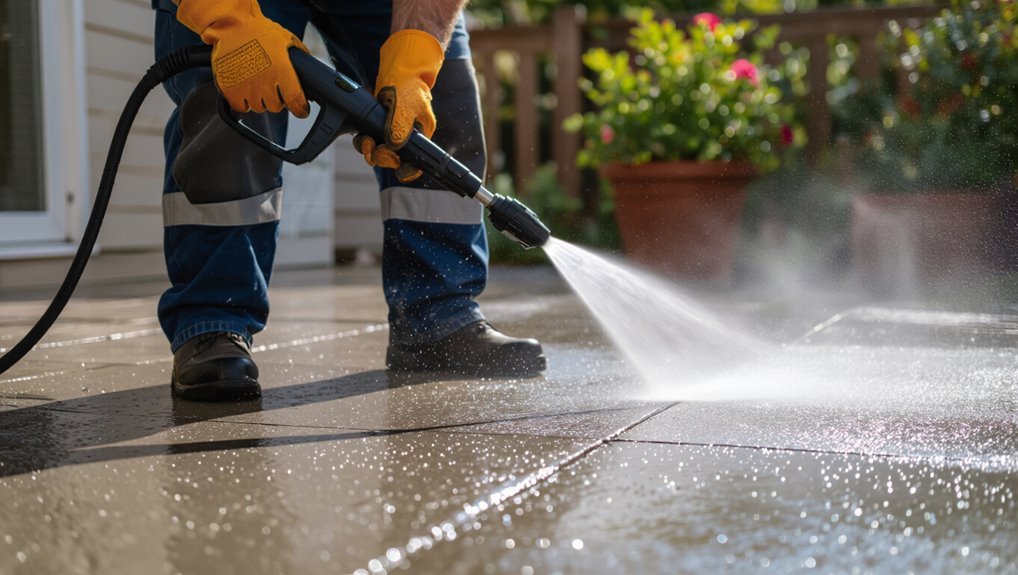
If you need a fast, effective way to freshen outdoor concrete, pressure washing delivers powerful cleaning with minimal elbow grease; just follow safety steps and start with the gentlest settings.
Wear eye and hearing protection, clear debris, and test a small area.
Use a 25–40° nozzle, keep the wand 12–18 inches away, and work in overlapping passes to avoid etching.
Step-by-Step Deep Clean for Any Finish
Before you start, clear the area, test a small patch, and check the floor for stains or damage.
Remove loose debris and dust, treat any grease or heavy soils with a degreaser, then choose manual or mechanical scrubbing based on the finish.
Finish by rinsing thoroughly and using a wet vacuum or fast-drying method to remove all moisture.
Step 1 Pre-inspection and prep (clear area, test small patch)
Once you’ve cleared furniture and debris, do a quick walkthrough to note stains, cracks, wax, or residue that need special attention; then pick an out-of-the-way spot to test your chosen cleaner so you can confirm it won’t damage the finish.
Mark trouble spots, note finish type (sealed, stained, polished), gather compatible cleaners, gloves, and a soft brush, and ventilate the area before proceeding.
Step 2 Debris removal and dry dusting
Start by removing loose debris with a broom or dust mop so grit won’t scratch the surface during wet cleaning; work in overlapping strokes from the farthest corner toward the exit and sweep dirt into a dustpan or vacuum with a hard-floor attachment.
Next, use a microfiber dust mop or electrostatic pad to pick up fine dust, paying attention to edges and corners before any wet cleaning.
Step 3 Degreasing heavily soiled areas
With loose dirt removed, focus on degreasing the spots that attract oil and grime—garage stains, cooking splatters, or industrial spills—so your wet cleaning actually works.
Apply a concrete-safe degreaser, let it dwell per instructions, then blot or rinse away dissolved oils.
For stubborn residues, repeat treatment or use absorbent poultices.
Always ventilate, wear gloves, and test a small area first.
Step 4 Scrubbing and agitation methods (manual vs. mechanical)
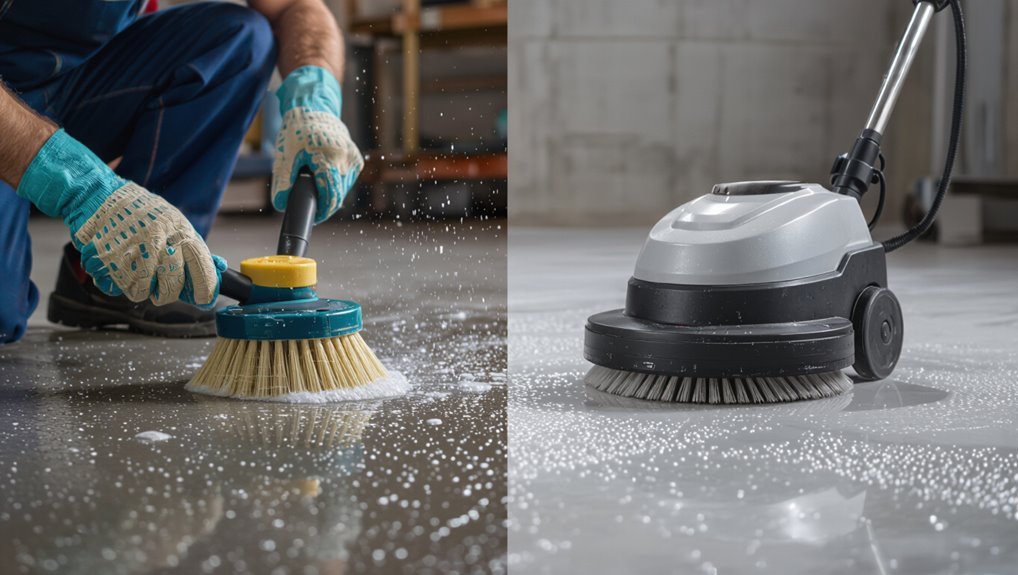
Because effective scrubbing restores texture and removes embedded grime, choose the agitation method that matches your floor’s finish and the level of soiling.
For light dirt, scrub with a stiff-bristle brush or push broom. For medium to heavy buildup, use a low-speed floor buffer with a nylon pad or a floor scrubber.
Work in overlapping passes and avoid abrasive pads on sealed surfaces.
Step 5 Rinsing and wet vacuuming/drying
After scrubbing, you’ll need to remove loosened soil and cleaning solution thoroughly to prevent residue and spotting.
Rinse with clean water, working downhill or toward a drain, and overlap passes.
Use a wet vacuum or squeegee to extract water, then mop remaining dampness.
Promote airflow with fans or dehumidifiers until the concrete is uniformly dry before foot traffic or further treatments.
Step 6 Final treatments: re-sealing, polishing, stain removal
Once the floor’s dry and clean, you’ll decide which final treatment—re-sealing, polishing, or targeted stain removal—best protects the surface and restores its appearance.
Apply sealer evenly with roller or sprayer, following cure times.
For polished concrete, use progressively finer pads and finish with a densifier.
Remove persistent stains with appropriate poultices or solvents, then neutralize and dry before sealing or polishing.
Specialized Cleaning by Finish and Problem
Now you’ll handle specific finishes and common problems so your cleaning matches the floor.
You’ll learn sealed-concrete do’s and don’ts, how to clean polished concrete without dulling it, and the best methods for oil, grease, rust, efflorescence, mold, and mildew.
You’ll also get clear techniques for removing paint and adhesives safely.
Cleaning sealed concrete do’s and don’ts
Because sealed concrete relies on its finish to protect the slab, you’ll want to treat different sealers and problems with specific methods to avoid damage and preserve shine.
Test cleaners in an inconspicuous spot, use pH-neutral products, mop gently, and avoid abrasive tools or acidic cleaners.
Reapply sealer as recommended and clean spills promptly to prevent staining and sealer breakdown.
Cleaning polished concrete without dulling finish
Sealed concrete and polished concrete both rely on surface integrity, but polished floors need extra care to keep that mirror-like sheen.
Use a pH-neutral cleaner, microfiber mop, and soft-bristled brush for spot treatments. Avoid harsh acids, abrasive pads, and waxes that haze or build up.
Rinse thoroughly, dry with a clean microfiber pad, and buff lightly to restore shine.
Removing oil and grease from garage floors
If oil or grease has stained your garage floor, act quickly to prevent deep penetration and slick hazards; blot excess with rags, sprinkle cat litter or sawdust to absorb, then sweep.
Apply a degreaser or trisodium phosphate solution, scrub with a stiff brush, rinse thoroughly, and repeat stubborn spots.
For cured stains, use a heavy-duty concrete cleaner or poultice per product instructions.
Removing rust, efflorescence, mold, and mildew
Rust, efflorescence, mold, and mildew each need a different approach, so identify the problem and your floor’s finish before you start.
For rust, use a commercial rust remover and rinse thoroughly.
For efflorescence, dry-brush then apply a mild acid cleaner per label.
For mold and mildew, scrub with a bleach solution or enzyme cleaner, rinse, dry, and improve ventilation to prevent recurrence.
Paint and adhesive removal techniques
Tackle paint and adhesive spots with the right method for your floor’s finish and the material involved—different products and tools work for concrete, painted concrete, and sealed surfaces, and using the wrong approach can damage the slab or coating. Use solvents, heat, or mechanical removal safely; test small areas first and always wear protection.
| Surface | Method | Tool |
|---|---|---|
| Bare concrete | Solvent/ps | Scraper |
| Painted | Heat/strip | Heat gun |
| Sealed | Mild solvent | Soft pad |
Tools and Product Comparison
You’ll pick the right mop—microfiber for light dusting, string or sponge for heavy spills—based on the job.
Choose scrubbers and floor machines by scale and maneuverability: hand units for spot work, walk-behinds for large areas, and orbitals for sensitive finishes.
Match cleaners to the soil and surface: pH-neutral for sealed floors, alkaline degreasers for grease, and acidic cleaners for mineral stains.
Mop types and their best uses
Choosing the right mop makes cleaning concrete faster and more effective, so you’ll want to match mop type to the job—microfiber for light dusting and polishing, string or strip mops for heavy soiling, sponge mops for small spills, and flat mops for controlled, low-moisture cleaning.
| Mop Type | Best Use |
|---|---|
| Microfiber | Dust, polish |
| String/Strip | Heavy soil |
| Sponge | Small spills |
| Flat | Low-moisture control |
Scrubbers and floor machines: hand vs. walk-behind vs. orbital
When you need more than a mop can handle, scrubbers and floor machines cut cleaning time and improve results by combining agitation, solution delivery, and recovery.
Hand machines suit tight spots and touch-ups, walk-behind models cover large areas efficiently, and orbital machines give aggressive, finish-safe scrubbing for textured or stained concrete.
Choose by area size, maneuverability, pad type, and water recovery capacity to match your job.
Chemical cleaners compared: pH-neutral vs. alkaline degreasers vs. acidic cleaners
Although concrete tolerates a wide range of cleaners, matching the chemistry to the soil and surface is key: you’ll choose pH-neutral for sealed floors, alkaline degreasers for oil and grease, and acidic cleaners for mineral stains or efflorescence—use cautiously.
| Type | Best Use | Caution |
|---|---|---|
| pH-neutral | Sealed/finished floors | Safe, gentle |
| Alkaline | Oils/grease | Rinse thoroughly |
| Acidic | Mineral stains | Etches unsealed concrete |
Common Mistakes and How to Avoid Them
Don’t use a cleaner that’s incompatible with your floor finish — it can dull or strip sealers.
Avoid over-wetting, which can cause efflorescence or long-term damage, and skip abrasive scrubbing on sealed or polished surfaces to prevent scratches.
Make sure you rinse properly so you don’t leave soap or chemical residue behind.
Using the wrong cleaner for the finish
If your cleaner doesn’t match the concrete’s finish, you can strip sealers, dull polished surfaces, or leave sticky residues that attract dirt.
Check manufacturer recommendations and test cleaners in an inconspicuous spot.
Use pH-neutral cleaners for sealed or polished floors, mild degreasers for unsealed garage slabs, and avoid acidic or abrasive products that alter appearance or bonding—replace cleaner immediately if you see adverse effects.
Over-wetting and causing efflorescence or damage
Mistreating cleaners can do more than harm a finish—you can also damage the concrete itself by over-wetting it.
If you soak slabs, water penetrates pores, draws salts, and leaves efflorescence or weakens the matrix.
Use minimal water, work in sections, blot spills, and dry promptly.
Test a small area, employ a wet-vac or fans, and avoid prolonged saturation to protect the slab.
Abrasive scrubbing that scratches sealed/polished floors
Although vigorous scrubbing might seem like a fast way to remove stains, abrasive pads and harsh brushes can quickly score sealed or polished concrete, dulling the finish and creating micro-scratches that trap dirt.
Use soft microfiber mops or non-abrasive pads, gentle cleaners, and light pressure. Test a small area first, work in straight lines, and replace worn pads promptly to protect the surface.
Improper rinsing and residue buildup
When you skip thorough rinsing, cleaner and soap residues stay behind and attract dirt, leaving your concrete looking cloudy and feeling sticky.
Rinse immediately with clean water, using a wet vacuum or mop to remove suds and grime. Repeat until water runs clear.
For sealed floors, use pH-neutral cleaners and minimal soap to prevent buildup and restore shine.
Maintenance and Prevention: Keep Concrete Looking Great
To keep your concrete looking great, stick to a regular cleaning schedule and handle spills or stains quickly.
Use mats, sealers, coatings, and simple traffic controls to protect surfaces, and adjust care for outdoor concrete during freeze/thaw cycles and when de-icing salts are used.
Check your floor’s finish periodically so you know when it’s time to re-seal or re-polish.
Regular cleaning schedule and quick-maintenance tips
A simple, predictable cleaning schedule keeps concrete floors looking their best and prevents small issues from becoming big repairs.
You should sweep daily, mop weekly with a neutral cleaner, and spot-treat spills immediately to avoid staining.
Follow these quick-maintenance tips:
- Remove grit and debris daily.
- Use pH-neutral cleaner for routine mopping.
- Blot oil and acidic spills right away.
Protective measures: mats, sealers, coatings, and traffic control
If you want concrete to stay attractive and durable, combine physical protection with surface treatments:
Place heavy-duty mats at entries and high-traffic zones to trap grit and moisture.
Use breathable penetrating sealers for stain resistance.
Apply epoxy or polyurethane coatings for wear and chemical protection.
Manage traffic flow with signage or barriers.
Regularly inspect and reapply coatings as needed to maintain protection.
Seasonal care for outdoor concrete (freeze/thaw, de-icing salts)
When winter arrives and temperatures swing around freezing, you’ll need to protect outdoor concrete from damage caused by freeze/thaw cycles and de-icing salts.
Planning timely maintenance and choosing the right products can prevent cracks, scaling, and accelerated wear. Shovel promptly, use plastic-blade shovels, and choose chloride-free deicers or calcium magnesium acetate.
Rinse surfaces in spring, inspect for damage, and repair small defects quickly.
When to re-seal or re-polish
After rinsing away winter salts and fixing small spalls, you’ll want to assess whether your concrete needs resealing or repolishing to restore protection and appearance.
Check for dullness, staining, water absorption, or surface wear every 1–3 years. If water beads, you’re fine; if it soaks in, reseal.
Polishing’s needed when scratches or loss of sheen appear; consult finish type and traffic levels.
Cost, Time, and When to Call a Pro
For routine cleaning you can expect a quick, low-cost job—usually an hour or two and minimal supplies—while deep stains or sealing can take longer and cost more.
If you’re seeing persistent discoloration, surface damage, or moisture issues, it’s time to call a pro. A professional will assess the damage, quote the work (including prep, repairs, and sealing), and use specialized equipment and products you probably don’t have.
Estimated time and cost for common clean jobs
1 key thing to know is that cleaning concrete ranges widely in time and cost depending on the job: a quick sweep and spot mop can take 10–30 minutes and cost nearly nothing.
Pressure washing a driveway runs 1–3 hours and $75–$250 (or more), while deep stain removal or epoxy stripping can take a day and cost several hundred to over a thousand dollars—call a pro when stains penetrate the surface, you need chemical stripping, or you want a warranty-backed finish.
For common jobs:
- interior garage sweep/mop 15–45 minutes, $0–$30;
- sealed floor maintenance 30–90 minutes, $10–$100;
- oil/stain remediation 2–8 hours, $50–$600+.
Signs you need professional cleaning or restoration
Knowing the typical time and cost for common clean jobs helps you spot when a DIY approach won’t cut it.
Call a pro if stains, efflorescence, major oil or chemical damage, deep pitting, structural cracking, or uneven grinding persist despite attempts.
Also hire professionals when jobs need heavy equipment, hazardous waste handling, or when restoring value outweighs DIY savings.
What to expect from a pro service
When you hire a pro, expect a clear estimate that breaks down labor, materials, equipment rental, disposal, and any surface prep or sealing.
Most straightforward garage or basement jobs run $200–$800 and take a few hours to a day, while heavy-duty restoration, stain removal, or diamond-grinding can cost $1,000–$5,000+ and span several days to a week depending on curing times.
You’ll get scheduling, warranty details, and care instructions.
Call a pro for deep stains, structural cracks, persistent odors, or when DIY risks spreading damage.
FAQs
You probably have a few practical questions about cleaning concrete, so let’s cover the essentials.
I’ll explain how often you should clean sealed versus unsealed floors, whether bleach or vinegar are safe to use, and if pressure washing will harm indoor concrete.
You’ll also get tips for stubborn oil stains and guidance on when to reseal after cleaning.
How often should I clean sealed vs. unsealed concrete?
Wondering how often to clean sealed versus unsealed concrete?
Sealed floors need light sweeping daily or weekly and a mild mop monthly or as spills occur; deep cleaning or resealing happens every 1–3 years depending on traffic.
Unsealed concrete demands more frequent sweeping and monthly wet cleaning to remove embedded dirt, with periodic scrubbing and resealing considerations to protect surface.
Can I use bleach or vinegar on concrete floors?
Sealed and unsealed concrete require different care, so it’s smart to check cleaners before grabbing them.
You can use diluted bleach for stubborn stains and mold on unsealed concrete, but rinse thoroughly and test a small area.
Vinegar is acidic and can etch sealers or bare concrete, so avoid strong concentrations—use mild solutions only for light surface cleaning and spot tests first.
Will pressure washing damage my indoor concrete?
Can pressure washing harm indoor concrete? Yes—if you use too high a PSI, stay too close, or apply it on weak, sealed, or freshly poured surfaces.
You should use a low-pressure nozzle, test a small area, protect nearby drywall and fixtures from water intrusion, and guarantee proper drainage.
For sensitive or finished floors, consider gentler methods or consult a pro.
How do I remove oil stains that don’t lift with degreaser?
What if a degreaser won’t budge that stubborn oil spot? Scrape excess, blot fresh oil, then apply a poultice: mix baking soda or cat litter with dish soap to a paste, spread over stain, cover with plastic, weigh down, and let sit 24–48 hours.
Scrape, rinse, repeat if needed. For deep stains, consider a concrete cleaner with poultice instructions or a professional.
Is it necessary to reseal concrete after cleaning?
Whether you should reseal concrete after cleaning depends on the floor’s finish, age, and exposure.
If the sealer’s worn, water soaks in, or the surface looks dull, reseal to protect, repel stains, and simplify future cleaning.
For untreated or high-traffic areas, apply a suitable sealer after the surface fully dries.
Follow manufacturer cure times and recoat intervals for best results.
