
Are Laminate Floors Waterproof? The Truth Homeowners Need to Hear
You shouldn’t assume laminate floors are waterproof—most aren’t, though some newer options are water-resistant or fully waterproof. Laminate has a decorative wear layer over an HDF core that swells with standing water, so spills and leaks can cause warping, delamination, and mold if not cleaned promptly. Proper installation, sealed edges, and choosing WPC/SPC or sealed-core products help. Keep humidity low and wipe spills fast, and keep going to learn practical tips and choices.
Are Laminate Floors Waterproof?
Short answer: most standard laminate floors aren’t fully waterproof, so you shouldn’t rely on them in areas with frequent standing water.
Some newer waterproof or water-resistant laminate products exist, and installation quality and underlayment can affect performance.
Check the manufacturer’s specs and warranty for the exact limits before installing in wet-prone rooms.
Short, direct verdict for homeowners
While laminate resists everyday spills, it isn’t fully waterproof—if water sits or seeps into seams, the core can swell and warp.
You should treat laminate as water-resistant, not waterproof. Clean spills immediately, use mats in wet zones, and avoid prolonged moisture.
If you need true waterproof flooring for bathrooms or basements, consider alternatives rather than relying on laminate alone.
One-sentence summary of exceptions and qualifiers
Because laminate’s water resistance varies by product and installation, treat most planks as water-resistant—not fully waterproof—and watch for exceptions like waterproof-rated cores, sealed edges, or loose installation that can let moisture in.
You should still avoid standing water, check manufacturer specs for waterproof claims, use proper underlayment and seals, and promptly fix spills or gaps to protect flooring longevity.
What Is Laminate Flooring? Basic Understanding
Think of laminate as a layered product: a tough wear layer, a printed decorative layer that mimics wood, a dense fiberboard core, and often a backing layer for stability.
You’ll want to know how those materials behave with moisture, because manufacturers label products as water-resistant, waterproof, or water-repellent and those terms mean different levels of protection.
Next, we’ll compare those definitions and explain how construction affects real-world performance.
Laminate floor construction (layers and materials)
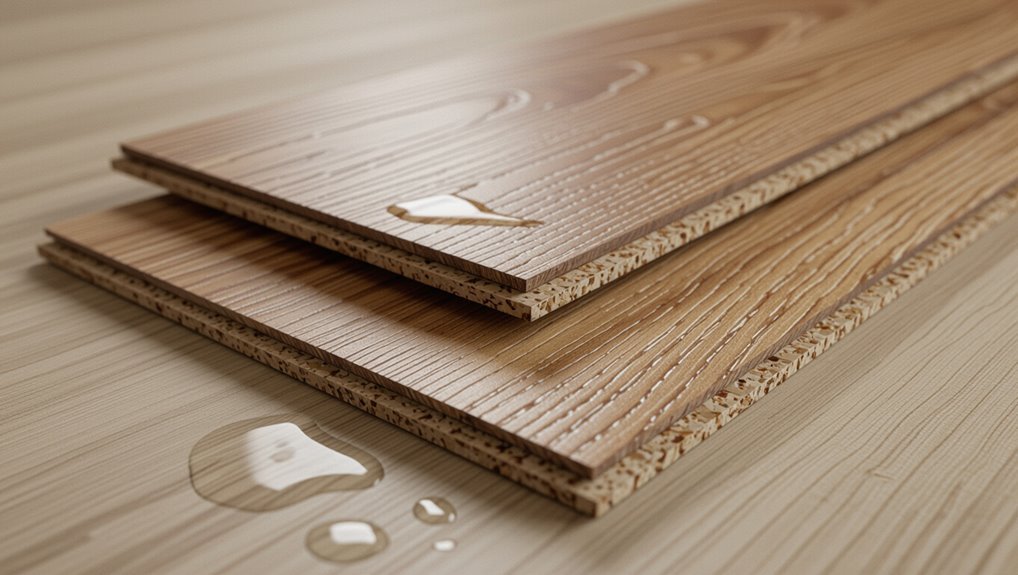
Laminate flooring is a multi-layered product engineered to mimic wood or stone while offering durability and easier maintenance.
You’ll find a clear wear layer, a printed decorative layer, a high-density fiberboard (HDF) core for stability, and a bottom balancing layer that resists moisture and warping.
Some panels include integrated click locks and water-resistant treatments on edges and cores.
Difference between water-resistant, waterproof, and water-repellent
While many flooring labels sound similar, they don’t mean the same thing, and you should know which one you’re buying.
Water-resistant laminate tolerates brief spills but can swell if moisture soaks seams.
Waterproof laminate blocks water longer, often with sealed edges and core materials that resist penetration.
Water-repellent means the surface sheds spills but isn’t guaranteed to stop prolonged exposure or edge seepage.
Why Water Behavior Matters for Laminate Floors
You’ll encounter moisture from spills, high humidity, and occasional leaks, and each source behaves differently around your floors.
If water reaches the core of laminate, it can swell the fiberboard, separate layers, and create conditions for mold.
That’s why understanding water behavior helps you prevent damage and choose the right care or product.
Common moisture sources in homes (spills, humidity, leaks)
Because water comes from many everyday sources—spills, indoor humidity, and hidden leaks—you need to know how each behaves around laminate floors.
You should spot and address sources quickly to prevent prolonged exposure.
- Accidental spills: quick cleanup limits risk.
- High indoor humidity: monitor with a hygrometer.
- Hidden leaks: check under sinks, appliances, and plumbing regularly.
How water damages laminate (swelling, delamination, mold)
When water reaches laminate flooring and sits, it can force the compressed wood core to swell, weaken the glue that holds layers together, and create conditions that let mold take hold.
You’ll notice buckling, gaps at seams, and loose planks as swelling stresses joints.
Persistent moisture also causes delamination—separating layers—and promotes mold growth beneath the surface, risking stains and health issues.
Types of Laminate and Their Water Resistance
You’ll want to know which laminate you’re looking at because water resistance varies widely—from standard, non-water-resistant boards to water-resistant options and fully waterproof types like WPC, SPC, and sealed-core variants.
Compare those to engineered wood and luxury vinyl to understand trade-offs in moisture performance, cost, and feel.
Knowing the category helps you pick the right product for kitchens, bathrooms, or basements.
Standard laminate (not water-resistant)
Although standard laminate looks like real wood and installs easily, it isn’t designed to handle standing water or repeated moisture exposure.
If you spill liquids, the core will swell and the surface can delaminate. You should avoid installing it in bathrooms, basements, or laundry rooms without extra protection.
Prompt cleanup helps, but prolonged dampness will cause irreversible damage and costly replacement.
Water-resistant laminate
If standard laminate can’t handle spills, water-resistant options give you more flexibility for moisture-prone areas.
You’ll find treated HDF cores, enhanced surface coatings, and better edge seals that slow water entry. They resist short-term spills and humidity better than standard boards, but aren’t designed for standing water.
Install carefully, wipe up liquids fast, and follow manufacturer limits to avoid damage.
Waterproof laminate (WPC, SPC, sealed core variants)
1 common way manufacturers deliver true waterproof performance is with rigid core products like WPC (wood plastic composite) and SPC (stone plastic composite) or with specifically sealed-core laminate variants. You’ll get better moisture resistance, easier cleaning, and more tolerance for spills. Choose based on budget, durability, and installation needs.
| Type | Waterproof | Best use |
|---|---|---|
| WPC | Yes | Comfort |
| SPC | Yes | High traffic |
| Sealed core | Varies | Budget-friendly |
Engineered vs. laminate vs. vinyl brief comparison
When you’re weighing engineered wood, traditional laminate, and vinyl, think about how each handles moisture and daily wear:
| Type | Water Resistance | Durability |
|---|---|---|
| Engineered | Moderate; seals help | Good; scratches show |
| Laminate | Low to moderate; core swells | Fair; wear layer varies |
| Vinyl | High; waterproof options | Excellent; resilient |
Real-World Performance: Situations Where Laminate Holds Up or Fails
You’ll find laminate handles short spills and everyday traffic reasonably well, especially if you wipe liquids up quickly.
It struggles in high-moisture rooms like bathrooms, basements, or laundry areas unless you choose water-rated products and seal seams carefully.
And with flooding or prolonged exposure, plus poor installation or a wet subfloor, laminate will often fail.
Short spills and everyday use
Although laminate isn’t fully waterproof, it handles short spills and daily foot traffic surprisingly well if you act quickly.
Wipe liquids within minutes, avoid abrasive cleaners, and use mats at entries to reduce grit. Small, occasional spills won’t warp boards if moisture doesn’t seep seams.
Prompt cleanup and routine maintenance let your floors look good and perform reliably in everyday living.
High-moisture areas (bathrooms, basements, laundry rooms)
If your bathroom, basement, or laundry room gets regular steam, splashes, or dampness, standard laminate often struggles because moisture can penetrate seams and backer boards, causing swelling and warping.
You’ll find it tolerates occasional dampness if sealed edges and proper underlayment are used, but constant humidity, condensation, or standing water will shorten lifespan—choose waterproof alternatives or strict moisture control instead.
Flooding and prolonged exposure
Having covered how regular humidity and splashes affect laminate in bathrooms, basements, and laundry rooms, let’s look at how the material fares when water exposure goes beyond occasional dampness.
If you experience flooding or standing water for hours or days, laminate will warp, swell, and delaminate.
Even water-resistant types fail under prolonged exposure; you’ll likely need board replacement and fast drying to limit damage.
Installation quality and subfloor impact
When installers take shortcuts or skip proper underlayment, you’ll see how quickly water issues escalate: gaps, uneven joints, and poor seals let moisture creep under boards and trap it against the subfloor.
You’ll worsen problems if the subfloor is warped, porous, or untreated; moisture then wicks, swells, and fosters mold.
Proper prep, vapor barriers, and precise installation keep laminate performing as planned.
How to Tell If a Laminate Product Is Waterproof
Start by checking the manufacturer’s waterproof claims and labels so you know what they guarantee.
Then read product specs—look for core type, AC rating, and sealed or beveled edge treatments that affect water resistance.
Finally, confirm any tests or certifications listed (like ASTM or ISO standards) to verify those claims.
Manufacturer claims and labeling to check
Because labels can be misleading, you should inspect manufacturer claims carefully to determine if a laminate product is really waterproof.
Look for clear terms like “water-resistant” versus “waterproof,” warranty exclusions for moisture, and documented testing standards (e.g., water immersion or spill tests).
Verify claim scope—room types, duration, and required installation/maintenance—to avoid surprises after purchase.
Product specifications to read (core type, AC rating, edge treatment)
If you want to judge a laminate’s real resistance to moisture, check the product specs—especially core material, AC rating, and edge treatment—as these determine how well the board handles spills, humidity, and wear.
Look for HDF or water-resistant cores, AC3+ for active homes, bevel-sealed or micro-beveled edges, and manufacturer notes on water-lock joints to gauge practical durability and suitability for damp areas.
Tests and certifications to look for
Wondering how to verify a laminate’s waterproof claims? You should check independent lab tests and recognized certifications before buying.
They prove resistance limits, installation tolerances, and warranty validity. Look for documented testing that matches your use.
- ASTM or ISO test reports
- AC/EN ratings plus water resistance notes
- Manufacturer-backed waterproof warranty with third-party verification
Installation Best Practices to Improve Water Performance
To boost your laminate’s resistance to moisture, start with a dry, level subfloor and install an appropriate moisture barrier before laying planks.
Choose the right underlayment, seal seams and the perimeter with recommended sealants, and use proper thresholds at doorways and openings to block water ingress.
These steps won’t make floors invincible, but they’ll greatly reduce the risk of water damage.
Subfloor preparation and moisture barriers
Because water problems usually start beneath your feet, proper subfloor prep and moisture barriers are the first line of defense for laminate flooring.
You’ll need to inspect for rot, level and dry the subfloor, and seal seams.
Install a vapor barrier appropriate for the subfloor type, tape overlaps, and protect edges at walls.
These steps reduce moisture intrusion and prolong flooring life.
Proper underlayment selection
When you pick the right underlayment, you give your laminate its best chance against moisture by combining cushioning, vapor control, and drainage in one layer.
Choose underlayment rated for your subfloor type and local humidity. Use closed-cell foam or specialized moisture-resistant cork where vapor control matters.
Verify compatibility with your laminate’s locking system and follow manufacturer specs to maintain warranty and long-term performance.
Sealing seams, transitions, and perimeter
If you want your laminate to actually resist water at the joints, seal seams, connections, and the perimeter carefully so gaps can’t trap moisture or let it migrate under the surface.
Use flexible silicone or manufacturer-recommended sealants at board joints, edge trim, and around pipes.
Keep expansion gaps clear but cover with waterproof trim or compressible gasket to direct moisture away and allow movement.
Thresholds and doorways to prevent water ingress
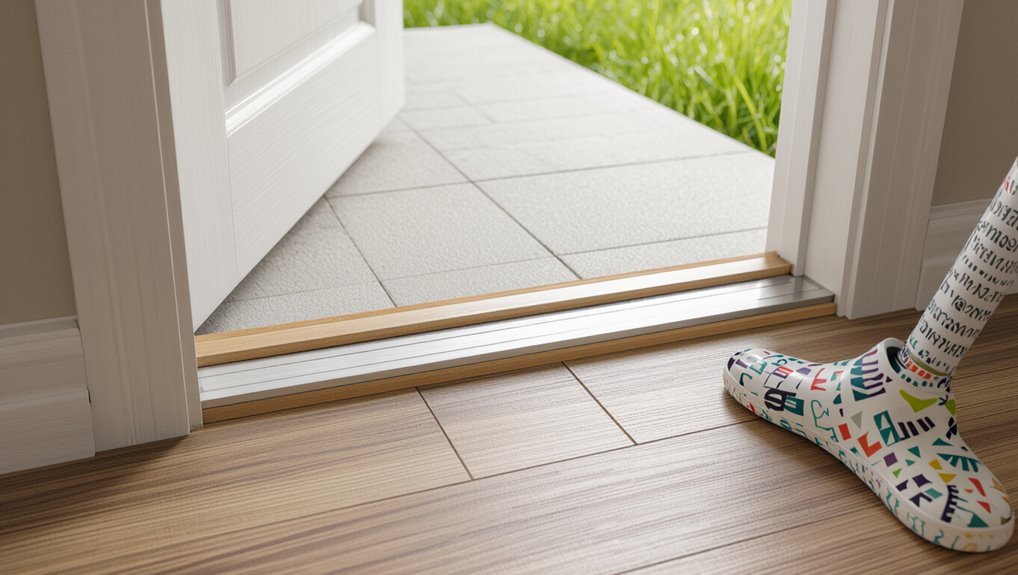
Sealing seams and edges inside the room helps, but you also have to stop water at the doorways where it’s most likely to cross from one space to another.
Install raised thresholds, waterproof connecting strips, and sill seals. Angle thresholds toward wetter rooms, secure perimeter sealing tape under thresholds, and guarantee tight door bottoms.
These steps limit water migration and protect your laminate.
Maintenance and Immediate Response Steps
Keep up simple daily and seasonal care—sweep, vacuum with a soft attachment, and control indoor humidity—to reduce the risk of moisture damage.
If you spill liquid, blot it immediately and dry the area thoroughly to prevent swelling or staining.
For leaks or floods, stop the water source, remove standing water, dry the floor fast with fans and dehumidifiers, and plan for a professional assessment and possible board replacement if damage is extensive.
Daily and seasonal maintenance to prevent moisture damage
Although laminate isn’t fully waterproof, regular daily and seasonal care will greatly reduce your risk of moisture damage.
Wipe spills quickly, control indoor humidity, and protect vulnerable zones like entryways and bathrooms. Inspect seams and under cabinets seasonally for swelling or gaps. Replace thresholds or seals as needed to block water intrusion.
- Sweep or dry-mop daily
- Keep humidity 35–55%
- Use mats and door seals
What to do after a spill
Act fast after a spill to prevent stains, warping, or swelling—blot up liquids with absorbent towels, then dry the area thoroughly with a clean cloth and a fan or hairdryer on low.
Remove residue with a damp microfiber, then dry again.
Check seams and under baseboards for moisture; if damp persists, keep area ventilated and monitor for changes over 48 hours.
What to do after a leak or flood (short-term and long-term actions)
If your laminate floor’s been exposed to a leak or flood, start by removing standing water immediately and ventilating the room to limit further damage.
Then document the situation with photos for insurance and safety decisions.
Dry boards with fans and dehumidifiers, lift baseboards, check subfloor and underlay, and discard warped planks.
Schedule professional assessment, repair or replace damaged sections, and address the moisture source.
Common Mistakes Homeowners Make with Laminate and Water
Don’t install laminate in bathrooms or other constantly wet rooms unless the product is rated for it.
Follow the manufacturer’s instructions, avoid harsh cleaners or soaking the floor, and don’t wait to fix swelling or leaks.
If you act fast and use the right products, you can prevent most water damage.
Installing in unsuitable rooms
While laminate can handle the occasional spill, installing it in high-moisture rooms like bathrooms or unfinished basements is a mistake that invites warping, swelling, and premature failure.
You’ll expose boards to constant humidity, seepage, and condensation they weren’t designed for.
Choose waterproof alternatives or properly finished, ventilated spaces instead, because installing laminate where moisture persists guarantees costly repairs and shortened floor lifespan.
Ignoring manufacturer guidelines
Because you bought laminate for its ease and economy, it’s tempting to skip the manual—but ignoring manufacturer guidelines invites problems that warranty won’t cover.
Read installation, acclimation, and moisture limits carefully. Use approved underlayment and expansion gaps, follow recommended adhesives and junction pieces, and document conditions.
Don’t assume all brands tolerate humidity or spills the same—follow their specs to avoid voiding coverage.
Using improper cleaners or excessive water
If you douse laminate with the wrong cleaners or leave standing water, you’ll invite swelling, warping, and finish damage that’s often irreversible.
You should use pH-neutral cleaners recommended by the manufacturer, wring microfiber mops well, and wipe spills immediately.
Avoid soap-based detergents, steam mops, and soaking floors.
Proper cleaning prevents gaps, delamination, and costly replacement.
Delaying repairs after moisture exposure
When moisture reaches your laminate, don’t wait to act—putting off repairs lets damage spread from a small stain to cupping, edge swelling, and mold behind the planks.
You should dry the area, lift affected boards if soaked, and inspect subflooring promptly.
Delaying increases repair costs and health risks; quick action often saves boards and prevents hidden mold growth.
When to Replace vs. Repair Laminate After Water Damage
If the damage is limited to surface swelling, cupping, or a few affected planks, you can often repair or replace just those boards and save time and money.
But when large areas are buckled, the core is disintegrating, or mold has set in, you’ll need full replacement for safety and longevity.
We’ll compare the signs, plus the typical cost and time trade-offs, so you can choose the right option.
Signs that repair is possible
Although water can seriously warp laminate, you can often save sections rather than replace the whole floor if the damage is limited, the core hasn’t swollen, and the locking seams still hold.
You should repair when planks are cupped but not delaminated, staining is superficial, subfloor is dry, and few boards are affected.
Quick drying, sanding, and plank replacement can restore the area.
Signs that replacement is necessary
You’ll need to replace laminate rather than repair it when water has caused irreversible damage to the core, seams, or finish—signs include swollen, buckled, or split planks, persistent soft spots, widespread delamination, or mold and mildew that won’t come out.
Also replace when multiple adjoining boards fail, locking mechanisms crumble, or odor and stain persist after drying; patching won’t restore structural integrity.
Cost and time considerations for repair vs. replacement
After you’ve identified signs that replacement is necessary, weigh the costs and time for repairing versus replacing laminate so you can make a practical decision. Repair saves money and time for small, local damage; replacement restores value after widespread warping or mold. Consider labor, materials, disposal, and downtime to decide what’s least disruptive and most cost-effective.
| Option | Cost | Time |
|---|---|---|
| Repair | Lower | Short |
| Replace | Higher | Longer |
Alternatives to Laminate for Waterproof Flooring
If you need a truly water-resistant option, consider waterproof vinyl planks (WPC/SPC), which give you easy maintenance and good durability but can vary in comfort and appearance.
You can also choose ceramic or porcelain tile for unmatched water resistance and longevity, though installation and coldness underfoot are trade-offs.
Engineered hardwood with waterproof features offers a warmer, more natural look while still handling moisture better than traditional laminate.
Waterproof vinyl plank (WPC/SPC) pros and cons
While laminate struggles with moisture, waterproof vinyl planks like WPC (wood plastic composite) and SPC (stone plastic composite) give you real, practical alternatives that handle spills, humidity, and even occasional flooding much better.
You get durable, low‑maintenance floors with realistic visuals, easy floating or glue installations, and underlayment options.
Downsides: can feel less warm than wood, may dent, and quality varies by brand.
Ceramic/porcelain tile pros and cons
Because ceramic and porcelain tiles are manufactured from fired clay and dense minerals, they give you one of the most waterproof, durable flooring options available for wet areas.
You’ll get scratch and stain resistance, long lifespan, and many styles.
Downsides: cold, hard underfoot surfaces, grout requires sealing and maintenance, and installation costs and labor can be higher than other waterproof choices.
Engineered hardwood with waterproof features
When you want real wood looks with better moisture resistance than traditional hardwood, engineered hardwood with waterproof features delivers a stable, attractive alternative to laminate.
You’ll get layered construction and a waterproof core or treated top layer that resists spills and humidity.
It’s installable in basements and bathrooms in many cases, offers refinishing options, and balances aesthetics with practical water protection.
Buying Guide: Choosing Laminate If You Need Water Resistance
When shopping for water-resistant laminate, focus on core materials, locking systems, and any factory-applied water seals.
Ask retailers and installers about installation methods, recommended underlayment, and real-world performance in wet areas.
Check the warranty closely — know whether it covers moisture-related swelling or only finish wear, and what conditions or installation steps void coverage.
Key features to prioritize when shopping
Shopping smart means zeroing in on the specific features that make laminate genuinely water-resistant rather than just water-tolerant.
You’ll want core materials, edge treatments, and wear layers that actually block moisture. Prioritize these measurable specs and certifications so you don’t rely on marketing claims.
- High-density, water-repellent core
- Sealed or beveled locking edges
- Thick aluminum oxide or polymer wear layer
Questions to ask retailers and installers
Curious which questions will actually uncover a laminate’s real water resistance?
Ask whether the plank’s core is water-resistant, if edges are sealed, and which tests back those claims.
Request installation methods that prevent moisture intrusion, compatible underlayment, and recommended humidity limits.
Ask for references or photos of similar jobs and maintenance tips for spills.
Clarify response times for moisture-related issues.
Warranty considerations and what water damage warranties usually cover
Because warranties vary widely, you should read the fine print closely before assuming a laminate floor’s water protection is covered.
Check what triggers coverage—manufacturing defects, spills, or flooding—and required maintenance or installation standards.
Note claim time limits, prorated remedies, and exclusions for moisture from subflooring or improper seals.
Keep receipts and photos; follow manufacturer instructions to preserve warranty rights.
Case Examples and Scenarios
When you’re planning laminate for specific rooms, think about how each space handles moisture and traffic.
In kitchens, follow sealant and splash-control tips.
Basements need moisture barriers or engineered/waterproof options for high humidity.
Bathrooms only work for small, well-sealed zones with waterproof planks and careful installation.
We’ll walk through practical best practices and recommended solutions for each scenario.
Best practices for kitchens
Kitchens demand practicality, so you’ll want to treat laminate as a durable, water-resistant — not waterproof — option and plan accordingly: seal seams near sinks and dishwashers, use rugs or mats in high-splash zones, and choose moisture-rated laminate with beveled edges to minimize water intrusion.
Wipe spills immediately, install proper underlayment, elevate appliances slightly, and inspect seals periodically to catch leaks early.
Basements with high humidity recommended solutions
If your basement has high humidity, treat laminate as a cautious choice and plan layered defenses: run a dehumidifier set to 50% or lower, install a continuous vapor barrier underlayment, guarantee proper subfloor moisture testing, and slope exterior grading plus fix leaks.
Choose waterproof-core laminate only for occasional dampness, and monitor humidity with a hygrometer to prevent warping and mold.
Bathrooms and small wet zones feasible approaches
Because bathrooms concentrate water and spills, you’ll need a clear plan before installing laminate in any small wet zone.
Choose waterproof or water-resistant laminate rated for bathrooms, seal edges with waterproof caulk, install a proper underlayment and vapor barrier, guarantee slopes toward drains, and keep ventilation strong.
Consider limiting laminate to dry areas and using tile or vinyl where standing water’s likely.
FAQs
You’ve probably got questions like whether you can install laminate in a bathroom or if minor spills will ruin it.
You’ll also want to know how long waterproof laminate lasts, whether water-damaged laminate can be sanded or refinished, and if waterproof options cost more than standard laminate.
I’ll answer each one so you can make the right choice for your space.
Can you install laminate in a bathroom?
Many people wonder whether laminate’s look and budget-friendly price make it a smart choice for a bathroom, and the short answer is: sometimes.
You can install water-resistant or waterproof laminate in low-moisture bathrooms if you seal edges, use proper underlayment, and control humidity.
Avoid wet rooms, steam-heavy showers, or poor ventilation—those increase failure risk and cut lifespan considerably.
Will minor spills ruin laminate flooring?
If you’ve sealed edges and kept humidity in check like we discussed for bathrooms, you’ll find laminate is pretty forgiving of minor spills.
Wipe liquids promptly with a soft cloth, avoid abrasive cleaners, and don’t let water pool near seams. Small, quick cleanups rarely cause swelling or warping.
Persistent soaking or repeated exposure, however, can eventually damage the core and finish.
How long does waterproof laminate last?
How long will waterproof laminate last in your home? Expect 10–25 years with quality product and proper care.
Lifespan depends on traffic, installation, moisture exposure, and maintenance. Warranties often reflect expected longevity.
You’ll extend life by keeping moisture out, using mats, avoiding abrasive cleaners, and replacing damaged boards promptly.
Regular cleaning and sensible use keep floors looking good longer.
Can you refinish or sand water-damaged laminate?
Although laminate looks like real wood, you can’t sand or refinish it the way you’d hardwood; the printed image layer and thin wear coat won’t tolerate abrasive sanding.
If water damages or swells boards, you’ll need to replace affected planks. Dry minor spills quickly to prevent edge swelling.
For extensive damage, remove and install matching replacement pieces or replace the whole floor for uniform appearance.
Is waterproof laminate more expensive than standard laminate?
Wondering whether waterproof laminate costs more than standard laminate? You’ll usually pay a bit more for waterproof options because they use denser cores, better seals, or special coatings.
The premium varies—sometimes modest, sometimes noticeable—depending on brand and technology.
Consider lifecycle costs: higher initial price can save on repairs and replacements in wet-prone areas, making it cost-effective long term.
