
How to Clean Terrazzo Floors Without Dulling the Surface
You can keep terrazzo glossy by using a pH-neutral cleaner, a microfiber mop, and soft brushes for grout, avoiding acids, bleach, or abrasive pads that dull the surface. Sweep or vacuum daily to remove grit, damp-mop with clean water and rinse thoroughly, then dry and lightly buff to restore shine. Protect high-traffic areas with mats and felt pads under furniture. Follow these steps and you’ll preserve the finish—and there’s more guidance and tips ahead.
How to Clean Terrazzo Floors Without Dulling the Surface
You’ll want to use pH-neutral cleaners, soft mops, and microfiber cloths to protect the terrazzo’s shine.
Avoid acidic or abrasive products and never scrub with steel wool or harsh brushes.
Rinse thoroughly and dry promptly to prevent residue and water spots that can dull the surface.
Best approach in one paragraph
While protecting the shine, start by sweeping or vacuuming to remove grit.
Then mop with a pH-neutral cleaner diluted per the label using a microfiber mop so you lift soil without abrading the surface.
Avoid acidic or ammonia cleaners, abrasive pads, and excessive water.
When stains persist, spot-treat with a manufacturer-recommended poultice or a soft nylon brush rather than scrubbing hard.
For quick guidance on how do I clean terrazzo floors, follow that routine consistently.
Understanding Terrazzo Floors
To care for terrazzo properly, you should know it’s a composite of marble, quartz, glass or other aggregates set in cement or epoxy and then ground and finished.
You’ll see different finishes—polished for shine, honed for a matte look—and differences between epoxy and cementitious bases that affect durability and cleaning.
Common causes of dulling include abrasion, improper cleaners, and buildup, so your cleaning approach should match the terrazzo type and finish.
What terrazzo is and how it’s made
Terrazzo is a composite flooring made by embedding chips of marble, quartz, glass, or other aggregates in a cementitious or resin binder, then grinding and polishing the surface to reveal a seamless, durable finish.
You’ll see raw aggregate set into the binder, cured, then successively ground with finer abrasives and polished. The result’s dense, low-porosity surface resists wear while showcasing decorative chips.
Why terrazzo can dull common causes of surface dulling
After polishing exposes that glossy, seamless surface, everyday factors can still make it look dull over time.
You’ll notice abrasion from foot traffic, grit and sand acting like sandpaper, harsh cleaners stripping oils or sealing layers, and water spots or residue leaving film.
Neglecting spills, improper mops, and dragged furniture all wear the surface, so routine gentle care prevents premature dulling.
Types of terrazzo finishes (polished, honed, epoxy vs cementitious)
When you choose a terrazzo finish, you’re deciding how the floor will look, feel, and wear over time; polished surfaces shine and resist staining, honed ones give a matte, slip‑friendly finish, and the substrate—epoxy or cementitious—affects durability, color range, and maintenance needs. You’ll select finishes based on traffic, sheen preference, and cleaning routine.
| Finish | Sheen | Maintenance |
|---|---|---|
| Polished | High | Low |
| Honed | Low | Moderate |
| Epoxy | Variable | Low |
| Cementitious | Variable | Moderate |
Tools and Materials You Need Before You Start
Before you start cleaning, you’ll want the right products and tools so you don’t damage the terrazzo’s finish.
Use neutral, pH-balanced cleaners and gentle equipment, and steer clear of anything too acidic or abrasive.
Here’s a quick checklist to picture what you’ll need:
- Microfiber mop, neutral cleaner, and soft buffer with appropriate pads
- Clean water buckets and a low-speed floor machine (if polishing)
- What to avoid: harsh acids, abrasive pads, ammonia, and bleach
Safe cleaners and pH considerations
Because terrazzo is sensitive to harsh chemicals, you’ll want cleaners that cut grime without etching the surface or stripping sealers.
Choose neutral-pH detergents (pH 7) or products labeled safe for stone. Avoid acids, bleach, and strong alkalis.
Test any cleaner in an inconspicuous spot first. Rinse thoroughly to remove residues, which can attract dirt or damage sealants over time.
Recommended equipment (microfiber mop, neutral cleaner, buffer, pads)
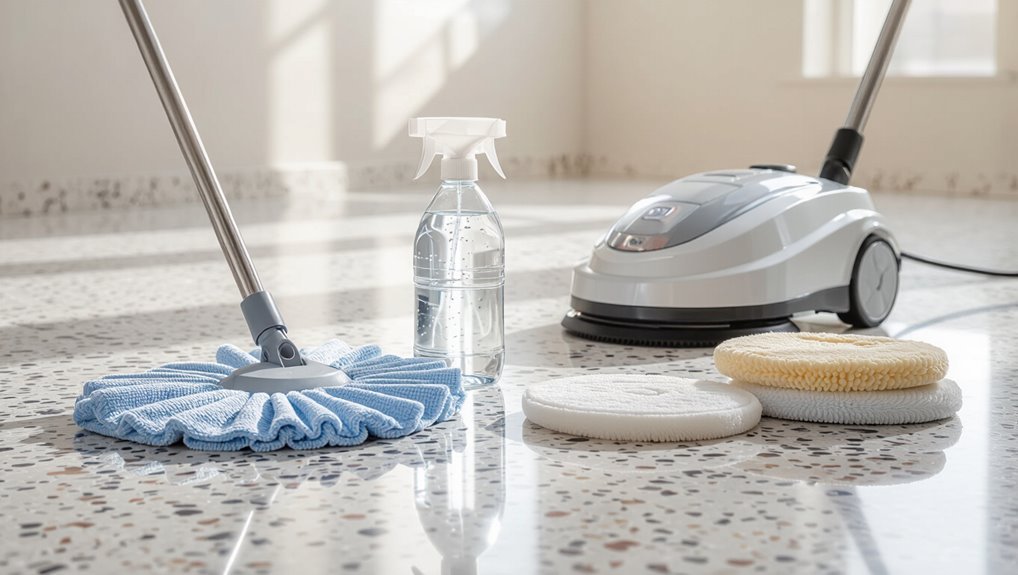
Start with a few essential tools that make terrazzo cleaning effective and safe: a microfiber mop for daily dust and light cleaning, a neutral-pH cleaner that won’t harm stone or sealers, and a low-speed buffer with the correct pads for deeper maintenance and polishing.
Add a bucket with a wringer, soft-bristled brushes for grout, replacement microfiber heads, and safety gear like gloves and goggles.
What to avoid (harsh acids, abrasive pads, ammonia, bleach)
When you’re prepping to clean terrazzo, steer clear of harsh acids, abrasive pads, ammonia, and bleach—these will damage the stone, strip sealers, and dull the finish.
Don’t use vinegar, harsh degreasers, or scouring powders. Skip metal brushes and rough pads.
Choose pH-neutral cleaners and soft microfiber tools instead. Test any product in an inconspicuous spot before widespread use.
Step-by-Step Cleaning Process
Before you start, you’ll inspect the floor and spot-test cleaners to avoid damage.
Then you’ll remove loose debris, mop with a properly diluted neutral cleaner and rinse, and treat stains or grout gently to prevent etching.
Finish by drying and buffing at the right time to restore shine.
Step 1 Pre-clean inspection and spot testing
1. Before cleaning, inspect the floor for chips, stains, sealant wear, and high-traffic zones.
Test cleaners in an inconspicuous area: apply a small amount, wait recommended time, then rinse and dry to check for dulling or color change.
Note sensitive spots and surface finish so you can choose compatible products and avoid damage during the main cleaning.
Step 2 Dry dusting and debris removal (technique and frequency)
Start by removing loose grit and dust with a soft-bristle broom, microfiber dust mop, or a dry vacuum set to a hard-floor attachment so you won’t scratch the terrazzo; do this daily in high-traffic areas and at least weekly elsewhere to prevent abrasive particles from wearing the finish.
Inspect corners and under furniture, trap edges, and grout lines, and empty dust receptacles promptly to avoid recontamination.
Step 3 Mopping with a neutral cleaner: dilution, method, and rinse
With loose grit removed, you’re ready to mop using a neutral pH cleaner diluted per the manufacturer’s directions—typically 1–2 ounces per gallon of warm water—to avoid etching or dulling the terrazzo finish.
Dip a microfiber mop, wring until damp, and work in short, overlapping strokes. Change solution when dirty, then rinse with clean water and dry promptly to prevent streaks or residue.
Step 4 Stain and grout spot treatments without etching
Treat stains and grout spots gently to remove discoloration without etching the terrazzo surface: first identify the stain type (organic, oil-based, rust, etc.), test a mild, manufacturer-approved poultice or cleaner in an inconspicuous area, and work from least to most aggressive—blotting, applying the product briefly, then rinsing and drying—so you don’t over-treat and damage the finish.
Use soft brushes, repeat sparingly.
Step 5 Drying and buffing to restore shine (when and how)
After rinsing and spot-treating, let the terrazzo surface dry until it’s just barely damp—too much moisture will prevent proper bonding during buffing, while bone-dry stone can generate dust and reduce shine.
Use a clean microfiber pad or soft cloth, work in small sections with light pressure, and keep movements circular.
Wipe residue, inspect for dull spots, and repeat gently if needed.
Step 6 When to use a low-speed mechanical buffer vs professional polishing
Decide between a low-speed mechanical buffer and hiring a pro based on the extent of wear, the size of the area, and the finish you want to achieve.
Use a buffer for light scuffs, small rooms, and routine maintenance; choose pads matched to grit.
Hire a professional for deep scratches, large commercial areas, or if you want high-gloss polishing and guaranteed, uniform results.
Maintenance Strategies to Prevent Dulling
To keep your terrazzo from dulling, you should follow simple daily, weekly, and monthly routines that tackle dust, spills, and light scuffing before they become permanent.
Use protective measures like entry mats, area rugs, and felt furniture pads to cut down on abrasive wear.
Also know when to seal or re-seal—seal to protect from stains and wear, but don’t overdo it where it could alter the finish.
Daily, weekly, and monthly maintenance routines
1 simple routine you can stick to will keep terrazzo bright and prevent dulling:
- Daily: sweep or dust-mop to remove grit, spot-clean spills with pH-neutral cleaner.
- Weekly: damp-mop with diluted neutral cleaner, rinse thoroughly, dry to avoid residue.
- Monthly: inspect for stains, deep-clean high-traffic areas with a microfiber scrub pad, then buff to restore sheen.
Protective measures: mats, furniture pads, area rugs
While regular cleaning prevents most wear, adding simple protective measures will stop grit and heavy foot traffic from dulling your terrazzo.
Place low‑profile, non‑abrasive mats at entrances to trap dirt, use felt or rubber furniture pads under legs to prevent scratches, and lay breathable area rugs in high‑traffic zones.
Clean mats and pads regularly to avoid trapping moisture or grit against the floor.
Sealing and re-sealing: when it helps and when it doesn’t
Although terrazzo is prized for its durability, sealing and resealing can make a real difference in how long the finish stays glossy and stain-resistant.
You should seal new or porous terrazzo to block stains and reduce wear.
Don’t over-seal polished, dense terrazzo—doing so can alter sheen.
Reseal only when wear shows or maintenance tests indicate absorption, using compatible, breathable sealers.
Restoring Shine and Repairing Dull Areas
If your terrazzo has only light haze or small dull spots, you can usually restore gloss with a quick polish; larger matte areas or deep scratches call for full restoration.
You can try DIY methods first—use a neutral pH cleaner, a fine-grit polishing pad or diamond-impregnated pads for low-speed machines, and a compatible terrazzo sealer or burnishing compound.
If dullness returns quickly, there’s visible etching, or grout and chips are widespread, call a professional for grinding, honing, and resealing.
When to do a light polish vs full restoration
When deciding between a light polish and a full restoration, look at the severity and extent of dullness: choose a light polish for small, superficial haze, scratches, or localized traffic paths that respond quickly.
Opt for full restoration when dullness is widespread, deep scratches, pitting, or worn binder expose aggregate.
Full work also fixes structural issues; expect longer time and professional tools.
DIY polishing methods and safe products
Start by testing a small, inconspicuous area to see how your terrazzo responds.
Use a microfiber pad with a neutral pH terrazzo cleaner for light polishing, buffing gently in circular motions.
For dull spots, try a fine-grit polishing powder or diamond-impregnated pads at low speed.
Rinse thoroughly, dry, and apply a breathable terrazzo sealer if recommended by the product.
Signs you need professional restoration
Noticing persistent dullness or etched spots despite your best DIY efforts is a clear sign you need professional restoration.
You’ll want experts when damage goes beyond cleaning: they’ve equipment and abrasives to safely grind, hone, and repolish without thinning your floor.
Consider these warning signs:
- Widespread, low-sheen areas that resist polishing
- Deep etching, pits, or scratches exposing aggregate
- Uneven gloss or faded patches after cleaning
Common Mistakes That Cause Dulling
Watch what you use on terrazzo, because acidic or strongly alkaline cleaners will strip the finish and leave dull spots.
Don’t rely on abrasive pads or wrong buffing techniques, and avoid over-wetting or skimping on rinsing, which can both harm the stone.
Finally, keep a regular maintenance routine—neglecting it’s a common reason floors lose their shine.
Using acidic or alkaline cleaners
If you reach for a heavy-duty acidic or strongly alkaline cleaner thinking it’ll strip grime faster, you’ll likely dull the surface instead—terrazzo’s cementitious matrix and polish don’t tolerate extreme pH.
Use neutral, pH-balanced cleaners designed for stone. Rinse thoroughly to remove residues, test any product in an inconspicuous area, and avoid prolonged contact.
Neutral maintenance preserves shine and prevents etching.
Abrasive pads and incorrect buffing techniques
One common mistake that dulls terrazzo is using abrasive pads or the wrong buffing technique, which can scratch the polish and wear away the binder.
You should choose non-abrasive, floor-specific pads and match pad speed and pressure to the manufacturer’s recommendations.
Test a small area first, use even, light passes, and replace worn pads promptly to prevent micro-scratches that accumulate into visible dulling.
Over-wetting or insufficient rinsing
After avoiding abrasive pads and improper buffing, you also need to control how much water and cleaner you use; over-wetting or failing to rinse thoroughly can leave residues and trapped moisture that dull terrazzo over time.
Use minimal, damp mopping, wring cloths well, and rinse with clear water.
Dry promptly with microfiber to prevent mineral deposits or moisture damage that reduce shine.
Neglecting routine maintenance
When you skip regular care, dirt and grit build up and slowly abrade the terrazzo’s surface, leaving it dull and lifeless. Routine maintenance prevents that gradual wear and keeps sealers and polish working as designed.
You should sweep daily, damp-mop with pH-neutral cleaner, and reapply sealer per manufacturer guidance. Consistent upkeep avoids deep scratches, staining, and the need for costly restorations later.
Product and Method Comparison
Now you’ll compare cleaners—neutral cleaners, mild detergents, and specialty terrazzo products—to see which protects shine without leaving residue.
Then weigh methods: manual mopping, microfiber systems, and commercial scrubbers, noting effectiveness, labor, and risk of abrasion.
Use those trade-offs to pick what suits your floor’s finish and traffic level.
Neutral cleaners vs mild detergents vs specialty terrazzo products
Although each cleaning option can remove dirt, they work differently and affect terrazzo’s finish in distinct ways. You’ll choose neutral cleaners for daily care, mild detergents sparingly for greasy spots, and specialty terrazzo products for restoration. Test first. Use the table to compare key traits.
| Cleaner type | Best use |
|---|---|
| Neutral | Routine |
| Mild detergent | Spot cleaning |
| Specialty | Restoration |
Manual mopping vs microfiber vs commercial scrubbers (pros and cons)
Because your terrazzo needs both gentle care and occasional deep cleaning, choosing between manual mopping, microfiber systems, and commercial scrubbers comes down to the job’s scale, finish sensitivity, and budget. You’ll use manual mops for light maintenance, microfiber for lift without scratches, and scrubbers for heavy grime—careful pads and low RPMs prevent dulling.
| Method | Best for |
|---|---|
| Manual mop | Small areas |
| Microfiber | Daily care |
| Scrubber | Deep cleaning |
Safety and Environmental Considerations
When you clean terrazzo, handle chemicals carefully—wear gloves, ventilate the area, and follow label instructions for storage and disposal.
Don’t pour harsh cleaners down drains; neutralize and dispose of waste per local regulations or take it to a hazardous waste facility.
Consider eco-friendly alternatives like pH-neutral, biodegradable cleaners or simple solutions of mild soap and water to protect your floor and the environment.
Safe handling of cleaners and disposal tips
1 simple rule will keep you and the environment safer: treat all cleaners with respect and follow label instructions exactly.
Wear gloves and eye protection, ventilate the area, and never mix products.
Store chemicals in original containers, out of children’s reach.
For disposal, follow local hazardous-waste guidelines—don’t pour concentrated solutions down drains or storm sewers; use community collection programs.
Eco-friendly cleaning options for terrazzo
Although you can rely on commercial products, choosing eco-friendly cleaners for terrazzo reduces toxic exposure and protects nearby waterways; pick pH-neutral, biodegradable cleaners or simple solutions like diluted castile soap, mild vinegar (used sparingly and only on sealed terrazzo), or a baking soda paste for spot cleaning.
You’ll rinse thoroughly, dry to prevent streaks, and avoid abrasive or acidic mixes that damage sealers.
FAQs Terrazzo Floor Cleaning (35 common questions)
You probably have specific questions—like whether vinegar or bleach are safe, how often to get professional polishing, or if plain water mopping can harm your terrazzo.
You’ll also want to know how to tackle deep stains without ruining the finish and whether steam cleaners are appropriate.
Below are clear answers to these and 30 more common terrazzo cleaning questions.
Can I use vinegar or bleach on terrazzo?
Curious if vinegar or bleach will safely clean your terrazzo?
Don’t use vinegar: its acidity etches and dulls the polished surface.
Avoid bleach for routine cleaning too; it can discolor cement-based terrazzo and degrade sealers.
Instead, use a pH-neutral cleaner and follow manufacturer guidance.
Reserve stronger products for spot treatment after testing an inconspicuous area and rinsing thoroughly.
How often should terrazzo be professionally polished?
How often you should have terrazzo professionally polished depends on foot traffic, finish condition, and whether the floor is sealed. Most homes need polishing every 3–10 years, while high-traffic commercial spaces may require it every 1–3 years.
Check annually for wear, scratches, or dull spots. If you see persistent blemishes or loss of gloss despite regular maintenance, schedule polishing sooner to restore protection and shine.
Will mopping with water damage terrazzo?
Wondering whether mopping with plain water will harm your terrazzo? No—occasional mopping with clean, lukewarm water won’t damage sealed terrazzo.
You should avoid soaking grout lines or leaving puddles; mop and dry promptly.
For daily care, use a damp mop; for sticky or greasy spots, add a pH-neutral cleaner.
Never use acidic or abrasive products that can etch or dull the finish.
How do I remove deep stains without damaging the finish?
Mopping with plain water is fine for routine care, but deep stains need a gentler, more targeted approach to protect the sealer and polish.
Blot spills promptly, then test a pH-neutral terrazzo cleaner on an inconspicuous spot.
For stubborn marks, use a poultice (absorbent powder plus cleaner), apply gently, cover, let sit, then rinse and buff.
Re-seal if penetration occurred.
Can I use a steam cleaner on terrazzo?
Curious whether a steam cleaner’s high heat and moisture will help or hurt your terrazzo? You can use steam cautiously: avoid high-pressure settings, test a hidden area first, and keep exposure brief to protect sealers and grout.
Don’t use on porous, unsealed, or poorly sealed terrazzo. After steaming, dry thoroughly and reapply sealer if the finish looks compromised.
Conclusion Quick checklist to keep terrazzo glossy without dulling
Keep a simple routine and your terrazzo will stay glossy without getting dull: follow these steps to protect finish and shine.
Keep a simple routine: daily sweep, weekly damp-mop, and prompt care to keep terrazzo glossy and protected.
- Sweep daily, damp-mop weekly with pH-neutral cleaner, dry promptly.
- Use felt pads on furniture, mats at entries, avoid abrasive tools.
- Reapply sealer per manufacturer schedule, spot-treat stains immediately to prevent etching.
