What Is Hardwood Laminate Flooring and How Is It Different From Real Wood?
Hardwood laminate is a manufactured plank that mimics real wood using a photographic design layer over a dense HDF or MDF core, topped with a clear wear layer for scratch and stain resistance. It’s cheaper, easier to install (often click-lock), and more moisture-tolerant than solid or engineered hardwood, but it can’t be sanded or refinished and has a shorter lifespan. Keep going to see when laminate makes sense and what trade-offs to expect.
Quick Answer What Is Hardwood Laminate and How It Differs from Real Wood
Hardwood laminate is a manufactured flooring that uses a photographic wood-look layer over a composite core to mimic real hardwood.
You’ll notice key differences in appearance, construction, cost, and durability: laminate often looks very similar but has a layered, synthetic build that’s usually less expensive and more scratch- and moisture-resistant than real wood.
When choosing, consider whether you want the authentic grain and refinishing options of real wood or the lower cost and easier maintenance of laminate.
One-sentence definition
Because it mimics timber with a printed wood-look layer over a compressed core, hardwood laminate gives you the appearance of real wood at lower cost and greater scratch and moisture resistance, though it lacks the solid, refinishing capability and natural grain variation of genuine hardwood. For a quick answer to what’s hardwood laminate flooring: it’s a layered, engineered plank designed to look like wood without being true solid timber.
Summary of key differences (appearance, construction, cost, durability)
When you compare hardwood laminate and real wood side-by-side, the differences jump out in appearance, construction, cost, and durability: laminate uses a printed photographic layer and a compressed core to mimic grain and color, while real wood shows natural grain, texture, and aging; laminate is generally cheaper and easier to install, resists scratches and moisture better, but can’t be sanded and refinished like solid hardwood and lacks the unique variation and lifespan of true timber.
- Appearance: mimicked vs. natural
- Construction: layered vs. solid
- Cost: lower vs. higher
- Durability: scratch/moisture resistant vs. refinishable
- Lifespan: moderate vs. long-term
Basic Understanding What Hardwood Laminate Is
Think of hardwood laminate—also called laminate wood or hardwood-look laminate—as a manufactured flooring that mimics real wood.
You’ll find it built in layers: a clear wear layer, a photographic design layer, a dense HDF or MDF core, and a backing for stability.
Common materials include HDF/MDF cores with melamine or vinyl overlays protecting the printed wood image.
Definition and common names (laminate wood, hardwood-look laminate)
Hardwood-look laminate is a multi-layer synthetic flooring product that mimics the appearance of real hardwood by using a high-resolution photographic layer beneath a clear protective wear layer.
You’ll often see it called laminate wood, engineered laminate, or simply laminate flooring.
You’ll find it marketed by style names (oak, hickory, maple) and by finish descriptors (hand-scraped, matte, distressed) to match real-wood aesthetics.
Typical construction layers (wear layer, photographic layer, core, backing)
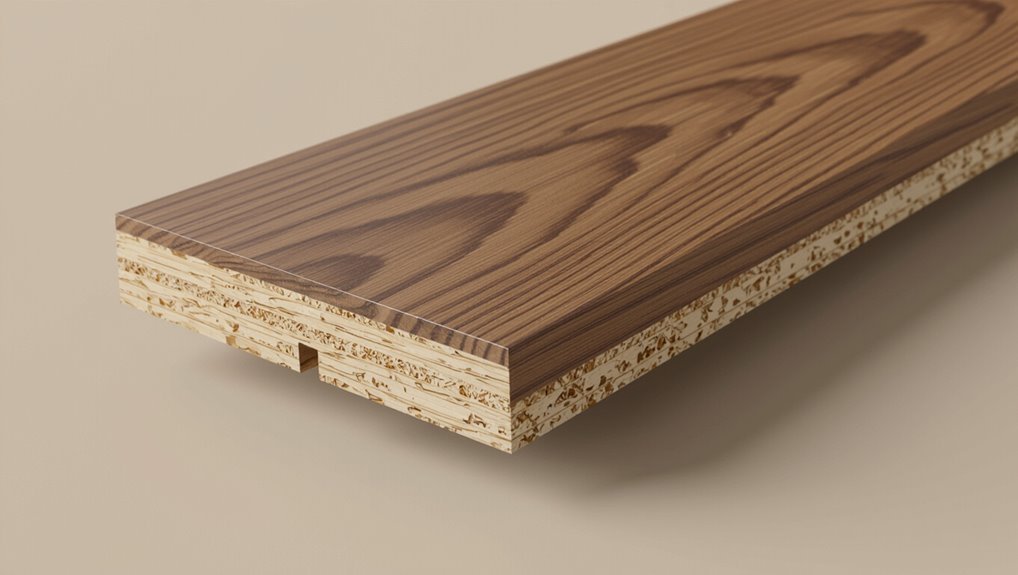
Although it’s a synthetic product, laminate flooring is built from distinct layers that each serve a clear function: a tough wear layer protects against scratches and stains, a high-resolution photographic layer provides the wood look, a dense core gives stability and impact resistance, and a backing layer balances moisture and keeps the planks flat.
You’ll choose based on durability, appearance, installation method and room use.
Materials used (HDF/MDF core, melamine, vinyl overlays)
Those distinct layers are made from specific materials that determine performance and feel.
You’ll find a high-density fiberboard (HDF) or medium-density fiberboard (MDF) core for stability, a printed photographic layer for realistic wood visuals, and a melamine wear layer or vinyl overlay for scratch, moisture, and UV resistance.
Each choice affects durability, comfort, and suitability for different rooms.
How Real Hardwood Is Constructed
When you compare solid hardwood and engineered boards, you’ll see differences in construction that affect stability and refinishing.
Common species like oak, maple, and walnut each offer distinct grain and hardness that shape your choice.
You’ll also want to evaluate finishes and treatments—stain, polyurethane, or oil—which protect the wood and change its look.
Solid hardwood vs engineered hardwood
Because both are called “real” hardwood, it helps to know how each is built: solid hardwood is milled from a single piece of timber, while engineered hardwood layers a real wood veneer over plywood or high-density fiberboard to improve stability.
You’ll choose solid for longevity and refinishing potential, or engineered for better moisture resistance, dimensional stability, and installation over concrete or radiant heat systems.
Typical species and planks (oak, maple, walnut)
Once you’ve picked between solid and engineered hardwood, the next choice is the species and plank style, since those determine grain, color, hardness, and how the floor will wear over time.
You’ll often choose oak for durability and prominent grain, maple for a smooth, pale look, or walnut for rich color and softer feel.
Plank width affects room scale and maintenance.
Finishes and treatments (stain, polyurethane, oil)
Finishes like stains, polyurethanes, and oils protect hardwood and change its look, so you’ll want to pick one based on durability, maintenance, and appearance.
Stains alter color while highlighting grain; polyurethane adds tough, low‑maintenance film suitable for high traffic; oil penetrates for a natural, repairable finish but needs periodic reapplication.
Choose by room use and your willingness to maintain it.
Detailed Comparison Hardwood Laminate vs Real Wood
You’ll want to weigh how appearance, durability, installation, maintenance, and cost differ between laminate and real wood before choosing. Below is a quick snapshot to guide your comparison and prompt questions for each point. Use this to decide which trade-offs matter most for your space.
| Feature | Laminate | Real Wood |
|---|---|---|
| Look & realism | High-quality photographic surfaces, limited refinishing | Authentic grain, can be sanded and refinished |
| Durability & maintenance | Scratch- and moisture-resistant options, easy upkeep | Can dent/scratch, more sensitive to moisture, refinishable |
Appearance and realism
Grain, color, and texture are the three things you’ll notice first when comparing hardwood laminate to real wood, and they determine whether a floor feels authentic or fake.
Laminate prints realistic grain patterns and consistent coloring, but repeats and perfect uniformity can betray it.
Real wood shows natural variation, depth, and subtle imperfections that give warmth and character you can’t fully replicate.
Durability and scratch/moisture resistance
The look you choose matters, but performance often determines whether a floor holds up over time.
You’ll find laminate more resistant to scratches, dents, and stains thanks to its tough wear layer, while real hardwood can ding and scratch but can be refinished.
For moisture, laminate resists spills better but can swell if water seeps; hardwood tolerates humidity shifts differently and may warp.
Installation methods and ease (click-lock, glue-down, nail-down)
1 clear advantage of laminate is its range of user-friendly installation methods—click-lock planks snap together for a fast floating floor you can install yourself, while glue-down options add stability over concrete;
real hardwood, by contrast, usually needs nail-down or glue-down installation and often requires professional tools and experience to get a lasting, level result.
You’ll find laminate faster, less messy, and more DIY-friendly.
Maintenance and refinishing capability
After installation, upkeep and the ability to refresh floors become the issues you’ll face most often.
Laminate resists stains and scratches, so you’ll mop and sweep it but can’t sand or refinish—it needs plank replacement when worn.
Real hardwood requires regular sweeping and occasional refinishing; you can sand and stain multiple times to restore appearance, extending lifespan if you maintain it properly.
Cost comparison (material and installation)
When you’re comparing costs, think in two parts: material price and installation labor.
Laminate typically costs less per square foot and installs faster with click-lock planks, lowering labor expenses.
Solid hardwood materials are pricier and require skilled installation and acclimation, increasing labor time.
Account for underlayment, trims, and potential subfloor prep—these add to both materials and installation budgets.
Environmental impact and recyclability
Although both hardwood and laminate can look similar in your home, they differ sharply in environmental footprint and end-of-life options.
You’ll find real hardwood is renewable when sourced responsibly and can be reclaimed or recycled more easily, storing carbon long-term.
Laminate uses composite cores and plastics, is harder to recycle, and often ends up incinerated or in landfills, increasing its overall environmental cost.
Lifespan and resale value
Because the materials and construction differ, you’ll see a clear gap in lifespan and resale impact between hardwood and laminate: solid or engineered hardwood can last decades—often 50–100 years with refinishing—while laminate typically endures 10–25 years depending on wear layer and quality, after which it usually needs replacement rather than restoration.
You’ll get higher resale value and buyer appeal with hardwood; laminate lowers upfront cost but adds replacement risk.
When to Choose Hardwood Laminate Use Cases and Scenarios
Think about where laminate shines: high-traffic rooms, basements, or areas prone to moisture where you want wood looks without the maintenance.
If you value resale, authenticity, or plan to refinish floors later, real wood may be the better pick.
Balance your budget and lifestyle—kids, pets, and low upkeep often point to laminate, while long-term investment and heirloom appeal favor real wood.
Best rooms and environments for laminate
When you’re weighing flooring options, laminate often wins for busy, everyday spaces because it balances durability, style, and cost.
Use it in living rooms, hallways, bedrooms, and home offices where foot traffic and spills are common.
Choose water-resistant laminate for kitchens, mudrooms, and basements; avoid areas with constant standing water or high humidity to preserve appearance and performance.
Situations where real wood is preferable
If you want a floor that gains character with age and can be refinished to look new, real hardwood is the better choice; it offers unmatched longevity, authentic grain and texture, and the ability to sand and refinish multiple times to repair wear or change color.
Choose real wood when you need heirloom quality, resale appeal, repairability, or true material authenticity in formal living areas and historic restorations.
Budget and lifestyle considerations
Real hardwood shines in formal spaces and for long-term investment, but laminate often fits better with tighter budgets and busy lifestyles.
You’ll save upfront, handle spills and pets easier, and replace floors sooner without guilt.
Consider how long you’ll stay, traffic levels, and maintenance time when choosing.
- Short-term living
- High foot traffic
- Pet-friendly households
- Tight budgets
- Low maintenance preference
Buying Guide How to Select Quality Hardwood Laminate
When choosing hardwood laminate, you’ll want to check key specs like AC rating, wear layer thickness, and core density to match durability to your traffic levels.
Also evaluate visual realism—texture, bevel, and color variation—and review warranties and manufacturer reputation.
Finally, compare brands and price tiers to balance quality and budget.
Key specifications to check (AC rating, wear layer thickness, core density)
A few technical specs tell you more about a laminate’s real performance than its appearance:
Check the AC rating for durability—AC3 for homes, AC4–AC5 for heavy traffic.
Look at wear layer thickness (measured in mils); thicker means better scratch resistance.
Assess core density (HDF vs. MDF); denser cores resist dents and moisture better, improving stability and lifespan.
Visual realism factors (texture, bevel, color variation)
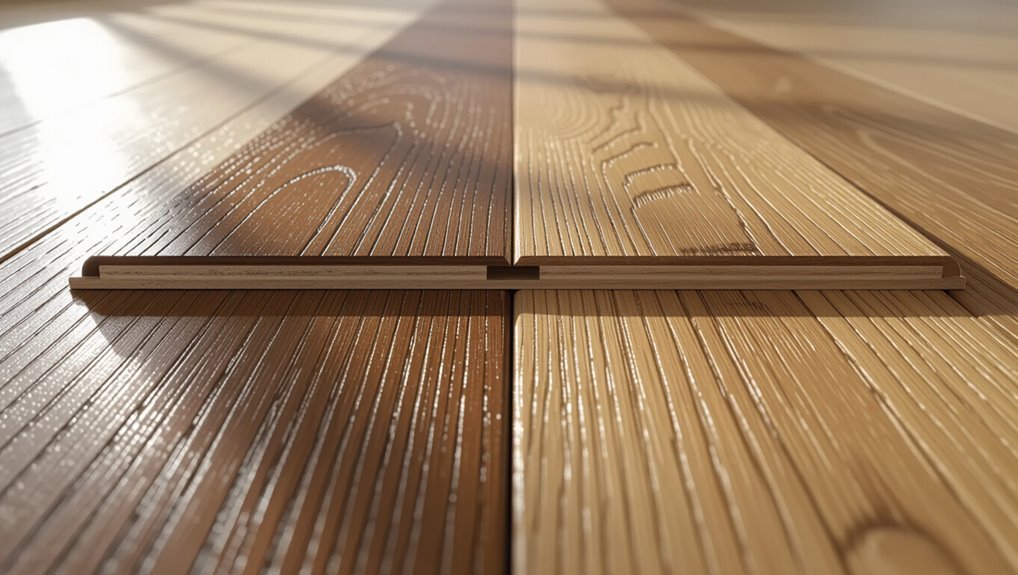
Texture, bevels, and color variation tell you whether laminate will convincingly mimic hardwood and how it’ll wear over time.
Run your hand over samples to feel embossed grain and micro-bevels that catch light like real planks.
Look for varied tones, knot patterns, and subtle distressing to avoid a repeating, artificial look.
Choose finishes that hide scratches and suit your decor.
Warranties and manufacturer reputation
Because your flooring is a long-term investment, you’ll want to read warranties closely and vet the manufacturer’s reputation before you buy.
Check what’s covered—wear, moisture, and structural defects—and for how long. Look for clear transferability, claim procedures, and exclusions.
Research reviews, industry certifications, and customer service responsiveness so you’ll choose a brand that stands behind its product and simplifies any future claims.
Comparing brands and price tiers
When comparing brands and price tiers, focus on the balance between material quality, manufacturing standards, and after-sale support so you get the best value for your budget.
You’ll weigh wear layer thickness, core stability, finish technology, installation system, and warranty coverage.
Choose a mid- to upper-tier brand if you want longevity and reliable customer service.
- Wear layer thickness
- Core stability
- Finish technology
- Installation system
- Warranty coverage
Installation Overview Steps and Options
Before you start, check and prepare the subfloor and let planks acclimate so the room’s moisture and temperature won’t cause problems.
I’ll walk you through a clear Step 1–Step 6 floating laminate install, explain glue-down versus click-lock options, and point out common mistakes to avoid.
Follow these basics and you’ll save time, materials, and frustration.
Pre-installation planning (subfloor, acclimation)
If you want your hardwood laminate to perform and look its best, start with proper pre-installation planning: inspect and prepare the subfloor, and acclimate the flooring.
Check for level, clean, dry surfaces; repair cracks or squeaks; install recommended underlayment.
Bring unopened flooring into the room for 48–72 hours to equalize temperature and humidity.
Follow manufacturer specs for moisture limits and spacing.
Step-by-step installation for floating laminate (Step 1“Step 6)
1. You’ll prep the underlayment, snap chalk lines, and leave a perimeter gap.
Lay the first row with tongues toward the wall, staggering end joints.
Click or angle-fit subsequent boards, tapping seams tight with a block and mallet.
Cut boards to fit edges and obstacles.
Install trim, junction strips, and baseboards.
Clean and inspect the finished floor.
Alternatives: glue-down and click-lock differences
After you’ve seen how floating installs work, you’ll want to weigh glue-down and click-lock options to pick what fits your space and skill level.
Glue-down gives a permanent, firmer feel and suits uneven subfloors or commercial areas, but needs adhesives and curing time.
Click-lock is faster, reversible, and DIY-friendly, relying on interlocking planks and a stable, level substrate.
Common installation mistakes to avoid
Because proper installation sets the stage for years of trouble-free performance, you’ll want to avoid a few common mistakes that cause gaps, buckling, or uneven wear.
Don’t skip acclimation, ignore subfloor flatness, or install without proper underlayment. Leave expansion gaps, stagger seams correctly, and use the right tools and adhesives.
Test-fit boards and follow manufacturer instructions to prevent costly repairs.
Maintenance, Repair, and Longevity
You’ll keep laminate looking its best with simple daily cleaning and quick stain removal using nonabrasive products.
For scratches, chips, or moisture damage there are easy repair kits and replacement planks, plus specific steps to limit further harm.
If your floor is real hardwood rather than laminate, you’ll need to know when refinishing can restore it and when full replacement is the smarter choice.
Daily cleaning and stain removal best practices
When you sweep or vacuum regularly and wipe up spills quickly, your hardwood laminate will stay looking fresh and resist permanent stains.
Use gentle cleaners, microfiber mops, and damp—not wet—cloths. Avoid harsh chemicals and steam.
- Blot spills immediately
- Use pH-neutral cleaner
- Dry floors after mopping
- Place mats at entries
- Trim pet nails regularly
Repair options for scratches, chips, and moisture damage
Keeping up with daily cleaning helps prevent many problems, but scratches, chips, and moisture damage still happen and will need targeted fixes.
For surface scratches, use manufacturer-approved touch-up kits, wax sticks, or blending markers.
Replace individual planks for deep gouges or swollen, water-damaged boards.
Dry affected areas quickly, fix leaks, and consider moisture barriers to prevent recurrence.
When replacement is necessary vs possible refinishing (real wood only)
Although minor surface wear can often be sanded and refinished on solid hardwood, there are clear limits where replacement is the safer, more cost-effective choice.
You should refinish when scratches, dull finish, or shallow stains affect appearance and enough thickness remains.
Replace when boards are cupped, severely warped, rotten from moisture, splintering, or when previous sanding removed the wear layer beyond safe limits.
Common Mistakes and Problems with Hardwood Laminate
You’ll run into problems if you ignore laminate’s moisture limits or pick cheap boards for busy rooms.
Improper installation and skipping proper underlayment or subfloor prep will shorten performance and cause gaps or warping.
Addressing these issues up front saves time and expense down the road.
Misunderstanding moisture limitations
When people assume hardwood laminate handles moisture like solid wood or vinyl, they set themselves up for surprises—swelling, warping, and edge separation often follow.
You should control humidity, wipe spills quickly, and avoid installation in damp areas unless the product is rated for moisture.
Don’t rely on click‑lock to stop water; choose proper underlayment, connectors, and proactive maintenance to prevent costly damage.
Choosing low-quality products for high-traffic areas
Moisture problems often reveal weak links in flooring choices, and picking low‑quality laminate for busy areas creates a different but equally avoidable set of failures.
You’ll see surface wear, delamination, and core breakdown under constant foot traffic. Cheap locking systems can loosen, seams open, and repairs become frequent.
Invest in higher AC-rated boards and durable wear layers to avoid premature replacement and ongoing costs.
Improper installation errors
If installers rush through subfloor prep or ignore expansion gaps, you’ll see problems fast: cupping, buckling, squeaks, and popping seams.
You also cause misaligned boards, uneven shifts, and weak locking joints by forcing planks or cutting poorly.
Improper acclimation, wrong fastening, and skipping stagger patterns shorten the floor’s life.
Fixes need partial pulls or complete reinstall by experienced pros.
Overlooking underlayment and subfloor preparation
You’ve covered how shoddy installation and ignored expansion gaps wreck a floor; overlooking underlayment and subfloor prep causes just as much damage but often goes unnoticed until problems appear.
If you skip proper underlayment, moisture, noise, and unevenness follow.
Always level and clean the subfloor, install suitable moisture barriers and cushioning, and match underlayment to laminate specs to prevent buckling, squeaks, and premature wear.
Tips and Best Practices for Maximizing Performance
To get the most from your hardwood laminate, start by choosing a high-quality, moisture-resistant product and matching it to your room’s traffic and humidity.
During installation, follow acclimation, proper underlayment, and spacing guidelines to prevent gaps and buckling.
Keep a simple maintenance routine and pick realistic grain patterns and plank sizes so your floor lasts longer and looks like real wood.
Buying tips to ensure longevity
When you’re choosing hardwood laminate, focus on construction quality, wear-layer thickness, and the locking system—these factors determine how well the floor resists scratches, moisture, and movement over time.
Also pick AC or commercial wear ratings suited to traffic, verify moisture warranties, choose realistic textures and finishes, buy extra boards for future repairs, and select reputable brands with clear installation guidance and reliable customer support.
Installation best practices to prevent gaps and buckling
Although proper installation takes time and care, following a few key practices will keep your hardwood laminate from developing gaps or buckling.
Acclimate boards 48–72 hours, maintain recommended expansion gaps, use proper underlayment, stagger end joints at least 12 inches, secure connections, and avoid fastening through tongues.
Check subfloor for levelness and moisture; correct issues before laying to prevent future movement.
Maintenance routine to extend lifespan
Keep a simple, regular maintenance routine and your hardwood laminate will look better and last longer.
Sweep or vacuum weekly, using a soft-brush attachment. Wipe spills immediately with a damp — not wet — cloth. Use cleaner formulated for laminate sparingly.
Place mats at entrances, felt pads under furniture, and avoid abrasive tools.
Inspect seams periodically and address damage promptly to prevent spreading.
Design tips to make laminate look like real wood
If you want your laminate to pass for real wood, start by choosing planks with a realistic grain pattern and varied plank widths to mimic genuine hardwood; pair them with a matte or low-sheen finish and color tones that match the room’s natural light.
- Install planks lengthwise to elongate space
- Stagger seams like real flooring
- Use realistic trim and thresholds
- Choose textured surfaces
- Coordinate with furniture tones
Cost and Value ROI and Long-Term Considerations
You’ll want to weigh upfront costs against lifetime costs to see whether a higher-quality laminate will save you money on repairs and replacement.
Consider how the flooring choice affects resale value and curb appeal, since buyers often notice durable, attractive floors.
Also look at cost-saving alternatives and savvy upgrades that boost longevity without breaking the bank.
Upfront costs vs lifetime costs
While hardwood laminate often costs less up front than solid hardwood, you should weigh installation, durability, refinishing limits, and replacement cycles to understand true lifetime cost.
You’ll save on materials and quicker installation, but expect shorter refinishing options and eventual replacement.
Factor maintenance, moisture resistance, and warranty length to compare total expenses over decades, not just initial sticker price.
Impact on home resale and curb appeal
Cost and value matter to buyers, so consider how hardwood laminate affects resale and curb appeal compared with solid hardwood.
You’ll boost appeal with consistent, low-maintenance floors that withstand traffic and moisture, but some buyers prefer authentic hardwood’s prestige.
Match laminate styles to home quality, disclose material, and keep finishes pristine to maximize ROI—buyers judge visuals and perceived longevity quickly.
Cost-saving alternatives and upgrades
Because laminate gives you flexibility, you can balance budget and resale by choosing targeted upgrades—like thicker wear layers, realistic embossing, or water-resistant cores—only in high-visibility areas while using standard planks elsewhere.
You’ll save by mixing grades, DIY installing where possible, and prioritizing moisture protection in kitchens or basements. Those choices improve longevity and ROI without overspending on whole-home premium flooring.
Frequently Asked Questions (FAQ)
You probably have practical questions like whether laminate can be refinished like real wood or if it’s waterproof.
You’ll also want to know typical lifespan, whether you can install it over existing floors, and if it adds value to your home.
Let’s answer each of these clearly so you can make an informed choice.
Can hardwood laminate be refinished like real wood?
Wondering if laminate flooring can be refinished like real hardwood? You can’t sand and refinish laminate because its decorative layer is thin and fused to the core.
Small scratches might be repaired with touch-up kits, fillers, or replacement planks, but deep damage requires swapping boards.
Expect less longevity for cosmetic resurfacing compared with solid or engineered hardwood refinishing.
Is hardwood laminate waterproof?
Is hardwood laminate waterproof? Most standard laminate resists spills but isn’t fully waterproof; prolonged moisture can swell the core and damage seams.
Waterproof or water-resistant laminate options exist with sealed cores and tight locking edges, letting you use them in kitchens or bathrooms with caution.
Always follow manufacturer guidelines, wipe up spills quickly, and guarantee proper installation to minimize water damage.
How long does laminate flooring typically last?
Although lifespan varies with quality and care, laminate flooring typically lasts 15 to 25 years in a home setting.
Your experience depends on traffic, pet claws, sunlight exposure, and maintenance. Higher AC grade and thicker wear layers extend life.
Repair options are limited to replacing planks, so prompt spot fixes and protective measures—rugs, felt pads, controlled humidity—help maximize longevity.
Can laminate be installed over existing flooring?
If you’re trying to extend your laminate’s life without gutting a room, installing new laminate over existing flooring is often possible and can save time and money.
You’ll want a flat, dry, stable surface—tile, vinyl, or well-attached wood work. Remove loose trim, fix uneven spots, and use appropriate underlayment.
Check manufacturer guidelines; improper installation can void warranties and cause issues.
Does laminate flooring add value to a home?
Wondering whether laminate flooring will boost your home’s resale appeal? It can, especially if you choose high-quality, realistic styles and install them professionally.
Buyers appreciate durable, attractive floors that mimic hardwood without the cost. Laminate adds visual appeal and practicality, but it rarely raises value as much as real hardwood.
Match style to neighborhood standards to maximize impact.