
Can You Use Bona Hardwood Floor Cleaner on Laminate Safely?
You can usually use Bona hardwood cleaner on sealed laminate if the label specifically says it’s safe for laminate and you avoid excess moisture. Test a hidden spot first and follow dilution and application instructions—use a lightly damp microfiber mop, not a soaking wet one. Don’t use it on unsealed, damaged, or warped edges, and check your flooring manufacturer’s guidelines to protect warranties. Keep going to learn safe techniques, alternatives, and common pitfalls.
Quick Answer Can You Use Bona Hardwood Floor Cleaner on Laminate?
Yes—you can use Bona Hardwood Floor Cleaner on many laminate floors, but only in moderation and with the right product version.
It’s safe when the cleaner is labeled for sealed or laminate surfaces and you avoid soaking the floor.
Don’t use it on unsealed or damaged laminate, or if the product instructions warn against non-wood floors.
Short direct verdict
You can use Bona Hardwood Floor Cleaner on some laminate floors, but only if the product label or the laminate manufacturer explicitly approves water-based cleaners; otherwise, stick to a laminate-specific cleaner to avoid warping, dulling, or stripping the wear layer.
Short verdict: can you use bona hardwood floor cleaner on laminate? Only when manufacturer guidance permits—otherwise don’t risk damage.
When it’s safe and when it’s not
If your laminate’s manufacturer or the Bona label says water-based cleaners are allowed, you can use Bona Hardwood Floor Cleaner safely; if not, don’t risk it—water and some cleaners can warp edges, dull the wear layer, or leave residue.
Test a hidden spot first. Use the recommended dilution, minimal moisture, and a soft mop.
Stop immediately if finish softens, streaks, or odors appear.
Basic Understanding Differences Between Hardwood and Laminate Floors
You’ll want to know that hardwood is solid wood with a protective finish, while laminate is a composite core topped with a printed image and a clear wear layer that’s more moisture-sensitive.
Cleaners matter because pH, residue, and wetness can harm wood finishes or seep into laminate seams and lift the core.
That’s why you should match product compatibility to the floor type before cleaning.
What is hardwood? composition and finish
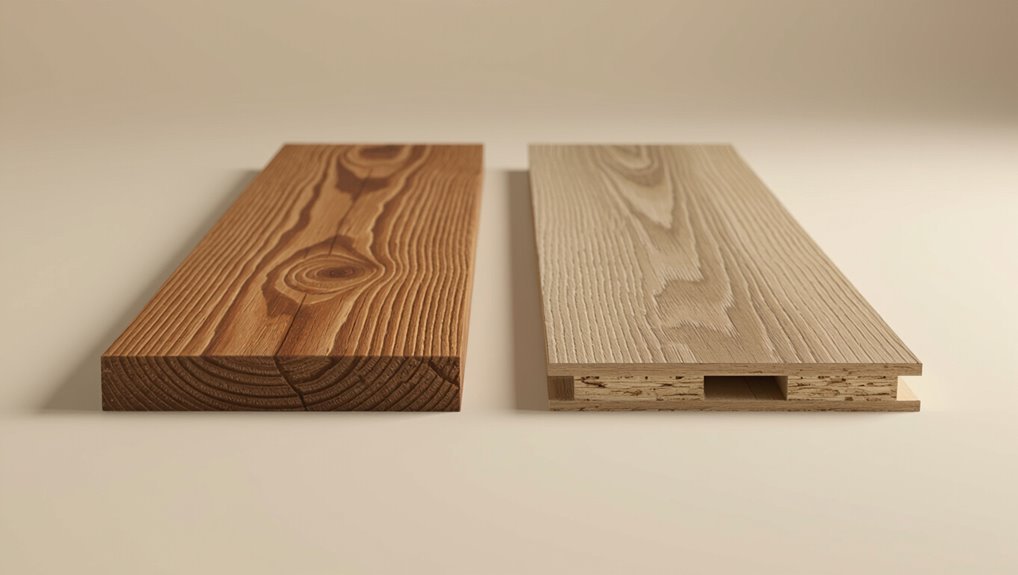
Hardwood is solid wood milled from a single species—like oak, maple, or walnut—and it’s valued for its natural grain, density, and durability.
You’ll find planks made from heartwood or sapwood; thickness varies for sanding and refinishing.
Finishes include oil, penetrating oils, shellac, and polyurethane or hard-wax oils that protect fibers, alter sheen, and determine maintenance methods over the floor’s lifespan.
What is laminate? composition, wear layer, and moisture sensitivity
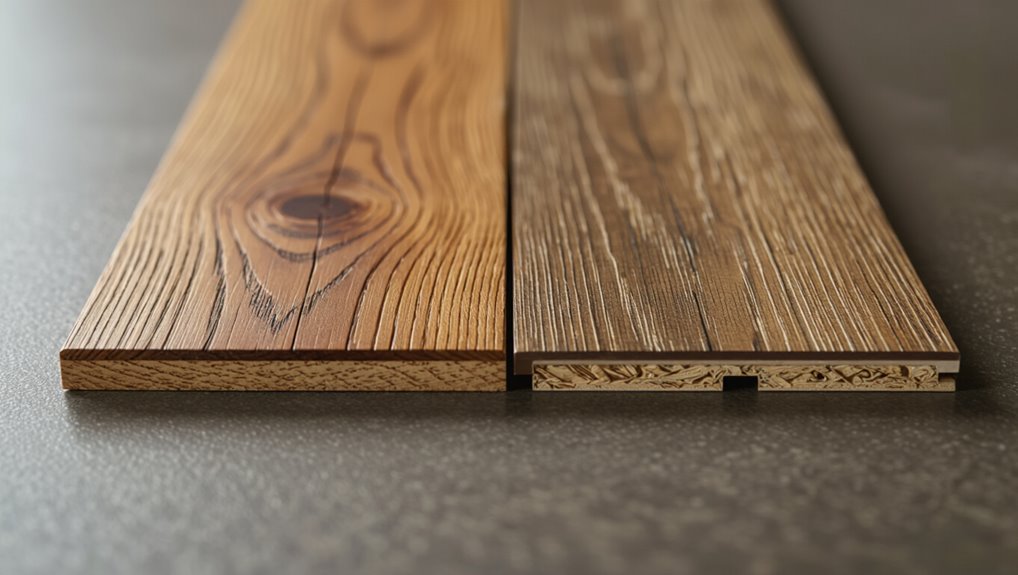
Shifting from solid wood, laminate flooring mimics wood using a layered, man-made construction you should recognize for its different care needs.
You’ll find a durable wear layer (transparent melamine) over a printed decorative layer and a compressed fiberboard core. That top layer resists scratches but won’t tolerate standing water; the core swells if moisture penetrates seams, so quick drying matters.
Why cleaners matter pH, residue, moisture, and finish compatibility
Cleaners matter because they interact directly with a floor’s pH tolerance, leave or remove residues, introduce moisture, and must be compatible with the finish—factors that determine whether a product protects or damages laminate.
You should pick cleaners with neutral pH, low residue formulas, and minimal wetting.
Too alkaline or oily products can strip wear layers or trap moisture, causing swelling, peeling, or dulling.
How Bona Hardwood Floor Cleaner Works
You’ll want to know what’s inside Bona hardwood cleaners—typically mild surfactants, water, and sometimes solvents or polymer finishes—and how those ingredients lift dirt without leaving residue.
The brand comes in sprays, ready-to-use mops, and concentrates that you dilute, and each format changes how much agitation or dilution you’ll use on laminate.
Finally, consider that Bona’s marketing highlights streak-free results and protective polymers, but real-world performance can vary with soil level, application method, and your laminate’s wear layer.
Typical ingredients and cleaning mechanism
Although it looks simple on the bottle, Bona Hardwood Floor Cleaner combines a few targeted ingredients—water, mild surfactants, and often a small amount of solvent or chelant—to lift soils without harming finish layers.
You’ll find pH-balanced formulas that loosen dirt, suspend particles for easy pickup, and evaporate quickly to avoid residue. That gentle chemistry preserves sealed surfaces while removing everyday grime.
Product varieties (spray, mop, concentrate)
Having covered what’s in the bottle and how those ingredients lift soils, it helps to look at the different product formats Bona offers: ready-to-spray bottles for quick spot cleaning, mop-and-refill versions for larger floor areas, and concentrated formulas you dilute for frequent use.
- Spray: quick spots, light soils
- Mop: even coverage, larger rooms
- Concentrate: cost-effective, adjustable strength
- Applicators: microfiber vs. pad
- Storage: sealed to preserve performance
Manufacturer claims vs. real-world performance
While the label promises streak-free shine and wood-safe cleaning, real-world use often reveals trade-offs you’ll want to contemplate.
You’ll find Bona removes surface dirt effectively and dries fast, but residue or slight dulling can appear on some laminates.
Test first in an inconspicuous spot, use minimal product, and avoid oversaturation to match manufacturer claims with your floor’s actual response.
Compatibility Analysis Bona Hardwood Cleaner vs Laminate
Check Bona’s label and website first, because the manufacturer’s guidance is the quickest way to know if their hardwood formula is recommended for your specific laminate.
You’ll want to compare pH, solvent content, potential residue and any wax or shine agents against your flooring’s care requirements.
It might be safe on sealed or water-resistant laminates, but avoid using it around unsealed edges or where excess moisture can seep in and cause damage.
Manufacturer guidance: Bona’s statements about laminate
Before you try Bona Hardwood Floor Cleaner on laminate, look to Bona’s own guidance: the company specifies that its hardwood formulas are designed for sealed wood and warns that not all hardwood products are tested or recommended for laminate.
You should follow label instructions, check Bona’s laminate-specific products or statements online, and contact their support if unsure before applying any hardwood cleaner to laminate flooring.
Key compatibility factors to check (pH, solvents, residue, wax/shine agents)
Because laminate and hardwood finishes react differently, you’ll want to focus on four compatibility factors—pH, solvents, residue, and wax/shine agents—before using a hardwood cleaner on laminate.
Check pH: neutral is safest.
Avoid strong solvents that can soften edges.
Verify the cleaner leaves no sticky film or residue.
Steer clear of wax or shine additives that can haze or delaminate laminate surfaces.
Scenarios where it may be safe (sealed or water-resistant laminates)
If your laminate has a robust factory seal or is rated water-resistant, you can sometimes use a Bona hardwood cleaner with minimal risk—as long as you confirm the product’s pH is neutral, it contains no strong solvents, and it won’t leave waxy residues.
Test a small, inconspicuous area first, use minimal product, follow manufacturer’s instructions, and dry promptly to avoid edge swelling or finish dulling.
Scenarios where it may damage laminate (unsealed edges, excessive moisture)
When you use a hardwood cleaner like Bona on laminate with unsealed edges or joints, you risk driving moisture into the core layers and causing swelling, delamination, or warping—especially along seams where the protective wear layer doesn’t cover the panel ends.
If you apply too much solution, let puddles sit, or scrub aggressively, the moisture can seep in and ruin joins, edges, and tongue-and-groove locks.
Step-by-Step Guide How to Test and Use Bona on Laminate Safely
Before using Bona on your laminate, check your floor manufacturer’s recommendations and read the Bona label and MSDS so you know what’s safe.
Do a small patch test in an inconspicuous spot, then follow dilution and application best practices—use a spray or slightly damp mop rather than soaking the floor.
After cleaning, let the area dry fully and inspect for any finish changes or residue.
Step 1: Check flooring manufacturer recommendations
Since laminate constructions and warranties vary, check your floor manufacturer’s cleaning guidelines first to see whether they approve Bona products or recommend specific cleaners.
If documentation’s unavailable, contact the manufacturer or installer with your model and finish information.
Note any prohibitions, warranty conditions, or required pH ranges.
Follow their instructions strictly to avoid voiding warranties or causing finish damage.
Step 2: Read Bona product label and MSDS for ingredients
Although Bona products are marketed for wood, you should read the product label and the MSDS to confirm ingredients, usage directions, and safety precautions before testing anything on your laminate.
Check for solvents, harsh alkalis, or waxes that can damage the wear layer. Note dilution ratios, contact time, ventilation needs, and recommended surfaces.
Keep MSDS emergency and first-aid details handy.
Step 3: Patch test in an inconspicuous area
Choose a small, out-of-the-way spot—like inside a closet or under a cabinet—and apply the diluted Bona solution exactly as the label directs to see how your laminate reacts.
Wait the recommended dwell time, then inspect. Note any changes and proceed only if unchanged.
- Check color match
- Look for swelling
- Test sheen loss
- Smell for residue
- Photograph results for reference
Step 4: Dilution and application best practices (spray vs damp mop)
Step 4 focuses on getting your dilution and application right so you clean effectively without soaking or damaging the laminate; dilute Bona exactly per the label and use a light mist or a barely damp microfiber mop rather than pouring or flooding the floor.
Spray in small sections, work with the grain, and avoid excess liquid near seams. Rinse mop frequently and change solution if it gets dirty.
Step 5: Drying and post-clean inspection
Once you’ve finished lightly mopping a small area, dry it promptly to prevent moisture from seeping into seams or swelling the core; use a clean, dry microfiber cloth or mop and follow the grain as you wipe.
Inspect seams, edges, and any textured areas for residue or streaks. If you spot buildup, repeat gentle wiping; note any discoloration or swelling and stop use if damage appears.
Alternative Cleaners and Methods for Laminate
You can also use safe commercial laminate cleaners like Black Diamond Stone & Laminate, Rejuvenate, or ZEP that are formulated to protect finish.
For DIY, mix 1 cup white vinegar with a gallon of warm water or a few drops of mild dish detergent per bucket for gentle cleaning.
Use a microfiber mop and soft cloths, and avoid steam mops or abrasive tools that can warp or scratch laminate.
Safe commercial laminate cleaners (brand examples)
If you prefer ready-made solutions, several commercial laminate cleaners are formulated to clean without damaging the wear layer or leaving residue—brands like Bona, Method, Rejuvenate, and Black Diamond offer laminate-safe sprays and mops that cut grease and lift dirt while protecting the finish.
- Spray-and-wipe cleaners for quick touch-ups
- Microfiber mop systems for streak-free drying
- No-rinse formulas to avoid residue
- pH-neutral solutions for finish safety
- Travel-size options for spot cleaning
DIY gentle solutions (vinegar mixes, mild detergents) with ratios
Alongside commercial options, simple DIY cleaners can keep laminate floors spotless without harsh chemicals—many homeowners mix common household ingredients to safely cut grease and lift dirt.
Use 1 cup white vinegar per gallon of warm water for light cleaning, or 1/4 cup mild dish soap per gallon for tougher grime. Wring mop well and spot-test first.
Avoid overwetting seams.
Tools to use and avoid (microfiber mop, steam mop warning)
When choosing tools for laminate, pick soft, low-moisture options like a well-wrung microfiber mop or a flat mop with disposable, lint-free pads that lift dirt without scratching; steer clear of abrasive scrubbers and rotary brushes that can wear the finish.
Don’t use steam mops or excessive water—steam penetrates seams, swells cores, and voids warranties.
Use gentle, controlled strokes and spot-dry immediately.
Common Problems and Mistakes When Using Hardwood Cleaners on Laminate
Be careful when you use hardwood cleaners on laminate because too much moisture can swell boards and loosen seams.
You’ll also notice residue can build up, leaving streaks or a dull film if you don’t rinse or buff properly.
Harsh solvents can strip or discolor the wear layer and even cause edge lifting or seam separation.
Over-wetting and swelling of boards
If you soak laminate with a hardwood cleaner meant for wood floors, the moisture can seep into seams and cause the core to swell, warp, or lift.
You’ll notice cupping, separation at joints, or soft spots where boards don’t sit flat.
Use minimal liquid, a damp mop or spray‑and‑wipe, and dry spills promptly to prevent irreversible damage and costly repairs.
Residue buildup causing dulling or streaking
Besides swelling from excess moisture, another common problem is residue left behind by cleaners designed for real wood—Bona and similar products can leave a filmy layer on laminate that dulls the finish or shows streaks when light hits it.
You’ll notice haze in high‑traffic areas; repeated use builds film, attracting dirt and making streaks worse. Rinse with a damp microfiber to remove residue promptly.
Discoloration or finish damage from harsh solvents
When cleaners contain harsh solvents or strong detergents, they can strip or soften the protective wear layer on laminate and cause fading, whitening, or sticky spots that don’t come out with normal mopping.
You should test any hardwood cleaner on an inconspicuous area first, avoid concentrated formulas, rinse surfaces if recommended, and stop use immediately if color or sheen changes appear to prevent irreversible damage.
Edge lifting or seam separation
Because laminate boards rely on tight seams and adhesive bonds, using a cleaner that soaks into joints or leaves a damp residue can make edges swell and pull apart.
You should avoid excess water and solvents, wipe spills promptly, and use pH-neutral, low-moisture products.
If seams start lifting, stop cleaning with that product, dry the area thoroughly, and repair or consult a pro before damage spreads.
Prevention and Best Practices for Long-Term Laminate Care
To keep your laminate looking great, you should set a routine for light sweeps and damp mopping while saving wet cleaning for spills or tougher spots.
Focus on spot-cleaning spills immediately and reserve full-floor cleaning for scheduled sessions to avoid excess moisture at seams and edges.
Also protect high-traffic areas with rugs, felt pads, and seasonal checks to prevent wear and water intrusion.
Routine cleaning frequency and methods
Regularly sweep or vacuum your laminate floors and spot-clean spills immediately to prevent grit and moisture from damaging the wear layer.
Aim for light cleaning once or twice weekly and deeper damp-mopping monthly with a microfiber mop and manufacturer-approved cleaner.
Use minimal water, wring mop thoroughly, and dry quickly.
Increase frequency in high-traffic areas and after messy activities to preserve finish and longevity.
Spot cleaning vs full-floor cleaning
While spot cleaning handles daily spills and tracked-in dirt before they bond to the wear layer, full-floor cleaning removes settled grime and restores an even appearance—so you should use both strategically.
Spot-treat spills immediately with a damp microfiber and recommended cleaner.
Schedule gentle full-floor cleaning weekly or biweekly to lift embedded dirt, maintain finish uniformity, and prevent buildup that dulls laminate over time.
Protecting edges and seams from moisture
1 simple habit can save your laminate floor from costly water damage: keep edges and seams dry and well-sealed.
Wipe spills immediately, avoid steam mops, and use a damp—not wet—cloth for cleaning.
Install or refresh perimeter sealant and apply water-resistant thresholds at junctions.
Regularly inspect joints for gaps and address them promptly to prevent swelling and delamination.
Seasonal care and dealing with heavy traffic
Keeping edges and seams sealed helps protect your floor year-round, but seasonal shifts and heavy foot traffic bring their own challenges.
Adjust humidity with a humidifier or dehumidifier to prevent cupping or gapping. Use washable rugs at entrances, felt pads under furniture, and rotate high-traffic rugs.
Clean spills immediately and schedule deeper cleanings monthly to remove grit that wears the finish.
Comparison Table Bona Hardwood Cleaner vs Recommended Laminate Cleaners
You’ll want a quick side-by-side to see how Bona’s hardwood formula stacks up against cleaners formulated for laminate on pH, ingredients, residue risk, recommended use, and cost. Below is a compact comparison to help you spot the main differences at a glance. Use it to decide whether Bona’s cleaner is a safe match for your laminate or if a laminate-specific product is wiser.
| Feature | Bona Hardwood Cleaner | Typical Laminate Cleaner |
|---|---|---|
| pH | Mildly neutral | Neutral to slightly alkaline |
| Residue & Use | Low residue; meant for sealed wood | Low residue; formulated for laminate surfaces |
Key metrics: pH, ingredients, residue risk, recommended use, cost
Although Bona’s hardwood cleaner can seem convenient, comparing key metrics like pH, ingredients, residue risk, recommended use, and cost shows why you should be cautious before using it on laminate.
Check pH (neutral is safer), inspect ingredients for solvents or waxes, and weigh residue risk.
Follow manufacturer recommendations; laminate-specific cleaners reduce damage risk.
Consider cost versus potential repair or refinishing expenses.
FAQs
You’ve probably got questions about using Bona products on laminate, like whether Bona’s multi-surface formulas are safer or if you can dilute the hardwood cleaner.
You’ll also want to know what to do immediately if you spot damage, whether a steam mop is okay after using Bona, and how often to deep-clean and which products to avoid.
Keep reading and you’ll get concise answers and practical steps for each concern.
Can Bona Multi-Surface products be safer for laminate?
Wondering if Bona Multi-Surface products are gentler on laminate than standard hardwood cleaners?
Yes — they’re formulated for various sealed surfaces, so they typically use milder surfactants and fewer solvents that can harm laminate layers.
Still, you should check the label for compatibility, test a small inconspicuous area first, and avoid saturating seams to prevent swelling or edge lifting.
Is it okay to dilute Bona hardwood cleaner for laminate?
Can you safely dilute Bona hardwood cleaner for laminate?
You can dilute concentrated cleaners per label instructions, but Bona hardwood ready-to-use formulas aren’t meant for thinning.
If you want milder cleaning, use a manufacturer-recommended dilution or switch to Bona’s multi-surface or a laminate-specific product.
Always test a small inconspicuous area first and avoid excess moisture to prevent swelling or finish damage.
What immediate steps should I take if damage occurs after using Bona?
Act quickly to limit further harm: stop using the cleaner, blot up any excess liquid with a soft, dry cloth, and dry the area thoroughly with fans or a hairdryer on low heat.
Inspect for swelling, discoloration, or finish loss. Photograph damage, avoid walking on the spot, and contact the floor manufacturer or a flooring professional for specific repair guidance and warranty advice.
Can I use a steam mop on laminate if I used Bona previously?
If you’ve already cleaned laminate with Bona and are tempted to follow up with a steam mop, be cautious—steam adds moisture and heat that can swell, warp, or delaminate laminate planks even if the surface seemed fine after Bona.
Wait until the floor is completely dry, check manufacturer guidance, and favor a dry or barely damp microfiber mop instead of steam to avoid damage.
How often should I deep-clean laminate and what products to avoid?
How often should you deep-clean laminate? Deep-clean every 3–6 months or sooner in high-traffic or pet homes.
Regularly sweep or vacuum to prevent grit.
Avoid excessive water, steam mops, oil-based cleaners, wax, abrasive scrubbers, and bleach—these can swell, strip, or dull the wear layer.
Use manufacturer-approved or pH-neutral laminate cleaners and a barely damp microfiber mop for safe, effective cleaning.
