How to Clean Laminate Floors Without Streaking (Methods That Actually Work)
You can get streak-free laminate by sweeping or vacuuming first, then mopping with a barely damp microfiber mop and a pH-neutral cleaner. Rinse the pad often and avoid excess water that can warp seams. Spot-treat stubborn grime before mopping, then dry and buff each area with a clean microfiber cloth to remove residue. Skip waxes, abrasive cleaners, and steam mops unless your manufacturer approves. Keep going for step-by-step methods, alternatives, and troubleshooting tips.
Quick Answer Best Way to Clean Laminate Floors Without Streaking
For a streak-free laminate clean, you’ll use a damp microfiber mop with a mild, pH-neutral cleaner and dry the floor immediately.
Gather a microfiber mop, bucket with warm water, pH-neutral cleaner, soft-bristle broom or vacuum, and a few clean microfiber cloths.
Follow that checklist and you’ll cut drying time and avoid streaks.
One-sentence summary of the most effective method
Sweep or vacuum to remove grit, then mop with a barely damp microfiber cloth and a pH-neutral cleaner diluted per label instructions to clean laminate floors effectively without streaking.
For best results, rinse the cloth often, dry any damp spots immediately, avoid soaking the floor, and use gentle, back-and-forth strokes so you’ll know how do you clean laminate floors without streaking every time.
Fast checklist of supplies and tools
1 quick kit gets you streak-free laminate: a soft-bristle broom or vacuum with a hard-floor setting, a microfiber mop head (flat or refillable spray mop), a few clean microfiber cloths, a pH-neutral laminate cleaner (or mild dish soap diluted per label), a spray bottle for diluted solution, a bucket for rinsing, and optional rubber-soled shoes or knee pads to protect finish while you work.
- Sunlit hallway, dust trail
- Damp mop, even strokes
- Dry buff, glassy shine
Basic Understanding What Laminate Floors Are and Why They Streak
Laminate floors are a layered product with a decorative surface and protective finish that can be scratched or warped if you use harsh cleaners or too much water.
Streaks usually come from leftover residue, water damage, inappropriate cleaning solutions, or not drying the surface properly.
Also check your manufacturer’s care instructions, because certain cleaners or methods can void the warranty or dull the finish.
What laminate flooring is (surface, finish, vulnerabilities)
Think of laminate flooring as a multi-layered sheet: a decorative printed image of wood or stone topped with a clear protective wear layer and bonded to a fiberboard core.
You’ll find sealed, textured finishes that resist scratches and fading but dislike standing water and abrasive tools.
Treat seams gently, use soft cleaning tools, and avoid harsh chemicals to preserve the wear layer and appearance.
Common causes of streaking (residue, water damage, wrong cleaners, improper drying)
After you’ve treated seams gently and stuck to soft tools, you’ll still sometimes see streaks that spoil the finish; those streaks usually come from a few common sources.
You’ll get residue from soap or wax buildup, water damage swelling edges, cleaners with harsh solvents, and streaks caused by letting moisture sit or drying unevenly.
Address each cause to prevent marks.
How cleaning affects warranty and finish
Because laminate has a protective wear layer over a printed design and fiberboard core, the way you clean it directly affects both appearance and any warranty coverage.
Follow manufacturer instructions, avoid abrasive tools, harsh chemicals, and excess water. Using approved cleaners and proper techniques prevents finish dulling, swelling, or delamination, and keeps warranty valid.
Keep receipts and document maintenance to support claims if needed.
Preparation What to Do Before You Clean
Before you start cleaning, decide whether you need routine daily or weekly maintenance or a deeper prep session for stains and grime.
Check the floor for damage and problem spots so you know what needs gentle treatment or repair, and pick tools and cleaners accordingly—microfiber mops and pH-neutral solutions work best.
Finally, clear the area, open windows for ventilation, and use gloves if you’re trying stronger cleaners.
Daily and weekly maintenance vs. deep-clean prep
When you’re tackling laminate care, know that daily and weekly upkeep keeps dirt from building up, while deep-clean prep gets the floor ready for a stronger, less frequent treatment.
You should sweep or vacuum daily, spot-mop spills immediately, and damp-mop weekly with a pH-neutral cleaner.
Before deep cleaning, remove furniture, dust baseboards, and dry-mop thoroughly so concentrated cleaners work effectively.
How to inspect for damage and stains
Start by scanning the room visually and by touch to spot scratches, chips, gaps, cupped boards, or stubborn stains that need special attention.
Note their locations and severity, photographing major damage for records.
Remove loose debris and test a small hidden area with water to check finish integrity.
Mark spots that may need repair, deeper cleaning, or professional assessment before you proceed.
Choosing the right tools and cleaners (mops, microfiber, pH-neutral solutions)
One good mop, a soft microfiber pad, and a pH-neutral cleaner will cover most laminate-floor needs, so pick tools that protect the surface and make cleaning efficient.
You’ll avoid scratches and streaks by choosing low-moisture mops, lint-free microfiber, and gentle cleaners labeled pH-neutral.
Visualize:
- Flat mop gliding smoothly.
- Plush microfiber capturing dirt.
- Small spray bottle for spot care.
Safety and ventilation tips
After you’ve picked the right mop and cleaner, make sure the area’s safe and well-ventilated before you work. Open windows and doors, run a fan if needed, and avoid enclosed spaces.
Remove pets and kids, store cleaners out of reach, and wear gloves if you’re sensitive. Don’t mix chemicals; follow label directions to prevent fumes and damage.
Step-by-Step Cleaning Method That Actually Prevents Streaking
Start by removing loose dirt with the right vacuum or a soft broom setting so grit doesn’t scratch the surface.
Treat spots and sticky residues before you mop, then mix a gentle cleaning solution—either a simple DIY recipe or a recommended store-bought product.
Use a barely damp microfiber flat mop, then dry and buff with a clean microfiber cloth and good airflow to prevent streaks.
Step 1 Remove loose dirt and debris (vacuum, broom settings)
Kick loose dirt and grit off your laminate by vacuuming or sweeping before you wet-mop; doing so keeps abrasive particles from scratching the finish and prevents muddy streaks.
Use a vacuum on hard-floor setting or detach the beater bar. For sweeping, choose a soft-bristle broom and push debris into a dustpan.
Work toward an exit, and empty the vacuum or pan promptly.
Step 2 Spot-treat stains and sticky residues (products and techniques)
When you spot a spill or sticky residue, don’t wet the whole floor—treat the area directly with the right cleaner and a soft cloth so you remove the mess without spreading it or causing streaks.
Dab gently, rinse cloth, dry immediately. Use appropriate cleaners for gum, grease, or ink.
- Soft microfiber cloth
- Mild detergent or laminate spot cleaner
- Plastic scraper
Step 3 Prepare the cleaning solution (DIY recipes and store-bought options)
3 simple options will get you a streak-free finish: a gentle DIY mix, a commercial laminate cleaner, or plain water with a microfiber mop.
For DIY, combine 1 cup white vinegar with 1 gallon warm water and a few drops of dish soap.
Pick pH-neutral commercial cleaners labeled safe for laminate.
Test any solution in an inconspicuous spot before full use.
Step 4 Mopping technique to avoid excess water (damp vs. wet; microfiber flat mop method)
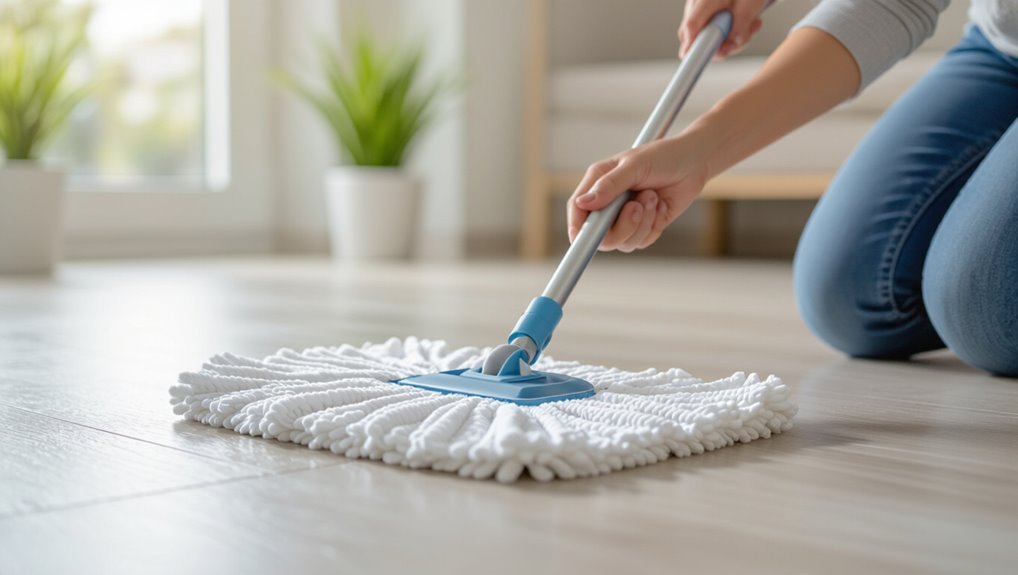
Now that your solution is ready, focus on technique: too much water will warp laminate, so keep the mop damp, not dripping.
Use a microfiber flat mop, wring or squeeze excess into a bucket, and work in small sections with the grain.
Glide, don’t scrub; flip or wash the pad when it’s dirty.
Rinse and wring frequently to avoid pooling.
Step 5 Drying and buffing to eliminate streaks (microfiber cloth, airflow)
Step 5 focuses on drying and buffing so your laminate stays streak-free and looks polished.
After mopping, go over small sections with a dry microfiber cloth, using circular motions to lift residual moisture and streaks.
Open windows or run a fan for airflow to speed drying.
Finish by lightly buffing each plank until the surface feels smooth and uniform.
Step 6 Final inspection and touch-ups
Before you finish, take a slow walk through the room and inspect each section under good light so you can spot missed spots, streaks, or damp areas.
Address imperfections immediately: re-mop small streaks with a barely-damp microfiber, dry puddles, and buff lingering haze.
Check edges and under furniture.
Finish when the floor looks uniformly clean, dry, and streak-free.
Alternative Methods and Tools (When the Main Method Isn’t Suitable)
If your usual mop isn’t an option, you can consider other tools and cleaners but you should know the trade-offs.
Steam cleaners can warp seams if overused, so only use low-steam settings and keep the mop moving.
Commercial laminate cleaners are formulated to clean without residue and are best for stubborn dirt or high-traffic areas.
For gentler options, you can make DIY solutions—diluted white vinegar (about 1/4 cup per gallon), isopropyl alcohol mixes for spot cleaning, or a few drops of essential oil for scent—always test a small area first.
Steam cleaners risks and safe usage scenarios
Although steam cleaners can seem like a quick way to sanitize laminate, they carry real risks—excess heat and moisture can warp planks, strip factory finishes, and force seams open—so you’ll want to know when and how to use them safely or choose an alternative.
Use only low-steam settings, brief passes, and manufacturer-approved models; test a hidden area first, avoid standing water, and never steam damaged or unsealed edges.
Commercial laminate floor cleaners recommended types and when to use
When your usual water-and-mop routine won’t cut it, commercial laminate cleaners give you targeted options—pH-neutral sprays and no-wax finishes work best for day-to-day maintenance, while solvent-free, polymer-based cleaners handle stubborn grime without damaging the factory seal. Use pH-neutral for routine freshening; polymer cleaners for grease. Test any product in a hidden spot first.
| Type | Best use |
|---|---|
| pH-neutral | Daily cleaning |
| Polymer-based | Heavy grime |
Natural/DIY cleaner alternatives (vinegar, alcohol, essential oils) and proper dilutions
Commercial cleaners work well, but you may prefer DIY options for cost, scent, or avoiding chemicals.
Use 1/2 cup white vinegar per gallon of warm water for general cleaning; avoid undiluted vinegar.
For quick spot-cleaning, mix 1 part isopropyl alcohol with 3 parts water. Add a few drops of essential oil for scent only.
Dry floors promptly to prevent damage.
Comparison Which Method to Use for Different Situations
When choosing a cleaning method, consider how each situation affects wear and dirt buildup.
You’ll want more frequent, gentle maintenance in high-traffic areas and stronger spot treatments for homes with pets or kids.
For new installs, use mild cleaners to protect the finish, while older or worn laminate may need restorative products or gentler techniques to avoid further damage.
High-traffic homes vs. low-traffic areas
1 key factor in choosing a cleaning routine is how much foot traffic your laminate sees: high-traffic homes need more frequent, tougher maintenance, while low-traffic areas can get by with gentler, less frequent care.
For busy zones, sweep daily, spot-clean spills fast, and mop weekly with a mild, streak-free solution.
For quiet rooms, dust and mop biweekly.
Pet homes and homes with children
Because pets and kids create different messes, you’ll want tailored cleaning methods for each: pet homes need fast odor and hair control plus scratch prevention, while homes with children demand frequent sanitizing and gentle, non-toxic products.
For pets, vacuum often, use a microfiber dust mop, and spot-clean stains with enzyme cleaner.
For kids, mop with mild, pH-neutral solutions and rinse well.
New installs vs. older/worn laminate
Whether you’ve just had laminate installed or you’re dealing with older, worn planks, the cleaning approach should match the floor’s condition. For new floors, stick to gentle pH-neutral cleaners and minimal moisture. For worn laminate, use diluted cleaners, avoid abrasive tools, and consider protective treatments. Choose methods that prevent swelling, dulling, or streaking based on surface wear.
| Condition | Cleaner | Frequency |
|---|---|---|
| New | pH-neutral | Weekly |
| Light wear | Diluted cleaner | 2–3×/week |
| Heavy wear | Mild scrub + seal | As needed |
Common Mistakes That Cause Streaks and How to Avoid Them
Don’t soak your laminate or let puddles sit — excess water warps seams and leaves streaks.
Avoid waxes, oil‑based or abrasive cleaners that leave residue or dull the finish, and use a flat microfiber mop with light, consistent strokes rather than a dripping sponge or harsh scrubbing.
Always sweep or vacuum and remove sticky buildup before you mop so you don’t trap grime and spread streaks.
Using too much water or soaking the floor
If you soak laminate floors or mop with too much water, you’ll quickly leave streaks, buckling, and dull spots because the moisture seeps into seams and under the wear layer.
Wring your mop until it’s damp, not wet. Use a microfiber pad and quick passes, dry remaining dampness with a clean towel, and tackle spills immediately to prevent damage and streaking.
Wrong cleaning products (wax, oil-based, abrasive cleaners)
After you’ve learned to limit water, watch what you put on the floor: waxes, oil-based cleaners, and abrasive products will leave a cloudy film, attract grime, or scratch the wear layer.
Use pH-neutral laminate cleaners or a diluted gentle dish soap. Test any product in a hidden spot first, rinse residues, and skip polish or wax—those’ll build up and cause permanent dulling.
Improper mop types and techniques
Choose the right mop and technique—because even the best cleaner can’t hide streaks caused by the wrong tools or sloppy motion.
Use a flat microfiber mop, keep it only damp, and wring it well. Avoid string mops and overly wet heads.
Mop in straight lines with light pressure, rinse the pad often, and change directions only when the surface is nearly dry.
Failing to remove residue before mopping
When you skip removing surface residue—like dust, pet hair, or cleaning-product buildup—mopping just spreads it into streaks and dull patches instead of making the floor shine.
You should sweep or vacuum first, then tack-mop or use a microfiber dust mop to lift grit.
Rinse mop heads often and spot-clean sticky areas before wet-mopping to keep laminate streak-free and protected.
Prevention and Best Practices for Long-Term Streak-Free Floors
Set a simple routine—quick daily sweeps, a weekly damp mop, and a monthly deeper clean—to keep streaks from building up.
Use entry mats, felt furniture pads, and a humidifier or dehumidifier to protect the surface and prevent moisture-related streaking.
Adjust your deep-clean frequency with the seasons and high-traffic periods so your floors stay streak-free year-round.
Routine maintenance schedule (daily, weekly, monthly)
A simple, consistent routine keeps laminate floors looking streak-free and prevents wear: do a quick sweep or vacuum daily, spot-clean spills immediately, mop with a damp (not wet) microfiber once or twice weekly, and deep-clean or buff high-traffic areas monthly.
Track trouble spots, rotate cleaning paths to avoid uneven wear, and adjust frequency during heavy use or seasonal messes to maintain finish and clarity.
Protective measures (mats, furniture pads, humidity control)
Keeping up with daily and weekly care will cut down on streaks, but protecting your floor from wear and moisture will keep it looking like new longer.
Place absorbent mats at entries, use kitchen rugs where spills happen, and add soft felt pads under furniture legs.
Maintain indoor humidity around 35–55% to prevent expansion or gaps.
Remove grit promptly to avoid scratches.
Seasonal care and deep-clean frequency
Although seasonal shifts and heavier use demand tweaks to your routine, you can prevent long-term streaks by scheduling deeper cleans and targeted maintenance each season.
In spring and fall, mop with a manufacturer-safe cleaner and inspect seams.
In winter, remove grit frequently and use entry mats.
In summer, control humidity and buff high-traffic areas.
Deep-clean every 3–6 months depending on wear.
Troubleshooting Fixing Persistent Streaks or Residue
If you’re seeing stubborn streaks or a filmy residue, first identify the source—old cleaner buildup, hard-water minerals, or leftover polish each call for different fixes.
Try targeted removal methods like a diluted vinegar rinse for minerals, a microfiber mop with plain water for cleaner buildup, or a gentle commercial residue remover for polish, always testing a small area first.
If streaks persist or the finish looks damaged, call a professional to assess whether deeper cleaning or refinishing is needed.
How to identify residue sources (cleaner buildup, minerals, polish)
Wondering what’s leaving streaks or a filmy haze on your laminate? Check recent cleaners—soap or wax-based products leave a sticky film.
Look for white mineral rings near water sources; hard water deposits feel gritty when wiped.
Polish or floor glazes create shiny, uneven patches that attract dust.
Note where residue appears and what you used last to pinpoint the culprit.
Steps to remove stubborn streaks safely
When streaks or a filmy haze won’t come up with your usual mop, tackle them step-by-step with gentle, targeted methods you can trust to protect the laminate finish.
Start by wiping with a microfiber cloth and distilled water.
Then try a 1:1 vinegar-water mist for stubborn residue.
Rinse with clean water, dry immediately, and buff with a dry microfiber pad.
Repeat spot-treating as needed.
When to call a professional or consider floor refinishing
Though many streaks you can treat yourself, call a professional if residue persists after multiple safe attempts, covers large areas, or the finish looks etched or uneven; a pro can diagnose whether the issue is surface buildup, sealer failure, or deeper damage and recommend cleaning, recoating, or refinishing.
If advised, get quotes, check references, and confirm they’ll match replacement or recoating materials to your laminate’s specifications.
Tools and Products Checklist (Buyers’ Guide)
Before you shop, decide what tools will make cleaning easier and safer for your laminate.
You’ll want recommendations for mops, vacuums, and microfiber pads, plus pH-neutral, residue-free cleaners that won’t damage the finish.
I’ll also warn you which items to avoid buying so you don’t harm the floor or waste money.
Recommended mops, vacuums, and microfiber pads
1 essential truth about keeping laminate floors looking great is that the right tools make the job faster and safer: pick a vacuum that won’t scratch, a mop that won’t leave residue, and microfiber pads that trap dirt without soaking the surface.
Choose lightweight, low-profile tools you can maneuver easily.
- Slim vacuum with soft wheels and brush off
- Flat microfiber mop head
- Extra washable microfiber pads
Recommended cleaners (pH-neutral, residue-free)
When you choose cleaners for laminate, pick pH-neutral, residue-free formulas that won’t dull the finish or leave sticky film behind.
You’ll want gentle solutions that dissolve grime without stripping sealers. Look for labels stating “safe for laminate” or “no-wax.”
Carry microfiber and a spray bottle for controlled application.
- Clear, low-foaming spray
- Dilutable neutral cleaner
- Rinse-ready maintenance solution
Items to avoid buying
Don’t buy abrasive scrubbers, wax-based polishes, or ammonia- and bleach-heavy cleaners for laminate floors — they’ll scratch, dull, or strip the protective wear layer.
Also skip steam mops, oil soaps, undiluted vinegar, and colored cleaning pads that can stain.
Choose soft microfiber, pH-neutral sprays, and manufacturer-approved products instead.
Test anything new in a hidden area first to avoid costly damage.
FAQ Common Questions About Cleaning Laminate Floors
You probably have a few quick questions about what’s safe and effective for your laminate floors.
I’ll cover whether vinegar or a steam mop is appropriate, how often to deep-clean, why streaks appear, and if you can buff or polish them away.
Read on for clear, practical answers.
Can I use vinegar on laminate floors?
Curious whether vinegar’s a safe, DIY cleaner for laminate floors? You can use a mild vinegar solution (one cup white vinegar to a gallon of warm water) for spot cleaning and degreasing.
Don’t overwet the floor—use a damp mop or microfiber cloth and dry quickly. Test a hidden area first, avoid strong concentrations, and skip vinegar on damaged or unsealed edges.
Is a steam mop safe for laminate flooring?
Wondering if a steam mop’s safe for your laminate floors? You should be cautious: high heat and excess moisture can warp or lift boards and damage the wear layer.
If you choose steam, use the lowest setting, move quickly, avoid soaking, and test an inconspicuous area first.
Many manufacturers still recommend against steam mops—check your flooring warranty before using one.
How often should I deep-clean laminate floors?
How often should you deep-clean laminate floors?
Deep-clean every 3–6 months, depending on traffic, pets, and spills.
In high-traffic or pet households, do it monthly or every 6–8 weeks.
For low-traffic areas, every 4–6 months is fine.
Always sweep or vacuum regularly and spot-clean spills promptly to extend time between deep-cleanings and protect the finish.
Why do my floors streak even after drying?
Why are your laminate floors streaking even after they seem dry? Oils, residue from cleaners or shoes, and hard-water minerals can leave hazy films that look like streaks once water evaporates.
Using too much cleaner, mop saturation, or dirty microfiber pads spreads residue.
Rinse with clean water, dry promptly with a lint-free cloth, and switch to a streak-free cleaner to prevent recurrence.
Can I buff or polish laminate to remove streaks?
If rinsing and drying didn’t fix the haze, you might consider buffing or polishing, but laminate isn’t the same as real wood and needs different care.
You can gently buff with a soft microfiber cloth or a low-speed buffer using a manufacturer-approved polish. Avoid waxes, abrasive pads, or high heat.
Test a small area first and stop if finish dulls or peels.