How Much to Clean Tile and Grout Floors: Cost Guide
You’ll typically pay $0.50–$3.00 per sq ft to clean tile and grout, or about $100–$300 for an average room, with basic cleans at the low end and deep stain removal, sealing, or natural stone work costing more. Prices rise with heavy staining, damaged grout, textured or porous tiles, larger areas, and high-cost regions or peak seasons. Watch for add-ons like stain removal or sealing, and keep going to see how size, condition, and DIY options affect price.
Quick Answer: Typical Tile & Grout Cleaning Costs
Typical tile-and-grout cleaning runs about $0.50–$3.00 per square foot for routine service, with most homeowners paying $100–$300 for an average room. You’ll find costs vary by floor condition, tile durability, and how stained the grout color has become.
If your tiles resist wear, technicians spend less time, lowering labor charges. Porous or delicate tiles demand gentler methods and can cost more.
Dark or sealed grout may need minimal treatment; faded or heavily discolored grout needs extra scrubbing or recoloring.
Ask for a written estimate that lists prep, cleaning method, and any additional sealant fees.
National Average Cost to Clean Tile & Grout
Across the country, you’ll typically pay within a broad price range for tile and grout cleaning depending on square footage and service level.
Expect factors like the type of tile, grout condition, regional labor rates, and whether sealant or spot treatments are needed to shift the cost.
Below we’ll break down typical price brackets and the main cost drivers so you can estimate what you’ll likely pay.
Typical Price Range
How much should you expect to pay to clean tile and grout? You’ll usually see a national typical price range from $0.50 to $4.00 per square foot depending on service level. Regular tile maintenance keeps costs lower, and grout color restoration can add to the price if you want recoloring or sealing. Below is a quick breakdown of common options and typical ranges.
| Service | Typical Price |
|---|---|
| Basic cleaning | $0.50–$1.50/ft² |
| Deep clean | $1.50–$2.50/ft² |
| Stain removal | $2.00–$3.00/ft² |
| Grout color/sealing | $1.50–$4.00/ft² |
Factors Affecting Cost
Because several variables influence the final bill, you should expect wide swings in the national average cost to clean tile and grout. You’ll pay more for heavily soiled grout, large areas, or intricate patterns that need extra labor.
Material type matters: natural stone often needs special cleaners and sealing. Accessibility, travel distance, and emergency scheduling raise rates.
Historical trends show prices rising with labor and equipment improvements, while DIY popularity can dampen demand.
Environmental impact influences cost too—eco-friendly cleaners and proper wastewater handling typically cost more but reduce long-term harm.
Get written estimates and compare services before booking.
How Square Footage Affects Your Price
How much you’ll pay mainly comes down to square footage: small spaces usually cost less overall, while mid-size rooms often have set pricing tiers.
For large areas, cleaners typically switch to a per-square-foot rate that can lower the unit cost. Knowing your room size helps you predict whether you’ll pay a flat fee or a per-foot charge.
Small Spaces, Lower Cost
When you’re dealing with a small room, the price for tile and grout cleaning usually drops because the technician spends less time and uses fewer materials. Labor and product costs scale down with square footage, so a compact bathroom or kitchenette will cost noticeably less than a large open-plan area.
You’ll see small spaces deliver clear cost savings since technicians can finish jobs faster and use less solution and equipment time. Expect lower minimum charges, shorter scheduling windows, and fewer add-ons.
Still, complexity (stains, grout color, access) matters, but square footage remains the primary driver of reduced price.
Mid-Size Room Pricing
Wondering how much you’ll pay for a mid-size room? You’ll typically see per-square-foot rates drop slightly compared with small rooms because setup time spreads over more area.
Costs hinge on square footage, tile durability and grout coloring—harder tiles and stained or colored grout need more care, raising labor and product needs.
Expect technicians to quote a flat minimum plus a scaled rate as size grows; mid-size jobs often qualify for bundled discounts.
You can lower costs by clearing furniture and disclosing any stains or sealant history upfront so crews arrive prepared and work efficiently.
Large Areas Per-Square-Foot
Because larger square footage spreads fixed setup costs and technician time over more area, you’ll usually pay a lower per-square-foot rate on big jobs, though total price rises with size.
When you schedule tile maintenance for extensive kitchens, hallways, or commercial spaces, crews plan labor and equipment more efficiently, reducing unit cost.
You’ll still face added expenses for deep-cleaning heavily soiled sections or complex layouts.
Grout repairs across vast zones increase time and materials, so providers may charge flat fees or tiered discounts.
Get multiple quotes that list per-square-foot rates, setup fees, and any allowances for grout repairs.
How Grout Condition and Stains Change Cost
If your grout’s heavily stained, cracked, or crumbling, expect the cleaning bill to rise—these conditions demand extra time, stronger products, or even repair work before cleaning can be effective.
You’ll pay more when technicians tackle grout discoloration or stubborn stain removal because they’ll use specialty cleaners, poultices, or steam and may need grout repairs first.
Consider these cost drivers:
- Deep-set stains requiring chemical poultices or repeated treatments.
- Cracked or crumbling grout that must be removed and regrouted.
- Mold or efflorescence needing antimicrobial treatment.
- Small, detailed areas that slow down technician progress.
Tile Type and Room Location That Raise Prices
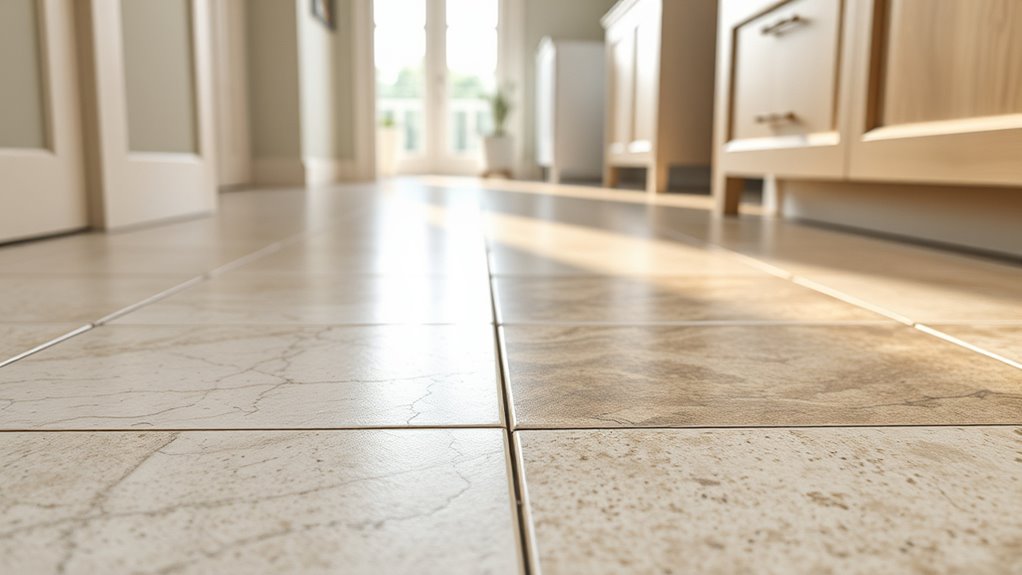
When tile is porous, textured, or made from natural stone, you’ll see higher cleaning costs because technicians must use gentler, specialized products and slower methods to avoid damage.
You’ll also pay more for intricate tile pattern layouts or small mosaic installs since they need detailed, time-consuming attention.
Rooms with heavy soil—like entryways, kitchens, mudrooms, or garages—raise prices because contaminants require stronger pretreatment and extra rinse cycles.
Bathrooms and basements can demand odor and mold control, increasing labor.
Dark or light grout color choices affect visible staining: pale grout often needs more frequent deep cleaning, driving up long-term service costs.
Common Cleaning Methods and Their Price Impact
Those material and room factors directly influence which cleaning methods technicians pick and how much you’ll pay. You’ll notice choices depend on tile durability and grout color, plus soil level.
Steam cleaning lifts dirt gently from glazed tile; it’s cheaper but may not suit fragile tile.
Steam cleaning gently lifts dirt from glazed tile—cost-effective, but avoid it on fragile or easily damaged surfaces.
High-pressure scrubbing removes stubborn stains on durable surfaces but raises labor and equipment costs.
Chemical deep-cleaning targets dark or discolored grout, adding product charges and neutralization time.
Sealing after cleaning preserves grout color, adding a modest fee.
- Steam cleaning — low cost, low risk
- High-pressure scrubbing — higher cost, effective
- Chemical deep-clean — mid cost, intensive
- Grout sealing — add-on fee, protective
Pro Tile & Grout Service Pricing Models
How do pro tile and grout services set their rates? You’ll find several pricing models: per-square-foot for routine jobs, per-room or flat-fee packages for standardized areas, and time-and-materials for complex or restoration work.
Specialists charge premiums for eco friendly options, advanced sealants, or grout color-matching. Historical preservation projects demand careful assessment and often higher labor rates because they require gentle techniques, documentation, and specialized materials.
You should expect tiered pricing based on soil level, tile type, and accessibility. Ask for line-item quotes so you can compare per-square-foot, flat, and hourly approaches and pick the model that fits your needs.
What to Expect in a Professional Estimate
When you get a professional estimate, expect a clear scope of work that lists what they’ll clean and any prep or repairs required.
You’ll also see a pricing breakdown showing labor, materials, and any extra fees.
Finally, the estimate should include a timeline for the job and any guarantees or warranties they offer.
Scope Of Work
Before any cleaning starts, you’ll get a clear scope of work that lists exactly what the crew will do, where they’ll work, and what results you can expect. The estimate often references historical trends in service steps and notes environmental impact choices like low-VOC cleaners. It defines prep, cleaning, grout restoration, and sealing, plus timelines and access needs. You’ll see guarantees, exclusions, and safety procedures. Ask for specifics on stains, sealers, and drying times so there’s no confusion.
- Areas included and excluded
- Methods and products used
- Expected results and timeline
- Warranties and safety measures
Pricing Breakdown
Curious what drives the price on a tile and grout cleaning estimate? You’ll see labor, square footage, cleaning method, and grout condition itemized.
Technicians list pre-treatment, deep steam or rotary scrubbing, stain removal, and sealing separately.
Specialty work—like restoring delicate or patterned floors—adds fees for historical tile preservation and careful material sourcing.
You can opt for eco friendly options; biodegradable cleaners or low-water systems may cost more but reduce risk to finishes.
Expect line-item charges for moving furniture, heavy staining, and travel.
Ask for a written estimate that specifies materials, per-square-foot rates, and any contingency pricing.
Timeline And Guarantees
Although timelines can vary with job size and condition, your estimate should give clear start and completion dates plus milestones for key steps like pre-treatment, deep cleaning, and sealing.
You’ll get a schedule that notes arrival time, work duration, and drying windows. The company should explain how tile durability affects timing and whether grout color restoration or dyeing is included.
Ask about contingencies for stubborn stains or repairs and get a written guarantee covering workmanship and stain resistance.
Compare guarantees and timelines across bids to choose one that balances speed, protection, and long-term results.
- Arrival and setup
- Pre-treatment
- Deep cleaning and repairs
- Sealing and final inspection
How to Compare Quotes From Cleaners
When comparing quotes from cleaners, focus on apples-to-apples details so you can tell which offer truly gives you the best value. Check scope, products, time, and guarantees. Ask if they offer eco friendly alternatives or advise on DIY maintenance to reduce frequency. Confirm whether prices include stain treatments, grout brightening, or only surface cleaning. Compare warranties and re-clean clauses, and note travel or disposal fees. Use this simple comparison chart to rank bids quickly:
| Item | Quote A vs B |
|---|---|
| Scope | |
| Price | |
| Extras | |
When Grout Sealing or Color Sealing Adds Cost
If you want your grout to resist stains and last longer, sealing is a worthwhile add-on to contemplate.
Color sealing, which changes or refreshes grout color, typically costs more because it’s more labor- and product-intensive.
We’ll compare the long-term benefits of standard sealing versus the higher upfront expense of color sealing so you can decide which fits your budget.
Grout Sealing Benefits
Because grout is porous and soaks up dirt, sealing it after a deep clean can considerably extend its lifespan and keep floors looking fresh. However, it does add to the overall cost.
You’ll notice fewer stains, less frequent deep cleans, and preserved grout integrity when you combine grout sealing with tile polishing. Sealing repels spills and simplifies maintenance, so you spend less time scrubbing and more time enjoying clean floors.
Consider these practical benefits:
- Reduced staining and easier spot cleaning
- Longer intervals between professional deep cleans
- Protection against moisture and mold growth
- Enhanced appearance after tile polishing
Color Sealing Costs
Want to change grout color while protecting it? Color sealing costs vary by square footage, grout condition, and product quality. You’ll pay more than a basic seal because color sealing requires cleaning, possible grout repair, and application of pigment-infused sealer.
Expect $3–$10 per square foot for DIY kits or $6–$15 per square foot for pros. High-traffic areas or intricate layouts raise labor time and price.
The added expense delivers consistent color, renewed appearance, and long-term stain protection that simple sealers can’t match. Get multiple quotes, confirm product lifespan, and ask about warranty before committing.
DIY Costs: Tile & Grout Supplies, Time, and Budget
When you tackle tile and grout cleaning yourself, you’ll spend mostly on a few key supplies—cleaners, brushes, a grout saw or steam cleaner if you’re deep-cleaning, and protective gear—so planning your budget around those items and the time they take keeps costs predictable.
Choose eco friendly options to reduce fumes and factor maintenance schedules into recurring costs. Estimate 1–4 hours per room for scrubbing, longer for stained grout.
Choose eco-friendly cleaners to cut fumes, schedule regular maintenance, and allow 1–4 hours per room for scrubbing.
Typical one-time supply cost: $20–200; recurring cleaners $5–20 monthly.
- Basic kit: cleaner, brush, gloves — $20–40
- Grout saw set — $15–40
- Steam cleaner (optional) — $80–200
- Sealant & applicator — $10–30
Step-by-Step DIY Tile & Grout Cleaning Plan
Before you start, gather your supplies, clear the area, and test cleaners on a small tile patch so you know what works and won’t damage the surface.
Work in sections: sweep or vacuum, apply an appropriate cleaner (consider eco friendly products), let sit per instructions, then scrub grout lines with a stiff brush. Rinse thoroughly and mop with clean water to remove residue.
For stubborn stains, repeat spot-treating and use a steam cleaner if safe for your tile.
Dry floors to prevent mildew.
Establish simple maintenance routines—weekly sweeping and monthly deep cleans—to keep grout and tile looking fresh.
Cost-Saving Tips When You Hire a Pro
If you hire a pro, you can still cut costs by comparing quotes, bundling services, and scheduling during off-peak times. You’ll save when you prepare rooms, accept package deals, and ask about eco-friendly options that may reduce heavy chemical fees.
Share clear expectations and point out trouble spots so technicians work efficiently. Keep tools accessible and follow basic DIY safety tips when moving fragile items to avoid damage fees.
Set clear expectations, highlight trouble spots, keep tools handy, and handle fragile items safely to avoid damage fees.
- Get three quotes and compare services.
- Bundle grout sealing with cleaning.
- Offer flexible timing for discounts.
- Remove furniture and rugs beforehand.
Regional Labor Rates and Seasonal Price Swings
Because labor costs vary widely by location and time of year, you’ll want to factor regional rates and seasonal swings into your budgeting for tile and grout cleaning.
You’ll see regional variations: urban areas and high-cost states charge more per hour than rural regions. Ask local providers for quotes and compare at least three.
Expect seasonal fluctuations—demand peaks in spring and fall can raise prices, while slower winter months may offer discounts or off-season promos.
Plan flexible scheduling to take advantage of lower rates, and confirm any date-based surcharges upfront so your estimate matches the final bill.
Hidden Costs and Common Upsells to Watch For
When you book a tile-and-grout cleaning, look past the base rate—many providers add charges for things you’d expect to be included. You should watch for Hidden fees and common Upsell tactics so you don’t get surprised at checkout.
Ask for a written estimate that lists services and materials. Question any mandatory add-ons and insist on line-item pricing.
- Stain-removal or pre-treatment charges
- Sealing or protective coatings billed separately
- Travel, minimums, or overtime fees
- Spot-treatment or high-traffic surcharges
Compare bids and refuse unnecessary upsells to keep costs predictable.
When Replacement Is Cheaper Than Deep Cleaning
Although deep cleaning can revive many floors, there are cases where replacement is the smarter, more economical choice. You should consider replacement when tile durability is poor — cracked, crumbling, or delaminating tiles often come back despite cleaning.
If the grout color is permanently stained, mismatched, or compromised by mold that won’t release, recoloring won’t fix structural damage.
Factor in labor, recurring cleaning costs, and reduced home value from visibly failing floors. Choosing replacement can save money long term and give you design control.
Get multiple estimates and prioritize quality materials so your new floor lasts.
Quick Checklist: Choose DIY or Hire a Pro
Decide whether to DIY or hire a pro by matching the job to your skills, time, and budget. You’ll weigh benefits: cost savings vs. thorough results, and consider eco friendly options and stain prevention needs. Use this quick checklist to decide.
- Scope: small spots or whole floors? Small jobs suit DIY; large areas may need pros.
- Tools & Skills: do you have a steam cleaner, grout brush, and patience?
- Time: can you devote hours for prep, cleaning, and drying, or need fast turnaround?
- Budget & Warranty: pros cost more but offer guarantees and deeper stain prevention.
Frequently Asked Questions
Are Pet Urine Odors Fully Removable From Grout Long-Term?
Sometimes you can fully remove pet urine odors from grout long-term, but it depends on saturation and treatment. You’ll need professional pet odor removal, deep grout odor treatment, enzyme cleaners, and possible grout removal to guarantee lasting results.
Is Professional Tile Sealing Safe for Babies and Pets?
Yes — professional tile sealing is safe for babies and pets when you follow tile maintenance guidelines and sealing safety instructions; contractors’ll use low-VOC sealers and ventilate, and you should keep little ones and pets away until cured per label.
How Soon After Cleaning Can Floors Be Walked on Without Marks?
Like stepping over a puddle of moonlight, you can usually walk on cleaned floors after 30–60 minutes; floor drying varies by humidity, so take footwear precautions—use socks or non-marking shoes until fully dry to avoid scuffs.
Will Commercial Cleaners Damage Heated Tile Floor Systems?
They generally won’t damage heated floors if you hire pros who use safe cleaning chemicals and follow manufacturer guidelines; you’ll want to confirm temperature limits, avoid harsh solvents, and guarantee technicians test a small area before full cleaning.
Do Warranties Cover Grout Color Sealing or Stain Removal?
Ironically, you can’t always expect miracles: warranties rarely cover grout color changes or stain removal, and they’ll often exclude cosmetic treatments or cleaning. You should check terms, document work, and consider paid color-sealing services.
Conclusion
You’ll be shocked — and thrilled — that cleaning your tile and grout won’t cost an arm and a leg. With a few smart choices you’ll dodge surprise upsells, pick the right pro or DIY method, and get floors that practically sparkle like new (maybe blindingly so). If grout’s beyond saving, replacement can be the clever move. Follow the checklist, compare quotes, and enjoy floors that make guests gasp — in a good way.