How to Create a Simple Home Cleaning Checklist
Decide what you want—daily tidy, weekly deep clean, or seasonal refresh—and set small, measurable goals you can keep. Spot high-traffic rooms (kitchen, bath, entry) and assign realistic frequencies for each task. Break jobs into short, concrete steps like “wipe counters” or “vacuum hallway,” then slot them into daily or weekly lists and share duties with housemates. Track completion, adjust as needed, and keep a printable checklist handy; keep going to get clear room-by-room plans and tips.
Set Your Cleaning Goals

Before you start listing tasks, decide what you want your cleaning to achieve and how often you’ll do it. You’ll set priorities by asking whether you want a daily tidy, weekly deep clean, or seasonal refresh.
Use cleaning motivation to pick realistic, specific outcomes — like clear counters, dust-free shelves, or clutter-free floors.
Apply goal setting: write measurable targets, assign rooms to days, and estimate time per task. You’ll keep goals achievable so you don’t burn out.
Revisit and adjust weekly; small wins boost motivation and make the checklist a habit rather than a chore.
Identify High-Traffic Areas
Start by spotting the rooms and spots that get the most use — entryways, kitchens, living rooms, and bathrooms — because they’ll need the most frequent attention.
Walk through your home and note traffic patterns, spills, shoe dirt, pet hair, and clutter to identify common messes.
Take photos or jot quick notes for each area so you don’t forget trouble spots.
Use that list to assess cleaning priorities objectively: which messes affect health, appearance, or function most?
That helps you focus effort where it matters. You’ll make a checklist that targets real needs instead of cleaning everything equally.
Choose a Cleaning Frequency
Everyone needs a routine that matches how their home gets used, so decide how often each task really needs doing — daily, weekly, monthly, or seasonally — and base it on the traffic and mess patterns you noted earlier.
Next, list frequency options for each area: high-traffic spots may need daily or weekly attention, while guest rooms and storage can be monthly or seasonal.
Create a clear cleaning schedule that assigns tasks to specific days or months, fits your available time, and balances chores across household members.
Revisit and adjust the schedule when routines, occupancy, or seasons change.
List Daily Tasks
Start by listing simple morning quick tasks you can do to set the day right, like making beds and wiping counters.
In the evening, plan a short reset routine to clear clutter, load the dishwasher, and prep for tomorrow.
Keeping these two small checkpoints daily will make deeper cleaning easier and faster.
Morning Quick Tasks
Mornings set the tone for your day, so keep a short, consistent list of quick tasks you can do in 10–15 minutes to keep the house functional: make the beds, wipe kitchen counters, load or run the dishwasher, do a quick sweep or vacuum of high-traffic areas, and empty bathroom bins.
Use morning motivation to turn these into a habit: set a timer, play a favorite song, or pair tasks with coffee. Focus on visible zones so effort yields immediate payoff.
Rotate small weekly extras like decluttering a drawer. Quick cleaning keeps clutter from growing and simplifies deeper chores later.
Evening Reset Routine
A short evening reset routine helps you end the day with a tidy, calm home—do these daily tasks in 10–15 minutes to make mornings easier:
| Task | Quick Action |
|---|---|
| Dishes | Load or wash |
| Surfaces | Wipe counters |
| Entryway | Clear shoes/mail |
| Laundry | Start or fold 1 load |
| Prep | Set out clothes/keys |
You’ll build evening habits that reduce morning stress. Use simple relaxation techniques after resetting—dim lights, breathe deeply, enjoy a tidy space. Do this nightly and you’ll sleep better, wake ready, and keep clutter from growing.
List Weekly Tasks
Now list the weekly tasks you’ll tackle to keep things running smoothly.
Focus on high-traffic areas like entryways and living rooms so dirt and clutter don’t build up.
Also schedule a quick bathroom refresh to wipe surfaces, swap towels, and check supplies.
High-Traffic Areas Upkeep
Because these spots see the most foot traffic and daily mess, you should tackle them every week to keep dirt, allergens, and wear from building up. Note traffic patterns, then plan cleaning strategies: sweep, vacuum, spot-mop, and wipe high-touch surfaces. Focus on entryways, hallways, living room, and kitchen areas. Rotate deep-clean tasks monthly.
| Area | Task | Time |
|---|---|---|
| Entryway | Sweep/mop, mat shake | 10 min |
| Hallway | Vacuum runner, dust | 15 min |
| Living room | Vacuum, spot-clean upholstery | 20 min |
| Kitchen zone | Sweep, wipe counters | 15 min |
| Stairs | Vacuum, handrail wipe | 10 min |
Quick Bathroom Refresh
Set aside 15–20 minutes each week to quickly refresh your bathroom so soap scum, grime, and odors don’t have a chance to build up.
Focus on small, consistent actions using bathroom essentials and simple cleaning hacks so tasks stay fast and effective.
- Wipe surfaces: counters, faucet, mirror with a microfiber cloth and multi-surface cleaner.
- Quick scrub: tub, shower walls, and grout with a paste or spray; rinse thoroughly.
- Tidy & deodorize: empty trash, replace hand towels, spray a light deodorizer, and restock toilet paper and soap.
Stick to this routine and your bathroom will stay clean with minimal effort.
List Monthly Tasks
When you plan monthly cleaning tasks, focus on jobs that prevent buildup and protect your home’s systems—things like deep-cleaning appliances, checking smoke detectors, descaling showerheads, and rotating mattresses. For monthly organization and effective scheduling, pick a consistent day, set reminders, and group similar tasks to save time. Prioritize safety checks and maintenance that avoid costly repairs.
| Task | Notes |
|---|---|
| Clean fridge coils | Improves efficiency |
| Deep-clean oven | Removes grease buildup |
| Test smoke/CO alarms | Replace batteries if needed |
| Descale showerheads | Restores water flow |
| Rotate mattresses | Even wear, longer life |
List Seasonal Tasks
Think seasonally: tackle tasks that protect your home from weather-related wear and keep systems running smoothly as temperatures and conditions change.
You’ll plan quarterly chores that go beyond weekly and monthly routines, mixing spring cleaning refreshes with winter maintenance prep so nothing surprises you.
- Spring cleaning: deep-clean windows, declutter storage, inspect siding and gutters.
- Summer checks: service AC, clean outdoor furniture, seal deck or patio.
- Winter maintenance: insulate pipes, test smoke and carbon monoxide detectors, clear vents and gutters before storms.
Rotate these into your checklist each season so upkeep stays manageable and proactive.
Prioritize Tasks by Importance
Start by focusing on high-impact areas like kitchens and bathrooms that make the biggest difference in comfort and cleanliness.
Then sequence tasks to save time — group similar jobs (dust before vacuuming, wipe surfaces before mopping) and work from top to bottom.
That way you’ll finish faster and keep your home looking better between deep cleans.
Tackle High-Impact Areas
Focus on rooms and surfaces that make the biggest visual and health differences first: kitchens, bathrooms, entryways, and high-traffic floors.
You’ll use high impact strategies to set clear cleaning priorities so effort shows quickly. Choose tasks that reduce germs, odors, and clutter. Keep a short list each session and stick to it.
- Wipe and disinfect counters, sinks, and faucets.
- Sweep or vacuum entryways and high-traffic floors.
- Clean toilets, mirrors, and quick shower wipes.
Save Time With Sequencing
After you’ve handled the high-impact spots, save time by sequencing tasks so each action sets up the next.
You’ll group jobs by room and by motion: dust before vacuuming, clear counters before wiping, run a load of laundry while you clean bathrooms.
That task prioritization reduces backtracking and boosts cleaning efficiency, letting you finish faster with less effort.
Use a simple checklist: list tasks in order, note items that can run concurrently, and assign short timers.
Stick to the sequence, tweak as needed, and you’ll maintain momentum, cut wasted steps, and keep your home consistently cleaner.
Break Tasks Into Manageable Steps
When a big cleaning job feels overwhelming, break it into small, concrete steps you can actually finish; list each action (dust shelves, clear countertops, sweep) rather than vague goals so you can move from one task to the next with confidence.
You’ll work faster when you write precise actions and use task delegation for shared areas. That also supports effective organization of supplies and time.
Break rooms into micro-tasks, set short timers, and check items off. Use this simple list to get started:
- Clear surfaces: remove items, wipe, return essentials
- Spot-clean floors: sweep, vacuum, mop
- Tidy storage: sort, label, stash
Assign Rooms to Specific Days
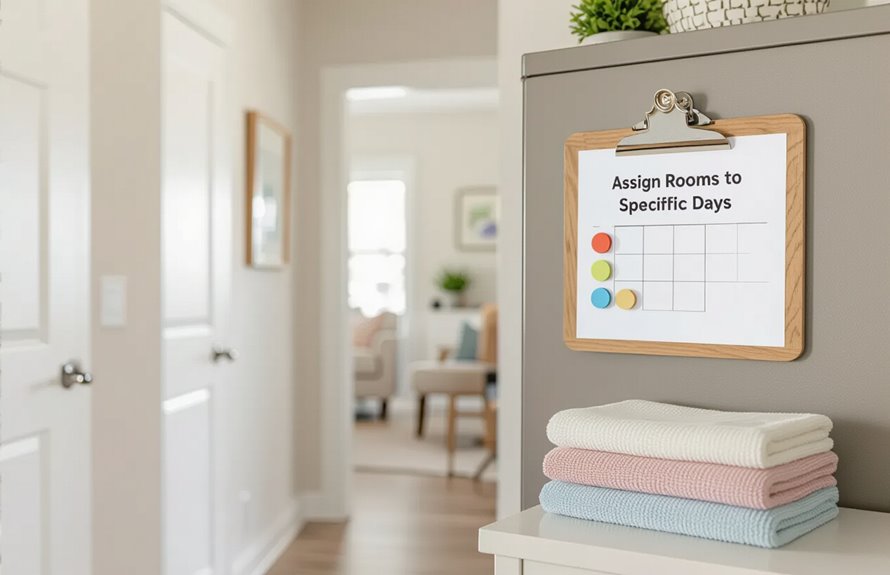
Pick one or two rooms per day and treat that time as your dedicated cleaning window so you’re not trying to do the whole house in one go.
Decide which spaces need weekly attention and which can wait longer, then make room assignments that match your energy and routine.
Put high-traffic rooms earlier in the week, quieter spaces later.
Add these to a simple cleaning schedule you can follow consistently.
Keep it flexible: swap days when needed, but avoid skipping too often.
This approach prevents burnout, keeps chores predictable, and helps you maintain a cleaner home with minimal daily effort.
Estimate Time for Each Task
Because knowing how long each chore takes helps you plan realistically, break tasks into timed estimates before you schedule them.
You’ll reduce stress and stick to a routine when you use clear time estimates and solid task organization. Start small, time a typical run-through, then average the results.
- Quick tasks (5–15 minutes): wipe surfaces, tidy counters.
- Medium tasks (15–30 minutes): vacuum a room, clean bathroom fixtures.
- Deep tasks (30–60 minutes): mop floors, declutter and organize a closet.
Adjust estimates for home size and skill level, and update them as you get faster or add new tasks.
Select Cleaning Supplies and Tools
Now you’ll pick the essential cleaning tools—think broom, mop, vacuum, microfiber cloths, and scrub brushes—that make tasks faster and more effective.
Next, build a cleaning products checklist with basics like all-purpose cleaner, glass cleaner, disinfectant, and a gentle bathroom cleaner.
Keep choices practical and safe for your surfaces and household.
Essential Cleaning Tools
A well-chosen set of cleaning supplies makes the job faster and less frustrating, so focus on versatile tools you’ll actually use regularly.
Start with basics that cover dusting, scrubbing, and quick pickups, and keep them grouped for easy access. Use simple organization tips like labeled caddies or hooks to avoid hunting.
- Microfiber cloths: reusable, lint-free, great for surfaces and glass.
- Multi-surface mop and broom combo: saves storage space and handles floors efficiently.
- Handheld vacuum or dustbuster: ideal for crumbs, upholstery, and quick spills.
Pick durable, multipurpose items to streamline your routine.
Cleaning Products Checklist
With your go-to tools in place, pick cleaning products that match the surfaces and tasks you’ll tackle most often.
Choose an all-purpose cleaner, glass cleaner, disinfectant, floor cleaner, and a gentle bathroom cleaner. Add spot treatments for upholstery and a degreaser for the kitchen. Prefer eco friendly products where possible to reduce fumes and harsh chemicals.
Buy concentrates to save space and waste. Store items safely: keep cleaning product storage organized, labeled, and out of children’s reach.
Use a caddy for daily tasks and a separate bin for deep-clean supplies so you can grab what you need quickly.
Include Decluttering Steps
Clarity makes cleaning faster, so start your checklist with focused decluttering steps that remove surface mess before you deep-clean. You’ll feel less overwhelmed when you follow clear decluttering strategies and practical organizing tips that prep spaces for quicker upkeep.
- Sort items into keep, donate, trash — handle each pile immediately.
- Clear counters and surfaces room-by-room so cleaning tools can reach everything.
- Corral loose items (keys, mail, toys) into bins for quick relocation.
Add time limits per room, note donation drop-off days, and keep the list visible so you stick to habits that prevent clutter from returning.
Add Deep-Cleaning Items
Don’t forget to add hard-to-reach areas like ceiling fans, behind appliances, and high shelves to your checklist so they’re not ignored.
Schedule seasonal deep tasks—windows, gutters, carpets, and oven cleaning—so they happen at set times each year.
Breaking these into quarterly or annual slots keeps your regular routine manageable while staying on top of big jobs.
Hard-To-Reach Areas
Because hard-to-reach spots collect the grime you miss in routine cleaning, add specific deep-cleaning items to your checklist so nothing gets neglected; include tools like an extendable duster, crevice brush, microfibre cloths, and a small vacuum attachment, plus cleaning solutions suited for vents, light fixtures, and behind appliances.
You’ll target dusty corners and ceiling fans, scheduling brief tasks to prevent buildup. Note frequency (monthly, quarterly) and safety steps for ladders and electrical fixtures.
- Dust vents, trim, and high shelves.
- Vacuum behind appliances and under furniture.
- Wipe and balance ceiling fans and light fixtures.
Seasonal Deep Tasks
When the seasons change, set aside time to tackle deeper jobs you don’t do in routine cleanings—think washing windows inside and out, shampooing carpets, deep-cleaning oven interiors, and flipping mattresses—so dirt and allergens don’t build up over months.
Create a seasonal deep tasks list for spring cleaning and autumn maintenance: clean behind appliances, descale faucets, wash curtains, dust vents and baseboards, clean light fixtures, and treat grout.
Schedule one or two concentrated days, gather supplies, and divide tasks by room. You’ll prevent buildup, improve air quality, and make regular chores quicker throughout the year.
Build a Quick-Check Morning Routine
If you want fast, reliable mornings, build a quick-check routine that hits high-impact tasks in under five minutes: make the bed, clear clutter from countertops, start a load of laundry or put a dishwasher on delay, and tidy the most visible surfaces.
Use quick clean tips and morning motivation to keep it consistent. Focus on visible wins that change how your space feels.
- Empty bedside dishes and toss trash
- Wipe bathroom sink and sweep entryway
- Gather items to return to other rooms
Do this daily to lower decision fatigue, protect momentum, and free up time for what matters.
Build a Quick-Check Evening Routine
End your day with a five-minute evening routine that resets your space and makes mornings smoother: clear countertops, wash or load dishes, wipe high-use surfaces, and set out anything you’ll need tomorrow. You’ll build evening habits that reduce morning stress and keep clutter from piling up. Do a quick clean up focused on visible zones, trash, and prepping for tomorrow. Use a simple checklist and stick to the rhythm nightly so it becomes automatic.
| Task | Target | Time |
|---|---|---|
| Dishes | Counter & sink | 2 min |
| Wipe | High-use surfaces | 1 min |
| Prep | Bags/keys/notes | 2 min |
Create a Room-by-Room Checklist
Because every room has different needs, break your checklist down by space so you can clean efficiently and not miss the basics.
Start with high-traffic zones and note daily, weekly, and monthly tasks. Include simple room organization steps and clear task delegation so chores get done without confusion.
- Kitchen: wipe counters, clean sink, sweep, declutter pantry.
- Bathroom: sanitize surfaces, scrub shower, launder mats, restock supplies.
- Living/Bedroom: dust surfaces, vacuum, change linens, tidy storage.
Label checkboxes, prioritize trouble spots, and keep the list visible so you’ll maintain momentum.
Incorporate Family or Roommate Responsibilities
When everyone shares specific tasks, keeping your home clean becomes faster and fairer; assign chores by ability and schedule so no one’s stuck with the same tedious jobs all the time.
You’ll list family roles clearly—who vacuums, cooks, or handles trash—and set expectations for frequency.
For roommates, create written roommate agreements covering cleaning frequency, shared supplies, and consequences for missed duties.
Use a visible checklist or app so responsibilities aren’t forgotten.
Rotate less desirable tasks monthly, honor individual limits, and hold brief check-ins to resolve disputes.
Clear roles and agreements prevent resentment and keep everyone accountable.
Track Progress and Adjust the Checklist
Once you start using your checklist, track what actually gets done each week so you can spot what’s working and what isn’t.
You should track cleaning habits to see which tasks repeat and which stall. At the end of the month, evaluate checklist effectiveness: remove redundant chores, shift frequencies, and reassign tasks if needed.
Use simple notes or marks beside tasks and review with housemates. Try these quick checks:
- Note missed tasks and why.
- Increase or decrease task frequency.
- Reassign tasks based on who consistently completes them.
Repeat reviews regularly so your checklist stays practical and aligned with real life.
Make the Checklist Accessible and Printable
After you’ve tracked progress and tweaked tasks, make the checklist easy to reach and print so everyone can follow it without excuses.
Save a clean, editable version in the cloud and share a link so family members can view and update it; this improves digital accessibility.
Offer printable formats like PDF and a simple Word or Google Doc for those who prefer paper.
Post a laminated copy in a common area and keep a clipboard nearby.
Label sections clearly and add checkboxes for quick use.
Review and update the shared file when tasks change so both digital and printed copies stay current.
Conclusion
You’ve built a clear, doable checklist that turns cleaning from a chore into a habit. Stick to your goals, focus on high-traffic spots, and spread tasks across daily and weekly lists so nothing piles up like a forgotten dust bunny. Assign roles to family or roommates, track progress, and tweak the plan as life changes. Keep the checklist accessible and printable — a small anchor that keeps your home calm and functional every day.