40 Garment Shop Interior Design Ideas to Attract More Customers
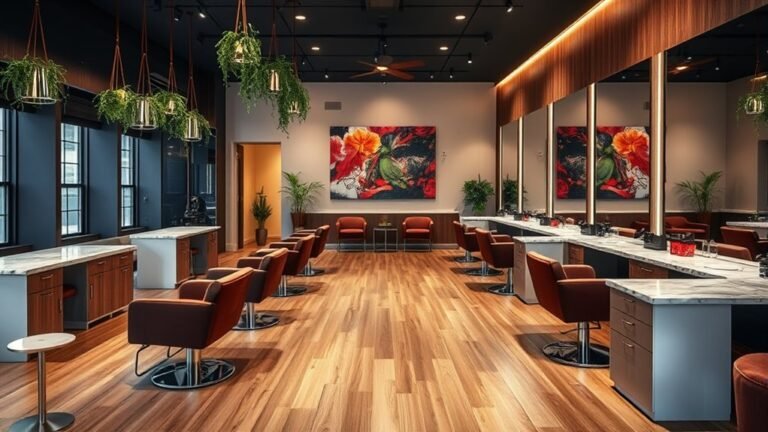
To attract more customers to your garment shop, use a cohesive color palette to set the mood. Incorporate eye-catching displays that showcase unique styles, and create comfortable fitting areas for a relaxed experience. Use creative lighting solutions to enhance merchandise visibility and consider adding unique wall art for visual interest. Don’t forget to showcase local designers and offer customization stations for personalized experiences. Discover even more ideas to elevate your shop’s atmosphere and draw in customers.
Create an Eye-Catching Window Display That Tells a Story
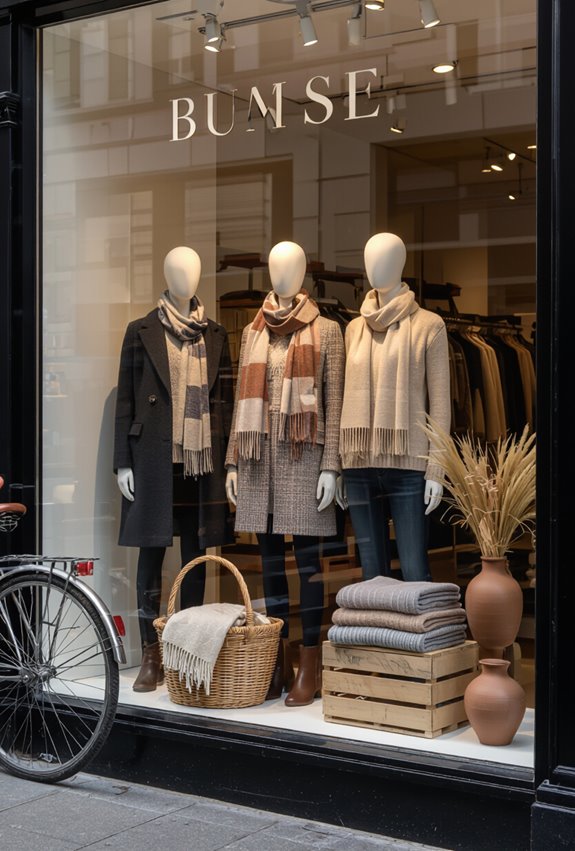
Draw shoppers in with a window that tells a clear, compelling story—one that showcases your best pieces, hints at how they’re worn, and connects emotionally in seconds.
Use narrative props to set context, staging outfits in Seasonal vignettes that change often.
Keep lighting focused, signage minimal, and a single focal look to spark imagination so passersby step inside to explore more.
Zone the Shop for Easy Browsing: Entry, Core Racks, Try-On, Checkout
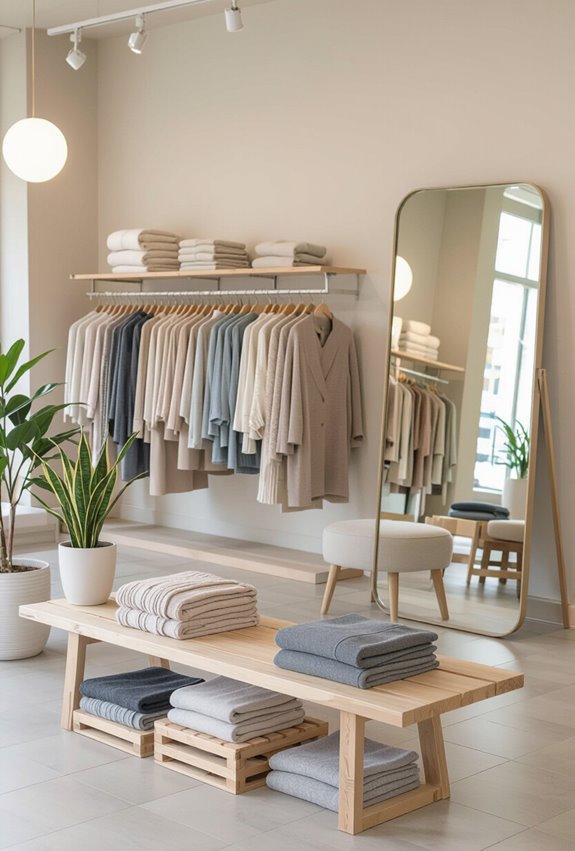
Start by zoning your store so customers move intuitively from the entry to core racks, to try-on, and finally to checkout.
You’ll design clear entry flow with signature displays, guide sightlines to core racks, and place fitting adjacency near complementary items.
Keep aisles wide, signage simple, and checkout visible but unobtrusive so browsing feels effortless and conversions rise.
Install Layered Lighting to Highlight Merchandise and Set Mood
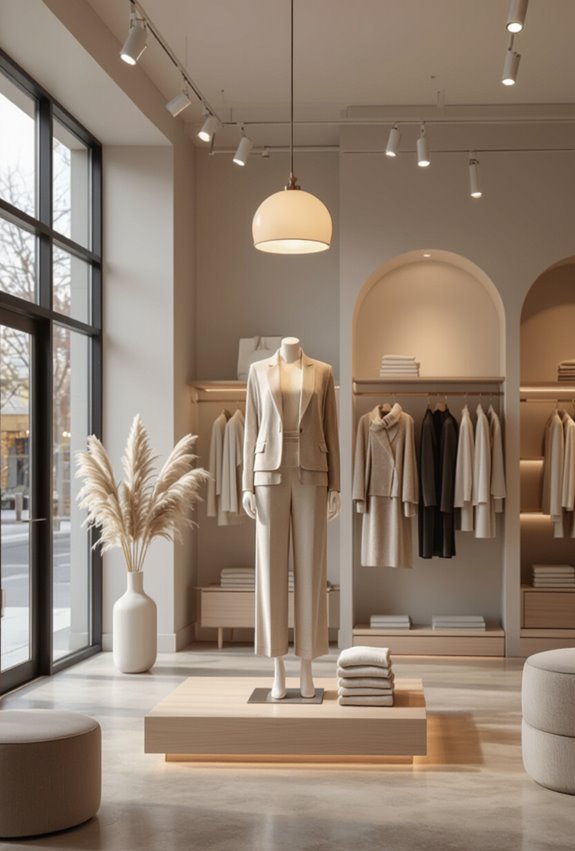
You’ll want layered lighting that both showcases merchandise and creates a welcoming mood, combining ambient, task, and accent sources so every product gets the right attention.
Use contrast layers to make textures pop, position task lights for fitting areas, and add adjustable accent spots for displays.
Program dimming presets for time-of-day moods and energy savings, ensuring consistency and easy control.
Use Focal Displays to Promote New Arrivals and Bestsellers
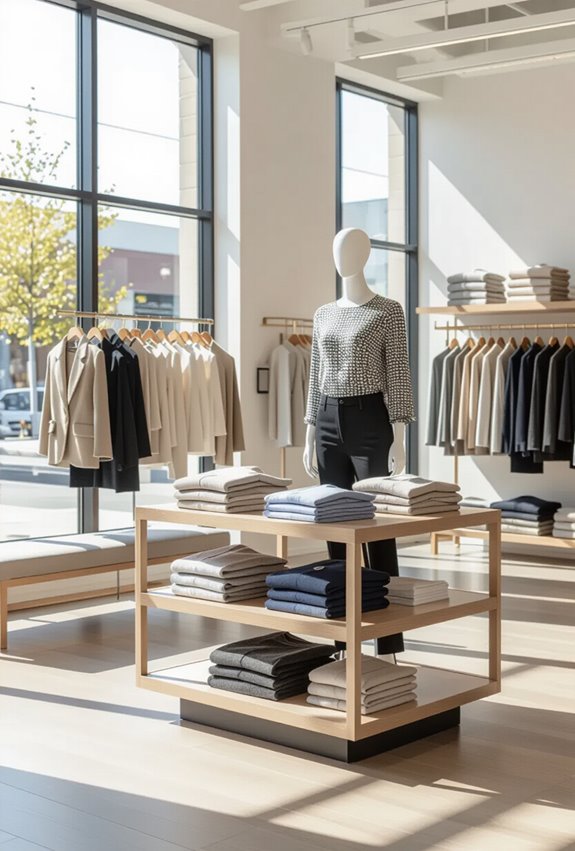
When you want customers to notice new arrivals and bestsellers, create a strong focal display that anchors the sales floor and tells a clear visual story; use scale, color contrast, and strategic lighting to guide attention and communicate value quickly.
Place seasonal focalpoints on curated pedestals, rotate featured styles regularly, and add concise signage so shoppers immediately understand trends, pricing, and styling options.
Choose Modular Fixtures for Flexible Seasonal Merchandising
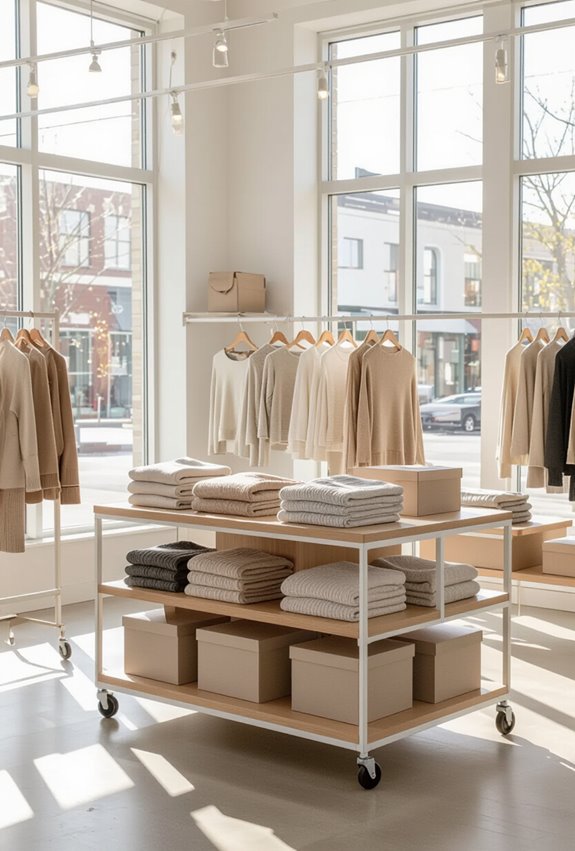
After spotlighting new arrivals with focal displays, pick modular fixtures so your floor can shift as fast as trends do. You’ll swap displays, group seasonal edits, and reconfigure flow without costly installs.
Use modular mannequins and collapsible shelving for quick shifts, rolling racks for pop-ups, and labeled zones to keep visual coherence. This keeps merchandising fresh and operationally efficient.
Maximize Vertical Space With High Shelving and Feature Walls
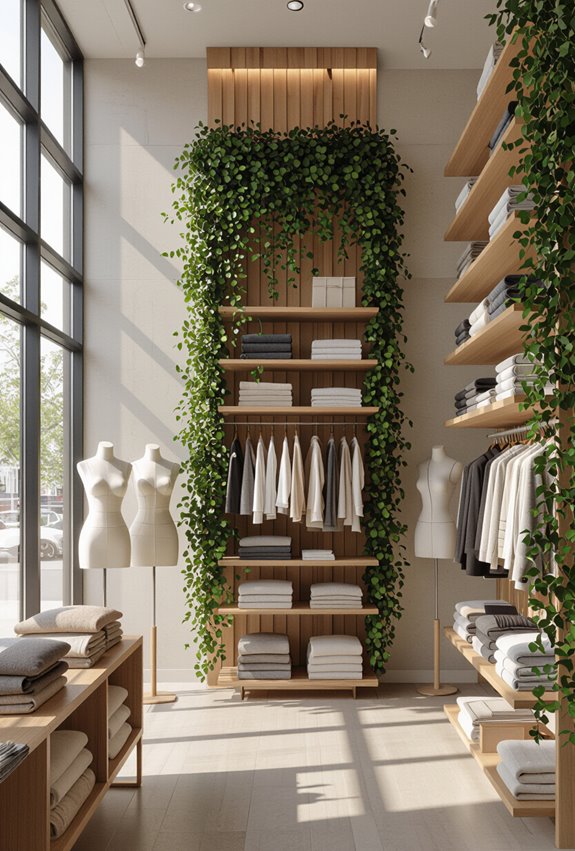
Maximizing vertical space lets you showcase more product without crowding the floor, so fit high shelving and striking feature walls into your layout to draw the eye upward and create layered merchandising.
Use lofted displays for seasonal highlights, integrate feature murals to set mood and brand tone, and keep sightlines clear with strategic lighting and accessible lower racks so customers can browse comfortably.
Design an Inviting Fitting Room Experience That Reduces Returns
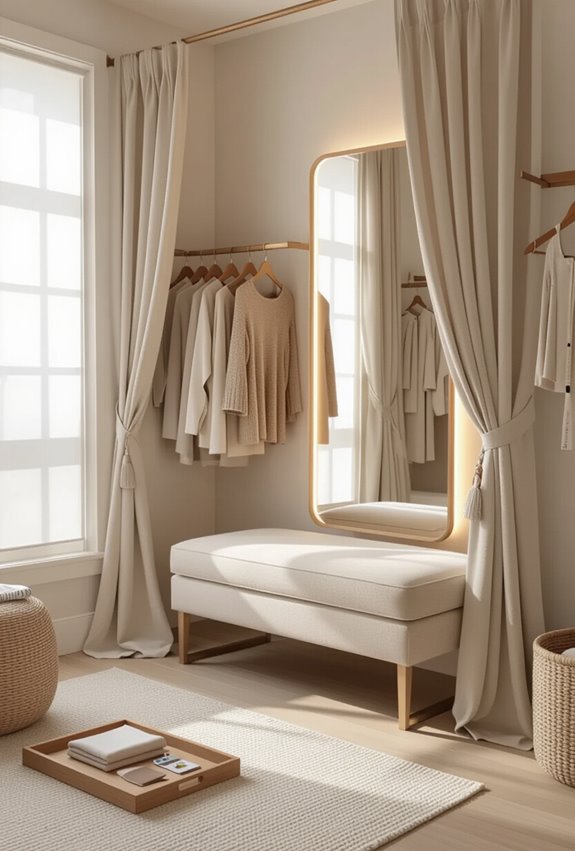
Often overlooked, your fitting rooms can make or break a customer’s impression and cut return rates by giving shoppers confidence to try, assess, and decide on purchases.
You should optimize Lighting Ambience for true color and flattering tones, enforce Privacy with soundproofing and secure locks, and refine Layout for comfortable movement and seating.
Clear signage and nearby staff support reduce uncertain purchases.
Place Mirrors Strategically to Make Space Feel Larger and Boost Sales
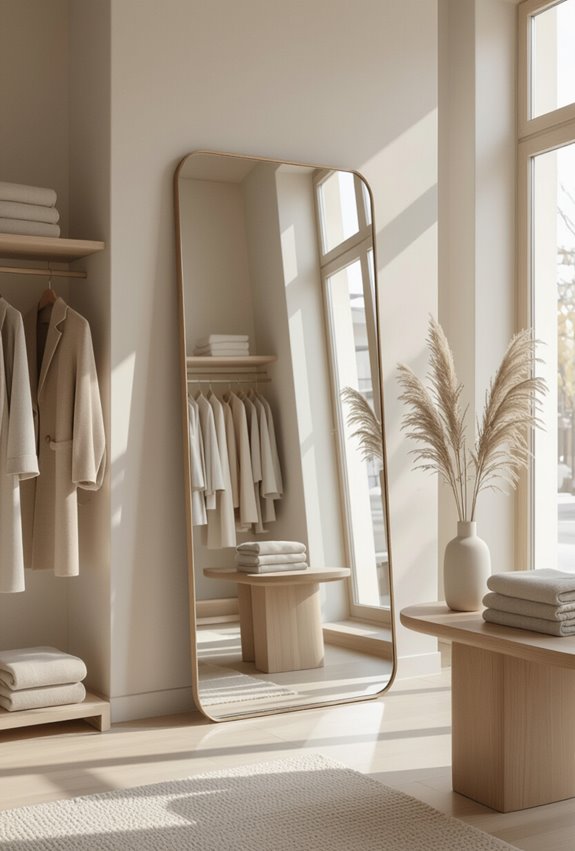
Good fitting rooms set expectations; now use mirrors throughout the shop to reinforce that confidence and expand perceived space.
Position Floor Mirrors opposite displays and between racks so reflections double visual depth.
Use Angle Placement to avoid glare, capture flattering sightlines, and highlight outfits from multiple perspectives.
That subtle choreography makes spaces feel larger, encourages lingering, and increases the chance customers buy more.
Incorporate Clear Sightlines So Customers Can Navigate Intuitively
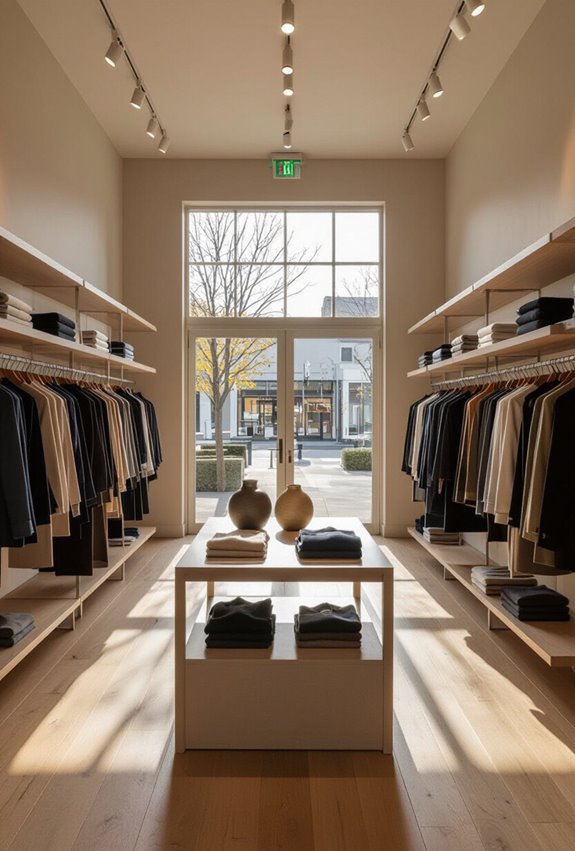
When you keep sightlines clear, customers move through the shop without hesitation and discover key displays naturally.
Use sightline mapping to plan aisles, fixtures, and focal points so views remain unobstructed.
Position mannequins and promotions for eye level focalization, guiding attention to bestsellers.
Keep clutter low, signage concise, and pathways direct so shoppers navigate intuitively and spend more time engaging with merchandise.
Use Texture and Materials to Communicate Your Brand’s Style
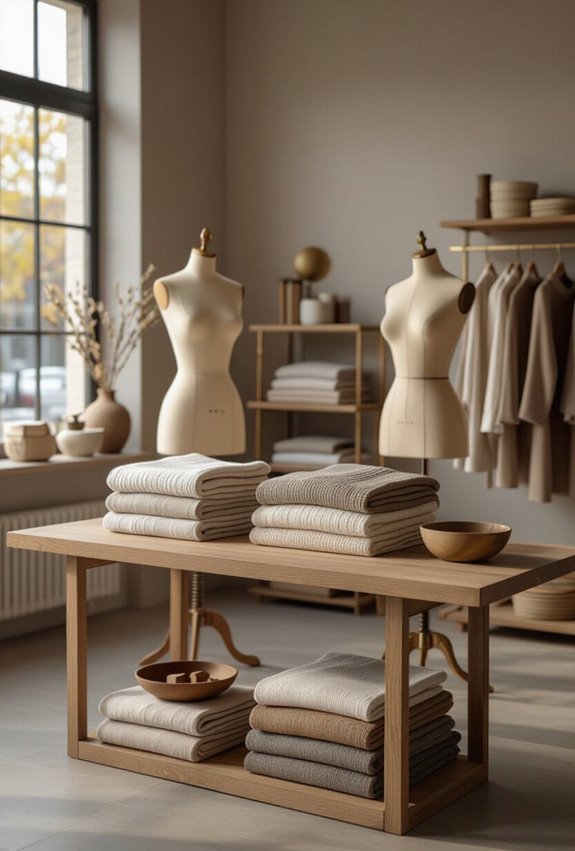
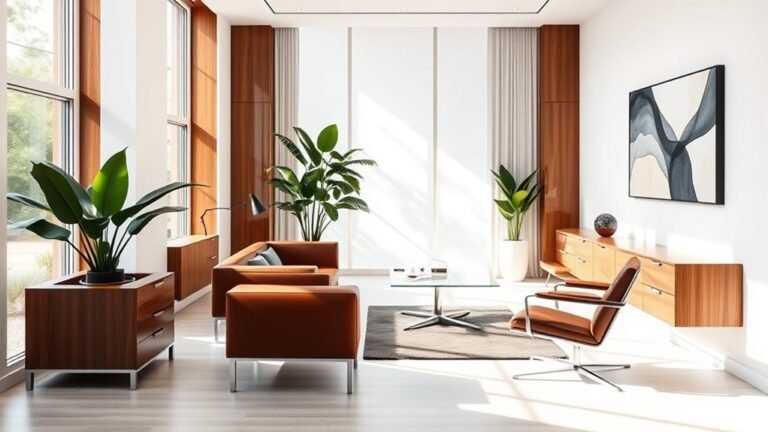
Choose textures and materials that speak your brand’s language—soft velvets and warm woods for a cozy, artisanal feel; polished metals and glass for a modern, high-end look; or raw concrete and reclaimed timber for an industrial, sustainable vibe.
You’ll create tactile contrasts to engage customers, establish a clear material hierarchy so focal pieces pop, and make certain finishes reinforce your brand’s mood consistently throughout the shop.
Add a Comfortable Seating Area to Encourage Longer Visits
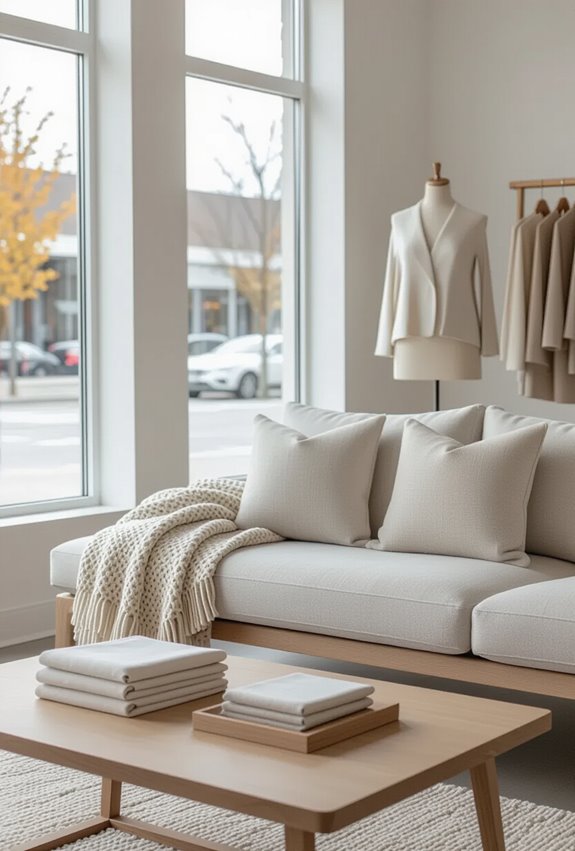
Create a cozy seating nook to invite customers to linger, try on items, and chat—turning brief visits into longer, more profitable stays.
Add a cozy lounge with comfortable chairs, soft lighting, and small tables so companions relax.
Include a reading nook with curated magazines and lookbooks to inspire purchases.
Keep seating near fitting rooms and displays without blocking pathways.
Optimize Aisle Width and Fixture Layout for Customer Flow
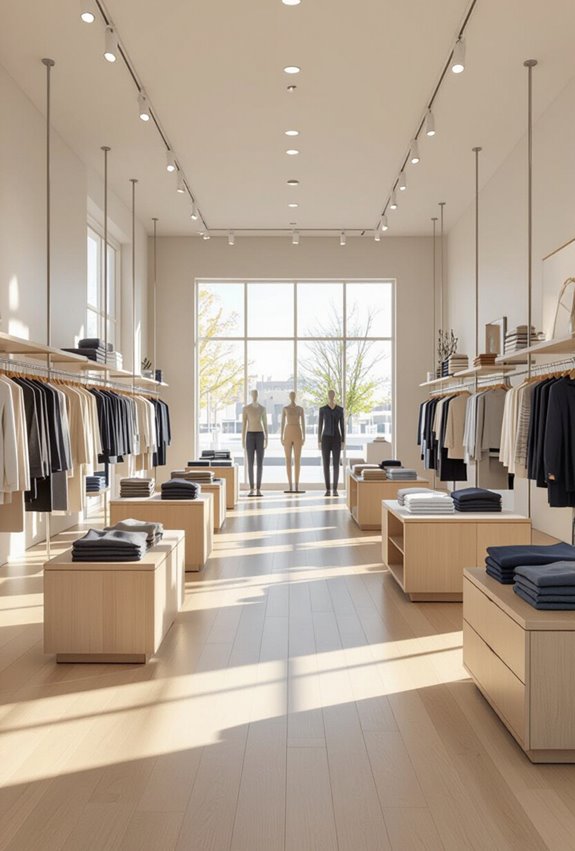
Because customers move more freely in a well-planned layout, you should set aisle widths and fixture placement to guide traffic smoothly without crowding displays.
Measure for comfortable circulation, balance Fixture Depth so sightlines stay clear, and leave turning space for strollers or wheelchairs.
Use Aisle Signage sparingly to orient shoppers, keep focal displays visible, and rotate fixtures to prevent bottlenecks.
Use Signage That Guides, Sells, and Reinforces Promotions
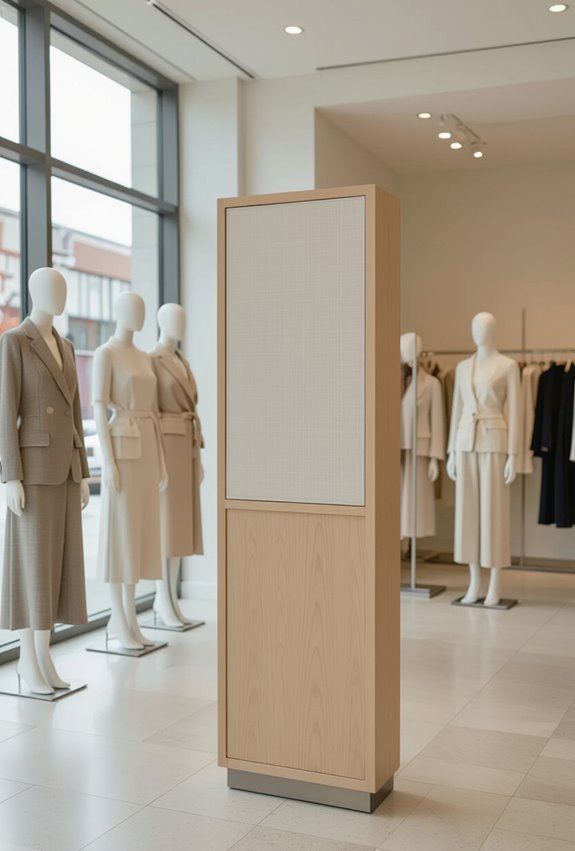
Use clear, purposeful signage to guide shoppers, spotlight products, and amplify promotions without overwhelming the space.
You’ll deploy directional signage to lead customers to zones, fitting rooms, and exits, while promo wayfinding highlights limited offers and bundles.
Keep typography readable, contrast strong, and messaging concise so signs sell, orient, and reinforce campaigns without cluttering sightlines or distracting from merchandise.
Create Tactile Touchpoints for Fabric-Forward Brands
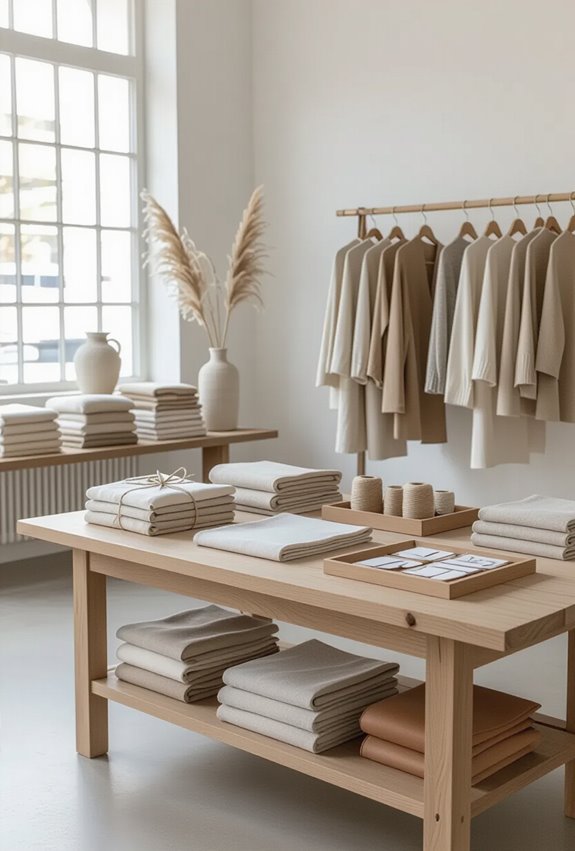
Tactile touchpoints let customers feel the fabric story before they commit, so plan stations—swatch walls, drape tables, and sample bins—that invite handling without disorder.
You’ll offer Fabric Sampling with clear labels on fiber, weight, and care, plus Tactile Workshops to teach touch-driven selection and drape techniques.
Keep layouts compact, provide sanitizing wipes, and train staff to guide, not overtake, hands-on exploration.
Feature Capsule Displays for Curated Outfit Ideas
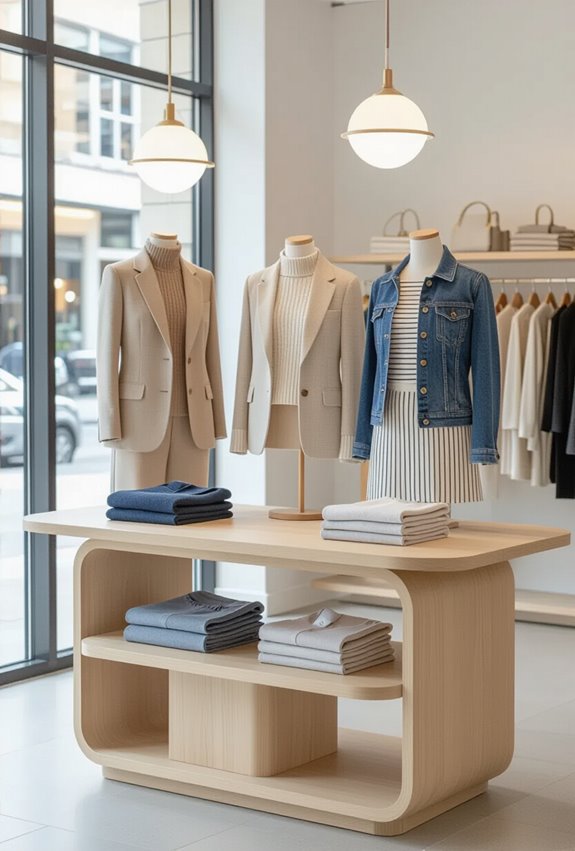
Highlight curated capsule displays to show customers how pieces work together and reduce decision fatigue.
You’ll use Capsule Mannequins with Outfit Tags that list sizes, prices, and styling tips.
Rotate Seasonal Capsules to keep inventory fresh and relevant.
Feature Layered Looks to demonstrate versatility and encourage add-on purchases, making shopping quicker, clearer, and more inspiring for every visitor.
Integrate Greenery and Biophilic Elements for a Calming Vibe
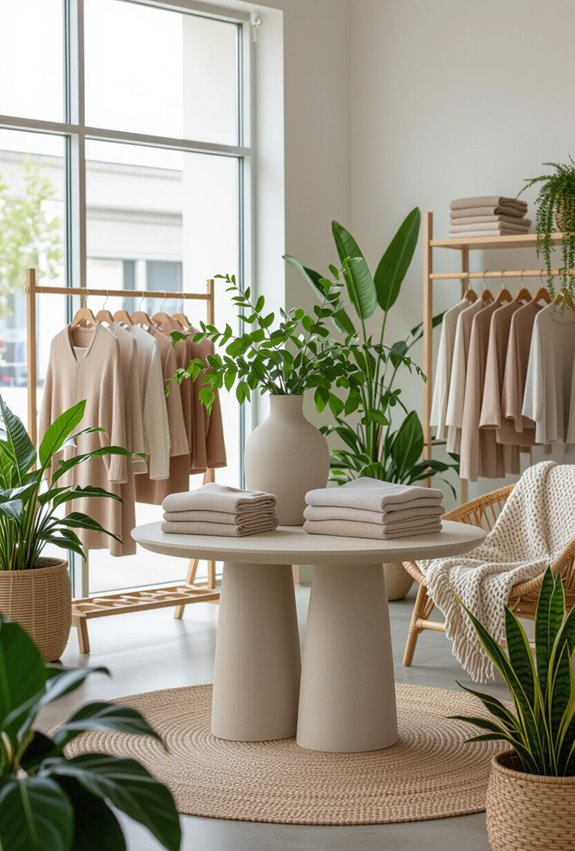
When you bring plants and natural materials into your shop, they soften hard lines, reduce stress, and make customers linger longer—improving mood and boosting purchase intent.
Use vertical planters to maximize greenery without sacrificing floor space, add moss walls for texture and acoustic damping, and choose sustainable wood fixtures and soft lighting so your space feels revitalizing, cohesive, and welcoming to shoppers.
Use Color-Blocking Sections to Simplify Outfit Coordination
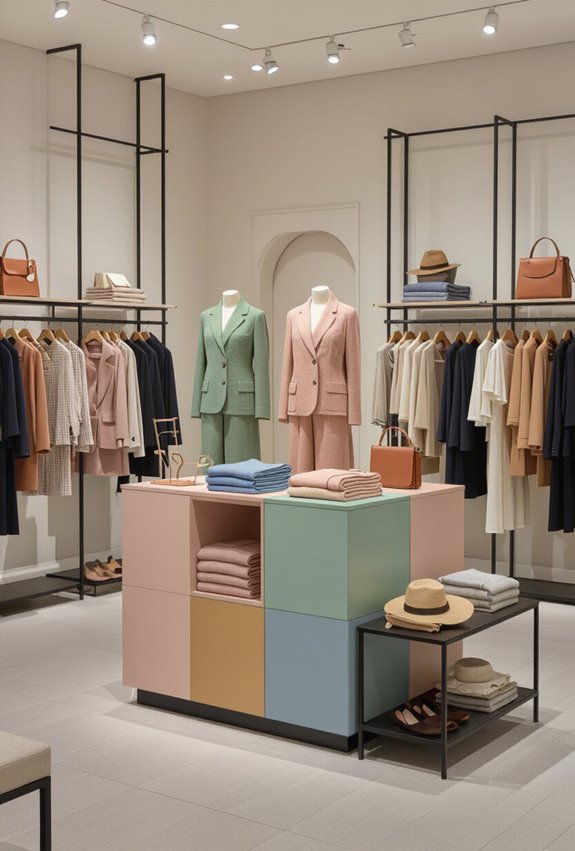
Because shoppers pick faster when choices are organized, divide your sales floor into clear color-blocking sections that let customers mix and match without hunting.
You’ll label color blocking stations by palette, stack complementary pieces together, and place outfit sorting bins nearby for quick grabs.
Encourage staff to rotate displays seasonally, maintain tidy groupings, and add simple signage to guide pairing and speed decisions.
Design a Memorable Checkout Counter That Speeds Transactions
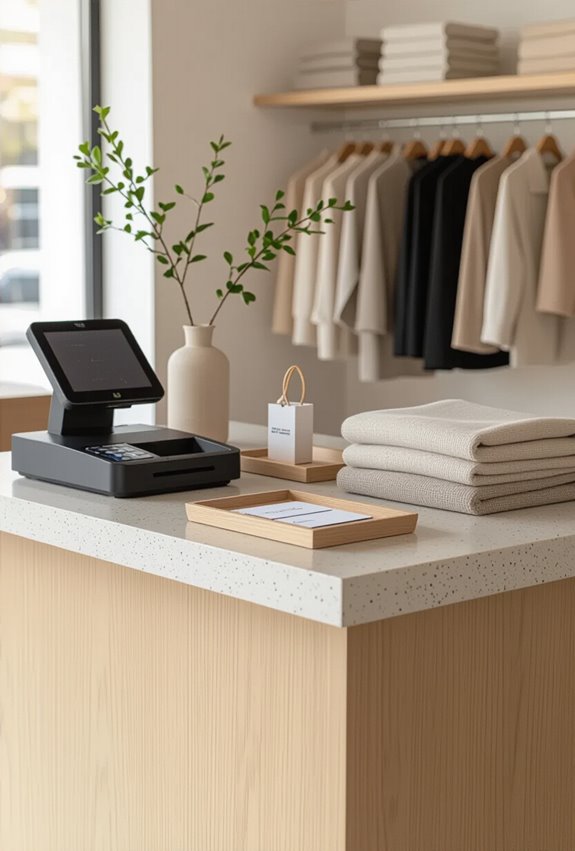
After guests finish pulling together outfits in your color-blocked zones, make the checkout counter a seamless final step that reinforces the store’s organized feel and speeds transactions.
Position a compact POS, clear signage, and accessible impulse displays so customers move quickly.
Use an ergonomic layout for staff efficiency, ample counter space for bags, and soft lighting to leave a polished last impression.
Implement Scent Marketing to Influence Mood and Memory
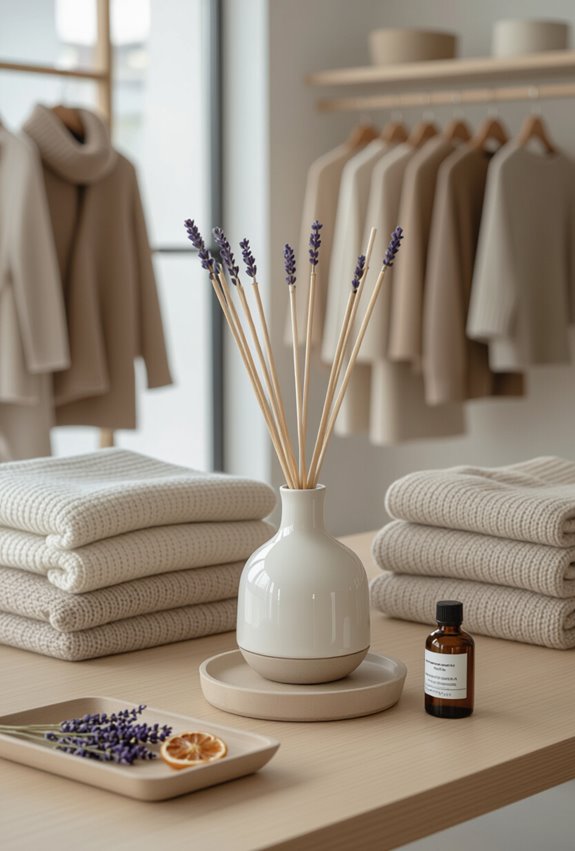
A subtle scent can shape how customers feel and remember your shop, so choose fragrances that match your brand and target mood—fresh citrus or green notes for energy, warm vanilla or sandalwood for comfort.
You’ll use ambient aromatics as subtle cues, placing scent zones near fitting rooms and displays.
Consistent aromas act as memory anchors, boosting recall and encouraging repeat visits.
Use Flooring Changes to Define Zones and Guide Flow
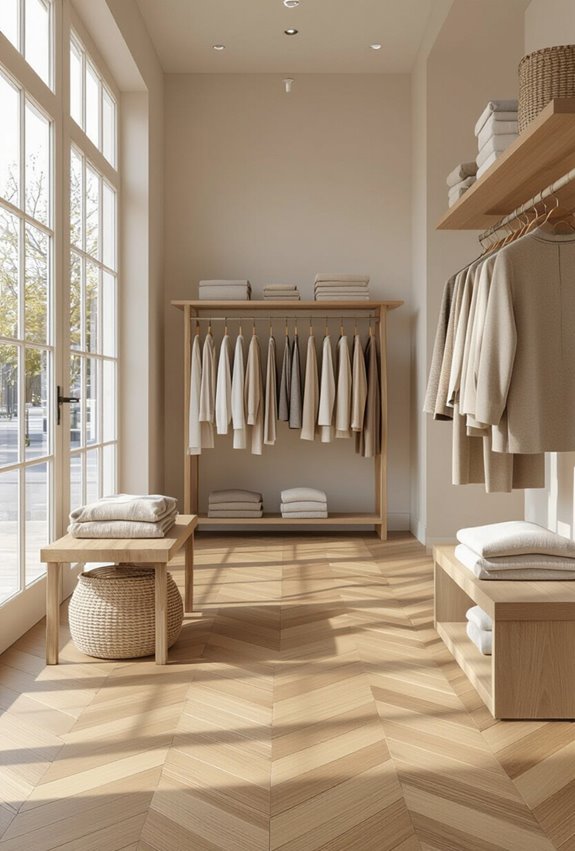
When you change flooring materials and levels, you give shoppers clear, tactile cues about different zones—soft rugs or warmer wood signal lounge and fitting areas, while durable tile or polished concrete marks high-traffic display and checkout paths.
Use pattern shifts and tactile thresholds to guide movement, highlight focal displays, and create comfortable pauses; align lighting and signage so each zone reads instantly and intuitively.
Showcase Local Designers or Collaborations on a Feature Wall
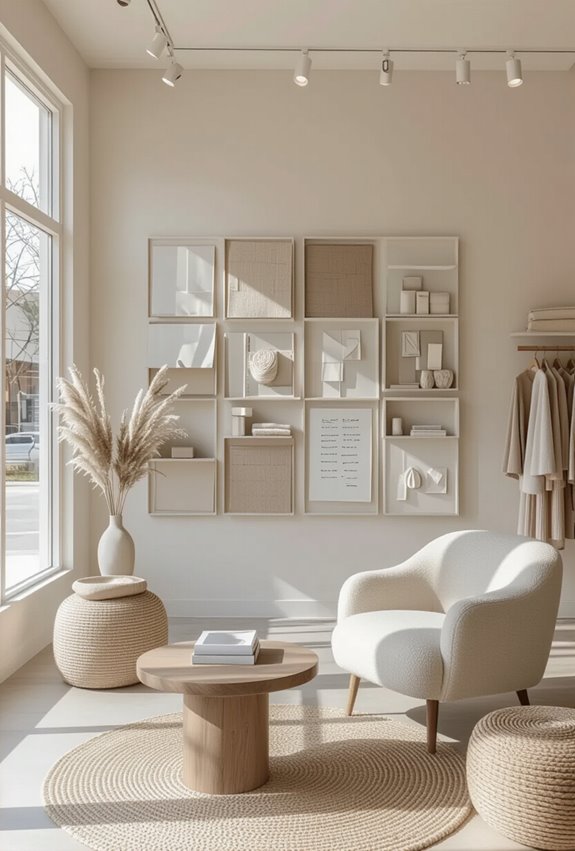
If you want to celebrate local talent and deepen community ties, dedicate a prominent feature wall to rotating displays of local designers and collaborations.
Use Local spotlights with bios, sketches, and sample garments, and commission Collaboration murals that visually link brands.
You’ll refresh the shop regularly, attract curious shoppers, support creators, and create a focal point that tells a neighborhood-driven story.
Create Instagrammable Spots to Encourage Social Sharing
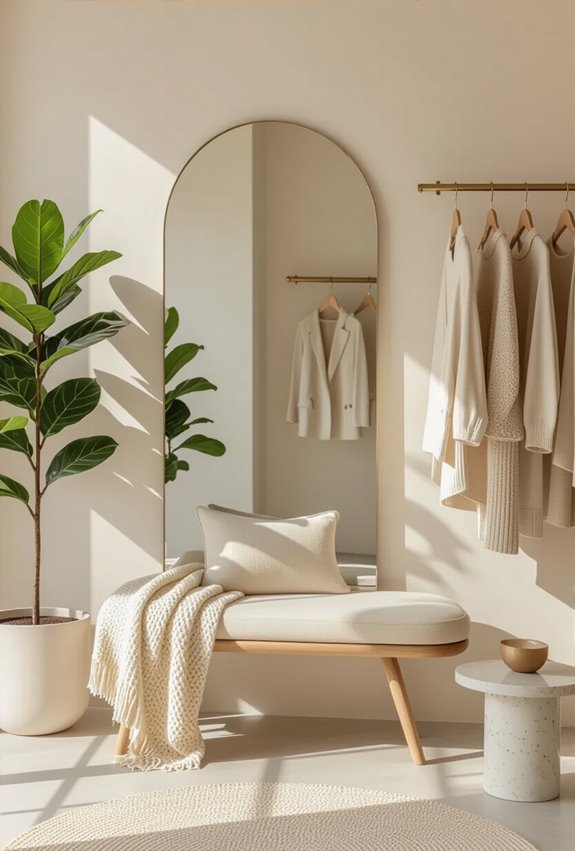
Make standout corners that beg to be photographed so customers can’t help but share your space.
Design Photo Nooks with textured backdrops, branded props, and seating that flatters outfits.
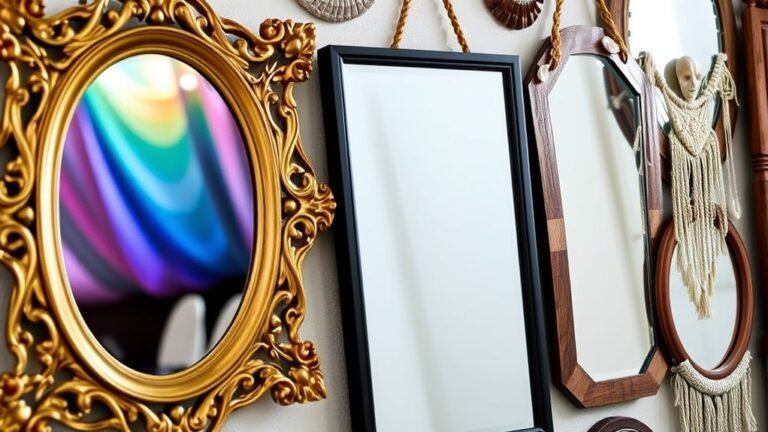
Add decorative Mirror Frames for selfie-friendly reflections and guarantee clear sightlines to displays.
Include subtle signage with your handle and a hashtag, making it effortless for guests to tag you and spread word-of-mouth digitally.
Use Lighting Temperature to Match Fabric Colors Accurately
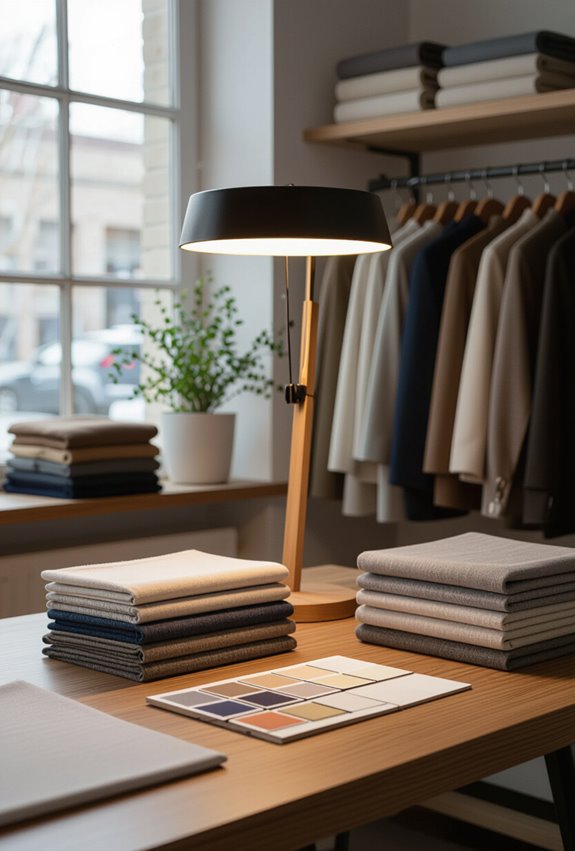
Good photos and selfie stations won’t matter if the clothing looks different in person than it does online, so control your lighting temperature to make sure fabrics read true.
You should prioritize high color rendering, set a neutral balance for fitting rooms, add warm highlights to enhance skin tones, and use cool accents near whites or blues.
Regularly test bulbs for consistency.
Keep a Tidy Back-of-House Layout for Quick Restocking
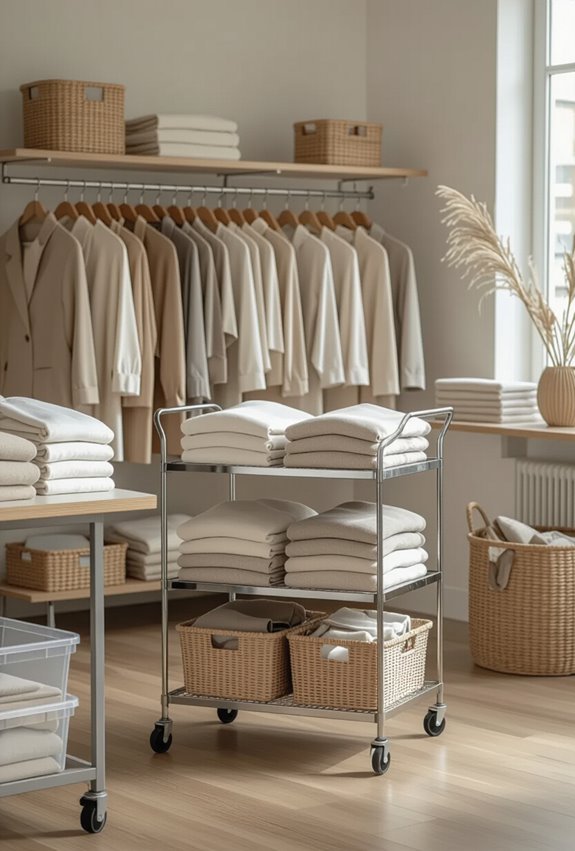
Regularly keeping your back-of-house organized lets staff restock the sales floor faster and keep displays neat.
You’ll streamline staff workflow by zoning inventory, labeling bins, and creating clear pick paths.
Efficient supply organization—stacked shelves, rotated stock, and accessible packing—cuts retrieval time and reduces errors.
Train staff on simple protocols so restocking stays quick, consistent, and unobtrusive to customers.
Incorporate Sustainable Materials to Attract Eco-Conscious Shoppers
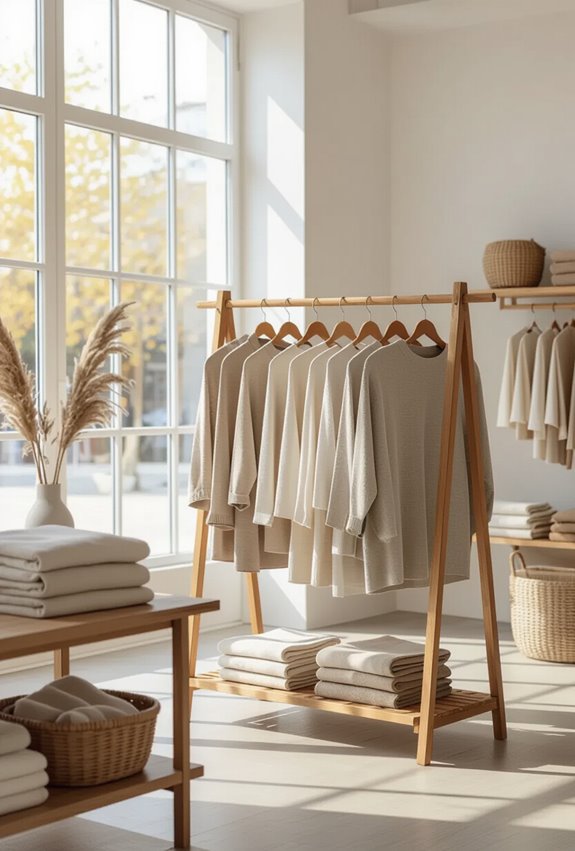
Many shoppers now prioritize sustainability, so using recycled, low-VOC, and responsibly sourced materials helps your shop resonate with eco-conscious customers. Choose recycled textiles for displays and cushions, install bamboo fixtures for shelving and hangers, and pick non-toxic paints and reclaimed wood.
Promote material stories on signage, train staff to explain choices, and highlight durability to show value and reduce perceived sacrifice.
Design for Accessibility to Welcome All Customers
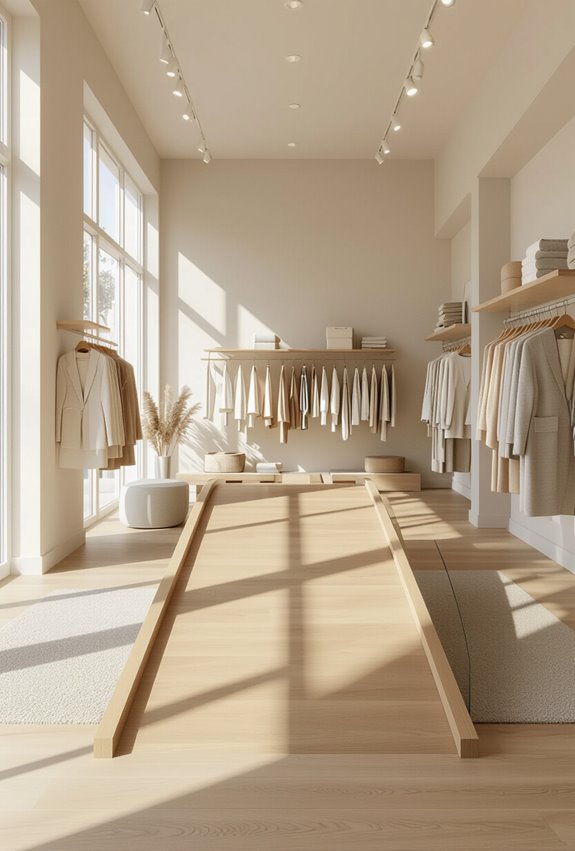
Clear pricing and QR codes make information immediate, but you’ll lose customers if the space itself isn’t navigable—design for accessibility so everyone can move, browse, and buy with dignity.
Guarantee step free entrances, wide aisles, lowered displays, clear sightlines, good lighting, and tactile signage for visually impaired shoppers.
Train staff to assist respectfully and maintain clutter-free paths for safe, independent shopping.
Use Seasonal Rotation Plans to Keep the Store Feeling Fresh
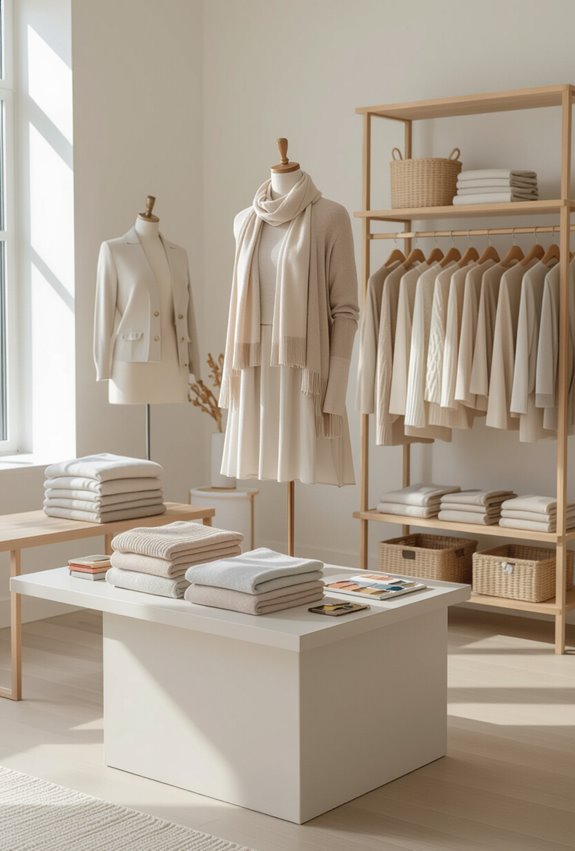
When you map out a seasonal rotation plan, you keep the shop lively and give customers reasons to return; rotate focal displays, update window themes, and refresh color palettes every 6–8 weeks to reflect holidays, weather shifts, and buying patterns.
Use a clear rotation calendar, plan seasonal signage that highlights key pieces, swap props efficiently, and track sales to fine-tune timing and themes.
Measure Success: Track Dwell Time, Conversion, and Best Displays
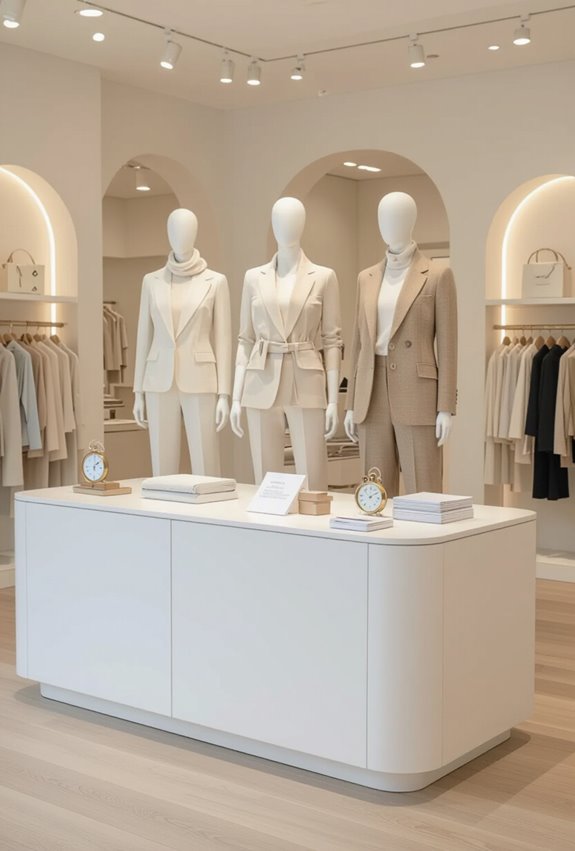
Measuring how customers move and respond in your shop lets you know what’s working and what to tweak; track dwell time, conversion rate, and top-performing displays to turn intuition into action.
Use dwell analytics to spot slow zones, then apply conversion mapping to link displays with sales.
Test changes, compare before/after metrics, and iterate quickly to boost engagement and purchases.
Low-Budget Updates That Deliver High Visual Impact
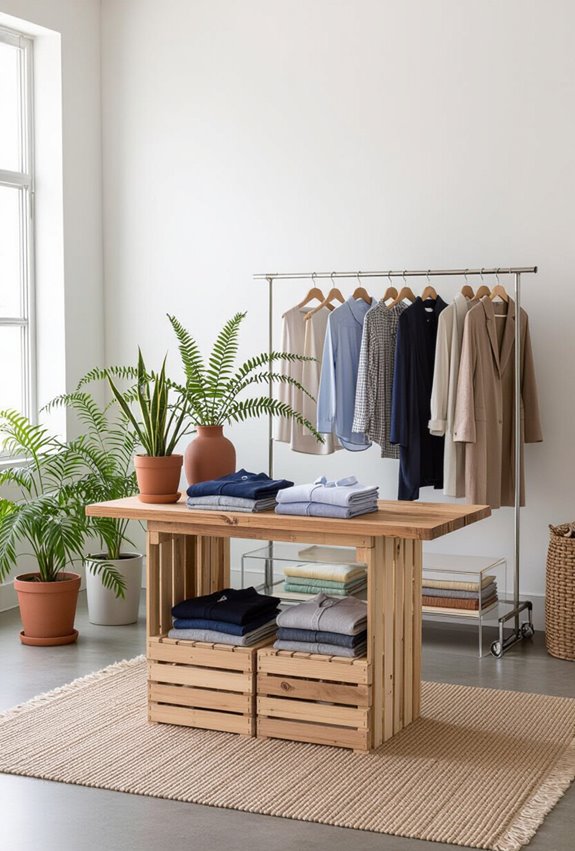
Data from dwell time and conversion rates tells you where changes will matter most, so use those insights to pick low-cost updates that pack a visual punch.
Swap harsh bulbs for budget lighting with warmer tones, add mirror accents to amplify space and light, refresh focal displays with coordinated props, and repaint key zones.
These moves boost perceived value and encourage browsing without large spend.
Use a Cohesive Color Palette
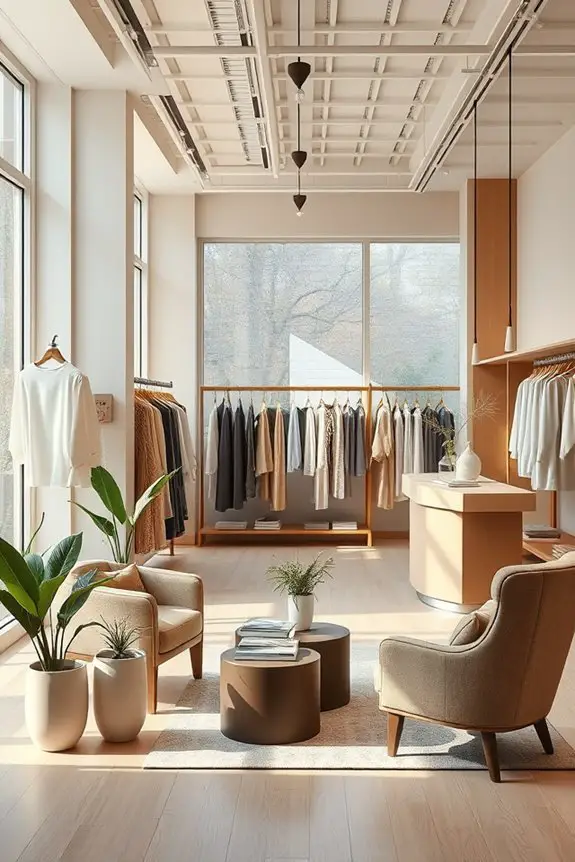
When you choose a cohesive color palette for your garment shop, it not only sets the mood but also enhances the overall shopping experience.
Color psychology plays an important role here; different hues evoke distinct emotions and reactions. For instance, warm tones can create a welcoming atmosphere, while cooler shades can convey professionalism.
By carefully selecting colors that align with your brand identity, you reinforce your shop’s message and values. This consistency helps customers connect with your brand on a deeper level.
Remember to take into account how colors interact with your merchandise and lighting. A well-thought-out palette not only attracts attention but also encourages longer visits and repeat customers, making it an essential element of your shop’s design strategy.
Add Unique Wall Art
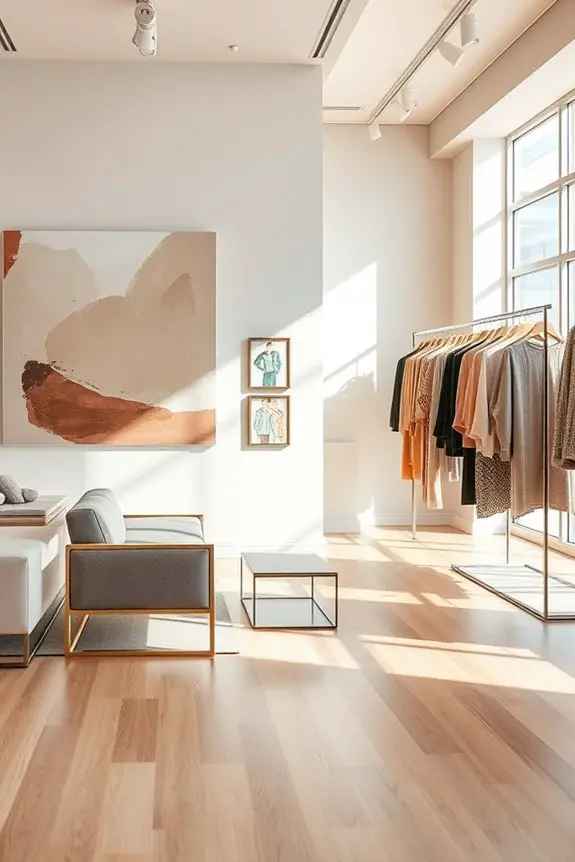
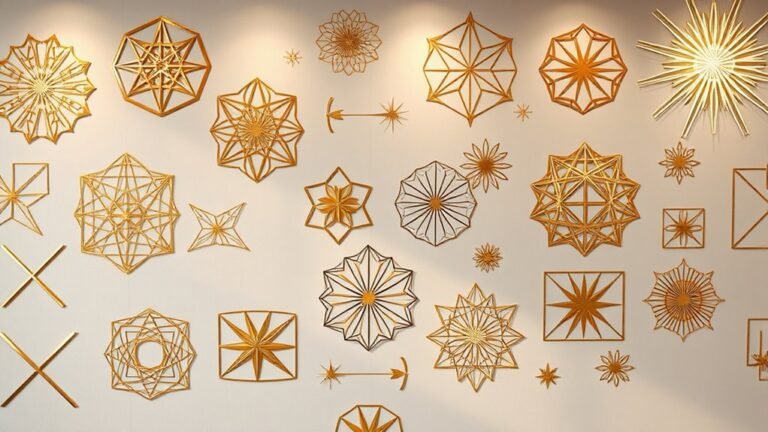
Creative lighting solutions can set the perfect backdrop for showcasing unique wall art in your garment shop.
Consider incorporating vibrant mural designs that reflect your brand’s identity and attract attention. These murals can create an inviting atmosphere, encouraging customers to linger and explore.
Additionally, think about adding artistic installations that engage your customers visually. Whether it’s a bold sculpture or a thought-provoking piece, these installations can spark conversation and enhance the overall shopping experience.
Make sure your wall art complements your merchandise, tying together the themes of your collections.
Design a Welcoming Entrance
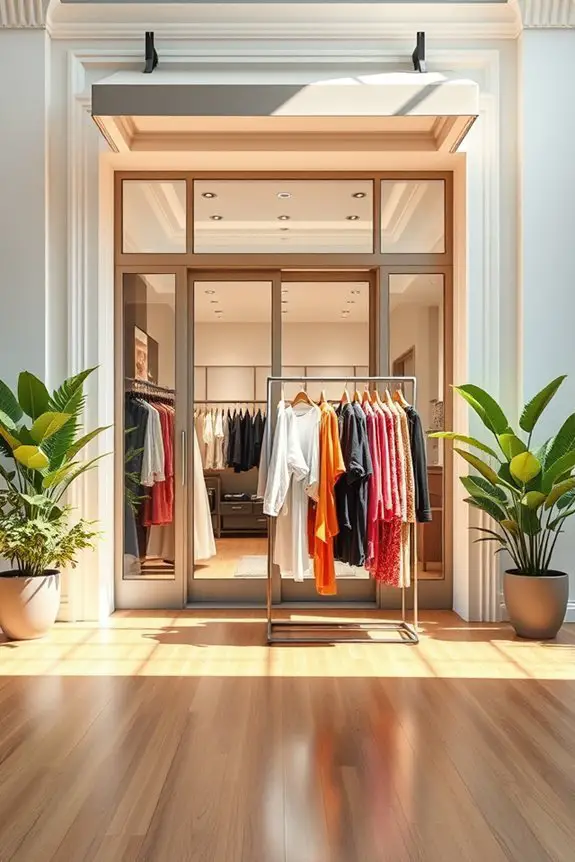
While a well-designed entrance might seem like a minor detail, it’s the first impression customers get of your garment shop. To create a welcoming atmosphere, start with clear, welcoming signage that showcases your brand and draws attention. Use bold fonts and colors to guarantee your shop stands out.
Next, focus on inviting lighting. Soft, warm lights can create a cozy feel, making customers want to step inside. Consider using accent lights to highlight key displays or products near the entrance.
Additionally, keep the entrance clean and clutter-free, allowing customers to see inside easily. By combining effective signage and inviting lighting, you’ll create an entrance that not only welcomes customers but also encourages them to explore your shop further.
Create Defined Shopping Zones
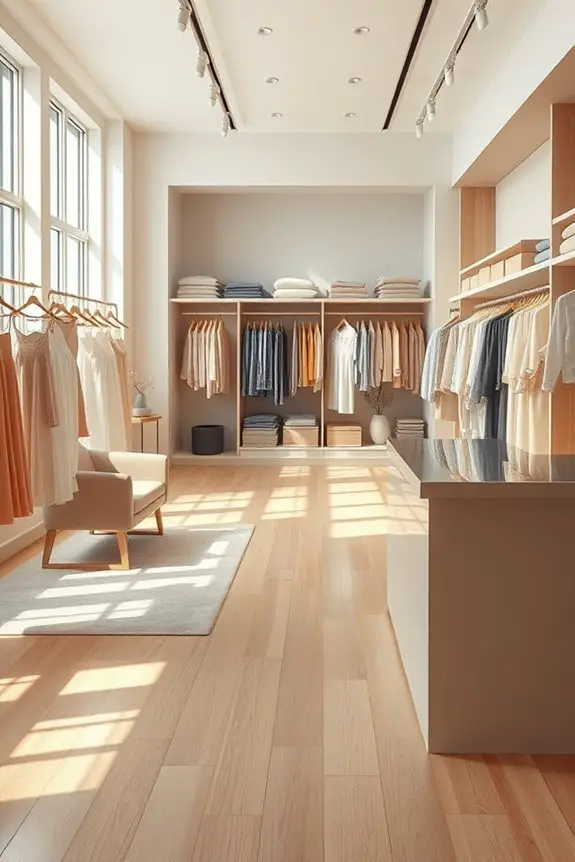
Creating defined shopping zones is essential for guiding customers through your garment shop and enhancing their overall experience. A well-planned zoning strategy can considerably improve customer flow, making it easier for shoppers to navigate different sections.
Start by dividing your shop into clearly marked areas for various categories, like casual wear, formal attire, and accessories. Use signage and distinct displays to differentiate these zones, ensuring customers know where to find what they’re looking for.
Additionally, consider the layout; keep high-demand items near the entrance to draw people in. By creating a logical flow through your shop, you’ll encourage customers to explore and linger longer, ultimately increasing sales and satisfaction.
Offer Refreshment Stations
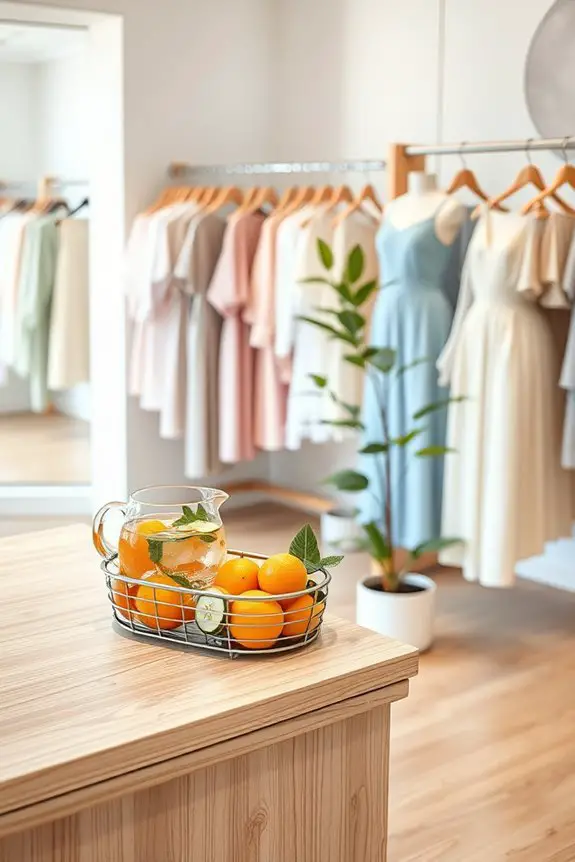
Offering refreshment stations in your garment shop can elevate the shopping experience while keeping customers energized and engaged.
Set up drink stations with a carefully curated refreshment menu that caters to various preferences, including water, coffee, and healthy snacks. This thoughtful addition not only enhances customer comfort but also encourages them to linger longer in your store.
Consider creating a cozy seating area near the refreshment stations, allowing shoppers to take a break and recharge.
You can even offer seasonal drinks or unique flavors to keep the menu exciting. By providing these refreshments, you’ll create a welcoming atmosphere that invites customers to return, ultimately boosting your sales and building a loyal clientele.
Use Minimalist Shelving
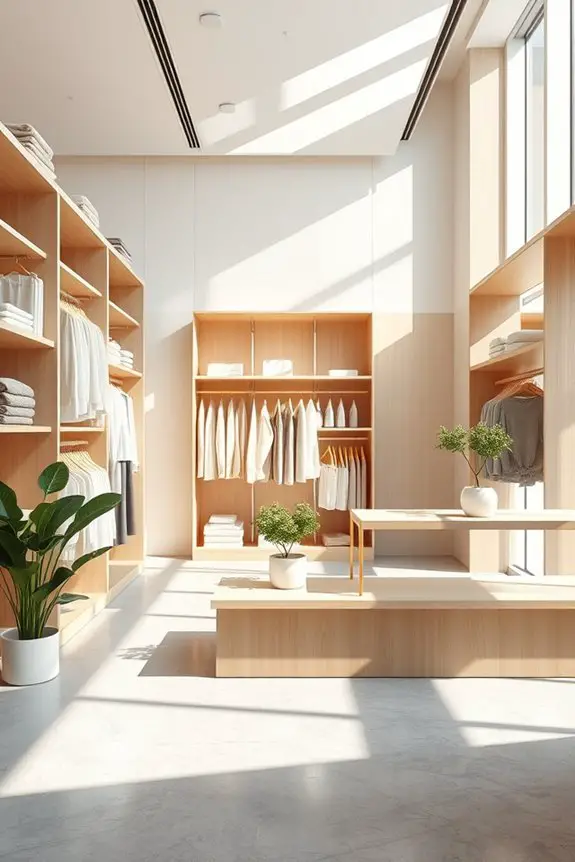
Creating an inviting atmosphere goes beyond just refreshments; the way you display your garments also plays a significant role in the shopping experience.
Using minimalist shelving can enhance your shop’s appeal while promoting efficient organization. Choose sleek, simple designs that allow your garments to stand out without overwhelming the space. This approach aligns with minimalist aesthetics, creating a clean and modern look that customers will appreciate.
Strategically placing shelves at varying heights can draw the eye and make browsing easier. Open shelving encourages customers to interact with the products, fostering a more engaging shopping experience.
Implement Seasonal Decor Changes
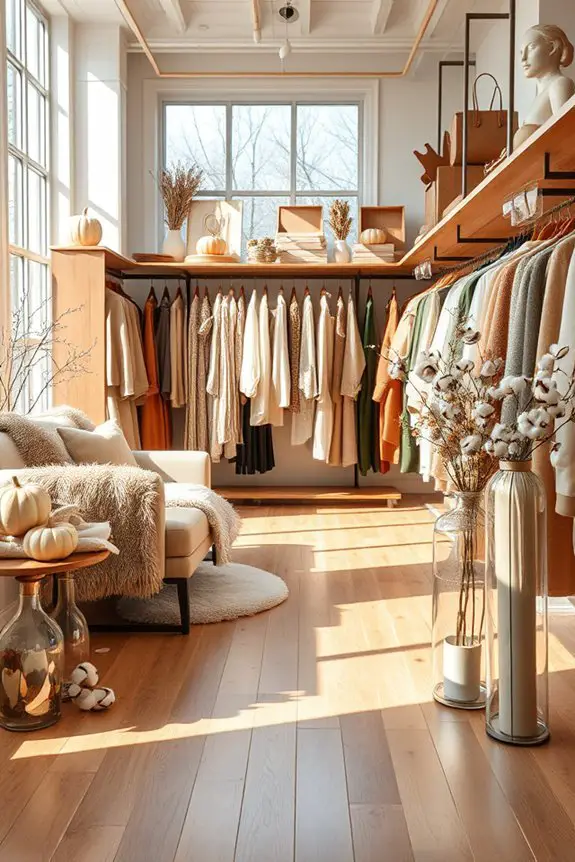
Once you’ve guaranteed a welcoming space for families, it’s time to think about how seasonal decor changes can elevate your garment shop’s appeal.
Embrace holiday themes with festive accents that resonate with customers. In winter, incorporate winter motifs and cozy colors to create a warm atmosphere. When summer rolls around, showcase bright colors and summer vibes to energize the space.
For autumn, use decor featuring autumn leaves to evoke a sense of nostalgia, while spring florals can breathe life into your shop as the weather warms up.
Consider themed events that coincide with these seasonal changes, and don’t forget to use promotional displays that highlight current color trends.
These simple updates can draw in more customers and keep your shop feeling fresh.
Use Ambient Soundscapes
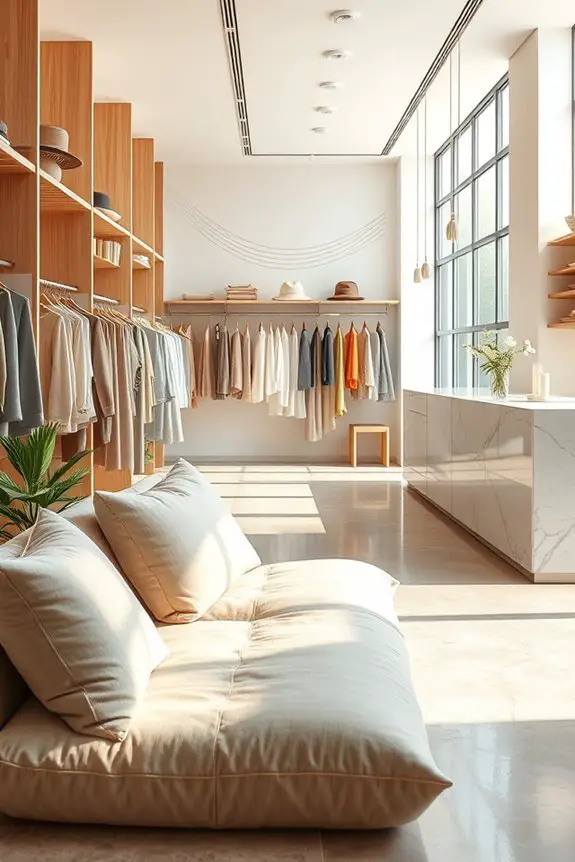
Sound can transform the atmosphere of your garment shop, making it more inviting and engaging for customers. By incorporating ambient soundscapes into your sound design, you create a unique sensory experience that resonates with shoppers.
Choose music or nature sounds that reflect your brand’s identity and appeal to your target audience. Soft background music can encourage customers to linger, while upbeat tunes can energize the space.
Consider seasonal variations to keep the auditory experience fresh and relevant. Make sure the volume is just right—loud enough to be heard but not overpowering.
This thoughtful approach to sound design will enhance the overall shopping experience, encouraging customers to return and share their positive impressions with others.
Create a VIP Shopping Area
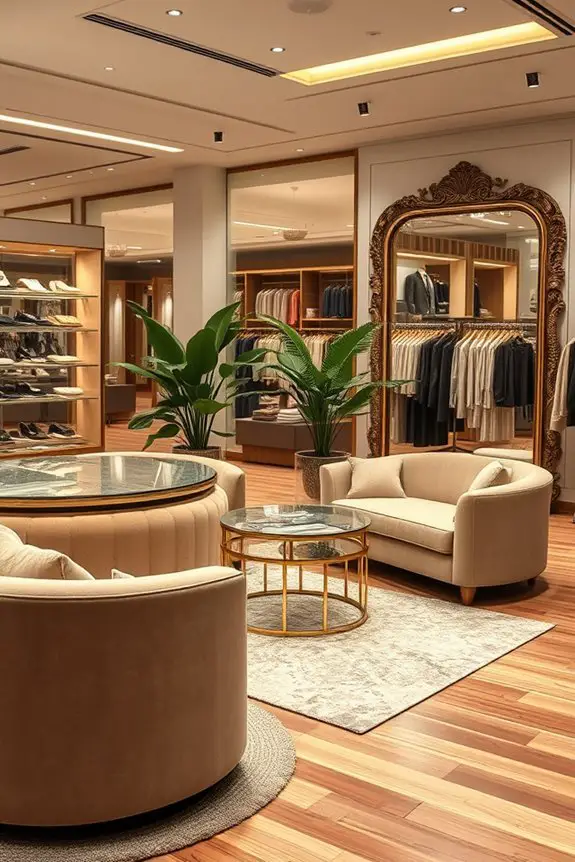
Creating a VIP shopping area not only enhances the exclusivity of your garment shop but also makes your most valued customers feel special and appreciated.
This space should exude a luxury ambiance, featuring elegant furnishings and soft lighting that invites relaxation. Consider adding plush seating where customers can unwind while browsing your exclusive selections.
Offering exclusive services, such as personalized consultations or complimentary refreshments, can elevate their experience. Use high-quality materials and finishes to create an atmosphere that reflects sophistication and style.
With tasteful decor, you’ll set the tone for a premium shopping experience, making your VIP customers feel valued. Ultimately, this dedicated area will encourage repeat visits and foster brand loyalty, driving your business’s success.
Offer Personal Styling Stations
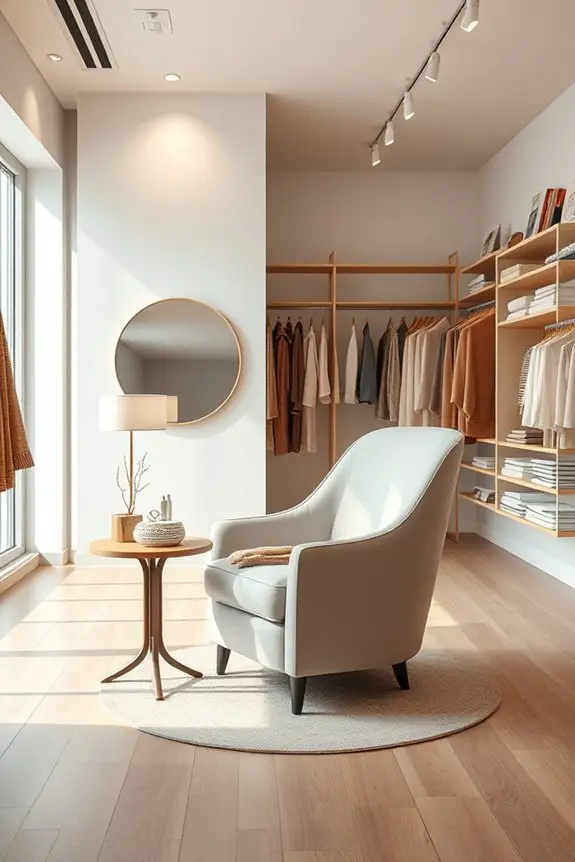
Alongside a VIP shopping area, incorporating personal styling stations can greatly enhance the customer experience in your garment shop.
These stations allow customers to receive tailored fashion advice from a personal stylist, making their shopping trip more enjoyable and productive. By offering this service, you create an inviting atmosphere where clients feel valued and understood.
Set up comfortable seating and mirrors to encourage interaction, and stock these areas with accessories that stylists can use to show different looks.
Customers will appreciate the convenience of having a knowledgeable professional at their disposal, helping them find outfits that suit their style and body type.
This personalized approach can lead to higher sales and loyal customers who return for your expert guidance.
Create a Community Board
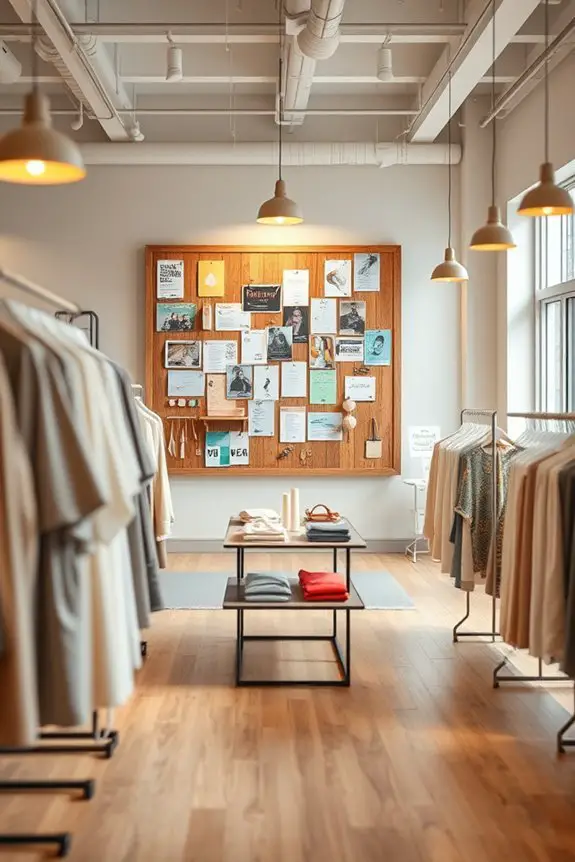
How can a community board transform your garment shop into a vibrant hub? By creating a dedicated space for community engagement, you invite customers to connect not just with your brand, but also with each other.
You’ll cultivate an atmosphere where people feel invested in your shop and the local scene. Plus, featuring local artisans or events can attract diverse clientele, making your space a go-to destination.
Offer Online Integration Points
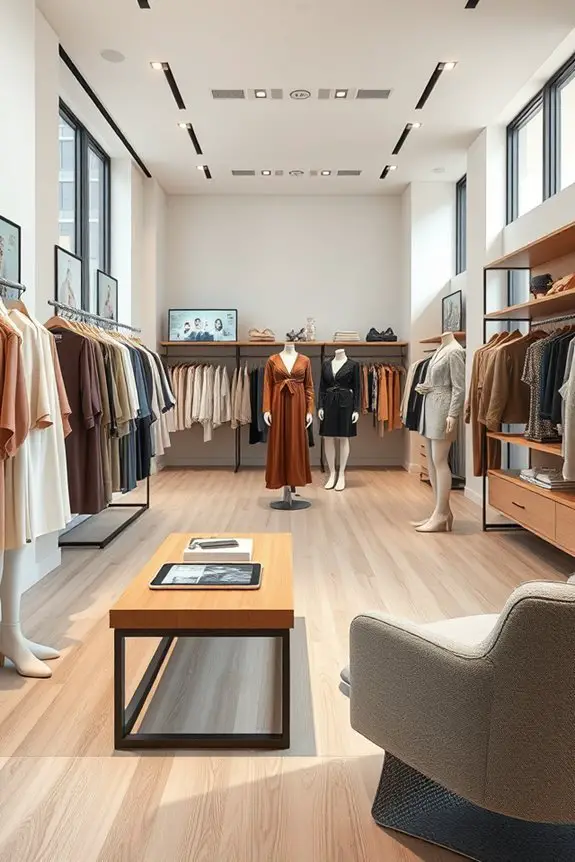
Engaging your community through a community board can lead to exciting opportunities for online integration.
Consider adding QR codes that link to your online shopping platform, allowing customers to browse and purchase items directly from their phones. This not only boosts sales but also enhances their shopping experience.
Furthermore, you can encourage social media integration by featuring a hashtag that customers can use when they share their purchases online. Displaying these posts in-store creates a dynamic connection between your shop and your online presence.
Additionally, offering exclusive online discounts to customers who engage with your social media can drive traffic both online and in-store.
Use Artistic Hangers
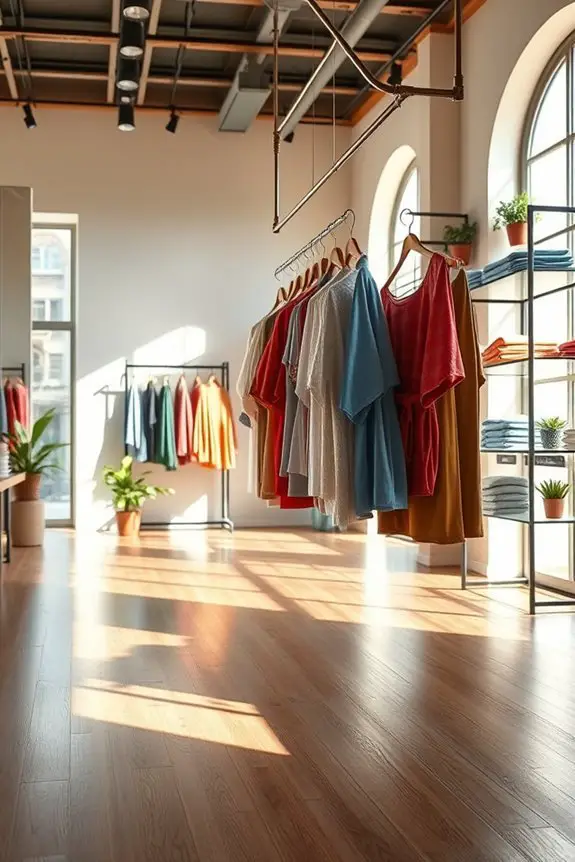
While traditional hangers serve their purpose, incorporating artistic hangers can elevate your garment shop’s aesthetic and create a memorable shopping experience.
By using unique hanger designs crafted from artistic materials, you can draw attention to your merchandise while enhancing the overall vibe of your space. Think about hangers made from wood, metal, or even fabric that reflect your brand’s personality.
These artistic touches not only highlight your garments but also invite customers to explore your offerings. Consider displaying your items on creatively designed hangers that complement your shop’s theme, making everything feel more cohesive.
With the right artistic hangers, you’ll turn a mundane display into an eye-catching showcase that encourages customers to linger and shop longer.
Design a Unique Checkout Experience
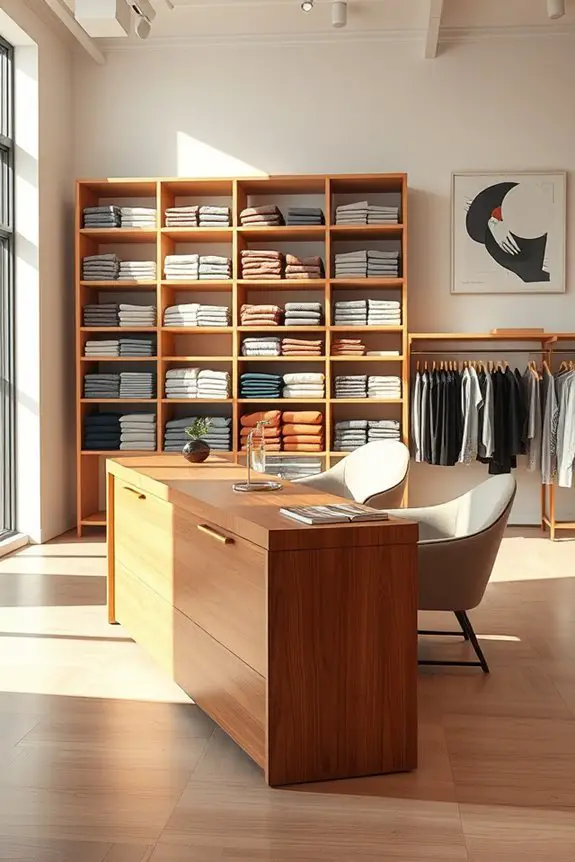
Creating a unique checkout experience can transform a simple transaction into a memorable part of your customers’ shopping journey. To achieve this, focus on an interactive checkout that engages customers beyond just ringing up their purchases.
Consider incorporating tablets or kiosks where shoppers can browse additional items or promotions while they wait.
Enhance the checkout ambiance with warm lighting, inviting décor, and calming music to create a welcoming atmosphere. You might also add personal touches, like friendly staff who can chat with customers during the process.
Use Technology for Inventory Management
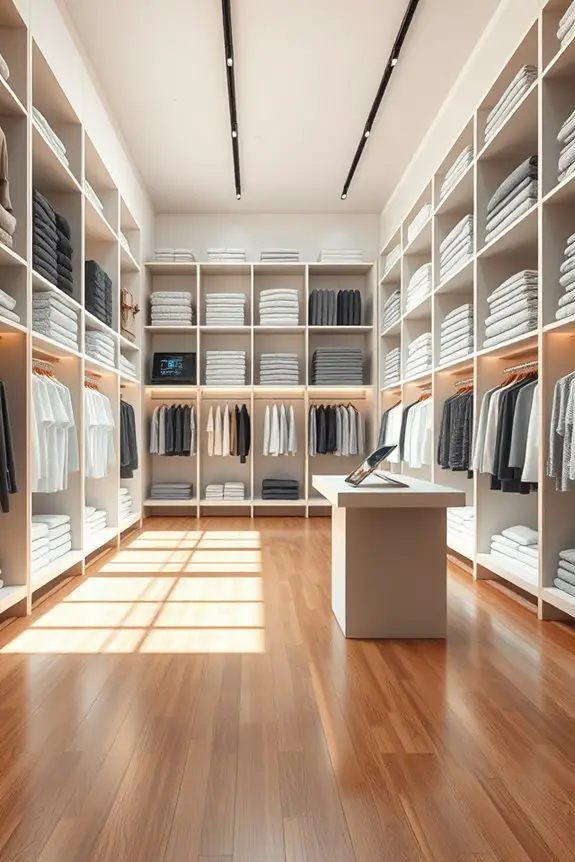
In today’s fast-paced retail environment, using technology for inventory management can considerably streamline your operations. By integrating advanced inventory tracking systems, you’ll keep a real-time pulse on stock levels, sales trends, and customer preferences.
This technology integration not only saves time but also reduces the risk of overstock and stockouts, ensuring you always have the right garments available for your customers.
Consider implementing barcode scanning or RFID technology to enhance accuracy and efficiency in inventory counts. Mobile applications can also facilitate quick updates and alerts, so you stay informed on your inventory status at all times.
Embracing these technological solutions won’t only improve your workflow but also create a more responsive shopping experience for your customers, ultimately attracting more business.
Create a Relaxation Zone
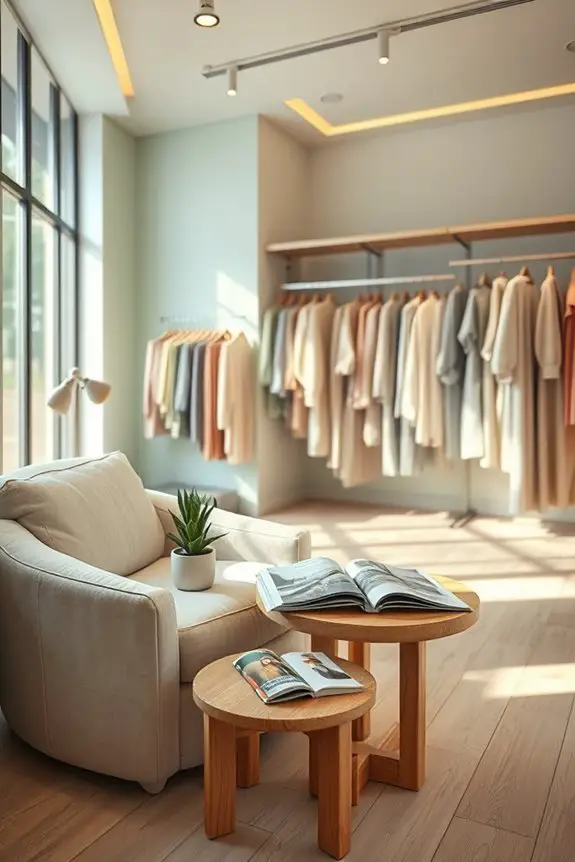
How can you transform your garment shop into a calming oasis for customers?
Start by creating a relaxation zone with comfortable seating that invites shoppers to unwind. Use soft lighting and soothing colors to enhance the atmosphere, making it feel more inviting.
Incorporate elements like plants or calming art to promote a peaceful environment. You could even provide a small area for relaxation techniques, like guided breathing exercises or short meditation sessions.
Offering refreshments, like herbal tea or infused water, can also encourage customers to linger longer.
Conclusion
Incorporating these design ideas can transform your garment shop into a vibrant space that draws customers in like a moth to a flame. Just like a beautifully wrapped gift catches the eye, your shop’s inviting atmosphere can spark curiosity and encourage exploration. Remember, each detail—from colors to displays—adds to the overall experience. When customers feel comfortable and inspired, they’re more likely to leave with not just purchases, but lasting memories of their visit.