40 Sophisticated CEO Office Interior Design Ideas to Boost Productivity
To enhance productivity in your CEO office, adopt minimalist design with functional furniture that reduces clutter. Incorporate natural light for a bright atmosphere and use bold color schemes to spark creativity. Invest in ergonomic office chairs for comfort and add acoustic panels for better focus. Consider soundproofing for privacy, a cozy library corner, and sustainable design elements. By thoughtfully utilizing vertical space, you can create an inspiring environment that fosters innovation and efficiency. Discover more transformative ideas ahead!
Choose a Single Statement Executive Desk
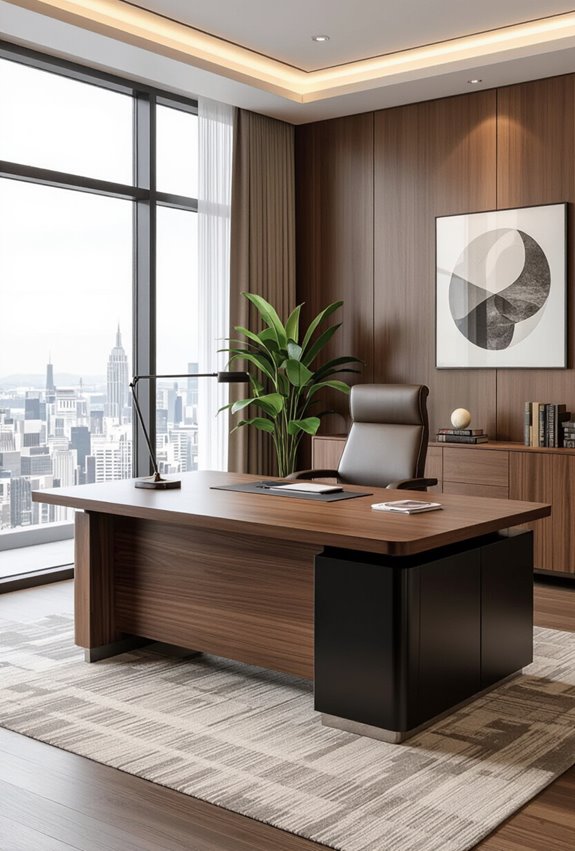
Choose a single statement executive desk that anchors the room and reflects the CEO’s authority without shouting for attention. You’ll pick a monolithic desk or a sculpture inspired desk to set tone and simplify choices. Let clean lines, premium materials, and balanced scale communicate leadership. Keep accessories minimal so the desk remains focal, practical, and unmistakably intentional.
Invest in an Ergonomic Executive Chair
Prioritize comfort and long-term health by investing in an ergonomic executive chair that supports prolonged focus and decision-making.
You’ll want adjustable Lumbar Support, seat depth, armrests, and tilt to match your body.
Choose models with built-in Posture Sensors for real-time feedback and subtle reminders to correct alignment.
A refined ergonomic chair reduces fatigue, improves concentration, and signals professional care for your wellbeing.
Design a Dedicated Focus Zone for Deep Work
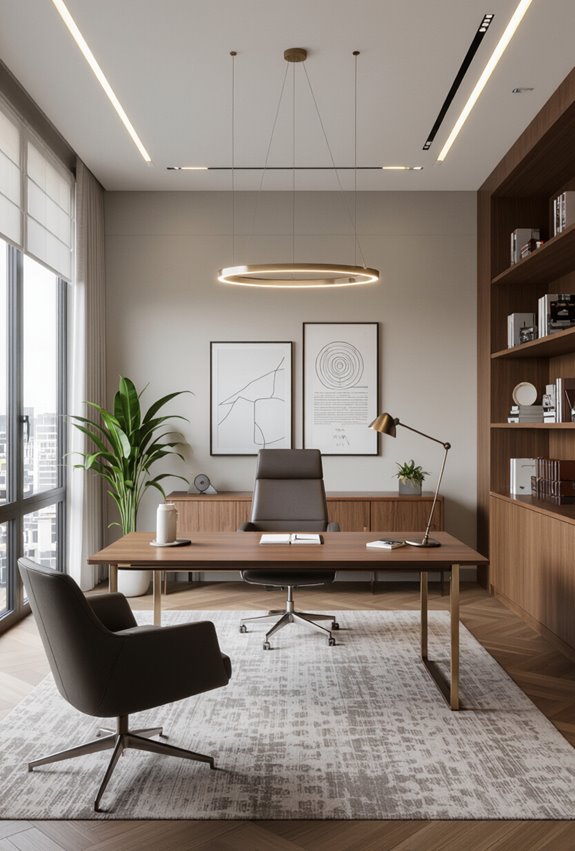
When you need uninterrupted concentration, carve out a dedicated focus zone that minimizes distractions and signals to your team that you’re doing deep work.
Place a comfortable, ergonomic chair, clear surfaces, and noise control.
Establish simple focus rituals—phone off, timer set, single-task list—to train attention.
Use subtle cues like a “do not disturb” sign to protect momentum and signal boundaries.
Use Layered Lighting to Reduce Eye Strain
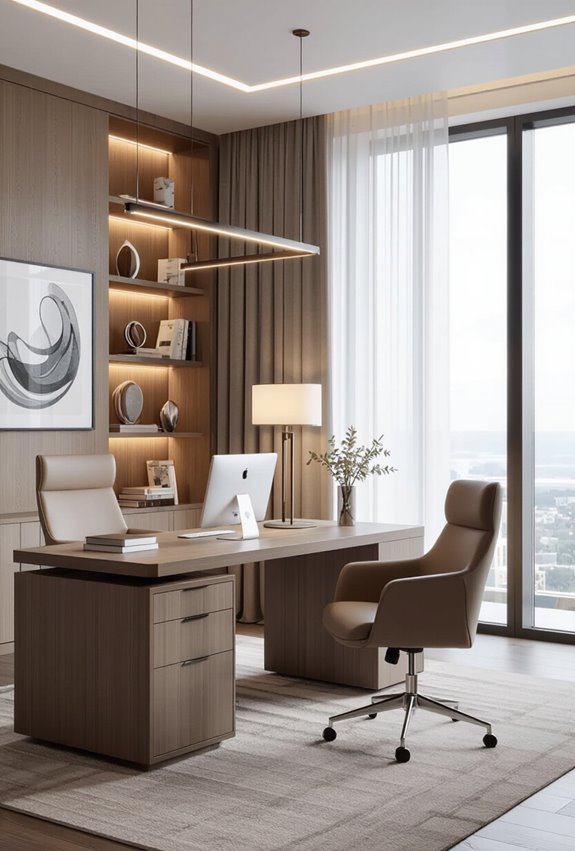
Because your eyes work best with balanced light, layer ambient, task, and accent sources to minimize glare and harsh contrasts.
You’ll create ambient layers that provide even illumination, add focused task lighting for desks, and use low‑glare accent fixtures to soften edges.
This approach reduces task contrast, prevents eye fatigue during long hours, and keeps your office comfortable without relying on a single overpowering source.
Integrate Motorized Window Treatments for Daylight Control
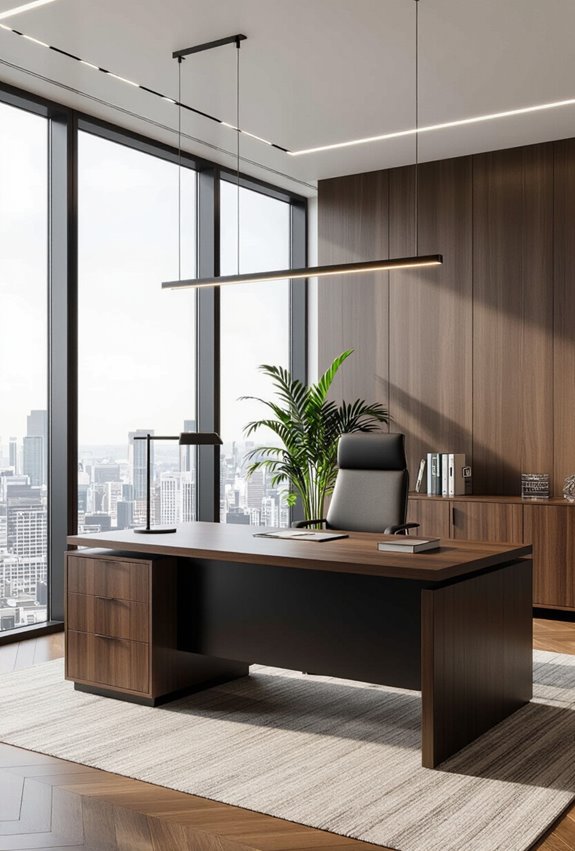
Balanced lighting sets the stage, but controlling incoming daylight is just as important—especially in a CEO office where glare, heat, and privacy need fast, precise management.
You’ll choose motorized shades and automated blackout systems to block glare instantly, or program gradual tinting for meetings.
Pair these with smart valances for seamless aesthetics, remote control, and integration with office scheduling to optimize comfort and focus.
Create Acoustic Privacy With Soundproofing
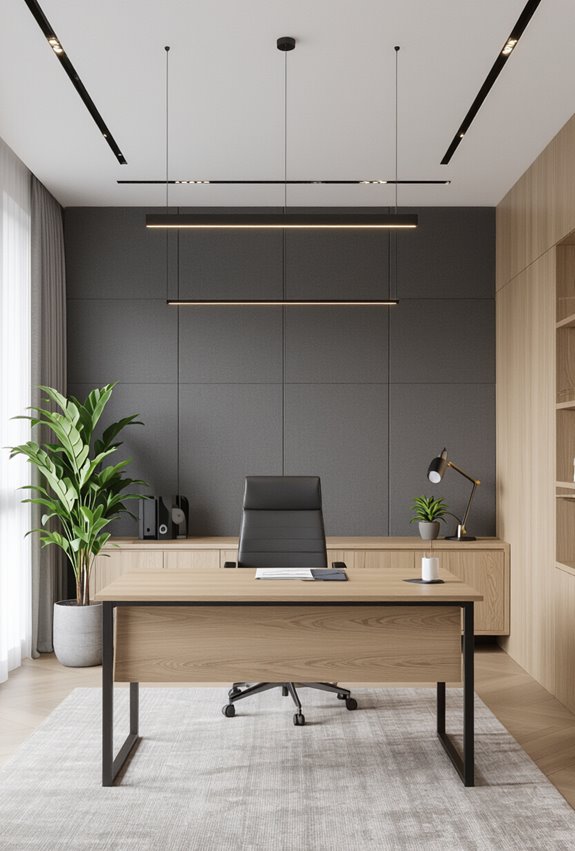
Protect conversations and concentration by designing for acoustic privacy from the start; in a CEO office, sound control is as critical as visual design because sensitive discussions, calls, and focused work can’t afford leakage or distraction.
You’ll combine decoupled walls, dense insulation, and acoustic seals, add sound masking for open zones, and choose absorbent finishes and strategic layout so meetings stay confidential and focus stays uninterrupted.
Add a Concealed Tech Hub for Cable Management
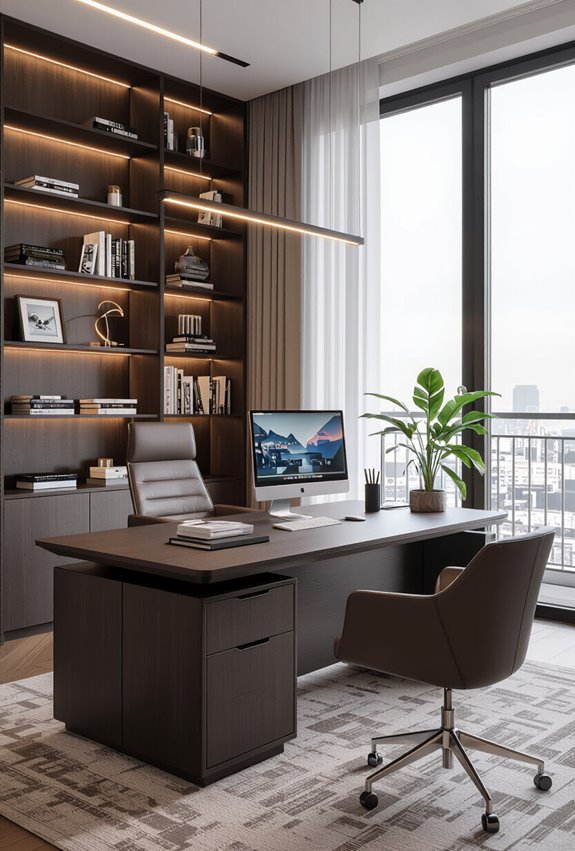
Sound control matters, but tech clutter can be just as disruptive; a concealed tech hub keeps cables, chargers, and AV gear out of sight so acoustics and aesthetics both stay intact.
You’ll install a hidden hub with labeled ports, ventilation, and accessible panels for maintenance. Smart cable concealment reduces visual distraction, improves safety, and streamlines meetings, letting you focus on leadership without tech tangles.
Include Adjustable Sit-Stand Options for Health
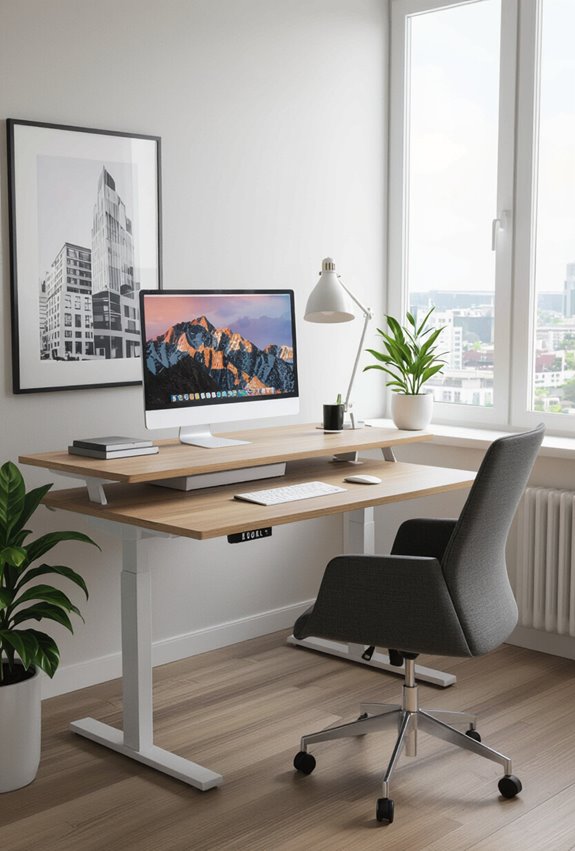
Promoting movement throughout the day, adjustable sit-stand options let you shift postures easily to reduce fatigue and boost focus.
Add a height-adjustable desk, an adjustable treadmill for light cardio during calls, and ergonomic seating.
Integrate posture reminders via smart wearables or desk apps so you’ll change position regularly.
These elements improve circulation, energy, and long-term musculoskeletal health without disrupting workflow.
Position Displays for Optimal Ergonomics
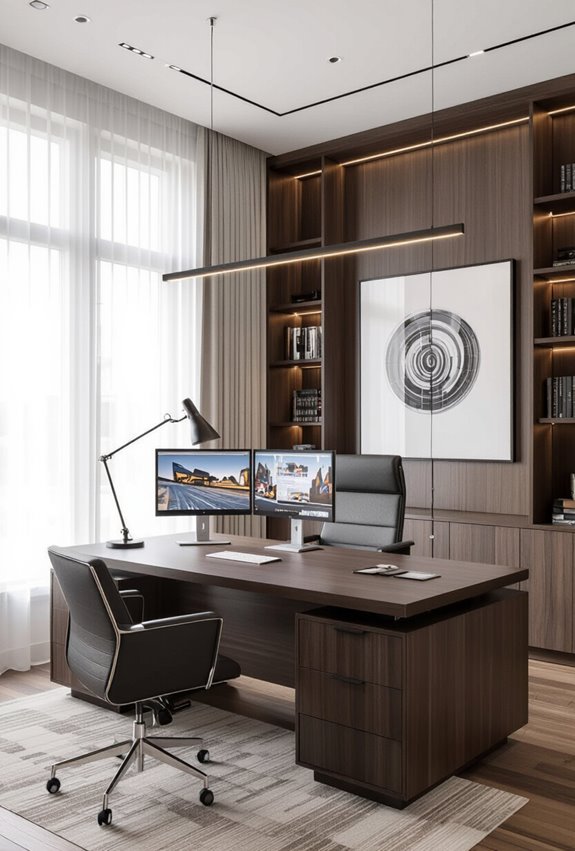
When you set up displays, place them to minimize neck and eye strain: position the top third of the primary monitor at or slightly below eye level, keep the screen about an arm’s length away, and angle it to reduce glare.
You should prioritize display ergonomics by aligning dual screens on the same plane, centralizing primary monitor placement, and adjusting height to support neutral posture.
Use Built-In Storage to Minimize Visual Clutter
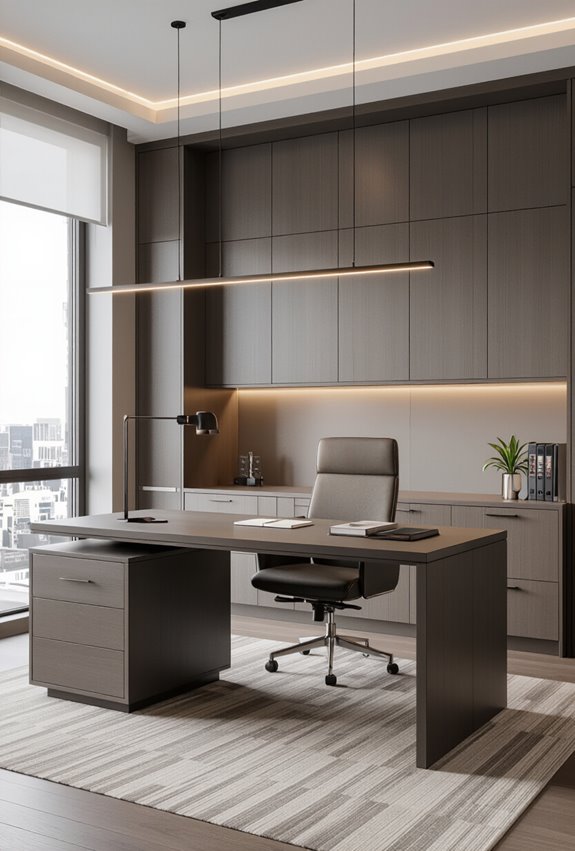
After you’ve optimized monitor placement to reduce strain, tackle the surrounding visual field by using built‑in storage to hide cables, documents, and personal items that pull your eye away from work.
Integrate hidden cabinetry and recessed shelving to maintain clean sightlines, store reference materials, and conceal tech. You’ll reduce distractions, streamline daily routines, and keep the office appearing purposeful without visual noise.
Select Materials That Convey Authority and Calm
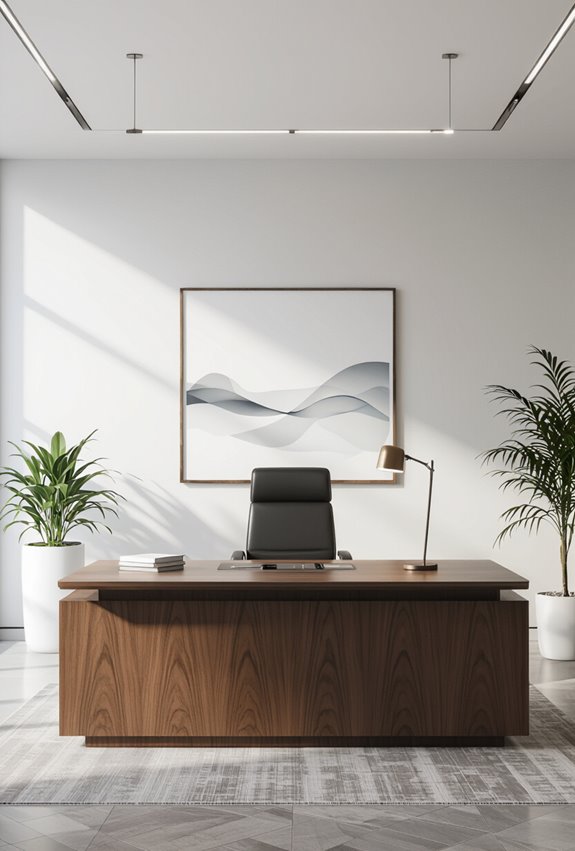
Authority comes from thoughtful material choices, and you’ll want surfaces that balance gravitas with a calming presence.
Choose tactile leathers for seating and accents to signal comfort and command, and pair them with matte metals for trim and hardware to avoid glare.
Use solid woods and stone for durable focal pieces, keep finishes subdued, and prioritize quality craftsmanship to reinforce authority without visual noise.
Incorporate Biophilic Elements for Cognitive Benefits
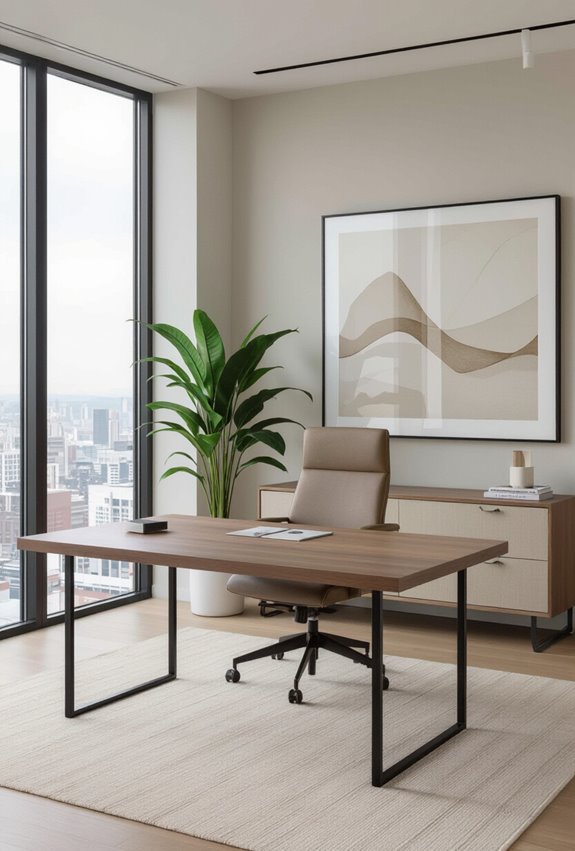
Complementing a restrained color scheme with biophilic elements brings calming, cognitive benefits that support focus and creativity.
You should add living walls or clustered plants to reduce stress and improve air quality, and choose natural textures like wood, stone, and woven fabrics to ground the space.
Position greenery near workstations and sightlines so you’ll get restorative visual breaks without disrupting workflow.
Add Curated Artwork to Inspire and Orient
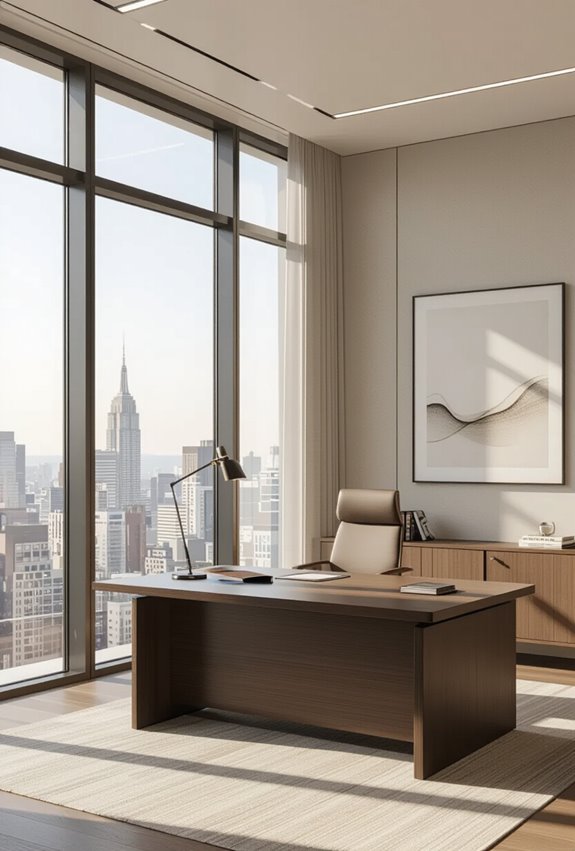
A striking painting or a thoughtfully chosen sculpture can set the tone for the entire office, so pick pieces that reflect your values and guide circulation.
You’ll choose emotionally resonant works that spark focus and calm. Use directional motifs—subtle lines, shapes, or placements—to orient movement, define meeting zones, and reinforce hierarchy without crowding the space or distracting from daily workflow.
Create a Hospitality-Style Refreshment Station
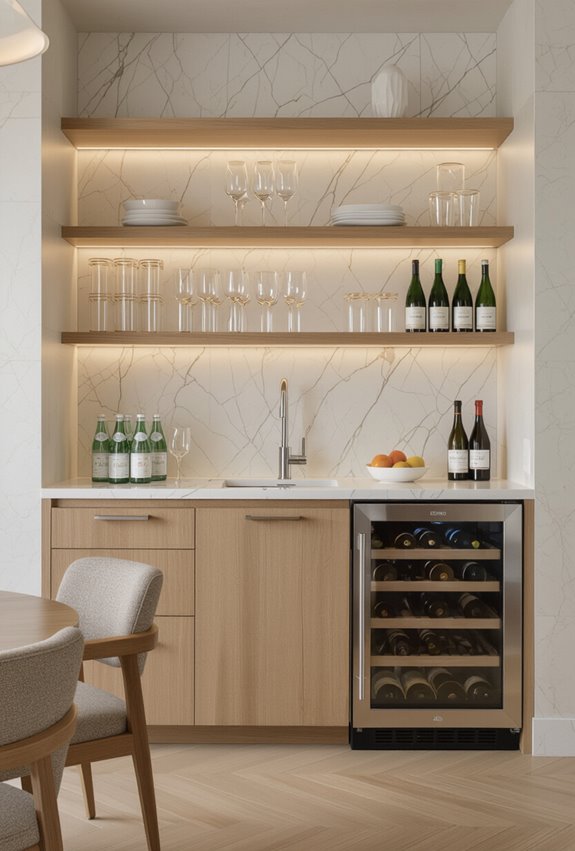
Designing a hospitality-style refreshment station makes daily routines feel intentional and welcoming. You’ll outfit a hospitality counter with quality beverages, glassware, and a compact coffee setup that’s easy to use.
Choose finishes and lighting that enhance refreshment aesthetics, add discreet storage for supplies, and keep surfaces uncluttered. This encourages short, restorative breaks that support focus and professional hospitality without disrupting workflow.
Design a Private Mini-Library for Reference
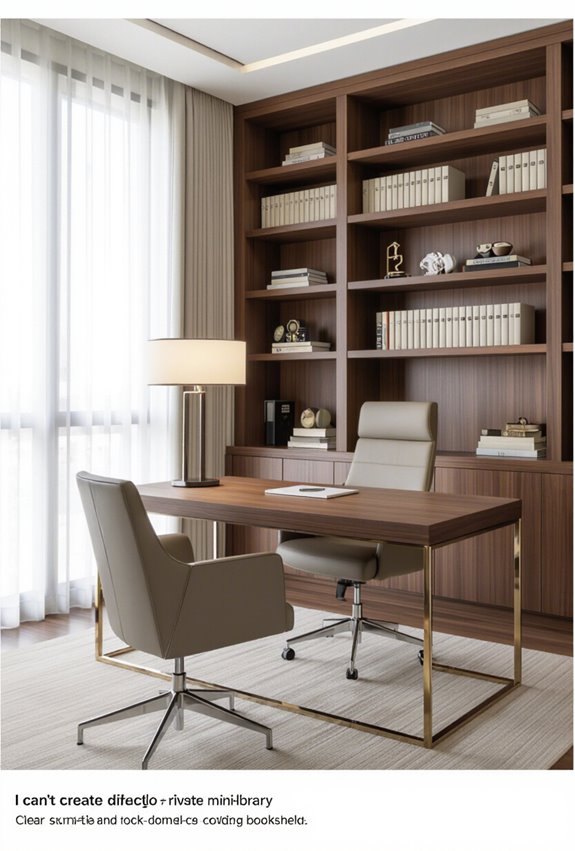
Shelves built to fit your collection turn a corner of the CEO office into a quiet, functional mini-library for quick reference and focused reading.
You’ll arrange antique stacks for character and easy access, mix current briefs with timeless volumes, and add task lighting for late work.
Sliding ladders save space and reach high shelves, while a comfortable chair invites brief, restorative study breaks.
Install a Compact, Discreet Meeting Table
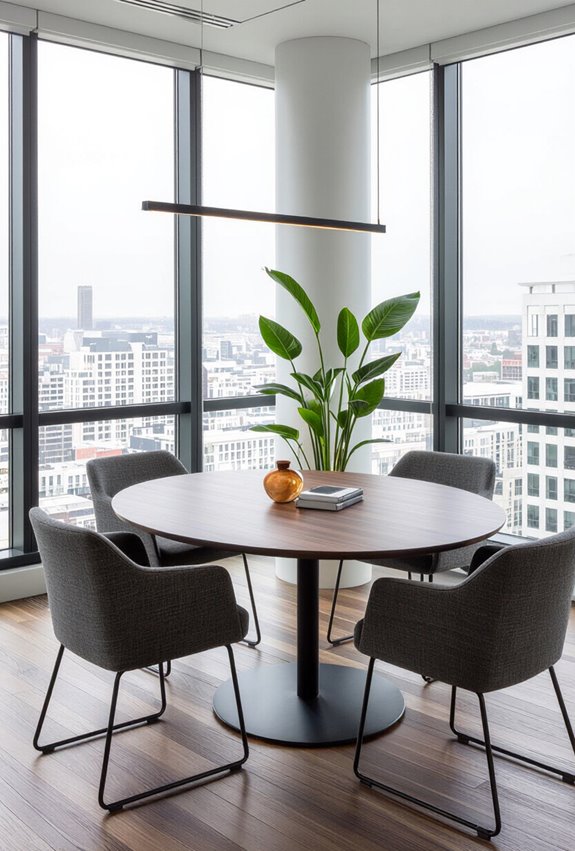
Tuck a compact, discreet meeting table into an underused corner or beside a window so you can host short, focused conversations without disrupting the room’s flow.
Choose a sleek privacy table with integrated cable management and subtle storage. You’ll appreciate retractable conferencing features for instant tech setup and a low profile that preserves circulation, encourages quick decisions, and maintains an uncluttered executive aesthetic.
Use Glass Partitions to Balance Openness and Privacy
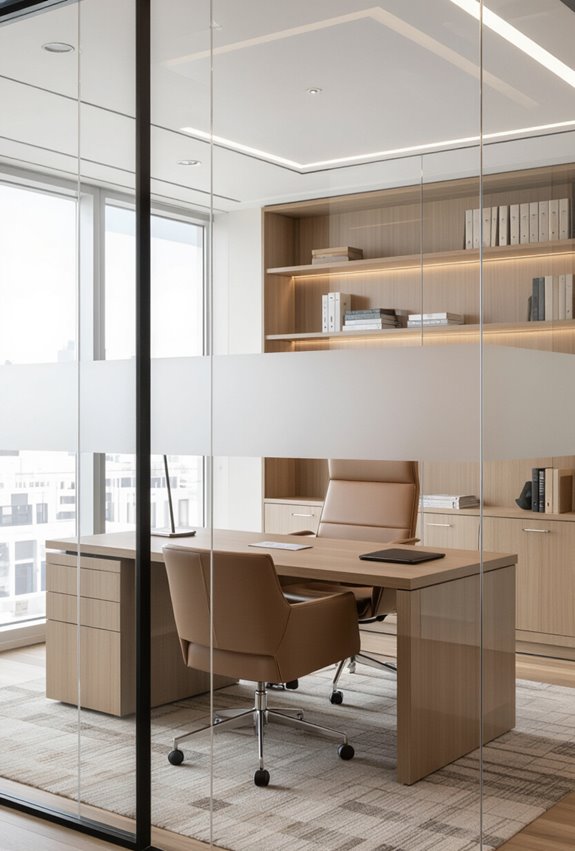
Bring in glass partitions to open up sightlines while still giving you acoustic and visual separation.
You’ll maintain transparent thresholds for easy flow between zones and use patterned frits to introduce subtle privacy and branding.
Position partitions to shield focused work without isolating teams, add operable panels for ventilation and meetings, and choose glass thickness and seals that guarantee acoustic performance.
Add a Branded Feature Wall for Identity Reinforcement
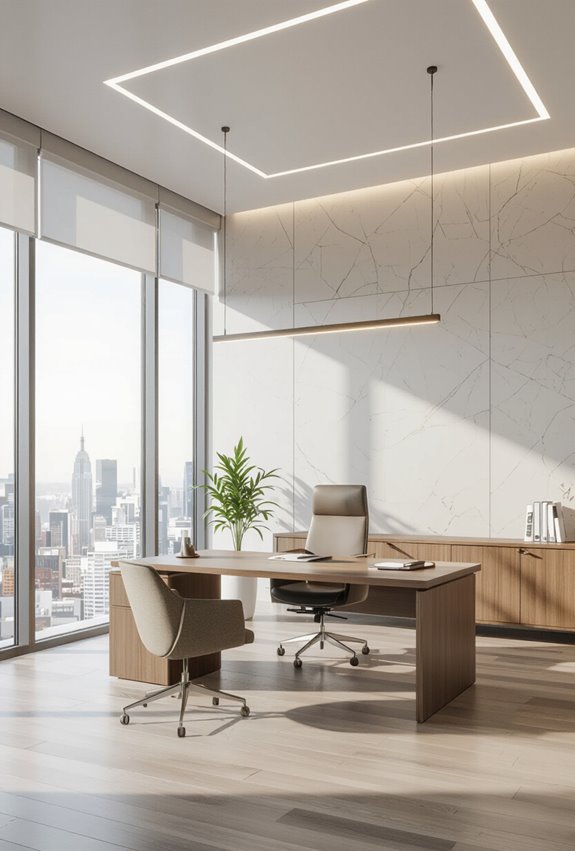
Once you’ve opened sightlines with glass partitions, anchor those views with a branded feature wall that reinforces identity and focus.
You’ll use a branded mosaic or subtle identity typography to convey values without clutter. Select durable finishes, controlled lighting, and muted colors so the wall draws attention yet stays professional.
Keep scale and placement aligned with sightlines for maximum impact.
Integrate Smart Controls for Lighting and Climate
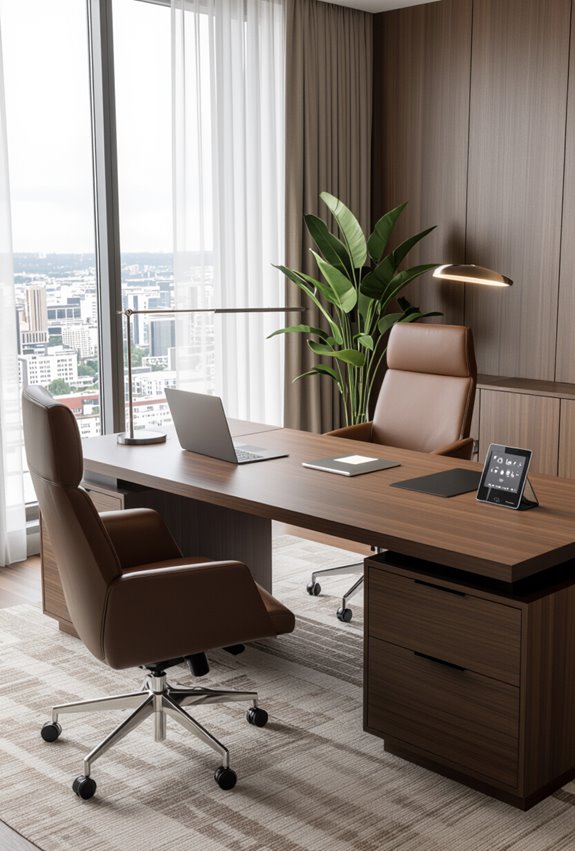
Automate lighting and climate to create a workspace that adapts to your schedule and preferences, improving comfort, energy efficiency, and productivity.
Use adaptive thermostats to maintain consistent temperatures and reduce distractions, and program circadian lighting to support focus and natural rhythms.
Integrate controls into a single app or voice system so you can quickly adjust scenes for meetings, deep work, or downtime.
Provide Personal Microclimate Options at the Desk
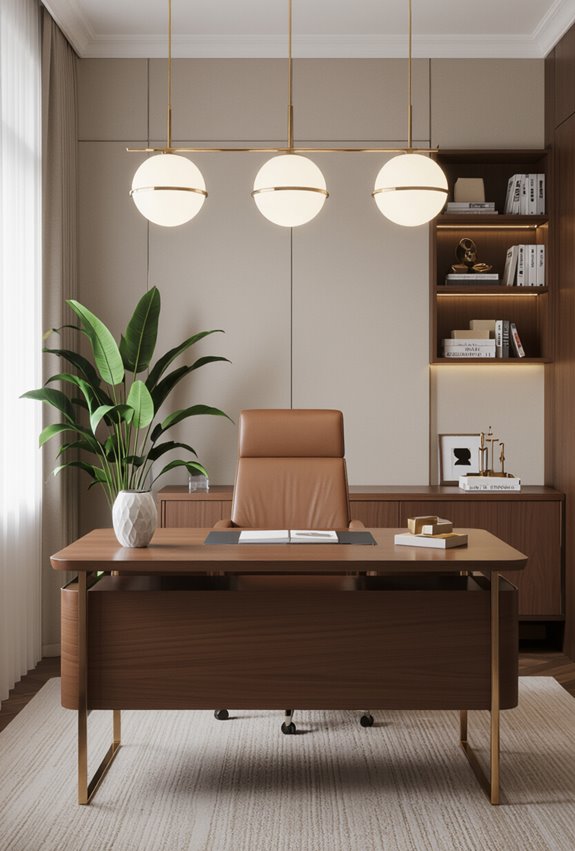
Smart, centralized controls are great for overall comfort, but people still feel different at their desks—so give each workstation its own microclimate options.
You can offer personal climate controls like a compact micro fan, a subtle desk diffuser for scent and perceived warmth, and ergonomic accessories such as a heated mouse. These choices help occupants fine-tune comfort without altering room settings.
Design for Movement With Clear Circulation Paths
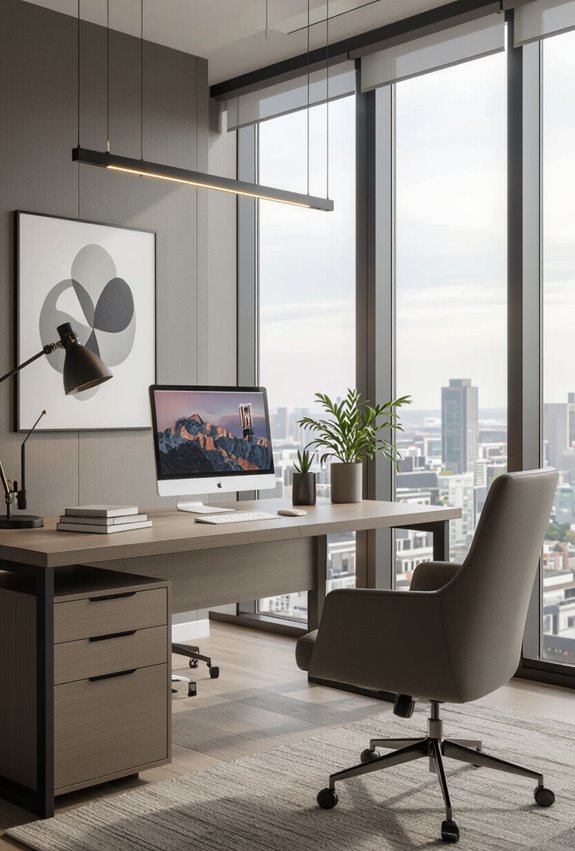
With clear circulation paths, you’ll keep movement effortless and reduce interruptions: lay out wide, unobstructed aisles between workstations and meeting areas, align desks and seating to natural walk lines, and reserve sightlines to key destinations like the reception and exits.
You’ll choreograph motion choreography by zoning functions, marking clear pathways with subtle flooring or lighting, and minimizing visual clutter to speed changes.
Implement Intentional Scent for Mood and Memory
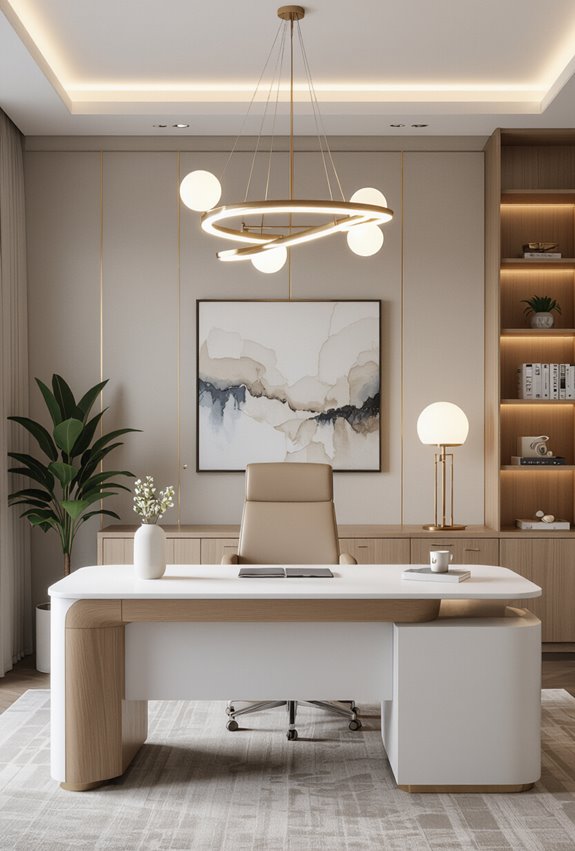
Because smell links directly to emotion and recall, choosing a signature scent for your CEO office can shape mood, sharpen focus, and make the space more memorable to visitors.
Use scent zoning to vary intensity between work, meeting, and reception areas.
Pick subtle, consistent fragrances tied to memory cues—like citrus for alertness or lavender for calm—so staff and guests associate scent with desired states.
Add Daylight-Mimicking Lighting for Late Work
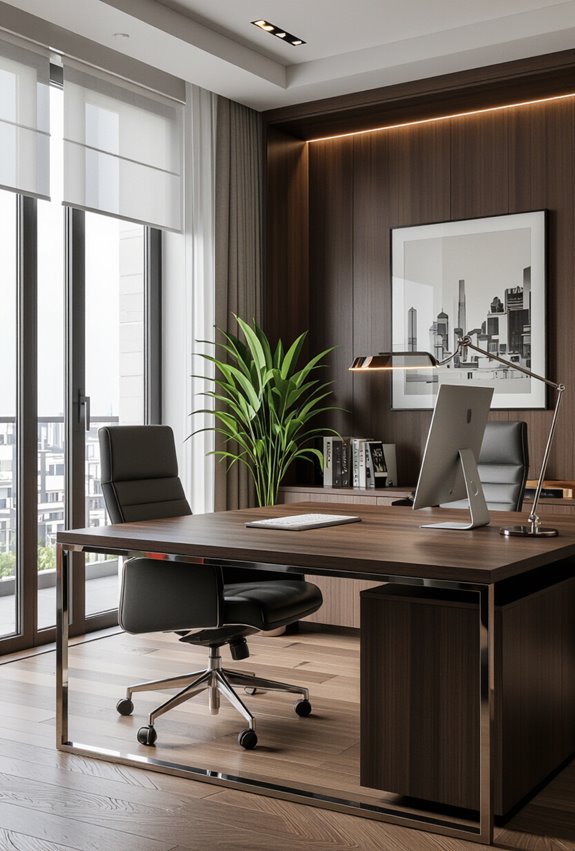
Scent sets mood; light sustains it—especially when your schedule stretches into the evening.
You’ll use circadian lighting systems to mimic daylight, boosting alertness and focus during late tasks. Choose cool white fixtures with adjustable intensity and color temperature so screens and meetings feel natural.
Position overhead and task lights to reduce glare, maintain contrast, and support sustained productivity without disrupting sleep later.
Include Zones for Quick Decompression Breaks
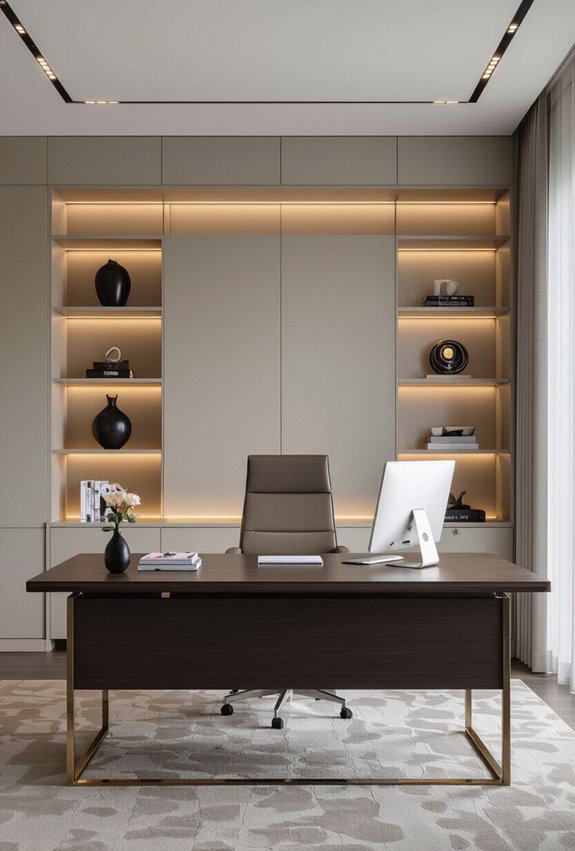
Designing short decompression zones gives you a reliable way to reset without leaving the office’s flow.
You can carve a Microbreak corner with a comfortable chair, subtle greenery, and a small table for water or a phone.
Add Sensory pods or a quiet alcove with soft lighting and tactile surfaces so you’ll recharge quickly between meetings, returning focused and composed.
Specify Durable Finishes for High-Touch Areas
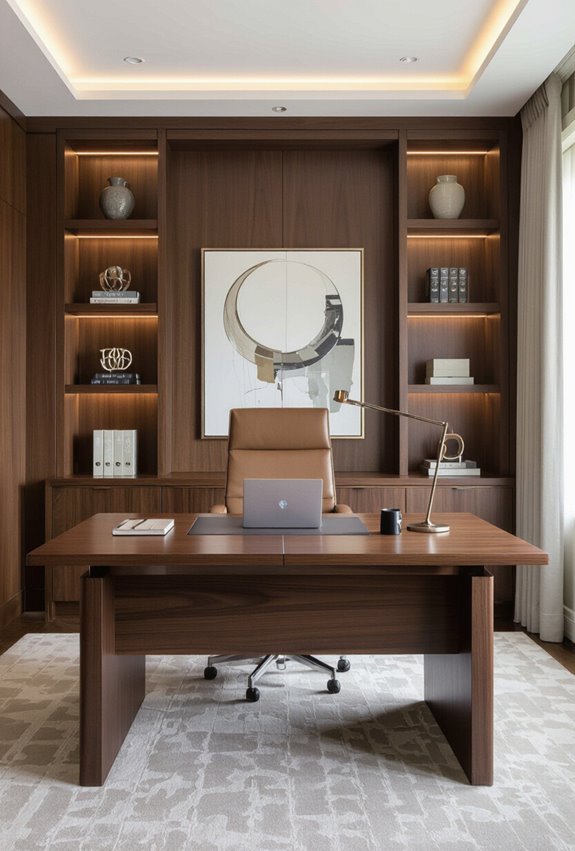
Prioritize hard-wearing finishes in high-touch zones—door handles, conference tables, reception counters, and elevator lobbies—to cut maintenance time and preserve a polished look.
Choose materials with high durability and antimicrobial coatings, ensuring seamless joins for easy cleaning.
Specify impact resistant surfaces on tabletops and counters, and pick colors and textures that hide wear so you keep a pristine, professional environment with minimal upkeep.
Hire Specialists: Architect, Acoustician, Lighting Designer
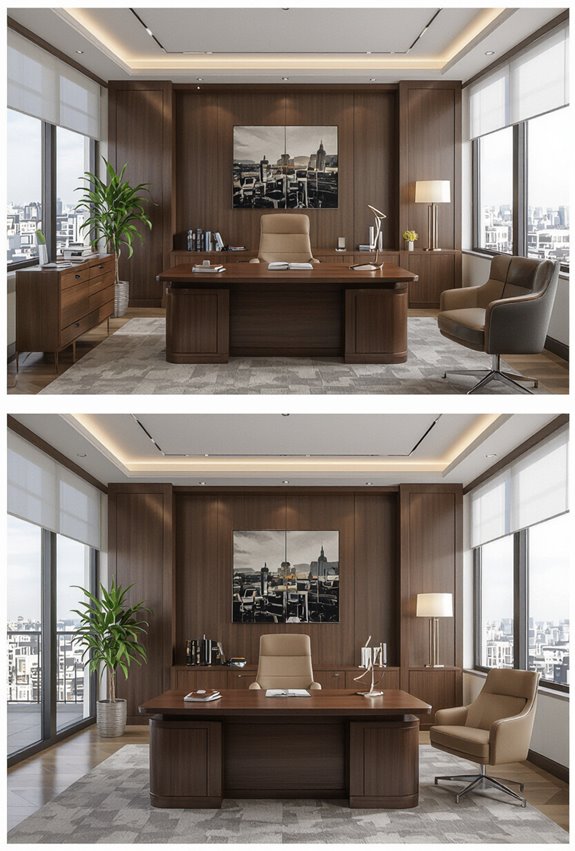
Once you’ve mapped phased priorities and budgets, bring in specialists to make those plans buildable and high-performing.
Hire an architect to resolve layouts and permits, an acoustician for acoustic modeling and noise control, and a lighting designer to optimize circadian-friendly illumination.
Coordinate their recommendations, supervise material sourcing, and guarantee technical drawings and schedules align so installations run smoothly and meet your performance goals.
Measure Outcomes: Productivity, Comfort, and Perception
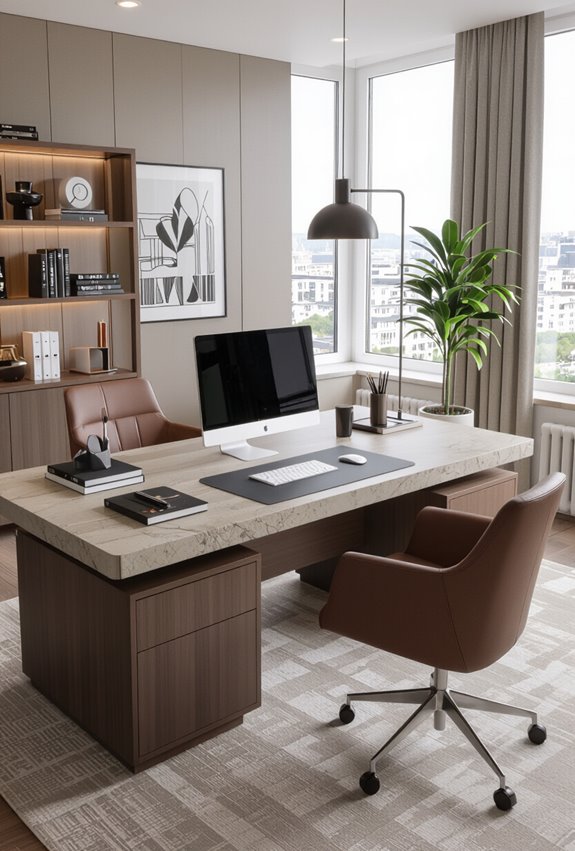
Track outcomes rigorously to see whether your design is delivering on productivity, comfort, and perception.
Define clear measurement frameworks tying design elements to KPIs, then run baseline and follow-up user surveys to capture satisfaction and perceived focus.
Use objective metrics—task completion, noise levels, ergonomic incidents—and combine them with qualitative feedback so you can iterate and justify further investment.
Bold Color Schemes to Inspire Creativity

Since colors can considerably impact mood and creativity, choosing a bold color scheme for your CEO office can spark inspiration and innovation.
Opt for vibrant accents like deep blues or bright yellows to create an energizing atmosphere. These hues not only enliven your workspace but also align with color psychology principles, influencing how you and your team feel and perform.
For instance, red can stimulate action and excitement, while green promotes balance and calmness. Don’t shy away from mixing these colors; a daring combination can break monotony and encourage creative thinking.
Ergonomic Office Chairs for Comfort and Support
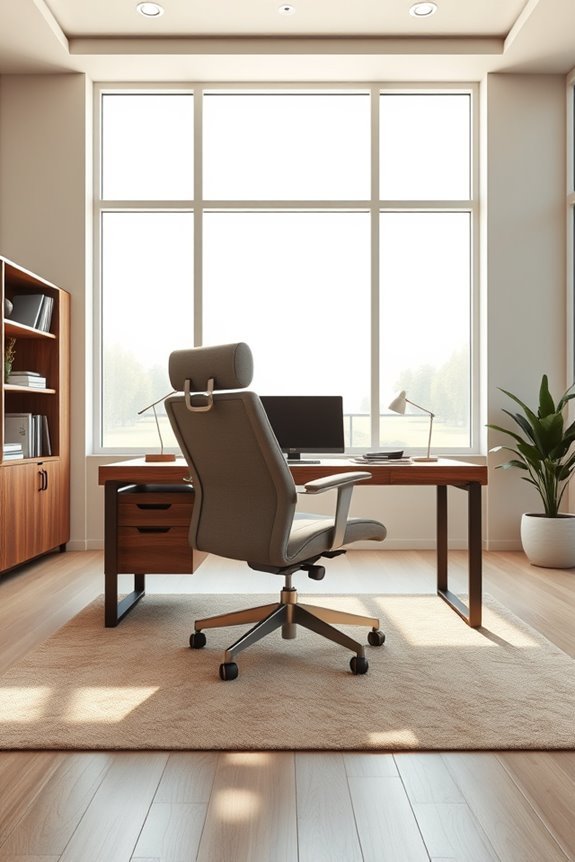
Comfort is key in a CEO’s office, and investing in ergonomic office chairs can make a significant difference in your daily productivity.
Look for chairs with adjustable height to guarantee you find the perfect fit. Features like lumbar support and breathable materials keep you comfortable during long meetings.
Don’t overlook aesthetic design; your chair should complement your office’s style while providing easy mobility. With various style options and color choices, you can match your chair to your brand.
Consider cushion firmness for ideal support, and choose armrest features that enhance your comfort.
Finally, prioritize durability standards to guarantee your investment lasts, allowing you to focus on leading your team effectively.
Acoustic Panels for Enhanced Focus
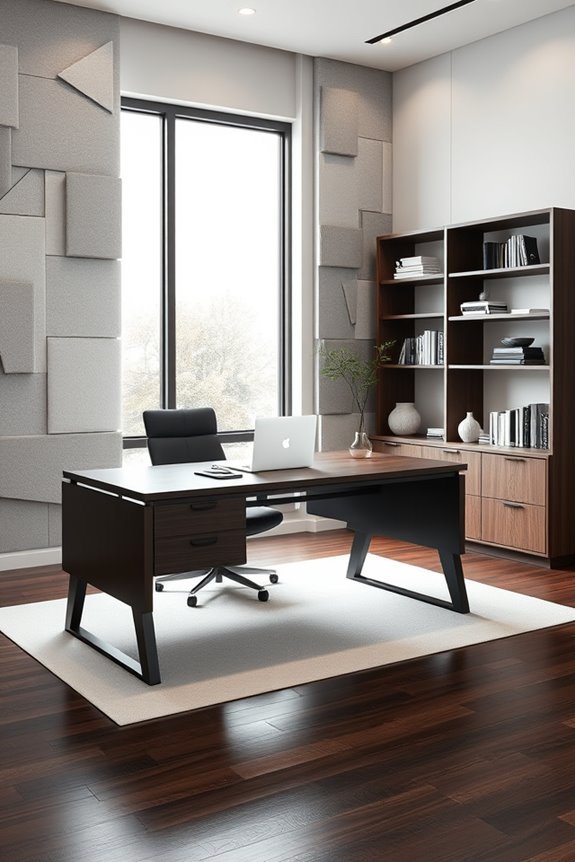
To maintain focus in a CEO’s office, incorporating acoustic panels can greatly reduce noise distractions.
These panels not only improve sound absorption but can also serve as stunning acoustic art, enhancing the overall aesthetic of your workspace. By strategically placing them on walls or ceilings, you’ll create a serene environment conducive to deep thinking and productivity.
Consider choosing designs that align with your brand’s personality; bold colors or unique patterns can inspire creativity while keeping the noise levels manageable.
The right acoustic panels can transform your office into a focused haven, allowing you to concentrate on high-stakes decisions without the interference of outside chatter.
Invest in this essential design element to elevate your workspace and boost your productivity.
Customized Built-in Shelving
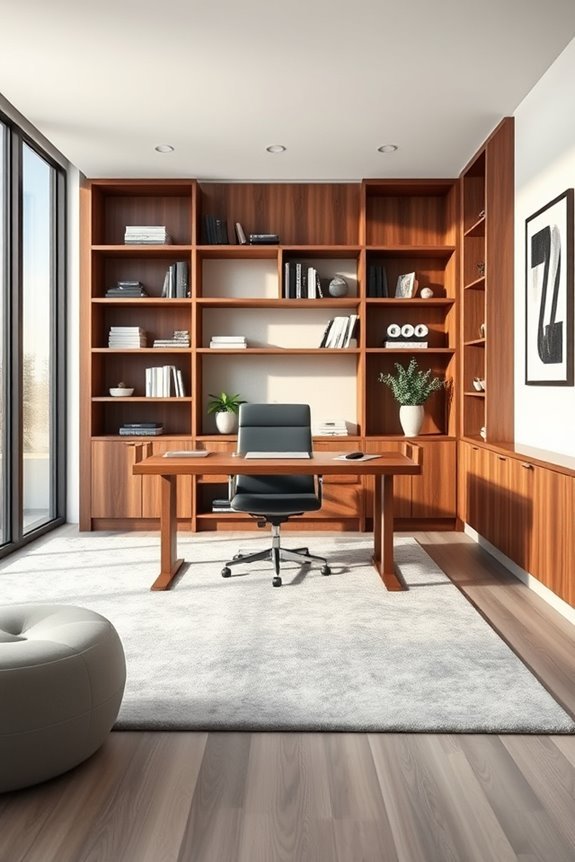
Customized built-in shelving can dramatically enhance both the functionality and aesthetic of a CEO’s office.
With custom shelving solutions, you can create a tailored storage system that meets your unique needs while maximizing space. These built-in storage options offer a seamless look, blending with the overall design of your office.
Imagine having designated spaces for books, awards, and essential documents, all organized efficiently. You can also incorporate lighting into the shelves to highlight important items and create a more inviting atmosphere.
This not only keeps your office clutter-free but also makes a powerful statement about your professionalism. Invest in customized built-in shelving to foster an environment that promotes productivity and reflects your personal style.
Luxury Desk Accessories for a Touch of Elegance

Artful wall decor sets the stage for a CEO’s office, but the details matter just as much. Elevate your workspace with luxury desk accessories that exude sophistication.
Start with a luxury pen set; a finely crafted pen not only looks impressive but also enhances your writing experience. Choose materials like rose gold or sleek black finishes to complement your office’s theme.
Next, opt for elegant desk organizers to keep your space tidy while adding a touch of class. These organizers can hold everything from business cards to essential documents, keeping your desk clutter-free and functional.
With these thoughtful additions, you can create an environment that inspires productivity and reflects your refined taste, making every day at the office feel extraordinary.
Private Nooks for Quiet Reflection

Private nooks for quiet reflection provide a much-needed escape from the hustle and bustle of the office. These privacy zones allow you to step away from your desk and recharge your mind.
Imagine creating reflective corners filled with comfortable seating, soft lighting, and calming decor. You’ll find that just a few moments in these spaces can spark creativity and enhance your focus.
Incorporate plants or artwork to make these areas inviting and inspiring. You might also consider soundproofing to minimize distractions, ensuring you can fully immerse yourself in your thoughts.
Color Psychology in Office Design

Incorporating private nooks for quiet reflection can enhance your office environment, but the colors you choose for your space also play a significant role in shaping mood and productivity.
Understanding color meanings can help you select hues that align with the emotional impact you want to create. For example, blue promotes calmness and focus, perfect for decision-making areas. On the other hand, yellow sparks creativity and optimism, ideal for brainstorming zones.
Green brings balance and rejuvenation, making it great for relaxation spots. By thoughtfully integrating these colors, you can cultivate an atmosphere that inspires your team, boosts morale, and enhances overall productivity.
High-Quality Materials for a Luxurious Feel
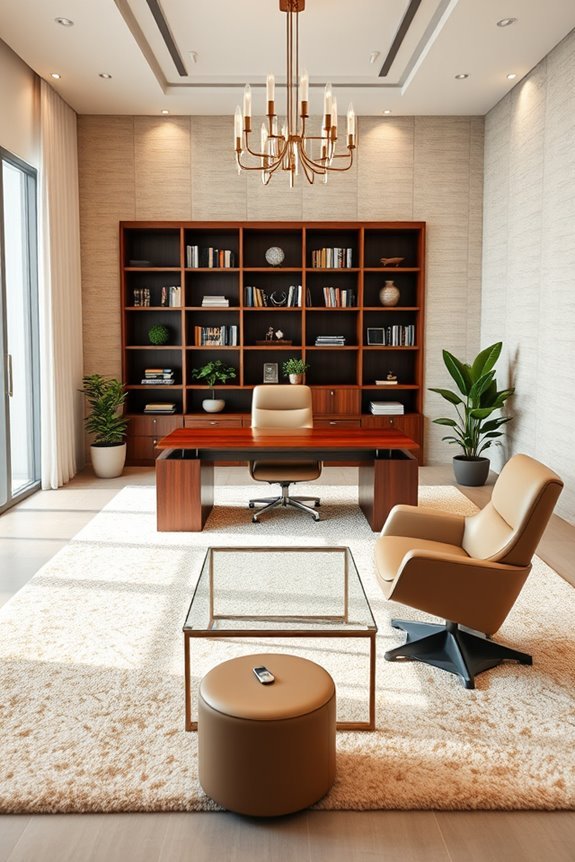
To create an atmosphere of sophistication in your CEO office, incorporating high-quality materials is essential. Opt for luxury materials like rich woods, polished marble, and soft leathers to elevate the space.
These elements not only add visual appeal but also create a tactile experience that impresses clients and inspires confidence. Choose furniture with premium finishes that showcase craftsmanship, such as fine upholstery or intricate detailing, ensuring every piece serves a purpose while enhancing the overall aesthetic.
Incorporating metallic accents, like brass or chrome, can also provide a modern touch, balancing warmth with a sleek vibe.
Smart Storage Solutions

Effective storage solutions can transform your CEO office from cluttered to streamlined, enhancing both functionality and aesthetics.
Consider incorporating smart shelving that maximizes vertical space, allowing you to keep important documents and decor within reach while maintaining a clean look. These shelves can be customized to fit your style, providing a cohesive appearance throughout the office.
Additionally, hidden compartments are a great way to keep personal items and less frequently used materials out of sight. You can integrate these into furniture pieces like desks or cabinets, ensuring everything has its place.
Creating a Relaxation Area
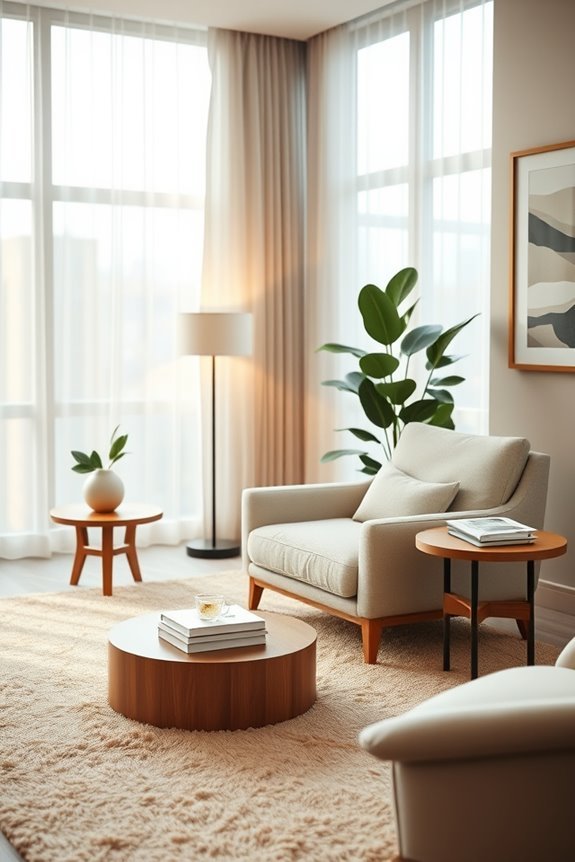
Creating a relaxation area in your CEO office can greatly enhance your work environment, allowing you to recharge and improve overall productivity.
Start by designating a corner for this space, filled with comfortable seating like a plush chair or a small sofa. Incorporate calming colors, such as soft blues or greens, to create a serene atmosphere.
You can add elements like indoor plants or a small water fountain to promote tranquility. Consider keeping relaxation techniques on hand, like guided meditation apps or stress relief tools, to help you unwind during hectic days.
This dedicated area won’t only foster creativity but also provide you with a much-needed break, allowing you to return to work more focused and energized.
Modular Office Furniture for Flexibility
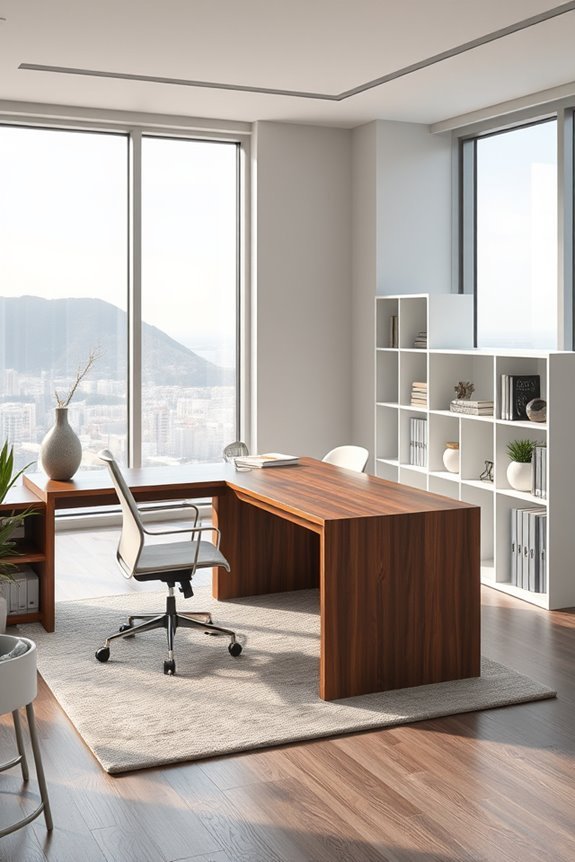
When you choose modular office furniture, you gain the flexibility to adapt your space to meet changing needs.
Modular workstations allow you to easily rearrange your office layout, fostering collaboration or creating private areas as required. This adaptability helps you maintain an efficient workflow, whether you’re hosting a team meeting or focusing on individual tasks.
With flexible layouts, you can effortlessly adjust your environment to accommodate new projects, team sizes, or even different working styles.
Plus, modular furniture often comes in various styles and colors, ensuring your office looks cohesive while remaining functional.
Embracing this approach not only enhances productivity but also creates a dynamic atmosphere where innovation can thrive.
Transform your workspace with modular solutions that fit your evolving business landscape.
Incorporating Cultural Elements
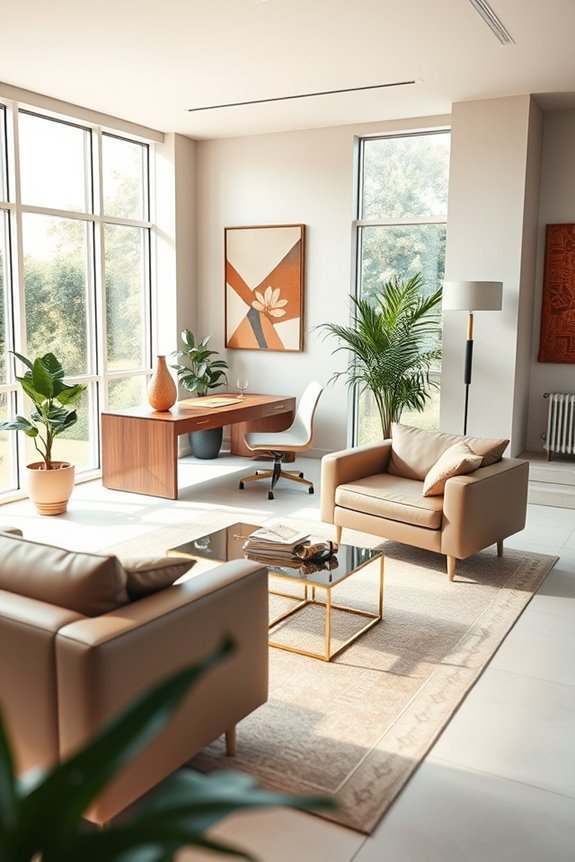
To create a truly inspiring CEO office, blending cultural elements can add depth and personality to the space. Incorporating cultural artifacts that reflect your values or heritage can spark conversations and enhance the office atmosphere.
Think about displaying unique pieces, like traditional sculptures or handcrafted items, that resonate with your identity. Regional artwork can also transform your workspace; choose paintings or photographs that showcase local talent or tell a story about the area.
These elements not only beautify the environment but also foster a sense of connection and creativity. When you surround yourself with meaningful cultural influences, you’ll inspire both yourself and your team, creating a stimulating atmosphere that boosts productivity and innovation.
Using Technology to Control Lighting and Climate

Combining cultural elements with modern technology can elevate the ambiance of your CEO office. By integrating smart home automation, you can control lighting and climate effortlessly, ensuring your workspace is always at its finest.
Imagine adjusting the lighting with a simple voice command or a tap on your smartphone, allowing you to create the perfect atmosphere for meetings or focused work. Energy efficient systems further enhance this setup by reducing your office’s carbon footprint and lowering utility costs.
With sensors that respond to natural light, you’ll maintain an ideal brightness throughout the day. This tech-savvy approach not only promotes comfort but also boosts productivity, helping you and your team stay focused and energized.
Personalized Workstations
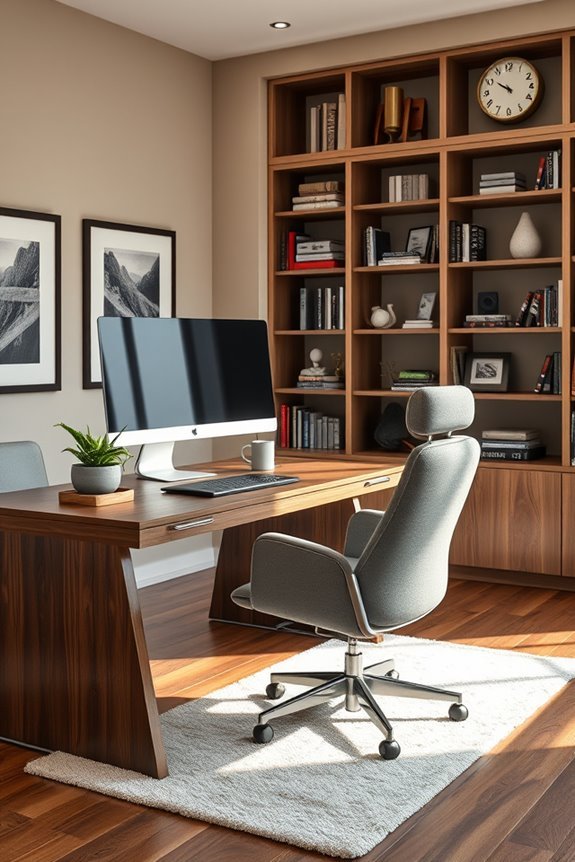
Creating personalized workstations can greatly enhance the productivity and comfort of your CEO office. By integrating customized technology, you can tailor your workspace to meet your specific needs.
Whether it’s an ergonomic chair, adjustable desk, or high-quality monitors, these elements can markedly improve your work experience.
Incorporating personalized decor also plays an essential role. Add elements that inspire you, like art pieces, plants, or motivational quotes that resonate with your leadership style.
This not only creates a more inviting atmosphere but also boosts your mood and creativity.
Ultimately, a well-designed workstation reflects your personality, making it easier for you to focus and thrive in your role.
Invest in these personalized touches to elevate your office environment.
Creative Use of Space Under Stairs
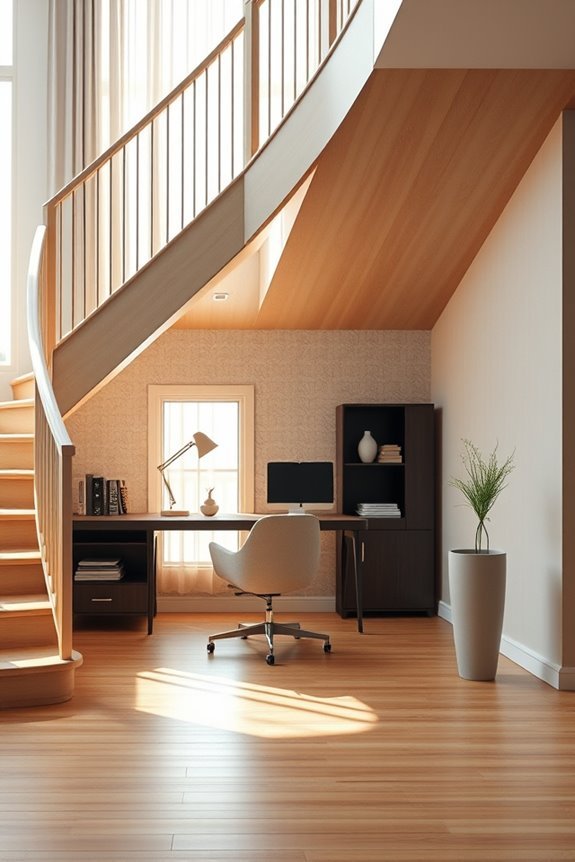
While many overlook the space under stairs as just a void, you can transform it into a functional and stylish area that enhances your office environment.
Consider creating under stair storage solutions that blend seamlessly with your office’s design. Built-in shelves can hold books or office supplies, while cabinets can hide away clutter.
If you want something cozier, turn that area into a creative hideaway—add a small desk or a seating nook for brainstorming sessions. You could even include a mini-library or a plant corner to inspire creativity.
Conclusion
Incorporating these sophisticated design ideas into your CEO office can transform it into a powerhouse of productivity. Just like a well-tuned orchestra, each element—from ergonomic chairs to bold colors—plays a crucial role in harmonizing creativity and focus. As you curate your space, remember that an inspiring environment fuels innovation and drives success. So, take the leap and elevate your office; it’s time to turn your vision into reality and watch productivity soar!