40 Corporate Interior Design Ideas for a Professional Look
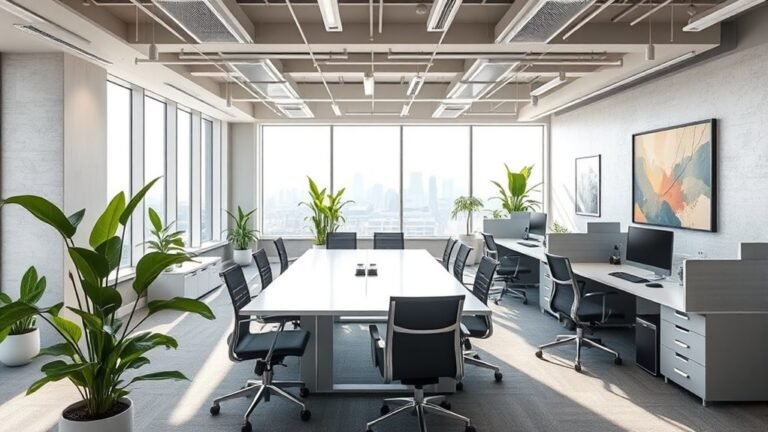
For a professional look in corporate interior design, consider open concept workspaces that encourage collaboration and flexibility. Incorporate ergonomic furniture solutions to enhance comfort and productivity. Add biophilic design elements like indoor plants to improve relaxation and creativity. Use color psychology to create an inspiring atmosphere, and embrace eco-friendly practices with sustainable materials. A fresh approach includes welcoming entryways and dynamic color accents. Keep learning to discover even more innovative ideas that can transform your office space.
Create Defined Touchdown Zones for Visitors
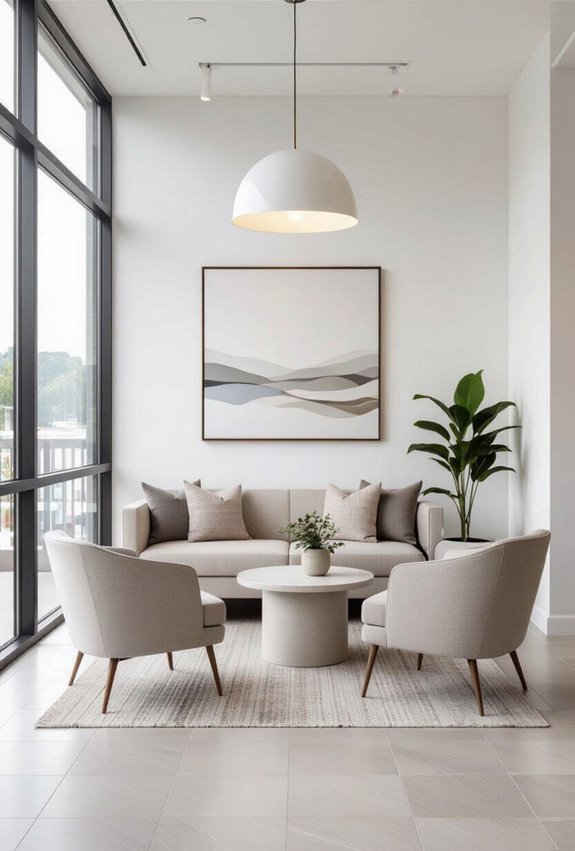
With a clear touchdown zone, you give visitors a welcoming, functional spot to plug in, check messages, and join meetings without disrupting the team.
Define the area with signage, modular visitor kiosks, and durable surfaces. Offer pop up seating and accessible power, storage for bags, and subtle privacy screens so guests feel comfortable, oriented, and ready to connect quickly.
Design Private Focus Rooms for Heads-Down Work
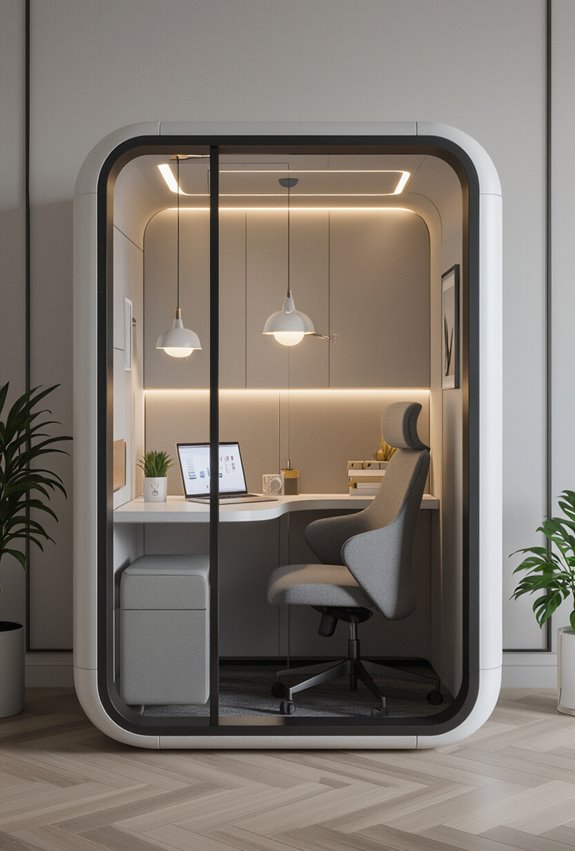
When you need uninterrupted concentration, private focus rooms give employees a quiet, controlled space to tackle deep work. Outfit privacy booths with ergonomic seating, adjustable lighting, and sound masking so people can concentrate without distraction.
Add focus alcoves for short tasks or phone calls. Standardize finishes and signage to keep the look professional, and provide ventilation and power for sustained productivity.
Implement Flexible Meeting Pods for Small Groups
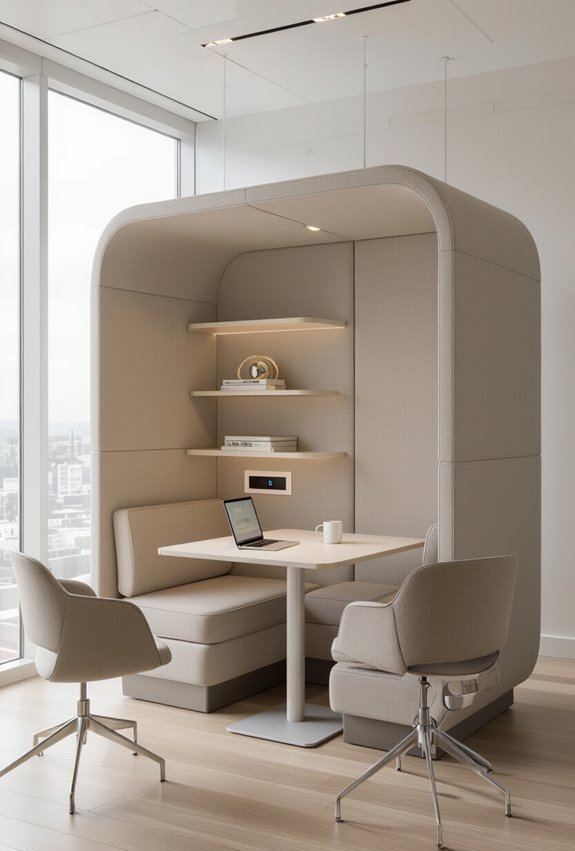
Think small and smart: flexible meeting pods give teams quiet, configurable spaces for quick huddles, focused work, or client chats without monopolizing larger conference rooms.
You’ll choose portable pods and acoustic booths to control noise, add power and writable surfaces, and position them near workzones.
They’ll support varied group sizes, preserve openness, and boost productivity without permanent construction or visual barriers.
Introduce Warm Wood Tones for a Professional Feel

When you bring warm wood tones into corporate interiors, they ground the space and convey professionalism without feeling cold or formal.
You can layer warm walnut cabinetry, Toasted oak trim, and subtle wood veneers to create depth. Pair those surfaces with neutral textiles and matte metals so the setting feels inviting, refined, and cohesive while still supporting productivity and a polished brand image.
Select Durable Commercial-Grade Flooring
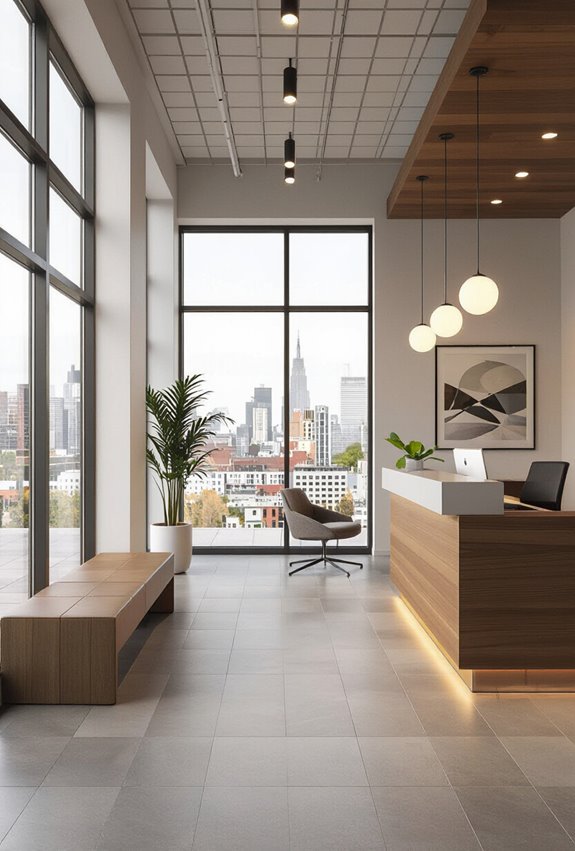
You’ve established warmth with wood tones, so pick flooring that stands up to heavy use while complementing that aesthetic.
Choose commercial-grade options—luxury vinyl plank, polished concrete, or engineered wood—with low high traffic maintenance needs and durable wear layers.
Prioritize slip resistant finishes for safety, easy-to-clean surfaces, and warranties that cover commercial use so your investment stays professional and practical.
Maximize Natural Light With Smart Window Treatments
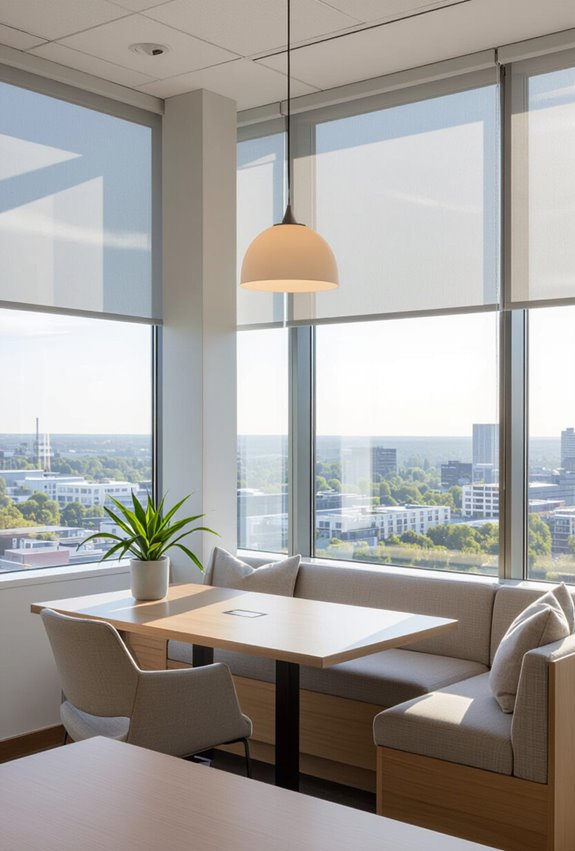
Because daylight boosts productivity and mood, prioritize window treatments that let you control light without blocking views. Choose adjustable solar shades to reduce glare and UV while preserving transparency, and use glass fritting for permanent glare control on large panes.
Combine motorized operation and simple manual options so you can adapt brightness throughout the day without sacrificing exterior sightlines or a clean professional aesthetic.
Incorporate Biophilic Elements for Wellbeing
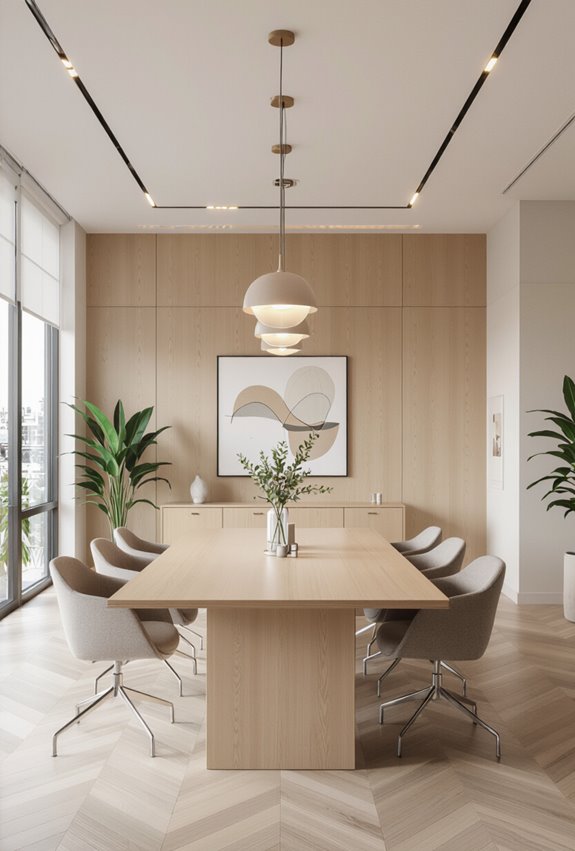
Introduce biophilic elements to connect people with nature, boost wellbeing, and sharpen focus in the workplace.
You can layer biophilic textures—natural wood finishes, stone accents, and tactile fabrics—to calm senses and improve concentration.
Rotate seasonal planting on desks and communal areas to freshen air and mood without dominating layout.
Keep choices low-maintenance, appropriately scaled, and aligned with your brand’s aesthetic.
Choose Ergonomic Office Chairs for Comfort
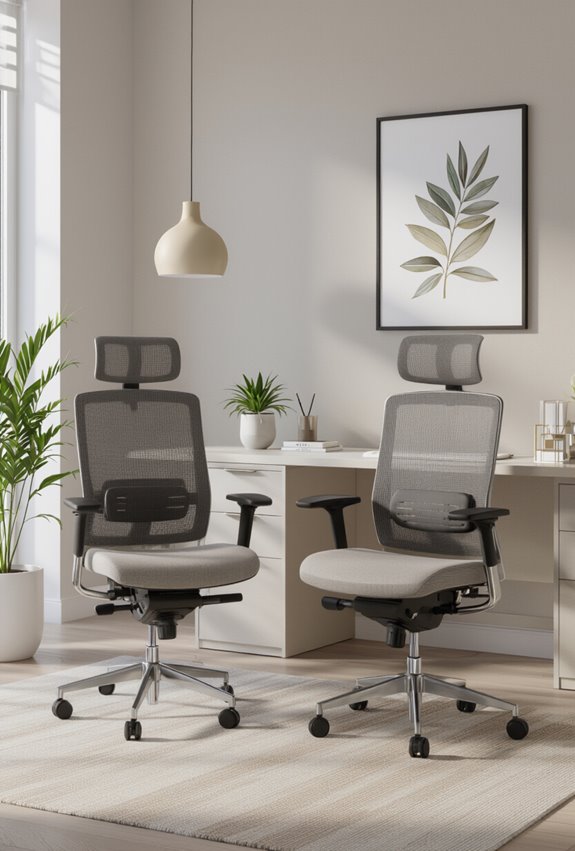
Select ergonomic office chairs that support posture and reduce fatigue, because comfortable seating directly boosts productivity and well-being. Choose models with adjustable lumbar support and seat depth so you can customize comfort. Prioritize mesh breathability for temperature control and quick drying. Opt for durable casters, tilt lock, and simple controls to keep your workspace professional, comfortable, and efficient.
Add Collaborative Furniture for Casual Meetings
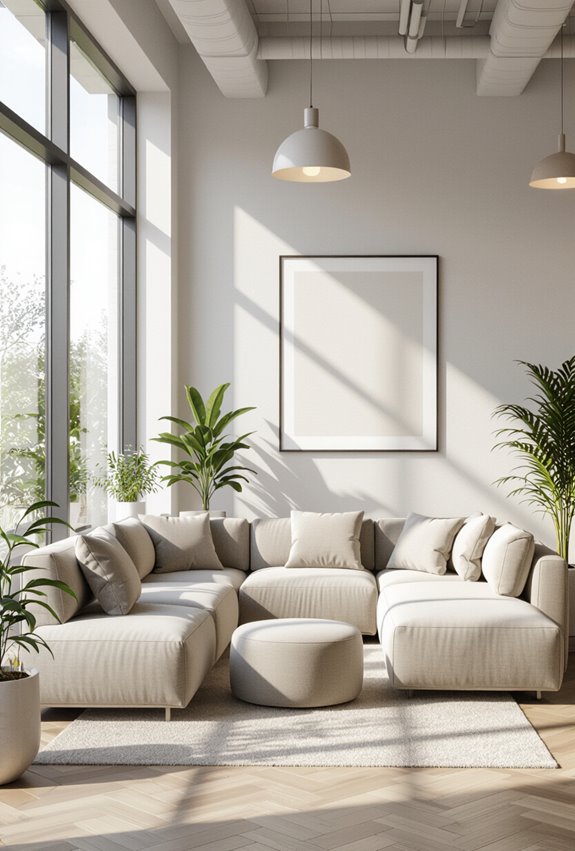
Switching between sit-stand desks works best when you also create spots for quick, informal huddles; adding collaborative furniture makes casual meetings comfortable and productive.
You’ll choose movable ottomans and modular poufs to reconfigure layouts fast, encourage impromptu brainstorming, and keep traffic flowing.
Opt for durable, easy-clean fabrics and mixed seating heights so everyone can join conversations without booking a formal room.
Conceal Cables and AV Gear for a Tidy Look
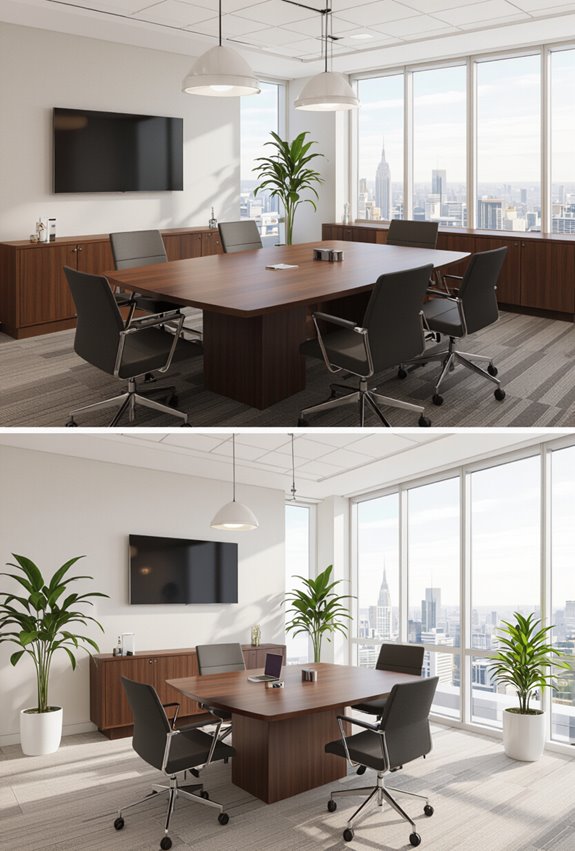
While you want tech to be accessible, you don’t want messy cables and bulky AV racks stealing attention; conceal wiring in wall channels, under raised floors, or inside custom millwork so surfaces stay clean and sightlines remain uninterrupted.
Use hidden cableways and integrated AV cabinetry to route power and signal lines, mount equipment behind panels, and provide ventilation access so your rooms look streamlined and professional.
Use Acoustic Panels to Reduce Noise Distractions
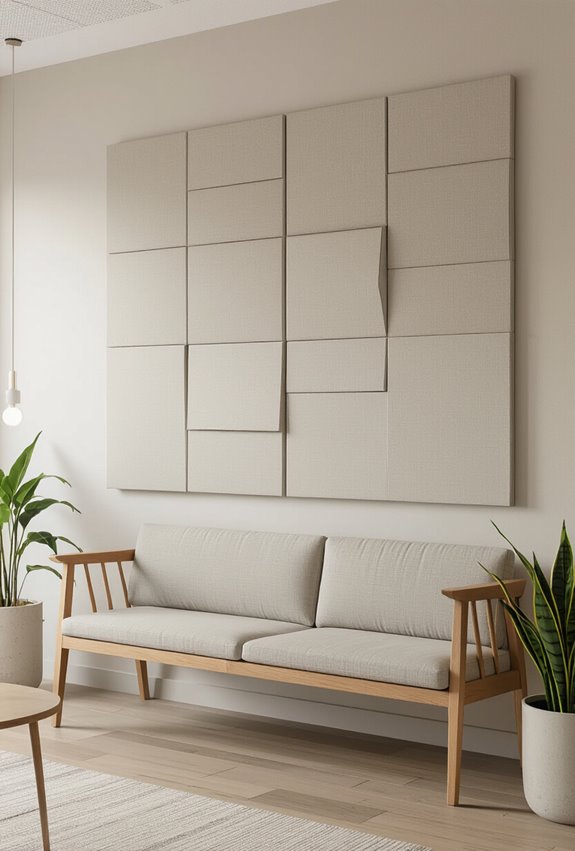
Neat cable management gives a room a clean look, but sound still travels freely and can undermine concentration; acoustic panels help control that problem by absorbing and diffusing noise so people can focus.
Choose ceilings panels for overhead reverberation control and wall-mounted options near meeting areas.
Integrate fabric-covered panels into desk dividers to create quieter, focused work zones without altering layout or sightlines.
Create a Clear Signage and Wayfinding System
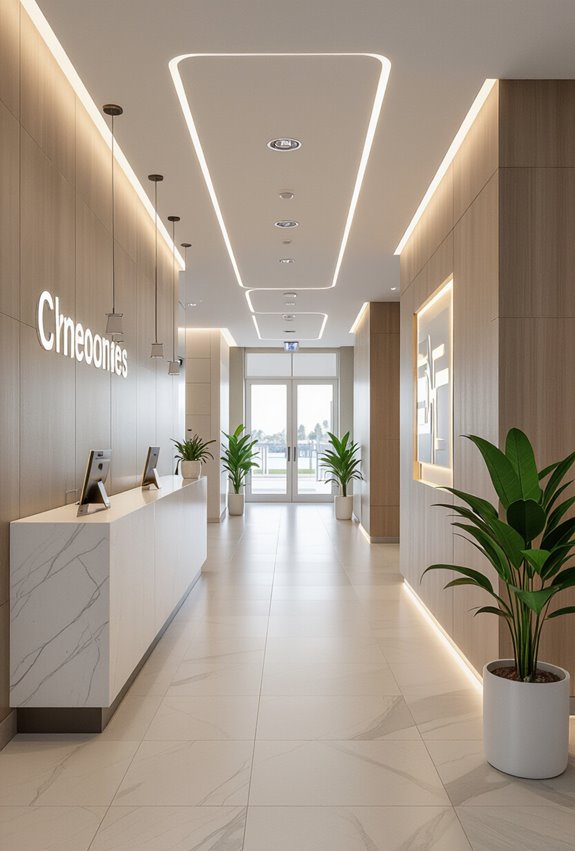
Soft furnishings cut noise and make open areas feel intentional, but people still need clear cues to move through the space.
You should design a signage and wayfinding system with bold directional typography, consistent color codes, and simple icons so visitors orient quickly.
Add tactile markers for accessibility, locate signs at decision points, and maintain visual hierarchy so guidance stays efficient and unobtrusive.
Offer a Quiet Lounge for Informal Conversations

After you create multifunctional break zones, carve out a quieter lounge where people can hold low-key conversations away from communal bustle.
You’ll place acoustic seating to absorb sound, add soft lighting and movable partitions, and provide charging points.
Keep furnishings minimal and comfortable so chats stay informal.
Include a small beverage station nearby for convenience, but avoid crowding the serene atmosphere.
Prioritize Storage Solutions to Avoid Clutter
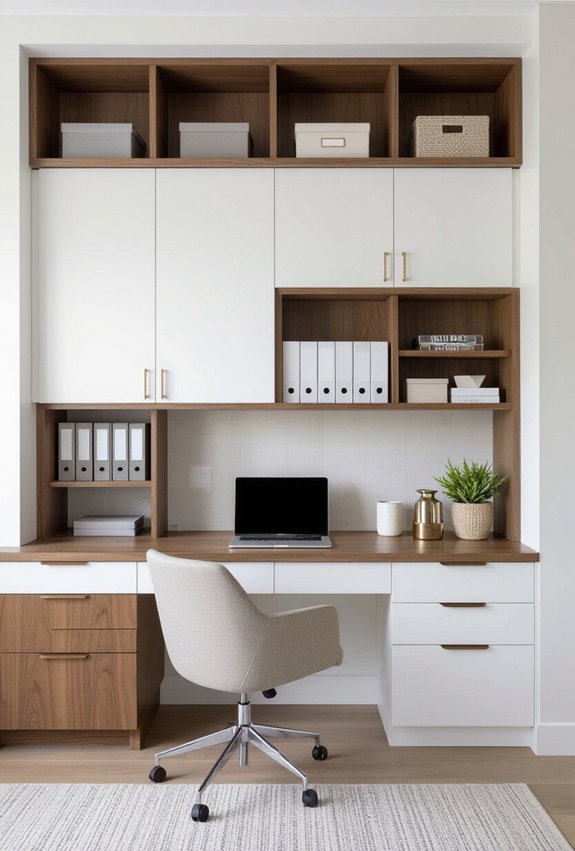
A well-planned pantry and coffee area sets the tone, but it’s thoughtful storage that keeps the whole office looking sharp and working smoothly.
You should integrate mobile storage for flexibility, hidden cabinets to conceal supplies, and labeled zones so everyone knows where things go.
Keep surfaces clear, limit open shelving to curated items, and schedule regular purges to prevent buildup.
Choose Durable, Low-Maintenance Materials
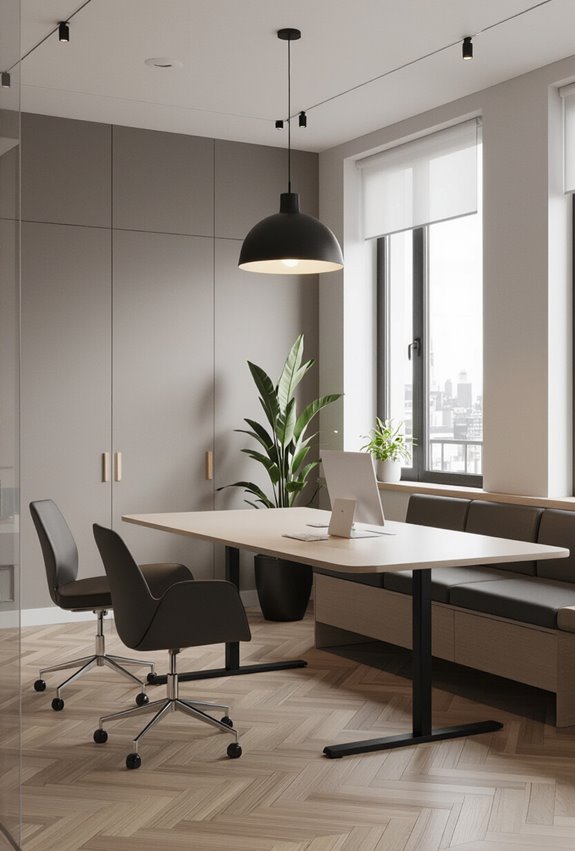
Choose materials that stand up to heavy use and need minimal upkeep so your space stays functional and professional with less effort.
Select high performance textiles for seating and window treatments to resist stains and wear.
Use durable flooring and wall surfaces that clean easily, and specify antimicrobial finishes on high-touch areas.
You’ll reduce downtime, maintenance costs, and preserve a consistently sharp corporate look.
Add Security-Conscious Entry and Reception Features
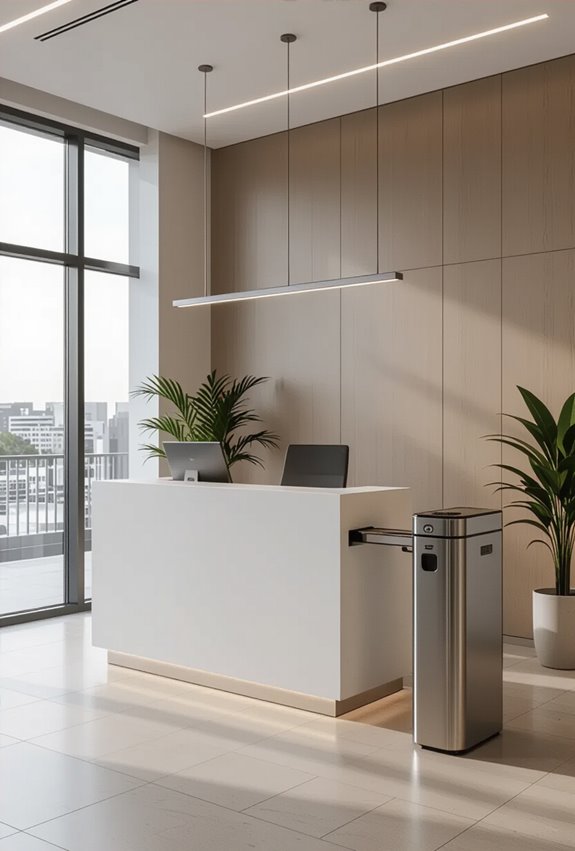
Because the entry sets the tone for safety and hospitality, design your reception to balance welcoming aesthetics with layered security—clear sightlines, controlled access points, and unobtrusive screening technologies let staff and visitors move comfortably while protecting people and assets.
Position badge kiosks for fast check-in, integrate discreet visitor screening, provide visible staff presence, and use durable finishes that deter tampering while maintaining a professional, approachable lobby.
Create a Budget-Friendly Refresh Checklist
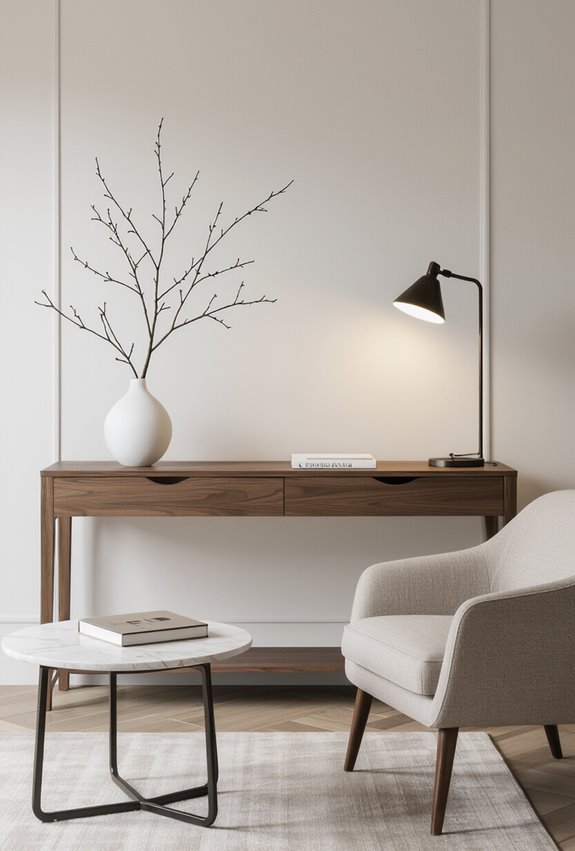
Start with a simple checklist that targets high-impact, low-cost updates you can do in a day or a weekend.
List tasks: declutter, deep-clean, repaint accent walls, swap lighting, update signage, and rearrange furniture.
Note vendor negotiation for discounts and explore surplus repurposing of existing pieces.
Assign owners, set timelines, estimate costs, and prioritize items that boost professionalism quickly and affordably.
Maintain a Seasonal Update Routine for Freshness
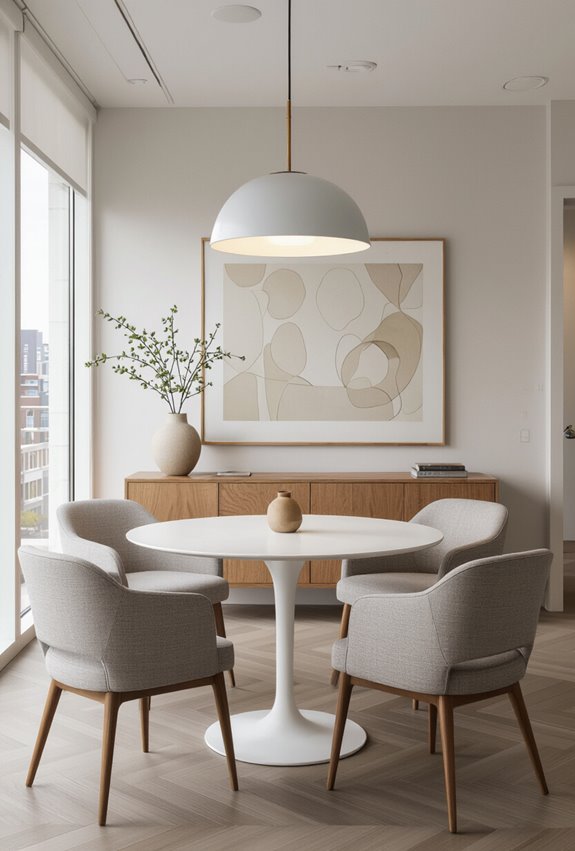
If you want your workplace to feel current and inviting year-round, set a simple seasonal update routine that’s easy to follow and quick to execute.
Schedule quarterly tasks: swap accents, update plants, change textiles, and implement seasonal scenting to match mood.
Rotate rotating artwork displays to refresh focal points, adjust lighting for daylight changes, and assign one person to oversee timely, consistent updates.
Measure Success With Staff Comfort and Brand Metrics
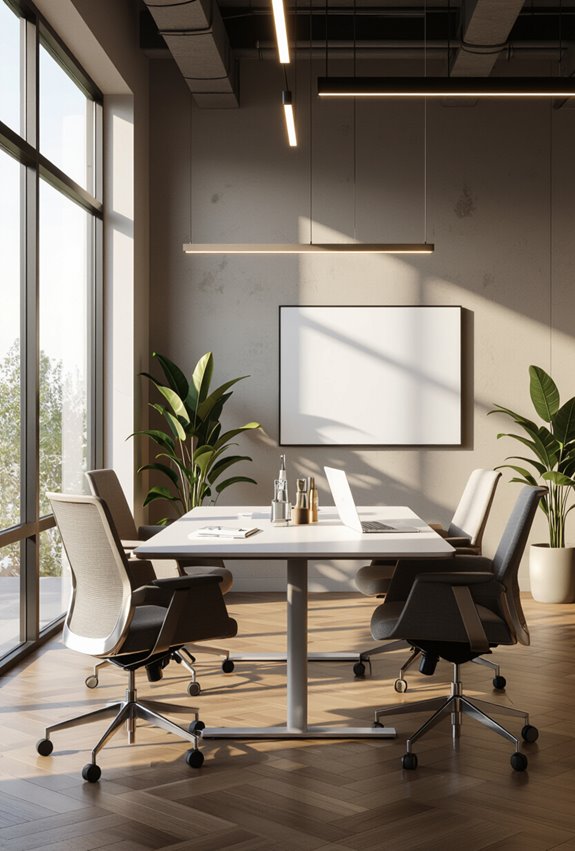
To know whether your design choices are working, track staff comfort and brand metrics side by side: gather employee feedback on lighting, acoustics, and ergonomics alongside measures like client recall, website traffic from office-based campaigns, and social media sentiment tied to your space.
Then correlate employee comfort scores with brand analytics to prioritize adjustments that boost productivity, perception, and retention while proving ROI.
Collaborative Meeting Areas

Effective collaborative meeting areas are essential for fostering creativity and teamwork. To create these spaces, consider incorporating flexible seating arrangements that encourage open dialogue and team brainstorming.
Use movable furniture to adapt the layout as needed, allowing teams to collaborate freely.
Integrating interactive technology, like smart boards and video conferencing tools, enhances participation and keeps everyone engaged. These tools enable real-time collaboration, making it easier for team members to share ideas, no matter where they are.
Don’t forget about natural light—incorporate large windows or bright lighting to energize the space.
Color Psychology in Office Design
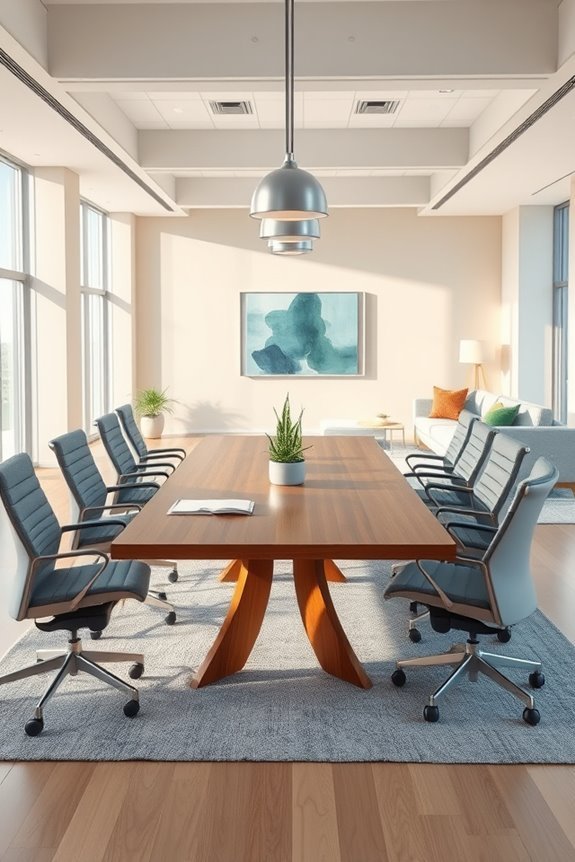
Color plays a pivotal role in shaping the atmosphere of your office, influencing mood, productivity, and even creativity. Understanding color meanings can help you evoke specific emotional responses in your team. For instance, blue promotes calmness, while yellow sparks creativity.
When choosing color combinations, consider color harmony to create a balanced environment. Current color trends suggest using branding colors to reinforce your company’s identity while maintaining workplace productivity.
Pay attention to color contrast and saturation; vibrant colors can energize, while muted tones offer serenity. Also, be mindful of cultural perceptions—colors have different meanings across cultures.
Minimalist Aesthetic Approaches
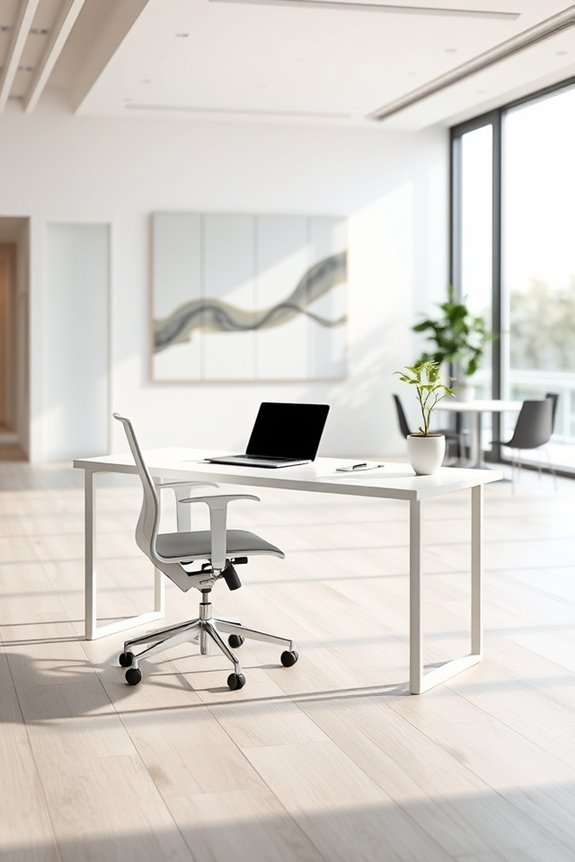
Embracing a minimalist aesthetic can transform your office into a serene and efficient workspace. Start by decluttering your environment; remove unnecessary items that distract you.
Focus on creating a minimalist workspace with clean lines and neutral colors that promote calmness. Opt for furniture that serves multiple purposes, like desks with built-in storage, to maximize functionality.
Streamlined storage solutions, such as floating shelves or hidden cabinets, can keep your essentials organized while maintaining that uncluttered look. Incorporate natural elements, like plants, to add warmth without overwhelming the space.
Acoustic Panels for Sound Management

After establishing a minimalist workspace, consider how sound can impact your productivity. Implementing acoustic panels is a smart choice for managing noise effectively. These panels utilize sound absorption techniques that minimize echo and create a more focused environment.
By incorporating various acoustic design materials, you can customize the look while enhancing functionality. Choose fabric-wrapped panels for a sleek appearance, or go for wood options to add warmth.
Position them strategically around your office to tackle specific noise issues, ensuring a quieter, more productive space. Don’t overlook the importance of sound management; it plays a vital role in maintaining a professional atmosphere.
With the right acoustic solutions, you’ll find a balance between style and functionality in your corporate interior design.
Multi-Functional Spaces

As you design your corporate space, consider that multi-functional areas can greatly enhance both collaboration and efficiency. By incorporating flexible furniture, you can easily transform your environment to suit various needs, whether it’s for team meetings, brainstorming sessions, or quiet work.
Look for items like modular seating and foldable desks that can be rearranged on a whim. Adapting layouts allows you to maximize the use of your space, encouraging a dynamic flow of ideas and interactions.
Think about creating zones that serve different purposes, such as lounge areas for relaxation and conference spaces for brainstorming. With these elements, you’ll foster a more productive atmosphere while ensuring your office remains versatile and inviting.
Natural Lighting Techniques

Natural lighting techniques can transform an office environment, promoting both productivity and well-being. By maximizing natural light benefits, you create a more inviting and energizing workspace.
Consider using large windows, skylights, or glass walls to let in ample daylight. Position workstations near these sources to enhance exposure.
Additionally, pay attention to light temperature effects; cooler light can boost alertness, while warmer tones create a cozy atmosphere. Use adjustable blinds or shades to control glare and allow for flexibility throughout the day.
Don’t forget to incorporate reflective surfaces like mirrors or light-colored walls to help distribute natural light effectively.
Use of Artwork and Murals

Incorporating artwork and murals into your corporate interior design can greatly enhance the atmosphere of your workspace. Thoughtfully selected artwork installations can inspire creativity and motivate employees, while creating a welcoming environment for clients.
Consider using mural techniques that reflect your company’s values or mission, turning blank walls into striking focal points. You can choose vibrant colors to energize spaces or calming tones to promote focus.
Collaborating with local artists not only supports the community but also adds a unique touch to your office. Don’t forget about the placement; strategic positioning can draw attention and elevate the overall design.
Breakout Zones for Relaxation
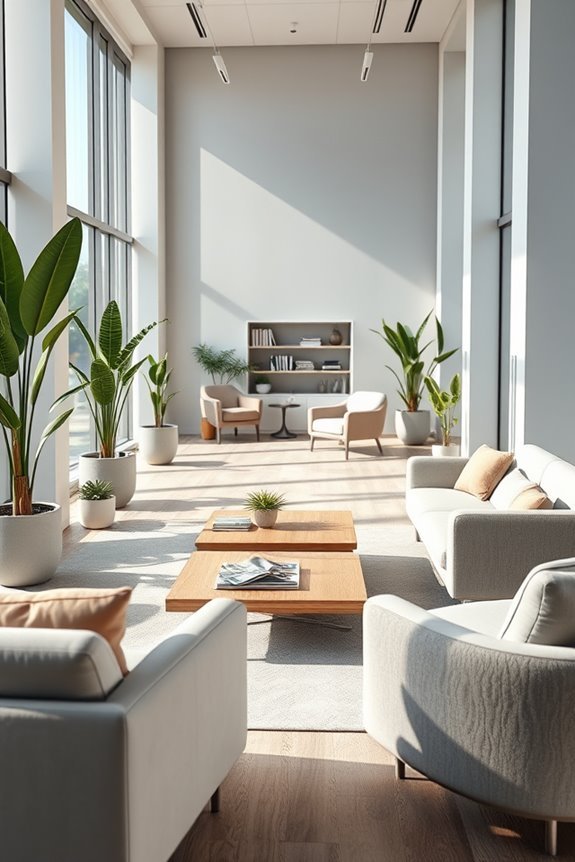
While technology enhances productivity, creating spaces for relaxation is equally important for maintaining employee well-being. Breakout zones can serve as the perfect retreat for you and your colleagues.
Consider designing meditative spaces that allow for quiet reflection or casual conversations. Incorporate nature-inspired decor, such as indoor plants or natural wood finishes, to promote a calming atmosphere. Comfortable seating options, like bean bags or lounge chairs, can invite employees to unwind during breaks.
You might also include soft lighting and soothing colors to enhance the relaxing environment. By prioritizing these breakout zones, you’ll encourage mental rejuvenation, foster creativity, and ultimately improve overall workplace morale.
Investing in relaxation spaces shows you value your team’s well-being, making the workplace more inviting and productive.
High-Quality Flooring Options

When choosing flooring for your corporate space, selecting high-quality options can greatly impact both aesthetics and functionality.
Consider incorporating sustainable flooring materials, like bamboo or cork, which not only enhance your office’s appearance but also promote an eco-friendly environment.
Luxury vinyl is another excellent choice, offering durability and versatility while mimicking the look of natural materials. It’s water-resistant and easy to maintain, making it perfect for high-traffic areas.
By opting for these high-quality flooring options, you’ll create a professional atmosphere that reflects your brand’s commitment to quality and sustainability.
Plus, these materials can help reduce noise levels, making your workspace more comfortable for employees and clients alike.
Choose wisely, and your flooring will elevate your corporate interior design.
Stylish Reception Areas
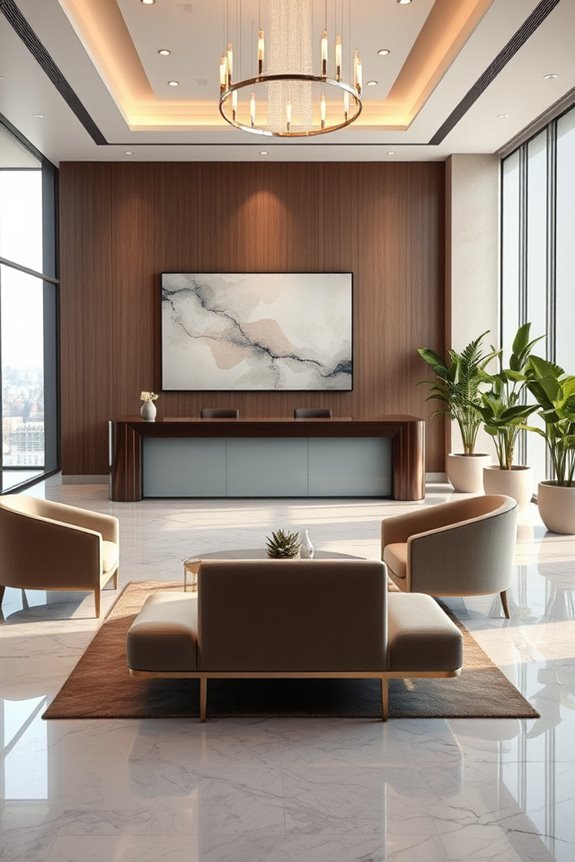
A stylish reception area sets the tone for your entire corporate space, making a lasting first impression on visitors. To achieve this, consider incorporating luxury seating that not only offers comfort but also enhances your aesthetic.
Opt for sleek sofas and elegant chairs that reflect your brand’s identity.
Next, integrate interactive displays that engage guests while they wait. These can showcase your company’s achievements or upcoming projects, creating a dynamic atmosphere.
Don’t forget about lighting; soft, ambient lighting can create a welcoming vibe.
A well-curated reception area combines functionality with style, ensuring that every detail aligns with your corporate image. By focusing on these elements, you’ll craft a memorable entrance that speaks to professionalism and sophistication.
Inspirational Color Palettes
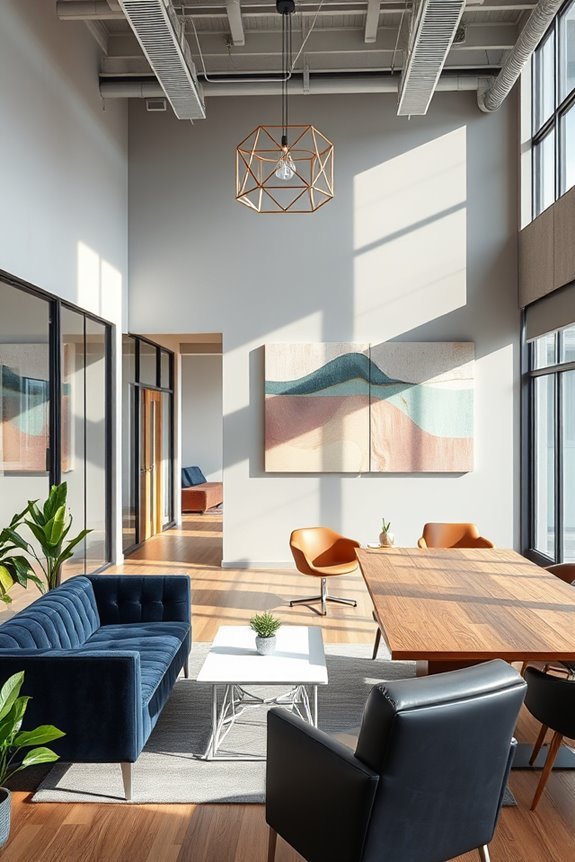
While selecting the right color palette for your corporate interior, it’s essential to contemplate how colors influence mood and productivity.
Start by creating a sense of color harmony; you can choose soft blues and greens for a calming effect, promoting focus and collaboration.
If you want to inspire energy and creativity, consider bold contrasts like vibrant oranges paired with deep grays. This combination can energize the workspace while maintaining a professional feel.
Don’t forget to incorporate neutral tones to balance the scheme, allowing the bolder colors to stand out without overwhelming the space.
Smart Office Technology
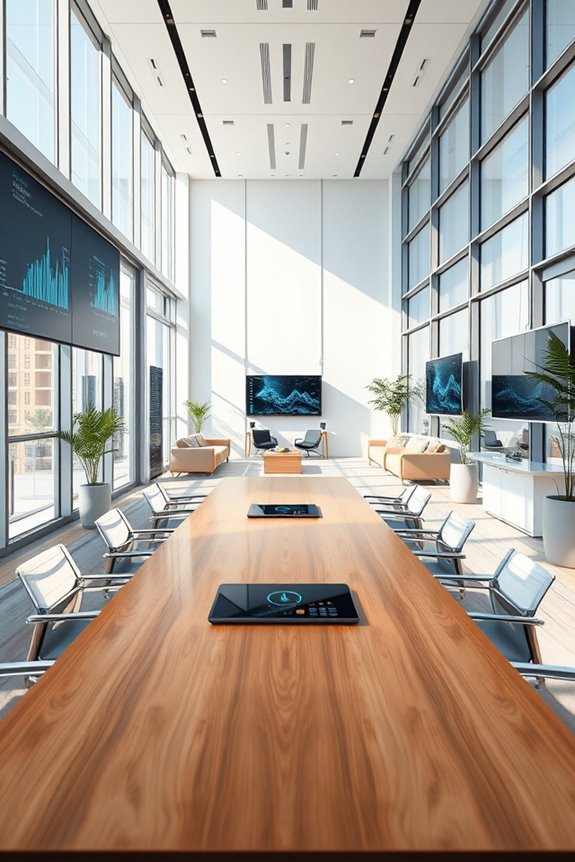
As businesses evolve, integrating smart office technology becomes essential for enhancing productivity and creating a more efficient workspace. You can start by incorporating smart office gadgets like automated scheduling systems, smart whiteboards, and IoT devices that streamline everyday tasks.
These tools not only save time but also foster a collaborative environment. Consider investing in remote collaboration tools that allow your team to connect seamlessly, no matter where they’re located.
Video conferencing solutions and project management apps can make communication effortless and keep everyone on the same page. By embracing these technologies, you’ll create a smarter, more agile workspace that empowers your team to perform at their best while enhancing the overall professional look of your office.
Attractive Storage Solutions
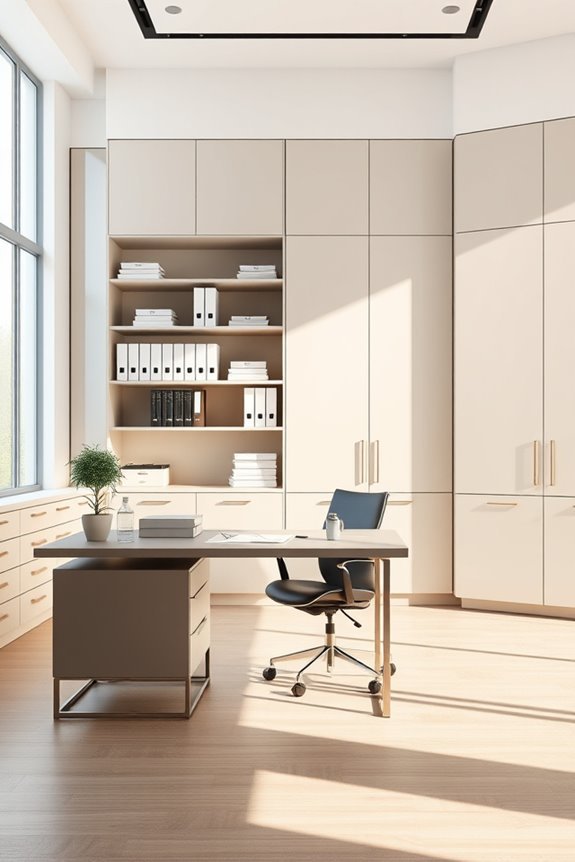
While creating a cohesive office aesthetic, attractive storage solutions can greatly enhance both functionality and style. You can choose custom shelving units that fit your space perfectly, adding a personal touch while keeping everything organized. These units can showcase decor and essential items, making them both practical and visually appealing.
On the other hand, modular storage systems offer flexibility and adaptability. You can easily rearrange them as your needs change, ensuring your workspace remains efficient.
Consider using a combination of both options to maximize your storage capabilities while maintaining a sleek look. With the right storage solutions, your office will feel polished and professional, setting the right tone for clients and employees alike.
Professional Conference Rooms
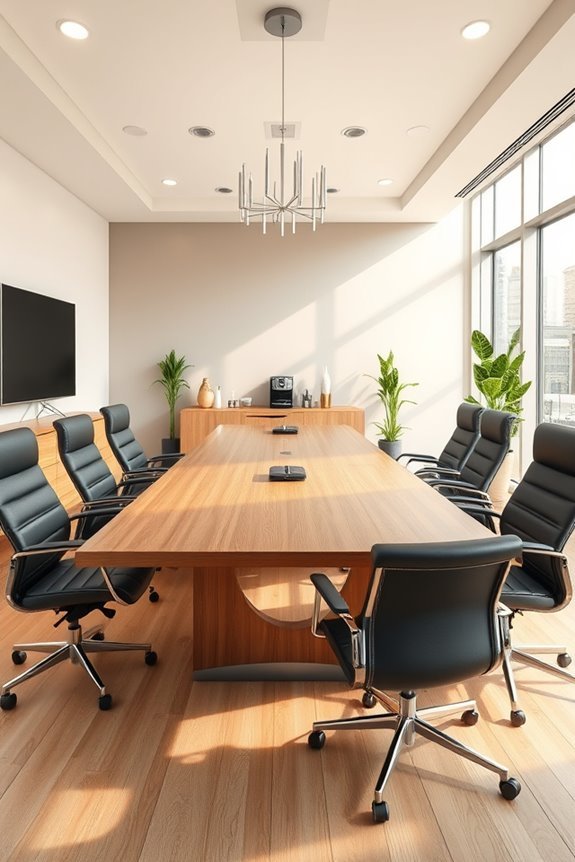
A well-designed conference room can greatly enhance collaboration and communication among team members, aligning perfectly with the employee-centric approach you’ve established.
To create an effective space, consider incorporating virtual conference technology that allows seamless interaction with remote participants. This guarantees everyone feels included, regardless of their location.
Additionally, hybrid meeting setups are crucial for modern workplaces. Use adjustable furniture to accommodate various group sizes, and invest in high-quality audiovisual equipment for clear presentations.
Natural light and soundproofing can help maintain focus and engagement during discussions.
Finally, don’t forget to add personal touches like artwork or plants to make the environment more inviting.
With these elements, your conference room will foster creativity and productivity, making it an essential asset for your team.
Conclusion
Incorporating these corporate interior design ideas transforms your workspace into a vibrant hub of creativity and productivity. Think of your office as a garden; when you nurture it with thoughtful design—like ergonomic furniture and biophilic elements—your team will flourish. A study shows that employees in well-designed spaces are 33% more productive. So, let your office bloom into a professional oasis where collaboration thrives and innovation blossoms, making every day at work feel like a refreshing change.