40 Front Yard Vegetable Garden Ideas for a Sustainable Garden
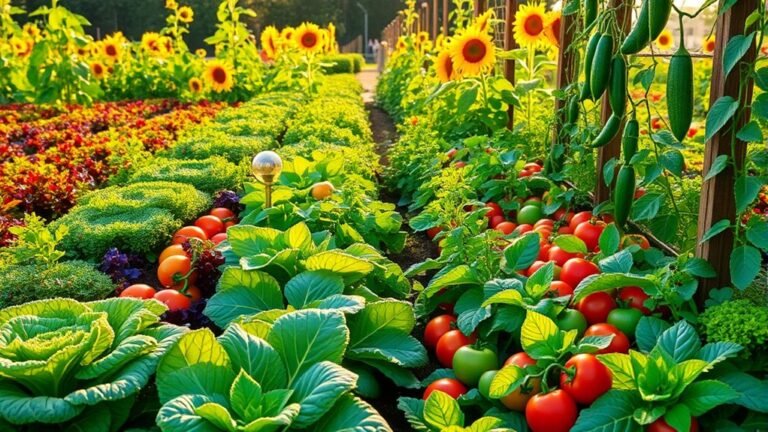
Creating a front yard vegetable garden is a great way to grow fresh produce while enhancing your home’s curb appeal. You could design raised bed gardens for easy access or try vertical gardening solutions to maximize space. Container gardening offers flexibility, and herb spirals look stunning while providing diverse flavors. By incorporating pollinator-friendly plants and using cold frames for season extension, you’ll create a vibrant ecosystem. Explore more ideas to transform your front yard into a sustainable haven for vegetables.
Vertical Gardening Solutions
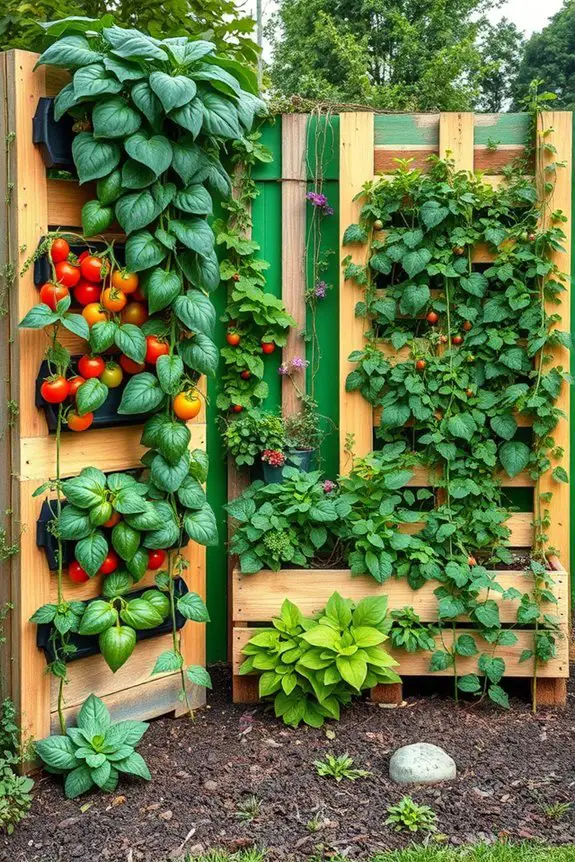
If you’re looking to maximize your front yard’s gardening potential, vertical gardening solutions can be a game changer. By incorporating green wall systems, you can create a stunning focal point while growing your favorite vegetables. These systems allow you to take advantage of vertical space, making them perfect for smaller yards.
Vertical planters are another fantastic option. They come in various designs, enabling you to customize your space. You can easily plant herbs, leafy greens, or even strawberries in these planters, keeping them accessible and visible.
Not only do these solutions save space, but they also enhance your garden’s aesthetics. So, embrace vertical gardening to boost your vegetable garden’s productivity and charm!
Container Gardening
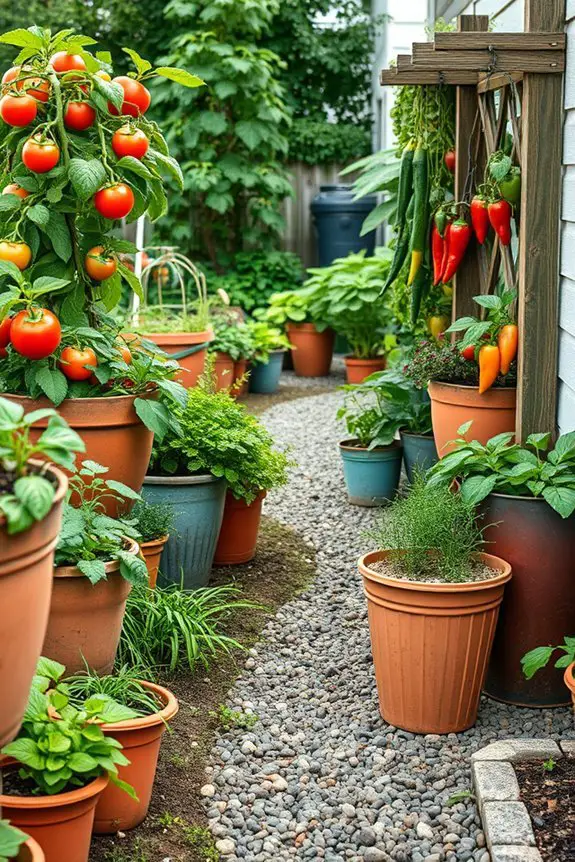
Container gardening offers a flexible way to cultivate fresh vegetables right in your front yard. You’ve got plenty of container choices, from traditional pots to repurposed items like old buckets or wooden crates.
This approach not only maximizes your space but also adds visual interest to your landscape. Plus, containers provide portable solutions, allowing you to move plants for ideal sunlight or protection from harsh weather.
Consider grouping smaller containers for a lush look, or using larger ones for bigger crops like tomatoes or peppers. Remember to choose the right soil and guarantee proper drainage.
With container gardening, you can easily create a thriving vegetable garden while enhancing your home’s curb appeal.
Companion Planting Techniques
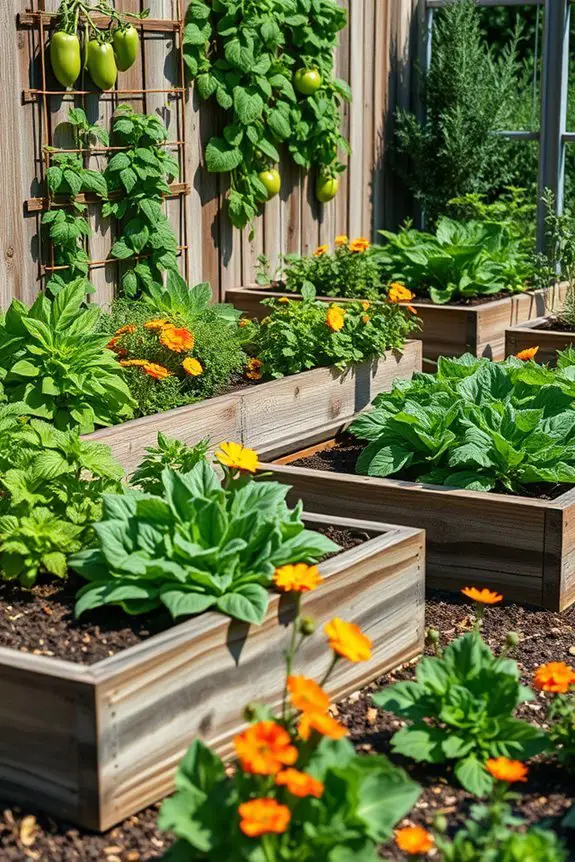
Although it might seem challenging to maximize your front yard’s potential, companion planting techniques can greatly enhance your vegetable garden’s productivity and health. By strategically pairing plants, you can create a thriving ecosystem.
For instance, planting companion flowers like marigolds can attract beneficial insects that pollinate your vegetables and fend off pests. Consider combining tomatoes with basil to improve flavor and deter harmful insects.
You’ll also want to experiment with plants like carrots and onions, which can benefit from each other’s presence. Remember, the right combinations not only boost growth but also help maintain soil health.
Embrace these techniques, and you’ll watch your garden flourish while keeping it sustainable and beautiful!
Keyhole Garden Design
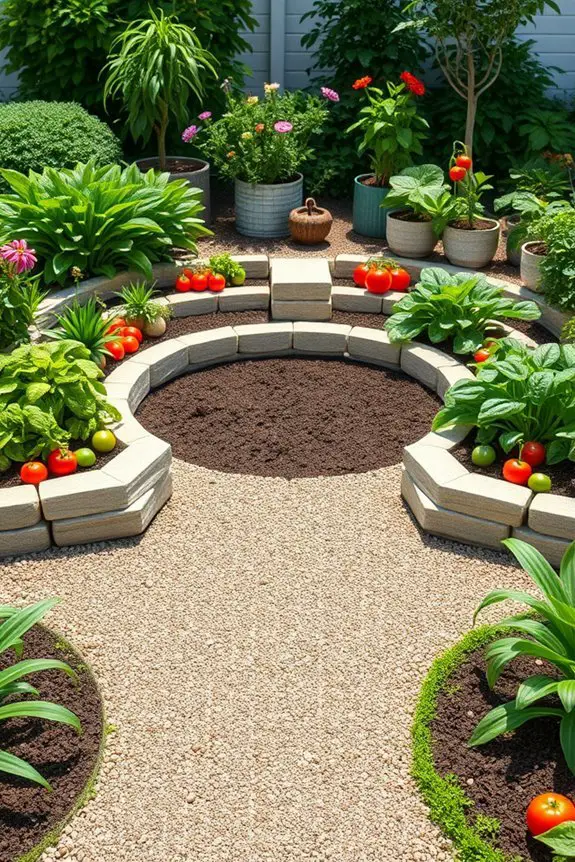
If you’re looking for an innovative way to maximize your front yard garden, consider the keyhole garden design. This unique layout features a circular raised bed with a compost bin at its center, making it easy to access both your plants and the compost.
You can plant your favorite vegetables along the outer edge, while the compost enriches the soil over time. The design not only optimizes space but also requires minimal garden maintenance.
Watering is efficient, as the keyhole shape allows for better moisture retention. Plus, this setup encourages biodiversity, attracting beneficial insects.
Embracing a keyhole garden can transform your front yard into a productive and sustainable oasis.
Straw Bale Gardens
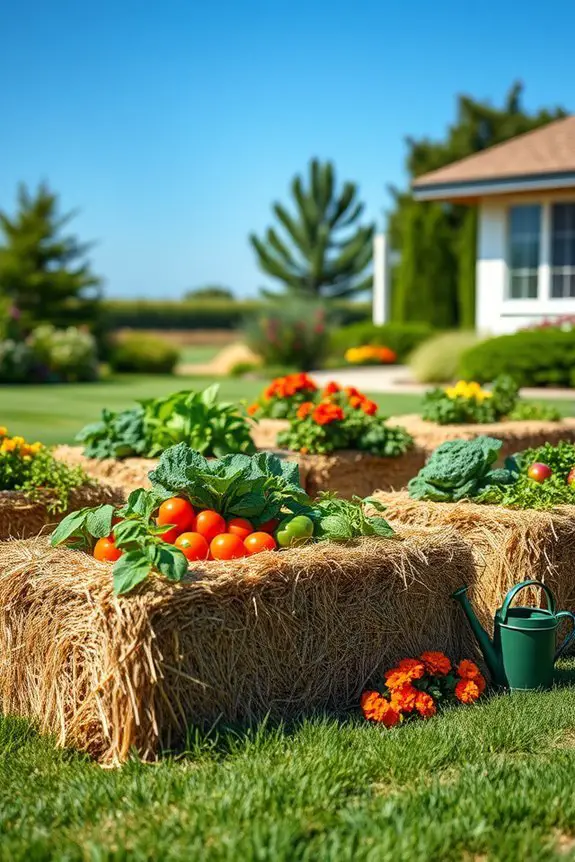
While traditional gardening can be challenging in limited spaces, a straw bale garden offers an innovative and accessible alternative. These gardens allow you to grow fresh vegetables right in your front yard without the need for soil.
One of the key straw bale advantages is that they provide excellent drainage and warmth, promoting faster plant growth. Plus, they’re lightweight and easy to set up, making them perfect for urban gardeners.
Straw bale maintenance is straightforward; you’ll need to water and fertilize your bales as they decompose, which helps nourish your plants.
As a bonus, straw bales can be an attractive feature in your yard, blending aesthetics with sustainability. It’s a unique way to enjoy homegrown produce!
Fruit Tree Espalier
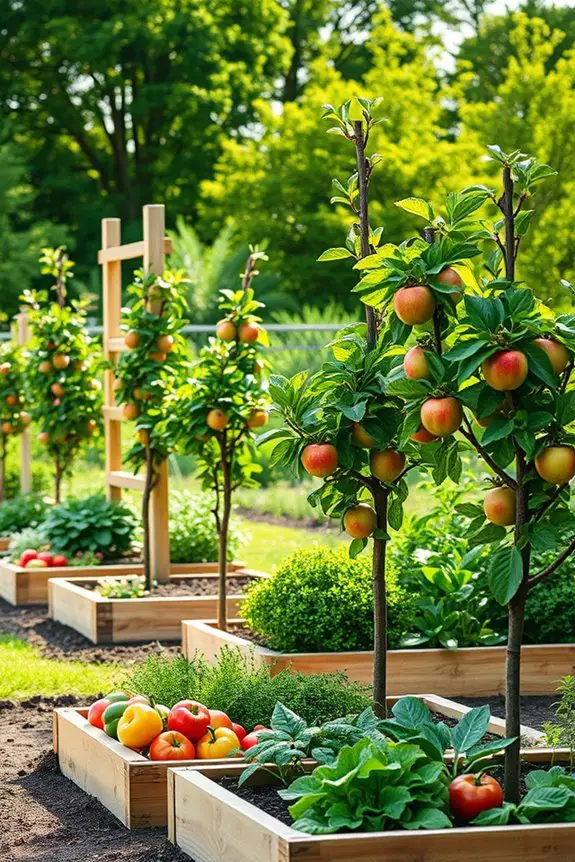
Espalier fruit trees can transform your front yard into a visually stunning and productive space. By using espalier techniques, you can train fruit tree varieties like apples, pears, or cherries to grow flat against a wall or fence.
This method not only saves space but also enhances sunlight exposure, improving fruit production. With careful pruning and support systems, your trees will flourish while adding an artistic element to your garden.
Choose dwarf or semi-dwarf varieties for easier maintenance, and enjoy the beauty of fresh fruit right at your doorstep. Plus, they can act as a natural privacy screen, providing both aesthetic appeal and functionality.
Get started on your espalier journey and watch your front yard thrive!
Succession Planting
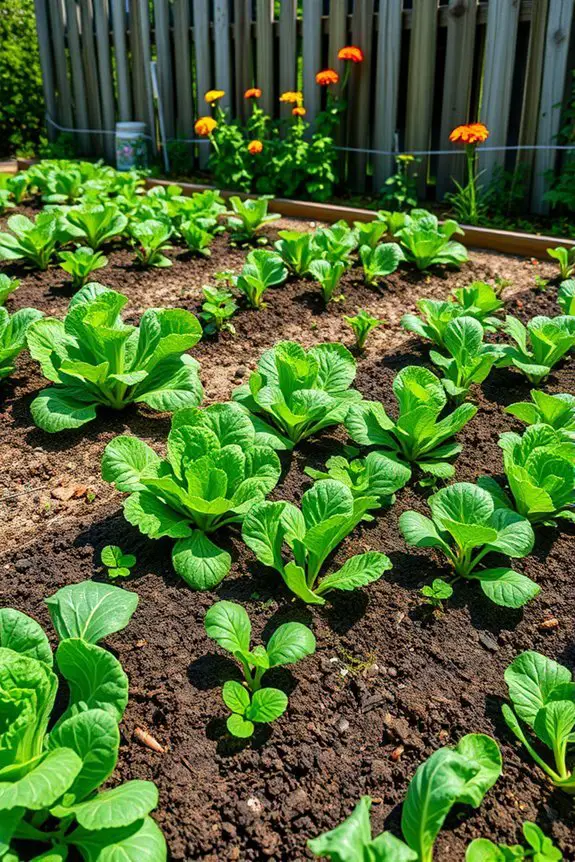
If you want to maximize your harvest throughout the growing season, succession planting is the way to go. This technique involves planting new crops in your garden as soon as you harvest the previous ones.
By using crop rotation, you can maintain soil health and reduce pest issues, allowing for a continuous supply of fresh produce.
Pair this with intercropping techniques, where you grow different crops close together, to make the most of your space and resources. For instance, you can plant fast-growing greens alongside slower-maturing vegetables.
This not only increases yield but also enhances biodiversity in your garden. With careful planning, you’ll enjoy a bountiful harvest from spring through fall, keeping your front yard both productive and sustainable.
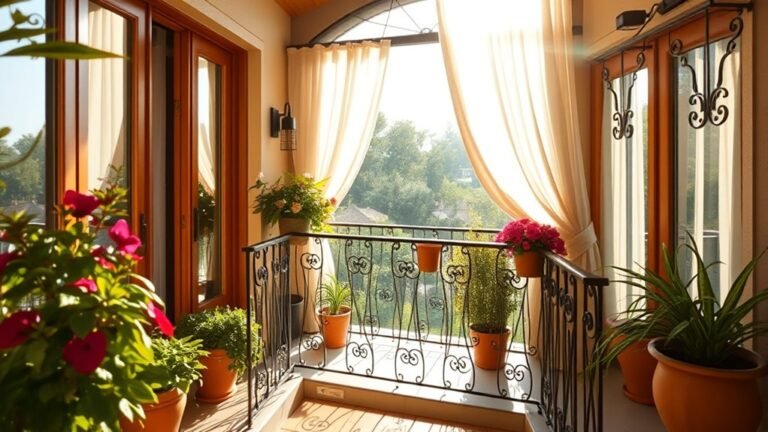
Window Box Vegetable Gardens
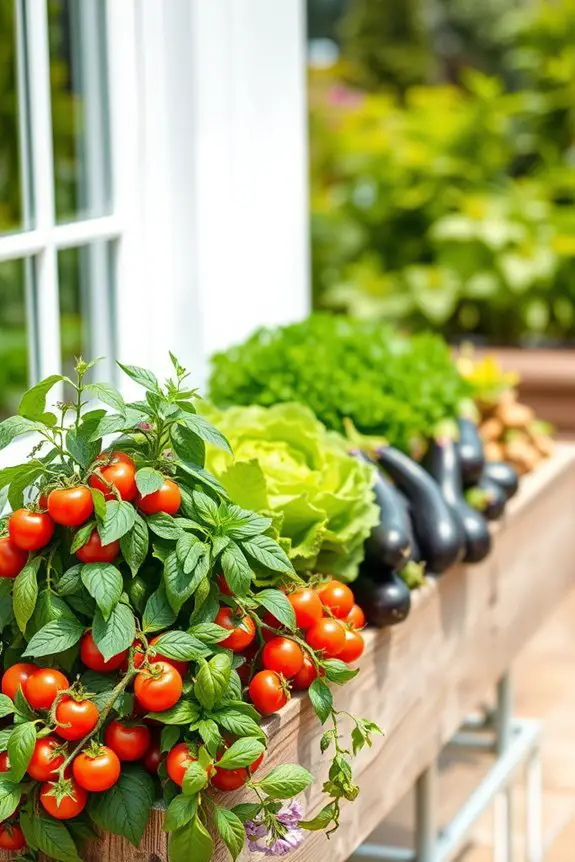
With the right approach, you can extend your gardening efforts beyond the ground and into the air by creating a window box vegetable garden.
A well-thought-out window box design not only beautifies your space but also provides an ideal spot for growing fresh veggies. Start by choosing the right container, ensuring it has proper drainage.
For seasonal planting, consider herbs like basil and parsley in spring, while cherry tomatoes and peppers thrive in summer. Rotate your crops based on the seasons to maximize your yield and keep the soil healthy.
Position your window boxes where they’ll receive at least six hours of sunlight daily, and you’ll enjoy a bountiful harvest right outside your window!
Seasonal Rotation Planning
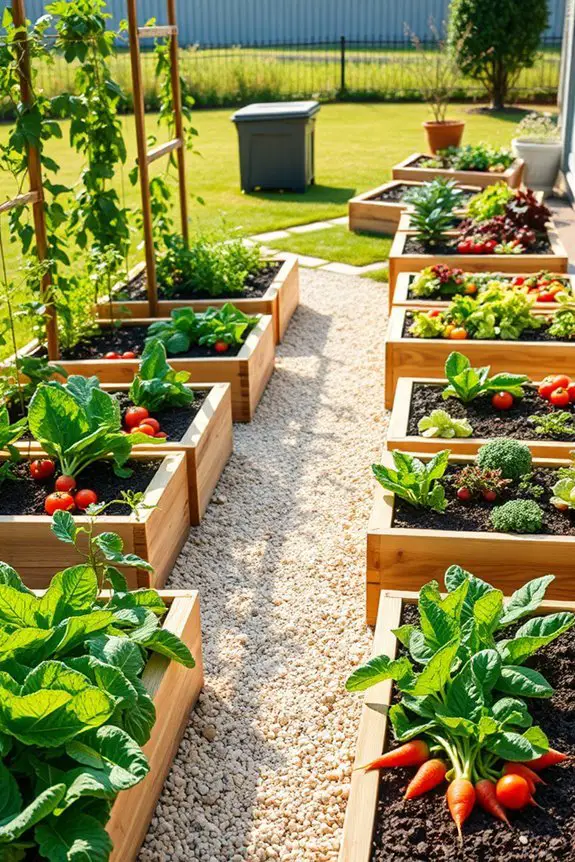
Planning a seasonal rotation for your front yard vegetable garden guarantees you maximize productivity and soil health. By implementing crop rotation, you can prevent nutrient depletion and reduce pest problems.
Start by creating a planting calendar that outlines when to sow each crop. For instance, follow legumes with leafy greens, and then plant root vegetables. This method not only enhances soil fertility but also keeps your garden dynamic and thriving.
Regularly rotate crops to disrupt pest cycles and minimize diseases. Consider your climate and local growing conditions as you plan.
With a thoughtful rotation strategy, you’ll enjoy bountiful harvests while maintaining a sustainable garden that benefits both you and the environment.
Dynamic Planting for Year-Round Harvest
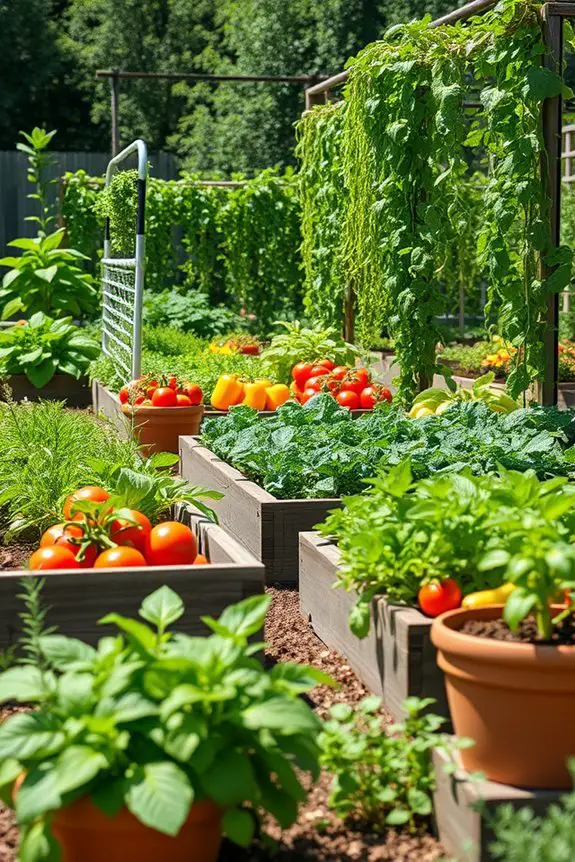
To enjoy a continuous supply of fresh produce, you can implement dynamic planting strategies in your front yard vegetable garden.
Start by practicing dynamic crop rotation, which helps maintain soil health and reduces pest issues. By rotating your crops seasonally, you can guarantee that different plants utilize distinct nutrients, promoting a balanced ecosystem.
Next, focus on seasonal crop selection. Choose fast-growing vegetables like radishes and lettuce for spring, and shift to hearty crops like kale and carrots for fall.
In winter, consider planting cold-hardy varieties or cover crops to enrich the soil. By mixing these strategies, you’ll maximize your harvest potential year-round, ensuring your garden remains productive and sustainable no matter the season.
Fencing for Pest Control
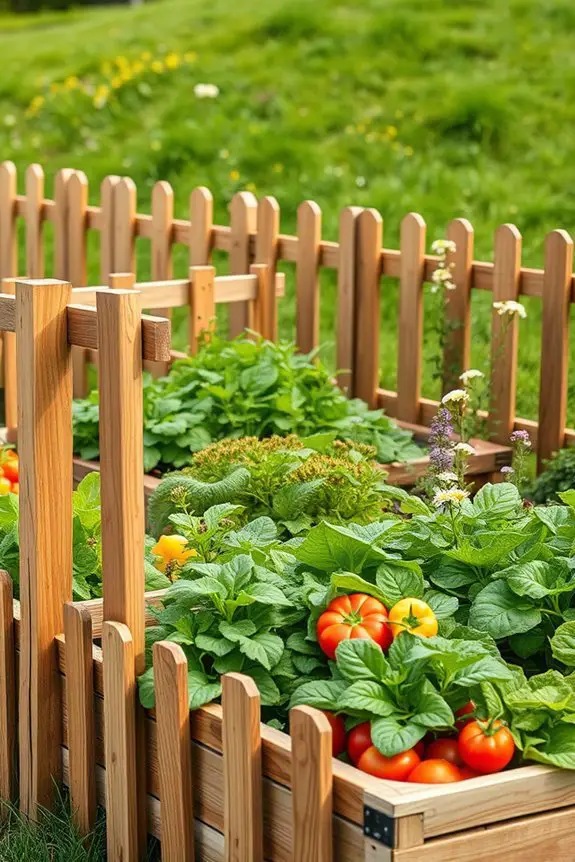
To keep your front yard vegetable garden thriving, installing a proper fence is essential for pest control. You can choose from various fence materials like wood, vinyl, or wire mesh, depending on your garden’s needs and aesthetics.
A well-built fence acts as an effective pest barrier, deterring rabbits, deer, and other critters from munching on your plants. Make sure the fence is tall enough—at least 4-6 feet—to prevent jumping pests.
For smaller intruders, consider burying the fence a few inches underground to stop burrowing animals. If you want to enhance your fence’s effectiveness, you can also add natural repellents or plant companion plants nearby to further discourage pests.
A sturdy fence keeps your garden safe and productive!
Garden Art and Decor
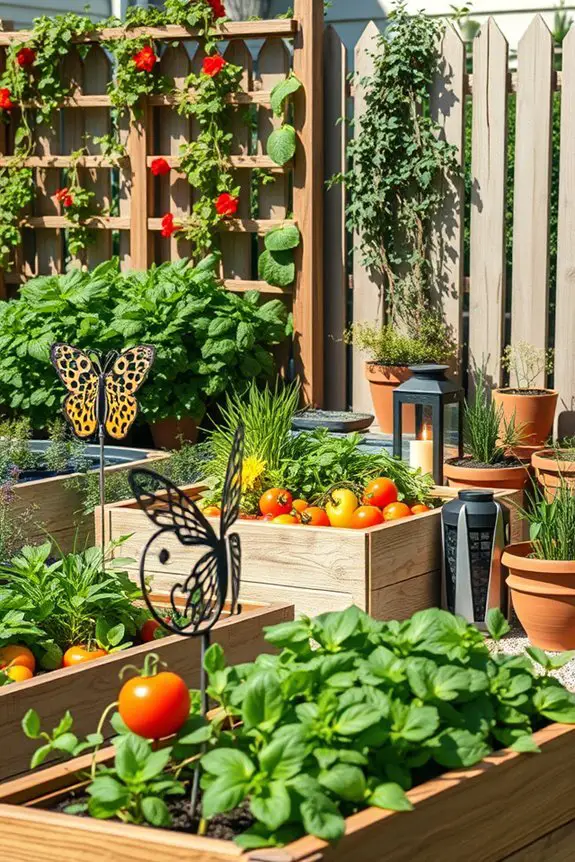
After securing your vegetable garden with an effective fence, it’s time to add personality and charm through garden art and decor. Incorporating garden sculptures can transform your space into a vibrant oasis.
Consider whimsical pieces that reflect your style, like a colorful birdbath or playful gnomes. You can also enhance the aesthetics with decorative fences; choose designs that complement your garden’s theme.
Whether it’s rustic wood or intricate metalwork, these elements not only provide a visual appeal but also serve as a backdrop for your plants. Adding a few hanging planters or wind chimes can further elevate the atmosphere.
Pathways and Accessibility
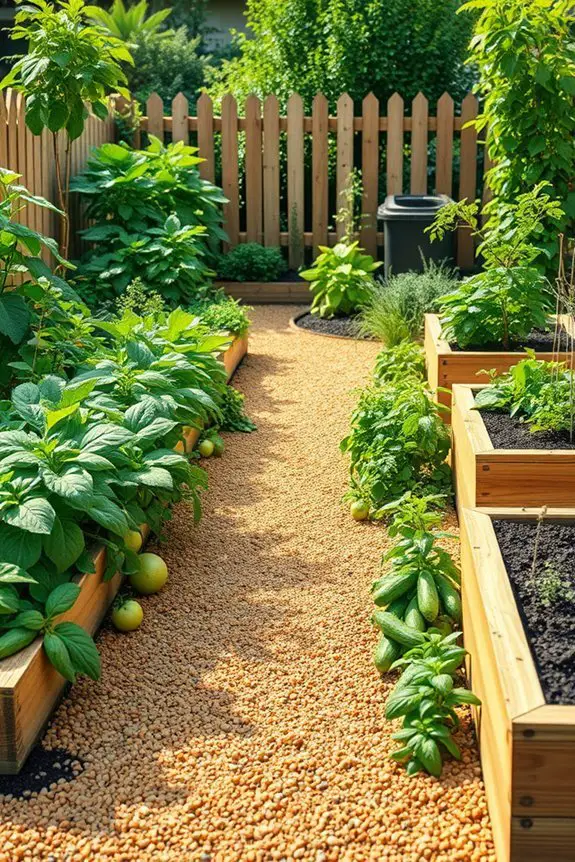
Creating pathways in your vegetable garden not only enhances accessibility but also adds structure to the space.
Thoughtful pathway design allows you to navigate easily between plants while keeping your garden organized. Consider using materials like gravel, wood chips, or pavers that complement your garden’s aesthetic.
Incorporating accessibility features, such as wider paths for wheelbarrows or raised beds for easy reach, guarantees everyone can enjoy the garden. You might also think about adding curves to your pathways; they can create a more inviting atmosphere.
Don’t forget to maintain clear pathways, as overgrown plants can obstruct access.
With the right design, your pathways can transform your garden into a functional and beautiful space that everyone can appreciate.
Utilizing Shade From Trees
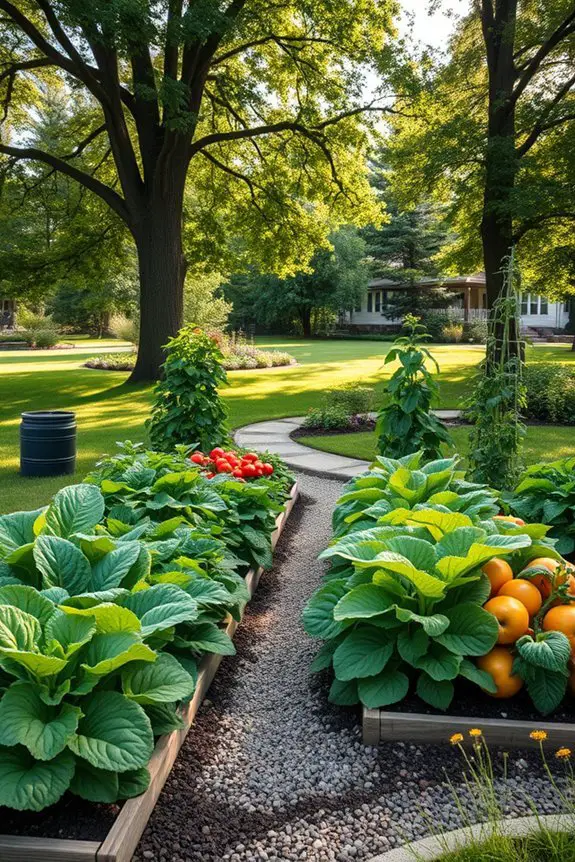
Incorporating shade from trees into your vegetable garden can enhance both the aesthetic and functional aspects of your space.
By strategically planting shade-tolerant vegetables, like leafy greens, carrots, and certain herbs, you can maximize your garden’s productivity while utilizing the natural shade provided by trees.
Consider companion tree planting, where you position trees that offer partial shade alongside your vegetable beds. This not only conserves moisture and reduces weed growth but also protects your plants from harsh sunlight.
Be mindful of the trees’ root systems and light requirements to guarantee your vegetables thrive.
With the right combinations, you’ll create a lush, inviting garden that benefits from both shade and the beauty of trees.
Drip Irrigation Setup
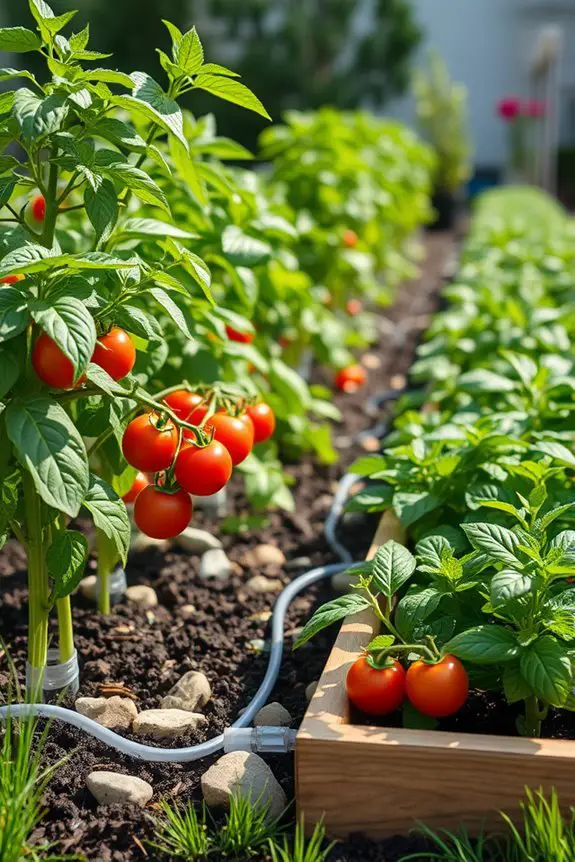
Setting up a drip irrigation system can transform your front yard vegetable garden into a more efficient and productive space.
Start by laying out your garden layout to determine where to place the drip tape and emitters. Use a pressure regulator to maintain ideal water flow, ensuring your plants receive the right amount of moisture.
Mind the emitter placement to target each plant’s root zone effectively. For water conservation, implement irrigation scheduling that suits your garden’s needs, taking into account soil moisture levels.
Consider integrating automated systems with timer control for hassle-free watering. Regular system maintenance will keep everything running smoothly, allowing you to focus on enjoying your thriving garden instead of worrying about watering.
Miniature Gardens
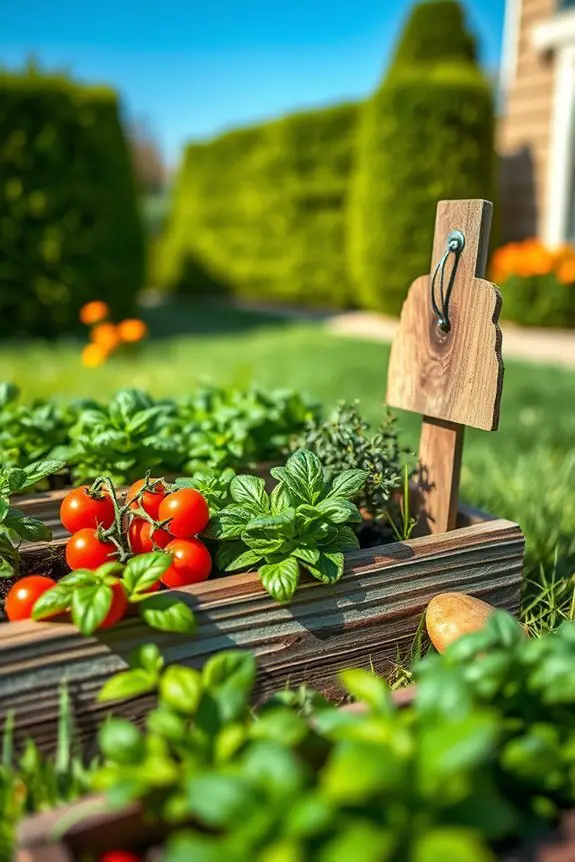
Cold frames and cloches can inspire your creativity when it comes to designing miniature gardens. By creating these charming miniature landscapes, you can transform small spaces into vibrant tiny ecosystems.
Start by selecting a variety of plants that thrive in confined areas, like herbs, succulents, or even small vegetables. Use decorative containers, like teacups or wooden boxes, to add a personal touch.
Incorporate elements like pebbles, small figurines, or even tiny pathways to enhance the visual appeal. These details make your miniature garden not just a sustainable garden but also a delightful focal point in your front yard.
With a little imagination, you’ll cultivate a unique, enchanting world that showcases your gardening talent right at your doorstep.
Community Gardening Initiatives
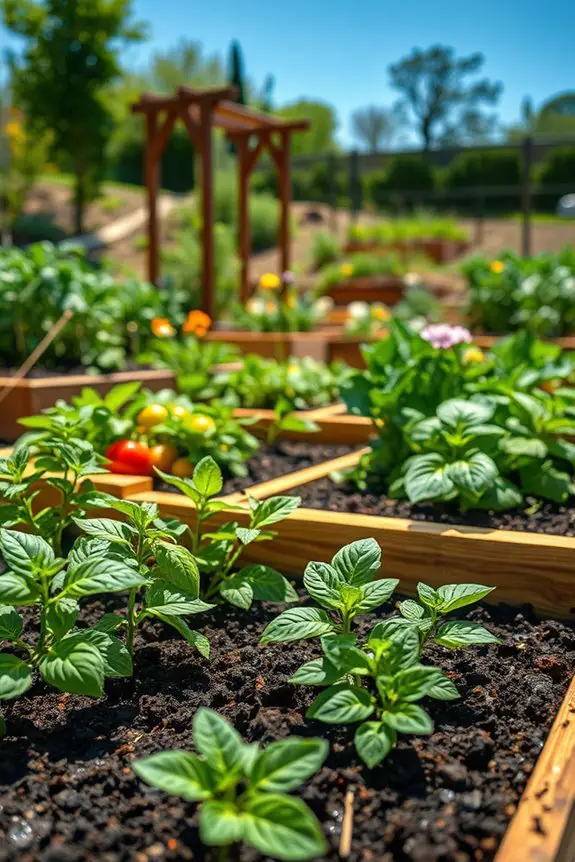
As you explore the world of community gardening initiatives, you’ll discover how these collaborative efforts can transform neighborhoods and foster connections among residents.
Through community outreach, you’ll engage with local partnerships that promote sustainable practices. Participate in gardening workshops where you’ll learn valuable skills and share resources.
Crop swaps and seed exchanges encourage diversity in your garden while strengthening community ties. Educational programs provide insights into neighborhood composting, making waste reduction a collective goal.
Plus, volunteer opportunities abound, allowing you to contribute directly to these initiatives. By getting involved, you’ll not only cultivate fresh produce but also build a supportive network that enhances your community’s well-being.
Embrace these initiatives and watch your neighborhood flourish!
Conclusion
Whether you’re working with a sprawling yard or a tiny balcony, these 40 front yard vegetable garden ideas show that sustainability is within everyone’s reach. You can grow a lush garden without sacrificing space or style, proving that even the smallest patches can yield big rewards. As you nurture your plants, you’ll find that each seed sown is a step toward a healthier planet, blending beauty with purpose in your outdoor oasis. Get growing!