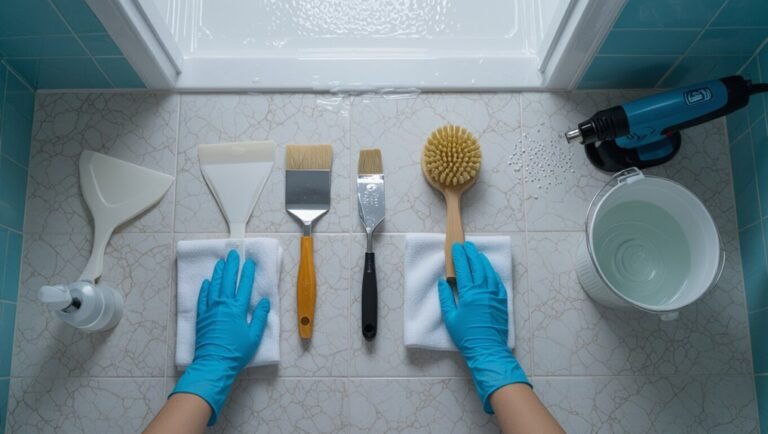
How to Clean SPC Flooring the Right Way to Preserve Its Surface
You can keep SPC flooring looking like new by sweeping or vacuuming daily to remove grit, spot-cleaning spills immediately, and damp-mopping weekly with a microfiber mop and pH-neutral cleaner. Avoid steam cleaners, abrasive pads, and harsh chemicals that can dull the wear layer. Protect high-traffic zones with rugs and felt pads, allow expansion gaps, and inspect seams monthly for gaps or lifting. Follow these steps and you’ll preserve the surface—keep going to learn detailed tips and fixes.
Best Way to Clean SPC Flooring Right Now
Start with a quick, regular routine: sweep or vacuum, mop with a pH-neutral cleaner, and dry any wet spots.
Reserve deeper cleaning—like using a recommended scrub pad or a stronger cleaner—for stubborn grime or high-traffic areas.
Call a professional if stains persist, seams lift, or you’re unsure about a product’s safety for your SPC floor.
Short step-by-step summary for routine cleaning
1 simple routine will keep your SPC floors looking great: sweep or vacuum daily, spot-clean spills immediately, mop weekly with a pH-neutral cleaner and damp (not wet) microfiber mop, and protect high-traffic areas with rugs or felt pads under furniture.
For clear how to clean spc flooring steps: remove debris, treat spots, damp-mop, dry promptly, and rotate rugs to minimize wear.
When to use deeper cleaning or professional help
When regular sweeping and weekly damp-mopping no longer remove dirt, stains, or dullness, it’s time to contemplate deeper cleaning or professional help.
Call professionals if stains persist, grout or seams trap grime, or high-traffic areas look worn.
You can try a manufacturer-approved deep-clean solution and soft scrubber first, but stop and seek pro services if damage, odor, or persistent residue remains.
Understanding SPC Flooring Basics
You’ll want to know what SPC flooring is and how it differs from vinyl and laminate so you can choose the right cleaning approach.
SPC’s rigid stone-plastic core plus the top wear layer and coatings affect durability and moisture resistance.
Different finishes—like UV-cured urethane or aluminum oxide—change how you mop and which cleaners are safe.
What is SPC flooring and how it differs from vinyl and laminate
SPC (stone plastic composite) flooring is a rigid, waterproof type of luxury vinyl that’s built around a limestone and PVC core for extra stability and durability.
You’ll find SPC firmer than traditional flexible vinyl, resisting dents and movement better. Unlike laminate, SPC won’t swell with moisture and usually installs thinner without underlayment, giving you a durable, low-maintenance option for busy areas.
SPC flooring structure and surface coatings
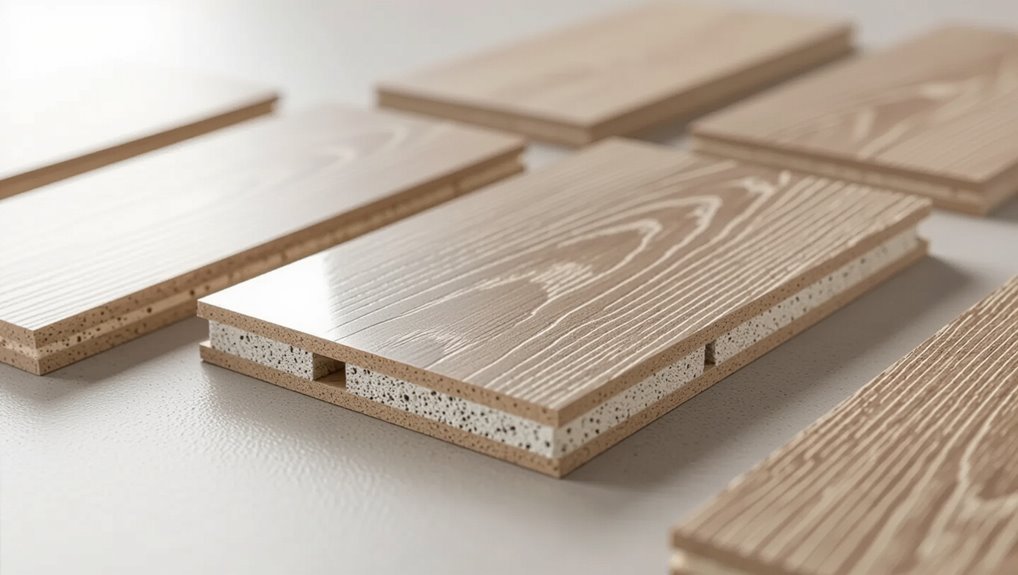
Think of SPC flooring as a layered system where each stratum plays a specific role: a rigid limestone-PVC core provides stability, a printed design layer gives the look of wood or stone, and a wear layer with protective coatings shields the surface from scratches, stains, and UV fading.
You should understand these layers to choose appropriate cleaning methods that preserve adhesion and coating integrity without over-wetting.
Common SPC finish types and their cleaning implications
Because finishes determine both appearance and care needs, you should know the common SPC coatings and how they affect cleaning.
Urethane and UV-cured coatings resist scratches and tolerate mild detergents; use pH-neutral cleaners.
Aluminum oxide is extremely durable—vacuum and damp-mop only.
Waxed or oil-modified surfaces need gentle maintenance and occasional reapplication; avoid abrasive tools and harsh chemicals to preserve the finish.
Why Proper Cleaning Matters
If you clean SPC flooring the wrong way, you can wear away the protective layer or loosen seams and edges.
Using the right methods and products helps keep the floor looking new and prevents costly repairs.
Proper maintenance also protects your warranty and extends the flooring’s lifespan.
How wrong cleaning damages the wear layer or seams
When you use harsh cleaners, abrasive tools, or too much water, you’ll strip or dull the SPC’s protective wear layer and force moisture into seams where it can lift and warp the planks.
You’ll also weaken surface coatings, invite stains, and accelerate scratches. Seams can separate, adhesive can fail, and small problems quickly become costly repairs if you don’t clean with appropriate products and minimal moisture.
Long-term benefits of correct maintenance (appearance, warranty, longevity)
Longevity pays off: keeping SPC floors clean with the right products and techniques preserves their original look, protects your warranty, and saves you money over time.
You’ll prevent premature wear, discoloration, and seam damage by using recommended cleaners, gentle tools, and regular routines.
Proper maintenance maintains resale value, reduces repair needs, and guarantees warranty compliance so your flooring lasts as planned.
Tools and Cleaning Products You Need
You’ll want a soft toolkit—microfiber mop, soft-bristle broom, and a vacuum rated for hard floors—to prevent scratches and trap dust.
Use manufacturer-approved cleaners or mild household solutions like diluted dish soap or vinegar for routine cleaning.
Avoid harsh chemicals, abrasive pads, and steam cleaners that can damage SPC surfaces.
Recommended cleaning tools (microfiber mop, soft-bristle broom, vacuum specs)
Although SPC floors are durable, using the right tools keeps them looking their best and prevents damage. You should choose gentle, effective equipment to remove dirt without scratching.
Prefer lightweight, easy-to-maneuver options.
- Microfiber mop: traps debris, uses less water
- Soft-bristle broom: sweeps fine grit safely
- Vacuum (hard-floor setting): avoids beater bar
- Microfiber cloths: spot-clean without residue
Approved cleaning solutions and household alternatives
Now that you’ve picked gentle tools, match them with safe cleaners to protect SPC’s wear layer and finish.
Use pH-neutral floor cleaner or mild dish soap diluted in water, then rinse. You’ll avoid residue and dulling when you:
- Choose labelled pH-neutral products
- Dilute cleaners per instructions
- Spot-test new mixes
- Use clean microfiber for rinsing
Products to avoid (harsh chemicals, abrasive pads, steam cleaners)
Because harsh chemicals, abrasive pads, and steam cleaners can quickly damage SPC’s wear layer, avoid them entirely and stick to gentle tools and pH-neutral solutions.
You should skip products that strip finishes, scratch surfaces, or introduce excess moisture.
Remember to:
- Never use bleach or ammonia cleaners
- Avoid steel wool or scouring pads
- Don’t use oil-based polishes
- Never operate a steam mop on SPC
Step-by-Step Cleaning Routine (Daily to Annual)
You’ll start with simple daily and weekly tasks like sweeping or dry-mopping and wiping up spills to keep grit and stains from building up.
Once a month, you’ll do a deeper clean using a manufacturer-safe cleaner diluted to the label’s recommended ratio and a damp mop for even coverage.
Every quarter or year, inspect seams and edges for gaps or damage and consider applying approved protective treatments if needed.
Daily and weekly routine quick maintenance steps
Keep a simple, predictable routine and your SPC floors will stay attractive and last longer.
You’ll handle spills, grit, and daily wear with short, regular tasks that prevent damage.
Follow these quick steps to keep surfaces clean without harsh treatments:
- Sweep or vacuum high-traffic areas daily
- Wipe spills immediately with a damp cloth
- Damp-mop weekly with pH-neutral cleaner
- Use felt pads under furniture legs
Monthly deeper clean method and product amounts
When you’re ready for a monthly deep clean, set aside 30–45 minutes and gather a soft broom or vacuum, a microfiber mop, a pH-neutral floor cleaner, a bucket, and two clean microfiber pads or mop heads.
Sweep or vacuum, dilute cleaner per label (usually 1–2 oz per gallon), mop with damp pad, rinse pad frequently, switch to a fresh pad for final pass, and let dry completely.
Quarterly or annual tasks (inspect seams, apply protective treatments)
Although quarterly and annual checks take a bit more time than your regular routine, they’re essential for spotting seam issues and keeping protective treatments effective.
Every three to twelve months, inspect seams for gaps, lifting, or mildew. Reseal or tighten loose edges, clean thoroughly, then apply a recommended protective coating or polish sparingly.
Document repairs and schedule follow-ups to prevent lasting damage.
Removing Specific Stains and Spills
When you encounter common messes like water, dirt, or mud, act quickly with blotting and a gentle rinse to prevent tracking and staining.
For oil, grease, food, ink, marker, or dye, you’ll use targeted degreasers or spot removers and follow specific techniques to avoid damage.
Tough residues like adhesives or paint need patient, careful removal with appropriate solvents and plastic scrapers so you don’t scratch the SPC surface.
Water, dirt, and mud fastest safe removal
Start by blotting up standing water with absorbent towels or a microfiber mop to keep moisture from seeping into seams; then sweep or vacuum loose dirt and grit so you don’t grind it into the surface.
For mud, let it dry slightly, scrape gently with a plastic spatula, then mop with a pH-neutral cleaner. Rinse and dry thoroughly to prevent residue.
Oil, grease, and food stains safe degreasing steps
Tackle oil, grease, and food stains quickly by blotting excess with a paper towel or cloth.
Then, apply a mild, pH-neutral degreaser or a mix of warm water and dish soap to lift the residue without harming the SPC surface.
Gently scrub with a soft cloth or microfiber, rinse with clean water, dry thoroughly, and repeat if needed.
Avoid abrasive pads or harsh solvents.
Ink, marker, and dye stain-specific techniques
Occasionally you’ll encounter stubborn ink, marker, or dye spots on SPC flooring, and acting quickly gives you the best chance of removing them without damage.
Blot fresh marks with a damp microfiber, don’t rub.
For dried stains, apply isopropyl alcohol to a cloth and gently lift ink; test an inconspicuous spot first.
Rinse with water, dry, and repeat sparingly until stain fades.
Adhesives, paint, and tough residues careful removal process
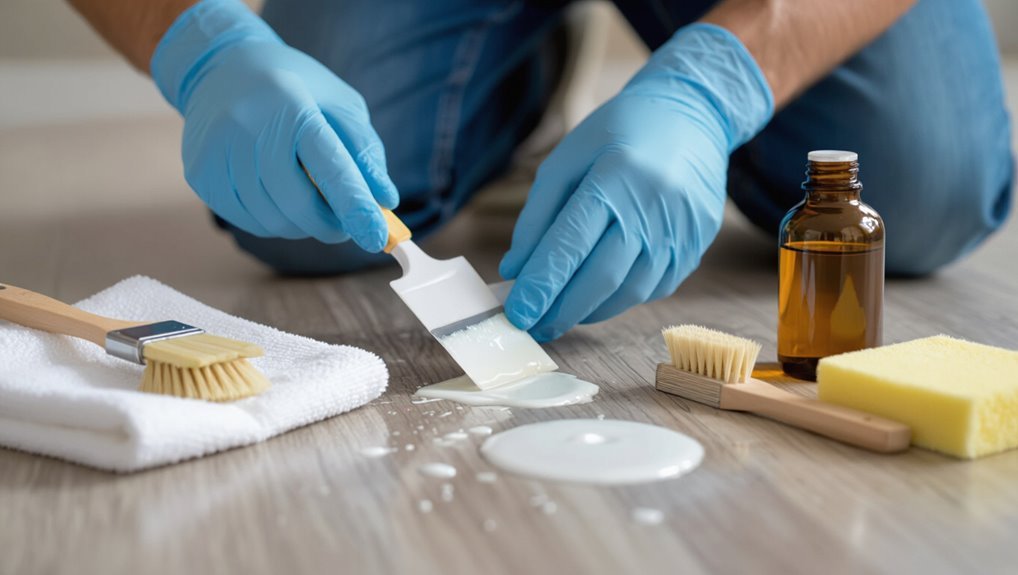
Use patience and gentle motion when removing adhesives, paint, or other stubborn residues from SPC flooring to avoid scratching or discoloring the wear layer.
Start by softening residue with warm, soapy water or a manufacturer-approved cleaner. Gently scrape with a plastic putty knife, then wipe.
For stubborn spots, use isopropyl alcohol sparingly, test first, and rinse thoroughly to prevent damage.
Dealing with Scratches, Scuffs, and Surface Wear
You’ll want to tell the difference between surface scratches and true wear-through so you can choose the right fix.
For light scuffs and shallow marks, you’ll often remove them with a soft cloth, mild cleaner, or gentle buffing; deeper scratches may need a repair kit or plank replacement.
Learn when a touch-up will suffice and when it’s more cost-effective to replace a damaged plank.
Identifying scratch vs. wear-through
When you inspect damaged SPC flooring, focus on depth and color to tell a scratch from wear-through: scratches are surface-level marks that may catch your fingernail but leave the core color intact, while wear-through shows the underlayer or core material and often exposes a different color or texture.
Check edges and traffic paths; deeper, discolored spots need repair or replacement rather than simple cleaning.
DIY scuff removal and buffing tips
If a mark proves to be a surface scratch or scuff rather than wear-through, you can often fix it yourself with simple tools and light buffing.
Use a soft cloth, non-abrasive cleaner, and a pencil eraser or melamine sponge for gentle rubbing.
For dull spots, try a microfiber buffing pad on low speed.
Always test inconspicuously and finish with a protective polish.
When to touch up vs. replace a plank
Because minor scuffs and shallow scratches can usually be buffed or touched up, you’ll want to reserve plank replacement for damage that goes through the wear layer, warps, chips along edges, or shows permanent discoloration; assess repairability by checking depth, size, location, and whether the core material is exposed or compromised.
If damage is superficial, touch up with filler or polish; replace for structural or extensive aesthetic failure.
Preventive Measures and Best Practices
You can prevent a lot of wear by using felt pads on furniture, walk-off mats at entrances, and low‑abrasion rugs in high-traffic areas.
Place doormats and establish a no-shoes policy to keep grit off the floor.
Also monitor temperature and humidity and follow installation care guidelines to avoid warping or seams opening.
Protective furnishings: pads, mats, and recommended rugs
When you place felt pads under furniture legs, use chair mats in high-traffic desk areas, and choose low‑pile, nonstaining rugs for entryways, you’ll prevent scratches, dents, and premature wear on SPC flooring.
Use these protective furnishings wisely:
- Felt pads: replace when compressed
- Chair mats: choose smooth, PVC-free backing
- Rugs: low‑pile, breathable, colorfast
- Rug pads: nonstaining, grippy, thin
Entryway and traffic control strategies to reduce grit
A few simple entryway and traffic-control steps can cut the amount of grit tracked onto SPC flooring and dramatically reduce scratches and wear.
Place heavy-duty doormats both outside and inside doors, and use a boot tray for wet shoes.
Establish a no-shoe policy or provide indoor slippers, and set clear paths with runners in high-traffic zones to minimize grit movement.
Temperature, humidity, and installation-related care
Because SPC floors expand and contract subtly with environmental changes, you should control temperature and humidity before and after installation to prevent gaps, buckling, or peaking.
Keep indoor temps between 60–80°F and relative humidity 35–55%. Acclimate planks 48–72 hours in the installation room.
Allow proper expansion gaps, use recommended underlayment, and avoid wetting seams during cleaning to protect joints and adhesives.
Common Cleaning Mistakes and How to Avoid Them
Don’t soak SPC floors or use harsh, oil-based or bleach cleaners, since excess water and the wrong products can damage seams and finish.
Don’t scrub with steel wool or use abrasive pads, and avoid DIY stain fixes that strip the protective layer.
And don’t ignore spills or skip regular light cleaning—small messes and routine care keep floors looking their best.
Using too much water or wrong cleaners
Too much water or the wrong cleaner can quickly ruin SPC flooring’s wear layer and seams, so you should stick to damp mopping and pH-neutral products recommended by the manufacturer.
Don’t pour, scrub harshly, or use bleach, ammonia, or oil-based solutions.
Wring mops thoroughly, spot-test new cleaners, and dry any damp areas promptly to prevent swelling, discoloration, or adhesive failure.
Abrasive tools and improper stain treatments
If you use abrasive scrubbers, steel wool, or harsh brushes on SPC flooring, you’ll quickly scratch the wear layer and leave dull, permanent marks.
Instead, choose soft microfiber mops and non-abrasive pads.
For stains, test a mild, pH-neutral cleaner in an inconspicuous spot and blot gently—don’t scrape or use bleach.
Follow manufacturer stain guidance to avoid damage and discoloration.
Ignoring spills and neglecting routine maintenance
When you leave spills or skip regular care, liquids and grit can seep into seams and wear down SPC flooring over time, leading to stains, swelling at edges, and a dulled finish.
You should wipe spills immediately, sweep or vacuum daily, and mop with a manufacturer-approved cleaner weekly.
Consistent maintenance prevents costly repairs and preserves appearance and warranty coverage.
Comparing Cleaning Methods and Products
You’ll want to compare how tools and cleaners affect SPC’s wear and finish, so start by weighing pros and cons of microfiber mops, steam cleaners, and traditional mops. Also compare commercial SPC cleaners with simple DIY solutions for safety and effectiveness. Use the quick table below to spot key differences at a glance.
| Method/Product | Quick notes |
|---|---|
| Microfiber mop | Gentle, effective at picking up dust, low water use |
| Steam cleaner | Risky for SPC if heat/moisture is high |
| Traditional mop | Works for spills but can leave excess water |
| Commercial SPC cleaner | Formulated for finish protection, usually pH-balanced |
Microfiber mop vs. steam cleaner vs. traditional mop
Although each method can clean SPC flooring, choosing between a microfiber mop, a steam cleaner, or a traditional mop comes down to how much soil you need to remove, how much moisture the floor can tolerate, and how much time you want to spend.
Use a microfiber mop for routine dust and light spills, a steam cleaner sparingly on sealed surfaces, and a traditional damp mop for heavier dirt with controlled moisture.
Commercial SPC cleaners vs. DIY solutions
If you want a quick, reliable clean with minimal guesswork, commercial SPC cleaners are formulated for the job.
But DIY solutions can save money and handle light messes—so your choice comes down to the floor’s finish, how stubborn the soil is, and whether you prefer convenience or control.
Use commercial products for guaranteed pH balance and protective additives; use gentle DIY mixes for routine, spot cleaning to avoid residue and damage.
Troubleshooting Guide Quick Fixes for Common Problems
If your SPC floor looks dull or has stubborn residue after cleaning, try a gentle, residue-free cleaner and a microfiber pad to restore the finish.
If you notice gapping seams or lifting edges, check for excess water, allow the floor to dry fully, and use edge adhesive or a seam repair kit as a temporary fix.
For odors or mold near wet areas, dry the spot thoroughly, treat with a mild antifungal cleaner, and address the moisture source to prevent recurrence.
Persistent residue or dull finish
Residue and a dull finish usually mean either cleaning product buildup or a worn protective layer, and you can fix most cases without calling a pro.
Rinse with clean water, mop with a pH-neutral cleaner, then buff dry with a microfiber cloth.
For buildup, strip residue with diluted vinegar solution, rinse thoroughly, and apply a manufacturer-approved refresher to restore shine.
Gapping seams or lifting edges after cleaning
When seams start gapping or edges lift after cleaning, you’re usually dealing with trapped moisture, sudden temperature changes, or loosening adhesive—issues you can often correct yourself without replacing planks.
Dry the area thoroughly, weight edges with flat boards until seams settle, and use a manufacturer-approved adhesive or seam sealer sparingly if needed.
Control room humidity and avoid rapid temperature swings to prevent recurrence.
Odors and mold concerns near wet areas
Gapping seams or lifted edges can trap moisture under your SPC flooring, and that trapped dampness often leads to musty odors or mold growth near wet areas.
Inspect seams, lift loose planks, dry the substrate thoroughly, and treat affected spots with a mold-safe cleaner.
Repair and reseal edges, improve ventilation, and address leaks promptly to prevent recurrence and lingering smells.
When to Call a Professional
If stains, warping, persistent odors, or loose seams won’t respond to DIY fixes, it’s time to call a pro.
Expect a technician to assess damage, perform deep cleaning or repairs, and give a clear estimate and timeline.
Ask about their SPC experience, cleaning methods and products, warranties, and any follow-up care you should do.
Indicators you need professional deep cleaning or repair
Although routine maintenance handles most issues, there are clear signs that you should call a pro for deep cleaning or repair of SPC flooring.
Call a specialist if you see persistent stains that DIY methods won’t remove, persistent odors, lifting or buckling planks, widespread scratches or wear, repeated water damage, or structural soft spots.
Don’t delay professional assessment.
What to expect from professional SPC services
When you call a professional for SPC flooring, expect a clear assessment, targeted cleaning or repair, and a plan that outlines needed work and costs.
They’ll evaluate damage, recommend restoration or replacement, use appropriate equipment and safe cleaners, and schedule work to minimize disruption.
You should get a timeline, warranty details, and post-service care instructions so your floor stays protected.
Questions to ask a flooring pro
Before they start work, you’ll want to ask a few specific questions to make sure their plan matches your needs and budget.
Ask about their experience with SPC, cleaning methods they’ll use, warranty and insurance, estimated timeline and cost breakdown, and whether they handle stains or repairs.
Request references or photos of past work and confirm post-service cleanup and follow-up care instructions.
Maintenance Checklist and Cleaning Schedule
You’ll keep SPC flooring looking its best by sticking to a simple maintenance checklist and schedule.
Follow these quick routines to avoid buildup and damage:
- Daily: sweep or dry-mop to remove grit and spills
- Weekly: damp-mop with pH-neutral cleaner for light soil
- Monthly: inspect seams, clean vents, and deep-clean high-traffic areas
- Annual: check for wear, reseal connections if needed, and consider professional inspection
Stick to the plan and you’ll prevent small issues from becoming big problems.
Daily, weekly, monthly, and annual checklist items
A clear maintenance checklist helps you keep SPC flooring looking great and lasting longer by breaking tasks into daily, weekly, monthly, and annual actions.
Daily: sweep or vacuum and wipe spills.
Weekly: damp-mop with pH-neutral cleaner.
Monthly: deep-clean edges, check grout or seams, treat scuffs.
Annually: inspect underlayment, reseal connections, address wear spots and consider professional maintenance.
FAQ
You probably have quick questions like whether steam cleaners or vinegar are safe for SPC floors, how often you should reseal or refinish them, and if pets or furniture will cause scratches.
You’ll also want to know how to restore shine to dull SPC flooring.
Below are concise answers to those common FAQs.
Can I use steam cleaners on SPC flooring?
Curious whether steam cleaners are safe for SPC flooring? You should avoid steam cleaners.
High heat and moisture can soften joints, loosen plank edges, and damage the wear layer’s coating. Instead, use a damp microfiber mop with manufacturer-approved cleaners and dry promptly.
If you still consider steam, test a hidden area first and follow the floor maker’s explicit guidelines to avoid voiding warranties.
Is vinegar safe for cleaning SPC floors?
If you’re avoiding steam, you might wonder whether vinegar is a safer alternative for cleaning SPC floors.
Vinegar’s acidity can dull or etch some floor finishes over time. Use a highly diluted mix (about 1/4 cup white vinegar per gallon of warm water) sparingly, rinse with plain water, and test a hidden spot first.
Don’t use straight vinegar or frequent treatments.
How often should I reseal or refinish SPC flooring?
How often should you reseal or refinish SPC flooring? You rarely need to.
SPC has a durable wear layer and factory-applied finish, so resealing or refinishing is generally unnecessary unless the wear layer is damaged.
Address scratches or surface dullness with manufacturer-recommended cleaners and occasional polish.
If damage is extensive, consult the manufacturer or a flooring pro to determine repair or replacement options.
Will SPC flooring scratch easily with pets or furniture?
Though SPC (stone plastic composite) is built to resist dents and scuffs, it isn’t completely immune to scratches from pet claws or moving furniture—particularly if abrasive grit or hard edges are involved.
You can minimize risk by keeping pet nails trimmed, using felt pads under furniture, lifting rather than dragging pieces, and sweeping grit away regularly to protect the wear layer and keep surfaces looking intact.
How do I restore shine to dull SPC floors?
Keeping pet nails trimmed and using felt pads will help prevent scratches, but worn or dulled wear layers can still leave SPC floors looking flat.
To restore shine, deep-clean with manufacturer-approved cleaner, rinse thoroughly, then apply a compatible floor polish or rejuvenator sparingly.
Test in an inconspicuous spot first. Avoid waxes or abrasive products; repeat polishing only as manufacturer recommends to protect the wear layer.