
What Does Laminate Flooring Look Like in Real Homes? Styles and Finishes Explained
You’ll see laminate flooring mimic wood or stone with convincing grain, varied plank widths, and finishes from matte to glossy or embossed that change both look and wear. Thicker wear layers and denser cores enhance realism, while wide planks feel modern and narrow ones suit traditional rooms. Lighter tones brighten small or north-facing spaces; textured boards hide scratches and suit cozy bedrooms. Keep looking and you’ll find practical tips on styles, layouts, and maintenance.
What Laminate Flooring Looks Like in Real Homes Quick Answer
You’ll see laminate flooring mimic everything from pale, washed oak to rich, distressed walnut with realistic grain, varied plank widths, and matte to glossy finishes.
In real homes it often reads as hardwood at a fraction of the cost, pairs well with both modern and traditional decor, and hides wear better than some real timber.
For high-traffic rooms pick durable, darker or textured styles, while lighter, smoother planks brighten small or low-traffic spaces.
Direct visual summary of common appearances
Think of laminate flooring as a practical mimic: it usually shows realistic wood or stone patterns with consistent grains, repeatable plank widths, and a low-gloss or matte finish that reads like real materials at a glance.
You’ll ask, what does laminate flooring look like? Picture three common looks:
- Warm oak planks with soft knots.
- Weathered gray wide boards.
- Polished stone tile effect.
One-sentence recommendation for choosing styles based on room
When choosing a laminate style for each room, match the look to the room’s function and lighting—go warm, textured planks for living areas, durable medium-toned boards for busy family spaces, lighter grays for small or north-facing rooms to brighten them, and stone or tile finishes in kitchens and baths where moisture resistance and easy cleaning matter.
Pick finishes that balance aesthetics, maintenance, and durability so each space performs and feels right.
Basic Understanding What Laminate Flooring Is and Why Appearance Matters
You’ll want to know that laminate is a layered product—an image layer over a core and wear layer—which directly shapes texture, grain clarity, and durability.
Pay attention to texture, grain pattern, color, plank size, and finish because those elements determine whether a floor reads like real wood, rustic tile, or something more modern.
Choose laminate over hardwood when you need cost-effective realism and durability, or over vinyl if you want larger plank visuals and a more wood-like appearance.
How laminate is constructed and how that affects look
At its core, laminate flooring layers a photographic image of wood, stone, or tile beneath a clear protective wear layer over a rigid core. That construction is what determines how realistic and durable the floor will look and perform.
You’ll notice thicker wear layers resist scratches and fading, while denser cores reduce expansion and mimic solid floors; quality matters for lasting appearance.
Key aesthetic elements: texture, grain, color, plank size, finish
Texture, grain, color, plank size and finish are the visual cues that shape how laminate flooring reads in a room, and they’re the details you’ll want to match to your style and space.
You’ll pick texture for tactile realism, grain for authenticity, color to set mood, plank size to influence scale, and finish (matte to glossy) to control sheen and maintenance.
When to choose laminate over hardwood or vinyl for appearance
When should you pick laminate over hardwood or vinyl for the look of a room?
Choose laminate when you want authentic wood visuals without hardwood’s cost or maintenance, or when you need more realistic wood texture than many vinyl options offer.
Pick laminate for high-traffic areas, tight budgets, quick installation, and durable finishes that mimic grain, color, and plank variation convincingly.
Common Laminate Styles Seen in Real Homes
You’ll see classic oak and light wood tones in many homes, alongside richer dark walnut and espresso options that add warmth.
Gray and contemporary stains, plus rustic distressed visuals, give you modern or farmhouse vibes depending on the room.
For more visual interest, herringbone, chevron, and patterned planks are popular choices that change the whole look.
Classic oak and light wood tones
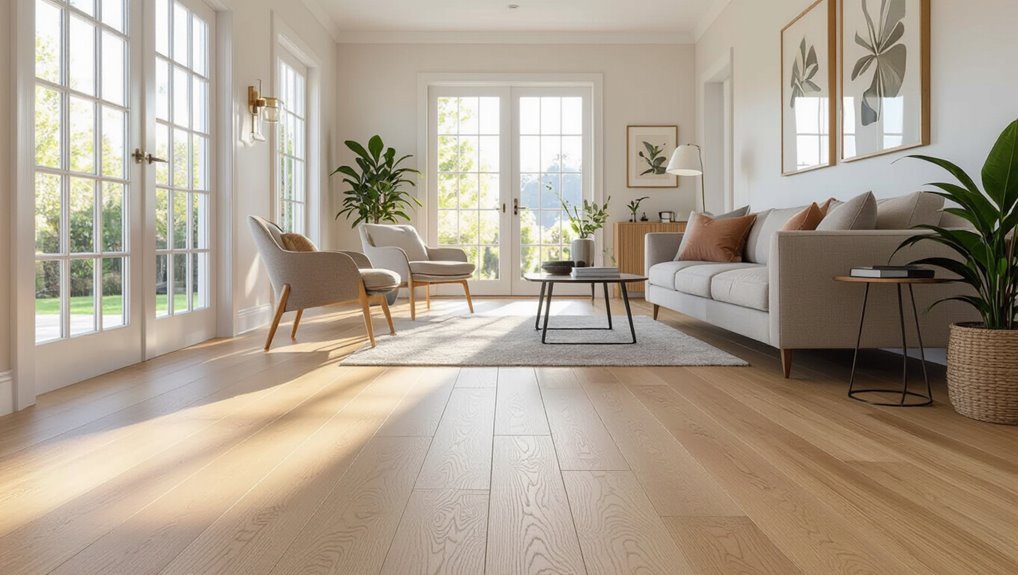
Classic oak and light wood tones bring a warm, timeless look to rooms, and they’re one of the most versatile laminate choices for real homes.
You’ll find they brighten small spaces, complement modern and rustic decor, and resist showing light wear.
Choose subtle grain patterns and matte finishes to maintain a natural feel, and pair with neutral walls for an airy, cohesive result.
Dark walnut and espresso looks
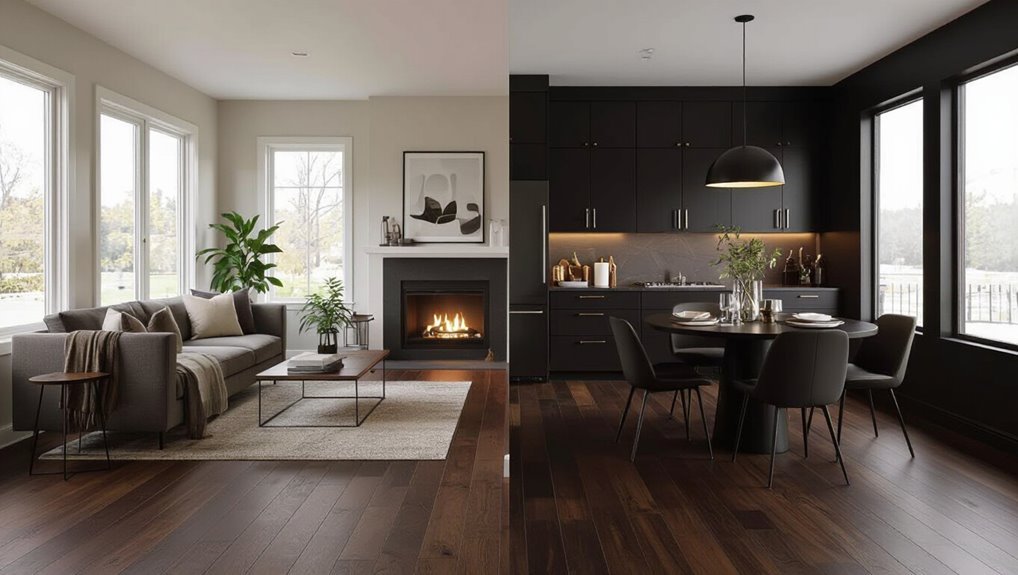
If you want a rich, dramatic foundation, dark walnut and espresso laminates deliver deep color and pronounced grain that anchor a room without overwhelming it.
You’ll notice how they add warmth and sophistication, conceal wear, and contrast nicely with light walls or metallic accents.
Use wide planks for a modern feel or hand-scraped textures to introduce rustic character while keeping maintenance simple.
Gray and contemporary stain options
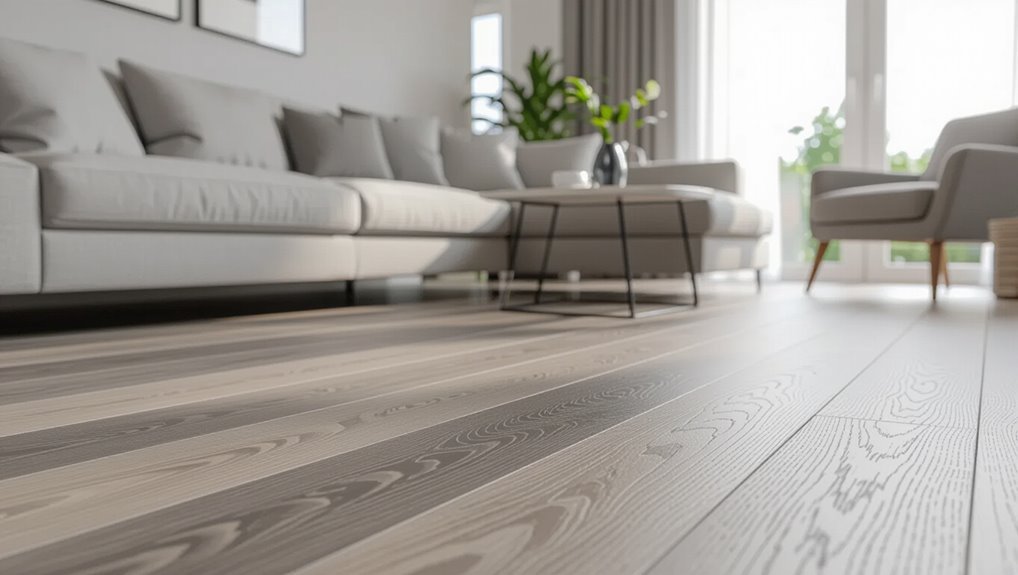
While dark walnut and espresso bring warmth, gray and contemporary stains give you a cooler, more versatile backdrop that fits minimalist, industrial, and Scandinavian schemes.
You’ll find subtle ash tones, weathered greys, and concrete-inspired finishes that brighten small spaces and pair with crisp whites or matte blacks.
These stains highlight grain subtly and suit clean, modern furniture and metal accents.
Rustic and distressed wood visuals
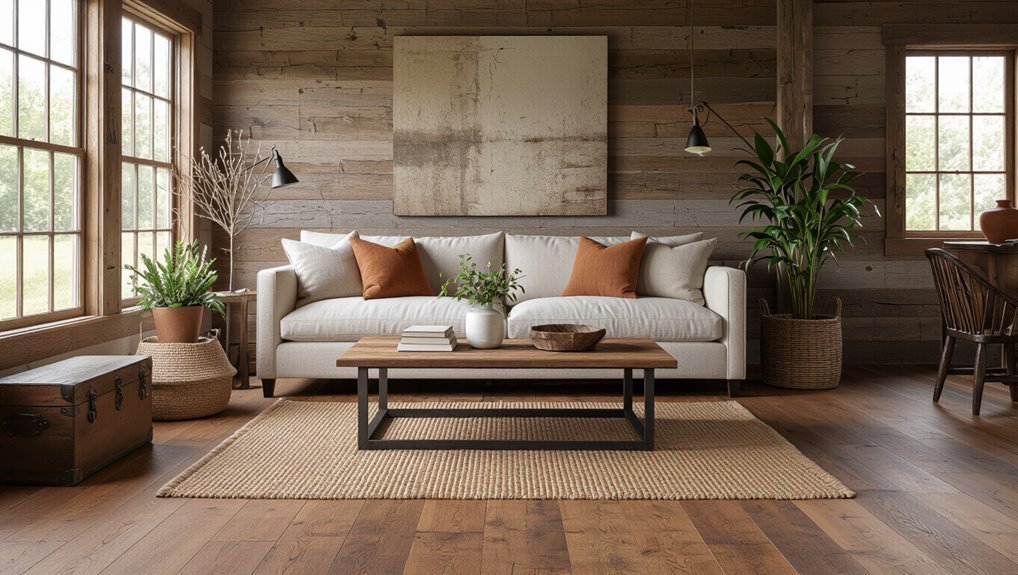
When you want a lived-in, homey feel, rustic and distressed laminate brings character without the upkeep of real reclaimed wood.
You’ll get knots, dents, and varied tones that mimic aged planks, adding warmth and personality to kitchens, living rooms, or entryways.
It wears intentional imperfections well, pairs with vintage or modern decor, and offers durability and easy maintenance compared to real distressed timber.
Herringbone, chevron and patterned plank styles
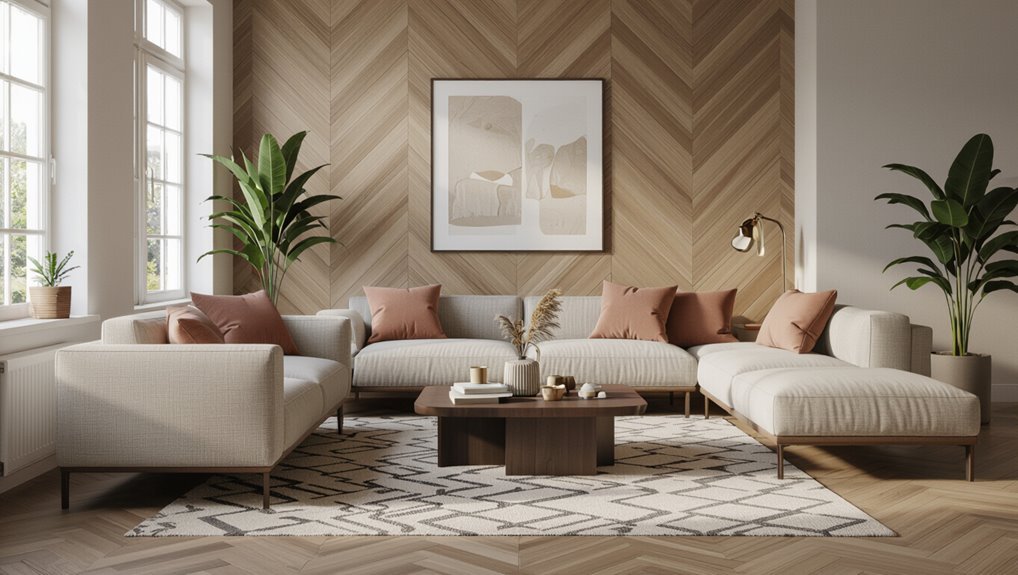
Patterns like herringbone, chevron, and other geometric plank layouts transform ordinary laminate into a design focal point, giving rooms motion and visual interest without the cost or fuss of bespoke flooring.
You can use bold contrasts or subtle tones to emphasize pattern, orient rooms, or create vintage and modern looks.
Installation alignment and plank size shape the final effect, so plan layout carefully.
Tile-look and stone-look laminates
Stone and tile-look laminates give you the look of ceramic, slate, or natural stone without the weight, cost, or complicated installation, letting you achieve a high-end aesthetic in kitchens, baths, and entryways.
You’ll find realistic veining, grout simulations, and varied textures that resist moisture and wear. They’re affordable, easy to install, and versatile for modern, rustic, or shifting designs.
Finishes and Textures: How They Change the Look
You’ll notice finishes and textures shape both the look and feel of your laminate—smooth planks read sleek, while embossed or textured surfaces add depth and hide wear.
Choose matte, satin, or glossy finishes to control glare and the perceived warmth of a room.
For a more rustic or aged vibe, hand-scraped and wire-brushed effects give character without sacrificing durability.
Smooth vs. embossed (textured) finishes
Finish choice matters: smooth laminate gives a clean, modern look with easy maintenance, while embossed (textured) finishes add depth and mimic real wood’s grain and knots so imperfections hide better.
You’ll pick smooth for sleek, minimalist spaces and busy households where spills wipe easily.
Choose embossed when you want tactile realism, subtle character, and better concealment of wear, dents, or pet scratches.
Matte, satin, and glossy finishes and room impact
When you’re choosing between matte, satin, and glossy laminate, think about how light and wear will play in the room:
Matte hides scratches and reduces glare, ideal for casual, cozy spaces.
Satin balances reflection and forgiveness, working well in living areas.
Glossy boosts brightness and shows texture and scuffs, so pick it for low-traffic, modern rooms where shine matters.
Hand-scraped and wire-brushed effects
One of the quickest ways to add character to a room is with hand-scraped or wire-brushed laminate textures; they mimic aged, authentic wood and change how light and shadow play across the floor.
You’ll notice subtle grooves and distressed edges that hide wear, add depth, and suit rustic, farmhouse, or industrial styles. They soften footprints and conceal minor scratches.
How Laminate Appears in Different Rooms and Settings
Think about how laminate can unify living rooms and open-plan spaces to create smooth visual flow.
In bedrooms you’ll often choose warmer, textured boards for coziness, while kitchens require tougher, more realistic finishes that balance durability with appearance.
For bathrooms, basements, and high-traffic or commercial-style areas, pick moisture-resistant or heavy-duty options to match performance needs without sacrificing style.
Living rooms and open-plan areas continuity and flow
If you’re aiming for visual continuity in an open-plan home, laminate gives you a straightforward way to link living areas without visual clutter.
You can run the same plank style through lounge, dining, and kitchen to unify sightlines, or choose subtle shifts—matching tone with different textures—to define zones.
Durable, low-maintenance laminate keeps flow intact while handling traffic and furniture placement.
Bedrooms warmth and coziness examples
When you want a bedroom to feel warm and inviting, laminate can do the heavy lifting: choose mid-tone wood grains with soft matte finishes to add warmth without glare.
Layer rugs, textured throws, and warm lighting to enhance coziness.
Lighter laminates brighten small rooms, while darker tones create intimacy—pair with neutral walls and natural accents for a restful, polished retreat.
Kitchens durability vs. realism trade-offs
Bedrooms benefit from mid-tone, matte laminates for warmth, but kitchens ask for a different balance: you’ll want flooring that stands up to spills, foot traffic, and dropped utensils while still looking like real wood or stone.
Choose scratch-resistant AC4 or AC5 wear layers, beveled edges to hide seams, and realistic textures that mask wear.
Pick colors that hide crumbs and stains.
Bathrooms and basements moisture-resistant laminate options
Because bathrooms and basements demand more moisture protection than other rooms, you’ll want laminate engineered specifically to resist humidity and occasional water exposure.
Choose waterproof cores, tight-click joints, and durable wear layers. Look for SPC or WPC options with embossed textures that mimic tile or plank without swelling.
Install with proper underlayment and perimeter sealing to prevent seepage and prolong appearance.
High-traffic areas and commercial-style looks
Moisture-prone rooms benefit from waterproof cores, and high-traffic zones demand a different set of strengths: toughness, scratch resistance, and wear-layer ratings that hold up to constant footfall and rolling loads.
You’ll want commercial-grade AC ratings, textured surfaces that hide scuffs, and low-maintenance finishes.
Choose darker tones or realistic wood grains to mask wear, and consider thicker planks for stability under heavy use.
Styling and Design Pairings with Laminate Flooring
Think about how wall colors and trim can make light, medium, or dark laminate pop or recede, and choose tones that keep the room balanced.
Match furniture and rugs to your chosen style—sleek, low-profile pieces and geometric rugs for modern; distressed wood and braided rugs for farmhouse; and upholstered, ornate pieces for traditional.
Also consider lighting: warm or cool bulbs and fixture placement will change how color and texture read, so test samples under real light before committing.
Wall colors and trim that complement light, medium, and dark laminates
Want to make your laminate flooring look intentional and balanced?
For light laminates, choose soft neutrals or cool grays and crisp white trim to keep spaces airy.
Medium tones pair well with warm beiges, muted greens, or greige walls and slightly darker trim for contrast.
For dark floors, use pale warm or cool walls and bright white or deep charcoal trim to define edges and add drama.
Furniture and rug pairings by style (modern, farmhouse, traditional)
After picking wall and trim colors that flatter your laminate, match furniture and rugs to reinforce the room’s mood: each style—modern, farmhouse, traditional—has clear choices that either highlight or soften the floor’s tone.
For modern, choose low-profile pieces, metal accents, and geometric rugs.
For farmhouse, pick distressed wood, linen upholstery, and braided or jute rugs.
For traditional, go with rich woods, upholstered classics, and oriental rugs.
Lighting considerations that affect perceived color and texture
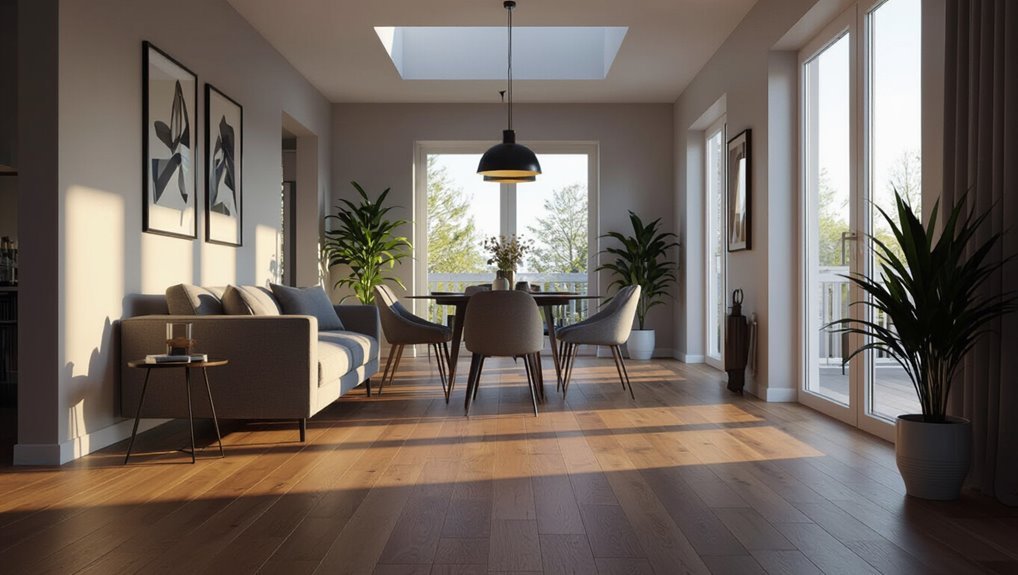
How will light change what you see in a room?
You’ll notice warm bulbs deepen honey and chestnut tones, while cool light brightens grays and mutes warmth.
Direct sunlight highlights grain and texture, revealing imperfections; diffuse light softens contrast.
Position fixtures and choose bulb temperature to control mood and perceived color, testing samples at different times to guarantee the look stays consistent.
Buying Guide Choosing the Right Look for Your Home
Start by looking at room size and natural light so you can pick plank width and length that fit the scale.
Consider finishes and textures that stand up to kids and pets, and match your budget tier to the level of realism you want.
Before you buy, run through a quick checklist of measurements, sample swatches, warranty details, and return policy.
Assessing room size and natural light
Wondering how light and space will affect your new laminate? Consider natural light: bright rooms let you choose richer, darker tones without closing the space, while dimmer areas benefit from lighter, reflective finishes to open things up.
Also account for room size: smaller rooms need simpler, less busy patterns to avoid visual clutter. Test samples in different lighting before deciding.
Matching plank width and length to room scale
Pick plank dimensions that match your room’s scale to keep proportions balanced and sightlines clean.
In small rooms, choose narrower, shorter planks to avoid overwhelming the space; in large, open areas, wider, longer planks create a cohesive, modern feel.
Consider layout direction—running planks along the longest axis lengthens the room—and maintain consistent plank size between connected rooms for flow.
Selecting finish and texture for lifestyle (kids, pets)
1 practical consideration when choosing laminate is how the finish and texture will stand up to kids and pets—these choices affect durability, cleaning, and comfort.
Pick a tougher AC rating, dent-resistant surface, and textured finish to hide scratches and add traction.
Smooth, high-gloss planks show paw prints and scuffs; matte, embossed surfaces mask wear and make spills easier to manage.
Budget tiers and how they impact realism
After you’ve settled on a finish and texture that stands up to kids and pets, your next choice is how much realism you want for the look—and that choice is driven largely by budget.
You’ll balance cost and detail: higher tiers mimic grain, bevels, and color variation; mid tiers offer decent texture; budget options simplify patterns.
- Luxury: deep grain, hand-scraped look
- Mid: realistic print, limited variation
- Budget: uniform planks, basic finish
Quick checklist before purchase
Before you buy, run through a quick checklist to make sure the floor you choose fits your lifestyle, budget, and installation plans.
Think practical: traffic, moisture, and style. Check these before deciding:
- High traffic? Pick durable AC rating and realistic texture.
- Moist areas? Choose water-resistant core or vinyl plank instead.
- Match décor? Test samples in different light and room sizes.
Installation and Layout Choices that Affect Appearance
The way you lay planks changes the room’s feel—running them lengthwise can make a space look longer, while diagonal or staggered patterns add interest.
Pay attention to junction strips and thresholds to keep sightlines and color continuity smooth between rooms.
Also choose the right underlayment and fix any subfloor issues, since they affect the board alignment, sound, and final appearance.
Direction of planks and visual effects
While choosing plank direction might seem purely practical, it has a major impact on how your room reads:
Lay planks lengthwise to elongate narrow rooms, across windows to emphasize width, or diagonally to create dynamic movement.
Running boards toward a focal point guides the eye; staggered joints add texture.
Consider light, room shape, and furniture flow to maximize visual effect.
Transition strips, thresholds, and continuity tips
One simple change you can make to keep your flooring feeling seamless is choosing the right linking strips and thresholds for each doorway or level change.
Match materials and color to your planks, pick low-profile connections for open spaces, and use wider thresholds where rooms differ in height.
Plan connections at natural breaks to preserve flow and hide expansion gaps neatly.
Underlayment and subfloor influence on final look
After you pick strips and thresholds that keep rooms flowing, pay attention to what’s under your laminate: underlayment and the subfloor shape how the finished surface looks and wears.
Choose quality underlayment for cushion, sound control, and moisture barrier.
Make certain your subfloor is flat and clean so panels align, joints stay tight, and patterns sit true—small imperfections visibly affect texture and plank fit.
Common Mistakes Homeowners Make With Laminate Appearance
You can wreck the look of a room by picking colors that clash with its lighting and furnishings.
Choosing low-quality patterns that try to imitate real wood but read as fake will also date the space.
And poor layout choices—like narrow plank direction or awkward seams—can make rooms feel smaller or oddly divided.
Picking colors that clash with lighting and furnishings
When natural or artificial light hits your new laminate, it can change the hue and tone more than you expect.
So test samples at different times of day before committing.
Consider how warm bulbs, cool daylight, and shadows shift color.
Match samples against upholstery, cabinets, and rugs in situ.
Don’t rely on store lighting or photos; trust real-room viewing.
Choosing unrealistic low-quality patterns
Lighting and pattern go hand in hand, but another frequent mistake is picking laminate with an obviously fake or low-resolution print that clashes with the room’s scale.
You’ll end up with cartoonish grain, repeating motifs, or mismatched plank sizes that ruin authenticity.
Choose higher-resolution visuals, varied plank patterns, and realistic distressing so your floor reads as natural instead of staged or toy-like.
Poor layout decisions that shrink or awkwardly divide rooms
If you lay planks without thinking about room flow, even a beautiful laminate can make the space feel cramped or chopped up.
Orient planks parallel to the longest sightline to elongate the room, avoid tiny border strips that create visual boxing, and plan connections at natural thresholds.
Proper layout makes flooring unify, not fragment, your living areas.
Best Practices and Tips to Make Laminate Look Like Real Wood
Before you commit, bring samples into the room and check them at different times of day so you can see how light changes the color and texture.
Match the planks with complementary moldings and baseboards to hide seams and reinforce a natural look.
Keep a simple care routine—regular sweeping, appropriate cleaners, and quick spill cleanup—to preserve the finish and sheen.
Sampling in-room and viewing at different times of day
Want to know how your laminate will really look in your space? Place several full-size samples in different rooms, near windows and under artificial lights.
Check them morning, midday, and evening to see color shifts, gloss changes, and shadowing.
Walk on samples with shoes to test wear appearance. Photograph each sample at those times for side-by-side comparison before deciding.
Pairing with complementary moldings and baseboards
When you match laminate with the right moldings and baseboards, the floor reads as hardwood rather than an installation.
Choose profiles and heights that echo plank width and room scale, and pick colors that either blend for seamless flow or contrast subtly for depth.
Use quarter round and reducers sparingly, caulk seams, and stain or paint trim to unify the overall aesthetic.
Care routines to maintain finish and sheen
Although laminate’s factory finish is durable, you’ll keep that just-installed look by following a simple care routine:
- Sweep or vacuum daily to remove grit that dulls sheen.
- Damp-mop with a manufacturer-approved cleaner; never flood the floor.
- Use felt pads, rugs in high-traffic zones, and wipe spills promptly to prevent stains and wear.
Visual Comparison Cheat Sheet
You’ll learn quick visual cues to tell laminate, engineered hardwood, and vinyl apart so you can spot them at a glance.
I’ll show photo-pair examples across light, medium, and dark styles to compare grain, plank thickness, and surface texture.
Use this cheat sheet as a fast reference when shopping or evaluating floors.
How to tell laminate vs engineered hardwood vs vinyl at a glance
Because these three floors can look similar at a glance, it helps to focus on a few quick visual cues so you can tell laminate, engineered hardwood, and vinyl apart without a tape measure. Use grain, edge, and texture cues: inspect pattern repeat, plank depth, and bevels.
| Feature | Laminate | Engineered Hardwood |
|---|---|---|
| Grain repeat | obvious | natural |
| Edges | micro/bevel | varied |
| Texture | printed | real |
| Water resistance | low–medium | low–medium |
Photo-pair examples of common style matches (light, medium, dark)
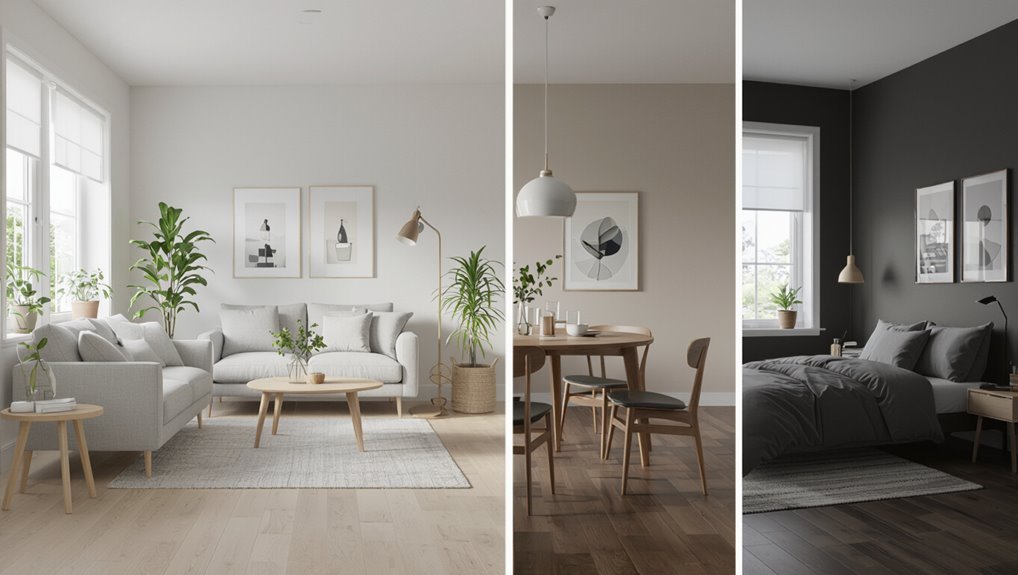
When you compare side-by-side photos of light, medium, and dark laminate, engineered hardwood, and vinyl, you’ll spot consistent visual cues—grain scale, plank width, bevel prominence, and surface sheen—that help you match styles at a glance.
Use three paired images per tone: close-up for texture, full-room for scale, and angled light to reveal sheen.
Note contrast with trim and furniture.
Frequently Asked Questions
You probably have quick questions like whether laminate looks fake up close and how long its appearance will hold up with regular use.
You’ll want to know if you can refinish or change the look later, whether laminate suits modern or traditional decor, and how plank width affects visual impact.
Let’s answer those points so you can pick the right style and finish with confidence.
Will laminate look fake up close?
Wondering whether laminate will look fake up close? You’ll often notice repeating patterns and a less natural texture than real wood, especially on low-quality planks.
High-definition photographic layers and embossed surfaces mimic grain and knots, reducing the “fake” feel. From a typical standing view you’ll be satisfied; up close, inspect edges and texture to judge realism before buying.
How long will the appearance last with regular use?
Seeing laminate up close helps you judge realism, but its look over time matters just as much.
With normal traffic and basic care, good-quality laminate keeps its color and texture for 10–20 years. Wear layers resist scratches and fading, though high-traffic areas may show dulling sooner.
Regular cleaning, felt pads, and mats preserve the finish and extend visual life.
Can I refinish or change the look later?
Can you change a laminate floor’s look later? You can’t sand and refinish laminate like hardwood because its decorative top layer is a printed image under a wear layer.
You can change appearance by replacing planks, using peel-and-stick overlays, or installing a floating floor above.
Choose long-lasting finishes initially to minimize future work, and plan replacement for style updates.
Is laminate good for modern vs. traditional decor?
How well does laminate fit modern or traditional decor? You’ll find laminate versatile: sleek, low-gloss planks suit minimalist, contemporary rooms, while textured, warm wood-look laminates complement classic or rustic styles.
You can mix tones and finishes to match furniture and trim. Choose patterns and borders for traditional flair, or clean, wide boards for a modern, streamlined appearance.
How to choose between plank widths for visual impact?
Wondering which plank width will make the biggest difference in a room?
Choose wide planks (7″+) to make spaces feel larger and contemporary; they minimize seams and showcase wood patterns.
Narrow planks (3–5″) add detail and suit traditional rooms or small spaces.
Consider room scale, furniture style, and pattern repetition—pick width that complements proportions and traffic flow for cohesive impact.