Can You Use a Swiffer on Laminate Flooring Without Causing Damage?
You can use a Swiffer on laminate floors for daily dusting and light spills if you avoid excess moisture and harsh cleaners. Use dry Swiffer cloths or lightly dampen a pad, wringing out all visible water before mopping. Don’t steam-mop or let solution pool in seams, and change pads when dirty. Follow your floor maker’s care guidance and wipe up spills fast to prevent swelling. Keep going and you’ll find safe techniques, product choices, and repair tips.
Can You Use a Swiffer on Laminate Flooring? Quick Answer and Bottom Line
Yes — you can use a Swiffer on laminate when you stick to dry or lightly damp methods and avoid soaking the floor.
Don’t use excessive water, harsh cleansers, or steam mops, since moisture can warp the boards and damage seals.
For best results, stick to dry sweeping or a barely damp mop pad and spot-clean spills promptly.
Direct short answer: when it’s safe and when to avoid it
Although Swiffers are generally safe for laminate, you should use them correctly and sparingly to avoid damage.
You can use a Swiffer on laminate flooring for dry dusting and light spills, but avoid excessive moisture, scrubbing with abrasive pads, or using oily wet pads that soak seams.
Skip Swiffers on warped, delaminated, or heavily soiled boards—use a gentle mop instead.
One-sentence summary of best practice
Use a Swiffer for dry dusting and quick, light spill cleanups on laminate—just avoid soaking seams, heavy scrubbing, or oily wet pads.
Switch to a damp mop for stubborn dirt or damaged boards.
You should use it sparingly, change pads often, test cleaners first, and never let moisture sit; when in doubt, follow manufacturer care instructions to protect the floor’s finish and joints.
How Laminate Flooring Works and Why Cleaning Method Matters
Laminate flooring is a layered product—usually a fiberboard core, a printed design layer, and a protective finish—so you’ve got to keep moisture away from the core to prevent swelling and warping.
Different finishes (AC-rated wear layers, textured surfaces, or water-resistant coatings) change how much cleaning abuse the floor can tolerate.
Knowing what your laminate is made of and which finish it has helps you pick the right Swiffer method and avoid damage.
What laminate flooring is made of and how moisture affects it
Think of laminate flooring as a layered sandwich: a wear layer protects a printed decorative layer that sits atop a high-density core board, and a stabilizing backing keeps the whole plank flat.
You should know the core is moisture-sensitive: standing water or excessive dampness swells and delaminates boards. Quick drying and minimal liquid cleaning prevent warping, edge peaking, and permanent damage.
Common types of laminate finishes and their vulnerability
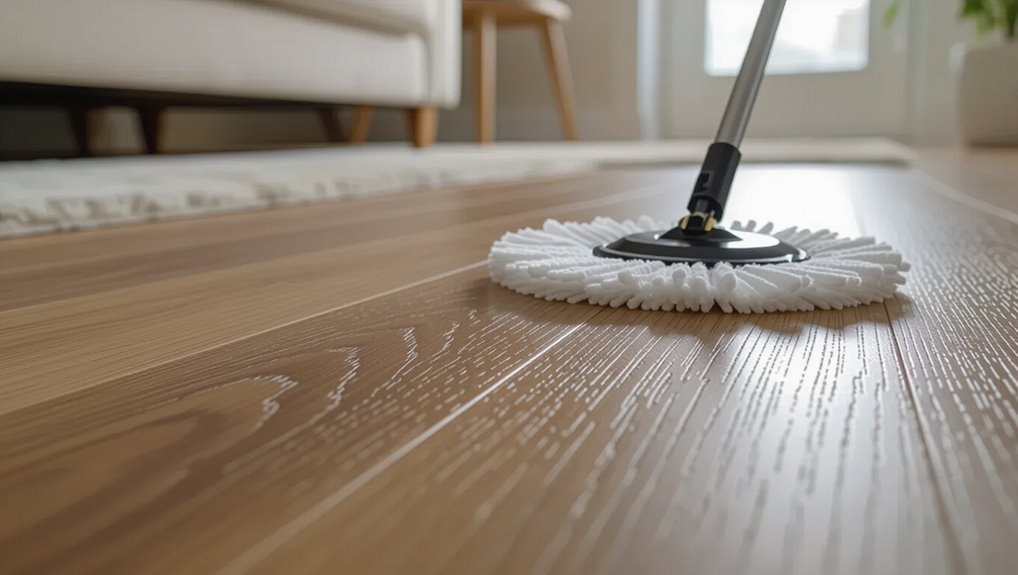
Because finishes control both appearance and protection, you should know the main types—gloss, semi-gloss, matte (including textured or “hand-scraped” options), and commercial-grade wear layers—and how each handles abrasion, scratches, and moisture.
Gloss shows scratches easily but resists stains; semi-gloss balances sheen and durability; matte hides wear but can scuff; textured and commercial wear layers offer the best abrasion and moisture resistance.
Which Swiffer Products Are Suitable or Not for Laminate
You’ll want to pick your Swiffer tools with care because the WetJet’s spray can leave too much moisture on laminate unless you use it sparingly and wipe up residue right away.
The Swiffer Sweeper with dry cloths is a safe choice for daily dusting and light debris, while wet cloths are okay only if you wring them out well and don’t let the floor stay damp.
Consider comparing store wet cloths with homemade or eco-friendly alternatives to control moisture and ingredients that might harm the finish.
Swiffer WetJet risks and precautions
Although the WetJet can make quick work of spills, it carries risks for laminate—its overspray and standing moisture can seep into seams and swell the core.
You should avoid saturating boards, test in an inconspicuous spot, use minimal solution, and promptly wipe excess liquid.
Don’t use on warped or unsealed edges, and follow manufacturer guidance to reduce long-term damage.
Swiffer Sweeper with dry cloths appropriate uses
A Swiffer Sweeper with dry cloths is one of the safest quick-clean tools for laminate: it traps dust, pet hair, and light debris without introducing damaging moisture or cleaners, so you can use it daily to keep floors looking tidy.
Use flat dry cloths or electrostatic pads on smooth laminate; avoid heavy scrubbing attachments. Replace cloths frequently to prevent abrasive grit buildup.
Swiffer Wet Cloths vs. homemade/eco-friendly alternatives
Now that dry Swiffer cloths are covered for daily dusting, you might be wondering whether Wet Cloths or DIY/eco-friendly solutions are safe for laminate. You should avoid excess moisture; Swiffer Wet cloths can be okay sparingly, while DIY mixes must be low-moisture and pH-neutral. Test first.
| Option | Moisture Risk | Recommendation |
|---|---|---|
| Swiffer Wet | Medium | Use sparingly |
| DIY vinegar | High | Avoid strong mixes |
| Eco cleaners | Low | Choose pH-neutral products |
Step-by-Step: Safe Way to Use a Swiffer on Laminate Flooring
Before you start, get the floor ready by sweeping or vacuuming to remove grit that can scratch laminate.
Pick the right Swiffer tool and pad, test a small hidden spot, then use a light, even mopping motion and dry any wet areas immediately.
Finish by airing the room and checking for lingering moisture to protect the flooring.
Step 1 Prepare the floor (sweeping/vacuuming first)
1. Before you Swiffer, remove loose debris by sweeping or vacuuming with a soft-brush attachment. You’ll prevent grit from scratching laminate when you mop.
Focus on high-traffic areas, corners, and under furniture. Check for sticky spots and pick them up with a damp cloth.
A clean surface guarantees the Swiffer pad won’t push particles around or abrade the floor.
Step 2 Choose the right Swiffer product and pad
Although laminate tolerates less moisture than hardwood, picking the right Swiffer product and pad keeps it safe and clean.
Use a dry or lightly damp Swiffer Sweeper with disposable dry cloths or a barely-moistened WetJet pad designed for laminate.
Avoid soaking solutions or heavy steam.
Choose pads labeled for hard floors, replace dirty pads promptly, and wring reusable pads thoroughly before use.
Step 3 Test a small inconspicuous area
Pick a small, out-of-the-way spot—like inside a closet or under a piece of furniture—and try your chosen Swiffer pad and solution there first so you can confirm they won’t dull, warp, or leave residue on the laminate.
Wait a few hours, inspect under different lighting, and check for stickiness, sheen change, or swelling.
If all looks normal, you can proceed confidently.
Step 4 Proper mopping technique and drying immediately
Start by working in manageable sections—about a 6-8 foot square—so you can control moisture and dry each area quickly.
Lightly mist or use the damp Swiffer pad; avoid pooling. Move with the grain in overlapping passes, then immediately follow with a dry microfiber pad to lift residual dampness.
Replace pads when soiled to prevent streaks and moisture buildup.
Step 5 Post-cleaning ventilation and moisture check
Once you’ve finished mopping and drying each section, open windows or run fans to speed evaporation and prevent trapped moisture from seeping into seams.
Check for damp spots, lift rugs, and inspect edges. You’ll want to:
- Verify no pooling water
- Feel for cool, damp areas
- Air out closets
- Remove damp mats
- Re-check after 30 minutes
Common Mistakes That Can Damage Laminate When Using a Swiffer
Be careful with how you use liquids and solutions—too much WetJet or water can seep into seams and warp your laminate.
Don’t leave pads soaking or reuse dirty ones, and avoid scrubbing; glide gently to prevent scratching and wear.
Also check your floor’s care instructions so you’re not using products or methods that void the warranty.
Using excessive liquid or WetJet solution
If you douse laminate with too much liquid—or spray a WetJet solution directly onto the floor—you risk causing the boards to swell, warp, or separate at the seams.
You should mist sparingly, apply cleaner to the pad rather than the floor, and wipe up excess moisture immediately.
Excess liquid soaks joints and backing, undermining the tongue-and-groove fit and finish over time.
Leaving pads soaked or reusing dirty pads
Just as too much liquid on the floor can harm laminate, leaving Swiffer pads soaked or reusing dirty ones creates problems of its own.
Wet, soiled pads breed streaks, residue buildup, and trapped grit that can abrade the finish. Change pads when damp or visibly dirty, rinse reusable pads thoroughly, and let them dry before reuse to protect the surface and maintain cleaning effectiveness.
Scrubbing instead of gentle gliding
One common mistake is scrubbing hard with a Swiffer instead of letting it glide—when you press and drag, the abrasive force and trapped grit can wear down the laminate’s protective finish.
Stop scrubbing; use light, even strokes and let the pad collect dirt. Lift to remove stubborn spots, change pads often, and avoid back-and-forth sawing that grinds particles into the surface.
Ignoring manufacturer care instructions
Scrubbing less won’t protect your floor if you ignore the manufacturer’s care instructions.
You need to follow their guidance on cleaners, moisture limits, and recommended tools. Using unapproved solutions or excess water voids warranties and can warp or stain laminate.
Check care labels before Swiffering, stick to advised pads and techniques, and document any special warnings to avoid costly damage and denied claims.
Alternatives and Complementary Tools for Laminate Care
You can pair your Swiffer with a microfiber mop for gentler grime pickup and should be cautious about steam mops, which can warp laminate.
Use pH-neutral or manufacturer-recommended cleaners and avoid excess water or abrasive chemicals.
Reserve spot-cleaning for spills and sticky spots, and do a full mop only when the floor needs overall revitalization.
Microfiber mops and steam mop considerations
Although microfiber mops look similar to traditional mops, they pick up dust and grit far more effectively without adding excess moisture.
This makes them a safer daily option for laminate floors. You should avoid steam mops: high heat and moisture can warp seams and finish.
Use microfiber for routine cleaning and reserve any steam use only if the manufacturer explicitly approves your specific laminate product.
Recommended cleaning solutions safe for laminate
1 simple rule will keep your laminate safe: use pH-neutral, low-moisture cleaners and avoid anything abrasive, oily, or ammonia-based.
You’ll prefer spray-and-wipe solutions labeled for laminate or hardwood, diluted gentle dish soap for stubborn spots, and commercial laminate cleaners.
Always apply to the cloth or mop, not the floor. Test new products in an inconspicuous area first.
When to use spot-cleaning vs. full-mop
When a spill is fresh or a small scuff appears, reach for a spot-cleaning approach—it’s faster, uses less moisture, and prevents damage from over-wetting; reserve a full mop for routine maintenance or when dirt and dust have built up across the room.
Use spot-cleaning for sticky spots, pet accidents, or tracked-in grime.
Full-mop weekly or biweekly, using minimal liquid and a gentle cleaner.
Preventive Maintenance and Best Practices for Longevity
Keep sweeping regularly and wipe up spills right away so dirt and moisture don’t damage the surface.
Use entry mats, felt pads on furniture, and maintain consistent indoor humidity to prevent warping and scratches.
Schedule a seasonal deep clean to remove buildup and inspect for wear so your laminate lasts longer.
Regular sweeping and quick spill response
Sweep daily and blot spills immediately to prevent grit and moisture from dulling or warping your laminate.
Use a soft broom or Swiffer to lift dirt before it scratches the finish. For liquids, blot—don’t rub—and dry the area thoroughly.
Check high-traffic zones often and remove debris promptly. Consistent, quick action keeps floors looking new and reduces long-term wear.
Protective measures: mats, felt pads, humidity control
Because tiny problems add up, you should protect laminate with simple measures like entry mats, felt pads under furniture, and steady humidity control to prevent scratches, dents, and warping.
Use washable mats at doors, replace worn pads regularly, and keep humidity around 35–55% with a humidifier or dehumidifier.
These steps prolong flooring, reduce repair needs, and make Swiffer use safer.
Seasonal deep-cleaning routine
Those preventive measures set the stage for a seasonal deep clean that takes care of buildup you won’t catch with weekly Swiffer passes.
Every few months, vacuum edges and under furniture, mop with a manufacturer-approved laminate cleaner using a microfiber mop, spot-treat stubborn stains, and inspect seams for gaps or lifting.
Finish by drying thoroughly and reapplying felt pads where needed.
Troubleshooting and Repair: If Damage Occurs
If you spot discoloration, swelling, or buckling, you’ll want to tell water damage from regular surface wear right away.
Minor issues like light scratches can often be buffed out or fixed with scratch repair kits and touch-up markers.
For deep gouges, persistent lifting, or widespread damage, you’ll need to replace planks or call a professional.
Identifying water damage vs. surface wear
When you’re deciding whether discolored, warped, or softened laminate is water damage or just surface wear, focus on depth and pattern: poke edges for swelling, check seams for separation, and note staining that follows boards or pools near fixtures.
Surface wear shows even fading or scratches without swelling.
Water damage often smells musty and progresses beneath the wear layer, needing replacement.
Minor fixes: buffing, scratch repair kits, touch-up markers
Once you’ve ruled out swelling or underlying rot, many superficial issues on laminate are repairable without replacing boards.
You can buff light scuffs with a soft cloth and a laminate-safe cleaner. For deeper scratches, use repair kits with filler or touch-up markers matched to your floor.
Apply sparingly, let cure, then gently blend for a near-invisible finish.
When to replace planks or call a professional
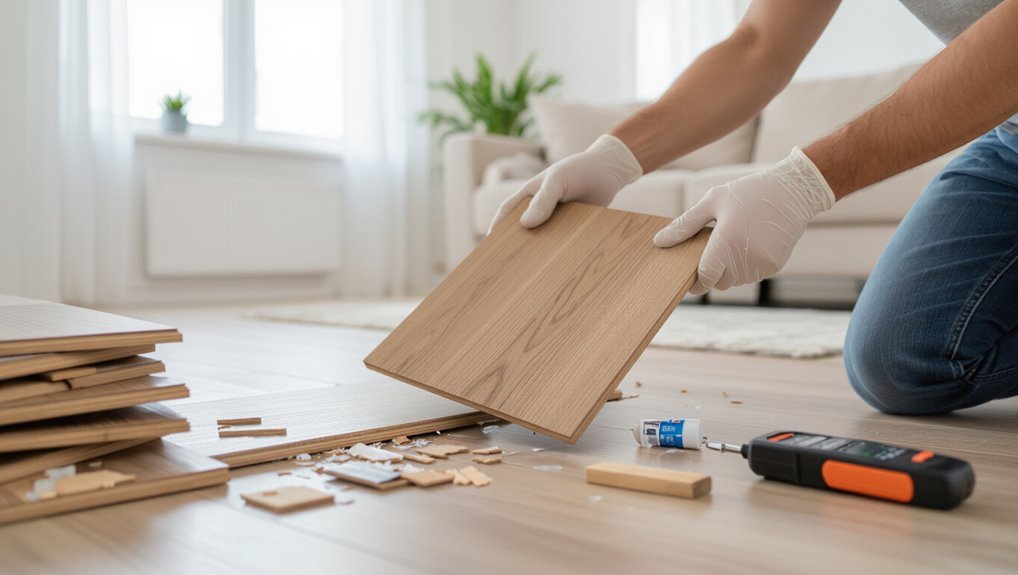
Although many surface problems you can fix yourself, some damage means it’s time to replace planks or call a pro.
If boards warp, split, swell from water, or the click-lock seams fail, you should replace affected planks to prevent spread.
Call a professional for large areas, structural concerns, subfloor issues, or if you’re unsure how to match replacement planks correctly.
FAQ Common Questions About Using a Swiffer on Laminate
You’ll find answers here to common concerns like whether it’s okay to use a Swiffer WetJet regularly on laminate and if DIY solutions are safe.
You’ll also learn whether Swiffer pads can scratch, how often to deep-clean, and what to do if the floor warps after mopping.
If you have a specific worry, mention it and you’ll get a practical, floor-friendly fix.
Is it okay to use Swiffer WetJet regularly on laminate?
Wondering whether you can use a Swiffer WetJet regularly on laminate? You can, but you should be cautious.
Limit frequency, avoid soaking floors, and use Swiffer pads meant for laminate. Don’t let liquid pool in seams or edges, and dry any damp areas promptly.
If your laminate is older or damaged, opt for gentler, less frequent cleaning to prevent swelling or warping.
Can I make a DIY Swiffer solution safe for laminate?
If you want to avoid store cleaners or control ingredients, you can make a gentle DIY Swiffer solution that’s safe for most laminate—so long as you keep it very dilute and don’t soak the floor.
Mix a quart of warm water with one teaspoon gentle dish soap or a few drops white vinegar.
Lightly mist; immediately wipe dry with a microfiber pad.
Will Swiffer pads scratch laminate floors?
How likely are Swiffer pads to scratch your laminate floors? They’re unlikely if you use them correctly.
Dry or damp microfiber-style pads glide gently and pick up dust without abrasion. Avoid gritty debris—sweep or vacuum first—and don’t scrub hard.
Replace dirty pads promptly. Using appropriate pads and routine care keeps scratches rare and helps maintain your floor’s finish.
How often should I deep-clean laminate floors?
When should you deep-clean your laminate floors?
Deep-clean every 6–12 months, or sooner if traffic, pets, or spills cause buildup.
Use a manufacturer-approved cleaner, avoid excessive water, and clean baseboards and grout lines where grime accumulates.
Between deep cleans, dust and spot-clean weekly with a Swiffer or microfiber mop to prevent abrasive debris and maintain the finish.
What to do if the floor becomes warped after mopping?
Because laminate isn’t waterproof, excess moisture from mopping can cause boards to swell and warp, so act quickly: blot pooled water with dry towels, use fans and a dehumidifier to speed drying, and remove wet rugs.
If gaps or buckling persist after drying, loosen trim to relieve pressure and consult a pro; seriously damaged planks may need replacement to prevent mold and structural issues.