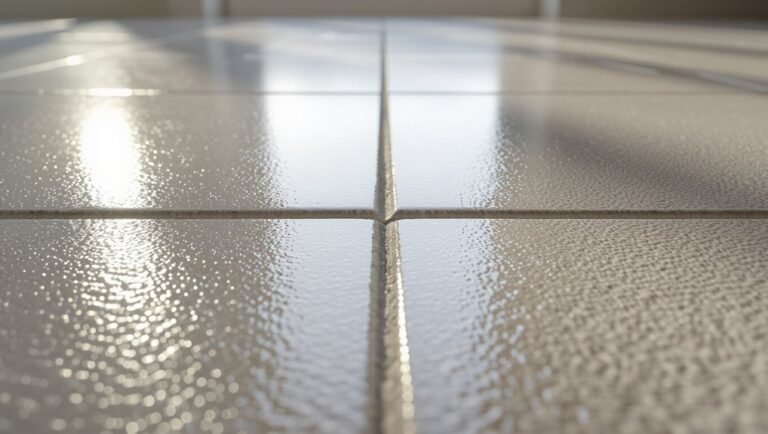
How to Clean Cat Pee From the Floor and Eliminate the Odor Completely
Act fast: blot fresh urine with paper towels, dilute with water and blot again, then apply an enzyme cleaner (or a 1:1 vinegar solution) to break down proteins and uric acid; avoid ammonia or bleach and don’t over-wet wood. For carpets, work the enzyme deep and let it sit; for tile, grout or concrete, scrub and let cleaners penetrate. Wear gloves and ventilate. Follow-up treatments remove lingering odor, and below you’ll find step-by-step tips and fixes.
How to Remove Cat Pee from the Floor and Eliminate the Odor Completely
You can stop the smell fast by acting immediately and blotting up as much urine as possible.
Then use an enzyme cleaner designed for pet messes to break down the odor-causing molecules.
If you follow these quick steps, the smell will be gone and the floor won’t attract repeat marking.
Quick Answer Fast steps to stop the smell now
First, act fast: blot up as much urine as you can with paper towels or an absorbent cloth, pressing firmly to lift liquid rather than rubbing it around.
Then neutralize: apply an enzymatic cleaner, let it sit per instructions, blot again, and air dry.
For stubborn stains or odor, repeat treatment and ventilate the area.
This is how to clean cat pee from floor.
Understanding Cat Urine and Odor
You’ll learn that cat urine contains ammonia, proteins and pheromones that create a sharp, lingering smell.
That odor worsens as bacteria break down urine and as ammonia concentrates, especially if it soaks into padding or a subfloor.
Different surfaces—hardwood, tile, vinyl, laminate and concrete—absorb and trap urine differently, so persistent smells can signal soaked layers or medical and behavioral issues that need attention.
What is in cat urine that causes strong odors
Although it might seem like simple ammonia, cat urine’s lingering smell comes from a complex mix of compounds—mostly urea, ammonia (produced as bacteria break down urea), proteins, and sulfate-containing molecules called thiols—which react with surfaces and make odors hard to remove.
You’ll also find uric acid crystals and volatile organic compounds; together they penetrate materials, bind to fibers and finishes, and create persistent, offensive smells you’ll need to target specifically.
Why cat urine smells worse over time
Because urine contains compounds that keep changing after it’s been deposited, the smell often gets stronger as time passes.
You’ll notice bacterial breakdown of proteins and urea produces ammonia and sulfurous gases.
Crystallization of uric acid traps odor molecules until moisture releases them.
As reactions continue and residues set, odors concentrate and become harder to neutralize without proper enzymatic cleaners and thorough removal.
How surface type affects cleaning (hardwood, tile, vinyl, laminate, concrete)
Different floor materials change both how urine soaks in and how you should clean it, so pick methods and products that suit hardwood, tile, vinyl, laminate, or concrete to avoid damage and lingering odor.
For hardwood, blot and use enzyme cleaners sparingly; tile/grout tolerate stronger cleaners and scrubbing; vinyl and laminate need gentle, pH-neutral solutions; concrete may require deep cleaning and sealing afterward.
When the smell indicates a deeper problem (soaked padding, subfloor, medical/behavioral issues)
If you’ve cleaned the surface but the smell keeps coming back, the urine has probably penetrated beyond the floor finish into padding, underlayment, or even the subfloor—or your cat may have a health or litter-box issue that keeps them peeing in the same spot.
Check padding and subfloor for stains; replace soaked materials.
Have your vet rule out medical causes and address litter-box access or stress to stop recurrence.
Immediate Action Steps (First 5“15 Minutes)
Put on gloves, open a window for ventilation, and grab absorbent cloths or paper towels so you’re ready to act.
First blot up as much fresh urine as you can, then dilute the area with water and blot again to lift remaining residue.
Finish by applying an enzyme cleaner or an approved household alternative to neutralize odor and prevent repeat marking.
Safety and preparation (gloves, ventilation, blotting tools)
Before you start cleaning, gear up and act fast: put on disposable gloves, open windows or run a fan for ventilation, and grab absorbent cloths or paper towels to blot the mess immediately.
Keep a sealable plastic bag for contaminated materials, have enzyme cleaner and a spray bottle ready, and protect nearby items.
Stay cautious with fumes and avoid mixing cleaners.
Step 1: Blot and remove fresh urine
Act quickly to blot up fresh urine so it doesn’t soak in: press absorbent cloths or paper towels firmly onto the spot, working from the outer edges inward to prevent spreading.
You’ll remove as much moisture as possible before treating.
- Use clean, thick paper towels
- Apply steady pressure, don’t rub
- Replace saturated towels promptly
- Work toward center last
- Keep pet away while you blot
Step 2: Dilute with water and blot again
Once you’ve blotted up as much as you can, run clean, cool water over the spot or dampen a fresh cloth and press it onto the area to dilute remaining urine—this helps lift residue rather than letting it sit.
After a few seconds, blot with clean paper towels or a microfiber cloth, repeating with fresh towels until no more moisture transfers and the area feels only slightly damp.
Step 3: Apply an enzyme cleaner or recommended household alternative
Reach for an enzyme cleaner or a proven household alternative and apply it generously to the damp area so the product can reach all the urine that soaked into the floor.
Let it sit per label instructions, usually 5–15 minutes, then blot.
For alternatives, use a 1:1 white vinegar and water mix or a baking soda paste, but avoid ammonia-based cleaners that can attract cats back.
Deep Cleaning by Floor Type
Next, you’ll tackle deep cleaning tailored to each floor type so you can remove stains and stop odors without causing damage.
I’ll cover safe methods and precautions for hardwood, what cleaners and agents to avoid on laminate and vinyl, techniques for lifting stains from tile and grout, stronger options for concrete and basement floors, and when to extract, shampoo, or call pros for rugs and carpets.
Follow the specific steps for your flooring to get the best results.
Hardwood floors safe methods and precautions
Because hardwood can warp, stain, or lose its finish if you use the wrong cleaners or too much water, you’ll want to take a careful, gentle approach when treating cat urine.
Blot promptly with a microfiber cloth, avoid soaking, and use a pH-neutral enzymatic cleaner designed for wood.
Test any product in an inconspicuous spot, dry thoroughly, and consider refinishing damaged areas.
Laminate and vinyl what to avoid and proper cleaners
While laminate and vinyl resist moisture better than hardwood, you still shouldn’t flood them or use harsh solvents that strip their wear layer; instead, blot urine with paper towels, wipe with a damp microfiber cloth, and treat stains with a manufacturer-safe enzymatic cleaner or a mild solution of water and a few drops of dish soap.
Rinse lightly, dry thoroughly, and avoid steam mops, bleach, or abrasive scrubbers that can damage seams.
Tile and grout removing stains and odors from grout lines
When urine soaks into tile grout, it can leave stubborn stains and a lingering odor that regular mopping won’t remove.
So you’ll need targeted cleaning to lift the stain and neutralize the bacteria-caused smell. Scrub grout with a paste of baking soda and hydrogen peroxide, let sit 10–15 minutes, then brush with a stiff nylon brush.
Rinse, repeat if needed, and seal grout.
Concrete and basement floors heavy contamination solutions
If grout needed stronger treatment, concrete and basement floors usually demand even tougher measures because porous concrete soaks urine deep into pores and cracks.
You’ll start by blotting, then apply enzymatic cleaners and degreasers, letting them penetrate several hours.
For severe cases, use a concrete-safe hydrogen peroxide solution or oxygen bleach, scrub with a stiff brush, rinse, and repeat until odor tests clear.
Use sealant afterward.
Rugs and carpets extraction, shampooing, and professional cleaning
Rugs and carpets trap urine deep in fibers and padding, so you’ll need extraction, targeted shampooing, and sometimes pro help to fully remove stains and odor.
Act quickly, blot, then follow with extraction and enzymatic cleaners. Consider pro steam cleaning for padding saturation.
- Blot excess moisture
- Use enzyme cleaner
- Hot water extraction
- Targeted shampooing
- Hire professionals if odor persists
Best Cleaners and Homemade Solutions
You’ll want enzyme-based cleaners first, because they break down urine proteins and stop cats from re-marking—follow the label for soak time and repeat treatments.
For quick home fixes, mix white vinegar and water (commonly 1:1) for cleaning, sprinkle baking soda afterward to neutralize odor and vacuum it up, and reserve hydrogen peroxide plus a drop of dish soap for stubborn stains while testing surfaces for colorfastness.
Also consider proven commercial brands formulated for pet urine if you prefer ready-made options.
Enzyme-based cleaners (why they work and how to use them)
Because cat urine contains proteins and bacteria that cause lingering odor, enzyme-based cleaners break those compounds down at the source, so stains and smells don’t come back. You’ll apply generously, let them sit per label, blot—not rub—and repeat if needed. They’re safe for most floors when used as directed.
| Step | Action |
|---|---|
| 1 | Blot fresh urine |
| 2 | Apply enzyme cleaner |
| 3 | Let sit (hours) |
| 4 | Blot/air dry |
| 5 | Repeat if needed |
Vinegar and water solution correct ratios and limitations
One simple homemade mix is 1 part white vinegar to 1 part water, which neutralizes urine odors without leaving a strong scent of its own; for tougher jobs you can boost vinegar to a 2:1 ratio (vinegar:water) but avoid higher concentrations on stone or waxed wood since acidity can etch or dull those surfaces.
Test in an inconspicuous spot, blot gently, then rinse and dry.
Baking soda for odor neutralization application and removal
Baking soda works as a mild abrasive and natural deodorizer, so sprinkle a generous layer over the affected area after blotting up as much urine as possible.
Let it sit for several hours (or overnight) to absorb odors, then vacuum or sweep it up and wipe the spot with a damp cloth to remove any residue.
Repeat if odor persists, and test on a hidden spot first to protect finishes.
Hydrogen peroxide and dish soap mixtures when to use and safety
Many people mix hydrogen peroxide with a few drops of dish soap to lift urine stains and neutralize odors.
You can use this on unsealed tile, vinyl, and washable sealed wood but avoid it on natural stone and untested finishes.
Test first in an inconspicuous spot, wear gloves, ventilate the area, and rinse thoroughly.
Don’t mix with bleach or ammonia — dangerous gases can form.
Commercial products to consider (brief mentions)
Look for enzymatic cleaners designed specifically for pet urine—these break down odor-causing proteins instead of just masking them, so they’ll work on carpets, upholstery, and most sealed hard floors when used as directed.
Use these options sparingly and test first:
- Enzymatic pet stain remover
- Oxygen-based powder bleach
- White vinegar solution
- Baking soda deodorizer
- Commercial odor neutralizer
Step-by-Step Deep Odor Elimination Process
Start by finding every spot—use a blacklight and a careful sniff test so you don’t miss hidden areas.
Pre-treat those spots with an enzyme cleaner, let it work, then agitate and extract carpets or rugs to lift out residue.
Finish by rinsing, neutralizing any leftover chemicals, and thoroughly drying to prevent mildew.
Step 1: Locate all affected areas (blacklight, sniff test)
Before you clean, you’ll need to find every spot the cat marked—use a blacklight in dim conditions and follow up with a careful sniff test to confirm suspicious areas.
Scan corners, under furniture, along baseboards, and rugs. Mark wet or discolored zones with tape.
Recheck after moving items. Don’t skip faint spots; odor often hides where you least expect it.
Step 2: Pre-treat stains and let enzymes work
Once you’ve marked every spot, treat them promptly so enzymes can break down the urine at its source: Blot excess moisture, then spray a commercial enzyme cleaner generously over each stain.
Let the solution penetrate for the manufacturer’s recommended time—usually several hours. Keep pets away and avoid rinsing too soon; enzymes need uninterrupted contact to digest proteins and neutralize odors effectively.
Step 3: Agitation and extraction for carpets/rugs
Work the enzyme cleaner into the carpet fibers with a stiff brush or a low-speed scrubber so it reaches the padding and breaks up trapped urine; do this gently to avoid damaging fibers.
Then let it sit the full recommended time before extracting.
After dwell time, use a wet-dry vac or carpet extractor to pull up liquid and loosened waste, repeating short passes until suctioned water runs clear.
Step 4: Rinse and neutralize residues
After agitation and extraction, you’ll rinse the area to remove enzyme residues and neutralize remaining odors so they don’t attract your cat back to the spot.
Use clean water or a mild vinegar solution (one part white vinegar to three parts water) and blot or gently flush. Rinse until no suds remain, then blot thoroughly.
Finish with a pet-safe odor neutralizer per product instructions.
Step 5: Drying techniques to prevent mildew
While the area still feels damp, speed up drying to prevent mildew and lingering odors; you’ll need good airflow, absorbent materials, and consistent monitoring to guarantee the floor fully dries.
- Open windows and run fans toward the spot
- Use a dehumidifier if available
- Press clean towels to soak remaining moisture
- Replace towels when saturated
- Check for cool, damp spots with your hand and repeat drying until completely dry
Step 6: When to replace padding or subfloor
If the odor persists after thorough cleaning and drying, you’ll need to inspect the padding and subfloor closely, because urine can soak in and keep releasing smell even when the surface seems clean.
Remove carpet and pad; press and sniff the subfloor.
Replace padding if damp, stained, or odorous.
Cut out and replace subfloor sections if urine has penetrated or odors resist enzymatic treatments.
Mistakes to Avoid
Don’t use ammonia-based cleaners or bleach, since they can make your cat return to the spot or damage the floor.
Avoid over-wetting, which pushes urine deeper and can trap odors, and don’t skip an enzyme treatment on old or soaked areas.
Finally, don’t mask smells with air fresheners — remove the source instead.
Using ammonia-based cleaners or bleach
When you’re tempted to reach for ammonia-based cleaners or bleach, remember they’ll often make the problem worse: ammonia smells like urine to cats, drawing them back to the spot, while bleach can set stains, damage finishes, and release harmful fumes.
Use enzyme cleaners instead; they break down urine molecules safely.
Test cleaners on a hidden area first to protect flooring.
Over-wetting floors and trapping urine deeper
Even though you want to rinse everything away, dousing a pee spot with too much water or cleaner can push urine deeper into porous flooring and seams, making it harder to remove and increasing the chance of lingering odor.
Blot instead, use minimal liquid, work from edges inward, and dry thoroughly. Over-saturation spreads contamination and forces odors into grout, wood pores, and subflooring.
Skipping enzyme treatment for old or soaked urine
If urine’s been sitting for a while or soaked into cracks, skipping an enzyme treatment will leave the microscopic proteins that cause persistent odor and attract repeat marking.
You’ll need a quality enzyme cleaner to break down those molecules. Apply thoroughly, let it dwell per instructions, and repeat if necessary.
Don’t assume surface cleaning removed the source; enzymes reach what detergents can’t.
Masking odors instead of removing them
Because masking scents doesn’t remove the proteins that cause cat urine odor, you’ll end up chasing the smell with stronger fragrances while the source keeps releasing it.
Don’t cover urine with perfumes, air fresheners, or scented cleaners.
You should locate and treat the stain with an enzyme cleaner, rinse and dry thoroughly, and ventilate.
That permanently neutralizes odor instead of hiding it.
Preventing Future Incidents
To stop repeats, you’ll want to check litter box placement, count, and cleanliness first.
Watch for behavioral triggers and get veterinary or behaviorist help if accidents keep happening.
Use training, deterrents, and protective floor coverings to manage problem spots and make cleanup easy.
Litter box placement, number, and maintenance
When cats keep peeing outside the box, rethinking litter box placement, count, and upkeep usually fixes the problem—start by giving each cat at least one box plus one extra.
Place boxes in quiet, easily accessed areas (not next to noisy appliances), and clean them daily so your cat doesn’t avoid them.
- Scoop daily
- Full change weekly
- Use low-dust litter
- Spread boxes around home
- Guarantee easy entry and privacy
Behavioral triggers and when to consult a vet or behaviorist
Fixing litter boxes covers a lot, but if your cat keeps peeing outside them you’ll also need to look at behavioral triggers and know when to get professional help.
Watch for stressors—new pets, territory changes, or litter aversion—that prompt marking.
If medical issues, sudden changes, or persistent avoidance occur despite clean boxes, consult your vet to rule out illness and a behaviorist for targeted strategies.
Training and deterrents for repeat offenders
If your cat keeps returning to the same spots, you’ll need a consistent training plan and deterrents that make those areas unattractive without frightening them.
Use positive reinforcement for good litter habits, set up short supervised retraining sessions, and apply safe deterrents (scent, texture, or motion) to problem zones.
Reward success, clean accidents promptly with enzymatic cleaners, restrict access briefly, and consult a vet if issues persist.
Protective floor coverings and easy-clean solutions
Because accidents can happen even after retraining, protect vulnerable areas with durable, easy-clean coverings that you can remove and wash quickly.
Use waterproof mats, vinyl runners, or washable rugs in litter-prone spots.
Place scent-free absorbent pads under furniture and by doors.
Keep spare covers on hand for fast swaps, and choose materials that resist staining and won’t trap odors.
When to Call Professionals
If stains keep reappearing, odors persist after cleaning, or your carpet or subfloor is discolored or soggy, you should call a professional carpet or floor restorer.
They’ll assess damage, explain treatment options like deep cleaning or replacement, and give an estimate so you know the costs up front.
Expect specialized odor-removal methods and a higher price than DIY, but also a better chance of fully eliminating smell and preventing recurrence.
Signs you need professional carpet or floor restoration
When stains penetrate deep into the carpet fibers or grout and home remedies won’t remove the odor, it’s time to call a pro; persistent discoloration, a sour or ammonia smell that returns after cleaning, visible mold growth, or warping in wood or laminate floors all signal damage beyond DIY repairs.
You should also call professionals if repeats keep happening, odor tests detect urine, or the area feels structurally compromised.
Costs and what to expect from professional odor removal
Though hiring a professional can feel like a big step, you’ll usually get a clear breakdown of costs and a scope of work before anyone starts.
Expect charges for inspection, deep cleaning, enzyme treatments, ozone or thermal remediation, and possible material replacement.
Ask for itemized estimates, timelines, guarantees, and follow-up checks.
Good pros explain odor sources, success likelihood, and prevention steps.
FAQ
You probably have a few quick questions about cat urine — like how long the odor lasts if untreated and whether enzyme cleaners can tackle old, set-in smells.
You’ll also want to know if hydrogen peroxide or vinegar will harm hardwood or finish, and how to locate hidden spots your nose misses.
I’ll answer each of these so you can clean effectively and protect your floors.
How long does cat urine odor last if untreated?
If left untreated, cat urine odor can linger for weeks to months because the ammonia and pheromone compounds soak into porous surfaces and keep releasing smell.
How long depends on surface type, humidity, temperature, and amount of urine.
On porous flooring, baseboards, or fabrics it may persist for months or longer.
You’ll notice recurring smell until all affected material is cleaned, sealed, or replaced.
Can enzyme cleaners remove old, set-in urine smells?
Wondering whether enzyme cleaners can tackle old, set‑in urine smells? Yes—if the enzymes reach and break down the urine molecules, they can neutralize long‑standing odors.
You’ll need a commercial, pet‑specific enzyme formula, thorough saturation, and repeated treatments for deeply embedded odors. For porous floors or long‑untreated spots, expect several applications and patience to fully eliminate the smell.
Is it safe to use hydrogen peroxide on hardwood?
Enzyme cleaners can handle old urine on many surfaces, but porous hardwood raises a different concern: hydrogen peroxide can lighten or bleach wood finishes and exposed raw wood.
You can use a diluted 3% solution cautiously on sealed floors, test in an inconspicuous spot, and blot—don’t soak.
If finish looks altered, stop and consult a wood-care professional or refinish the area.
Will vinegar damage my floor finish?
How will vinegar affect your floor finish?
Vinegar’s acidity can dull or etch certain finishes, especially unfinished, waxed, or sensitive hardwoods and some stone sealers.
You can use a diluted solution (one part white vinegar to four parts water) briefly on sealed floors.
Test in an inconspicuous spot first, then rinse and dry promptly to minimize risk and preserve the finish.
How can I find hidden urine spots my nose can’t detect?
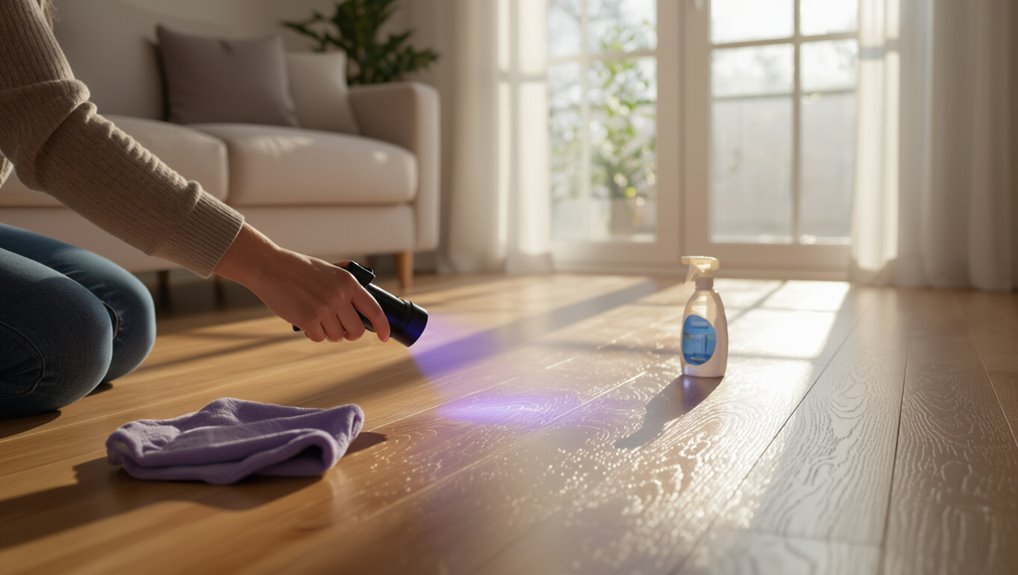
Still can’t smell where your cat peed? Use a blacklight in a dark room—urine glows yellow-green.
Move slowly, scanning corners, baseboards, rugs, and under furniture. Mark spots with tape.
For carpets, lift edges and check padding. You can also blot suspected areas with paper towels; dampness may reveal hidden wet spots.
Repeat after cleaning to confirm removal.