How to Clean Up a Laundry Detergent Spill on the Floor Without a Mess
Act fast: blot liquid with paper towels and ring out until dry, or sweep up powder and pick up pods to stop spreading and slipping. Contain edges with towels, then wash the spot with warm water and mild dish soap, rinsing thoroughly to remove slippery residue. Use a mop or dry towels to finish and ventilate the area. For carpets or dried buildup use spot-cleaning or a wet vacuum. Keep going and you’ll find specific surface tips and prevention tricks.
Quick Answer How to Clean Up a Laundry Detergent Spill Without a Mess
If you spill laundry detergent, act fast to blot liquids and contain powdered messes so they don’t spread.
You should tackle spills immediately when they’re on floor surfaces, rugs, or near children and pets; you can wait a bit for small spills on nonporous counters.
Use a dry cloth or paper towel first, then clean with water and mild soap as needed.
One-sentence summary
Quickly blot up excess detergent with paper towels, sprinkle baking soda or cornstarch to absorb residue, sweep or vacuum the powder, and wipe the area with a damp cloth so you’re left with no sticky mess.
For how to clean up laundry detergent spill on floor, act efficiently: contain liquid, absorb residue, remove powder, then rinse and dry to prevent slips, stains, or residue buildup.
When to act immediately vs. when you can wait
When a detergent spill happens, act immediately if the liquid is spreading, near electrical outlets, on stairs, or on fabric that can stain—these situations create risks for slips, damage, or more difficult cleanup later.
Otherwise, you can pause briefly to gather supplies, block traffic, and ventilate the area.
Prioritize safety, prevent tracking, and clean sooner for colored or concentrated detergents to avoid residue.
Understanding the Spill What Happens When Detergent Hits the Floor
When detergent hits the floor, you’ll notice different behaviors from liquids, powders, and pods—liquids spread and make slippery films, powders can clump and leave gritty residue, and pods burst into concentrated suds.
Your floor type matters: tile and concrete handle moisture better, hardwood and laminate can warp or stain, and carpet traps residue and smells.
Besides a slip hazard, detergent can leave stains, sticky residue, or even damage finishes if you don’t clean it up promptly.
Types of laundry detergent (liquid, powder, pods) and how they behave
Detergent comes in three common forms—liquid, powder, and concentrated pods—and each behaves differently when it hits the floor.
Liquids spread, can make slippery films, and soak into porous grout.
Powders scatter, leave gritty residue, and can clump if damp.
Pods burst, releasing concentrated gel that’s slick and staining.
You’ll adjust cleanup speed and materials to each type.
Surface considerations (tile, hardwood, laminate, carpet, concrete)
Different floors react differently to spills, so you’ll need to tailor your cleanup to the surface.
On tile, mop and rinse—grout may trap suds.
For hardwood, blot excess, avoid soaking, then wipe with a damp cloth.
Laminate needs gentle wiping and quick drying.
On carpet, blot and use carpet cleaner; on concrete, scrub and rinse thoroughly to remove residue.
Risks: slipping, residue, staining, surface damage
If you step on a sudsy patch, you can lose your footing in an instant, but slipping is just the most obvious hazard — detergent also leaves slippery residue, can dull or strip finishes, and may stain porous materials if it soaks in.
You should blot and rinse promptly to avoid discoloration, finish damage, and long‑lasting slickness that attracts dirt and causes repeat slips.
Tools and Materials You’ll Need
You’ll want a few basic supplies like absorbent cloths, a mop or sponge, a bucket, and trash bags to start.
For larger or stubborn spills, consider extras such as a wet/dry vacuum, floor scraper, or extra-absorbent pads.
I’ll also list safe cleaning solutions and simple homemade alternatives like diluted vinegar or a mild dish soap mix.
Basic supplies list
Before you start, gather a few essential supplies so you can clean the spill quickly and safely: absorbent towels or paper towels, a dustpan and brush or disposable scraper for scooping up thick detergent, a bucket of warm water, mild dish soap, a sponge or microfiber cloth, rubber gloves, and a mop for final rinsing.
- Relief — towels ready
- Control — scraper in hand
- Clean — warm soapy water
- Confidence — gloves and mop
Optional tools for large or stubborn spills
Once you’ve handled the basics, you may need heavier-duty gear for large or stubborn detergent spills.
You’ll want tools that control slipperiness, protect surfaces, and speed cleanup so frustration fades fast.
- Rubber gloves — protect hands and give grip.
- Wet/dry vacuum — removes large volumes quickly.
- Squeegee — pushes detergent without streaks.
- Absorbent pads — trap residue and ease disposal.
Recommended cleaning solutions and homemade alternatives
1 practical approach is to keep a small kit of proven cleaners and simple DIY alternatives on hand so you can tackle spills fast.
Pack quick items that calm panic and restore order:
- White vinegar (diluted) — cuts residue, soothes worry
- Baking soda — absorbs and neutralizes suds
- Mild dish soap — breaks oily streaks gently
- Microfiber cloths — lift mess without spreading it
Step-by-Step Cleanup Process (Small Spills)
First, make sure you’ve got fresh air and gloves on before you start.
Contain the spill so it won’t spread, then remove any excess detergent—wipe up liquids, scoop powders, and pick up pods.
Finish by blotting carefully to avoid suds, then rinse the area and neutralize any residue.
Step 1 Safety first: ventilation and protective gear
Before you start scooping or wiping, make sure the area is well ventilated and you’re wearing basic protective gear.
Open windows or run a fan to disperse fumes, and put on rubber gloves and closed-toe shoes.
If the detergent splashed, wear eye protection.
Avoid bare skin contact and keep kids and pets away until the area feels safe and dry.
Step 2 Contain the spill to prevent spread
With ventilation on and protective gear in place, stop the detergent from spreading by creating a perimeter around the spill.
Quickly lay down absorbent materials—old towels, paper, or kitty litter—around edges to block runoff. Work outward from the center to avoid pushing liquid farther.
Keep pets and people away, and mark the area if it’s in a shared space until you finish cleanup.
Step 3 Remove excess detergent (liquid vs. powder vs. pod)
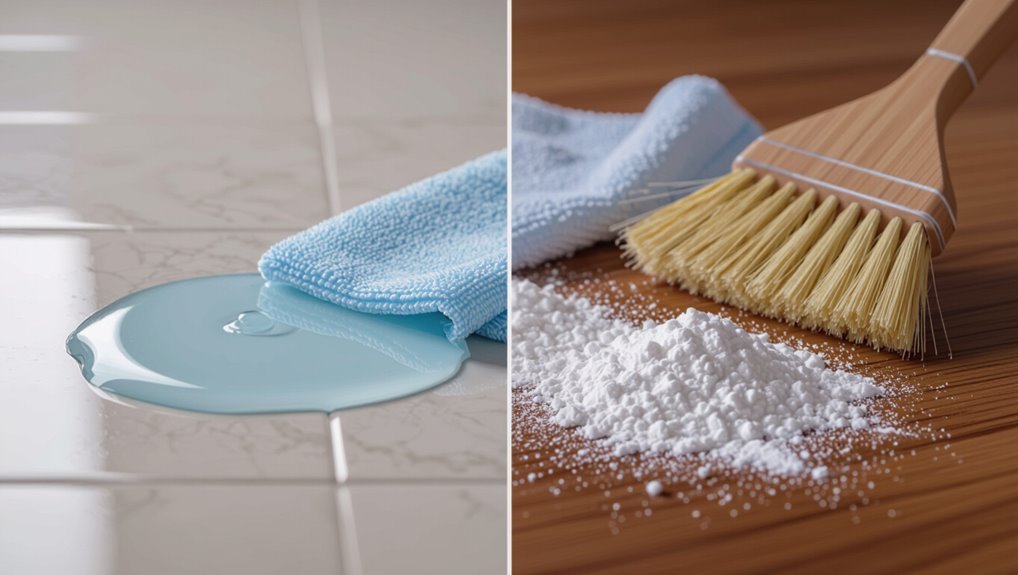
Start by evaluating what spilled so you can choose the right removal method: liquid tends to spread and needs blotting, powder can be swept or vacuumed once dry, and pods should be picked up carefully to avoid puncturing the pouch.
For liquid, mop up excess with absorbent cloths; for powder, let it settle then sweep or vacuum; for pods, pick up intact and discard if ruptured.
Step 4 Blotting and wiping techniques to avoid suds and streaks
1. You’ll blot gently with a clean, absorbent cloth or paper towel to lift remaining detergent—don’t rub or you’ll spread suds.
Work from the spill’s edges toward the center, replacing damp cloths as they saturate.
For stubborn residue, use a damp microfiber and light strokes to wipe straight lines, preventing streaks.
Finish when fabric no longer darkens.
Step 5 Rinse and neutralize residue
Rinse the area thoroughly to remove any lingering detergent so it won’t attract dirt or damage surfaces.
Use clean water and a gentle spray or damp mop, working from the edges inward.
If suds persist, add a small amount of diluted white vinegar to neutralize alkalinity, then rinse again.
Check for slippery spots and repeat rinsing until residue is gone.
Step 6 Drying the area to prevent slips and damage
Once the surface is free of detergent and suds, dry it promptly to prevent slips and water damage.
Use clean absorbent towels or a mop, wringing frequently into a bucket. For faster drying, open windows or run a fan.
Check edges and grout for trapped moisture; press a towel down to lift it.
Finish when floor feels completely dry to the touch.
Cleaning Large or Dried Detergent Spills
If the spill is large or the detergent has dried, start by evaluating the size and choosing the right tools and method.
Scrape or soften thick residue on hard floors before wiping, and use a wet extraction or shampoo for carpets and rugs.
Call professional cleaners if stains persist, the area is extensive, or you’re unsure about safe removal.
Assessing the scale and choosing the right approach
When you’re dealing with a large or dried detergent spill, start by gauging how much area and what surfaces are affected so you can pick the right cleanup method; a soaked carpet needs a different approach than crusted powder on tile or a spill that’s spread into vents or under appliances.
Note hazards like slippery soap, electrical risks, and odors, then choose tools: vacuum, wet mop, absorbents, or carpet extractor.
Removing thick or crusted detergent from hard floors
After you’ve sized up the spill and chosen your tools, focus on removing thick or crusted detergent from hard floors by loosening and collecting the residue before it scratches or spreads.
Gently score hardened edges with a plastic scraper, soften with warm water or a damp cloth, lift fragments with a dustpan, then wipe the area with a microfiber mop and mild cleaner to remove sticky film.
Extracting detergent from carpet and rugs
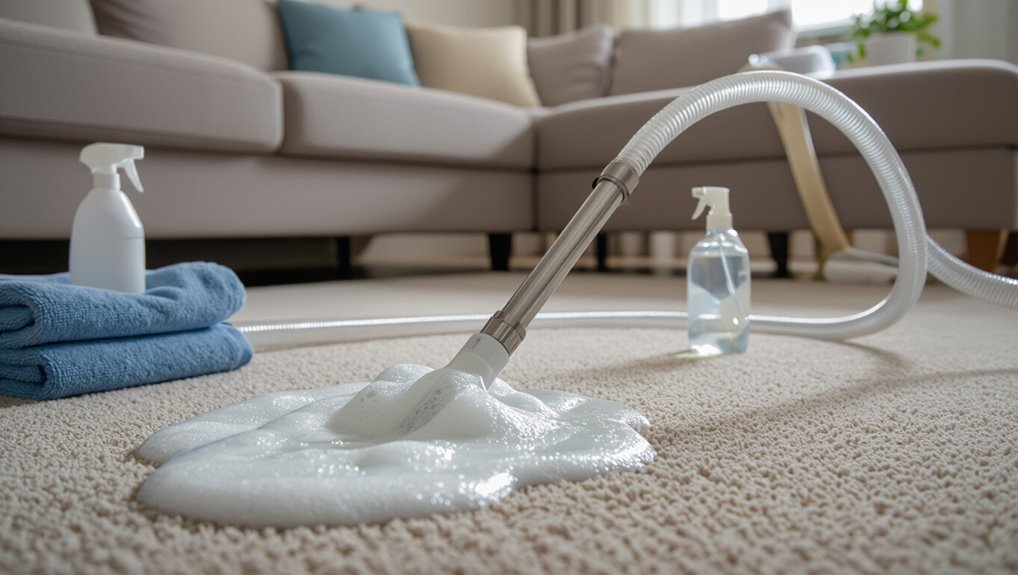
Large or dried detergent on carpets needs prompt, targeted action to prevent staining and residue buildup.
Blot loose powder, then vacuum.
Mix a teaspoon of mild dish soap with a cup of warm water, test in an inconspicuous spot, then work from edges inward with a clean cloth.
Rinse with plain water, blot until dampness is gone, and let air-dry.
When to call professional cleaners
If a spill covers a wide area, soaked through padding, or has hardened into crusted residue that won’t budge with spot cleaning, you should call a professional cleaner right away.
Professionals have carpet-specific equipment, drying systems, and chemical expertise to prevent mold, color loss, and lingering residue.
Don’t delay if odors persist, padding stays damp, or DIY attempts fail.
Surface-Specific Instructions and Precautions
Different surfaces need different care, so you’ll want to match your cleaning method to the material to avoid extra damage.
For tile and grout, prevent soap scum; on hardwood or laminate, use minimal water to avoid warping or finish problems; and on vinyl or linoleum, stick to gentle cleaners and thorough rinsing.
For carpets and upholstery, spot-treat then consider deep cleaning if needed, while concrete and garage floors often require degreasers or pressure washing.
Tile and grout: avoiding soap scum buildup
When detergent splashes onto tile and grout, it quickly leaves a filmy residue that attracts dirt and hard-water minerals.
You should remove it promptly and use methods that prevent buildup without damaging the grout. Wipe up puddles, rinse with warm water, and scrub grout lines with a soft brush and diluted vinegar or a pH-neutral cleaner.
Rinse well and dry to stop scum forming.
Hardwood and laminate: preventing warping and finish damage
Tile and grout need quick rinsing to prevent soap scum, and hardwood and laminate demand the same urgency but different care to avoid warping and finish damage.
Blot up detergent with absorbent towels, then lightly dampen a microfiber mop with plain water to remove residue.
Don’t saturate seams or use harsh scrubbing; dry thoroughly and ventilate the room to prevent moisture absorption and finish dulling.
Vinyl and linoleum: gentle cleaners and rinsing
Because vinyl and linoleum can stain or delaminate if scrubbed or soaked, act quickly but gently: blot excess detergent with a soft cloth, then mop with warm water mixed with a few drops of mild dish soap.
Rinse thoroughly with plain water to remove residue, wipe dry to prevent slipping, and avoid abrasive pads or strong solvents that can dull or lift the surface.
Carpet and upholstery: spot-cleaning and deep-cleaning options
If your detergent spills on carpet or upholstery, act fast to blot up excess and prevent a stain; then choose spot-cleaning for small areas or a deeper clean for soaked padding or persistent residue.
For spots, dilute mild dish soap in water, blot outward, rinse with clean water, and blot dry.
For heavy saturation, rent a carpet extractor or call a pro to avoid mold and padding damage.
Concrete and garage floors: degreasers and pressure washing
When detergent splashes onto concrete or garage floors, act quickly to contain the run-off and prevent slick spots; start by sweeping up any solid residue and blotting pooled detergent with absorbent towels or cat litter.
Use a concrete-safe degreaser following label dilution, scrub with a stiff broom, then rinse with a pressure washer on moderate setting.
Dry thoroughly to avoid slips.
Common Mistakes and How to Avoid Them
When you clean up a detergent spill, watch out for common missteps that make the mess worse.
Don’t rub and spread the detergent, avoid dumping on too much water that creates extra suds, and skip cleaners that aren’t suited to the surface.
Finally, make sure you remove all residue so it won’t attract dirt later.
Mistake 1 Rubbing and spreading the detergent
Though it might feel natural to scrub at a detergent spill, rubbing only pushes the soap deeper into fibers and spreads the mess wider; instead, you should blot and lift the detergent gently to prevent stains and excess suds.
Use clean, absorbent cloths or paper towels, pressing repeatedly to transfer liquid, replacing damp layers as needed.
Finish by air-drying and checking for residue.
Mistake 2 Using too much water and creating more suds
After blotting up excess detergent, resist the urge to douse the area with water to rinse it away — adding too much water just makes more suds and spreads the soap further.
Instead, use a slightly damp cloth to lift residue, wring it often, and work from the edges inward.
Finish by blotting dry and ventilating the area to prevent slippery residue.
Mistake 3 Using the wrong cleaner for the surface
Surfaces vary, and so should your cleaner — using the wrong product can damage finishes, discolor fabrics, or leave behind residues that attract dirt.
Check the floor type and pick a compatible cleaner: pH-neutral for sealed wood, mild soap for vinyl, and gentle upholstery cleaner for fabric.
Test a small area first, dilute as directed, and avoid abrasive scrubs that can etch surfaces.
Mistake 4 Ignoring residue that attracts dirt later
If you leave detergent film on floors, counters, or fabrics, it’ll act like a magnet for dust and grime and make the area look dirtier faster.
Don’t stop after wiping up visible suds; rinse with clean water and dry thoroughly.
Use a microfiber cloth to remove streaks, and check crevices.
Reclean any sticky spots so dirt won’t cling and buildup won’t return.
Prevention and Best Practices
To avoid future spills, store and handle detergent in tightly sealed containers away from children and pets.
Use steady pouring techniques and funnel or pump tools to transfer detergent without splashing, and adopt quick-response habits like keeping paper towels and a mop nearby.
Teach household members where detergents are kept and set simple rules—like never leaving open containers on counters—to keep everyone safer.
Safe storage and handling of laundry detergent
Because spills usually happen when detergents are grabbed in haste, store bottles and pods where they’re stable, visible, and out of reach of children and pets.
Secure lids, use sealed containers, label clearly, and wipe drips immediately.
Keep inventory low to avoid heavy lifting, and place heavy jugs at waist height.
- Prevent accidents
- Protect kids
- Reduce stress
- Save time
Pouring tips and transfer tools to minimize spills
1 simple habit can cut spills dramatically: control the transfer. Use a funnel or measuring cup with a spout, pour slowly, and steady the container with both hands.
Shift liquid into smaller, manageable bottles before use. Choose pumps or pour caps for heavy jugs.
Keep tools clean and store them nearby so you’ll always have the right gear when you pour.
Quick-response habits to limit mess and staining
Controlling the pour helps prevent spills, but quick-response habits will stop a small mishap from becoming a big mess.
When detergent drips, blot immediately with a dry cloth to prevent spreading. Rinse residue with a damp cloth, then dry the area.
Keep absorbent towels and a small scoop nearby, clean up drips before they harden, and address colored stains promptly.
Child- and pet-safety measures around detergent
While spills can happen to anyone, keeping kids and pets safe around detergent starts with simple, consistent habits you can adopt today.
Store pods and liquids high or in locked cabinets, use childproof lids, wipe up drips immediately, and rinse containers before disposal.
Teach children not to touch or taste cleaners, supervise curious pets, and keep emergency numbers handy in case of ingestion.
Comparison: Cleaning Methods and When to Use Each
When a spill happens, you’ll choose between a quick wipe, a full rinse, or a deep clean based on how much detergent and what surface is affected.
You’ll also weigh homemade fixes like vinegar and baking soda against commercial cleaners for effectiveness and safety.
In the next section, we’ll compare when each method and product makes the most sense.
Quick wipe vs. full rinse vs. deep-cleaning
Because detergent spills vary in size and surface type, you’ll choose between a quick wipe, a full rinse, or a deep-clean based on residue level and the area affected; pick quick wipes for small, wet spots, rinse for sticky residue, and deep-clean for dried buildup or sensitive floors.
| Method | When to use |
|---|---|
| Quick wipe | Small, fresh spills |
| Full rinse | Sticky residue |
Homemade cleaners vs. commercial products
After you decide whether a quick wipe, a full rinse, or a deep clean fits the spill, you’ll need to pick a cleaner — and that choice comes down to homemade solutions versus commercial products. You’ll weigh cost, safety, and effectiveness: homemade is cheap and gentle; commercial is stronger and faster. Use homemade for light messes, commercial for sticky or large spills.
| Type | Strength | Best use |
|---|---|---|
| Homemade | Mild | Small spills |
| Commercial | Strong | Large/sticky spills |
| Hybrid | Moderate | Sensitive floors |
Troubleshooting Persistent Problems
If soap scum, streaks, or a slippery film won’t come off with your first pass, try targeted fixes before calling a pro.
Use gentle abrasives or vinegar solutions for scum and streaks, a mild bleach or color-safe brightener for discoloration, and extra rinses or a degreasing cleaner to remove lingering slipperiness.
Test any stronger treatment on an inconspicuous spot first to avoid further dulling or damage.
Removing soap scum and streaks that remain
Soap scum and streaks can cling stubbornly after a detergent spill, but you can remove them with the right cleaners and technique.
Dampen a microfiber cloth, apply a few drops of white vinegar or a mild all-purpose cleaner, and gently scrub in circular motions.
Rinse with clean water, dry thoroughly, and repeat once if faint residue remains to restore a streak-free finish.
Tackling discoloration or surface dulling
When detergent leaves behind discoloration or a dull finish, don’t panic—you can often restore the surface with the right approach:
Test a hidden area first. For painted floors or sealed wood, gently clean with a mild pH-neutral cleaner, then buff dry.
For tile or stone, use a diluted vinegar solution sparingly, rinse thoroughly, and reseal or polish if needed to revive shine.
Dealing with lingering slippery residue
You may find that even after rinsing, a slick film lingers where detergent pooled; that slippery residue can be both annoying and hazardous.
Neutralize it by wiping with a solution of white vinegar and warm water (1:3), then scrub with a microfiber cloth or soft brush.
Rinse thoroughly, dry with clean towels, and test the area before walking to guarantee grip is restored.
FAQ
You probably have quick questions like whether vinegar can neutralize detergent, if the finish on hardwood will be damaged, or how long to wait before kids and pets come back.
You might also wonder if liquid detergent is safe to flush down a floor drain or the best way to handle a burst pod.
Keep reading for clear, practical answers to each.
Can I use vinegar to clean up a detergent spill?
Curious if vinegar will neutralize a laundry detergent spill? Yes, diluted white vinegar can help rinse away slippery residue and break down alkaline detergent.
Blot excess first, then mop with a solution of one cup vinegar to a gallon of warm water. Rinse with plain water afterward.
Test an inconspicuous spot if you’re worried about sensitive flooring finishes.
Will detergent ruin my hardwood floor finish?
If your spill was mostly diluted detergent and you followed up with vinegar and plain water, your finish is likely fine—but concentrated detergent left sitting can dull or strip some hardwood coatings.
Act fast: blot up liquid, rinse with clean water, dry thoroughly.
Test a hidden spot if you’re unsure. For visible damage, consult your floor’s manufacturer or a refinishing pro for repair options.
How long after a spill is it safe for kids and pets to return?
After cleaning up the bulk of the detergent and rinsing the area with plain water, wait at least 30–60 minutes before letting kids and pets back in the room so surfaces can dry and any lingering residue dissipates.
If the spill was large or soapy streaks remain, extend drying time until no slippery feel or smell remains.
Supervise initial return and wipe paws or shoes if needed.
Can I flush liquid detergent down a floor drain?
Can you pour liquid detergent straight down a floor drain? You shouldn’t.
Detergent can foam, clog traps, and harm septic systems or municipal treatment processes.
Instead, blot and absorb spills with towels or cat litter, dispose of solids in the trash, then rinse a small amount of water into the drain if local regulations allow.
Check local disposal rules for guidance.
What’s the best way to clean up a pod that burst?
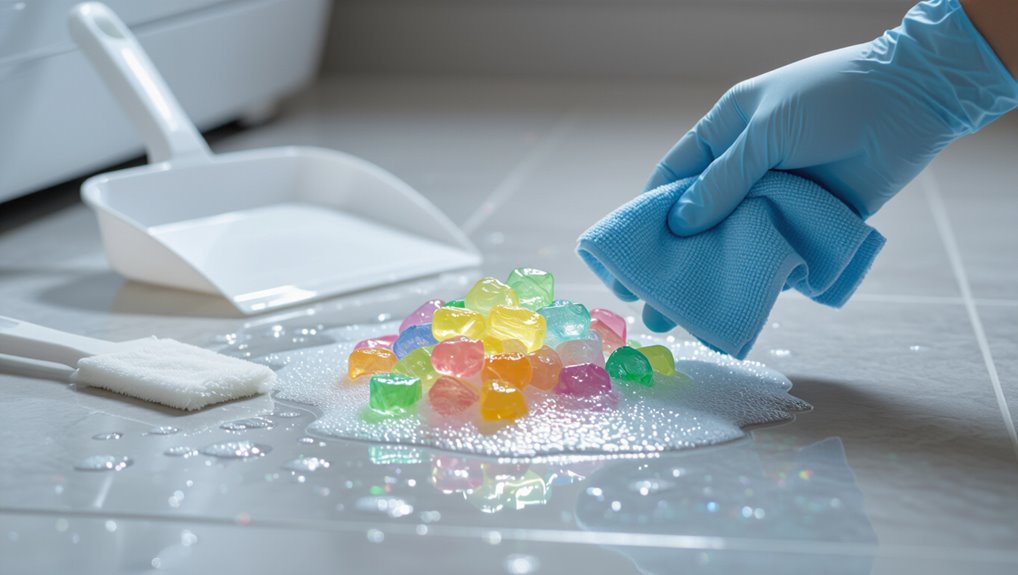
Spills that leave suds or pooled liquid require different handling than a burst detergent pod, which spreads concentrated dye and soap gel that can stain fabrics and surfaces.
First, wear gloves and blot excess gel with paper towels—don’t smear.
Scoop remaining gel with a spatula into a sealed bag.
Wipe residue with damp microfiber and mild detergent, then rinse and dry the area.