
Can You Steam Clean Tile Floors Safely Without Damaging Grout Lines
You can safely steam clean tile floors without harming grout if you use low pressure, short passes, and the right machine. Test a small, inconspicuous area first and avoid cracked, crumbling, unsealed, or lime‑based grout. Stick to ceramic or porcelain tiles and keep moisture brief to prevent softening or sealer damage. Dry thoroughly after cleaning and consider resealing fragile grout. Keep these precautions and tips in mind, and you’ll find more practical steps and warnings ahead.
Quick Answer: Is Steam Cleaning Safe for Grout?
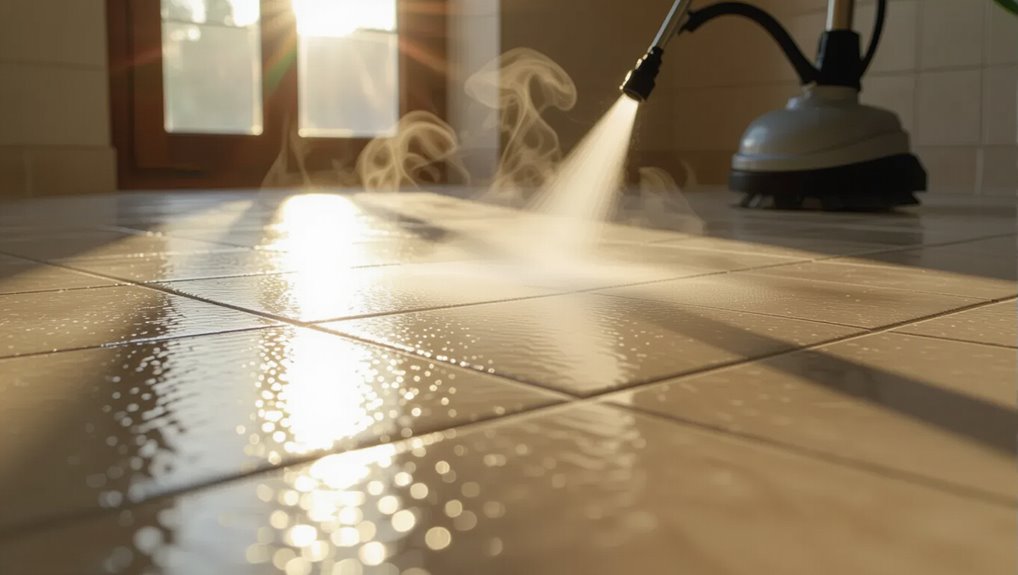
Wondering if steam will harm your grout? You can safely use steam for grout cleaning when you choose the right steam cleaner, keep sessions brief, and avoid excessive heat or soaking.
Steam benefits include lifting dirt and sanitizing without chemicals, but you’ll still inspect grout condition first and test a small area.
Follow manufacturer guidance and don’t overdo treatments.
How Steam (Heat, Moisture, Pressure) Affects Grout
If you decide to use steam on grout, it helps to understand how heat, moisture, and pressure each interact with the material.
You’ll manage grout durability by controlling exposure. Steam can soften old grout and alter heat effects on sealers. Use controlled passes, low pressure, and short cycles.
Manage grout durability by limiting exposure—steam can soften grout and affect sealers. Use short, low-pressure passes.
- Heat: brief, focused
- Moisture: avoid saturation
- Pressure: gentle, steady
Safe Tile Types: Ceramic, Porcelain – When to Avoid Stone
Because steam cleaning delivers heat, moisture, and pressure in concentrated bursts, you should stick to ceramic and porcelain tiles—they’re dense, glazed, and resist steam’s effects—while avoiding natural stone like marble, limestone, and some travertine that can etch, discolor, or absorb moisture.
You’ll appreciate ceramic durability for frequent cleaning and minimal care; porcelain maintenance is simple, but test a small area first to confirm sealants.
Grout Types and Conditions That Should NOT Be Steamed
When grout is cracked, crumbling, unsealed, or made from porous mixes like some sanded or lime-based formulations, don’t use a steam cleaner—steam will force moisture into gaps, worsen deterioration, and loosen tiles.
You should assess grout composition and grout durability before steaming.
Consider avoiding steam for:
- Old, crumbly cement grout
- Lime-based or soft mixes
- Unsealed or hairline-cracked grout
How to Test a Small Area and What to Look For
Pick an inconspicuous spot like inside a closet or behind a cabinet so any damage stays out of sight.
Do a single, controlled steam pass over that area—don’t linger—and let it dry according to the machine’s instructions.
Inspect the grout for color change, crumbling, softening, or loss of adhesion before you proceed.
Choose An Inconspicuous Spot
Before you steam the whole floor, test a tiny, out-of-the-way area so you can spot any adverse reactions without risking visible damage.
Choose a testing location near a cabinet or baseboard where grout color variance is least obvious. Check for discoloration, softening, or residue.
Do this quick 3-step check:
- Clean area.
- Steam briefly.
- Inspect grout and tile.
Perform A Controlled Steam Pass
Start by fitting your steam cleaner with the smallest nozzle or brush attachment and set it to a low steam setting so you can make a single, controlled pass over the test spot.
Move the head slowly and steadily for about 5–10 seconds, then stop and let the area cool briefly.
Observe how grout reacts to that steam pressure and maintain controlled movement—note loosening residue or color change.
Inspect Grout For Changes
After that controlled steam pass, inspect the grout closely to see how it responded.
Test a small corner, note texture, color, and adhesion. Look for early signs of grout discoloration causes like staining or fading.
If you spot issues, pause and plan grout repair techniques.
- Scrub gently and dry.
- Probe for soft spots.
- Photograph changes for records.
Best Steam Settings and Tools to Protect Grout
Grout is porous and sensitive, so you’ll want low to medium steam settings and the right attachments to clean without degrading the sealant or loosening joints.
Choose best steamers with adjustable pressure and temperature controls, soft-bristle or microfiber tools, and narrow nozzles for grout lines.
Use gentle, overlapping passes, short exposure times, and test an inconspicuous spot to confirm cleaning techniques and avoid damage.
Step-by-Step: Steam Clean Without Damaging Grout
Now that you’ve picked the right settings and tools, you’ll follow a careful sequence to steam clean without harming the grout.
With the proper settings and tools, follow a careful sequence to steam clean gently and protect your grout.
Start small, test, then proceed methodically with gentle pressure and the correct steam equipment.
- Pre-vacuum and spot-treat grout cleaning areas.
- Use low-steam passes, moving nozzle slowly.
- Wipe residues and allow grout to air-dry fully.
Common Mistakes That Damage Grout : and How to Avoid Them
Because grout soaks up water and weak cleaners, it’s easy to damage it without realizing. Common mistakes include using overly hot steam, scrubbing with stiff brushes, or applying harsh chemicals that erode the binder.
To avoid them, follow proper temperature, tool, and product guidelines and test a small area first. You should maintain sensible cleaning frequency, use soft tools, and prioritize grout sealing after repairs.
When to Avoid Steam Cleaning and Call a Professional
If your tile or grout is highly porous, you shouldn’t use a steamer because it can force water into the substrate and cause damage.
When grout is extensively cracked or missing, call a pro to assess repairs before any cleaning.
And if you have severe mold throughout the grout or under tiles, a professional remediation is safer and more effective than DIY steam cleaning.
High Porosity Flooring
Porous tile and grout—like unsealed natural stone, quarry tile, or older terracotta—soak up moisture and cleaners, so you should avoid DIY steam cleaning on these surfaces; the heat and vapor can drive water deep into pores, causing staining, mineral deposits, or damage to adhesives beneath the tile.
- Recognize high porosity issues early.
- Try gentle cleaning and sealing.
- Call a pro for assessment and maintenance tips.
Extensive Grout Damage
When grout is crumbling, missing, or deeply stained across large areas, don’t try to fix it with a home steam cleaner—you’ll likely make the problem worse.
You should call a professional for grout repair instead. Pros assess substrate damage, recommend regrouting or sealing, and use approved cleaning solutions safely.
Trying DIY fixes can worsen voids, loosen tiles, and increase long-term costs.
Severe Mold Infestation
Just as extensive grout damage calls for a pro, severe mold infestation is another situation where you should stop and call a specialist rather than reach for a steam cleaner.
You’ll risk spreading spores and worsening stains. Professionals use containment, testing, and certified removal techniques you can’t replicate.
Focus on mold prevention afterward and hire experts when infestations are extensive.
- Containment
- Testing
- Certified removal techniques
Aftercare: Drying, Sealing, and Routine Maintenance
After steam cleaning, dry the floor promptly to prevent moisture from seeping into grout or underlayment and to reduce slipperiness. Use microfiber mops, towels, or fans to speed evaporation and follow manufacturer guidance for any steam cleaner residual heat.
Then assess sealing options for grout, apply appropriate sealer, and adopt maintenance tips and routine cleaning schedules to preserve grout integrity and prevent mold recurrence.
Frequently Asked Questions
Can Steam Cleaners Remove Tile Adhesive Residue?
Yes — you can often loosen tile adhesive with steam, and you’ll remove much steam residue; you’ll need a scraper and patience, test a hidden spot, and repeat heating plus scraping to avoid damaging tiles or grout.
Will Steam Cleaning Kill Mold Deep in Grout?
Yes — steam helps surface mold removal, but it won’t reliably kill deep mold entrenched in grout; you’ll need scrubbing, antimicrobial treatment, and grout maintenance to fully remove and prevent regrowth. Use ventilation and safety gear.
How Often Can I Steam Clean Without Degrading Grout?
You can steam clean about once a month; some worry it loosens grout, but proper technique prevents that. For grout maintenance, balance steam frequency with sealing and gentle agitation to protect grout and prolong its life.
Are Handheld Steamers as Effective as Canister Models?
Handheld steamers can be effective for quick spot cleaning and portability, but you’ll get more consistent canister power for large floors. Use handheld benefits for tight spots, yet choose canisters for sustained, deeper cleaning across tiles.
Can Steam Damage Grout Colorants or Dyes?
Could steam strip grout colorants or dyes? You shouldn’t assume safety: if you use high steam temperature without grout protection, you’ll risk fading or lifting dyes, so test a hidden spot and lower heat settings first.
Conclusion
Think of your tile floor as a garden: steam’s warmth can revive blooms but too much water will wash away the soil. If your grout is intact and tile is steam-safe, proceed gently — test first, use low pressure, and dry well. If grout is cracked, soft, or unmortared, don’t steam; call a pro. Tend the floor with sealing and regular care, and it’ll stay a steady, well-kept path under your feet.
