How to Remove Wax From Vinyl Floor Safely Without Damaging Surface
You can safely remove wax from vinyl by softening it with a hair dryer or warm towel, then gently lifting flakes with a plastic scraper or old credit card so you don’t scratch. Clean remaining residue with warm water and mild dish soap, or a diluted vinegar solution, and spot-test rubbing alcohol for stubborn areas. Work in a ventilated space, wear gloves, and dry thoroughly to avoid damage—keep going to find targeted tips for colored or greasy wax spots.
Quick Method: Remove Hardened Wax From Vinyl
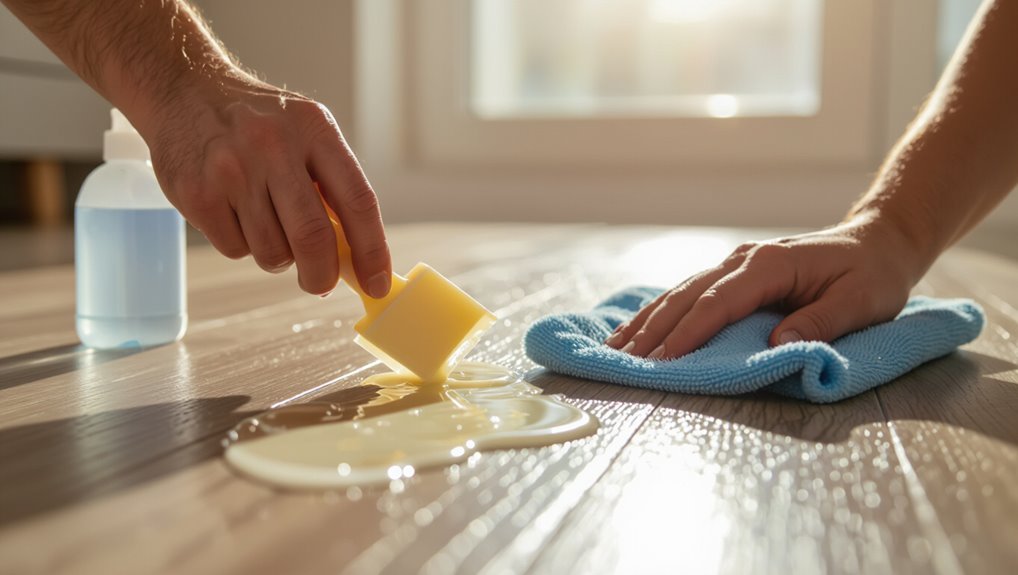
1 simple, effective way to tackle hardened wax on vinyl is to soften it first, then lift it away.
You’ll warm the wax gently with a hairdryer or warm towel, scrape with a plastic putty knife, then clean residue with a mild detergent.
These wax removal techniques protect finish while restoring shine.
Follow vinyl floor care guidelines, rinse, and dry thoroughly to avoid streaks.
Why Wax Sticks to Vinyl Floors
You’ll notice wax clings where the vinyl’s tiny pores and texture give it more surface area to grip.
Heat from sunlight or a hair dryer softens the wax and helps it flow into those micro‑crevices, locking it in place.
Also, the wax’s chemistry often bonds well with the plasticizers in vinyl, so they can adhere more strongly than you’d expect.
Surface Texture Interaction
Think of vinyl’s surface like tiny hills and valleys: wax melts and flows into those microscopic grooves, then cools and mechanically locks in place.
You’ll notice surface texture dictates contact area and grip, so wax interaction is mainly mechanical rather than chemical.
When you scrape or dissolve wax, aim to free it from grooves without abrading the vinyl finish.
Heat Causes Adhesion
When wax warms, it softens and flows into the tiny pores and texture of vinyl, then cools and hardens to form a tight physical bond; because heat reduces the wax’s viscosity and increases surface contact, even brief exposure from sunlight, hot water, or a steam mop can make wax grip the floor more firmly.
You’ll notice heat sources amplify adhesive properties, so avoid heating during removal.
Chemical Composition Match
Because vinyl flooring and common floor waxes share similar hydrocarbon-based chemistries, the molecules in wax dissolve slightly into the plasticizer-rich surface of vinyl and form strong intermolecular attractions.
This compatibility lets wax wet the surface, seep into microscopic crevices, and create a bond that’s harder to break than with dissimilar materials.
You should consider chemical properties and different wax types when choosing solvents and removal methods.
Safety: Gloves, Ventilation, Heat Precautions
Before you start removing wax, put on chemical-resistant gloves to protect your skin from solvents.
Make sure the room is well ventilated or use a fan so fumes don’t build up.
If you use heat, keep sources controlled and never leave them unattended to avoid burns or damage.
Wear Chemical-Resistant Gloves
Anyone working with wax removers should wear chemical-resistant gloves to protect your skin from solvents and hot wax.
Choose nitrile or neoprene gloves that fit well and inspect for tears. Change gloves if they’re compromised, and avoid touching your face.
These precautions pair with wax prevention tips and safe cleaning techniques to keep you injury-free while restoring vinyl floors.
Ensure Adequate Ventilation
Good ventilation is essential when removing wax from vinyl floors—open windows and doors, run fans, and, if possible, use an exhaust fan to pull fumes outside so solvent vapors and heated odors don’t build up.
You should monitor air circulation, limit exposure time, and take basic safety measures like wearing gloves and a mask.
Keep pets and children away until odors dissipate.
Observe Heat Source Safety
While you’re heating wax to loosen it, keep the area well-ventilated, wear heat-resistant gloves, and never leave the heat source unattended—hot tools and solvents can create flare-ups or release stronger fumes as temperature rises.
- You’ll feel relieved using proper safety precautions.
- You’ll avoid panic by controlling risk.
- You’ll stay calm handling hot tools.
- You’ll protect surfaces and yourself.
Tools & Household Items You’ll Need
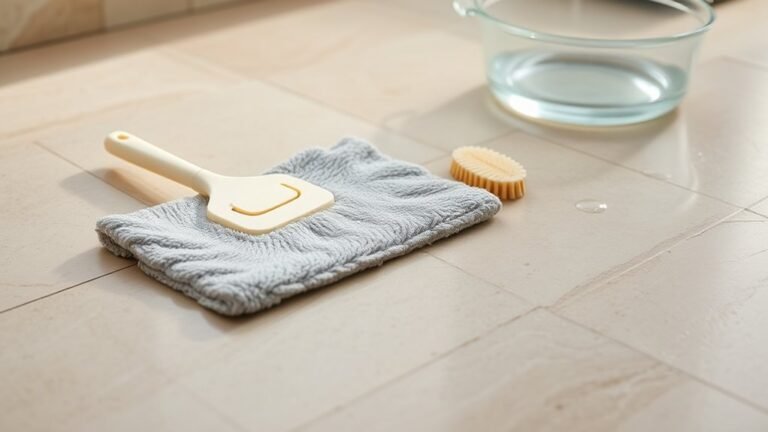
Gather a few basic items before you start: a plastic scraper or old credit card, microfiber cloths, paper towels, a hair dryer or heat gun on low, rubbing alcohol or mineral spirits, a mild dish soap, and a bucket of warm water.
Add gloves, a soft-bristled brush, and a spray bottle. These cleaning supplies help safe wax removal without harsh abrasives or solvents.
Soften Wax With a Hair Dryer or Heat Gun
Now that you have your tools ready, warm the wax to make removal easier.
Aim low: use low heat settings and keep the dryer or gun moving to avoid warping.
Different wax types melt differently, so test a small spot.
Because waxes vary, always try a tiny test area first to find the right heat and avoid damage.
Stop once wax softens—don’t scorch.
- Calm
- Confident
- Relieved
- Empowered
Lift Wax With Ice for Heat-Sensitive Vinyl
If your vinyl is heat-sensitive, you can use ice to harden the wax so it lifts cleanly.
Wrap ice in a plastic bag and press it on the wax until it becomes brittle.
Then gently chip or scrape the hardened wax away without scratching the floor.
Use Ice Safely
Because heat can warp vinyl, you’ll want to lift wax with ice instead of a hairdryer on sensitive floors.
You’ll protect the surface and control wax removal by chilling spots before gentle scraping. Use a sealed bag of ice, not direct water.
- Feel relieved
- Stay cautious
- Work patiently
- Avoid rushing
Lift Hardened Wax
Chill the wax to make removal simple and safe: place a sealed bag of ice over the hardened spot for 10–15 minutes so the wax becomes brittle, then gently lift it with a plastic scraper or credit card to avoid scratching the vinyl. Use gentle scraping as one of the best wax removal techniques for careful vinyl floor care.
| Step | Tool | Tip |
|---|---|---|
| 1 | Ice bag | 10–15 min |
| 2 | Plastic scraper | Shallow angle |
| 3 | Soft cloth | Wipe residue |
Gently Scrape Softened Wax Without Scratching
Start by letting the wax soften fully so you can lift it without gouging the vinyl.
You’ll use gentle soft wax removal and safe scraping techniques: tilt a plastic scraper, work at low angle, lift shards, and wipe residue with a soft cloth.
Stay steady and patient to avoid scratches.
- Relief
- Confidence
- Calm
- Satisfaction
Test Any Method on a Hidden Spot First
Before you try any wax-removal technique on the main floor, test it on a hidden spot—like inside a closet or under a cabinet—to make sure the heat, solvent, or scraper won’t discolor or damage the vinyl.
You’ll confirm the test method’s effect, assess finish compatibility, and avoid surprises. Always document results and follow safe practices for wax removal to protect the floor.
Remove Thin Wax Films With Warm Mild Detergent
If you’re dealing with a light wax haze, mix a few drops of mild dish soap into a bucket of warm water and mop the area using a soft microfiber mop or cloth, wringing frequently so you’re not leaving excess moisture on the vinyl.
Concentrate on detergent properties that lift residue without stripping finish; this handles common wax types gently.
Use Isopropyl Alcohol Safely on Vinyl
When removing stubborn wax spots, you can safely use isopropyl alcohol on vinyl if you dilute it and test an inconspicuous area first; this prevents finish damage while letting the solvent break down wax.
You’ll apply a 70% or lower mix, blot gently, and rinse.
Note isopropyl alcohol benefits for dissolving residue, but follow vinyl surface precautions: dilute, patch-test, and avoid prolonged contact.
When Solvents Can Harm Vinyl (And When to Avoid Them)
Using isopropyl alcohol carefully can work, but some solvents will strip vinyl’s finish, discolor the surface, or soften the backing, so you need to know which to avoid.
Using isopropyl alcohol cautiously can help; many solvents can strip vinyl finish, discolor, or soften backing — test first.
You should recognize solvent types and choose safe alternatives when uncertain. Test first on an inconspicuous spot. Feel uneasy? Stop and switch to gentler methods.
- Harsh ketones — alarming
- Strong acids — shocking
- Petroleum solvents — distressing
- Unknown blends — terrifying
Lift Stubborn Residue With White Vinegar and Water
Mix one part white vinegar with three parts warm water, and test a small, hidden spot first so you don’t damage the vinyl.
Use a soft cloth or mop and gentle circular motions to lift the wax residue without scrubbing harshly.
Rinse the area with clean water and dry thoroughly to prevent streaks or moisture damage.
Vinegar-To-Water Ratio
Although white vinegar is mild, you’ll want the right vinegar-to-water ratio to lift stubborn wax without harming your vinyl; a common, safe starting point is one part vinegar to three parts warm water.
You’ll use vinegar benefits and water properties to dissolve wax gently. Choose this mix, test a small area, and proceed confidently.
- Relief
- Trust
- Satisfaction
- Calm
Gentle Application Technique
Start by blotting any pooled wax with a soft cloth, then dampen a clean microfiber pad in the 1:3 vinegar-to-water solution and wring it so it’s damp, not dripping. Apply gentle pressure, work in small circles, and lift softened residue. Repeat with a fresh soft cloth as needed until wax loosens.
| Step | Action | Tip |
|---|---|---|
| 1 | Blot | Use soft cloth |
| 2 | Dampen | 1:3 mix |
| 3 | Press | Gentle pressure |
| 4 | Circle | Small motions |
| 5 | Repeat | Fresh cloth |
Rinse And Dry Thoroughly
Once the vinegar solution has lifted the wax, rinse the area with clean water to remove any acidic residue that could dull the vinyl.
Dampen a microfiber cloth or mop and wipe the floor in straight strokes, then blot with a dry cloth to pull up remaining moisture.
Use gentle rinse techniques and quick drying methods so your floor looks refreshed.
- Relief
- Pride
- Calm
- Satisfaction
Use Baking Soda Paste for Greasy Wax on Vinyl
Make a thick paste by mixing baking soda with just enough warm water to form a spreadable consistency.
Then apply it to greasy wax spots on your vinyl floor. Let it sit 10–15 minutes so baking soda aids grease absorption.
Gently scrub with a soft cloth or nylon brush, then wipe away residue with a damp microfiber.
Dry thoroughly to prevent streaks or moisture damage.
Choose Vinyl-Safe Commercial Wax Removers
When you need something stronger than a paste, pick a commercial wax remover labeled as safe for vinyl and low in harsh solvents.
Test the product in an inconspicuous spot and follow the manufacturer’s directions for application and dwell time.
If the finish softens or discolors during testing, stop and try a gentler option.
Safe Chemical Choices
Although harsh solvents might seem like a quick fix, you should stick to products labeled safe for vinyl and formulated specifically as wax or finish removers.
Pick low-odor, non-abrasive formulas; consider natural alternatives and eco-friendly solutions when possible to protect finish and air quality.
- Gentle vinyl-safe remover
- pH-balanced cleaner
- Low-VOC option
- Biodegradable formula
Application And Testing
Since you’ve chosen a vinyl-safe remover, test it before full application to avoid damaging the floor. You’ll follow simple testing methods and clear application techniques: apply a small amount, wait, wipe, inspect. If safe, proceed across the area in small sections, working with grain. Keep ventilation, gloves, and clean cloths handy for controlled, consistent results.
| Step | Action |
|---|---|
| 1 | Spot test |
| 2 | Wait & inspect |
| 3 | Apply small area |
| 4 | Wipe with cloth |
| 5 | Repeat if safe |
Drying and Buffing to Restore Shine
Pat the floor dry with clean microfiber towels, then let any remaining moisture evaporate so the vinyl can fully set before buffing.
For shine restoration, use gentle buffing techniques with a soft cloth or low-speed polisher, moving evenly.
You’ll feel satisfaction as the surface revives.
- Relief
- Pride
- Calm
- Joy
Remove Colored or Scented Candle Stains From Vinyl
Tackle colored or scented candle stains on vinyl by acting quickly: scrape off any hardened wax with a plastic scraper, then soften the residue with a warm cloth or a low-heat hair dryer so you can lift pigment without spreading it. Use mild cleaner for remaining tint from various candle types and test first.
| Visual | Action |
|---|---|
| red wax | blot gently |
| scented drip | warm & lift |
| deep stain | repeat |
Prevent Scratches and Finish Dulling While Cleaning
When you clean wax from vinyl, take steps that protect the surface so you don’t introduce scratches or dull the finish; use soft, non-abrasive tools, gentle cleaners, and minimal pressure to lift residues without abrading the top layer.
When removing wax from vinyl, work slowly with soft, nonabrasive tools and gentle cleaners to avoid scratches.
You’ll favor scratch prevention and finish protection by working slowly and testing a small area first.
- Gentle cloths
- Soft scraper
- Mild cleaner
- Light pressure
Common Wax-Cleaning Mistakes to Avoid
Even with gentle tools and mild cleaners, it’s easy to make mistakes that leave wax smeared, scratched, or re-deposited on vinyl.
Don’t use abrasive pads, harsh solvents, or excessive heat; they damage finish and hinder proper wax removal techniques.
Avoid overworking areas, mixing cleaners, or leaving residue.
Follow product directions and test in a discreet spot for safe vinyl floor care.
Quick Maintenance Tips for Future Wax Spills
If you catch a wax spill early, blot up excess with a soft cloth before it hardens and use a plastic scraper for any remaining film to prevent spreading or scratching.
You should embrace wax spill prevention and routine maintenance habits to stay calm and confident.
- Act fast to avoid stains.
- Keep a soft cloth handy.
- Store wax away from traffic.
- Schedule quick clean checks.
Frequently Asked Questions
Can Wax Removal Void My Vinyl Flooring Warranty?
Yes — improper wax removal can void your warranty coverage if you use harsh chemicals or abrasive tools; follow manufacturer maintenance tips, use approved cleaners, document procedures, and contact the manufacturer before attempting any potentially risky cleaning.
Can Heat Removal Methods Affect Vinyl Underlayment?
Like a loaf left too close to the oven, your underlayment can warp: yes, heat sensitivity means you can damage surface integrity and underlayment layers if you overheat; you should test, use low heat, and monitor closely.
Will Pet Urine Interact With Wax Removal Products?
Yes — pet urine interaction can alter wax removal safety; you’ll find urine reacts with solvents, causing staining or soapy residues, so test products, neutralize odors first with enzyme cleaner, and avoid harsh chemicals on vinyl.
How to Remove Wax From Vinyl Baseboards or Trim?
You’ll soften wax with warm soapy water, then gently scrape with a plastic putty knife; for stubborn spots, apply a mild solvent sparingly. Prioritize baseboard cleaning and trim maintenance to avoid damage, drying thoroughly afterward.
Can Wax Removal Remove Adhesive From Vinyl Tiles?
Yes — you can remove some adhesive from vinyl tiles, but results depend on adhesive types and removal techniques; you’ll need gentle solvents, heat or mechanical scraping, and you’ll test first to avoid damaging the tile surface.
Conclusion
You’ve learned how to coax wax from vinyl without scarring its shine, like a gardener coaxing weeds from a treasured bed—gentle, patient, and precise. Keep safety and soft tools close, use heat and mild solutions instead of harsh scrapes, and treat spills quickly to save effort later. With these habits, your floors will keep reflecting light and memory, showing that careful attention preserves both surface and story.