How to Keep Tile Floors Clean (Simple Daily Tips)
Keep tile floors fresh by sweeping or vacuuming high-traffic areas daily, wiping spills immediately with a microfiber cloth, and mopping weekly with a pH-neutral cleaner suited to your tile type. Use entrance mats, felt pads under furniture, and a squeegee to remove excess water for streak-free results. Spot-treat stains quickly and re-seal grout and natural stone as recommended. Follow these simple habits and you’ll avoid most problems—and if you want more tips, keep going.
Daily 5‑Minute Tile Floor Checklist
When you’ve got five minutes, do a quick sweep of high-traffic areas, spot-clean spills, and run a microfiber dust mop along baseboards and under furniture legs to lift grit before it scratches tiles.
Check grout color for fresh stains—dampen a cloth with mild cleaner and blot, not scrub. Wipe visible dust along grout lines and edges where dirt hides.
Inspect tile pattern for loose or chipped pieces and note them for repair later.
Rinse the mop often and change water if it gets cloudy.
Finish by drying any wet spots to prevent streaks and slipping.
Start With the Right Sweep and Vacuum Routine
Because grit and dust are the main culprits that scratch and dull tile, start with a quick, targeted sweep or vacuum of high-traffic paths, corners, and along baseboards before wet cleaning.
Use a soft-bristled broom or vacuum with a hard-floor setting to lift particles without grinding them into grout lines. Focus on edges and under furniture where debris hides—this protects grout maintenance efforts and prevents premature wear.
Empty the vacuum often so suction stays strong. Routine dry cleaning reduces how often you’ll need deep scrubbing or tile sealing touch-ups, keeping floors looking sharp with minimal effort.
Mop Routines by Tile Type (Ceramic, Porcelain, Stone)
Now that you’ve swept and vacuumed, tailor your mopping to the tile: mop ceramic weekly to prevent grime buildup.
Use a neutral cleaner and a damp mop on porcelain to avoid streaks.
Choose pH-neutral, non-acidic solutions for natural stone to protect the finish.
For tough spots on ceramic or porcelain, you can spot-clean more often, but don’t over-wet stone.
Follow manufacturer recommendations and test any cleaner in an inconspicuous spot first.
Ceramic Mop Frequency
Ceramic tile is forgiving and low-maintenance, so you can usually mop it once a week for regular traffic areas and twice weekly in kitchens or entryways where dirt and spills concentrate.
For effective ceramic maintenance, stick to a simple schedule: sweep daily or vacuum often, spot-clean spills immediately, and mop with a mild cleaner on your planned days.
Adjust mop frequency if pets, kids, or heavy foot traffic increase soil.
Use a damp microfiber mop to avoid excess water and protect grout.
Consistent routines prevent buildup and keep tiles looking fresh without harsh chemicals.
- Sweep or vacuum daily
- Spot-clean spills immediately
- Mop weekly or twice weekly
Porcelain Cleaning Method
When you’re cleaning porcelain floors, aim for a routine that balances gentle care with regular maintenance to preserve their dense, low-porosity surface. You’ll mop weekly with warm water and a pH-neutral cleaner to honor Porcelain durability, spot-clean spills immediately, and use microfiber to avoid scratches. Adjust cleaning frequency based on traffic; high-use areas get a quick swipe daily. Rinse to remove residue and dry to prevent streaks. Avoid harsh acids or abrasive pads that can dull finish. Follow grout care as needed and keep furniture pads in place to protect the tile long-term.
| Task | Frequency | Tool |
|---|---|---|
| Daily spot-clean | Daily | Microfiber cloth |
| Routine mop | Weekly | pH-neutral mop |
| Heavy traffic | As needed | Damp mop |
Stone Safe Solutions
Porcelain holds up well to gentle care, but stone tiles need a different approach—Stone Safe Solutions gives you mop routines tailored to tile type so you don’t damage natural surfaces.
You’ll use pH-neutral cleaners for marble, travertine, and limestone to prevent stone damage and avoid acidic or abrasive products. Damp-mop frequently, wringing excess water to stop seepage into pores. Rinse with clean water and dry to prevent streaking.
Skip harsh chemical cleaning on sealed stone; instead, spot-clean with a soft cloth and approved cleaner.
- Use microfiber mops
- Test cleaners in an inconspicuous spot
- Re-seal porous stone annually
Handle Spills on Tile Floors Instantly to Prevent Stains

If you spill something, act fast so liquids and dyes don’t soak into grout or leave a film on the tile. Blot up excess with a clean cloth, then rinse the area with warm water and mild detergent.
Next, pat dry and inspect for residue — stubborn spots need a gentle scrub with a soft brush. Don’t use harsh abrasives that strip tile polish; instead, test cleaners in an inconspicuous spot.
For regular protection, maintain grout sealing to reduce staining and make future cleanups easier.
Handle acidic or colored substances immediately, and avoid rubbing spreads that can enlarge the stain area.
Daily Grout Habits That Actually Work
Keep grout looking fresh by wiping the lines with a microfiber cloth as part of your daily sweep.
If you spot grime, do a quick spot scrub with a soft brush and mild cleaner before it sets.
Finish by applying a daily-use grout sealer to repel dirt and make upkeep easier.
Wipe Grout Lines
Because grout soaks up dirt fast, wipe the lines daily to stop stains before they set. Use a damp microfiber cloth or a soft brush with mild cleaner, working along grout lines so dirt lifts instead of embedding.
Combine this with occasional grout coloring refreshes and proper sealing techniques to reduce discoloration and extend time between deep cleans. You’ll notice cleaner grout and less elbow grease.
- Wipe after heavy traffic or spills
- Use gentle cleaners to protect grout coloring
- Re-seal annually or as product instructions advise
Stay consistent; daily wiping prevents tough buildup.
Quick Spot Scrubbing
After you’ve been wiping grout lines daily, add a short, targeted scrub for trouble spots so stains never have a chance to set. You’ll focus on small areas: dampen, apply mild cleaner, scrub with a toothbrush, then rinse. Quick attention prevents bigger stain removal jobs and complements regular grout sealing routines without replacing them.
| Spot | Tool | Action |
|---|---|---|
| Dark grout | Toothbrush | Agitate gently |
| Oil | Degreaser | Dab then rinse |
| Scuff | Eraser sponge | Light rub |
| Mold speck | Vinegar mix | Short soak |
| Residue | Microfiber | Wipe dry |
Apply Daily Sealer
Want to protect grout without extra work? You can apply a daily sealer spray to keep grout sealed between deep treatments. Use simple application techniques: mist, wipe, let dry. That routine boosts sealer longevity by preventing dirt and moisture from penetrating.
Do it after mopping or spot cleaning when grout is dry. You’ll save time and reduce staining without harsh chemicals. Choose a product labeled for daily use and test a small area first.
Consistent, light applications work better than heavy coats. Follow manufacturer instructions for full cures and reapply full-strength sealer per their recommended schedule.
- Quick misting
- Light wiping
- Regular testing
Cleaning Products to Use : and Avoid for Tiles
When choosing cleaners for your tile floors, pick pH-neutral, non-abrasive products and avoid acidic or highly alkaline solutions that can dull glaze or damage grout.
Use mild detergents or purpose-made tile cleaners to preserve tile glaze and maintain consistent grout color.
Steer clear of bleach, ammonia, vinegar, and products with trisodium phosphate; they can strip sealers and fade grout pigments.
For natural stone, buy stone-specific cleaners only.
Spot-test new cleaners in an inconspicuous area first.
Rinse thoroughly after cleaning to remove residue, and don’t mix chemicals.
Proper product choice keeps tiles attractive and grout true to color.
Best Tools for Daily Tile Care (Broom, Microfiber, Squeegee)
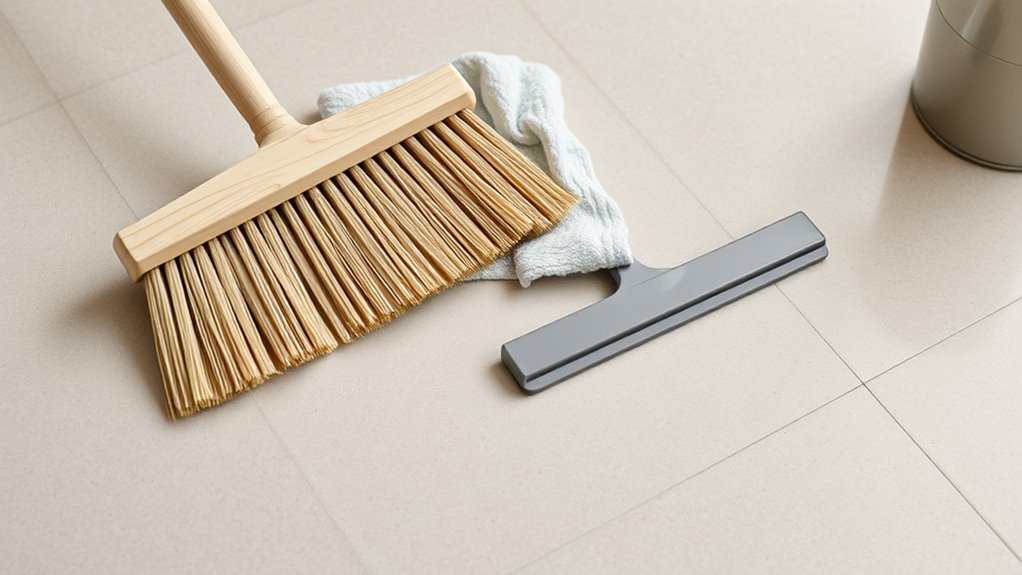
Because tile sees so much daily traffic, choosing the right basic tools makes upkeep quick and effective. You’ll want a reliable broom for crumbs and grit, a microfiber mop to lift dirt without scratching, and a squeegee to remove water fast so deposits won’t dull finish or interfere with grout sealing.
Use the broom first, then microfiber for a streak-free pass, and finish wet areas with the squeegee. For occasional touch-ups, pair these tools with gentle cleaners and occasional tile polishing to restore shine.
Maintain tools clean to avoid re-depositing dirt and prolong results.
- Broom
- Microfiber mop
- Squeegee
Adjust Routines for Ceramic vs. Porcelain vs. Stone Tiles
Although all tiles look similar at a glance, you’ll need different care habits for ceramic, porcelain, and natural stone to protect finish and grout.
For ceramic, sweep daily and mop with mild detergent; avoid abrasive scrubbers that wear glaze and reapply grout sealing as needed.
Porcelain tolerates more vigorous cleaning—use a stronger cleaner sparingly and a stiff brush on grout lines; Tile sealing is usually unnecessary on glazed porcelain but helps on unglazed pieces.
Natural stone needs pH-neutral cleaners, gentle cloths, and periodic professional Tile sealing to prevent stains and etching; don’t use acidic products on stone surfaces.
Spot‑Treating Common Stains: Oil, Dye, Rust
If a spill happens, act fast to prevent permanent stains—oil, dye, and rust each demand a different response.
Blot oil stains with a dry cloth, sprinkle baking soda to lift remaining grease, let sit, then vacuum and wipe with a mild detergent.
For dye removal, dab with diluted hydrogen peroxide on a hidden tile first, then rinse thoroughly.
Rust needs a commercial rust remover formulated for tile; follow directions and test a corner.
Don’t scrub harshly or use acidic cleaners on sensitive stone.
Quick action and appropriate products protect finish and grout.
- Oil stains: blot then absorb
- Dye removal: test peroxide
- Rust: use tile-safe remover
When to Deep‑Clean Tile Floors and What to Do
You should schedule a deep clean when grout looks discolored, build-up won’t come off with regular mopping, or after heavy traffic or a spill that’s soaked in.
Start by sweeping and vacuuming, then apply a grout-safe cleaner and scrub grout lines with a stiff brush.
Finish by rinsing thoroughly and sealing grout if needed to protect against future stains.
When To Deep Clean
How do you know it’s time for a deep clean? Look for dull tile, stained grout lines, or persistent odors—these signal that regular mopping isn’t enough. You’ll also deep-clean before resealing: tile sealing and grout sealing work best on thoroughly clean surfaces. Deep cleaning restores appearance, removes trapped dirt and mildew, and preps tiles for protection.
- Visible grout discoloration that won’t lift with routine cleaning
- Sticky residue, buildup in high-traffic zones, or lingering smells
- Before applying or renewing tile sealing or grout sealing
When these signs appear, schedule a deep clean to preserve your floors and finishes.
Deep‑Cleaning Steps
When grout’s color won’t budge and floors feel grimy despite regular mopping, it’s time to deep-clean. You’ll need a stiff brush, pH-neutral cleaner, and patience. Test a small patch to protect tile color, then scrub grout lines with cleaner, rinse, and dry. For stubborn stains, use a baking soda paste or oxygen bleach, avoiding harsh acids. After everything’s dry, apply grout sealing to lock out dirt and stains. Maintain with weekly gentle mops.
| Step | Tool | Time |
|---|---|---|
| Prep | Vacuum | 5–10 min |
| Scrub | Brush/cleaner | 15–30 min |
| Seal | Grout sealer | 30–60 min |
Five Small Prevention Steps to Keep Tile Floors Looking New
Although daily scrubbing isn’t necessary, a few small preventive habits will keep your tile floors looking new and cut down on deep cleaning time.
You can protect tile grout by wiping spills promptly and using mats at entrances to trap grit that scratches tiles.
Vacuum or sweep daily to remove abrasive dirt, and mop with a pH-neutral cleaner weekly.
Consider routine floor sealing where appropriate to repel stains and simplify maintenance.
Protect high-traffic areas with rugs and felt pads under furniture legs to prevent chips.
- Wipe spills immediately
- Use entrance mats
- Seal grout and tiles regularly
Frequently Asked Questions
Can I Use Steam Cleaners on Different Tile Types?
Yes — you can use steam cleaners, but steam cleaner safety matters: you’ll assess tile type considerations first. Porcelain and glazed ceramic handle steam; unglazed, natural stone, or damaged grout need caution or avoidance to prevent damage.
How Often Should Grout Be Sealed?
Seal grout every 1–2 years for high-traffic areas and every 2–3 years elsewhere. You’ll add grout sealing into your cleaning schedule, checking annually for water absorption and resealing sooner if stains or wear appear.
Are Radiant-Heated Tile Floors Cleaned Differently?
Absolutely — you won’t need rocket-science care: radiant heated tile floors aren’t cleaned wildly differently, but you’ll follow specific cleaning considerations, use gentle cleaners, avoid abrasive tools, and prevent excessive water that could harm heating elements beneath.
Can Pets’ Urine Permanently Discolor Tiles or Grout?
Yes — pet stains from urine damage can permanently discolor tiles or grout if left too long. You should blot quickly, neutralize with appropriate cleaners, and reseal grout to prevent lasting stains and odor.
Is Vinegar Safe for Everyday Tile Cleaning?
Yes — you can use cleaning vinegar for everyday tile cleaning, but you shouldn’t with natural stone. You’ll protect tile maintenance by diluting vinegar, testing a small area, then rinsing and drying to avoid residue or grout damage.
Conclusion
You’ve got this — five minutes a day keeps tile tantrums away. Stick to quick sweeps, the right mop for your tile, and immediate spill cleanup, and your floors will shine like they were installed yesterday. Treat grout gently and handle stains fast (oil, dye, rust), and schedule a deep clean when life gets messy. With these tiny habits, you’ll prevent big headaches and keep your tiles looking brand‑new for years.