40 Elegant Chinese Dining Room Ideas for a Touch of Tradition
If you want to add a touch of tradition to your dining room, consider incorporating traditional Chinese furniture styles that blend artistry with functionality. Add vibrant red accents through table runners or artwork for a pop of color. Elegant lantern lighting, porcelain tableware, and bamboo elements enhance the ambiance. Don’t forget to showcase family photos in traditional frames or elegant wall hangings that reflect your heritage. There’s a lot more you can explore to achieve this enchanting look.
Incorporate a Ming-Style Rosewood Dining Table
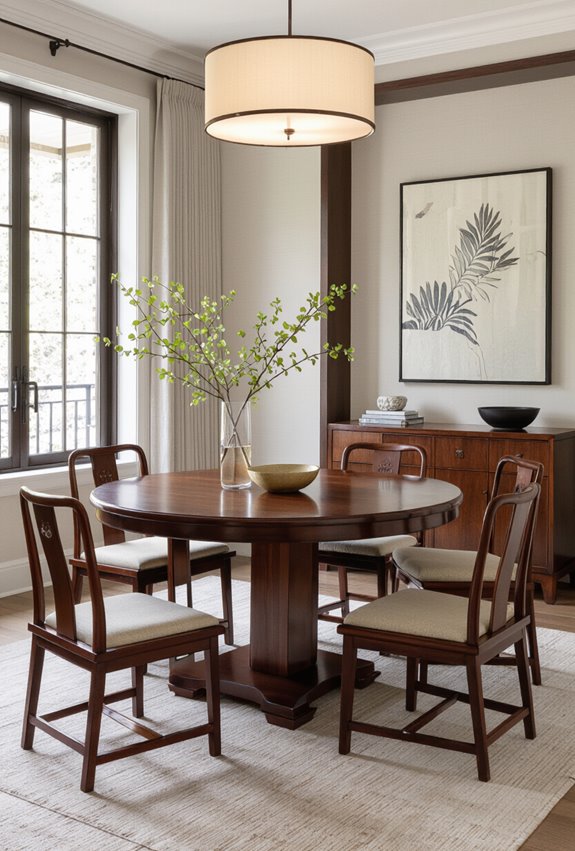
Anchor your dining room with a Ming-style rosewood table to bring timeless elegance and balanced proportions into the space. You’ll appreciate Ming proportioning—clean lines and harmonious scale—while arranging chairs and lighting to emphasize flow.
Maintain finish and grain with gentle Rosewood care: mild soap, soft cloth, and periodic oiling. Keep accessories minimal so the table remains the room’s calm centerpiece.
Choose Lacquered Red Cabinetry for a Bold Focal Wall
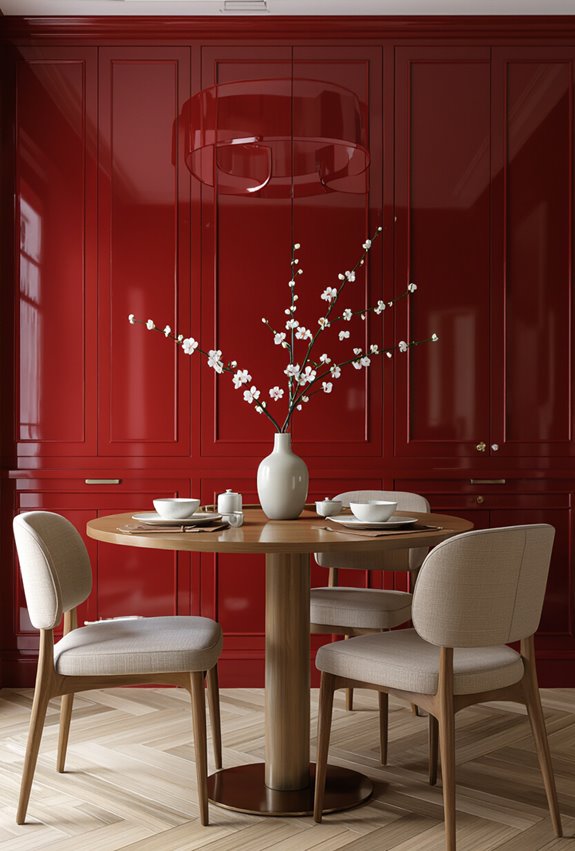
Make a bold statement with lacquered red cabinetry as your dining room’s focal wall: the glossy finish and vivid hue instantly energize the space while referencing traditional Chinese color symbolism for luck and celebration.
Pair high gloss lacquer surfaces with restrained cabinet hardware in brass or black to balance shine. You’ll create a striking, modern-traditional backdrop that anchors artwork and storage without overwhelming the room.
Use a Round Table to Honor Chinese Family Dining Traditions
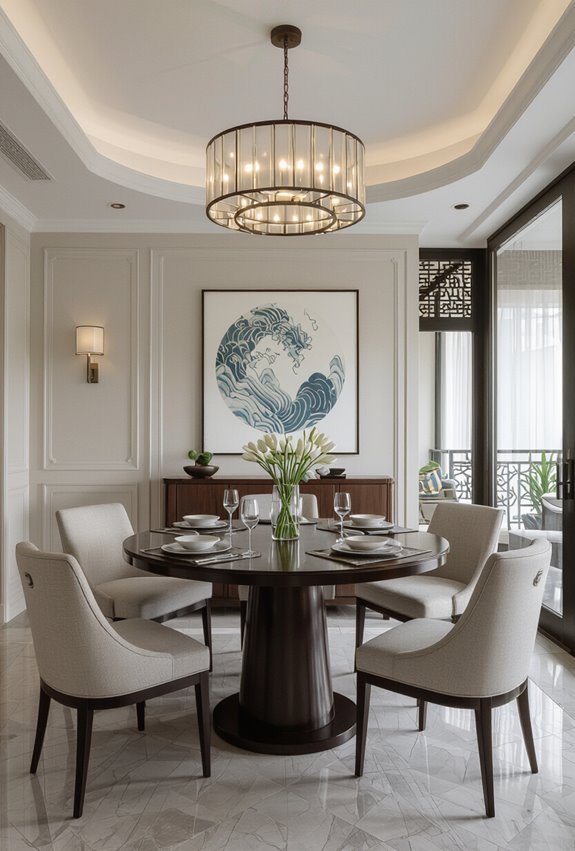
A round table invites everyone to share food and conversation, reflecting the importance of togetherness in Chinese family dining traditions; its circular shape removes hierarchy so you and your guests can pass dishes easily and engage equally. Choose a size that fits your room, prioritize comfortable seating, and arrange lighting to highlight circular symbolism. This supports family rituals and fosters warm, equal interaction.
Layer Silk Cushions With Traditional Patterns
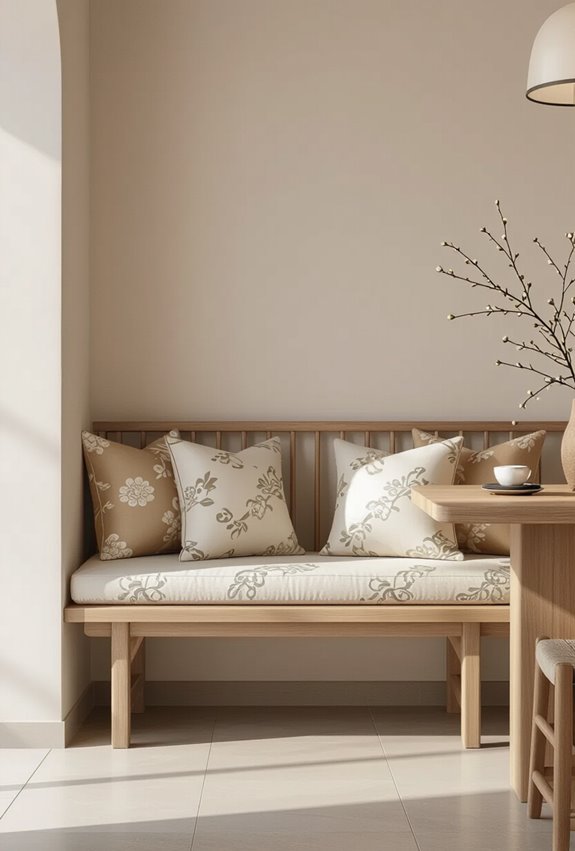
Layer silk cushions with traditional patterns to add depth, color, and tactile luxury to your dining bench or chairs. Combine embroidered silk seat cushions with patterned bolsters for contrast and support, selecting complementary hues like deep red, jade, or gold.
Mix scales—small florals, geometric borders—and vary textures to create a balanced, authentic look that’s comfortable, durable, and visually rich without overwhelming the space.
Hang a Large Circular Mirror With Lacquered Frame
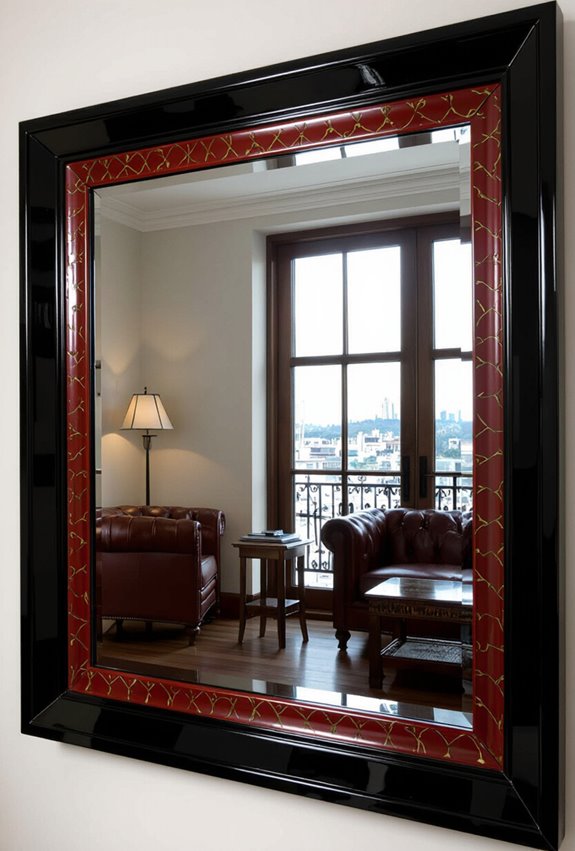
After you’ve layered silk cushions for warmth and pattern, anchor the room with a large circular mirror set in a lacquered frame to reflect light and amplify color. Hang it at eye level so you’ll broaden space and highlight artwork.
Choose a subtle matte lacquer finish and a beveled edge to catch glints without glare, keeping lines clean and traditionally inspired.
Create Symmetry With Matching Altar-Style Cabinets
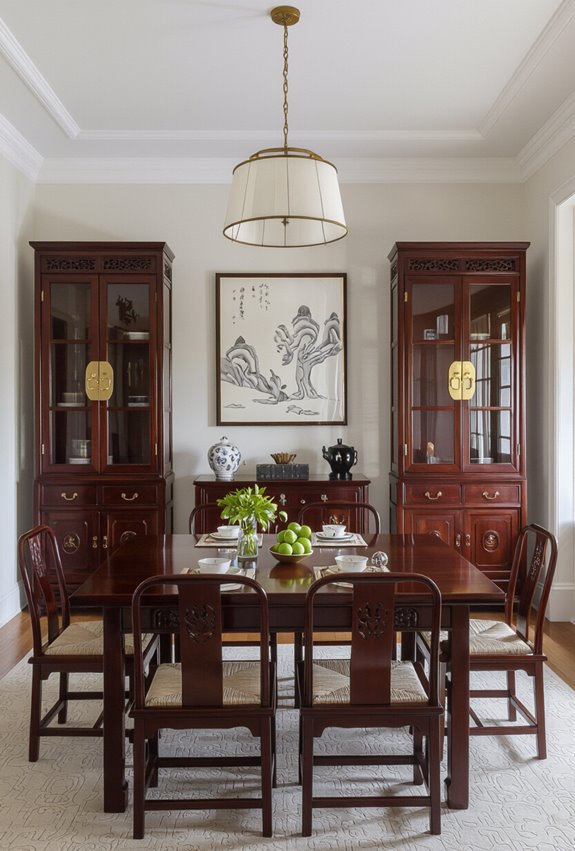
Place matching altar-style cabinets on either side of a focal point—like a sideboard, doorway, or large artwork—to create instant symmetry and balance in the dining room.
You’ll choose symmetrical cabinetry that anchors the space, display meaningful objects, and maintain clear lines.
Add subtle altar balance lighting above or within cabinets to highlight details and reinforce harmony without overpowering the room.
Choose Horseshoe-Back Chairs for Classical Flair
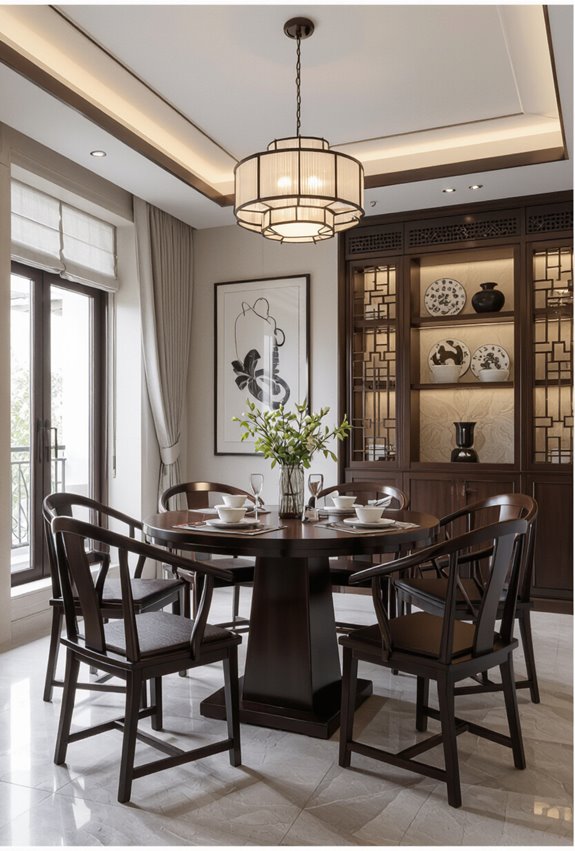
To complement jade-green accents, consider horseshoe-back chairs to give your dining room classical Chinese character and refined silhouette.
You’ll appreciate mahogany carving details that highlight craftsmanship while the curved silhouette supports posture and visual flow.
Pair chairs with a simple table, neutral linens, and warm lighting so the chairs’ form and texture become the room’s elegant focal point without overwhelming the space.
Use Landscape Scroll Art to Lengthen the Room Visually
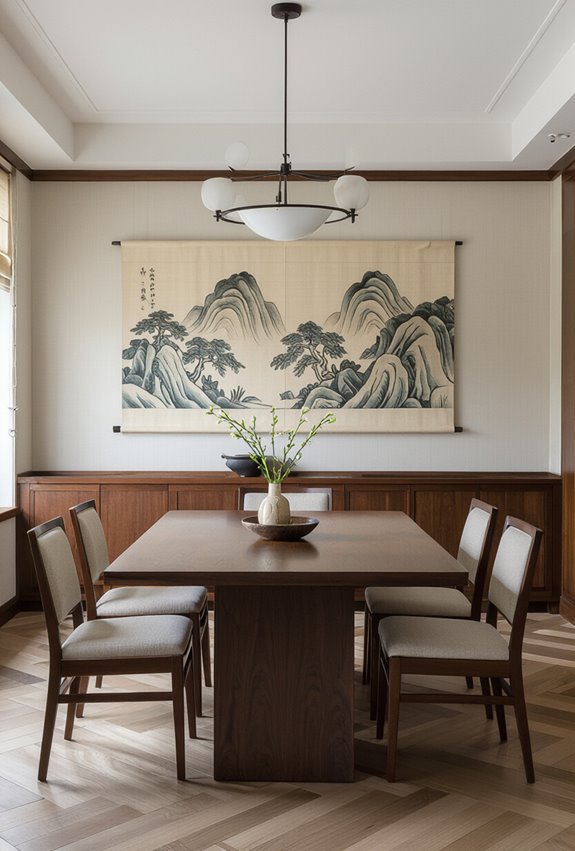
If you want to make a narrow dining area feel longer, hang a horizontal landscape scroll above the sideboard or along the longest wall — its panoramic composition will draw the eye across the space and create visual depth.
Pair it with slimmer vertical scrolls elsewhere to balance height, or group multiple panoramic landscapes for a layered effect that elongates sightlines without cluttering the room.
Add a Hand-Painted Mural With Peonies or Cranes
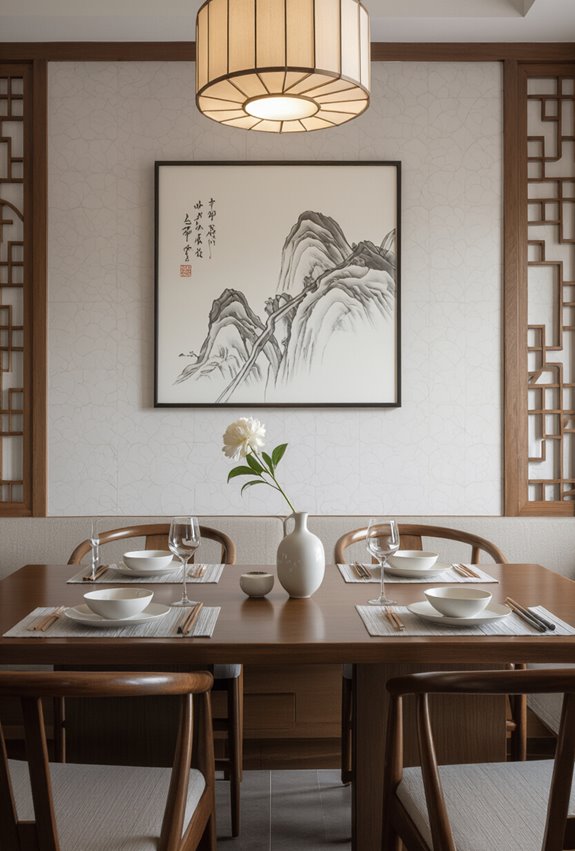
When you paint a mural of peonies or cranes, you turn a plain wall into the room’s focal point, blending symbolism with bold visual interest.
Choose colors that complement your palette, sketch composition lightly, then paint layered washes for depth.
Highlight peony symbolism and crane symbolism through placement and scale.
Seal the work for durability so the mural endures daily dining and ambient humidity.
Place a Lazy Susan for Practical Communal Dining
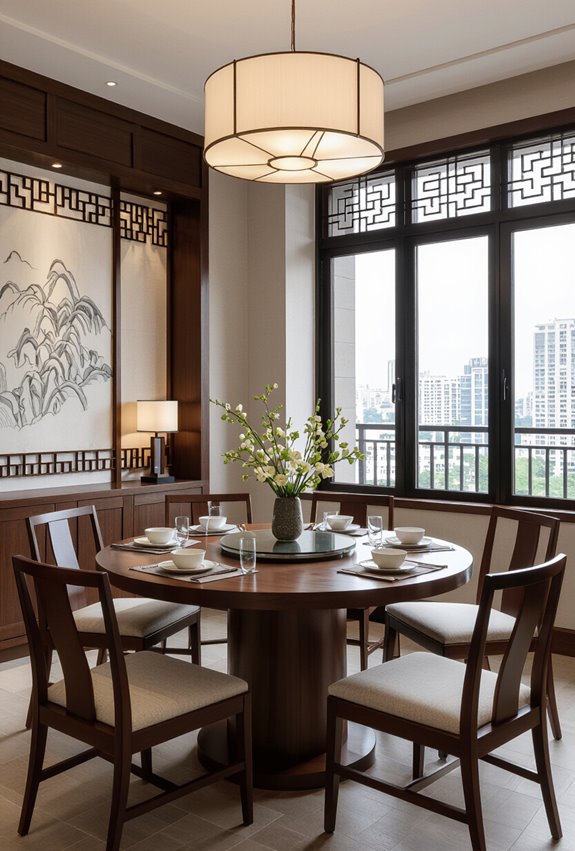
Anchor your table with a Lazy Susan to make sharing dishes effortless and keep conversation flowing; you’ll reduce passing, spills, and tabletop clutter by giving every plate a clear, reachable spot.
Choose a sturdy rotating centerpiece that matches wood tones or lacquer; place dishes thoughtfully, teach simple communal etiquette, and keep sizes balanced so everyone reaches plates easily and meals stay harmonious.
Mix Antique Chinese Pieces With Modern Minimalism
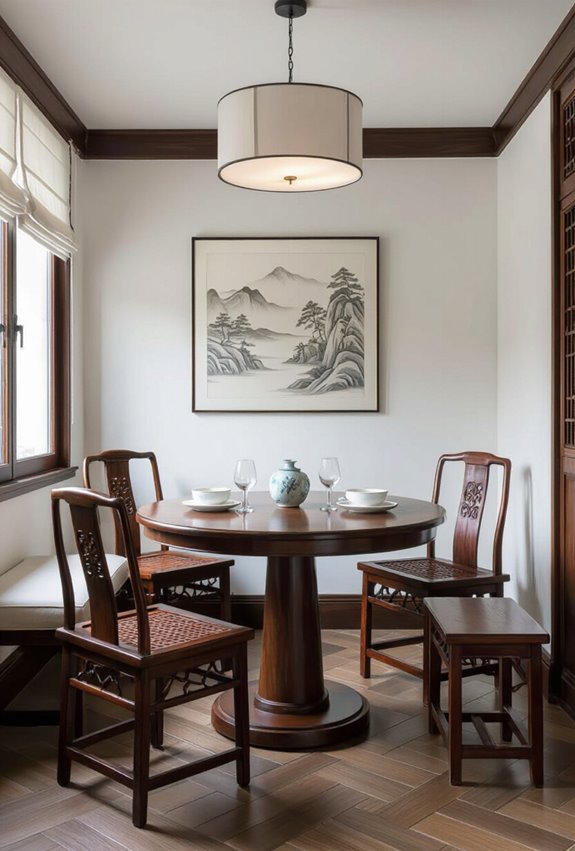
After you’ve made the table feel communal with a Lazy Susan, layer in personality by pairing antique Chinese pieces with modern minimalism.
Let an antique lacquer cabinet anchor the room while you balance it with minimalist silhouettes—slim chairs, simple lighting, and uncluttered surfaces.
Mix textures sparingly, highlight craftsmanship, and keep color restrained so tradition and modern calm coexist.
Use Bamboo Flooring for a Warm, Natural Base
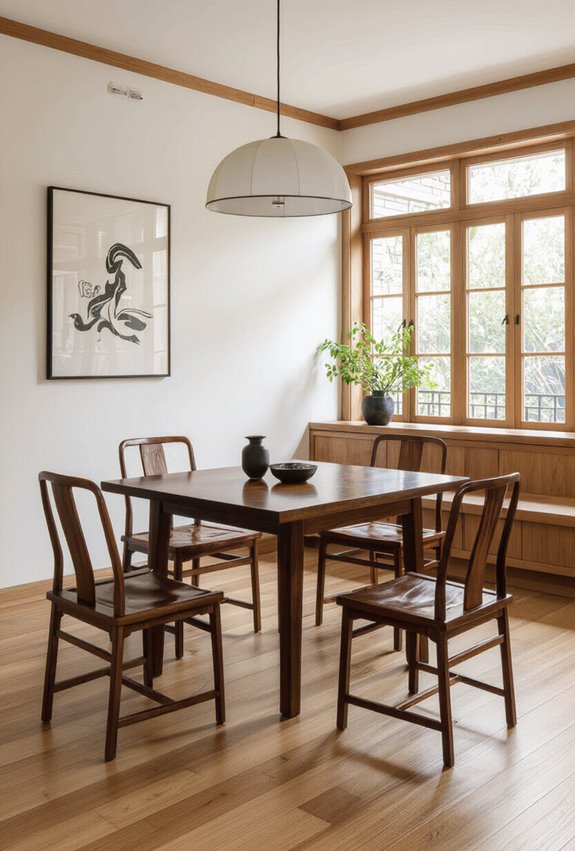
Choosing bamboo flooring gives your dining room a warm, natural base that’s both durable and eco-friendly.
You’ll enhance warm textures underfoot while keeping a clean, minimalist look that complements antique Chinese pieces.
Opt for bamboo with sustainable sourcing certifications to guarantee responsibility.
Maintain grain direction and choose a matte finish to reduce glare and highlight natural warmth, creating an inviting, grounded dining space.
Create a Tea Corner With Small Table and Shelves
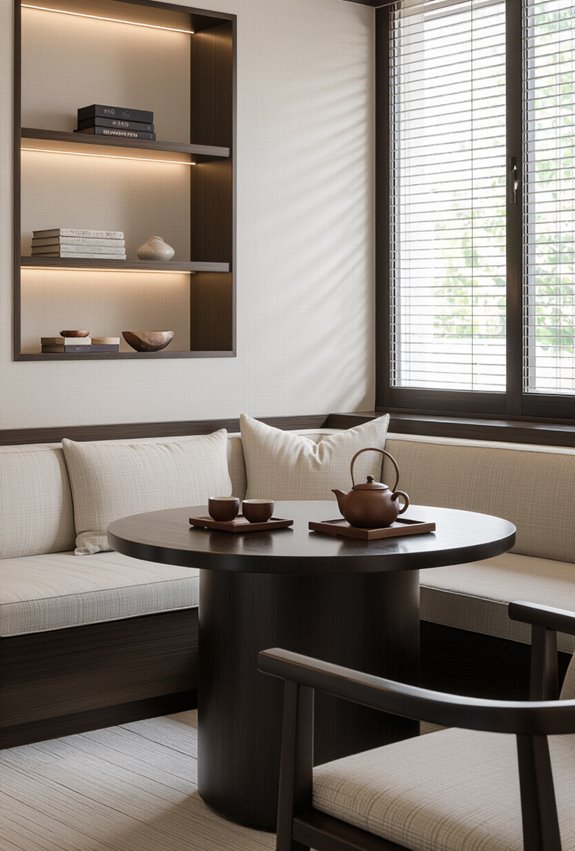
Carving out a tea corner brings a calm, ritual-focused nook to your dining room—place a small table and a few slender shelves near a window or against a quiet wall so you can brew, pour, and enjoy without crowding the main table.
You’ll display teaware and ceramics, practice tea rituals, and add subtle shelf lighting to highlight pieces and set a peaceful, intimate mood.
Bring in Brass Hardware With Traditional Motifs
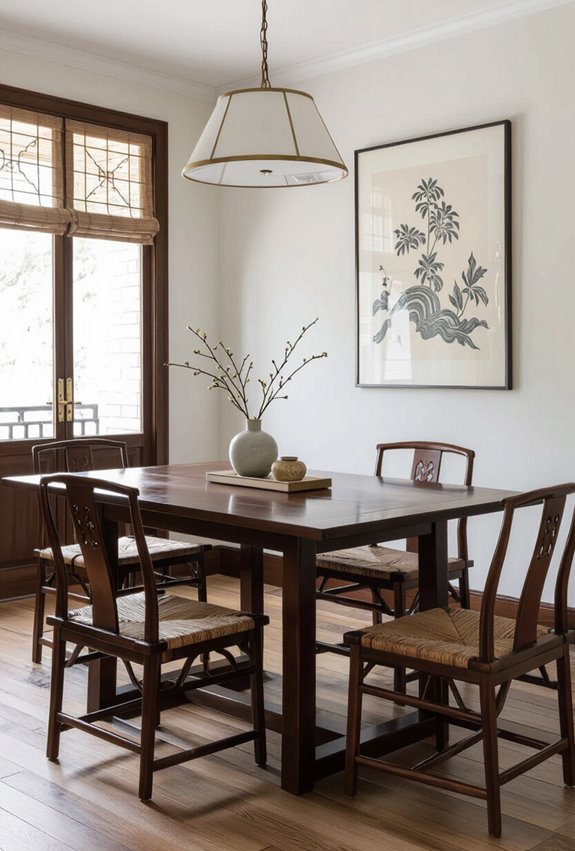
If you want to anchor your dining room in Chinese character and warmth, introduce brass hardware engraved with traditional motifs—drawer pulls, cabinet knobs, door plates, and lamp accents carry pattern and history into everyday touchpoints.
You can mix brass medallions on buffet doors with phoenix pulls on cabinets to create focal points, pairing patinaed metals with dark woods for contrast and tactile tradition.
Use Silk-Screened Window Panels for Filtered Light
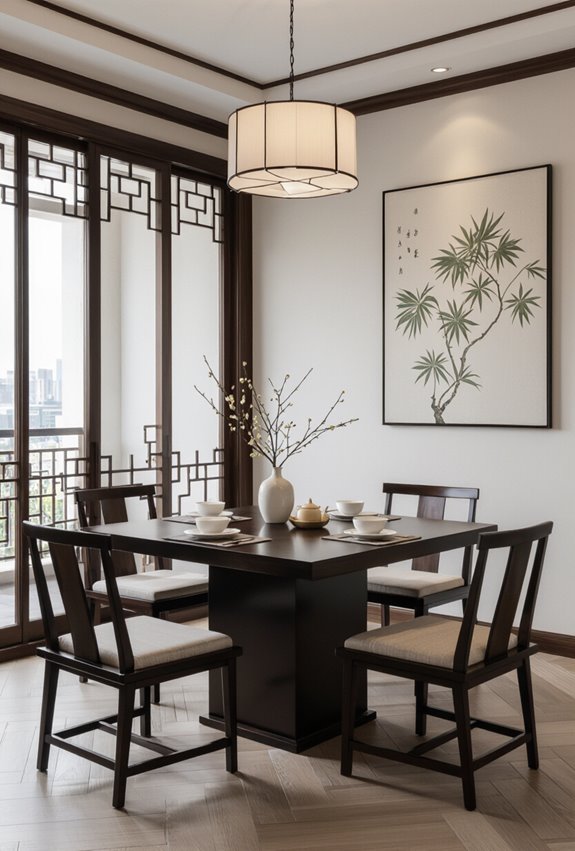
Brass accents bring weight and history to fixtures, while silk-screened window panels give the light itself a quieter, more intentional presence.
You’ll use filtered translucency to soften glare and protect furnishings, letting patterned silhouettes play across a lacquer table.
Choose muted inks and geometric or botanical motifs so sunlight becomes a calm, decorative layer that complements porcelain, wood tones, and restrained ornamentation.
Layer Rugs With Chinese Knot or Cloud Patterns
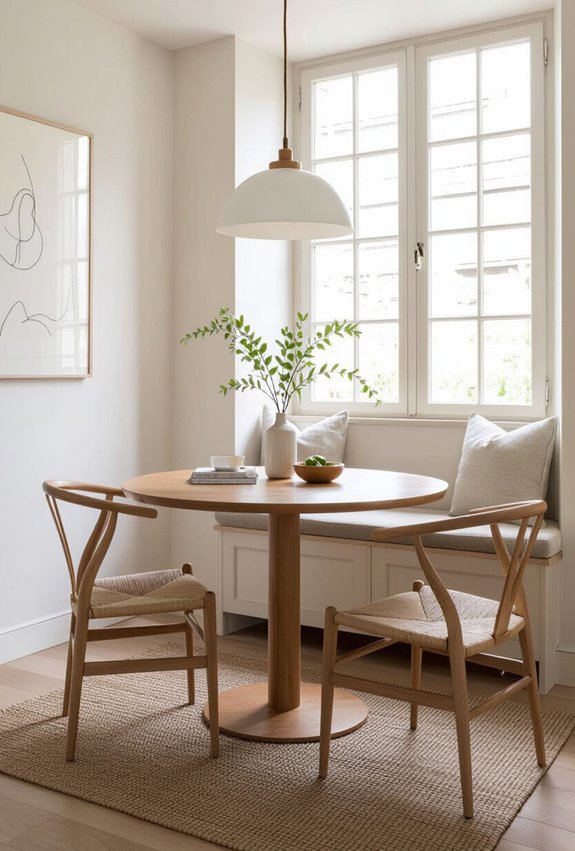
Often you’ll layer rugs to anchor a dining room and introduce pattern without overwhelming the space.
You’ll place a larger neutral foundation rug, then a smaller piece featuring Chinese knot or cloud motif layering to add texture and focus.
Use an antique rugpad beneath to protect floors and prevent slipping.
Keep colors restrained so patterns read as intentional accents, not clutter.
Incorporate Calligraphy Wall Art for Cultural Depth
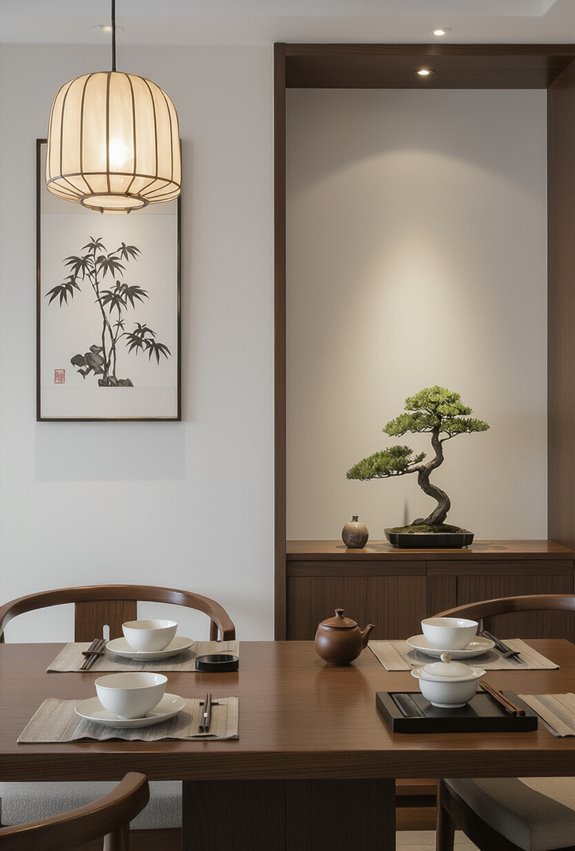
Layered rugs set the stage for a room’s textures and motifs, and calligraphy wall art will amplify that cultural narrative while keeping the walls visually light.
You’ll choose pieces that emphasize brushstroke symbolism and pair framed works with subtle inkstone textures for tactile contrast. Hang at eye level, vary scale, and let negative space breathe so each character reads clearly and complements dining conversation.
Use Muted Ink-Wash Tones for a Modern Traditional Look
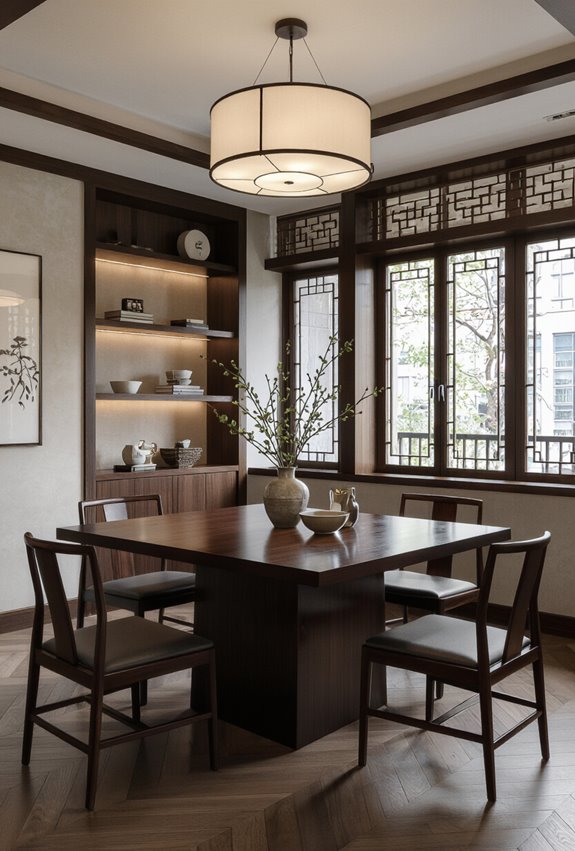
When you lean into muted ink-wash tones, you’ll create a modern-traditional dining room that feels composed and lived-in; soft grays, faded indigos, and warm taupes mimic brush-washed paper and give furniture and textiles a serene backdrop.
You’ll use a muted wash on walls, layered textiles, and art to highlight ink gradients, balancing simplicity with subtle texture for calm, refined gatherings.
Add Potted Bamboo or Bonsai for Living Texture
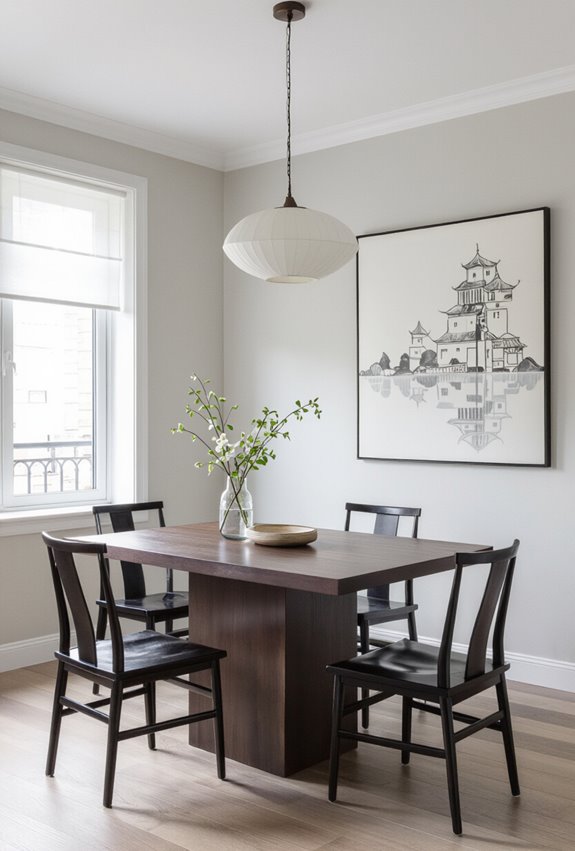
Adding potted bamboo or a bonsai brings living texture and a calm, sculptural presence to a Chinese-inspired dining room.
You’ll place a living bamboo near a window for vertical rhythm and gentle sound, while a bonsai centerpiece anchors the table with refined form.
Rotate plants for even light, trim sparsely, and use simple ceramic pots to keep the focus on natural lines and balance.
Accent With Famille-Rose Patterned Dinnerware
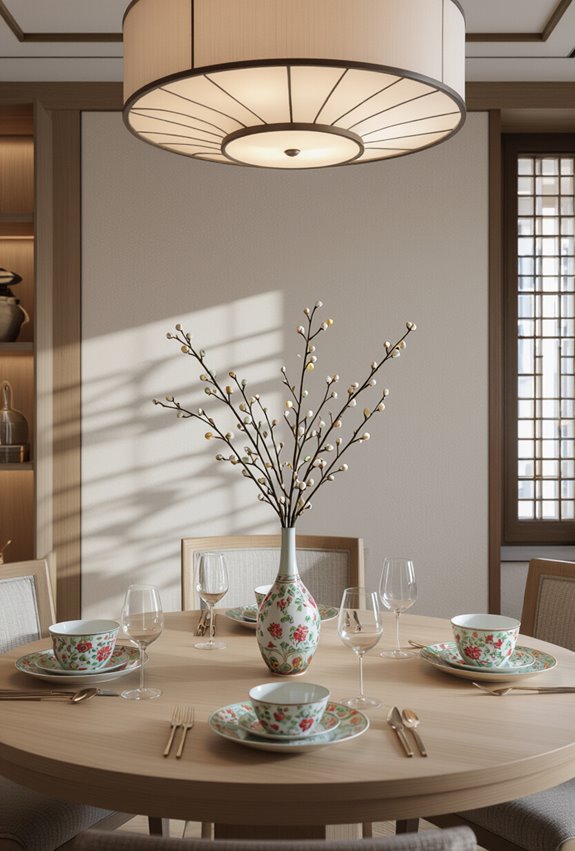
Bring in famille-rose patterned dinnerware to punch up your Chinese dining room’s color and heritage without overwhelming the space.
You’ll display pieces with provenance stories on open shelves or a sideboard, mixing contemporary tableware for balance.
Highlight porcelain restoration techniques when needed, and rotate focal plates seasonally so patterns feel intentional, fresh, and respectful of tradition.
Create a Two-Tone Palette: Deep Umber and Cream
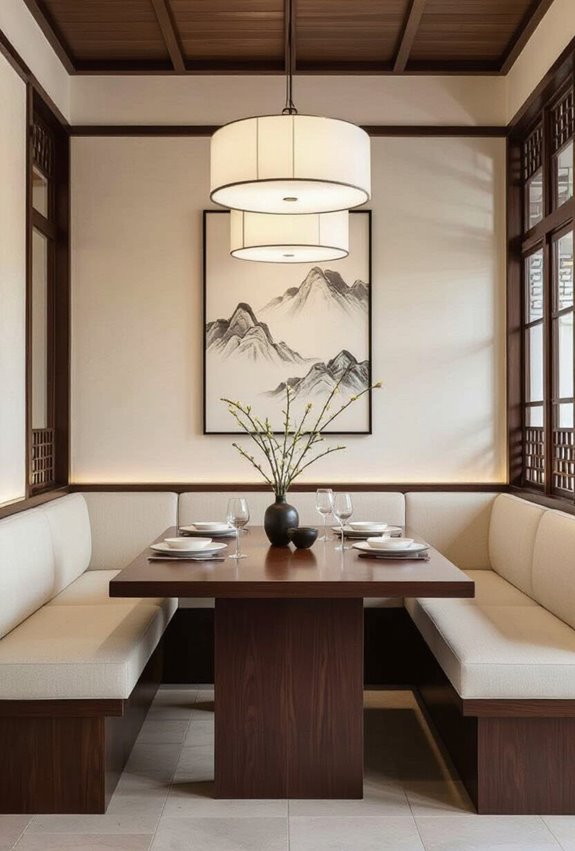
When you pair deep umber with warm cream, you create a grounded, elegant backdrop that highlights lacquered furniture and porcelain without competing with them.
Use deep umber on lower walls and cream contrast above to lift the room. Introduce textured plaster panels for subtle depth and choose matte finishes to keep reflections low, letting form and pattern remain the focus.
Use Carved Mother-of-Pearl Inlays on Furniture Fronts
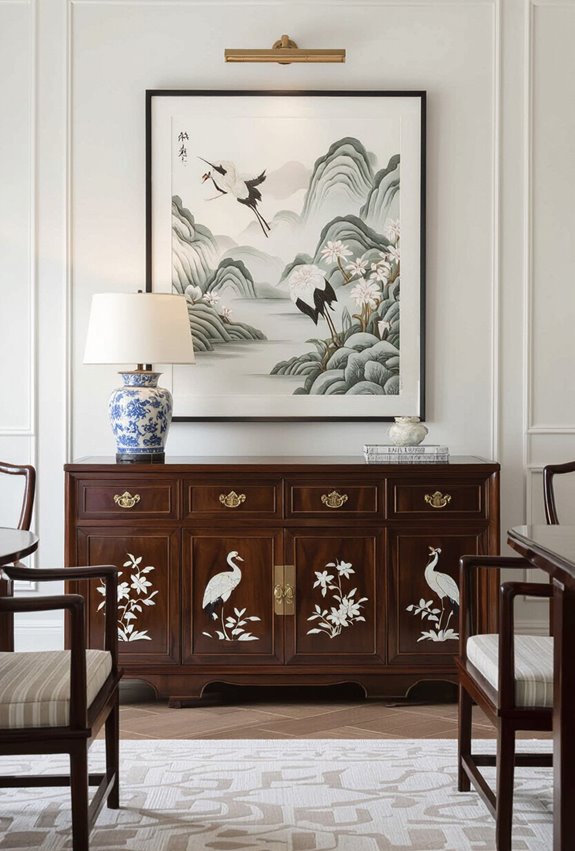
Add carved mother-of-pearl inlays to furniture fronts to inject shimmer and storytelling into your dining room without overwhelming the space.
You’ll choose inlay techniques that suit scale—linear borders, floral motifs or subtle shell mosaic panels—and match finishes.
Learn basic restoration methods so repairs respect patina.
Placement on sideboards and cabinets adds focal shimmer while keeping surfaces functional and refined.
Select Geometric Fretwork Panels for Visual Interest
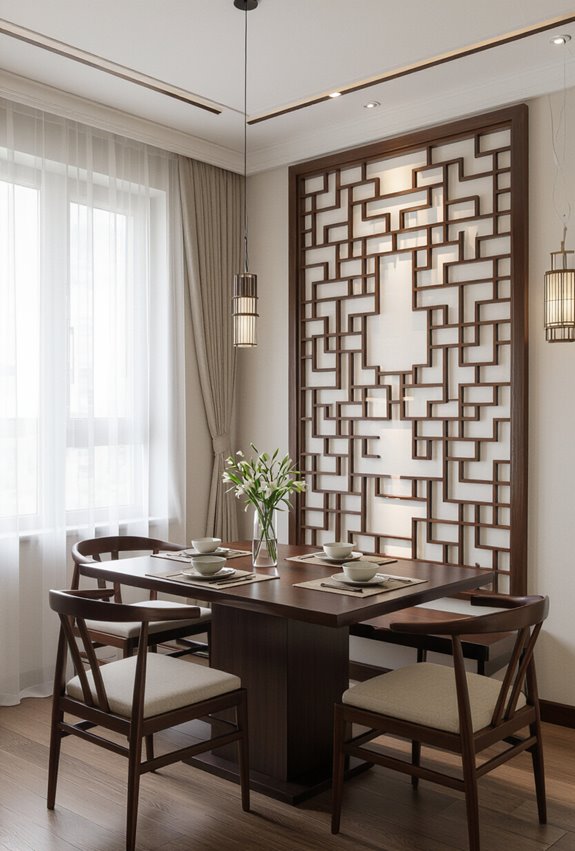
Often overlooked, geometric fretwork panels can instantly sharpen a dining room’s composition by introducing crisp patterns and measured negative space that play off Chinese design traditions.
You can mount fretwork as room dividers, cabinet overlays, or wall art to create contrast neutrals and graphic rhythm.
Use finishes that allow layered translucency—lacquered wood or laser-cut metal with backlighting—to balance tradition with modern clarity.
Choose Matte Black Fixtures for Contemporary Edge
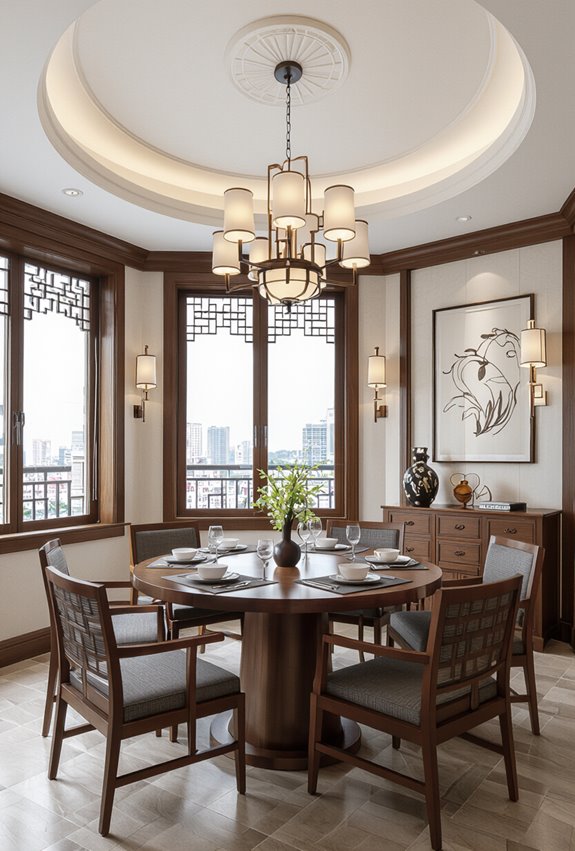
You’ll find matte black fixtures instantly sharpen a room’s silhouette, giving a contemporary edge without overpowering the space.
Pair matte black sinks with simple porcelain or stone countertops, and install matte black sconces to frame artwork or a serving cabinet.
These accents create contrast against warm wood and red tones, keep lines clean, and let traditional elements remain the room’s focal point.
Add Red Silk Tassel Pulls on Cabinets and Curtains
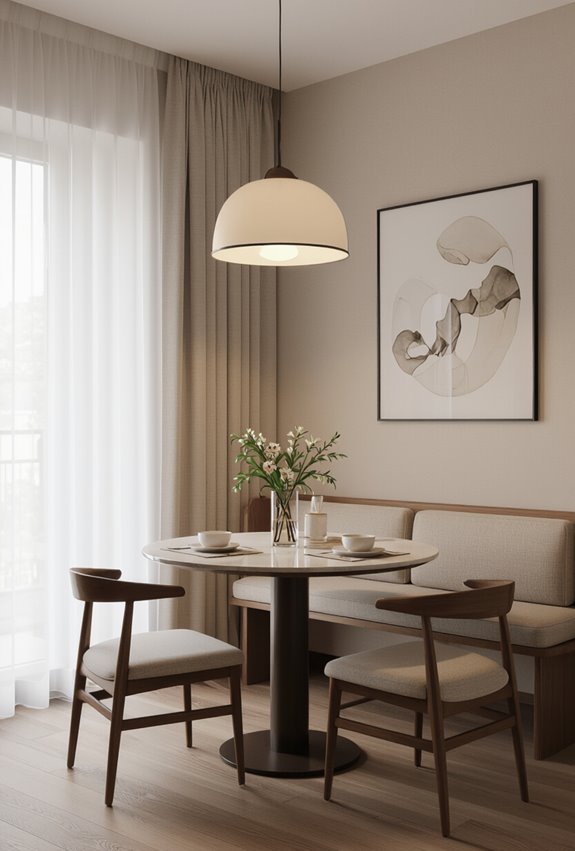
Matte black fixtures give the room a crisp outline, and adding red silk tassel pulls brings a softer, unmistakable Chinese accent that balances that edge.
You’ll attach them to cabinets and curtain ties to draw the eye, mindful of tassel color symbolism for luck and warmth.
Follow basic silk tassel care—gentle dusting and spot cleaning—to keep them vivid and elegant.
Blend Cantonese Banquet Styling for Large Gatherings
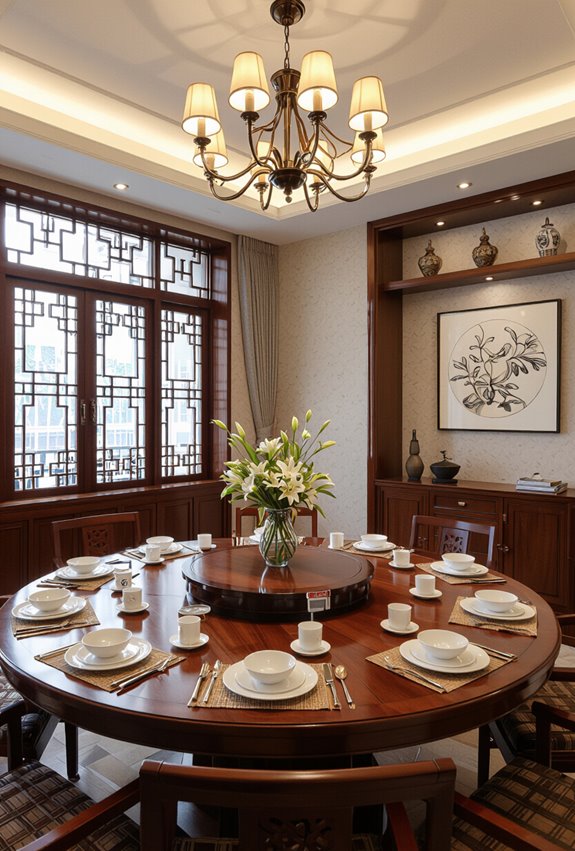
Bring Cantonese banquet energy into your dining room by designing for long tables, shared platters, and a flow that accommodates serving rounds and conversation.
You’ll plan seating to respect Cantonese etiquette, allow space for lazy Susans, and map Banquet logistics like service paths, timing, and lighting.
Incorporate durable finishes and movable serving stations to keep large gatherings smooth, social, and stylish.
Source Reclaimed Chinese Timber for Authentic Character
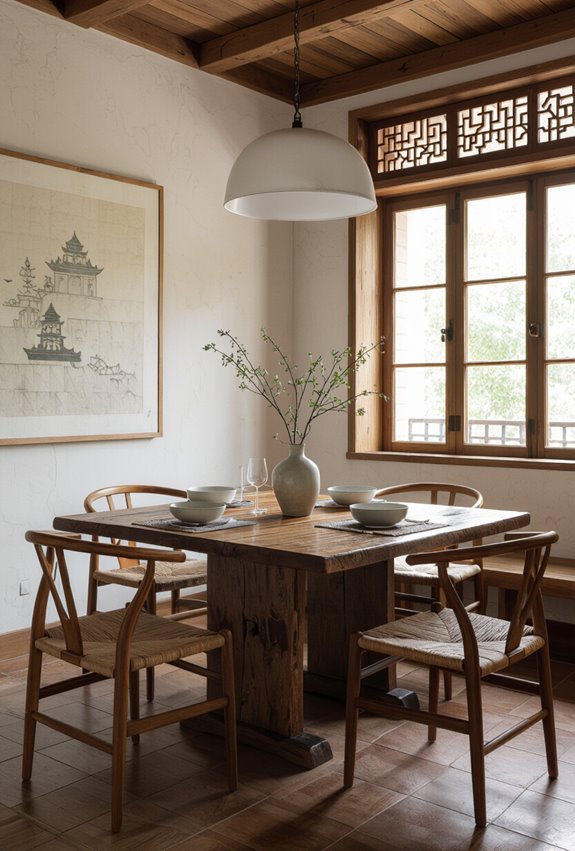
When you source reclaimed Chinese timber, you get boards that carry history—old-growth density, mortise-and-tenon marks, and patina that new wood can’t match—so plan projects around each plank’s unique character and structural quirks.
You’ll celebrate reclaimed joinery and aged patina by highlighting joints, stabilizing cracks, and pairing warm finishes with minimalist fittings to keep authenticity central.
Decorative Screens for Privacy
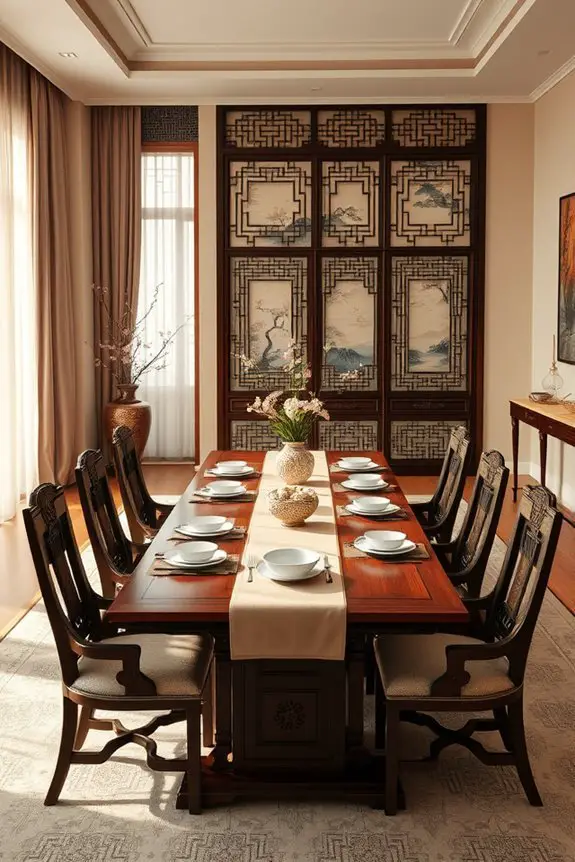
While creating an inviting dining space, don’t overlook the charm of decorative screens for privacy.
These privacy screens not only enhance your room’s aesthetics but also provide a sense of intimacy. Choose screens adorned with intricate decorative motifs, such as traditional Chinese patterns or nature-inspired designs. This way, you’ll maintain a cozy atmosphere while adding a touch of elegance.
Position your screens strategically to create separate zones within your dining area, allowing guests to feel more at ease. You can even use lightweight materials, making it easy to move them around as needed.
Low Tables With Cushioned Seating
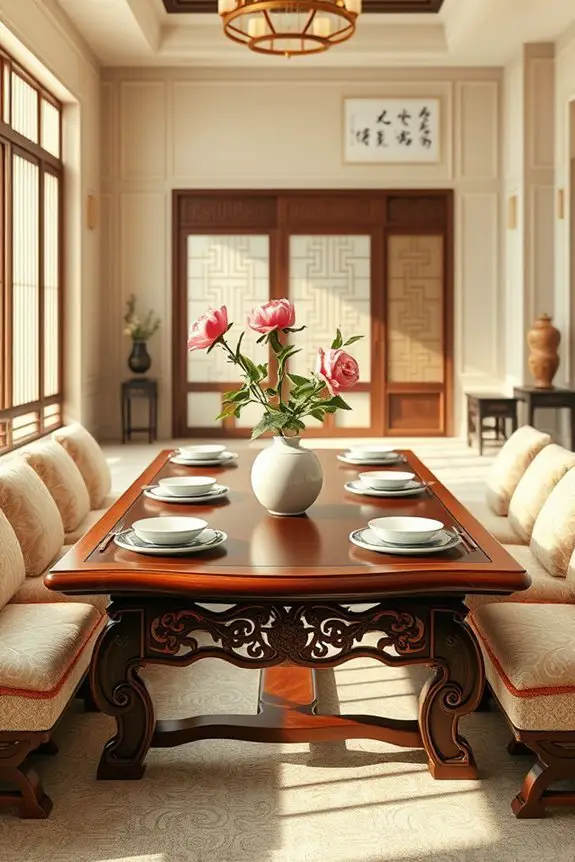
Transforming your dining experience can also be achieved through low tables with cushioned seating. These elegant setups invite a relaxed atmosphere, perfect for sharing meals with family and friends.
Pair your tea tables with vibrant floor cushions to enhance comfort and style. You can choose cushions in various colors and patterns that reflect your personal taste while adding a pop of color to the room.
When seated at a low table, you’ll find the experience more intimate and engaging, fostering deeper connections over delicious dishes.
Consider using a traditional tea table for serving tea ceremonies, making the experience even more special. This unique arrangement not only showcases your appreciation for Chinese culture but also brings a cozy charm to your dining space.
Antique Chinese Artifacts
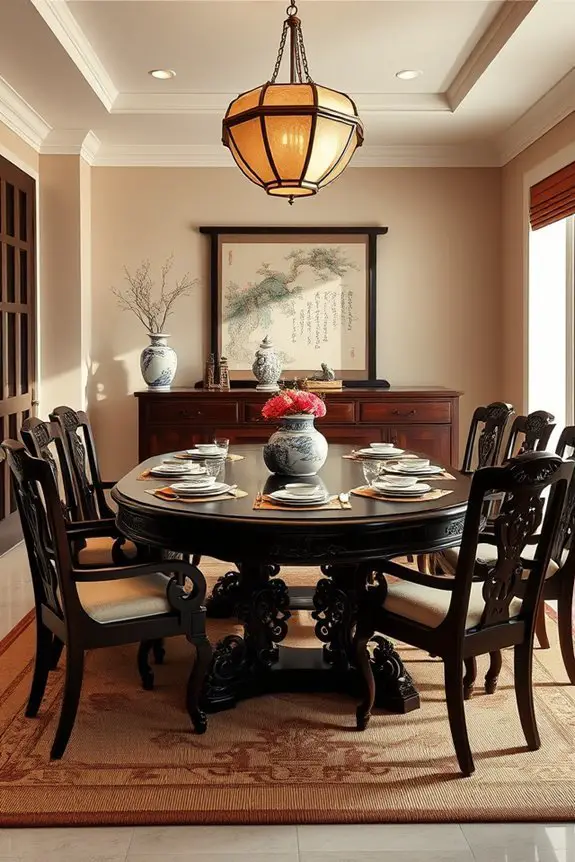
As you explore the world of antique Chinese artifacts, you’ll discover a rich tapestry of culture and history that can enhance your dining room’s aesthetic.
Incorporating antique vases into your decor adds an elegant touch, often showcasing intricate designs that tell stories of the past. Placing these vases on a side table or as a centerpiece can draw attention and spark conversation.
Additionally, consider hanging traditional scrolls on your walls. These scrolls can feature beautiful calligraphy or serene landscapes, creating a calming atmosphere.
The combination of antique vases and scrolls won’t only beautify your space but also infuse it with authenticity, inviting your guests to appreciate the artistry and tradition behind each piece.
Natural Wood Finishes
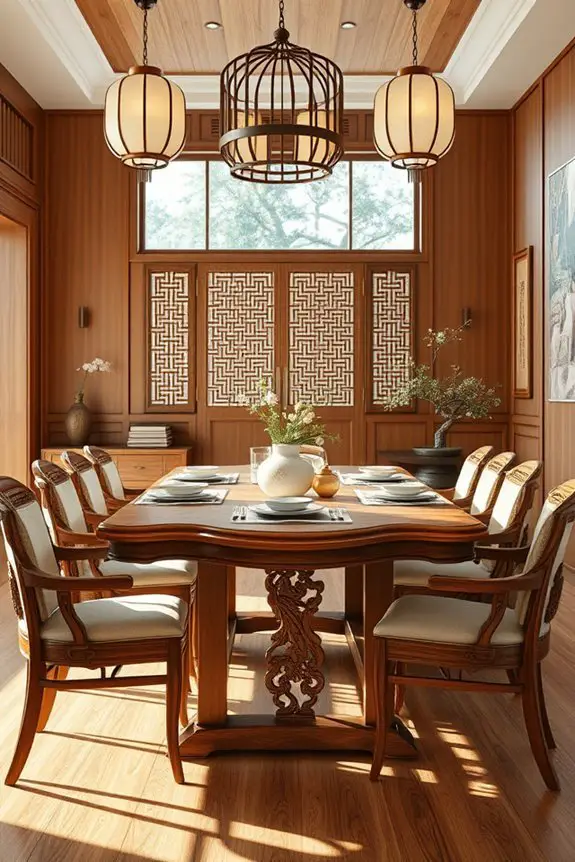
Choosing natural wood finishes can instantly transform your dining room into a warm and inviting space, especially when you want to highlight the beauty of traditional Chinese design.
Incorporating natural wood textures into your furniture, such as a solid wood table or intricately carved chairs, adds depth and character. You might consider using rustic wood accents, like reclaimed wood shelves or decorative beams, to enhance the room’s charm.
These elements not only bring a sense of authenticity but also create a harmonious connection with nature. Pair your wood finishes with soft lighting for a cozy atmosphere, and don’t forget to complement them with elegant tableware.
With the right choices, you’ll create a dining experience that’s both traditional and inviting.
Elegant Centerpieces With Flowers
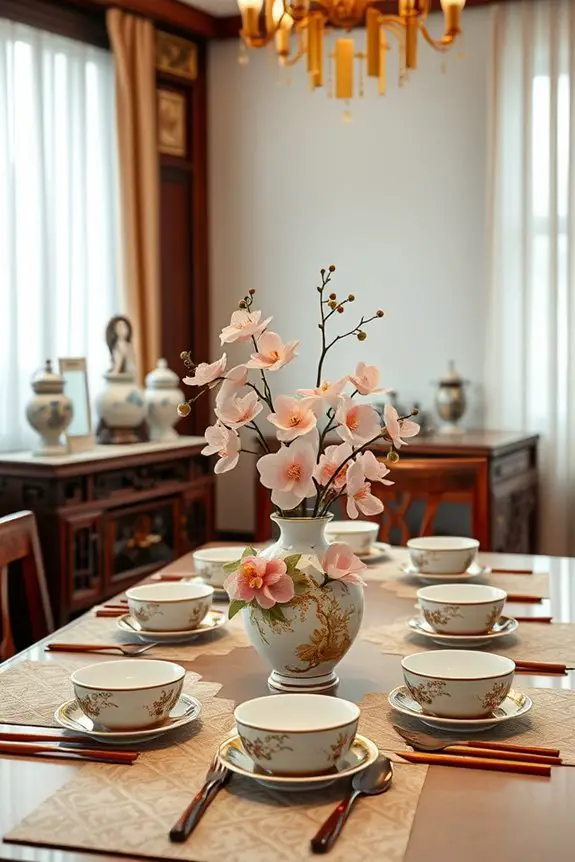
To elevate your dining experience, elegant centerpieces featuring flowers can make a striking impression.
Consider incorporating stunning floral arrangements that reflect the beauty of Chinese culture. Opt for bold colors like red and gold, or soft pastels that add a touch of sophistication.
When choosing your centerpiece designs, think about varying heights and textures to create visual interest. Tall vases with cascading blooms can draw the eye upward, while low arrangements encourage intimacy during meals.
You might also mix in traditional Chinese elements, such as bamboo or jade accents, to enhance the theme.
Modern Interpretations of Traditional Designs
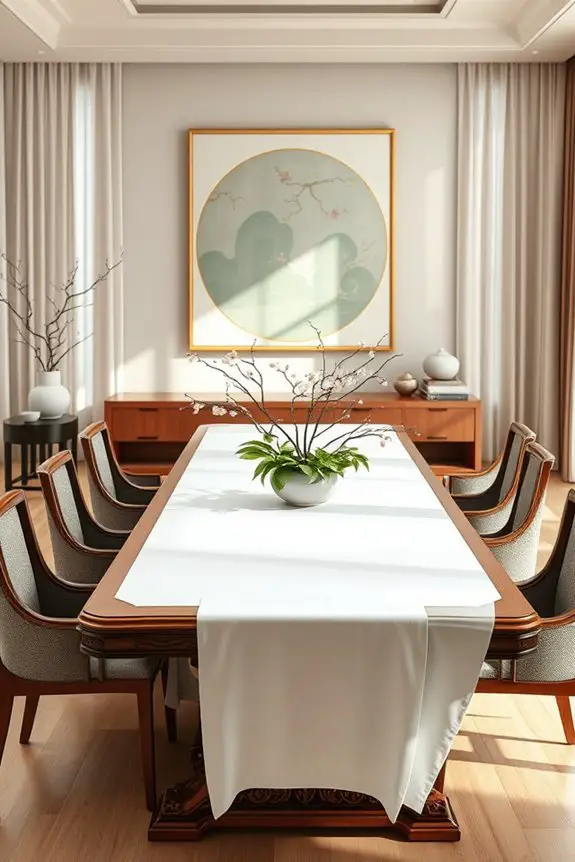
As you explore modern interpretations of traditional Chinese designs, you’ll discover a fascinating blend of old and new that breathes fresh life into your dining room.
Imagine sleek, minimalist furniture paired with intricate patterns that pay homage to ancient artistry. The use of rich woods and bamboo elements reflects traditional aesthetics, while contemporary craftsmanship guarantees durability and comfort.
You might opt for a simple table adorned with elegant ceramics, creating a space that balances functionality with beauty. Incorporating subtle colors and clean lines enhances the minimalist elegance, allowing the traditional elements to shine without overwhelming the room.
This thoughtful fusion not only honors heritage but also creates a warm, inviting atmosphere ideal for gatherings with family and friends.
Elegant Serving Dishes
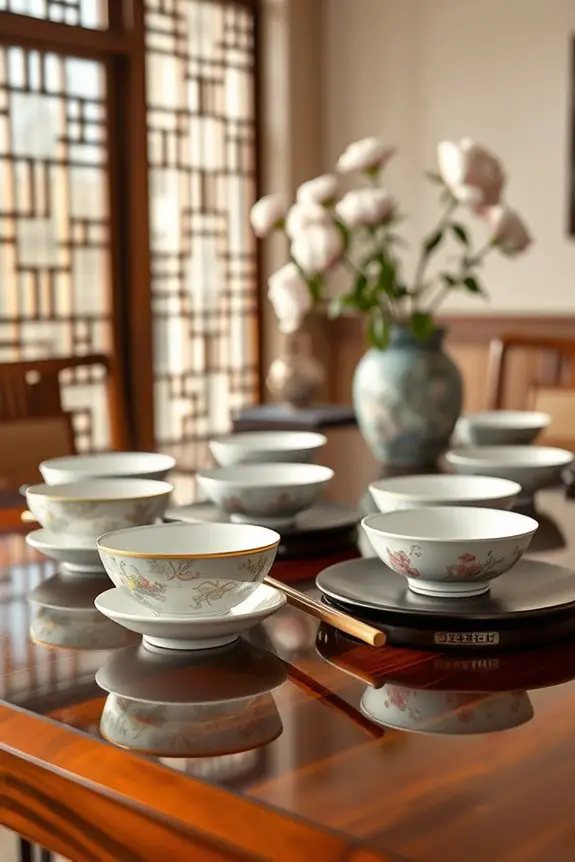
When you want to elevate your dining experience, elegant serving dishes play an essential role in presentation and atmosphere.
Choose elegant serving trays that complement your table’s aesthetic, enhancing the overall feel of your dining room. These trays not only serve a functional purpose but also add a touch of sophistication to your gatherings.
Decorative serving platters are another excellent choice; they can showcase your culinary creations beautifully, making each dish stand out. Opt for platters with intricate designs or vibrant colors to spark conversation among guests.
Statement Lighting Fixtures
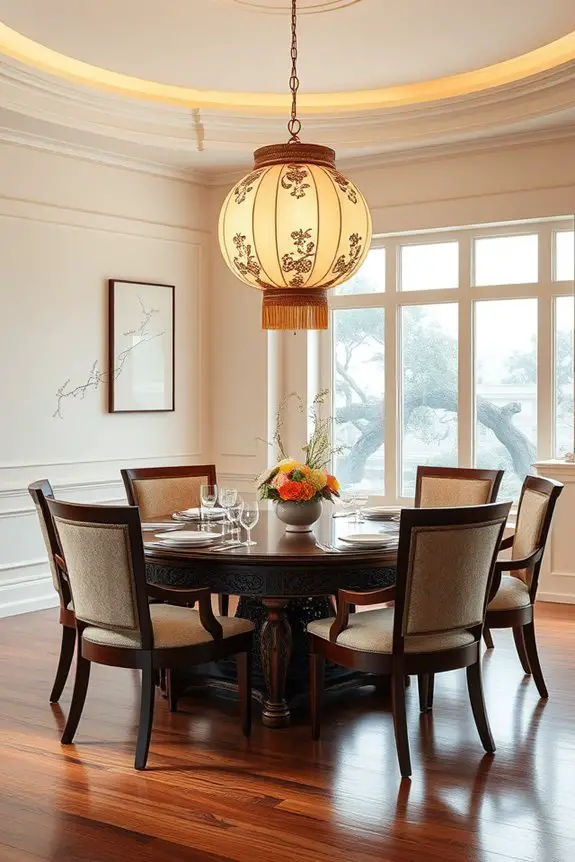
To elevate your dining room’s ambiance, consider selecting statement lighting fixtures that reflect the elegance of Chinese design. A modern pendant with intricate detailing can serve as a focal point, drawing attention and sparking conversation.
Look for options that showcase sculptural designs, combining traditional motifs with contemporary materials. These fixtures not only illuminate your space but also add an artistic touch, merging functionality with beauty.
Incorporating soft, warm light will enhance the inviting atmosphere, perfect for family gatherings or intimate dinners.
Balance your lighting choices with the overall decor, ensuring a cohesive look. By thoughtfully selecting these standout pieces, you’ll create a dining experience that pays homage to tradition while embracing modern elegance.
Cultural Souvenirs as Decor
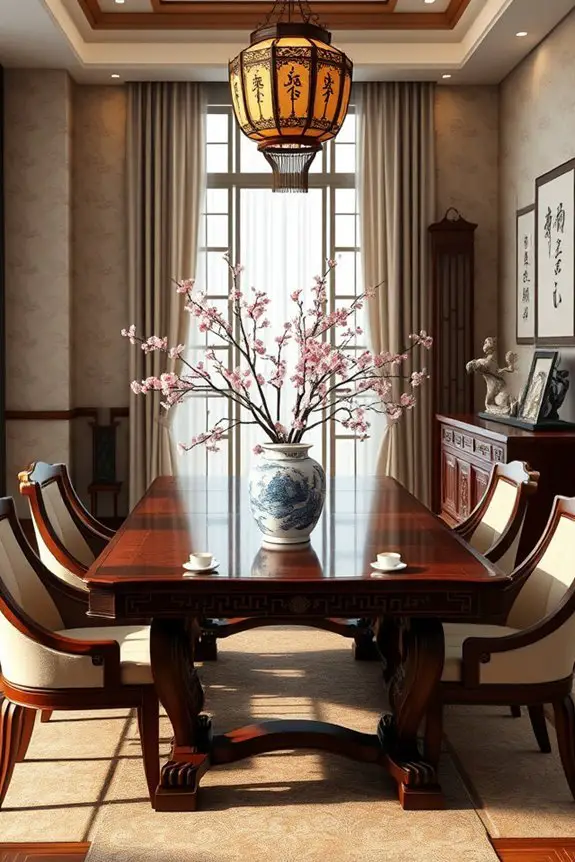
When you want to infuse your dining room with character, cultural souvenirs can serve as striking decor that tells a story. Incorporating cultural artifacts from your travels not only enhances the aesthetic but also sparks conversations.
Consider displaying a vintage Chinese teapot or hand-painted plates that remind you of your adventures. These pieces become focal points, evoking cherished travel memories. You could arrange them on a shelf or use them as centerpieces, creating a blend of functionality and art.
Conclusion
Incorporating these elegant Chinese dining room ideas transforms your space into a serene retreat, where every meal becomes a cherished gathering. Picture the warm glow of lanterns illuminating porcelain dishes, as laughter dances through the air like the soft rustle of bamboo leaves. With each red accent and beautifully framed family photo, you’re not just decorating; you’re weaving a tapestry of tradition that honors the past while embracing the present. Let your dining room tell your family’s story.