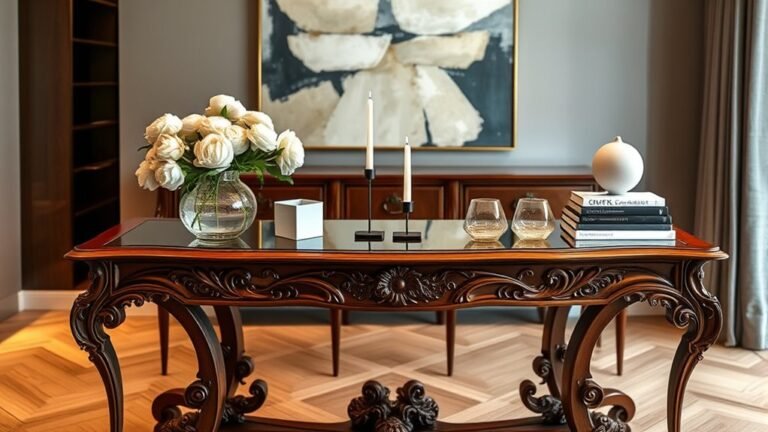
40 Elegant Buffet Dining Room Ideas to Enhance Your Meal Experience
Elevate your dining experience with these elegant buffet ideas that blend functionality and style. Consider an open concept layout for easy access and guest interaction. Rustic wooden tables add warmth, while modern minimalist designs showcase sleek lines. Use elegant glassware and unique serving boards to enhance presentation. Vintage styles bring nostalgia, and seasonal decorations can refresh your setup. With kid-friendly options and scented elements to set the mood, there’s so much more to explore for your perfect buffet.
How to Plan an Elegant Buffet Dining Room Layout
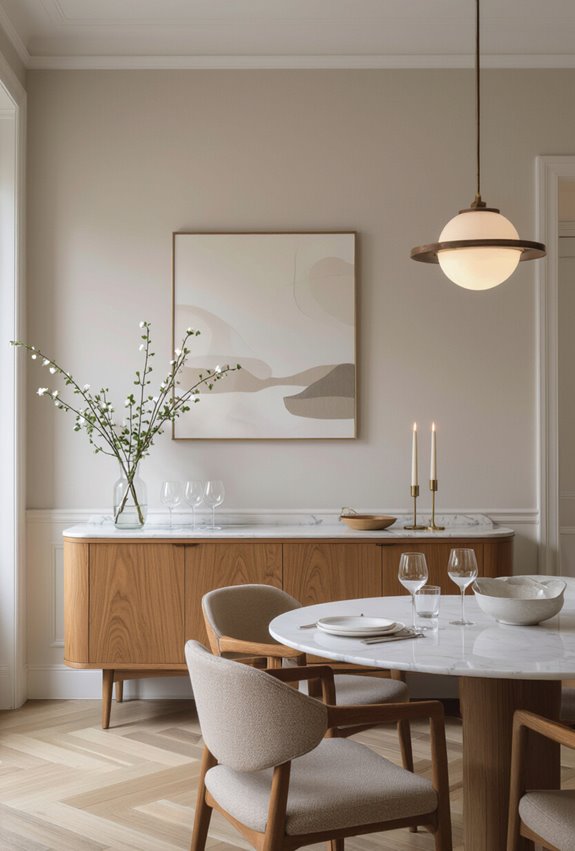
When planning an elegant buffet dining room layout, start by mapping traffic flow so guests can serve themselves without crowding or backtracking. You’ll analyze flow patterns and run a basic traffic simulation to predict pinch points.
Define clear guest zoning for starters, mains, and desserts, and rehearse service choreography with staff. Adjust spacing, signage, and timing to keep movement smooth and graceful.
Choose the Right Buffet Table Size for Your Space
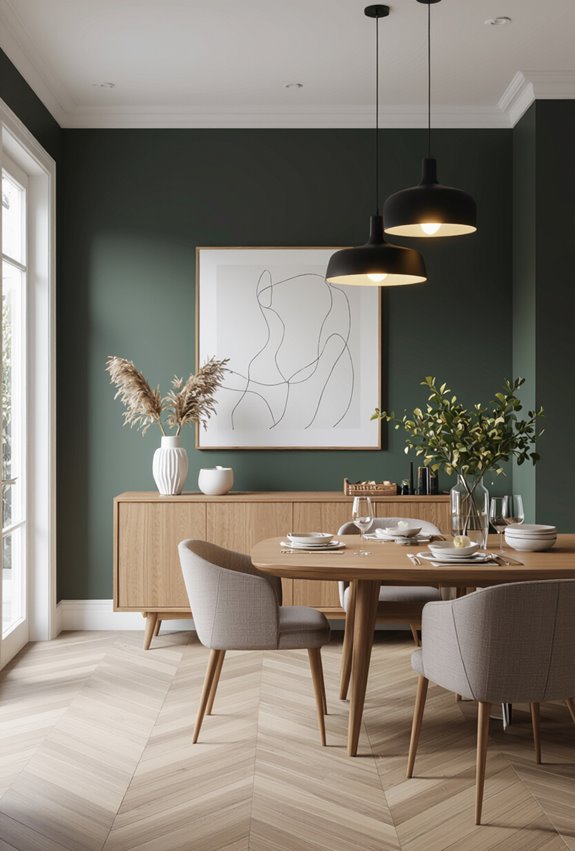
Once you’ve mapped traffic flow and zoned stations, pick a buffet table size that matches both guest count and available circulation space. Use a scale guide to proportion the table to your room, allowing serving and plating zones.
Follow clearance rules: keep at least 36–48 inches behind servers and 30–36 inches for guest circulation. Prioritize functionality over oversized pieces.
Pick a Cohesive Color Palette for a Refined Look
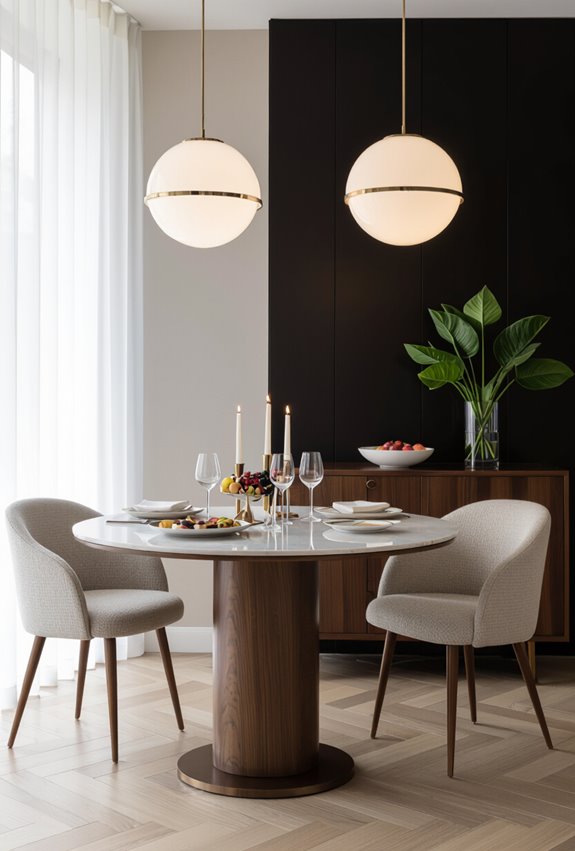
Although a well-chosen palette can seem subtle, it anchors the entire buffet room and makes every element feel intentional.
You’ll favor neutral neutrals—creams, taupes, soft grays—for a calm backdrop, then add texture and finishes. Introduce Monochrome contrast with varying shades and matte versus glossy surfaces to create depth without clutter. Keep accents limited so the look stays refined and cohesive.
Layer Textures With Linens, Runners, and Placemats
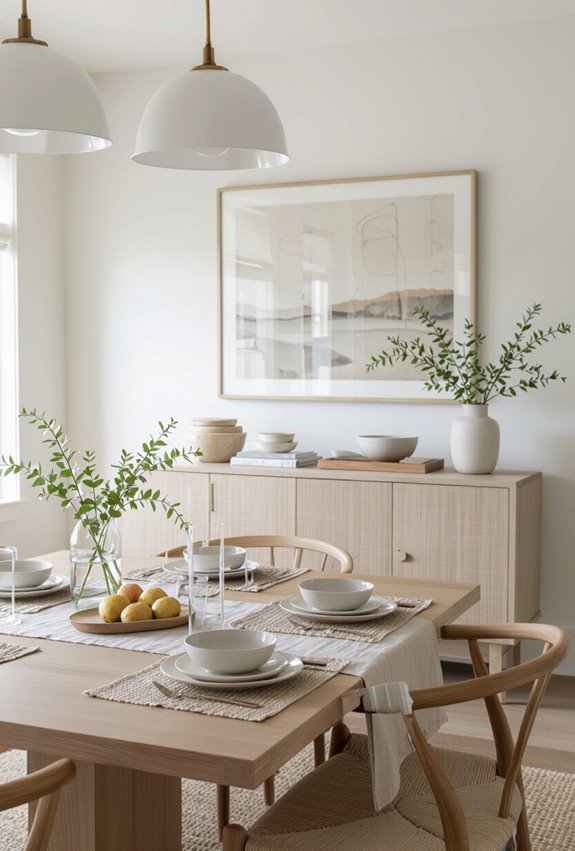
With layered linens, runners, and placemats you’ll create depth and tactile interest that turns a practical buffet into a styled tableau.
Choose contrasting linen textures—crisp cotton under a soft linen runner—to define serving zones.
Add woven placemats for warmth and grip, mixing sizes for visual rhythm.
Keep colors cohesive and patterns subtle so dishes and décor remain the focus of your display.
Use Dimmable Lighting to Set Dinner Mood and Timing
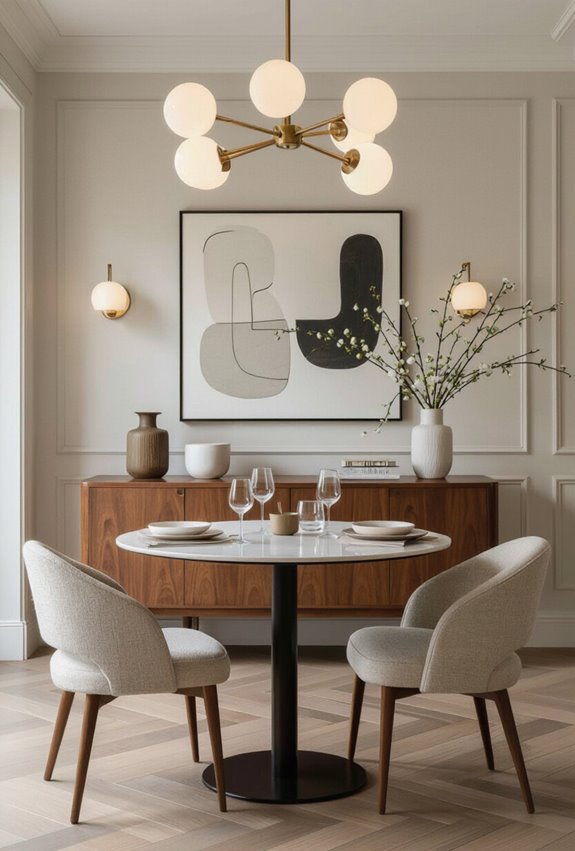
You can instantly shift the tone of a buffet by dimming lights to match the meal’s pace and purpose.
Use dimmable presets to create welcoming brightness for setup, softer warmth for relaxed dining, and low glow for winding down.
Blend circadian lighting principles to support energy earlier and calm later.
Program scenes so you’ll set mood and timing with a single control.
Incorporate Greenery and Floral Arrangements for Freshness
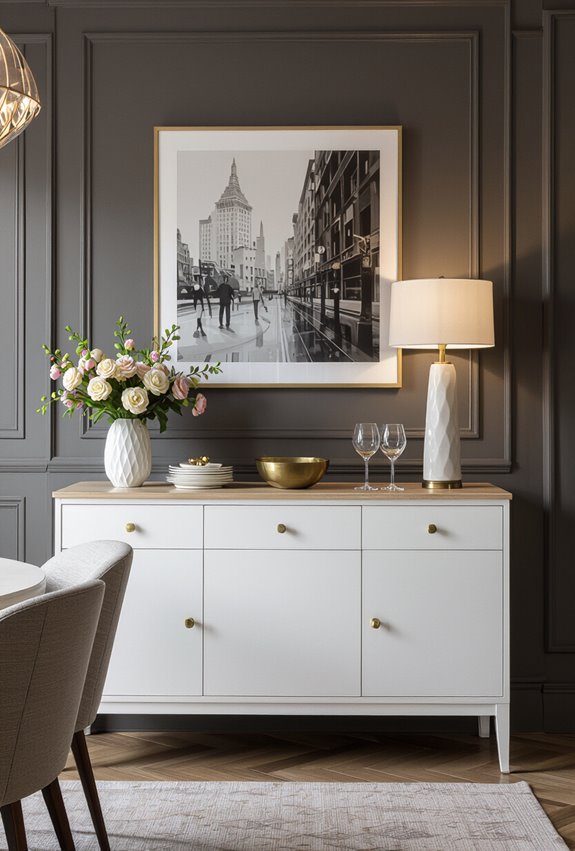
Frequently, adding greenery and fresh flowers transforms a buffet from purely functional to inviting, and you can do it without crowding service areas.
Place low-profile potted herbs by drink stations for scent and utility, tuck small vases of seasonal blooms along trays, and use trailing greenery at table edges.
Keep arrangements low and sparse so guests can serve freely.
Style a Seasonal Centerpiece That Complements the Buffet
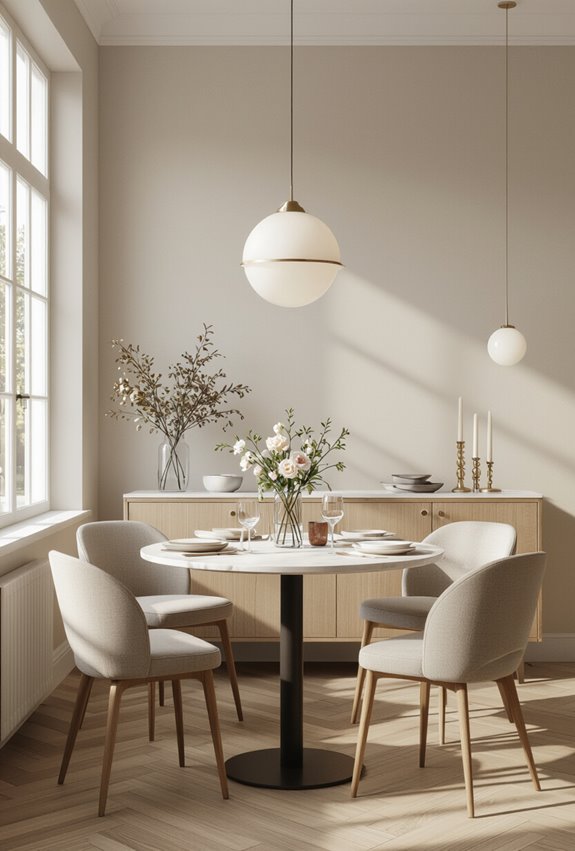
Craft a seasonal centerpiece that echoes the buffet’s colors and textures so it feels like a natural extension of the spread.
Choose seasonal textures—dried grasses, velvet leaves, glossy fruit—and layer low arrangements to keep sightlines clear.
Use restrained color accents that mirror dishware and linens, tying the table to the buffet.
Add subtle candles or metallics for warmth without overpowering the food.
Display Dishes on Tiered Stands to Save Surface Area
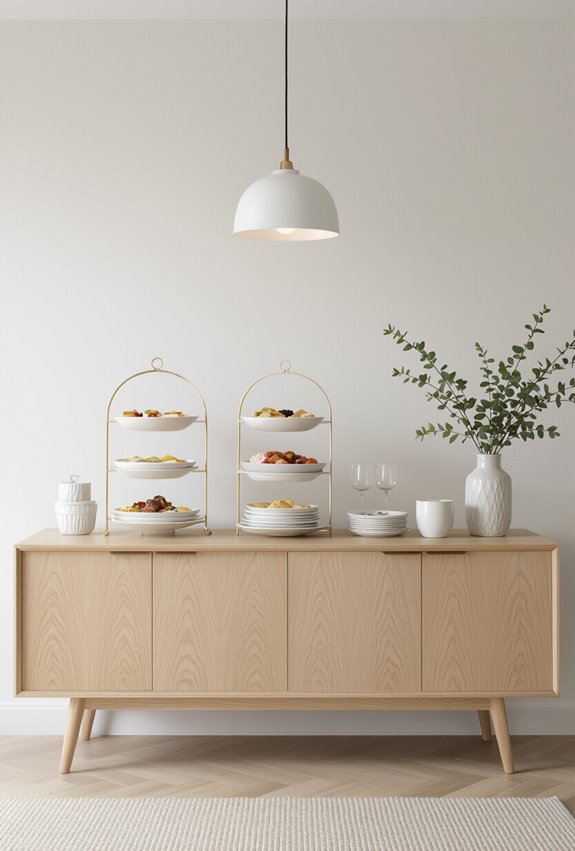
Elevating dishes on tiered stands lets you stack plates, pastries, and appetizers vertically so more food fits on limited buffet real estate without crowding.
You’ll use vertical tiers to create visual interest and easy access, mixing heights for balance.
Choose compact platters and varying tier diameters to maximize servings while keeping pathways clear, swapping items quickly during service to maintain a tidy presentation.
Choose Serving Ware That Elevates Presentation
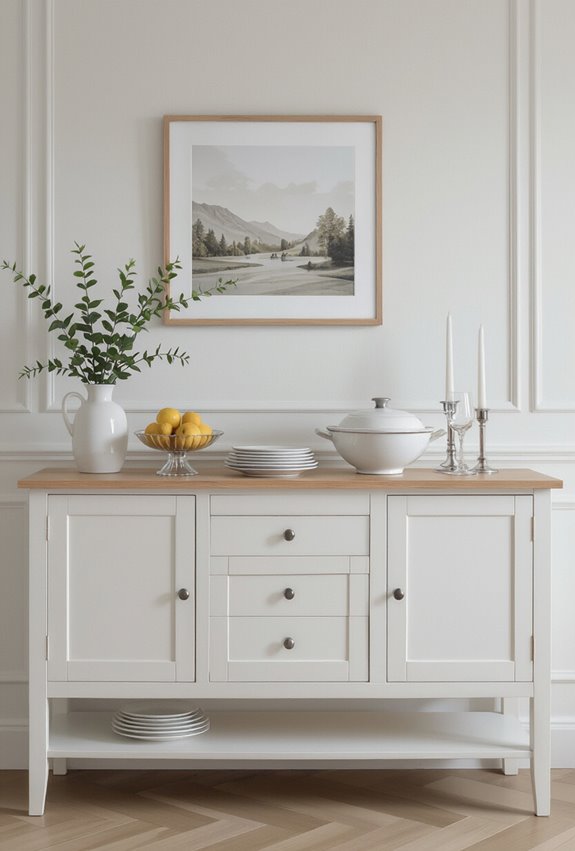
Once guests can grab drinks without interrupting food flow, focus on serving ware that makes dishes look as good as they taste.
Choose porcelain platters for clean lines and contrast, and pair them with minimalist flatware to keep attention on the food.
Mix sizes for visual rhythm, add a few elevated bowls for sauces, and maintain a cohesive color palette to unify the buffet.
Employ Attractive Food Covers and Cloches for Hygiene
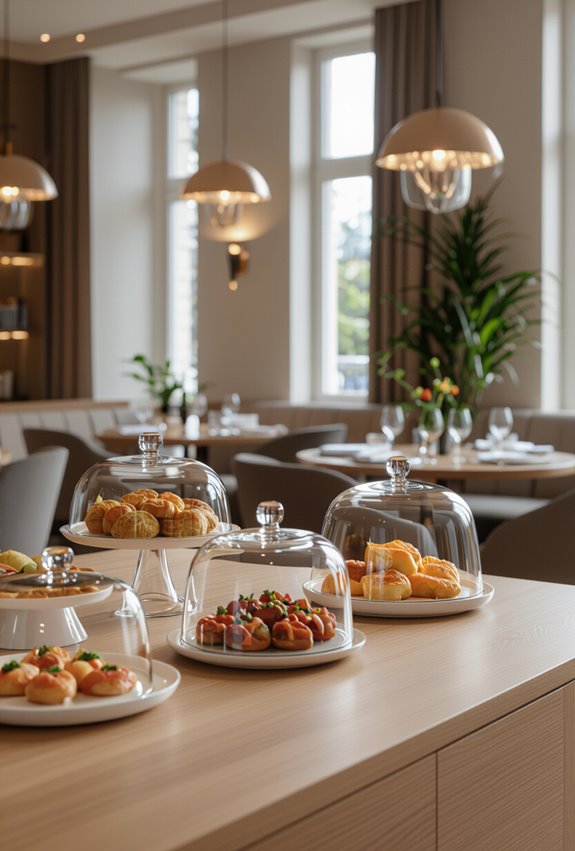
You’ve tucked chafers and warmers out of sight, but you still need to protect dishes from airborne contaminants and curious hands—attractive food covers and cloches do that without ruining the look.
You’ll mix glass cloches for pastries and cheeses with wooden domes for rustic platters, matching finishes and heights. Lift-and-replace covers keep service quick while maintaining hygiene and style.
Add Seating Vignettes to Encourage Lingering Conversations
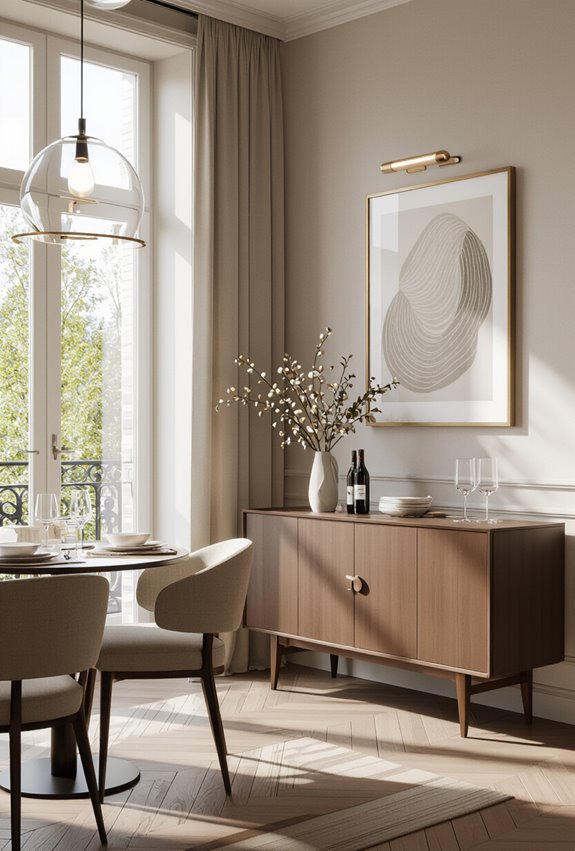
Often you’ll find that a few well-placed seating vignettes invite guests to linger, chat, and savor the meal rhythm instead of rushing away.
You can create cozy conversation corners with a pair of chairs and a small table, or arrange intimate seating groups near the buffet edge to encourage post-meal chatter, offering cushions, soft lighting, and easy access without disrupting service flow.
Use Area Rugs to Define the Buffet and Dining Zones
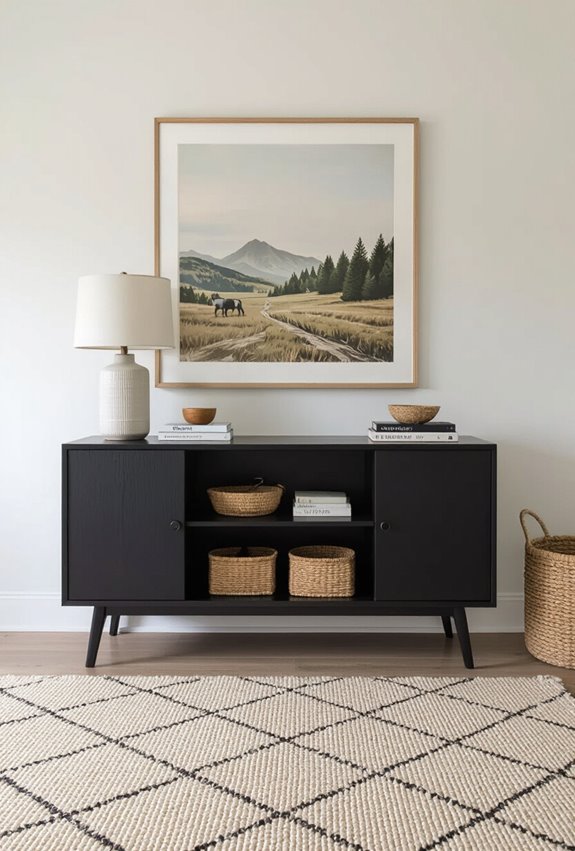
Placing area rugs under the buffet and dining spots helps you visually separate functions without building walls or blocking traffic. You’ll anchor each zone with a patterned rug for contrast, then use textured layering—jute runners or plush pads—to add warmth and reduce noise.
Choose sizes that fit furniture footprints, coordinate colors, and keep edges clear so service stays smooth and looks intentional.
Optimize Traffic Flow for Parties and Busy Gatherings
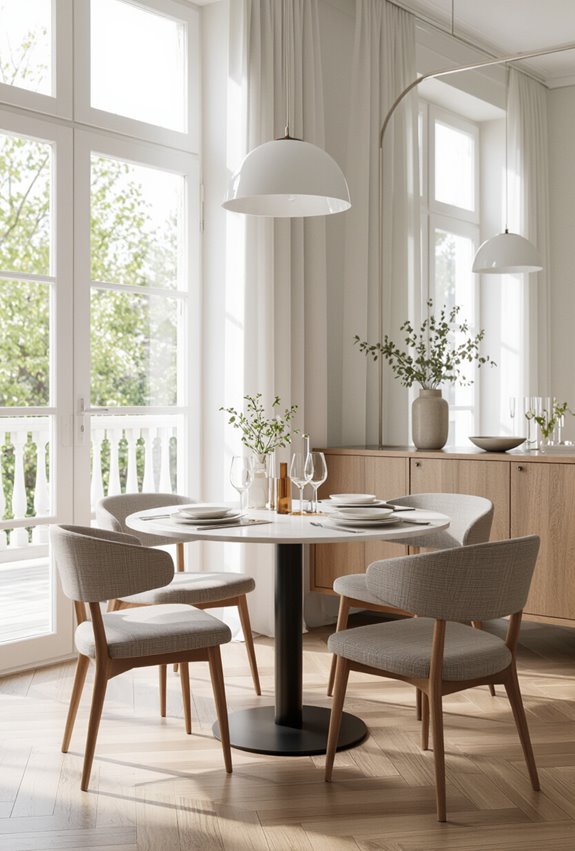
When guests arrive, map clear pathways between the buffet, dining table, and entry so people can circulate without blocking service or conversations.
You’ll plan traffic choreography by spacing stations, angling tables, and leaving a clear return path for trays.
Use guest zoning to assign standing, serving, and seating areas, label serving flow, and keep exits unobstructed for smooth, sociable gatherings.
Use Mirrors to Visually Expand a Small Buffet Area
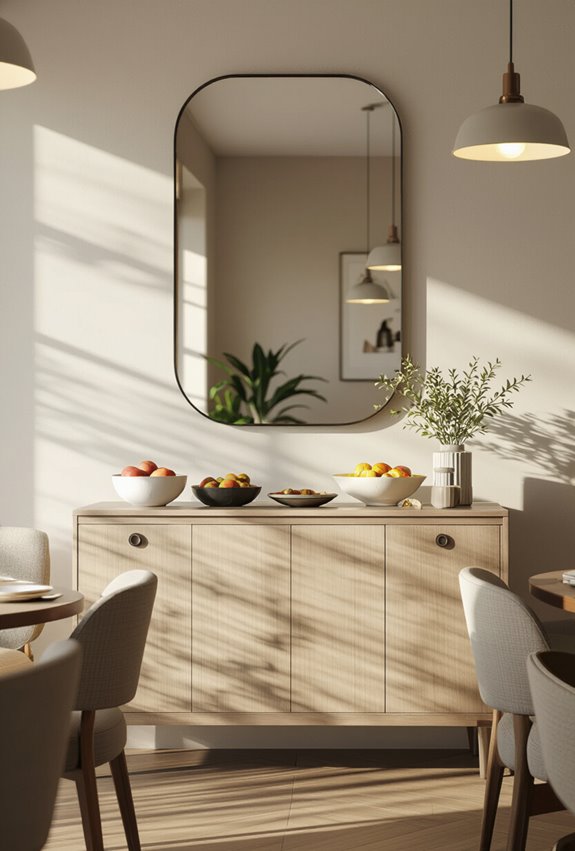
Lining the wall behind your buffet with a mirror instantly opens the space and bounces light across your serving area, making even a narrow sideboard feel larger and more inviting.
Choose mirror placement that aligns with overhead lighting and sightlines, and mix reflective frames for texture.
Lean a large mirror or hang several smaller ones to create depth without cluttering surfaces or competing with table settings.
Choose Durable, Stain-Resistant Fabrics for High Use
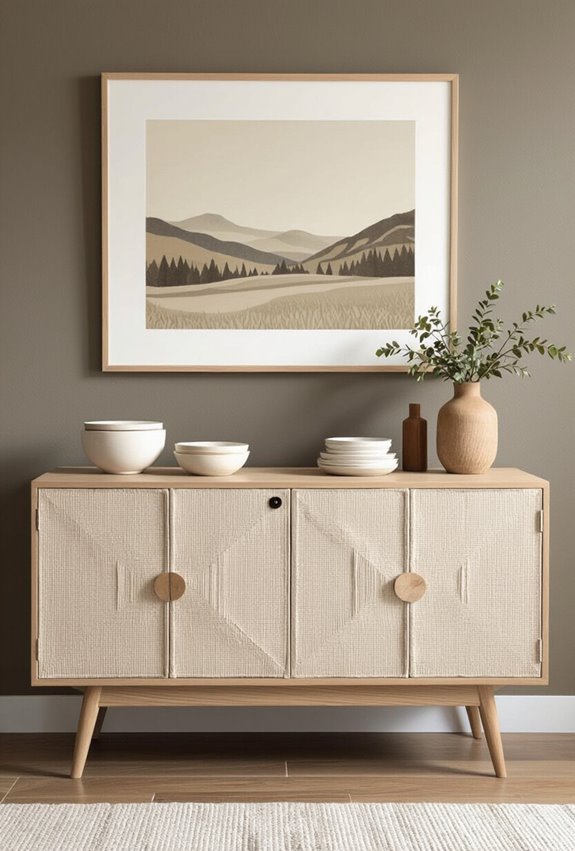
Art and décor set the tone, but the fabrics you pick will take the daily wear and tear — choose materials that stand up to spills, frequent use, and regular cleaning.
You’ll favor Performance Fabrics and Stain Resistant Upholstery for chairs and cushions; they repel liquids, resist stains, and clean easily.
Opt for neutral tones and durable weaves to keep your buffet area looking fresh.
Integrate a Warming Drawer or Microwave Into Cabinetry
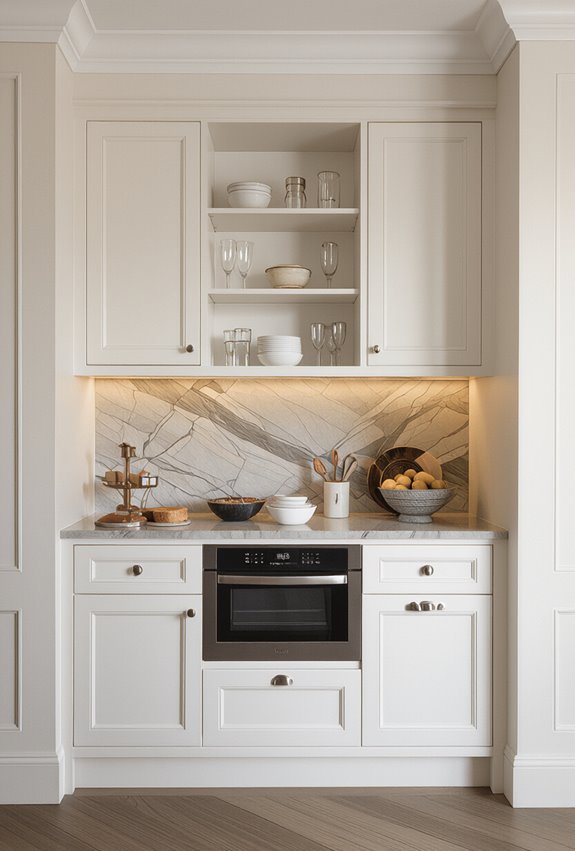
To keep hot dishes ready without crowding countertops, tuck a warming drawer or microwave into your buffet cabinetry. You’ll maintain a clean surface while offering practical service.
Choose a built in microwave for seamless aesthetics or a dedicated warming drawer to keep platters at serving temperature. Position controls discreetly, match finishes to cabinets, and guarantee ventilation and electrical access for safe, reliable use.
Use a Portable Island or Trolley for Flexible Layouts
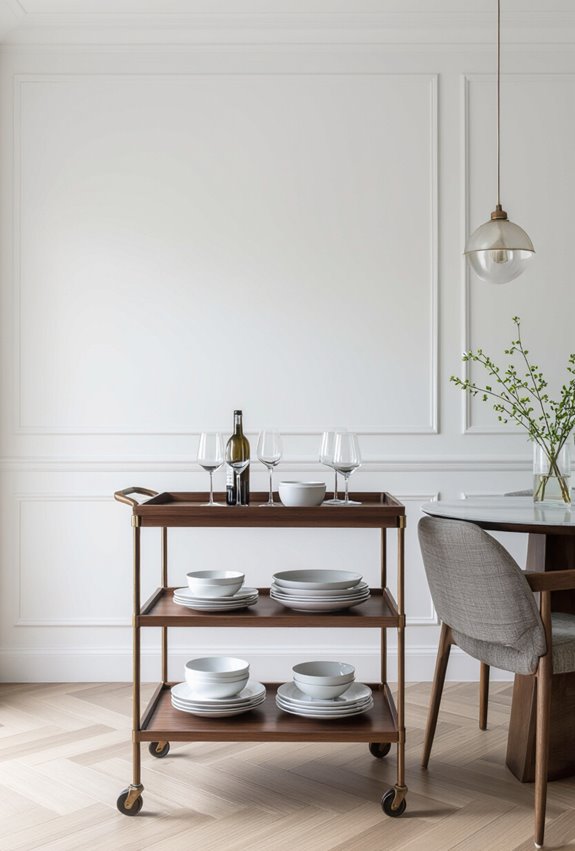
Bring a portable island or trolley into your buffet setup and you’ll gain instant flexibility for serving, prep, and storage.
Choose a sturdy rolling cart as a mobile service station you can reposition between courses.
Use a modular workstation configuration to combine prep space, utensil drawers, and chilled or heated trays.
Lock wheels for stability, then redeploy it as needed.
Style a Dessert Buffet With Tiering and Signage
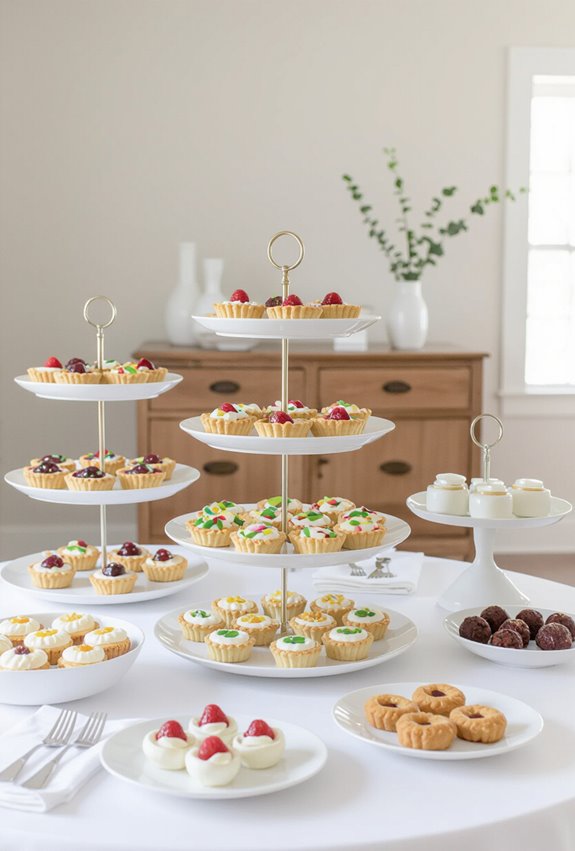
Three levels of height instantly make a dessert buffet feel organized and indulgent: stack tiered cake stands, risers, and platters so each sweet gets its own spotlight.
You’ll add tiered signage for theme consistency and clear dessert labeling so guests know flavors and allergens. Mix textures—ceramic, glass, wood—and keep spacing neat. Refill discreetly to preserve presentation and flow.
Create a Tasting Station for Curated Small Plates
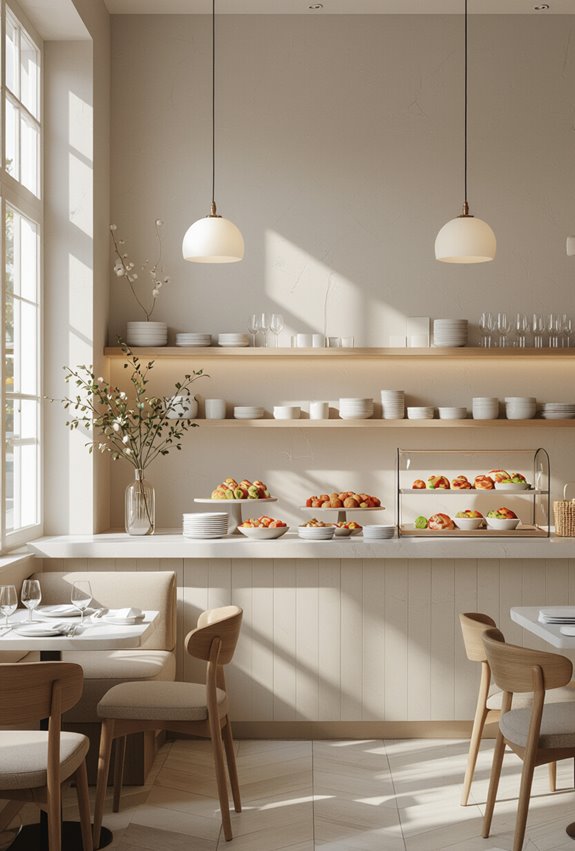
When you set up a tasting station, think of it as a curated journey of small plates that invites guests to sample a variety of flavors without committing to a full course. Design a mini tasting lineup with bite-sized portions, clear labels, and small utensils.
Rotate offerings for seasonal pairings, balance textures and temperatures, and provide palate cleansers so guests move smoothly between tastes.
How to Plan an Elegant Buffet Dining Room Layout
When planning an elegant buffet dining room layout, start by mapping traffic flow so guests can serve themselves without crowding or backtracking. You’ll analyze flow patterns and run a basic traffic simulation to predict pinch points.
Define clear guest zoning for starters, mains, and desserts, and rehearse service choreography with staff. Adjust spacing, signage, and timing to keep movement smooth and graceful.
Choose the Right Buffet Table Size for Your Space
Once you’ve mapped traffic flow and zoned stations, pick a buffet table size that matches both guest count and available circulation space. Use a scale guide to proportion the table to your room, allowing serving and plating zones.
Follow clearance rules: keep at least 36–48 inches behind servers and 30–36 inches for guest circulation. Prioritize functionality over oversized pieces.
Pick a Cohesive Color Palette for a Refined Look
Although a well-chosen palette can seem subtle, it anchors the entire buffet room and makes every element feel intentional.
You’ll favor neutral neutrals—creams, taupes, soft grays—for a calm backdrop, then add texture and finishes. Introduce Monochrome contrast with varying shades and matte versus glossy surfaces to create depth without clutter. Keep accents limited so the look stays refined and cohesive.
Layer Textures With Linens, Runners, and Placemats
With layered linens, runners, and placemats you’ll create depth and tactile interest that turns a practical buffet into a styled tableau.
Choose contrasting linen textures—crisp cotton under a soft linen runner—to define serving zones.
Add woven placemats for warmth and grip, mixing sizes for visual rhythm.
Keep colors cohesive and patterns subtle so dishes and décor remain the focus of your display.
Use Dimmable Lighting to Set Dinner Mood and Timing
You can instantly shift the tone of a buffet by dimming lights to match the meal’s pace and purpose.
Use dimmable presets to create welcoming brightness for setup, softer warmth for relaxed dining, and low glow for winding down.
Blend circadian lighting principles to support energy earlier and calm later.
Program scenes so you’ll set mood and timing with a single control.
Incorporate Greenery and Floral Arrangements for Freshness
Frequently, adding greenery and fresh flowers transforms a buffet from purely functional to inviting, and you can do it without crowding service areas.
Place low-profile potted herbs by drink stations for scent and utility, tuck small vases of seasonal blooms along trays, and use trailing greenery at table edges.
Keep arrangements low and sparse so guests can serve freely.
Style a Seasonal Centerpiece That Complements the Buffet
Craft a seasonal centerpiece that echoes the buffet’s colors and textures so it feels like a natural extension of the spread.
Choose seasonal textures—dried grasses, velvet leaves, glossy fruit—and layer low arrangements to keep sightlines clear.
Use restrained color accents that mirror dishware and linens, tying the table to the buffet.
Add subtle candles or metallics for warmth without overpowering the food.
Display Dishes on Tiered Stands to Save Surface Area
Elevating dishes on tiered stands lets you stack plates, pastries, and appetizers vertically so more food fits on limited buffet real estate without crowding.
You’ll use vertical tiers to create visual interest and easy access, mixing heights for balance.
Choose compact platters and varying tier diameters to maximize servings while keeping pathways clear, swapping items quickly during service to maintain a tidy presentation.
Choose Serving Ware That Elevates Presentation
Once guests can grab drinks without interrupting food flow, focus on serving ware that makes dishes look as good as they taste.
Choose porcelain platters for clean lines and contrast, and pair them with minimalist flatware to keep attention on the food.
Mix sizes for visual rhythm, add a few elevated bowls for sauces, and maintain a cohesive color palette to unify the buffet.
Employ Attractive Food Covers and Cloches for Hygiene
You’ve tucked chafers and warmers out of sight, but you still need to protect dishes from airborne contaminants and curious hands—attractive food covers and cloches do that without ruining the look.
You’ll mix glass cloches for pastries and cheeses with wooden domes for rustic platters, matching finishes and heights. Lift-and-replace covers keep service quick while maintaining hygiene and style.
Add Seating Vignettes to Encourage Lingering Conversations
Often you’ll find that a few well-placed seating vignettes invite guests to linger, chat, and savor the meal rhythm instead of rushing away.
You can create cozy conversation corners with a pair of chairs and a small table, or arrange intimate seating groups near the buffet edge to encourage post-meal chatter, offering cushions, soft lighting, and easy access without disrupting service flow.
Use Area Rugs to Define the Buffet and Dining Zones
Placing area rugs under the buffet and dining spots helps you visually separate functions without building walls or blocking traffic. You’ll anchor each zone with a patterned rug for contrast, then use textured layering—jute runners or plush pads—to add warmth and reduce noise.
Choose sizes that fit furniture footprints, coordinate colors, and keep edges clear so service stays smooth and looks intentional.
Optimize Traffic Flow for Parties and Busy Gatherings
When guests arrive, map clear pathways between the buffet, dining table, and entry so people can circulate without blocking service or conversations.
You’ll plan traffic choreography by spacing stations, angling tables, and leaving a clear return path for trays.
Use guest zoning to assign standing, serving, and seating areas, label serving flow, and keep exits unobstructed for smooth, sociable gatherings.
Use Mirrors to Visually Expand a Small Buffet Area
Lining the wall behind your buffet with a mirror instantly opens the space and bounces light across your serving area, making even a narrow sideboard feel larger and more inviting.
Choose mirror placement that aligns with overhead lighting and sightlines, and mix reflective frames for texture.
Lean a large mirror or hang several smaller ones to create depth without cluttering surfaces or competing with table settings.
Choose Durable, Stain-Resistant Fabrics for High Use
Art and décor set the tone, but the fabrics you pick will take the daily wear and tear — choose materials that stand up to spills, frequent use, and regular cleaning.
You’ll favor Performance Fabrics and Stain Resistant Upholstery for chairs and cushions; they repel liquids, resist stains, and clean easily.
Opt for neutral tones and durable weaves to keep your buffet area looking fresh.
Integrate a Warming Drawer or Microwave Into Cabinetry
To keep hot dishes ready without crowding countertops, tuck a warming drawer or microwave into your buffet cabinetry. You’ll maintain a clean surface while offering practical service.
Choose a built in microwave for seamless aesthetics or a dedicated warming drawer to keep platters at serving temperature. Position controls discreetly, match finishes to cabinets, and guarantee ventilation and electrical access for safe, reliable use.
Use a Portable Island or Trolley for Flexible Layouts
Bring a portable island or trolley into your buffet setup and you’ll gain instant flexibility for serving, prep, and storage.
Choose a sturdy rolling cart as a mobile service station you can reposition between courses.
Use a modular workstation configuration to combine prep space, utensil drawers, and chilled or heated trays.
Lock wheels for stability, then redeploy it as needed.
Style a Dessert Buffet With Tiering and Signage
Three levels of height instantly make a dessert buffet feel organized and indulgent: stack tiered cake stands, risers, and platters so each sweet gets its own spotlight.
You’ll add tiered signage for theme consistency and clear dessert labeling so guests know flavors and allergens. Mix textures—ceramic, glass, wood—and keep spacing neat. Refill discreetly to preserve presentation and flow.
Create a Tasting Station for Curated Small Plates
When you set up a tasting station, think of it as a curated journey of small plates that invites guests to sample a variety of flavors without committing to a full course. Design a mini tasting lineup with bite-sized portions, clear labels, and small utensils.
Rotate offerings for seasonal pairings, balance textures and temperatures, and provide palate cleansers so guests move smoothly between tastes.
How to Plan an Elegant Buffet Dining Room Layout
When planning an elegant buffet dining room layout, start by mapping traffic flow so guests can serve themselves without crowding or backtracking. You’ll analyze flow patterns and run a basic traffic simulation to predict pinch points.
Define clear guest zoning for starters, mains, and desserts, and rehearse service choreography with staff. Adjust spacing, signage, and timing to keep movement smooth and graceful.
Choose the Right Buffet Table Size for Your Space
Once you’ve mapped traffic flow and zoned stations, pick a buffet table size that matches both guest count and available circulation space. Use a scale guide to proportion the table to your room, allowing serving and plating zones.
Follow clearance rules: keep at least 36–48 inches behind servers and 30–36 inches for guest circulation. Prioritize functionality over oversized pieces.
Pick a Cohesive Color Palette for a Refined Look
Although a well-chosen palette can seem subtle, it anchors the entire buffet room and makes every element feel intentional.
You’ll favor neutral neutrals—creams, taupes, soft grays—for a calm backdrop, then add texture and finishes. Introduce Monochrome contrast with varying shades and matte versus glossy surfaces to create depth without clutter. Keep accents limited so the look stays refined and cohesive.
Layer Textures With Linens, Runners, and Placemats
With layered linens, runners, and placemats you’ll create depth and tactile interest that turns a practical buffet into a styled tableau.
Choose contrasting linen textures—crisp cotton under a soft linen runner—to define serving zones.
Add woven placemats for warmth and grip, mixing sizes for visual rhythm.
Keep colors cohesive and patterns subtle so dishes and décor remain the focus of your display.
Use Dimmable Lighting to Set Dinner Mood and Timing
You can instantly shift the tone of a buffet by dimming lights to match the meal’s pace and purpose.
Use dimmable presets to create welcoming brightness for setup, softer warmth for relaxed dining, and low glow for winding down.
Blend circadian lighting principles to support energy earlier and calm later.
Program scenes so you’ll set mood and timing with a single control.
Incorporate Greenery and Floral Arrangements for Freshness
Frequently, adding greenery and fresh flowers transforms a buffet from purely functional to inviting, and you can do it without crowding service areas.
Place low-profile potted herbs by drink stations for scent and utility, tuck small vases of seasonal blooms along trays, and use trailing greenery at table edges.
Keep arrangements low and sparse so guests can serve freely.
Style a Seasonal Centerpiece That Complements the Buffet
Craft a seasonal centerpiece that echoes the buffet’s colors and textures so it feels like a natural extension of the spread.
Choose seasonal textures—dried grasses, velvet leaves, glossy fruit—and layer low arrangements to keep sightlines clear.
Use restrained color accents that mirror dishware and linens, tying the table to the buffet.
Add subtle candles or metallics for warmth without overpowering the food.
Display Dishes on Tiered Stands to Save Surface Area
Elevating dishes on tiered stands lets you stack plates, pastries, and appetizers vertically so more food fits on limited buffet real estate without crowding.
You’ll use vertical tiers to create visual interest and easy access, mixing heights for balance.
Choose compact platters and varying tier diameters to maximize servings while keeping pathways clear, swapping items quickly during service to maintain a tidy presentation.
Choose Serving Ware That Elevates Presentation
Once guests can grab drinks without interrupting food flow, focus on serving ware that makes dishes look as good as they taste.
Choose porcelain platters for clean lines and contrast, and pair them with minimalist flatware to keep attention on the food.
Mix sizes for visual rhythm, add a few elevated bowls for sauces, and maintain a cohesive color palette to unify the buffet.
Employ Attractive Food Covers and Cloches for Hygiene
You’ve tucked chafers and warmers out of sight, but you still need to protect dishes from airborne contaminants and curious hands—attractive food covers and cloches do that without ruining the look.
You’ll mix glass cloches for pastries and cheeses with wooden domes for rustic platters, matching finishes and heights. Lift-and-replace covers keep service quick while maintaining hygiene and style.
Add Seating Vignettes to Encourage Lingering Conversations
Often you’ll find that a few well-placed seating vignettes invite guests to linger, chat, and savor the meal rhythm instead of rushing away.
You can create cozy conversation corners with a pair of chairs and a small table, or arrange intimate seating groups near the buffet edge to encourage post-meal chatter, offering cushions, soft lighting, and easy access without disrupting service flow.
Use Area Rugs to Define the Buffet and Dining Zones
Placing area rugs under the buffet and dining spots helps you visually separate functions without building walls or blocking traffic. You’ll anchor each zone with a patterned rug for contrast, then use textured layering—jute runners or plush pads—to add warmth and reduce noise.
Choose sizes that fit furniture footprints, coordinate colors, and keep edges clear so service stays smooth and looks intentional.
Use Mirrors to Visually Expand a Small Buffet Area
Lining the wall behind your buffet with a mirror instantly opens the space and bounces light across your serving area, making even a narrow sideboard feel larger and more inviting.
Choose mirror placement that aligns with overhead lighting and sightlines, and mix reflective frames for texture.
Lean a large mirror or hang several smaller ones to create depth without cluttering surfaces or competing with table settings.
Choose Durable, Stain-Resistant Fabrics for High Use
Art and décor set the tone, but the fabrics you pick will take the daily wear and tear — choose materials that stand up to spills, frequent use, and regular cleaning.
You’ll favor Performance Fabrics and Stain Resistant Upholstery for chairs and cushions; they repel liquids, resist stains, and clean easily.
Opt for neutral tones and durable weaves to keep your buffet area looking fresh.
Integrate a Warming Drawer or Microwave Into Cabinetry
To keep hot dishes ready without crowding countertops, tuck a warming drawer or microwave into your buffet cabinetry. You’ll maintain a clean surface while offering practical service.
Choose a built in microwave for seamless aesthetics or a dedicated warming drawer to keep platters at serving temperature. Position controls discreetly, match finishes to cabinets, and guarantee ventilation and electrical access for safe, reliable use.
Use a Portable Island or Trolley for Flexible Layouts
Bring a portable island or trolley into your buffet setup and you’ll gain instant flexibility for serving, prep, and storage.
Choose a sturdy rolling cart as a mobile service station you can reposition between courses.
Use a modular workstation configuration to combine prep space, utensil drawers, and chilled or heated trays.
Lock wheels for stability, then redeploy it as needed.
Style a Dessert Buffet With Tiering and Signage
Three levels of height instantly make a dessert buffet feel organized and indulgent: stack tiered cake stands, risers, and platters so each sweet gets its own spotlight.
You’ll add tiered signage for theme consistency and clear dessert labeling so guests know flavors and allergens. Mix textures—ceramic, glass, wood—and keep spacing neat. Refill discreetly to preserve presentation and flow.
Create a Tasting Station for Curated Small Plates
When you set up a tasting station, think of it as a curated journey of small plates that invites guests to sample a variety of flavors without committing to a full course. Design a mini tasting lineup with bite-sized portions, clear labels, and small utensils.
Rotate offerings for seasonal pairings, balance textures and temperatures, and provide palate cleansers so guests move smoothly between tastes.
Rustic Wooden Buffet Tables

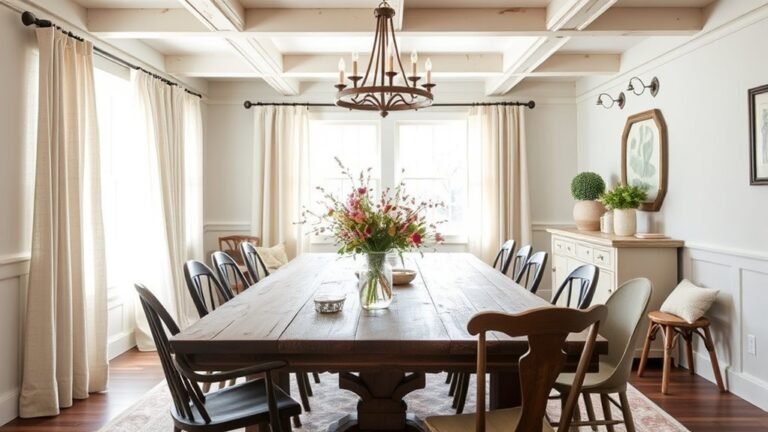
An open concept buffet layout pairs beautifully with rustic wooden buffet tables, adding warmth and character to your dining area.
Choosing a buffet table crafted from reclaimed wood or featuring distressed finishes enhances the rustic charm of your space. The rich wooden textures create a cozy atmosphere, inviting guests to gather and enjoy meals together.
Consider pairing your buffet table with natural elements like potted plants or woven baskets to further emphasize that warm, rustic feel. You can also accessorize with vintage dishware or simple centerpieces that complement the wooden tones.
These choices not only elevate your dining experience but also create a welcoming environment where cherished memories can be made over delicious meals.
Modern Minimalist Buffet Design
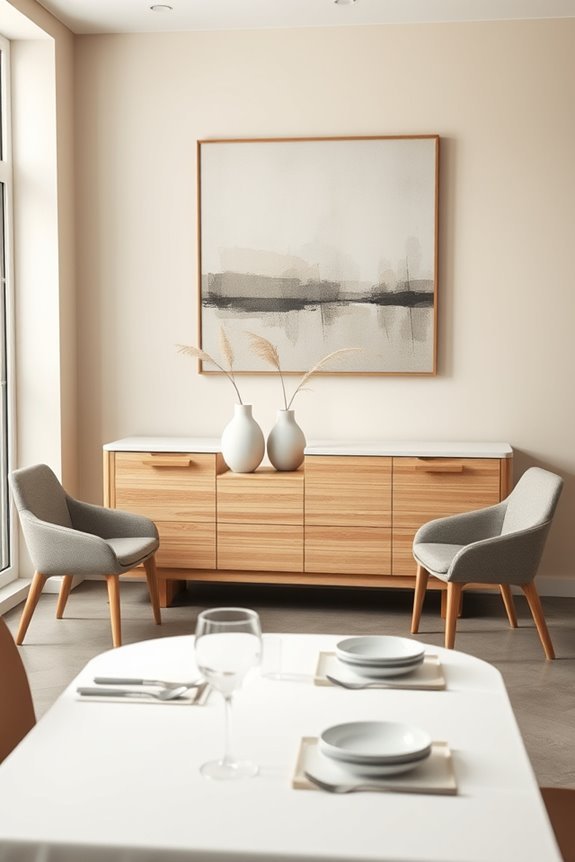
Sleek lines and understated elegance define modern minimalist buffet design, creating a space that feels both sophisticated and inviting.
By embracing minimalist decor, you’ll find that each piece serves a purpose, showcasing functional design and space efficiency. Opt for furniture that features a monochromatic palette, allowing neutral tones to dominate the room and enhance the overall aesthetic.
This intentional simplicity draws attention to the beauty of the buffet itself, making it a focal point without overwhelming the space. Consider incorporating open shelving to display your favorite items, ensuring everything looks tidy and organized.
With this approach, your dining area will radiate tranquility, inviting guests to enjoy their meal experience in an elegantly curated environment.
Colorful Table Linens
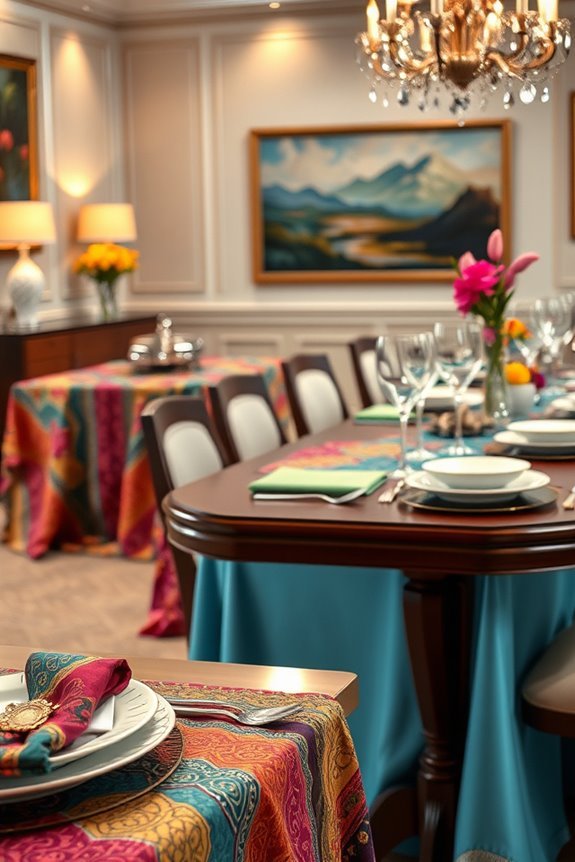
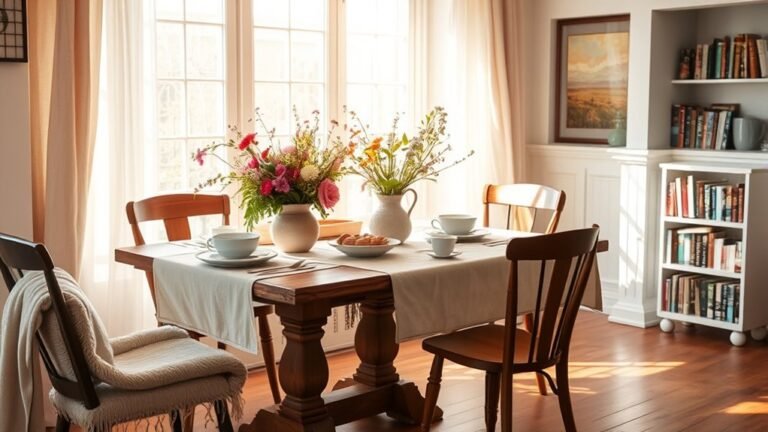
Colorful table linens can instantly elevate your buffet dining experience, adding vibrancy and personality to the table. By choosing vibrant tablecloths, you set the perfect backdrop for your delicious spread.
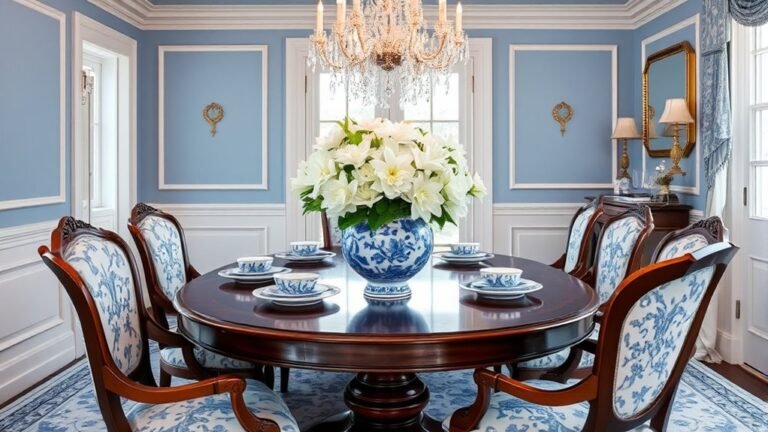
Think bold colors like deep reds, sunny yellows, or rich blues that complement your meal and make the setting inviting. Don’t forget about colorful napkins—they’re the finishing touch that brings the whole look together.
You can mix and match patterns or stick to a cohesive theme; either way, they’ll catch your guests’ attention. Consider using napkin rings or creative folds for an added touch of elegance.
With these simple additions, you’ll create a lively atmosphere that makes every meal feel special and memorable.
Chic Centerpiece Ideas

To create an inviting atmosphere at your buffet, consider incorporating chic centerpieces that reflect your personal style and the theme of your gathering.
Chic floral arrangements can elevate your table, adding color and vibrancy. Opt for seasonal flowers in tasteful vases that complement your décor.
For a touch of sophistication, use elegant candle holders to create a warm ambiance. Choose varying heights and styles to add visual interest, while soft lighting from candles sets the mood for your meal.
Mixing these elements together—floral arrangements and candle holders—can create a stunning focal point.
Remember to keep the arrangements low so guests can easily converse across the table.
With these chic centerpieces, your buffet will feel more inviting and stylish.
Buffet With Built-In Storage
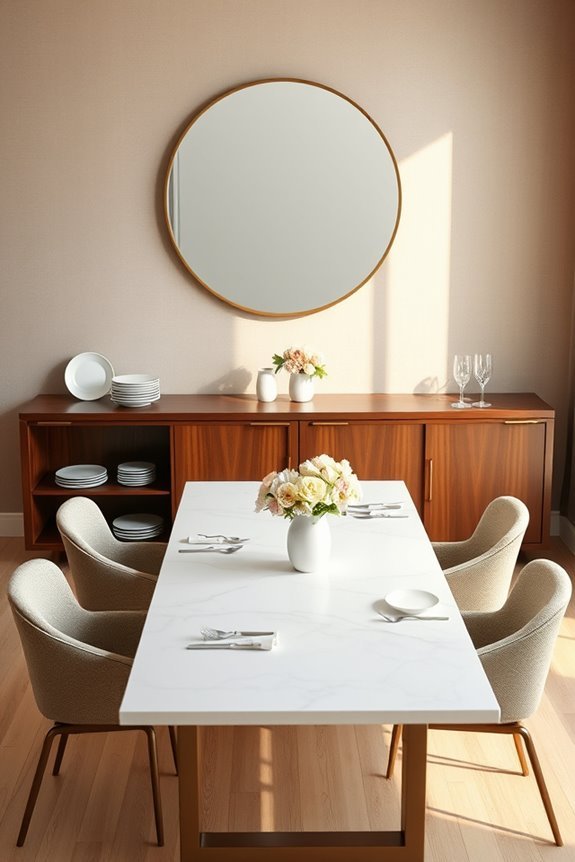
If you want to maximize space and functionality in your dining area, a buffet with built-in storage is an excellent choice.
These pieces not only serve as a stylish focal point but also offer hidden compartments for your dining essentials. Imagine neatly stowing away tablecloths, utensils, or even serving dishes, keeping your dining space clutter-free.
With stylish cabinetry, you can choose a design that complements your decor, whether it’s modern, rustic, or classic. This way, you’ll have easy access to everything you need during meals while enhancing the overall aesthetic of your dining room.
Plus, a well-organized buffet helps create a seamless dining experience, making it easier for you and your guests to enjoy every moment.
Seasonal Decor Changes
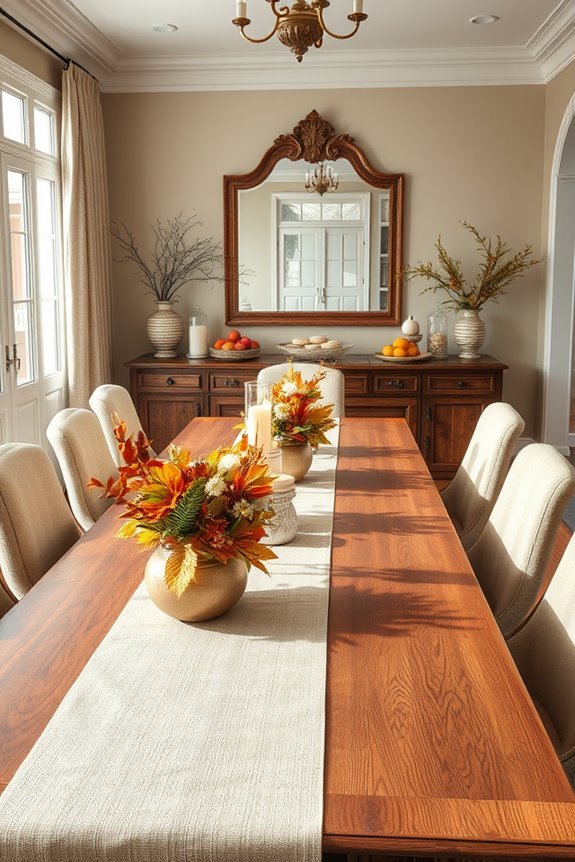
As the seasons change, rejuvenating your buffet dining room decor can create a warm and inviting atmosphere that reflects the beauty outside.
Embrace seasonal themes by swapping out decor elements to match the time of year. In spring, consider pastel colors and fresh flowers, while summer might call for bright hues and tropical accents.
Fall can bring rich tones and natural elements like pumpkins, and winter is perfect for cozy textures and festive accents like twinkling lights.
You’ll create a dynamic space that feels fresh and welcoming. Don’t forget to incorporate themed tableware or centerpieces to tie it all together.
Coordinated Color Palettes
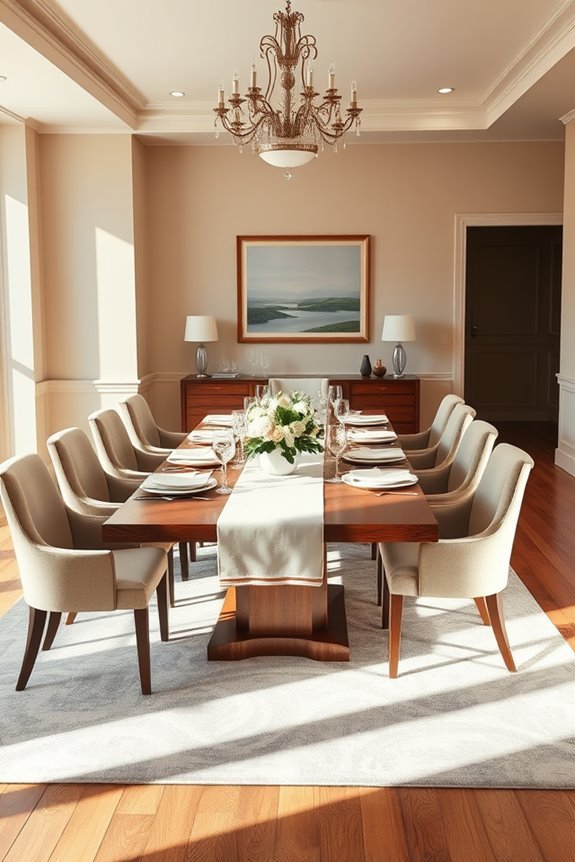
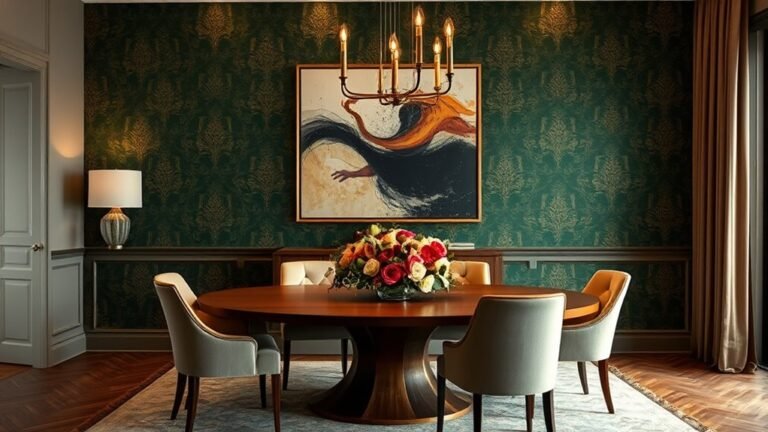
A well-coordinated color palette can transform your buffet dining room into a visually stunning space. By focusing on color harmony, you can create an inviting atmosphere that enhances your meal experience.
Start with a base color that reflects your style, then select complementary shades for accents. For instance, pairing warm earth tones with soft pastels can evoke a cozy feel, while bold colors can energize the space.
Consider how palette coordination affects your furnishings, tableware, and wall art. Choose items that resonate with your chosen colors to maintain a cohesive look.
Conclusion
With these 40 elegant buffet dining room ideas, you’ll transform your space into a culinary wonderland that rivals the grandest feasts of royalty! Picture tables overflowing with rustic charm, minimalist grace, and vintage flair, all while your guests are enchanted by the twinkling glassware and aromatic scents wafting through the air. Kid-friendly stations will keep the little ones happy, while seasonal decorations create a festive atmosphere. Get ready to host unforgettable gatherings that’ll leave everyone raving for ages!