40 Stylish Beach Hotel Design Ideas to Capture the Coastal Vibe
To capture the coastal vibe, think open-air lounges with ocean views and nautical-inspired decor that sets a relaxed tone. Use coastal color palettes to create calm and inviting spaces. Incorporate sustainable materials and local cultural elements to enhance authenticity. Don’t forget stunning infinity pools overlooking the sea for that truly memorable experience. You’ll find trendy boutique shops and water sports rentals to keep guests engaged, and there’s much more to explore as you design your perfect beach hotel.
Coastal Color Palettes for Relaxed Guest Rooms
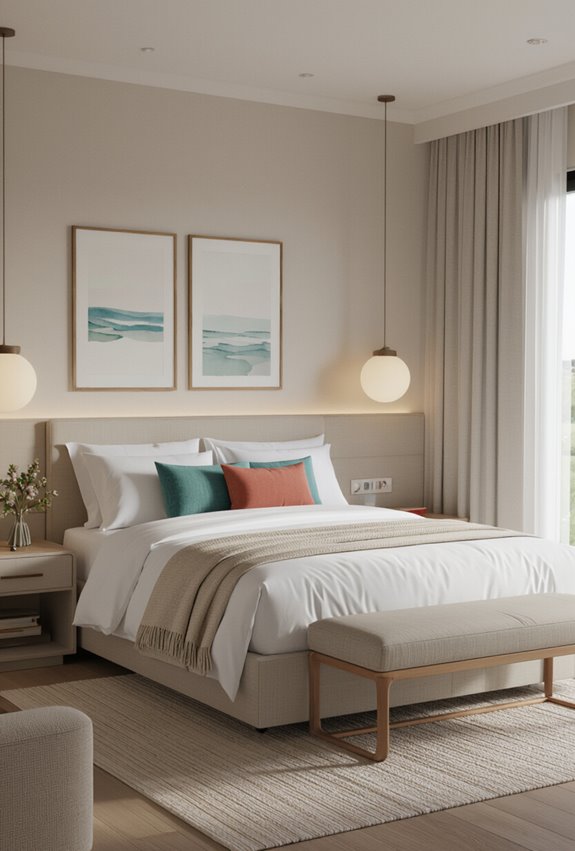
Often you’ll find that a calm color scheme sets the tone for a guest’s entire stay: choose soft blues, sandy neutrals, and muted greens to evoke sea, sky, and dunes.
You’ll layer seafoam grey walls with white trim, add muted coral accents in pillows or art, and keep curtains sheer.
This balance feels airy, fresh, and inviting without overpowering the room.
Breezy Outdoor Corridors and Shaded Walkways
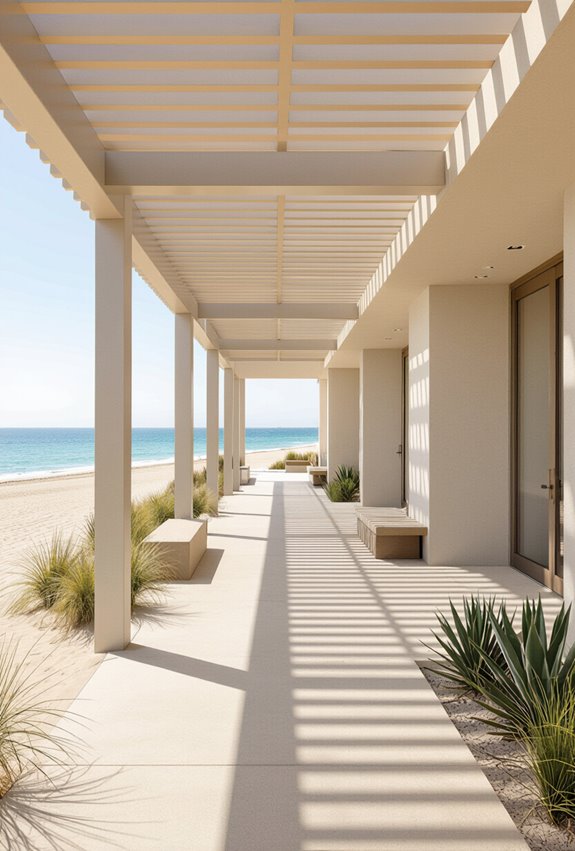
When you design outdoor corridors and shaded walkways, prioritize airflow and sun protection so guests move comfortably between rooms and public areas.
Use Bamboo breezeways for natural ventilation and texture, combine with Canopy linkages to shield pathways from sun and rain, and place intermittent seating and native planting to cool routes.
Keep materials durable, slip-resistant, and easy to maintain for coastal conditions.
Durable, Water-Resistant Flooring Options
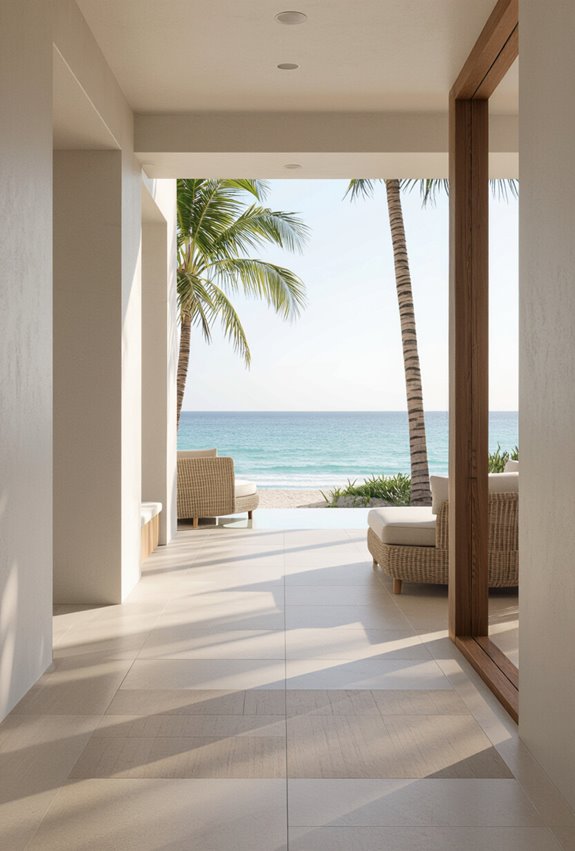
Extending living spaces outdoors means your floors must stand up to sand, salt spray, and frequent cleaning, so pick materials that combine resilience with beachy style.
You’ll favor slip resistant vinyl for wet areas and low-maintenance composite decking for terraces and pool surrounds.
Both resist fading, mold, and salt corrosion, cleaning easily while keeping guests safe and comfortable in coastal conditions.
Shade Structures and Pergolas for Guest Comfort
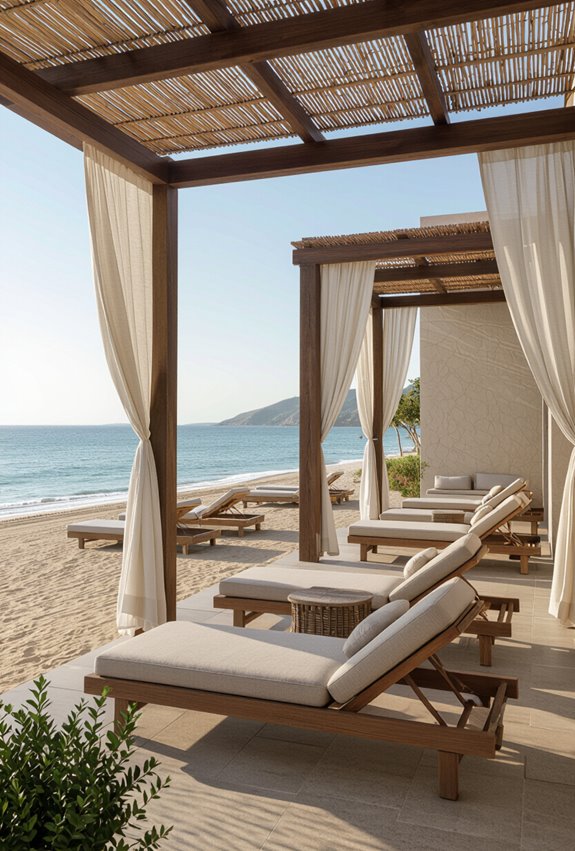
When guests step outside to enjoy ocean breezes, they’ll want shaded retreats that cut glare, reduce heat, and frame views without blocking the sea—so design pergolas and shade structures that balance protection with openness.
You’ll choose Coastal pergolas with slatted roofs, integrate retractable canopies for flexible sun control, add durable fabrics, cooling fans, and soft lighting to keep guests comfortable and connected to the horizon.
Beachfront Pool Layouts That Maximize Views
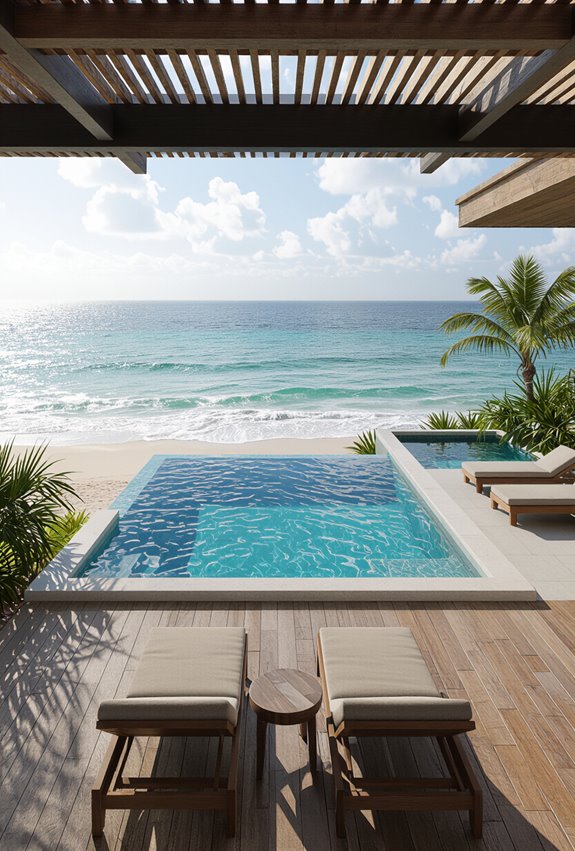
Positioned to frame the horizon, a beachfront pool should make the sea the star of the experience while keeping sightlines open and circulation smooth.
You’ll orient loungers and pathways to uninterrupted Sunset Vistas, use Infinity Edges to blur water and ocean, and stagger depths to preserve views. Keep landscaping low, circulation direct, and focal lines pointing seaward so guests always feel connected to the shore.
Dining Terraces Designed for Sunset Service
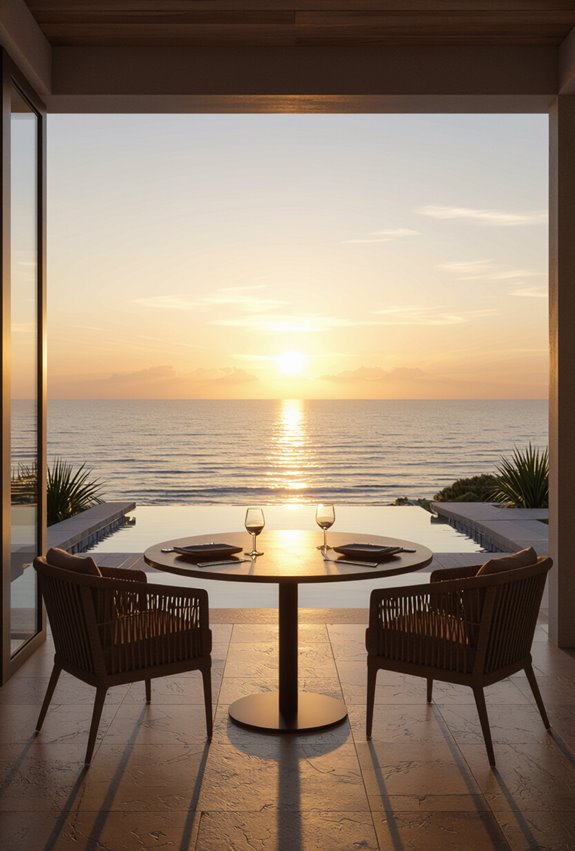
As daylight softens, design your dining terraces to frame the sunset—orient tables toward the horizon, stagger seating to preserve sightlines, and choose low-profile railings or glass that won’t block the view.
You’ll accentuate gold hour seating with dynamic lighting that fades into twilight, plan sunset acoustics to keep conversation pleasant, and offer ambient cocktails at service stations so guests relax without leaving the panorama.
Open-Air Kitchens for Coastal Cuisine Experiences
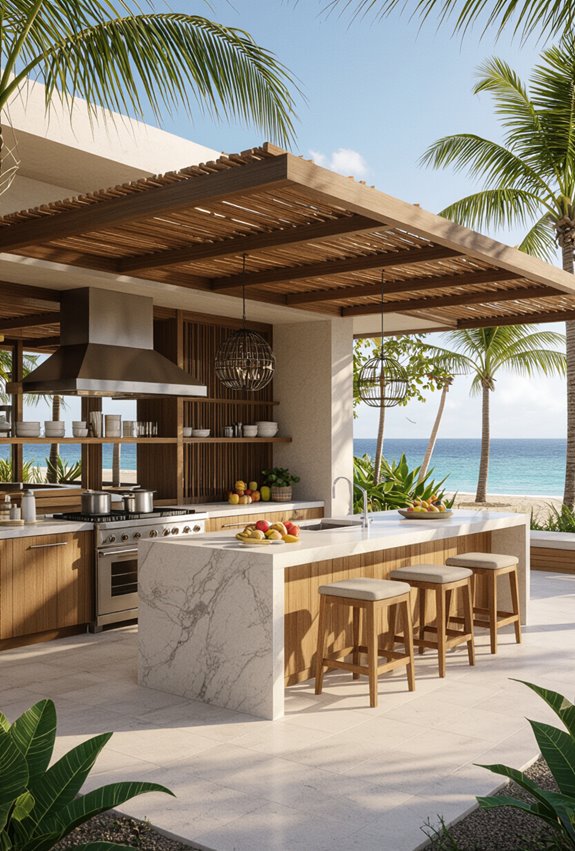
While your terraces capture the sunset, bring the coastal flavors closer by integrating open-air kitchens that turn views into part of the meal.
You’ll outfit a sea salt kitchen with durable surfaces, wind-sheltered prep stations, and an open fire grill for smoky seafood. Position service flow toward terraces, provide shaded seating, and use local materials to keep maintenance low and ambiance authentic.
Private Beach Access and Dune-Friendly Paths
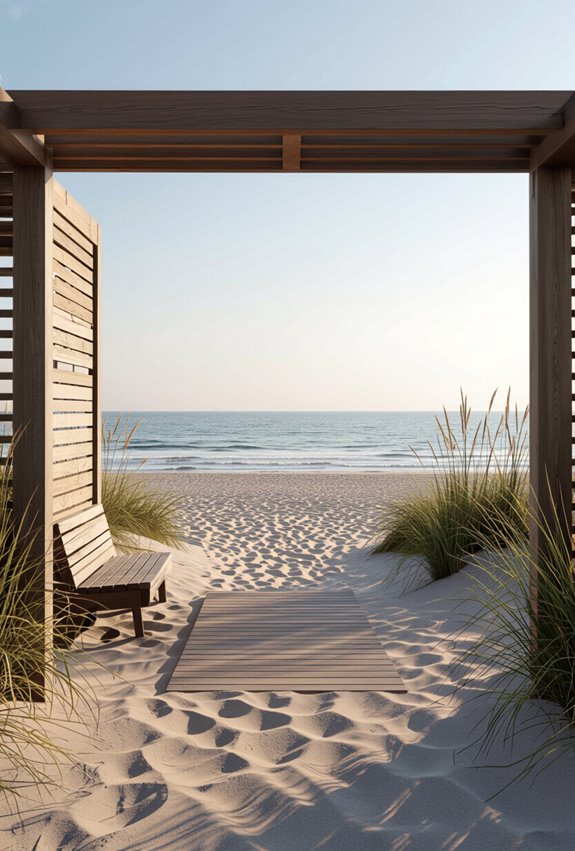
Because guests expect effortless access without harming sensitive dunes, design private beach paths that guide foot traffic along durable, low-impact routes.
You’ll integrate barefoot pathways of boardwalk and soft sand, add shoreline signage to direct movement, and position a private groyne to reduce erosion.
Prioritize dune rehabilitation with native planting, discrete fencing, and maintenance schedules so access stays safe, scenic, and sustainable.
Eco-Friendly Design Strategies for Coastal Sites
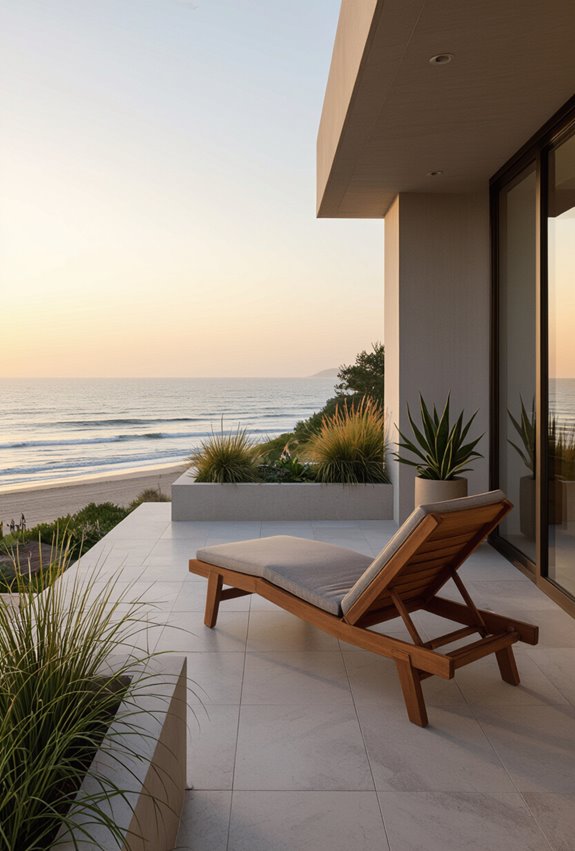
Alongside tidy gear stations, you can also reduce your hotel’s environmental footprint by designing with coastal ecosystems in mind. Use native planting to stabilize dunes and support wildlife, buffer tidal wetlands, and minimize irrigation.
Orient buildings for passive cooling and add solar shading to cut energy use. Select permeable paving for parking and paths to manage runoff, recharge groundwater, and protect nearby shoreline habitats.
Storm-Resilient Construction Details for Hotels
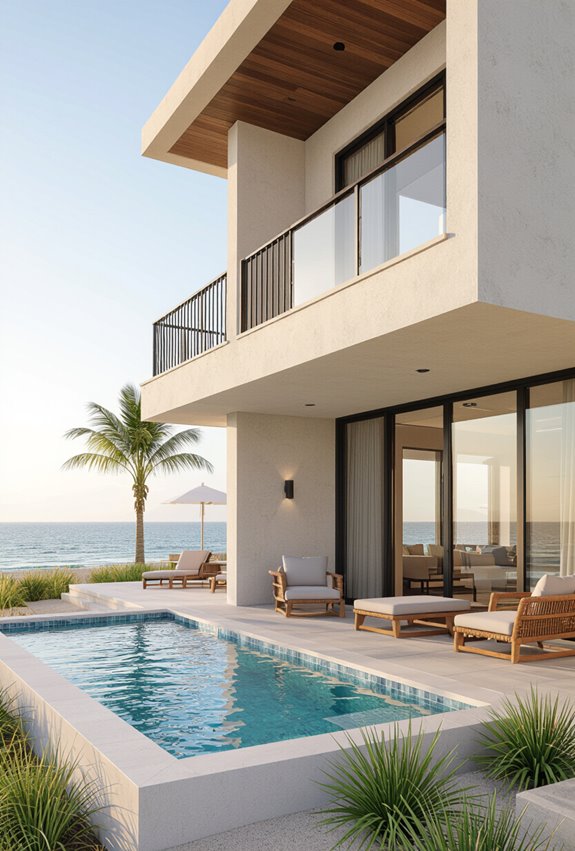
When you design for storms, prioritize robust structural systems, elevated critical spaces, and resilient envelope details that keep guests safe and downtime minimal.
You’ll specify a reinforced parapet, continuous load paths, and impact-resistant, stormproof glazing. Sealants, secondary drainage and protected openings reduce water ingress.
Design service routes, backup power, and quick-repair details so you restore operations fast after extreme weather.
Corrosion-Resistant Fixtures and Fittings
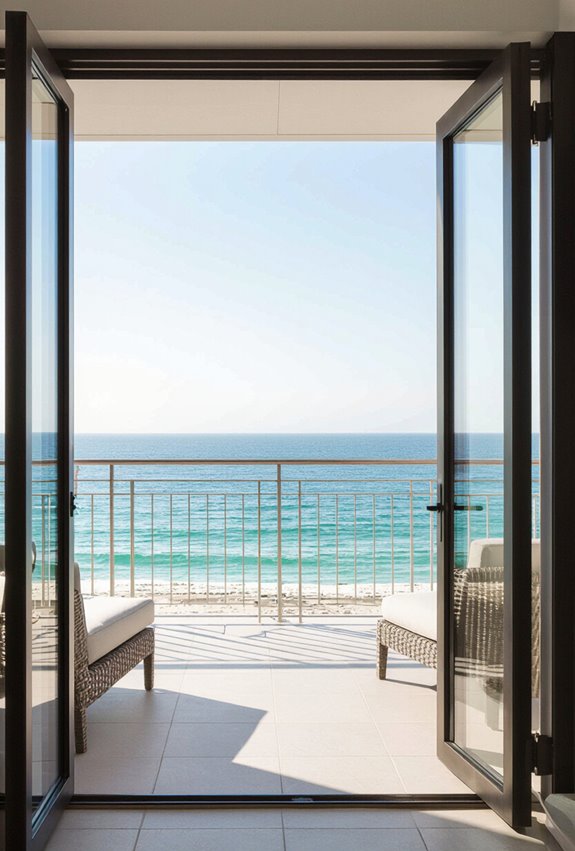
Storm-hardened structural elements and sealed openings only go so far if metal fixtures and fittings corrode in the salty air; specifying corrosion-resistant materials and finishes protects operations and guest comfort.
You should choose marine grade hardware, stainless alloys, and anodized aluminum for balustrades, doorware, and outdoor furniture.
Apply saltproof coatings and regular inspection schedules so you avoid premature failure and costly replacements.
Lighting Schemes That Enhance Night-Time Ambiance
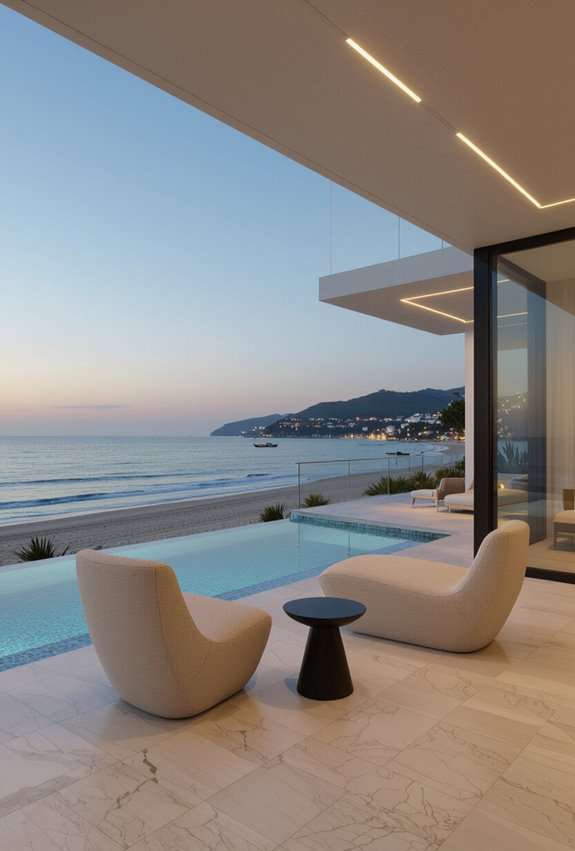
If you want guests to linger after sunset, craft layered lighting that balances safety, mood, and visual interest. Use subtle uplighting on palms and façades, warm low-level fixtures for terraces, and dimmable task lights for seating.
Highlight circulation with moonlit pathways and soft step lighting. Control glare, use waterproof, corrosion-resistant fittings, and create scenes that shift from vibrant to intimate as the night deepens.
Natural Ventilation Strategies to Reduce AC Use
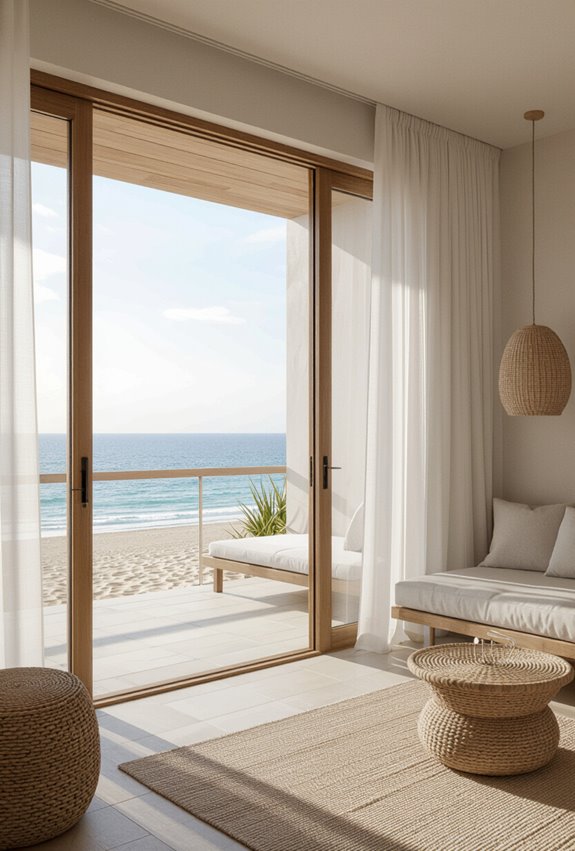
Because coastal breezes are one of your best passive tools, design layouts to capture and channel wind before you reach for mechanical cooling.
Orient rooms for cross breezes, use stack ventilation and solar chimneys to pull hot air up, and plan night purging to flush heat.
Combine operable windows, shaded openings, and thermal mass so you rely less on AC while keeping guests comfortable.
Local Art and Craft Displays That Tell a Place Story
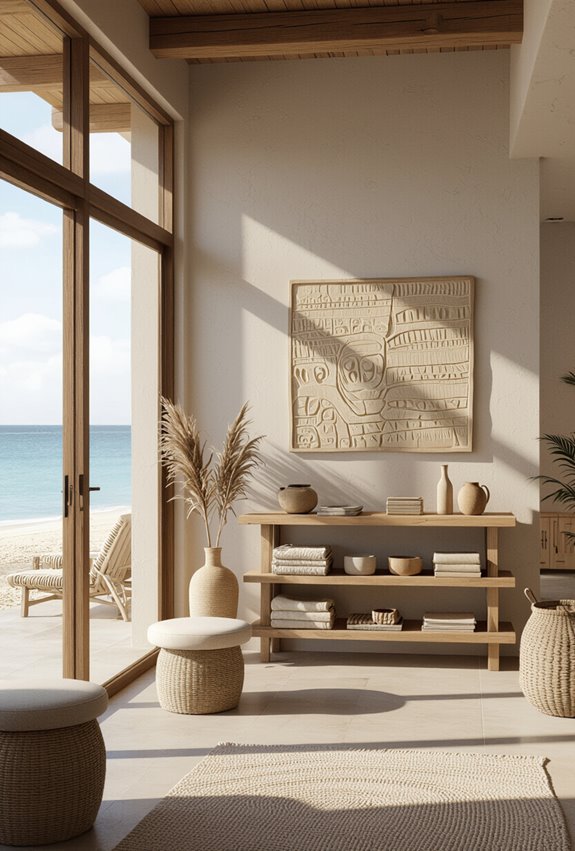
Local-art displays and curated craft corners let you weave the region’s story into guests’ everyday experience. You’ll showcase Community artisans’ pieces with clear labels, rotating exhibits, and small-sale opportunities.
Host Heritage workshops in public lounges or poolside gazebos so visitors meet makers, learn techniques, and leave with meaningful souvenirs. This approach deepens place connection and supports local creative economies.
Guest-Room Furniture That Resists Sun and Salt

You’ll want furniture that stands up to sun, salt, and frequent use without looking industrial or tired: choose UV-stable finishes, marine-grade metals, and tight-weave fabrics treated for salt resistance, and place pieces where cross-ventilation limits moisture buildup.
Opt for UV stable wicker and marine grade upholstery on beds and lounges, teak or powder-coated frames, removable cushions, and easy-drain construction for quick drying.
Rooftop Bars and Terraces With Panoramic Ocean Sightlines
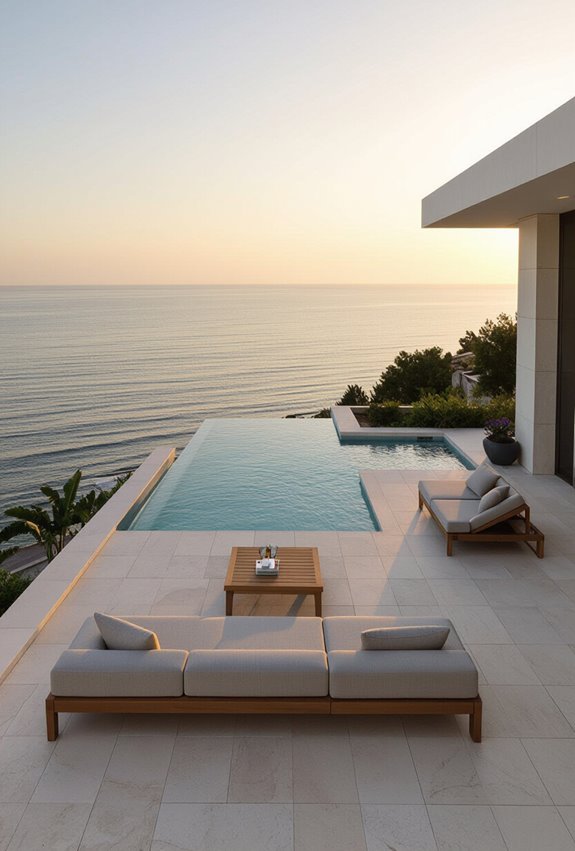
Perched above the shoreline, rooftop bars and terraces turn every sunset into a destination—design them with unobstructed sightlines, low-profile glazing, and staggered seating so guests can move freely between sun-drenched lounge areas, shaded nooks, and open-air bars.
You’ll prioritize Sunset viewing with Glass windbreaks, ambient lighting, durable furnishings, and flexible layouts that encourage mingling, cocktails, and late-night ocean breezes.
Texture Play: Woven, Driftwood, and Linen Accents
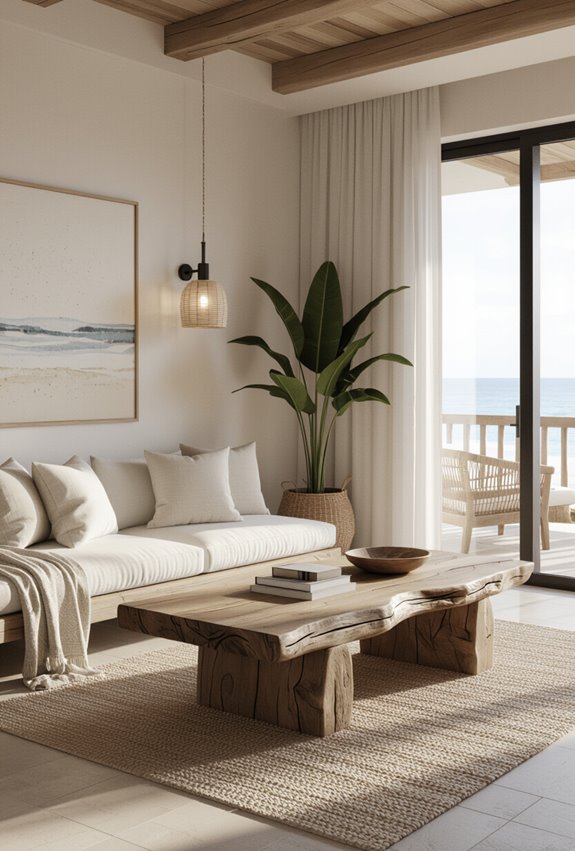
If you want guests to feel the coast before they even step outside, layer woven baskets, driftwood accents, and breathable linen textiles to create a tactile narrative that’s both rugged and refined.
You’ll mix woven lighting for soft, organic glow with linen drapes and upholstery for cool comfort. Place driftwood sculptures as focal points, balancing texture and calm in public and guest-room spaces.
Color-Blocking Ideas for Brand-Forward Hotels

Lean into bold color-blocking to make your brand instantly recognizable—pair saturated sea-glass greens or coral accents with crisp neutrals to guide sightlines and signal different zones.
You’ll use Bold accents sparingly on reception walls, signage, and upholstery to create focal points.
Combine Brand gradients across corridors and elevators to suggest hierarchy and movement, ensuring cohesive, memorable wayfinding and photo-ready moments.
Small-Batch, Locally Inspired Breakfast Nooks
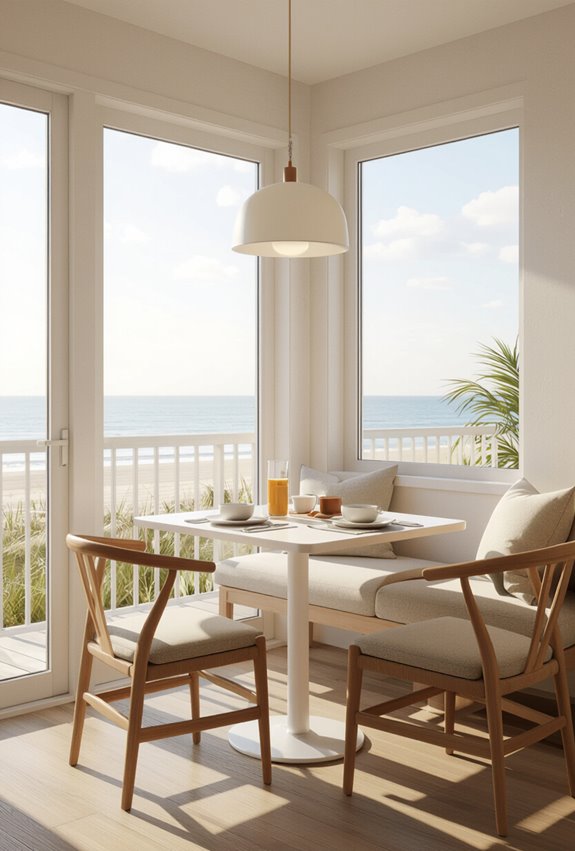
Celebrating local flavors and craftsmanship, small-batch breakfast nooks give guests a distinct morning identity—think hand-roasted coffee, house-made preserves, and regionally sourced pastries presented in compact, sunlit alcoves that feel both curated and communal.
You’ll showcase community recipes on chalkboards, pair bites with ceramic crockery, and design intimate counters where guests linger, trade stories, and sample seasonal specialties that reflect place and provenance.
Lighting for Safety on Beaches and Boardwalks
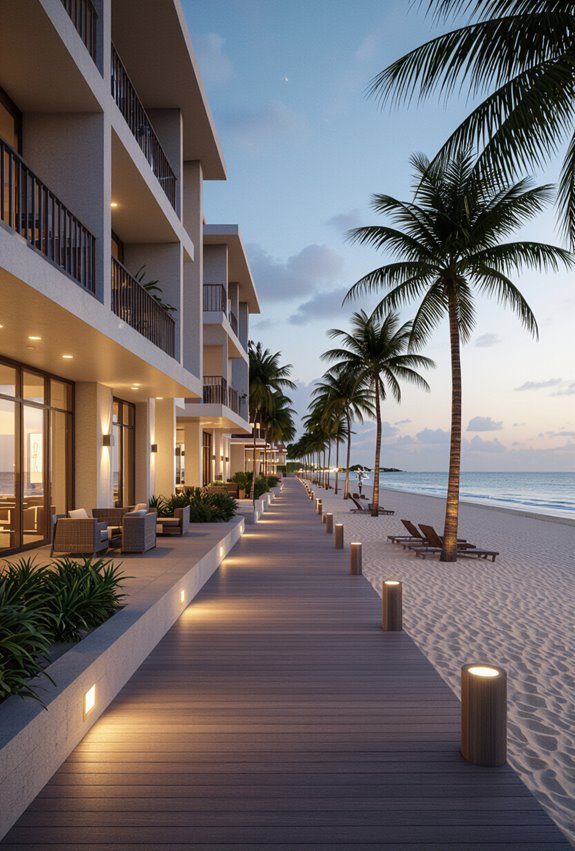
When you plan lighting for beaches and boardwalks, prioritize visibility and wayfinding without washing out the night sky; well-placed fixtures reduce accidents, discourage risky behavior, and help guests orient themselves along paths and near hazards.
You’ll use low-glare pathway illumination, subtle Tidewatch beacons for shoreline hazards, and timed dimming to protect wildlife while keeping routes safe, clear, and easy to navigate.
Seasonal Programming Spaces for Events and Markets

If you want your hotel to feel alive year-round, design flexible outdoor zones that adapt quickly from morning farmers’ markets to evening concerts and holiday fairs.
You’ll create pop up piazzas with modular seating, power access, and storage for seasonal marquees.
Plan clear circulation, staging spots, and vendor hookups so you can shift layouts fast, host community events, and maximize revenue without permanent disruption.
Designing for Low-Light Winter Beach Seasons
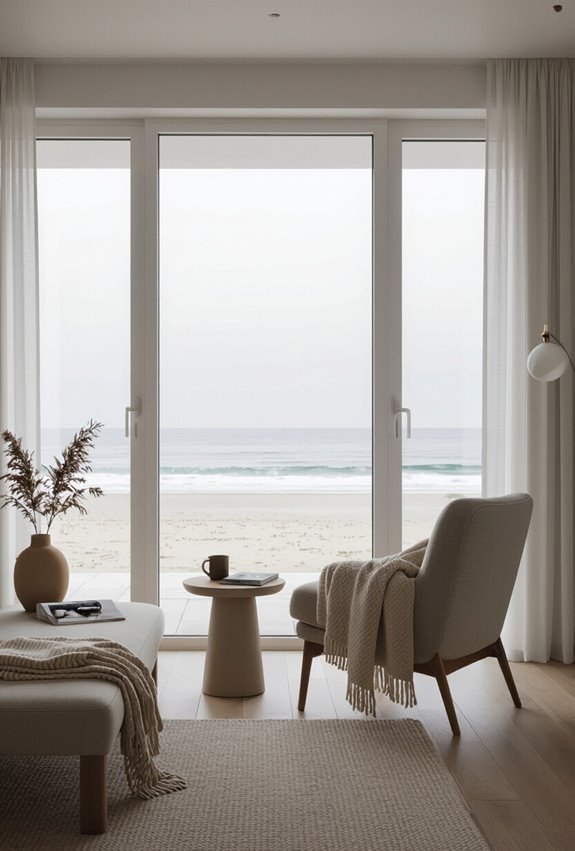
Often overlooked, winter’s low light demands that you design beach hotel spaces to feel warm, safe, and energizing without relying on sunshine. Use layered lighting, reflective surfaces, and warm palettes.
Implement winterized glazing to maximize insulation and diffuse dim daylight.
Incorporate low light landscaping—evergreens, sculptural hardscape, and lit pathways—to create year-round curb appeal and safe, inviting outdoor connections.
Modular Units and Pop-Ups for Temporary Demand
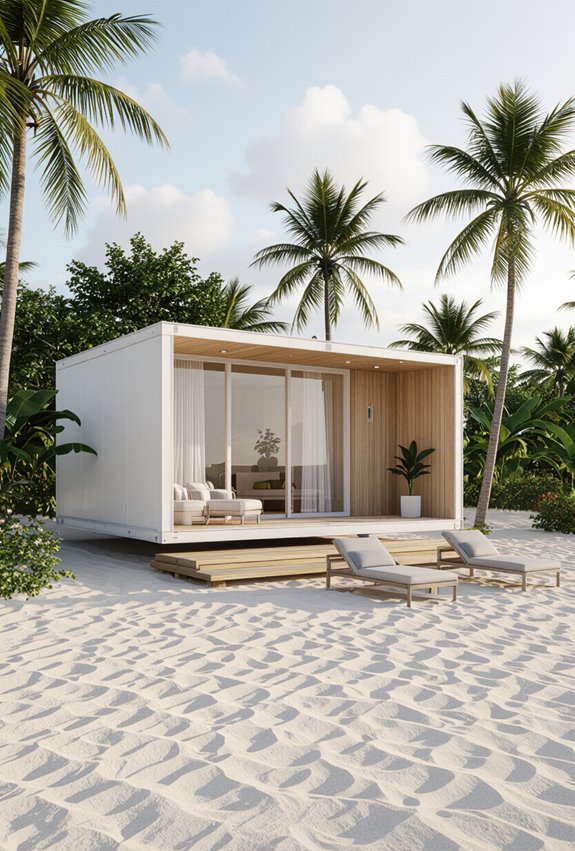
Low-light winter strategies pair well with flexible accommodation that responds to seasonal demand: modular units and pop-ups let you scale capacity and activate spaces without permanent construction.
You can deploy pop up bungalows and modular beachlets to create instant guest clusters, concierge hubs, or workspaces. They fold away off-season, preserve site lines, and let you test layouts, amenities, and micro-markets before committing long-term.
Cost-Conscious Design Choices for Small Properties
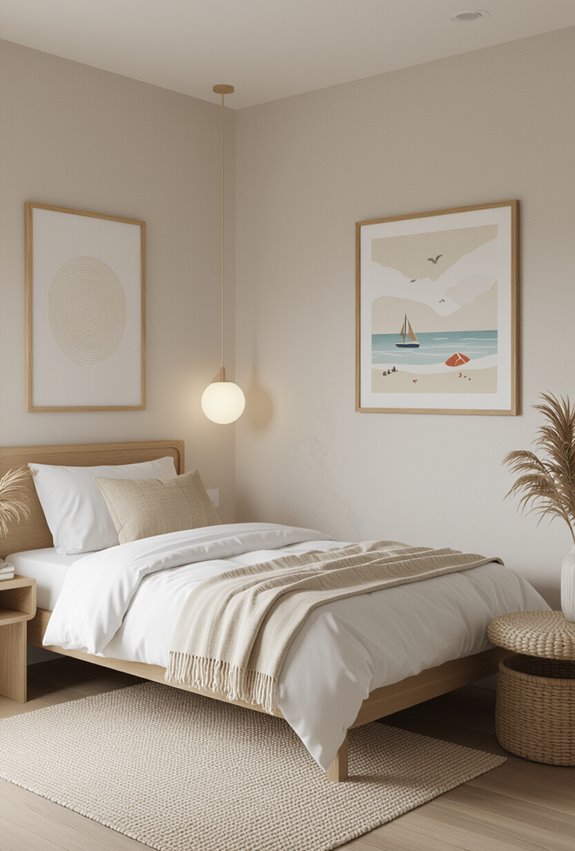
Think small and smart: you can stretch a tight budget by prioritizing high-impact moves—durable finishes, multi-use furniture, and simple layouts that reduce construction and maintenance costs.
Use budget palettes to unify rooms, hide wear, and elevate perceived value.
Opt for strategic furniture swaps to refresh looks without replacing everything.
Focus on efficient lighting, durable textiles, and smart storage to cut long-term costs.
Open-Air Lounges With Ocean Views
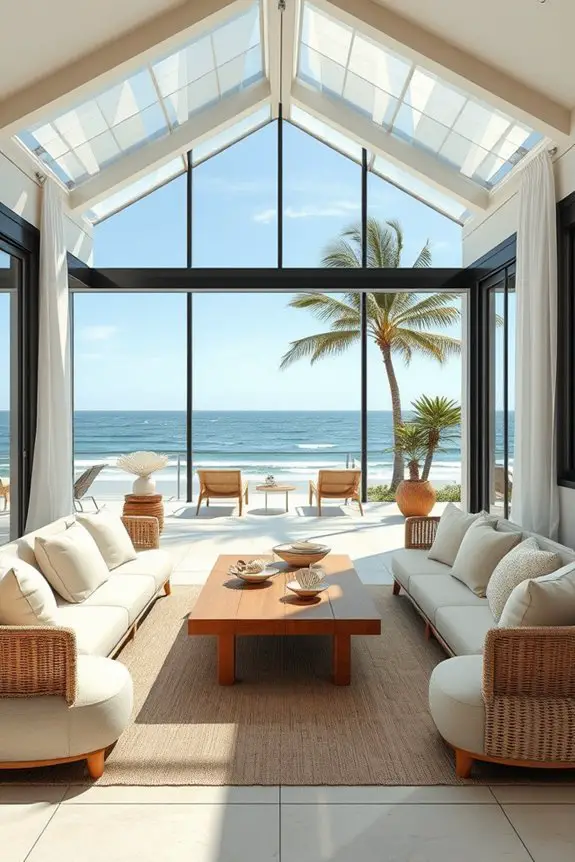
When you step into an open-air lounge with ocean views, it feels like paradise. The gentle sound of waves lapping against the shore invites you to unwind and soak in the ambiance.
Imagine sinking into plush seating, surrounded by vibrant greenery, as the ocean breeze wafts through the space. These ocean breeze lounges create an atmosphere of beachfront relaxation, perfect for sipping cocktails or enjoying a good book.
You can feel the sun warming your skin while soft music plays in the background. Whether you’re with friends or savoring a moment alone, the inviting layout encourages conversation and connection.
With breathtaking views and a laid-back vibe, you’ll find yourself lingering longer than you planned, blissfully lost in the coastal charm.
Infinity Pools Overlooking the Sea
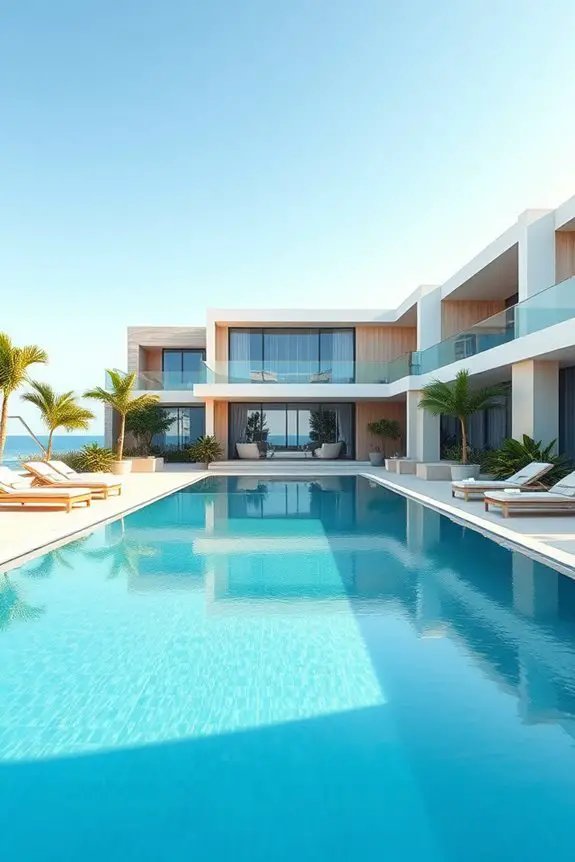
As you design your beach hotel, consider incorporating infinity pools that seamlessly blend with the horizon.
These stunning infinity pool designs not only enhance the ocean view aesthetics but also create a tranquil escape for your guests. Imagine the calming effect of crystal-clear water flowing over the edge, making it seem like the pool spills right into the sea.
Choose materials and colors that complement the coastal environment, ensuring your pool feels part of the landscape.
Adding comfortable lounge chairs and ambient lighting can elevate the atmosphere, inviting guests to unwind.
With the right design, your infinity pool can become a focal point, drawing visitors who seek both relaxation and breathtaking views, ultimately enriching their beach hotel experience.
Waterfront Yoga Spaces
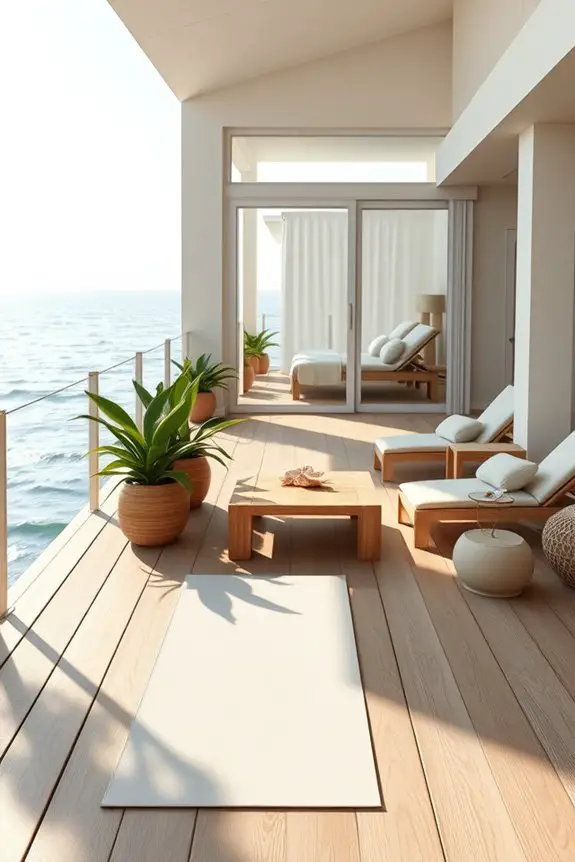
Creating spaces for relaxation and wellness is key to enhancing your beach hotel experience, and waterfront yoga areas offer a perfect blend of serenity and nature.
Picture yourself flowing through mindful movement, surrounded by the calming sound of waves and the gentle sea breeze. By designing serene spaces with natural materials and soft colors, you can foster a tranquil environment that encourages guests to unwind and reconnect with themselves.
Include features like open-air platforms or shaded cabanas, allowing for year-round practice, regardless of the sun’s intensity. Don’t forget to incorporate lush greenery to enhance the peaceful atmosphere.
With waterfront yoga spaces, you’ll elevate your hotel’s appeal, inviting guests to embrace wellness and enjoy the breathtaking coastal views.
Beachy Colorful Tiles
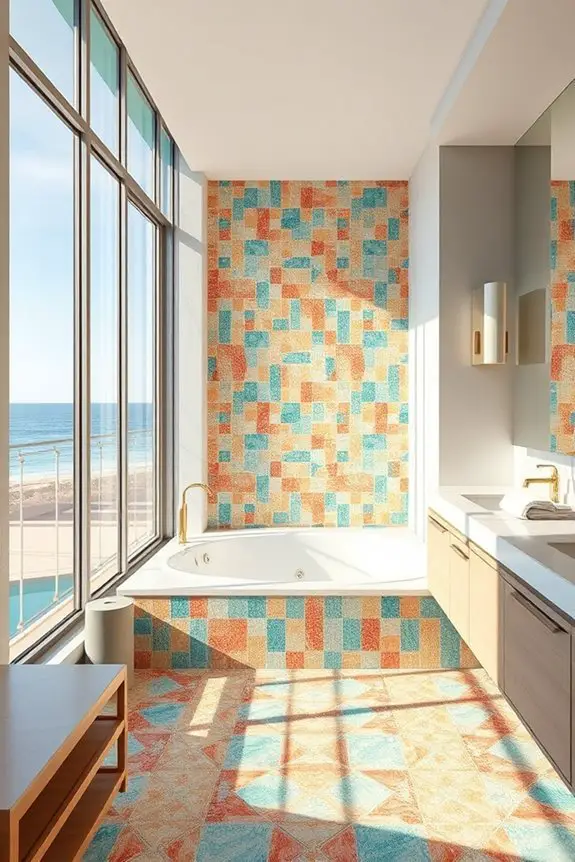
Bright, beachy colorful tiles can transform your hotel’s aesthetic, infusing spaces with a lively coastal vibe. By incorporating vibrant tile patterns, you’ll create a playful atmosphere that invites guests to feel relaxed and inspired.
Think about using bold colors like turquoise, coral, and sunny yellow to reflect the beautiful seaside surroundings. Mosaic art styles can add a unique touch, allowing you to express creativity while enhancing the overall charm of the space.
Consider applying these tiles in common areas, like the lobby or poolside, to make a stunning impression. You could even use them in guest bathrooms for a rejuvenating surprise.
Whatever your choice, these colorful tiles will surely capture the essence of beachside living.
Beachfront Fireworks Viewing Areas
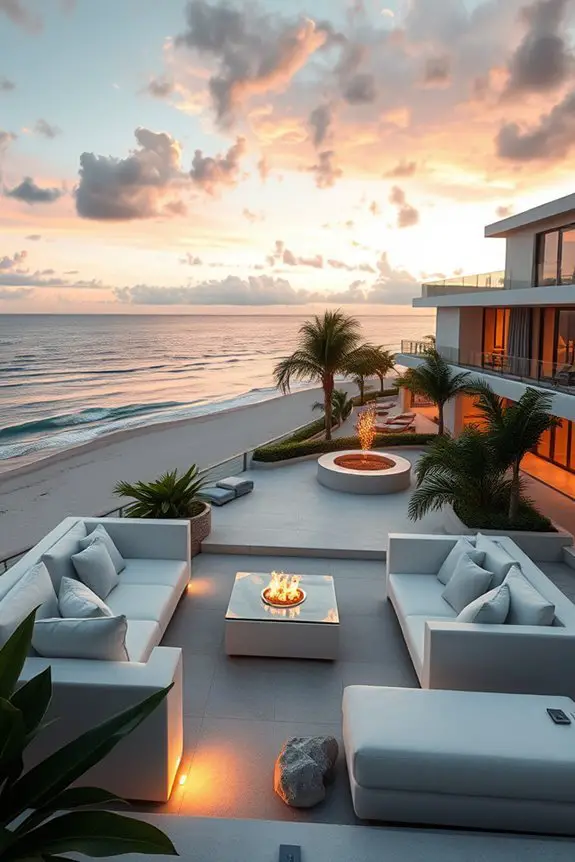
When you design beachfront fireworks viewing areas, you set the stage for an unforgettable experience that guests will look forward to.
To enhance the ambiance, consider comfortable fireworks seating arranged to provide ideal views of the sky. You’ll want to create a cozy atmosphere with stylish beachfront lighting that adds warmth and charm as the sun sets.
Incorporate fire pits or outdoor heaters for chilly evenings, ensuring guests stay comfortable while they enjoy the spectacular displays. Use natural materials like wood and stone to blend seamlessly with the surroundings, and don’t forget to include pathways that guide guests to their seats safely.
With thoughtful design, you’ll create a magical space for guests to enjoy the fireworks and create lasting memories.
Glass Walls for Ocean Views
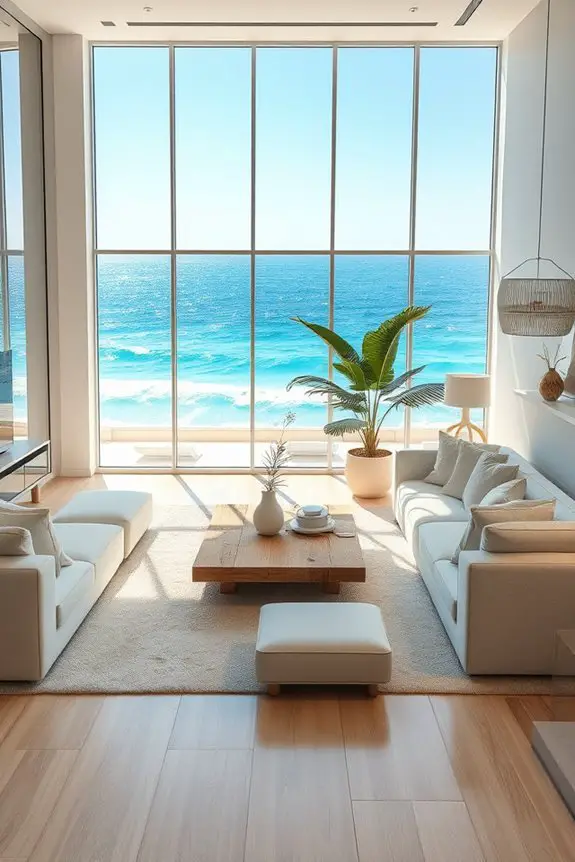
After guests enjoy a breathtaking fireworks display, they’ll want to take in the stunning ocean views that your beachfront property offers.
Incorporating glass wall innovations is a game changer for creating an immersive experience. These expansive glass walls not only maximize natural light but also provide unobstructed, panoramic ocean views that make every moment unforgettable.
Imagine lounging in a beautifully designed room where the boundaries between indoors and outdoors blur seamlessly. With the right arrangement, you can enhance the vibe of your space, making it feel both modern and inviting.
This design choice invites guests to connect with nature while enjoying their stay, ensuring they leave with lasting memories of your coastal paradise.
Conclusion
Incorporating these 40 stylish beach hotel design ideas will transform your coastal getaway into paradise itself! You’ll create a space that not only captures the essence of the beach but also offers guests an unforgettable experience. From stunning infinity pools to nautical decor, every detail matters. Embrace the local culture and sustainable materials to make your hotel stand out. With these elements, your beach hotel will become the ultimate escape, making waves in the hospitality industry!