
Can You Use Pine-Sol on Vinyl Flooring Safely?
Yes — you can use diluted Pine-Sol on most vinyl floors, but you shouldn’t use it full strength. Mix per label directions (about 1/4 cup per gallon), mop with a well-wrung pad, and rinse or buff dry to avoid residue. Test a hidden area first, avoid unsealed seams or older discolored vinyl, and stop if you see dulling, tackiness, or color change. Follow manufacturer care instructions for best results, and keep going to learn safe techniques and alternatives.
Quick Answer Can You Use Pine-Sol on Vinyl Flooring?
Yes—you can use Pine-Sol on most vinyl floors for routine cleaning because it effectively removes dirt without harming the surface when diluted.
Don’t use it full-strength, on unsealed seams, or on older/discolored vinyl that may be solvent-sensitive.
If you’re unsure, test a small hidden area first and avoid prolonged soaking.
Short, direct recommendation
You can use Pine-Sol on most vinyl floors for routine cleaning, but dilute it per the label and avoid prolonged rinsing or high concentrations that might dull or damage the finish.
For a quick recommendation, test a small hidden area first, mop with the proper dilution, rinse lightly if needed, and don’t let the solution sit or pool to protect the vinyl surface.
When it’s safe and when to avoid it
If your vinyl has a factory-applied wear layer and you follow the label dilution, Pine-Sol’s safe for routine cleaning; avoid it on unsealed, textured, or older vinyl that’s showing wear because the cleaner or repeated rinsing can dull or lift the finish.
Test a hidden area first, use a damp mop rather than soaking, and stop use if you notice discoloration, residue, or increased surface tack.
Basic Understanding What Is Pine-Sol and What Is Vinyl Flooring?
Before you decide on a cleaner, know that Pine-Sol is a formulation of surfactants, solvents, and fragrances (and sometimes glycolic or pine oil derivatives) that breaks down grease and soils.
Vinyl flooring comes in sheet, tile, and luxury vinyl plank (LVP) formats with various wear layers or surface coatings that protect the printed vinyl core.
You’ll want to understand how those cleaning chemicals can interact with different finishes so you don’t dull, strip, or discolor your floor.
What Pine-Sol is made of (active ingredients and typical formulations)
Pine-Sol is a commercially formulated household cleaner that’s built around surfactants, solvents, and antiseptic agents; its most common active ingredient in many formulations is pine oil or other terpenes, while newer versions often use glycol ethers (like mono- or dipropylene glycol ethers) plus biodegradable surfactants and fragrance. You should note concentrations vary; check labels for compatibility with finishes.
| Ingredient | Role |
|---|---|
| Pine oil/terpenes | Fragrance/antiseptic |
| Glycol ethers | Solvent |
| Surfactants | Cleaning |
| Fragrance | Scent |
Types of vinyl flooring (sheet, tile, luxury vinyl plank) and surface coatings
Knowing what’s in Pine-Sol helps you judge how it might interact with different vinyl floors, because vinyl comes in several constructions and surface coatings that react differently to solvents and strong cleaners.
You’ll find sheet vinyl (seamless, glued), vinyl composition tile (VCT, denser), and luxury vinyl plank (LVP, layered).
Coatings vary: factory urethane, wear layers, or no protective finish at all.
How cleaning agents interact with vinyl finishes
When you clean vinyl floors, the ingredients in a cleaner determine whether it simply lifts dirt or also affects the surface finish. Solvents and strong detergents can dull, soften, or strip wear layers while mild, pH-balanced cleaners usually just remove soil.
You should test products, dilute per instructions, avoid waxy or oil-based formulas, and rinse residues to prevent buildup or finish degradation.
Detailed Explanation Risks and Benefits of Using Pine-Sol on Vinyl
When you use Pine-Sol on vinyl, you should weigh clear benefits—strong cleaning power, grease removal, and deodorizing—against real risks like discoloration, finish dulling, or adhesive breakdown.
How safe it’s depends on factors you can control: dilution, concentration, dwell time, and the flooring’s finish condition and age.
Test a small area first and adjust your method based on the result.
Potential risks (discoloration, finish dulling, adhesive breakdown)
Although Pine-Sol can cut grease and leave floors smelling clean, it can also harm vinyl: repeated or concentrated use may strip the factory finish, cause uneven discoloration, and soften adhesive under sheets or tiles.
You risk patchy color, dull shine, lifting seams, lingering residue, and costly repairs.
- Frustration
- Shock
- Regret
- Anxiety
- Urgency
Possible benefits (cleaning power, grease removal, deodorizing)
Pine-Sol can deliver real cleaning benefits on vinyl: it cuts through grease, lifts dirt and grime that water alone won’t remove, and leaves a fresh, deodorized scent that masks odors from pets or spills.
You’ll restore visible shine, remove sticky residues, and neutralize smells quickly; routine use can make maintenance easier, saving time compared with plain water or mild soap.
Factors that influence safety (concentration, dwell time, dilution, finish condition, age of flooring)
Those cleaning benefits are real, but you’ll want to pay attention to how you use Pine-Sol so the product doesn’t harm your vinyl.
Use proper dilution, shorten dwell time, and avoid concentrated pours.
Test a hidden spot first—damaged or worn finish and older flooring absorb chemicals more readily.
When in doubt, dilute more, rinse promptly, and skip Pine-Sol on fragile or aging vinyl.
How-To: Safely Clean Vinyl Flooring Using Pine-Sol (Step-by-Step)
Before you start, check your vinyl’s manufacturer recommendations and any warranty limits so you won’t accidentally void coverage.
Gather your supplies and mix Pine-Sol to the proper dilution, then choose the right application method—mop, microfiber, or spot-cleaning—and allow appropriate dwell time.
Finish by rinsing, drying, and buffing to remove residue and restore shine.
Step 1 Check manufacturer recommendations and warranty considerations
Because some vinyl floors have surface coatings or adhesives that can react to cleaners, you should check the manufacturer’s care instructions and your warranty before using Pine-Sol.
Look for explicit cleaning agents to avoid, recommended dilution ratios, and any voiding clauses. If guidance is unclear, contact the manufacturer or keep documentation; doing so protects your floor and maintains warranty coverage.
Step 2 Prepare the area and tools needed
Now that you’ve confirmed Pine-Sol won’t void your warranty or harm the finish, prepare the room and gather supplies so cleaning goes smoothly.
Clear debris, open windows for ventilation, and test a hidden patch.
Have these ready to ease the task and calm nerves:
- Broom or vacuum
- Microfiber mop
- Bucket
- Gloves
- Soft cloths
Step 3 Proper dilution ratios and mixing instructions
Since concentrated cleaners can dull or damage vinyl if used straight, dilute Pine-Sol to the proper strength before you mop.
Mix 1/4 cup (2 tablespoons) of original Pine-Sol per gallon of warm water for routine cleaning. For tougher grime, increase to 1/2 cup per gallon.
Stir gently, avoid splashing, and label the solution; discard unused mix after 24 hours.
Step 4 Application methods (mop, microfiber, spot-cleaning) and dwell time
With your Pine-Sol solution mixed and labeled, choose the right application method for the task:
A well-wrung mop or microfiber pad spreads the diluted cleaner evenly for full-floor jobs. A damp microfiber mop lifts dirt with minimal water, and a soft cloth or sponge works best for spot-cleaning scuffs and spills.
Work small sections, let solution sit 1–2 minutes to loosen grime, then agitate as needed.
Step 5 Rinsing, drying, and buffing to restore shine
Finish by rinsing, drying, and buffing each section to remove residue and revive the vinyl’s shine.
After mopping with diluted Pine-Sol, go over the floor with clean water to lift cleaner, then blot excess with a microfiber towel.
Let air-dry briefly, then buff with a dry microfiber or low-speed floor buffer in circular motions to restore luster without overworking the surface.
Step 6 Post-cleaning inspection and when to repeat
After buffing, take a close look at the floor for remaining streaks, sticky spots, or missed areas so you can spot-clean before things set.
Check edges and grout lines, test any high-traffic zones for residue, and verify no dull patches remain.
If you find buildup or lingering odor, repeat cleaning with a diluted Pine-Sol solution and rinse again until surfaces are consistently clean.
Alternatives to Pine-Sol for Vinyl Flooring
You don’t have to use Pine-Sol to keep vinyl looking good—mild soap and water, commercial vinyl-safe cleaners, and simple homemade options can all work well.
I’ll show quick recipes and effectiveness for soap-and-water mixes, what to look for in store-bought vinyl cleaners, and the pros and cons of vinegar or baking soda solutions.
That way you can pick a safe, effective method that fits your budget and preferences.
Mild soap and water (recipes and effectiveness)
While Pine-Sol can work, a simple mix of mild dish soap and warm water often cleans vinyl just as well without harsh fumes; combine one teaspoon of dish soap per gallon of warm water.
Mop or wipe gently, then rinse with clean water to avoid residue. You’ll remove dirt, grease, and light stains safely—test a hidden spot first to verify no finish dulling.
Commercial vinyl-safe cleaners and products
Think of commercial vinyl-safe cleaners as purpose-built alternatives to Pine-Sol that give you effective cleaning without the risk of finish damage or lingering fumes. You can choose pH-neutral formulas, no-wax finishes, or quick-dry sprays. Follow label directions and spot-test first.
| Brand | Type | Best for |
|---|---|---|
| Bona | Spray | Daily maintenance |
| Armstrong | Concentrate | Deep cleaning |
| Zep | No-rinse | High-traffic |
| Rejuvenate | Restorer | Faded floors |
Homemade natural cleaners (vinegar, baking soda) pros and cons
If store-bought vinyl cleaners don’t fit your budget or you prefer DIY solutions, simple household ingredients like vinegar and baking soda can work for many cleanup tasks.
You can mix diluted white vinegar and water for light cleaning and use baking soda as a gentle scrub.
Avoid undiluted acid, abrasive scrubbing, and frequent use—these can dull or damage vinyl over time.
Comparison Pine-Sol vs. Vinyl-Safe Cleaners
You’ll want to weigh Pine-Sol’s cleaning power against cleaners labeled safe for vinyl, since effectiveness can vary by soil type.
Consider how each product affects your floor’s finish and long-term durability, plus differences in price and how easy they’re to buy.
Also factor in environmental and toxicity concerns so you can choose what’s safest for your home.
Cleaning effectiveness
While Pine-Sol cuts through grease and grime on vinyl, it isn’t formulated specifically for vinyl surfaces the way vinyl-safe cleaners are; those products balance cleaning power with pH levels and conditioners that protect finish and prevent dulling.
You’ll find Pine-Sol removes tough stains quickly, but vinyl-safe cleaners lift dirt effectively while minimizing residue, streaks, and the need for repeated rinsing to restore appearance.
Impact on finish and longevity
Beyond cleaning power, what really matters is how a product affects your vinyl’s finish and lifespan.
Pine-Sol’s strong solvents can dull or strip factory wear layers over time, causing premature fading, cracking, or loss of sheen.
Vinyl-safe cleaners are formulated to clean without degrading protective coatings, preserving color and flexibility.
Choose pH-balanced, non-abrasive products and follow dilution instructions to extend your flooring’s life.
Cost, availability, and environmental/toxicity concerns
Because price and access often drive your choice, weigh Pine-Sol’s low upfront cost and wide availability against the slightly higher price and sometimes narrower distribution of vinyl-safe cleaners. Consider toxicity and disposal: Pine-Sol can have harsher chemicals; vinyl-safe formulas often use milder, greener ingredients. Compare at a glance:
| Feature | Pine-Sol vs Vinyl-Safe |
|---|---|
| Cost | Lower vs Higher |
| Toxicity | Higher vs Lower |
Common Mistakes and Problems to Avoid
Don’t use undiluted Pine-Sol or a stronger mix than recommended, and don’t let the solution sit on your vinyl or scrub with abrasive tools.
Always follow the flooring manufacturer’s care guidelines and warranty terms, and test the cleaner in an inconspicuous spot first.
These simple steps will help you avoid stains, surface damage, or voiding your warranty.
Using undiluted Pine-Sol or too strong a solution
If you pour undiluted Pine-Sol or mix a solution stronger than the label recommends, you can damage your vinyl’s finish and adhesive.
You should always follow dilution instructions and test a small, hidden area first. Strong solutions may strip protective coatings, cause discoloration, or loosen tiles.
Rinse thoroughly with clean water after cleaning to remove residue and protect the flooring.
Letting cleaner sit too long or using abrasive tools
When you let Pine-Sol sit on vinyl too long or scrub with scouring pads, you risk dulling the finish, staining the surface, or abrading the wear layer that protects the floor.
Rinse promptly, wipe excess cleaner, and use a soft mop or microfiber cloth.
Test in an inconspicuous spot first, and avoid metal brushes, steel wool, or harsh scrubbing that can permanently damage vinyl.
Ignoring manufacturer guidelines or warranty terms
Although a quick cleaning hack might seem fine, ignoring the manufacturer’s instructions or warranty terms can void coverage and lead to costly repairs.
You should follow care guidelines and approved products; manufacturers know what chemicals and methods suit their vinyl.
Skipping those rules risks staining, warping, or losing warranty protection, leaving you responsible for replacement or professional restoration costs.
Failing to test in an inconspicuous area first
Following manufacturer guidelines helps, but you still shouldn’t skip a simple spot-check before using Pine-Sol on the whole floor.
Test a diluted solution in an out-of-the-way corner or under a piece of furniture for 24 hours. If you see discoloration, dulling, or finish breakdown, stop immediately.
Testing saves you from costly damage and preserves your warranty.
Best Practices and Preventive Tips for Maintaining Vinyl Floors
Keep a regular maintenance schedule with gentle cleaning—sweep or vacuum often and mop with a diluted Pine-Sol solution to avoid buildup.
Use felt pads, rugs, and proper cleaners to protect against scratches and chemical damage, and tackle stubborn stains or adhesive residue with recommended spot treatments and a soft scraper.
If wear, deep scratches, or peeling appear, call a professional for restoration before the problem worsens.
Regular maintenance schedule and gentle cleaning routine
When you stick to a simple, regular maintenance schedule, your vinyl floors will stay cleaner and last longer.
You should sweep daily, mop weekly with mild cleaner, spot‑treat spills immediately, use microfiber tools, and let floors air‑dry.
Small habits protect your investment and brighten rooms.
- Calm pride
- Quiet relief
- Simple joy
- Lightweight effort
- Lasting comfort
Protecting floors from scratches and chemical damage
Because vinyl is durable but not indestructible, you’ll want to take simple steps to prevent scratches and chemical damage that can dull or warp the surface.
Use felt pads on furniture legs, place mats at entrances, and lift heavy items instead of dragging.
Test cleaning products on an inconspicuous spot, avoid harsh solvents, and keep pets’ nails trimmed to minimize wear.
What to do for stubborn stains or adhesive residue
If a spill or sticky residue won’t budge with regular mopping, tackle it promptly with targeted methods to protect the vinyl’s finish.
Test a small area first, then use a soft cloth with warm water and mild detergent, or apply rubbing alcohol or a commercial adhesive remover sparingly.
Gently scrape with a plastic scraper, rinse well, and dry. Repeat if needed.
When to call a professional for restoration
Although many surface issues you can handle yourself, call a professional once damage goes beyond routine cleaning or simple spot repairs.
If you see deep scratches, warped or lifting planks, widespread discoloration, persistent odors, or moisture damage, get an expert evaluation.
They’ll assess subfloor issues, recommend repairs or replacement, and guarantee adhesive, seams, and finish are restored safely to prevent recurring problems.
Visual Guide
Before you apply Pine-Sol broadly, test it on an inconspicuous spot to check for discoloration or finish damage.
Take clear photos of the area before and after cleaning so you can spot any changes and undo them if needed.
Follow simple before-and-after steps—sweep and spot-test first, dilute and clean gently, then rinse and dry thoroughly.
How to test a cleaner on an inconspicuous spot
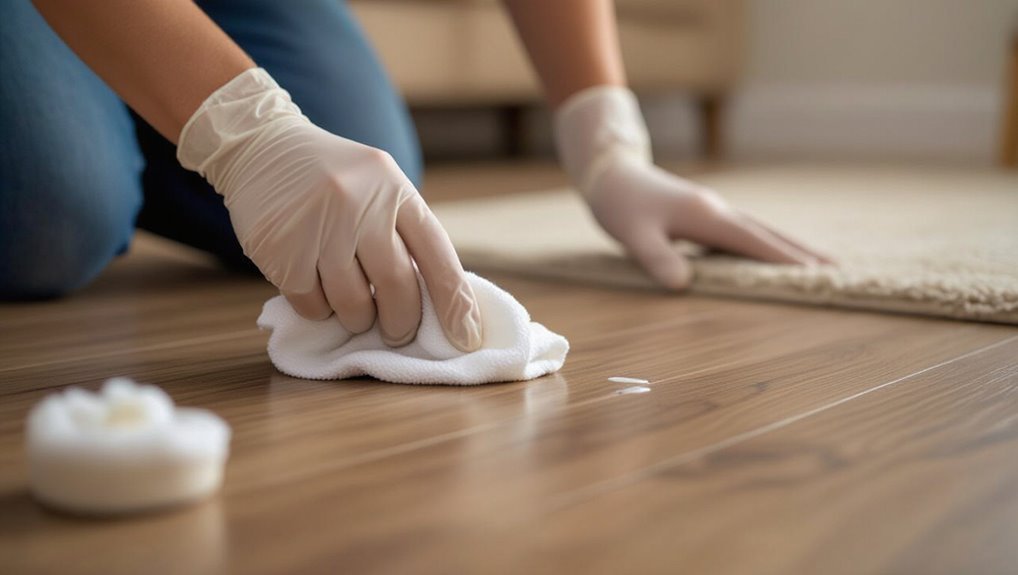
When you’re ready to try Pine-Sol, pick a small, out-of-the-way spot—like the underside of a cabinet lip or behind a baseboard—so you can check results without risking visible damage.
Dampen a cloth with diluted cleaner, blot the test area, wait 10–15 minutes, then wipe and inspect for color change, swelling, or finish loss.
If unchanged, proceed cautiously.
Before-and-after care steps for safe cleaning
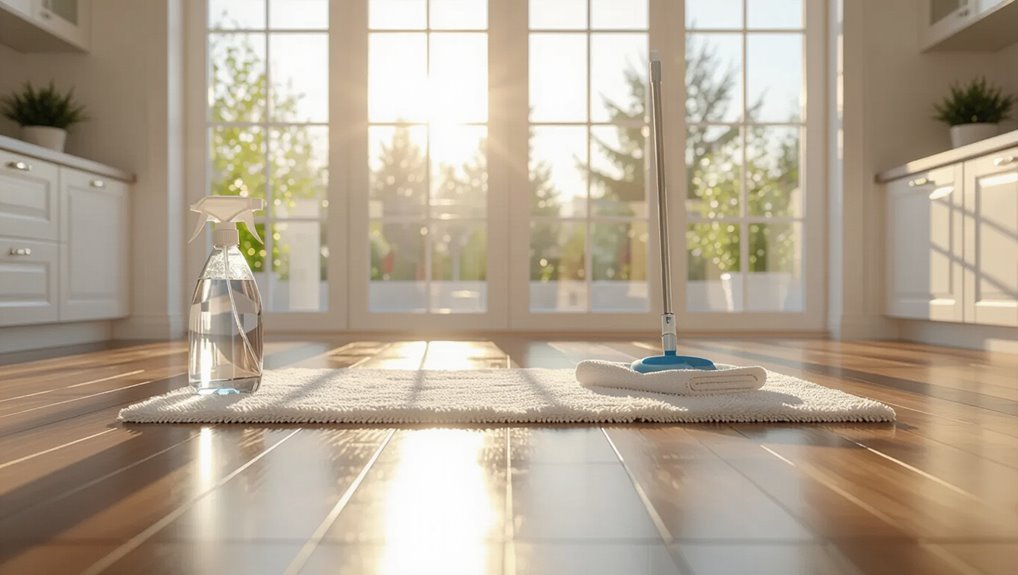
If you want predictable results and to protect your vinyl, take a few quick steps before you clean and a few more after: sweep or vacuum to remove grit, test the cleaner as described, and lay down a damp mop with diluted Pine-Sol.
Once you’ve cleaned, rinse with plain water to remove residue, dry thoroughly to prevent streaks and moisture damage, and replace rugs or furniture only after the floor is completely dry.
Follow up by spot-checking for dullness, re-mopping with plain water if residue remains, and using felt pads under furniture to avoid scratches.
FAQ
You probably have specific questions about Pine-Sol and your vinyl, like whether it can permanently damage the floor or strip finishes on LVP.
We’ll cover how often it’s safe to use, what to do if the floor discolors, and whether protective coatings are affected.
Read on for clear answers and practical steps you can take.
Can Pine-Sol permanently damage vinyl flooring?
Wondering whether Pine-Sol can permanently damage vinyl flooring? You’re unlikely to see lasting harm if you dilute Pine-Sol per label instructions and rinse spills promptly.
Undiluted product, prolonged soaking, or repeated heavy use can dull or weaken the wear layer over time.
Test a hidden area first and avoid abrasive scrubbing to protect finish and color integrity.
Is it safe to use Pine-Sol on luxury vinyl plank (LVP)?
Curious whether Pine-Sol is safe for luxury vinyl plank (LVP)? You can use diluted Pine-Sol on most LVP if the product label allows and you test first in an inconspicuous spot.
Avoid undiluted cleaner, excessive scrubbing, and standing puddles. Use a damp mop, rinse with clean water, and dry promptly to protect the wear layer and prevent potential discoloration.
How often can I use Pine-Sol on vinyl without harming the floor?
How often should you use Pine-Sol on vinyl? Aim for spot cleaning weekly and a full mop with a diluted Pine-Sol solution every 1–2 months, depending on traffic.
For high-traffic areas, increase spot treatments but avoid excessive full-strength use.
Always rinse areas if residue builds up and test a small inconspicuous spot first to guarantee no immediate discoloration.
Will Pine-Sol remove protective coatings or finish on vinyl?
Will Pine-Sol strip the protective finish on vinyl?
You shouldn’t expect routine, diluted use to remove modern factory finishes. However, concentrated solutions, prolonged dwell time, or aggressive scrubbing can dull or weaken coatings over time.
Test a hidden area first, use the manufacturer’s recommended dilution, rinse well, and avoid repeated heavy applications to preserve the finish and warranty.
What should I do if my vinyl becomes discolored after cleaning with Pine-Sol?
If you notice discoloration after cleaning with Pine-Sol, act quickly to limit permanent damage.
Rinse the area thoroughly with warm water and mild dish soap, blotting—not rubbing—with a soft cloth.
Test a small hidden spot with a vinyl-safe cleaner or diluted white vinegar.
If discoloration persists, contact the manufacturer or a professional restoration service before attempting stronger chemicals or abrasive methods.
