
How to Clean Marley Dance Floor Properly for Safety and Durability
You should sweep daily to remove grit, spot-treat spills immediately, and damp-mop twice weekly with a microfiber mop and a pH‑neutral vinyl cleaner, rinsing diluted solutions and drying quickly to prevent residue. Inspect the vinyl type and finish, avoid solvents, ammonia, bleach and excess water, and enforce clean, non‑marking footwear. Keep a maintenance log, train staff on protocols, and schedule periodic checks for wear — keep going to learn detailed steps, tools, and emergency tips.
Quick Marley Floor Cleaning Routine
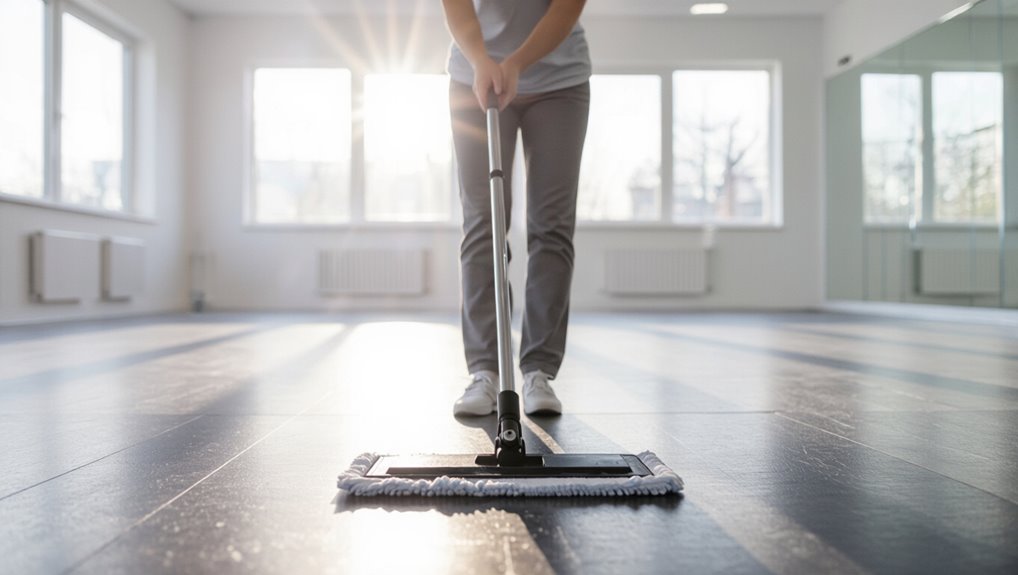
A quick Marley floor cleaning routine keeps the surface safe and dance-ready between deep cleans.
You’ll sweep daily to remove grit, damp-mop with a pH-neutral cleaner twice weekly, and spot-treat spills immediately.
Track cleaning frequency on a simple log, adjust after heavy use, and avoid harsh chemicals or excess water.
This dance floor maintenance preserves grip and appearance.
Why Cleaning Matters for Marley Safety
Because grime, sweat, and dust quickly change how Marley responds underfoot, keeping it clean directly affects dancer safety.
You’ll meet safety standards by removing slippery residues and abrasive particles, preserving traction and consistent feel.
Regular cleaning supports injury prevention, prolongs flooring performance, and helps you spot wear early.
Stay disciplined with routines to protect dancers and extend surface life.
Identify Your Marley Type and Finish
Keeping the floor safe starts with knowing exactly what you’re cleaning. Inspect vinyl Marley types (studio, portable, sprung-compatible) and note finish characteristics: glossy, matte, textured.
Match maintenance to surface—texture traps debris, gloss shows scuffs—so you’ll adjust sweeping and rinsing frequency.
Label your floor type, record finish details, and follow care steps that respect those specific characteristics.
Choose Safe Cleaners for Marley Floors
Choose pH-neutral cleaners designed for vinyl so you won’t strip the finish or leave residue.
Don’t use harsh solvents, ammonia, or bleach that can damage the surface.
Always test any cleaner on a small, inconspicuous area before treating the whole floor.
pH-Neutral Cleaning Solutions
1 good pH-neutral cleaner will keep your Marley floor safe and extend its lifespan by removing dirt without breaking down the surface.
You should choose products that balance pH levels for cleaning effectiveness, meet safety standards, and offer eco friendly options.
Follow simple steps:
- Dilute per label.
- Wring mop to avoid pooling.
- Rinse when recommended.
Avoid Harsh Solvents
Because harsh solvents can strip the vinyl surface, you should avoid cleaners containing acetone, mineral spirits, or strong alcohols on Marley floors.
Stick to mild, pH-neutral products and water-based cleaners. Don’t fall for cleaning myths promising quick fixes with solvents; they damage finish and shorten life.
Follow simple maintenance tips: gentle agitation, rinse thoroughly, and dry to preserve safety and durability.
Test Cleaners First
Before you roll out a full cleaning, always spot-test any product on an inconspicuous area of your Marley floor to confirm it won’t discolor, dull, or soften the vinyl.
You’ll verify product compatibility and safe cleaning techniques before wider use.
Follow these quick checks:
- Test five minutes, then wipe.
- Inspect for residue or haze.
- Repeat with diluted solution if needed.
Tools and Supplies You’ll Need
You’ll need a few basic tools and supplies to clean a Marley dance floor properly: a soft broom or dust mop, a microfiber mop, a neutral pH floor cleaner, clean water, and lint-free towels.
Add a bucket, soft scrub brush, and optional neutral disinfectant.
Use proper cleaning techniques and simple maintenance tips: change water frequently, wring mops well, and store supplies clean and dry to avoid residue and damage.
Prep the Studio and Protect Dancers
Before you start cleaning, clear the dance area of props, bags, and any loose items so you’ve got unobstructed space to work.
Ask dancers to switch to clean, non-marking shoes or foot coverings to prevent tracking dirt and scuffs onto the Marley.
Tie back hair or secure costume pieces that could drag on the floor.
Clear The Dance Area
Start by clearing the room of clutter and hazards so dancers can move confidently; remove shoes, bags, water bottles, and any loose equipment.
Tape down cables, and secure doors or mirrors that might swing open. You’ll guarantee proper dance space setup and follow safety protocols.
- Inspect floor for debris.
- Mark wet/uneven areas.
- Keep entryways clear.
Protect Dancer Footwear
While preparing the studio, make sure dancers’ footwear is clean, appropriate, and won’t damage the Marley surface; inspect soles for debris, choose shoes with non-marking rubber or suede, and avoid heels or sharp edges.
You should enforce dancer hygiene, require clean socks or foot coverings, and store outdoor shoes separately.
Inform dancers about acceptable shoe materials and how proper care preserves floor safety and durability.
Remove Loose Debris and Dust Safely
If your Marley floor has visible dust, grit, or bits of debris, clear them away gently so they don’t scratch the surface during cleaning or dancing.
Use soft brooms or microfiber dust mops for debris collection and dust removal. Vacuum with a soft-brush attachment if needed.
Use soft brooms or microfiber dust mops to gently collect debris; vacuum only with a soft‑brush attachment if needed.
Follow these quick steps:
- Sweep toward one exit.
- Mop dust-mop across the grain.
- Empty collection receptacle immediately.
Spot-Treat Scuffs and Black Marks
Before you start scrubbing, identify whether marks are scuffs from shoes, rubberized streaks, or stubborn black rubber transfer so you pick the right approach.
Test a gentle, pH-neutral cleaner or a specialty marley spot remover on an inconspicuous area to confirm it won’t harm the surface.
For tougher marks, use a soft cloth or a non-abrasive eraser and work gently until the residue lifts.
Identify Mark Types
When you spot marks on a Marley floor, first figure out whether they’re scuffs from shoes, black rubber transfer, or something sharper—each needs a different approach.
You’ll use mark identification to choose treatment and practice mark prevention to limit recurrence.
- Light scuffs: dry buffing.
- Black transfer: targeted removal.
- Gouges: assess repair.
Safe Spot Cleaners
Now that you’ve identified the mark type, focus on safe spot cleaners designed to lift scuffs and black rubber without harming Marley’s vinyl surface.
Test product on a hidden area first, evaluate spot cleaner effectiveness, and work gently with a soft cloth or microfiber. Rinse residue and dry thoroughly.
Consider eco friendly alternatives like diluted vinegar or plant-based cleaners for safe, effective spot-treating.
Remove Grease, Wax, and Adhesives
Tackle grease, wax, and adhesive buildup with targeted solvents and gentle scraping so you don’t damage the Marley surface.
You’ll choose product recommendations for grease removal and adhesive solutions, follow safety precautions, and use precise cleaning techniques for wax elimination and residue cleanup to protect floor maintenance.
- Test solvent on a hidden patch.
- Scrape gently with plastic tools.
- Wipe and neutralize residues.
Mop Marley Floors the Right Way
When you mop Marley, pick a pH-neutral cleaner to protect the surface and finish.
Use a microfiber mop to lift dirt without scratching, and rinse or change the water often.
After mopping, dry the floor thoroughly to prevent slipping and water damage.
Choose A Neutral Cleaner
Although Marley floors can look forgiving, you should use a pH-neutral cleaner to protect the vinyl and any dance finish underneath.
Choose gentle, residue-free solutions and dilute per label directions.
For effective cleaning techniques and maintenance tips, remember these priorities:
- Non-abrasive, pH-neutral formula
- Proper dilution ratio
- Rinse or wring mop to avoid buildup
Use Microfiber Mops
After you’ve selected a pH‑neutral cleaner and mixed it correctly, grab a microfiber mop to clean Marley floors the right way.
You’ll notice microfiber benefits: superior dust capture, less water use, and reduced streaking.
Use gentle mop techniques—figure-eight motions, light pressure, and frequent pad rinsing—to lift dirt without abrading the surface.
Replace pads when soiled to maintain effectiveness.
Dry Thoroughly After Mopping
Because excess moisture can seep into seams and backing, dry Marley floors thoroughly after mopping to prevent warping and mold.
You’ll use quick drying techniques and follow safety precautions to avoid slips and damage.
Dry with clean microfiber cloths, fans, and low-heat blowers.
- Microfiber wipe-downs
- Directed airflow fans
- Low-heat blower use
Drying and Ventilating to Prevent Slips
Even as you finish mopping, don’t leave moisture to sit—dry the Marley quickly with clean microfiber towels or a flat mop to remove streaks and damp patches that cause slips.
Use proper drying techniques: blot, follow grain, and overlap passes.
Open doors and run fans to speed evaporation; ventilation importance reduces residue and mold, keeping the surface safe and dry for dancers.
Restore Traction Without Abrading Vinyl
To restore traction without harming the surface, you’ll focus on preserving the vinyl’s texture first.
Use only low-abrasive cleaners designed for Marley floors so you don’t strip the grit that provides grip.
If needed, apply a manufacturer-approved traction enhancer sparingly to boost grip without abrading the vinyl.
Preserve Vinyl Texture
When you restore traction on a Marley dance floor, focus on gentle methods that lift grip without wearing the vinyl’s textured surface.
Use soft brushes and mild solutions as part of vinyl maintenance tips and texture preservation methods.
- Spot-clean with microfiber and clear water.
- Blot spills immediately to avoid residue.
- Dry thoroughly to keep texture effective.
Use Low-Abrasive Cleaners
Choose low-abrasive cleaners that lift dirt and residue without scuffing the vinyl’s texture, because harsh abrasives remove the microscopic grip that gives Marley its slip resistance.
You should test products on a hidden area, follow manufacturer instructions, and set cleaning frequency based on traffic.
These maintenance tips preserve traction, reduce wear, and keep your floor safe without relying on aggressive scrubbing or harsh chemicals.
Apply Traction Enhancers
1 simple way to restore grip without damaging the vinyl is to apply a purpose-made traction enhancer; these products replenish the microscopic texture that gives Marley its slip resistance while avoiding abrasive action.
You’ll use traction techniques with approved maintenance products, spray lightly, then buff gently.
- Test in a corner
- Follow manufacturer dilution
- Reapply as needed for consistent grip
Emergency Spill Response and Stain Fixes
Spills happen fast, so act immediately to limit damage and prevent staining on your Marley floor.
Use spill containment and fluid identification to isolate the area, follow emergency protocols and safety measures, and employ quick response techniques for stain removal.
Take prompt action, inform dancer awareness, cordon off affected zones, blot liquids, and clean with appropriate, approved solutions to avoid lasting damage.
Test Any New Product Safely First
Before you apply any cleaner or treatment across the whole Marley floor, test it on a small, inconspicuous area to confirm it won’t discolor, swell, or leave a residue.
You’ll verify product compatibility and perform basic safety testing. Follow these quick checks:
- Observe for color change after 24 hours.
- Check texture for swelling or tackiness.
- Ascertain no slippery residue forms.
Cleaners and Degreasers to Avoid
Once you’ve confirmed a product is safe on a patch, steer clear of cleaners that can damage Marley floors.
Avoid abrasive powders, solvent-based degreasers, acidic solutions, and bleach—they cause discoloration, surface softening, and slippery residues.
Stick to manufacturer-recommended, pH-neutral options and safe cleaning methods to prevent harmful chemical effects.
When in doubt, consult the floor maker for approved products.
Repair Small Tears, Seams, and Edges
If you spot small tears, lifting seams, or frayed edges, act quickly to prevent further damage: clean the area, dry it thoroughly, and trim loose material before making repairs.
Use proper adhesive and patching for tear repair, apply seam reinforcement tape, and press edges flat.
Follow these steps for damage prevention:
- Clean and prep
- Patch and glue
- Seal and press
Store, Roll, and Transport Marley Rolls
1 good roll will make storage and transport far easier: clean and dry the Marley thoroughly, then roll it tightly with the top (finished) surface facing out to protect the wear layer and prevent creases.
Use padded tubes, straps, and upright storage solutions.
Learn proper rolling methods and gentle transport techniques to avoid damage.
Follow simple maintenance tips and label rolls for quick handling.
Daily, Weekly, and Periodic Checklist
Now that your Marley rolls are stored and labeled properly, keep the surface performing and looking its best with a simple checklist you can follow daily, weekly, and periodically.
Keep your Marley surface performing and looking its best with a simple daily, weekly, and periodic care checklist.
Use daily maintenance routines and adjust cleaning frequency based on use and spills.
- Sweep or vacuum after each session.
- Damp-mop weekly with recommended solution.
- Inspect seams, repair and deep-clean quarterly.
Train Staff and Dancers on Care
Start by outlining clear, simple routines everyone must follow so your staff and dancers know exactly how to care for the Marley floor.
Schedule staff workshops to teach daily cleaning, spotting spills, and correct equipment use.
Hold dancer demonstrations so performers learn proper shoes, avoiding food on the floor, and gentle sweeping techniques.
Reinforce rules with brief refresher sessions and accessible written guidelines.
When to Resurface or Call a Pro
If you notice persistent scuffs, peeling seams, or uneven traction that regular cleaning won’t fix, call a professional or plan a resurfacing—these signs mean the floor’s performance and safety are compromised.
You should seek a professional assessment to confirm resurfacing signs and costs, or schedule resurfaces only when needed.
Have a professional assess resurfacing needs and costs — only schedule work when it’s truly necessary.
- Safety risks
- Visible wear
- Loss of grip
Frequently Asked Questions
Can Marley Floors Be Cleaned With a Steam Mop?
You shouldn’t use a steam mop on Marley floors; high heat can warp or loosen seams. Instead, rely on low-moisture methods. Maintain regular cleaning frequency to remove debris, preserving surface grip and extending flooring life.
Is It Safe to Use Essential Oil–Based Cleaners?
Like a cautious perfume, no — you shouldn’t use essential oil–based cleaners directly on Marley. You’ll lose essential oil benefits but can opt for water-based, ph-neutral cleaning alternatives and dilute cleaners to protect finish and traction.
How Do Pets Affect Marley Floor Maintenance?
Pets add pet hair and can cause floor scratches, so you’ll vacuum often, use soft-bristled brooms, trim nails, place mats at entrances, clean spills promptly, and avoid allowing pets to run or wear abrasive collars on the surface.
Can Sunlight Cause Marley Discoloration Over Time?
Yes — prolonged UV exposure will cause color fading on Marley. You’ll notice gradual discoloration where sunlight hits most; you should limit direct exposure, use UV-blocking window films or curtains, and rotate flooring when possible.
Are Rubber-Soled Shoes Safe on Marley Floors?
About 70% of studios report fewer slips when non-marking rubber soles are used; you’ll find rubber-soled shoes can be safe if you manage rubber shoe impact, choose non-marking soles, and maintain proper floor grip to avoid scuffs.
Conclusion
Think of your Marley like a well-loved pair of dance shoes: one studio I visited logged 40% fewer slip incidents after adding a simple daily wipe and weekly deep clean. You’ll protect traction and extend life by knowing your floor type, using nonabrasive cleaners, storing rolls correctly, and training everyone on care. Stick to the checklists, call a pro for resurfacing, and your Marley will keep dancers safe and performing at their best.
