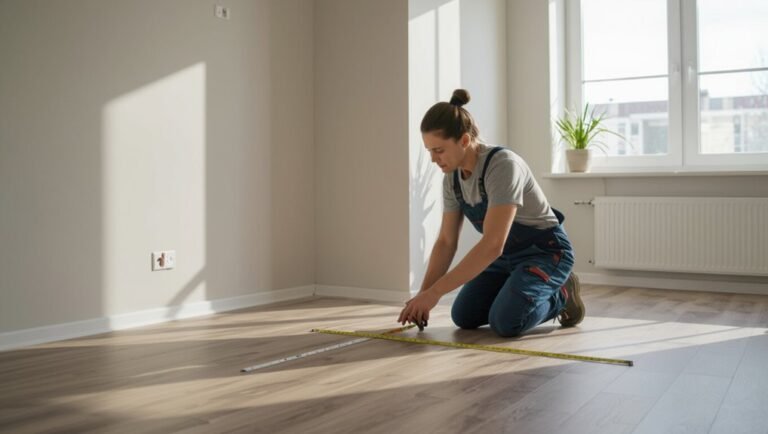
How to Get Pee Smell Out of Laminate Flooring Once and for All
Act fast: blot up wet urine, clean with mild soap and warm water, then mist a 1:1 white vinegar and water solution to neutralize ammonia. Let dry, sprinkle baking soda, wait 10–30 minutes, and vacuum. For persistent odor, apply an enzymatic cleaner per directions, agitate gently, extract with a wet/dry vacuum, and dry thoroughly to avoid swelling. Inspect seams and lift planks if needed; follow these steps and keep going to learn deeper fixes and prevention.
Quick Answer How to Get Pee Smell Out of Laminate Flooring Now
If you need to neutralize pee odor from laminate right away, blot up liquid.
Clean the spot with a gentle enzyme cleaner or a vinegar-water mix, and dry thoroughly to prevent lingering smell.
Sprinkle baking soda for a few hours and then vacuum to absorb persistent odors.
If the smell won’t go away, keeps returning, or you’ve soaked seams, call a professional to inspect and treat or replace affected boards.
Immediate short steps to neutralize odor fast
When you need the smell gone now, act fast: blot up any wet spots with paper towels or an absorbent cloth.
Then mist the area lightly with a 1:1 white vinegar and water solution to neutralize ammonia odor.
After drying, sprinkle baking soda, let sit 10–30 minutes, then vacuum.
Repeat if needed; this quick routine tackles how to get pee smell out of laminate flooring fast.
When to call a professional
Although quick home remedies often work, you should call a professional if the urine soaked through seams, left a persistent odor after repeated cleanings, or the flooring shows warping or discoloration—these signs mean deeper contamination or damage that needs expert treatment.
A pro can assess subfloor damage, remove and replace affected planks, use industrial deodorizers, and prevent mold, saving time and avoiding repeat issues.
Understanding the Problem Why Pee Smells Persist on Laminate Flooring
Laminate flooring has a layered composite core and a sealed surface, but urine can seep into seams, grout lines, and microscopic cracks where odors hide.
Urine breaks down into ammonia and feeds bacteria, and those reactions produce persistent, sour smells if not fully removed.
Pets, toddlers, and incontinent adults are the most common sources you’ll need to address to stop the odor at its root.
What laminate flooring is made of and where odors hide
Think of laminate flooring as a layered system: a clear wear layer, a printed decorative layer, a dense fiberboard core, and a backing layer that keeps everything flat.
Urine can seep into seams, edges, and microfractures, wicking into the fiberboard and backing where it’s absorbed and trapped.
Seals and underlayment slow evaporation, so smells linger until liquid and residues are removed from those hidden spots.
How urine chemistry (ammonia, bacteria) creates long-lasting smells
Because urine contains volatile compounds and bacteria that keep breaking them down, the smell can linger long after the liquid dries.
Ammonia and other nitrogenous byproducts vaporize, reaching your nose. Bacteria metabolize urea into smelly compounds, penetrating microgaps, grout, and finish seams.
You’ll need enzymatic cleaners to neutralize those compounds at the molecular level rather than just masking odors.
Common sources: pets, toddlers, incontinent adults
When pets, toddlers, or incontinent adults pee on your floor, the liquid soaks into seams, baseboards, and textured surfaces where odors hang on long after the spot looks dry.
You’ll notice recurring smells from pets marking territory, toddler accidents that repeat in the same spot, or frequent adult incontinence.
Each source deposits urine repeatedly or in volume, increasing bacterial growth and chemical residues that sustain odor.
Tools, Materials, and Safety Precautions
Before you start, gather the right cleaners—enzymatic solutions, white vinegar, baking soda, hydrogen peroxide, and a mild detergent—and tools like a microfiber mop, scrub brush, wet/dry vacuum, and optionally a steam mop (use with caution on laminate).
Wear protective gloves, keep the area well-ventilated, and always spot-test cleaners in an inconspicuous area first.
These steps will help you clean effectively while avoiding damage or safety hazards.
Recommended cleaning supplies (enzymatic cleaners, vinegar, baking soda, hydrogen peroxide, detergent)
If you’re tackling pee odor on laminate, you’ll want a small set of proven cleaners and the right tools: an enzymatic cleaner to break down urine proteins, white vinegar and baking soda for neutralizing odors, diluted hydrogen peroxide for stubborn stains, a mild detergent for surface dirt, plus microfiber cloths, soft-bristled brushes, a spray bottle, and rubber gloves.
Use enzymes first; follow label instructions and spot-test peroxide.
Tools: microfiber mop, scrub brush, wet/dry vacuum, steam mop (cautions)
Start with a microfiber mop for regular wiping and gentle lifts—its fine fibers trap urine particles without scratching laminate.
Use a soft-bristled scrub brush for stubborn spots, working gently along seams.
A wet/dry vacuum extracts liquid and cleaner from joints.
Avoid high-heat steam mops; they can warp laminate.
Choose tools that clean effectively while protecting the floor’s finish and edges.
Safety: ventilation, protective gloves, spot-test guidance
While you clean, keep the area well-ventilated and wear protective gloves to avoid skin contact with urine and cleaning solutions; open windows or run a fan to disperse fumes from disinfectants and deodorizers.
Also wear eye protection if splashing. Test cleaners in an inconspicuous spot for colorfastness and finish compatibility, wait recommended dwell time, and follow label instructions to protect you and the flooring.
Step-by-Step Cleaning Process
Start by containing any fresh urine and blotting it up so it won’t spread.
Next you’ll do an initial surface clean, then apply an enzymatic cleaner to break down odors.
Finally, agitate and let the cleaner dwell per instructions, rinse thoroughly, and dry the floor to prevent moisture damage.
Step 1 Contain and blot fresh urine
Contain the mess quickly and blot up as much fresh urine as you can with paper towels or a clean cloth—press firmly to soak deeply rather than wiping, which spreads moisture.
- Use multiple towels, replacing soaked ones until mostly dry.
- Apply gentle pressure to edges to pull liquid from seams.
- Keep pets or people off the area while it air-dries briefly before further treatment.
Step 2 Initial surface clean to remove residues
Gather basic cleaning supplies and wipe the area to remove remaining residues before deeper treatment.
Mix mild dish soap with warm water, dampen a microfiber cloth, and wipe along the grain. Rinse the cloth frequently to avoid spreading residue.
Dry immediately with a clean towel to prevent moisture damage.
Inspect seams and baseboards for trapped fluid and address any visible buildup.
Step 3 Apply enzymatic cleaner for deep odor removal
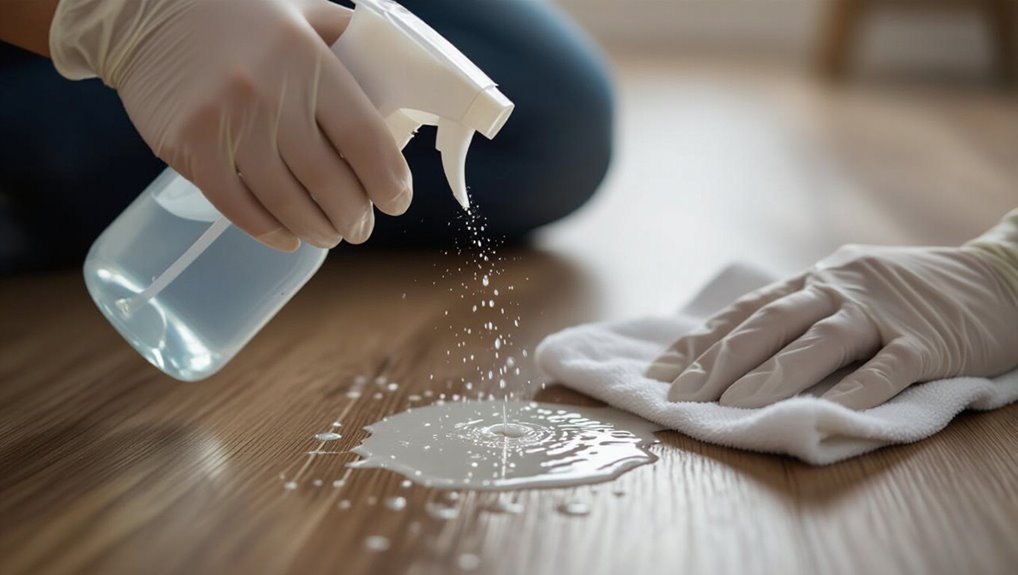
Reach for an enzymatic cleaner specifically labeled for pet urine and follow the product’s instructions closely: these cleaners break down urine proteins and bacteria that cause lingering odors, so they’re essential for deep odor removal on laminate floors.
Apply evenly to affected areas, avoid excess soaking, and use a clean cloth to blot. Let the cleaner act per label time before proceeding.
Step 4 Agitate and dwell time best practices
1. After applying the enzymatic cleaner, gently agitate the area with a soft brush or microfiber pad to work enzymes into grout lines and seams without scratching.
Let the product dwell per label instructions—usually 10–30 minutes—to allow enzymes to break down urine molecules.
Reapply to stubborn spots and avoid rushing dwell time for effective odor removal.
Step 5 Rinse thoroughly and dry to prevent moisture damage
Once the enzymes have had time to work, you’ll want to remove all residue and moisture promptly to protect the laminate.
Rinse the area with a damp microfiber mop or cloth using plain water, changing rinse water often.
Wipe up excess liquid immediately, then dry with clean towels.
Finish by airing the room or using a fan to guarantee the floor is completely dry.
Step 6 Deodorize with baking soda or targeted odor neutralizer
Now deodorize the area so lingering odors don’t return: sprinkle a thin, even layer of baking soda over the spot or apply a commercial odor-neutralizer made for pet urine.
Then let it sit undisturbed for several hours to absorb and break down smells before vacuuming or wiping it away.
After waiting, remove residues thoroughly, repeat spot-treatment if needed, and ventilate the room to speed odor dissipation.
Step 7 Final inspection and repeat if necessary
Ready to check your work? Walk the area, sniff for lingering odor, and inspect seams and edges for dampness.
If you still detect smell, reapply cleaner or baking soda to targeted spots, let it sit, then dry thoroughly. Repeat until odors are gone.
Finish by airing the room and noting what prevented full removal for future prevention.
Alternative and DIY Methods (When Enzymatic Cleaner Isn’t Available)
If you don’t have an enzymatic cleaner, you can use a diluted vinegar-and-water solution for light odors—wipe with a damp cloth and dry immediately to protect the laminate finish.
For tougher spots, a low-concentration hydrogen peroxide mix can help, but test in an inconspicuous area and avoid prolonged saturation.
A baking soda paste will absorb smells but reacts with vinegar, so use them separately.
You can also weigh commercial odor eliminators against household remedies for effectiveness, cost, and safety to decide what’s best for your floor.
Vinegar and water solution how to use safely on laminate
One simple DIY alternative is a diluted white vinegar and water solution, which cuts odor and disinfects without harming laminate when used properly.
Mix one part white vinegar with three parts warm water, test a hidden spot, then blot (don’t soak) the stain with a microfiber cloth.
Rinse with clean water and dry thoroughly to prevent warping or residue buildup.
Hydrogen peroxide mixes concentrations and precautions
Hydrogen peroxide can be a useful alternative when you don’t have an enzymatic cleaner: use a 3% solution for most pet urine stains and a diluted 1.5% mix for light odors or sensitive finishes.
Test a hidden spot first, avoid prolonged soaking, blot rather than rub, and ventilate the area.
Neutralize residue with a clean, damp cloth and dry promptly to protect the laminate.
Baking soda paste and vinegar reaction pros and cons
Baking soda paste and vinegar are a popular DIY combo for pet urine because they’re cheap and easy to mix, but they work very differently and shouldn’t be treated as a single cure-all.
You can deodorize with baking soda and lift stains with vinegar, but their reaction neutralizes acidity and reduces effectiveness.
Use separately: baking soda to absorb odors, vinegar to break residues, then dry thoroughly.
Commercial odor eliminators vs. household remedies
When enzymatic cleaners aren’t available, you’ll have to choose between store-bought odor eliminators and household remedies — each has trade-offs in speed, safety, and lasting effectiveness. You’ll find commercial sprays act fast but can mask odors; DIY fixes are cheaper but often temporary. Test surfaces first and ventilate well.
| Product | Tip |
|---|---|
| Commercial spray | Test small area |
| Baking soda | Sprinkle, wait, vacuum |
| Vinegar solution | Dilute, don’t overuse |
| Hydrogen peroxide | Spot test only |
| Activated charcoal | Long-term absorber |
Dealing with Old, Set-In, or Widespread Odors
If the odor’s old or spreads beyond surface stains, you’ll need to check whether urine soaked under seams or into the subfloor.
You can try wet/dry vacs and deep-extraction cleaning, but persistent smells may mean lifting boards to treat or replace the subfloor or individual planks.
For large jobs or uncertain repairs, call a professional—remediation can range from a few hundred dollars for spot fixes to thousands for full subfloor replacement.
Identifying penetration under seams or into subfloor
Because urine can wick under seams and soak into the subfloor, old or widespread odors often come from beneath the laminate rather than the top surface.
Inspect seams for dark discoloration, soft spots, or raised planks. Smell along edges and in closets.
Remove a plank if needed to check subfloor condition and stains. Document locations before remediation or replacement.
Using wet/dry vacuums and deep-extraction methods
Once you’ve located areas where urine has seeped under seams or into the subfloor, you’ll need methods that reach below the surface—wet/dry vacuums and deep-extraction equipment pull out trapped liquid and loosen embedded residues that mopping can’t.
Use a wet/dry vacuum with appropriate attachments, extract in overlapping passes, and follow with an enzymatic cleaner applied per instructions to neutralize odors before allowing thorough drying.
When to lift boards, treat subfloor, or replace planks
When odors persist after surface cleaning and extraction, you’ll need to decide whether to lift boards, treat the subfloor, or replace planks based on how far urine has penetrated, the age of the stain, and the condition of the flooring materials.
Inspect underboards for discoloration, warping, or dark staining. If contamination reached the subfloor or MDF core, lift boards and apply enzymatic cleaner or replace affected planks.
Professional remediation options and expected costs
If odors are old, deeply set, or cover a large area, you’ll likely need professional remediation rather than DIY fixes.
You’ll hire pros to assess, remove affected laminate, and treat or replace subflooring. Expect costs based on scope:
- Inspection and odor testing: $150–$400
- Targeted removal/treatment: $500–$2,000
- Full replacement and sanitation: $2,000–$6,000
Preventive Measures and Best Practices
To keep pee smells from coming back, act fast on accidents, train pets, and stick to a regular cleaning routine with recommended cleaners.
You should also control moisture, seal gaps, and check under baseboards so odors can’t recontaminate the flooring.
These preventive habits save time and keep your laminate smelling fresh.
Rapid-response habits to stop odors from setting
Because urine soaks in fast, acting within minutes makes the difference between a quick clean and a lingering smell.
Blot immediately with paper towels, then dab with a damp microfiber cloth.
Use an enzyme cleaner per label, allow dwell time, then blot dry.
Open windows or run a fan to speed drying.
Dispose of contaminated towels and sanitize hands afterward.
Training pets and managing accidents
Quick action helps stop odors from setting, but preventing accidents in the first place will save you time and protect your laminate.
Teach pets consistent potty routines, reward successes, and supervise until they’re reliable. Use confinement, frequent outdoor breaks, and clean accidents thoroughly to remove scent cues.
Address medical or anxiety issues with your vet to reduce repeat incidents and protect your flooring.
Routine cleaning schedule and recommended products
A simple, consistent cleaning schedule will keep odors from building and protect your laminate’s finish.
Wipe spills immediately, mop weekly with a pH-neutral laminate cleaner, and dry floors thoroughly.
Use enzyme-based cleaners for occasional pet accidents to neutralize odors.
Vacuum or sweep daily in high-traffic areas.
Rotate targeted deep-cleaning every month to remove residues and maintain freshness without harming the surface.
Moisture control and sealing gaps to prevent recontamination
If moisture keeps seeping into seams or under the planks, odors will return no matter how well you clean.
So you should focus on controlling humidity and sealing gaps to stop recontamination. Use a dehumidifier, fix leaks, and guarantee proper ventilation.
Inspect and caulk gaps with a flexible, floor-safe sealant, replace swollen planks, and add door sweeps to block moisture and pet access.
Common Mistakes That Make Urine Smells Worse
Don’t make the problem worse by reaching for ammonia-based cleaners or bleach without checking label warnings, since they can set odors and damage finish.
You’ll also want to avoid over-wetting laminate or just masking smells with air fresheners instead of treating the source.
Skipping an enzymatic cleaner on biological stains is another common error that lets urine odors linger.
Using ammonia-based cleaners or bleach incorrectly
When you try to neutralize urine with ammonia-based cleaners or bleach, you can actually make the smell worse and risk damaging your laminate floor.
You’ll create chemical reactions that intensify odors and produce harsh fumes. Don’t mix products or use concentrated solutions.
Instead, test cleaners in a hidden spot, follow label instructions, ventilate the area, and opt for enzyme-based cleaners designed to break down urine safely.
Over-wetting laminate and causing damage
Mistaking a heavy rinse for a thorough cleaning can make laminate worse: over-wetting forces moisture into seams and the fiberboard core, causing warping, lifting, and a trapped environment where urine odors linger and grow.
Don’t soak floors; use a barely damp microfiber mop, blot fresh spots immediately, dry thoroughly, and ventilate. Excess moisture ruins boards and lets smells persist beneath the surface.
Masking odors instead of eliminating source
Although a quick spray of air freshener or a scented cleaner might seem to help, masking urine smell only hides the problem and often makes it worse over time.
You’ll delay finding the source, trap odor molecules in cracks or seams, and confuse your nose. Instead, locate and treat affected areas thoroughly—masking buys you temporary relief but guarantees recurring, stronger odors.
Skipping enzymatic treatment on biological stains
If you skip enzymatic cleaners on biological urine stains, you’re leaving the actual odor-causing molecules — proteins and urea — intact so they keep breaking down and reeking.
Don’t rely on soap, bleach, or vinegar alone; they mask or halt bacteria temporarily but don’t digest residues.
Use a proper enzyme product, follow dwell-time instructions, and rinse—otherwise the smell returns and spreads into seams and pads.
Product Recommendations and What to Look For
You’ll want products that actually break down urine—look for enzymatic cleaners (brands like Nature’s Miracle or Simple Solution work well) and follow label directions for dwell time and saturation.
Pick odor neutralizers that chemically eliminate smells rather than just masking them, and avoid solvent-heavy sprays that can warp laminate.
Also consider tools like a microfiber mop, a wet-vac for deep pulls, and disposable gloves to make the job easier and safer.
Enzymatic cleaners: features, sample brands, and usage tips
Enzymatic cleaners break down the proteins in urine that cause lingering odors, so they’re your best bet for really getting pee smell out of laminate floors. They contain bacteria-produced enzymes that digest urine into odorless compounds instead of just masking it.
Choose color-safe, pH-balanced formulas like Nature’s Miracle or Simple Solution, follow dwell times, avoid overwetting seams, and test first in an inconspicuous spot.
Odor neutralizers vs. fragrances choosing safe options for laminate
When deciding between odor neutralizers and fragranced products, focus on how each works and whether it’s safe for laminate: neutralizers chemically bind or alter odor molecules without leaving residues, while fragrances only mask smells and often contain solvents or oils that can dull or damage laminate finishes.
Choose pH-neutral, water-based neutralizers labeled safe for laminate; avoid alcohol, oil-based sprays, and heavy perfumes.
Tools and accessories worth investing in
Having picked a safe, pH-neutral odor neutralizer rather than a fragranced mask, you’ll get better results if you pair it with the right tools.
Choose quality, washable microfiber cloths, a soft-bristled scrub brush, and a spray bottle with adjustable mist. Prioritize durability, nonabrasive materials, and easy cleaning.
- Microfiber cloths
- Soft scrub brush
- Adjustable spray bottle
FAQ Quick Answers to Common Questions
You probably have quick questions about tools and safety, so let’s clear the basics.
I’ll explain whether steam mops or vinegar can harm laminate, how long enzymatic cleaners need to sit, whether baking soda can cure odors, and how to tell if the subfloor’s affected.
Read on for concise answers you can act on.
Can I use steam mops to remove pee smell from laminate?
Wondering if a steam mop will get pee smell out of laminate? You can use one cautiously: steam helps sanitize and loosen odor-causing residue, but excess heat and moisture can warp sealed edges.
Work quickly, keep steam on low, avoid seams, and dry thoroughly with towels and fans.
Test a hidden spot first and combine steaming with an enzyme cleaner for best odor removal.
Will vinegar damage laminate flooring?
Will vinegar harm your laminate floors?
You can use diluted white vinegar (one part vinegar to four parts water) for light odor cleaning, but don’t soak the floor.
Excess moisture or undiluted vinegar can dull the finish or seep into seams.
Test a small hidden area first, wipe up promptly, and follow with a dry microfiber to protect the laminate’s protective layer.
How long should enzymatic cleaners be left on the floor?
If diluted vinegar won’t fully remove pet odors, enzymatic cleaners target the proteins that cause smells and need time to work.
Apply per label, saturating the spot and edges of any soaked seams. Let it sit for the recommended period—usually 10 minutes to several hours—or longer if instructions allow.
Don’t rinse immediately; allow enzymes to digest before blotting or air-drying.
Can baking soda permanently remove urine odor?
Can baking soda completely eliminate urine odor?
Baking soda absorbs surface smells and helps neutralize mild fresh urine when you sprinkle, wait several hours, then vacuum.
It won’t permanently remove deep-set or protein-based odors soaked into seams or the subfloor.
Use baking soda as a supplementary step after cleaning with an enzymatic cleaner; repeat if needed but don’t rely on it alone.
How do I know if the subfloor is contaminated?
How do you tell if the subfloor’s contaminated? Check for persistent odor after removing laminate and pad, dark stains, warped or soft spots, or mold growth.
Press a damp white cloth onto the plywood; if it discolors or smells strongly, contamination’s likely.
You can also use a black light to reveal urine stains.
If unsure, pull a small section for inspection or test.
Checklist: Step-by-Step Action Plan to Eliminate Pee Smell for Good
Gather your supplies and follow this concise checklist to remove pee odor from laminate flooring for good:
Gather supplies and follow this concise checklist to permanently eliminate pee odor from laminate flooring.
- Blot and clean: remove moisture, then scrub with enzyme cleaner; rinse and dry thoroughly.
- Inspect seams and baseboards: lift boards if needed, treat subfloor or replace damaged underlayment.
- Neutralize and prevent: apply odor neutralizer, seal affected area, and enforce housetraining or pet barriers.