How to Design a Functional and Stylish Living Room
Decide how you’ll use the living room—relaxing, hosting, working—and rank those needs so furniture and storage follow function. Measure the space, note doors and windows, then arrange seating around a clear focal point with 30–36 inch circulation paths. Pick a cohesive color palette, durable materials, layered lighting, and multiuse pieces like storage ottomans. Hide cables and add plants for texture. Follow this plan and you’ll get a stylish, practical room; keep going to learn specific layouts and shopping tips.
Define Your Living Room’s Purpose and Priorities
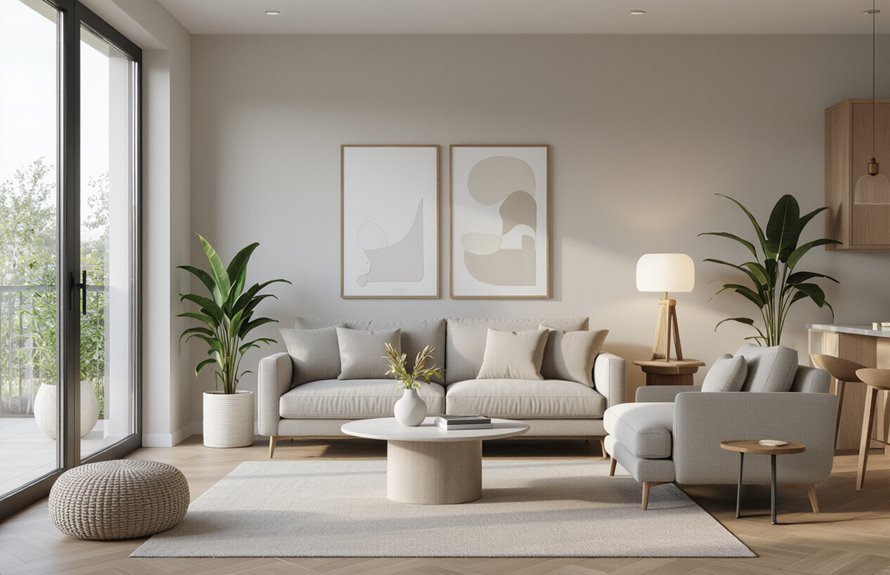
Before you pick a color or buy furniture, decide how you’ll actually use the room: entertain guests, binge shows, work from home, or create a quiet reading nook.
You’ll list primary living room activities and rank them—daily relaxation, hosting family gatherings, gaming, or focused work. Prioritize comfort, circulation, and storage based on that list.
Choose durable materials where messes or kids matter. If hosting dominates, plan seating and lighting; if work does, carve a compact, ergonomic corner.
Revisit priorities seasonally; needs shift. Let purpose guide scale, finish, and flexibility so the space serves you well.
Assess the Room’s Size, Shape, and Flow
Now that you’ve pinned down how you’ll use the room, measure its dimensions and note doorways, windows, built-ins, and where traffic naturally moves.
Use a sketch to record room dimensions and obstacles so you can plan furniture placement confidently. Identify focal points and visualize sightlines to keep layout flow smooth; leave clear paths between seating, entry, and media.
Consider scale—choose pieces that suit the room’s proportions and allow circulation. Mark areas for rugs and lighting.
When you test arrangements, walk the space to confirm comfort and adjust so the room feels balanced, accessible, and purposeful.
Establish a Cohesive Color Palette
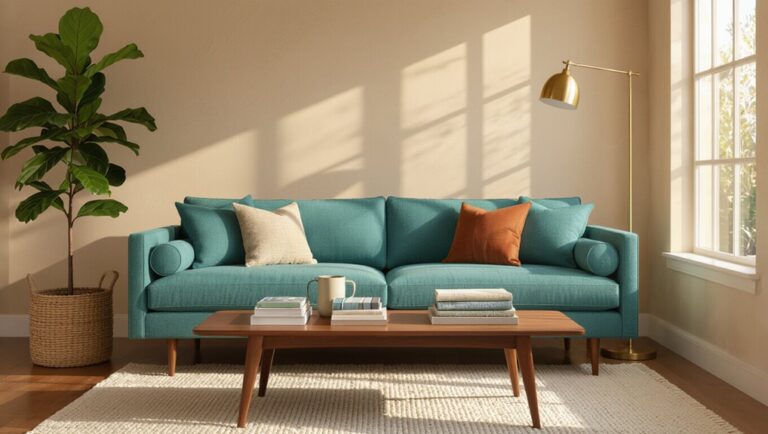
Pick a dominant hue that sets the mood for the room and use it consistently across large elements like walls or a sofa.
Counterbalance that color with a palette of neutrals—think creams, grays, or warm woods—to keep the space grounded.
This approach lets you create a unified look while still adding accents for interest.
Choose a Dominant Hue
Start by choosing one dominant hue that will set the tone for the whole room, then layer supporting shades and neutrals around it so every element feels intentional and connected.
Pick a hue that matches your lifestyle: calming blues for relaxation, energetic yellows for sociability, or grounded greens for balance—use color psychology to guide choices.
Check color trends for fresh inspiration but prioritize longevity over fads.
Commit to that hue across large surfaces—walls, a statement sofa, or a rug—then repeat it in smaller accents to create cohesion.
This approach makes decisions easier and the room feel confidently unified.
Balance With Neutrals
While your dominant hue sets the mood, neutrals are what keep the room grounded and wearable—use them to bridge bold colors and give the eye places to rest.
You’ll build neutral color schemes that support accents without becoming boring. Choose warm or cool neutrals to match your main hue, vary textures for depth, and keep contrast moderate for a balanced design.
- Soft walls: off-white, greige, or pale taupe
- Statement sofa in muted tone
- Layered textiles: rugs, throws, pillows
- Accent pieces: wood, metal, ceramics
Choose a Functional Seating Layout
A well-planned seating layout makes your living room usable and inviting, so arrange pieces to support how you actually live: conversations, TV viewing, traffic flow, and occasional guests.
Start by mapping focal points and measuring clear pathways. Mix seating styles for visual interest—a bench, accent chairs, or a loveseat—while keeping proportions balanced.
Try layout options: conversational clusters, a media-facing arrangement, or flexible zones with movable pieces. Leave at least 30–36 inches for traffic routes.
Use rugs and lighting to define areas. Prioritize sightlines and easy movement so the room feels organized, welcoming, and adaptable.
Select the Right Sofa and Chairs for Comfort
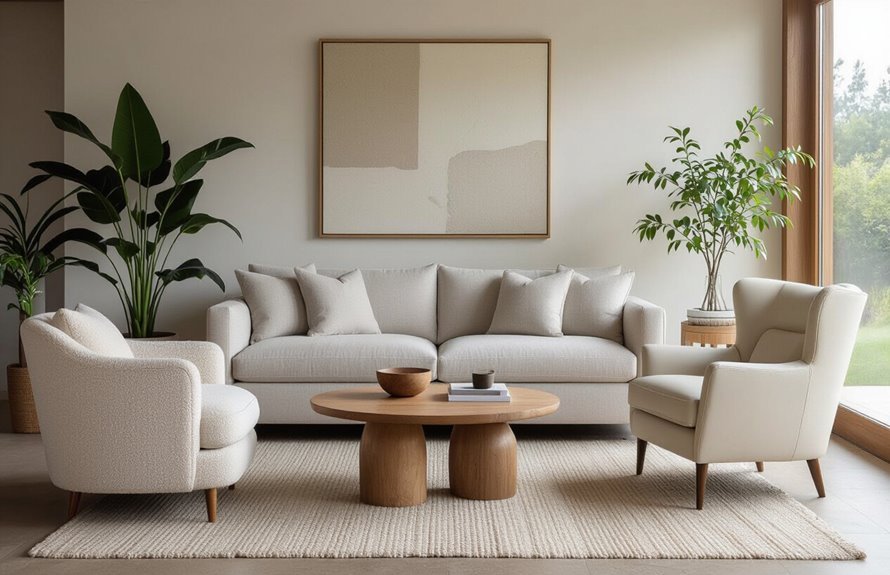
How do you pick sofas and chairs that feel as good as they look? You’ll balance scale, support, and style.
Test seat depth and cushion resilience, and match sofa styles to room proportions. Consider chair materials for durability and comfort—leather for ease, woven fabrics for warmth.
Prioritize frame quality and suspension for longevity. Use this checklist:
- Measure proportions: fit pathways and focal points.
- Try cushions: firmness, spring, and recovery.
- Evaluate fabric: stain resistance, breathability, and texture.
- Confirm construction: hardwood frame, webbing or springs, and solid joinery.
Choose pieces you’ll relax in daily.
Layer Lighting for Ambiance and Task Needs
When you layer lighting, you combine ambient, task, and accent sources so each activity—from reading to entertaining—gets the right light without glare or shadows.
You’ll plan ambient lighting first for overall brightness, then add task lighting—like floor lamps and adjustable sconces—for a functionality focus where you read or work.
Use layered fixtures to mix recessed, pendant, and table lamps so different light sources create depth.
Accent lights and decorative accents highlight art and architectural features, aiding mood enhancement.
Keep controls flexible with dimmers and zones to maintain design balance and adapt lighting to every moment.
Create a Balanced Focal Point
Layered lighting sets mood and guides the eye, so use that momentum to establish a clear focal point in your living room.
Choose focal point options that suit your lifestyle and balance scale, color, and texture to maintain visual harmony. Anchor seating toward that spot and avoid competing elements.
- Fireplace or media wall — center and frame it.
- Statement art — size it to the wall and sofa.
- Architectural feature — highlight with accent lighting.
- Furniture grouping — arrange to draw attention inward.
Keep proportions right, limit distractions, and let the focal point feel intentional and restful.
Incorporate Smart Storage Solutions

Because a tidy, functional living room starts with smart storage, think of every piece as doing double duty: hiding clutter while adding style.
Use furniture with hidden compartments—coffee tables, ottomans, benches—to stow remotes, throws, and toys.
Mount floating shelves with closed cabinets to keep surfaces clean without losing display space.
Group smaller items in decorative baskets for easy access and visual order.
Use slim consoles and built-ins around seating to keep books and electronics organized.
Label bins or baskets subtly, and keep frequently used items reachable.
Smart storage keeps the room calm, practical, and effortlessly inviting.
Mix Textures and Materials for Visual Interest
Smart storage sets a clean backdrop that lets texture and material choices take center stage, so mix surfaces that contrast and complement to add depth without clutter.
You’ll balance texture combinations and material contrasts by layering fabrics, woods, metals, and glass. Keep a cohesive palette and vary scale: large, smooth surfaces with small, tactile accents.
- Soft textiles (wool, velvet) vs. sleek leather
- Warm woods vs. cool metals
- Matte ceramics vs. reflective glass
- Natural fibers (jute, linen) vs. polished finishes
Use repetition and restraint so each piece enhances the room’s harmony.
Choose Durable, Stylish Flooring Options
You’ll want flooring that balances style with wearability, so weigh hardwood’s timeless look against engineered wood’s better moisture resistance.
Consider luxury vinyl for its realistic visuals and scratch-proof, low-maintenance performance.
For high-traffic areas or a cooler, modern feel, pick durable porcelain or large-format tiles that stand up to daily use.
Hardwood vs. Engineered
When choosing flooring, weigh real hardwood’s timeless appeal against engineered wood’s practical resilience—both give a warm, stylish foundation, but they perform differently under moisture, traffic, and budget constraints.
You’ll consider hardwood advantages like longevity, refinishing, and classic grain. Engineered benefits include dimensional stability, easier installation, and better moisture tolerance.
Match choice to room use, maintenance willingness, and resale goals.
- Durability: hardwood lasts decades with care.
- Moisture: engineered handles basements and fluctuating humidity.
- Cost: engineered often lowers upfront expense.
- Style: both offer varied species and finishes to suit your design.
Luxury Vinyl Benefits
Comfortable and surprisingly tough underfoot, luxury vinyl gives you a practical, stylish alternative to wood or tile.
You’ll find waterproof options that handle spills and pets without warping, plus textured surfaces that mimic grain and stone convincingly.
Installation’s faster and often less costly than real hardwood, so you can refresh the room sooner.
Maintenance is simple—sweep and occasional damp-mopping keep it looking new.
With expanding color palettes and plank sizes, luxury vinyl reflects current flooring trends while offering durability and softer acoustics underfoot.
Choose high-traffic rated planks for family rooms, and pair them with rugs to add warmth and pattern.
Durable Tile Choices
If you want flooring that stands up to heavy use and still looks refined, durable tile delivers both resilience and style.
You’ll favor ceramic tiles for budget-friendly options and porcelain tiles for near-indestructible, low-porosity performance.
Choose finishes that resist scratches and pick grout colors that hide wear.
Consider patterns and large formats to reduce seams and make maintenance easier.
Match slip-resistant textures in high-traffic or wet zones to keep everyone safe.
- Porcelain tiles: ultra-durable, low absorption
- Ceramic tiles: versatile, cost-effective
- Large-format tiles: fewer grout lines, cleaner look
- Textured finishes: improved safety and grip
Add Area Rugs to Anchor the Space
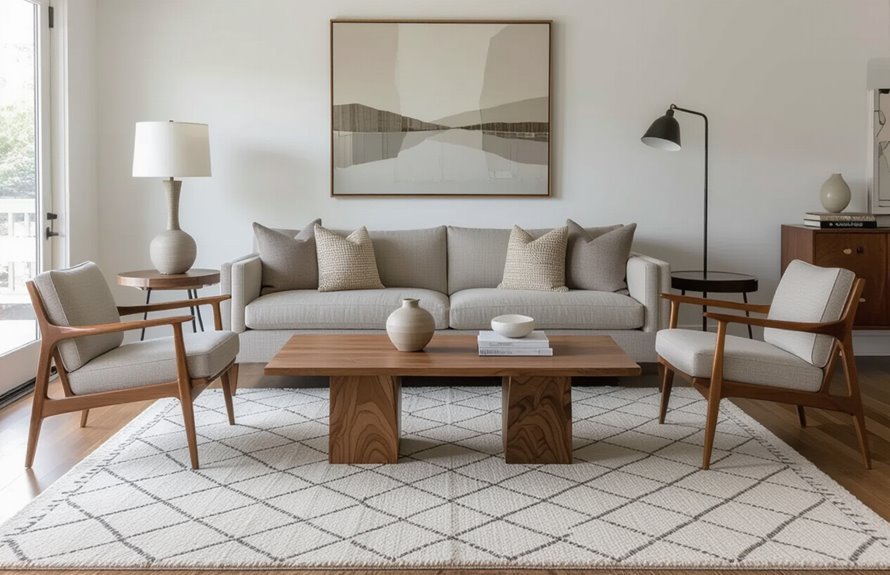
Because area rugs define seating zones and bring texture, you should choose one that’s the right size and placement to anchor your living room visually.
Pick rug materials that suit traffic and maintenance—wool for durability, synthetic blends for easy cleaning, natural fiber for a casual look.
Position the rug so at least the front legs of sofas and chairs rest on it, or opt for full coverage under all furniture in larger rooms.
Use scale and pattern to complement your furniture without overwhelming it.
Layer smaller rugs for interest, and rotate them periodically to even wear and preserve color.
Integrate Window Treatments for Light Control
When you plan window treatments, think of them as tools for controlling light, privacy, and the room’s mood rather than just decorations.
You’ll choose layers to match function: sheer curtains soften daylight, while blackout shades block morning glare.
Combine treatments for flexibility and energy savings.
Mount hardware close to the ceiling to make windows feel taller and guarantee proper rod length to fully cover glass for privacy.
Consider motorized options for hard-to-reach windows or smart timers to protect furnishings.
Balance fabric weight with room scale and cleaning needs so treatments stay beautiful and practical.
- Layer for versatility
- Match function to fabric
- Prioritize full coverage
- Add automation
Curate Art and Decorative Accessories
Start by deciding what mood you want your living room to convey, then choose art and accessories that reinforce that feeling without cluttering the space.
You’ll refine art selection by picking a focal piece and complementary works that share color, scale, or theme. Balance textures and forms—metal, wood, ceramics—to add depth without overcrowding surfaces.
Plan accessory arrangement in groups of odd numbers, varying heights and negative space to guide the eye. Rotate items seasonally to keep the room fresh.
Trust restraint: a few meaningful pieces arranged deliberately will create cohesion and style without visual noise.
Designate Zones for Different Activities
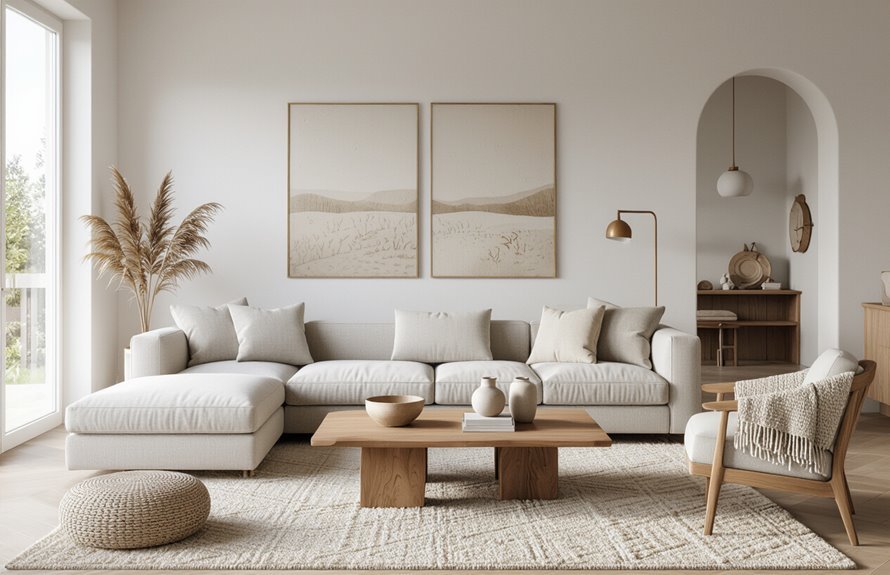
Good zoning turns a single room into several purposeful areas, so map out how you actually use the space—watch traffic flow, note where light and outlets sit, and decide which activities (conversation, TV, reading, work, kids’ play) need dedicated spots.
Use clear zoning techniques to define activity areas without clutter. Rugs, lighting, and placement signal purpose; keep pathways open and scale seating to each zone. Prioritize comfort and function for designated tasks.
Consider sightlines so TV or play areas don’t dominate conversation corners.
Example zone ideas:
- Conversation nook
- TV/media area
- Reading/quiet corner
- Kid-friendly play spot
Select Multi-Functional Furniture Pieces
Because living rooms must serve many roles, choose furniture that works harder than it looks: sofas with hidden storage, coffee tables that lift into desks, and ottomans that double as extra seating and toy bins.
You’ll maximize usable area by prioritizing space saving solutions and convertible designs that adapt to guests, work, and play.
Pick pieces with clean lines and durable materials so transformations stay effortless. Test mechanisms for smooth operation and measure clearances before buying.
Mix multifunctional units with a few statement items to keep style intact. With smart choices, your room stays flexible, uncluttered, and welcoming.
Optimize Traffic Paths and Accessibility
When you arrange furniture, prioritize clear walkways that let people move naturally between entryways, seating, and focal points without squeezing past corners or obstructing doors.
You’ll improve traffic flow by keeping paths 30–36 inches wide, angling pieces to guide movement, and grouping seating to define zones.
Consider accessibility options like lower seat heights, firm cushions, and reachable side tables. Use rugs to indicate lanes and avoid cluttered surfaces.
- Measure and map primary paths
- Leave clearance at doors and windows
- Choose furniture scaled to the room
- Add lighting for safe navigation
Personalize With Plants and Natural Elements
Bring plants and natural materials into your living room to add texture, improve air quality, and make the space feel more alive—choose species and surfaces that match your light, maintenance time, and style.
You’ll layer plant arrangements at varying heights—floor plants, side-table pots, hanging planters—to create depth without crowding walkways.
Mix woven baskets, wooden trays, stone accents, and linen cushions for cohesive natural decor.
Rotate plants for even growth, prune dead foliage, and use matching pots to maintain a tidy look.
Let greenery be a personal signature that complements furniture, color palette, and daily routines.
Incorporate Technology Seamlessly
If you want your living room to feel modern without looking like a tech showroom, integrate devices so they enhance daily life and disappear visually—conceal cables, use furniture with built-in charging, and choose slim, wall-mounted screens or art-style displays that match your decor.
You’ll blend smart home features with ergonomic design: automated lighting and voice control simplify routines, while hidden cables and wireless charging keep surfaces tidy.
Pick integrated speakers and compact entertainment systems that suit scale, and tuck tech accessories away.
Consider digital artwork that doubles as a display for photos or media to keep the room calm and functional.
- Choose concealed wiring
- Use furniture with wireless charging
- Opt for integrated speakers
- Add art-style digital artwork
Plan for Seasonal Refreshes and Flexibility
So you can keep your living room feeling fresh year-round, design with easy swaps and adaptable pieces in mind.
Choose neutral larger items and layer seasonal decor—throws, rugs, pillows and art—that you can rotate quickly.
Pick flexible furniture: modular sofas, nesting tables, ottomans with storage and lightweight chairs that move where needed.
Keep a simple system for swapping accents each season, like labeled bins and a dedicated shelf for off-season items.
Lighting should be adjustable so mood shifts without clutter.
These choices let you refresh looks frequently, respond to changing needs, and keep the space functional and inviting.
Budget Smartly and Prioritize Big-Impact Items
Start by prioritizing seating quality—you’ll use sofas and chairs every day, so invest where comfort and durability matter most.
Pick multiuse pieces like sleeper sofas or storage ottomans to stretch your budget without sacrificing function.
Save a portion of your funds for focal points, such as a statement rug, artwork, or a standout light fixture that ties the room together.
Prioritize Seating Quality
Because seating anchors the room, invest where it matters most: choose durable, comfortable pieces you’ll use every day rather than chasing every trendy accent.
You’ll plan seating arrangements around function and flow, weighing comfort considerations like cushion resilience, support, and fabric durability.
Prioritize a main sofa and one or two chairs that fit your routines. Balance quality with budget by buying fewer, better pieces.
- Test cushions for support and recovery.
- Choose fabrics that handle wear and stains.
- Confirm scale fits traffic paths and viewing angles.
- Opt for neutral core pieces, add personality with accessories.
Invest in Multiuse Furniture
After you’ve invested in a few high-quality seating pieces, stretch your budget by choosing furniture that pulls double duty: think storage ottomans that hide blankets, sleeper sofas for guests, and console tables that act as room dividers.
You’ll save floor space and avoid clutter with space saving solutions like nesting tables, lift-top coffee tables, and benches with hidden compartments.
Look for convertible designs that switch between seating, sleeping, and storage without sacrificing style.
Prioritize pieces that make daily life easier and guests comfortable, so your living room feels functional and polished while you spend selectively on a few standout items.
Allocate Budget for Focalpoints
When you plan your living room budget, focus on a few high-impact focal points—like a statement sofa, an eye-catching rug, or a bold lighting fixture—and spend more where it will change the room’s look and feel.
You’ll decide budget allocation by listing priorities, estimating costs, and leaving a contingency. Invest in one or two standout pieces, then fill in with affordable accents.
Balance durability and style so your focal point endures.
- Prioritize: pick primary focal point(s)
- Research: compare prices and reviews
- Allocate: assign percentages to items
- Reserve: set a 10% contingency
Conclusion
You’ve now got the blueprint to make your living room both insanely functional and ridiculously stylish — so much so neighbors will think you hired a celebrity designer. Stick to your purpose, respect flow, pick comfy seating, sneak in tech, and let plants do the heavy lifting for atmosphere. Rotate elements seasonally and spend where it counts. Do this, and your living room won’t just host guests — it’ll stage small miracles on demand.