
40 Practical and Stylish Accessibility Bathroom Design Ideas for Seniors
Creating a senior-friendly bathroom is easier than you think! Start with walk-in showers fitted with grab bars for safety. Use non-slip flooring to reduce accidents and consider elevated toilet seats for comfort. Think about accessible sink designs that cater to all needs. Roll-in shower options are great for barrier-free access while height-adjustable mirrors allow for better visibility. With smart technology and eco-friendly fixtures, your bathroom can be both stylish and functional. Discover more ideas to enhance your space!
Curbless Bathroom Floors for Easy Wheelchair Access
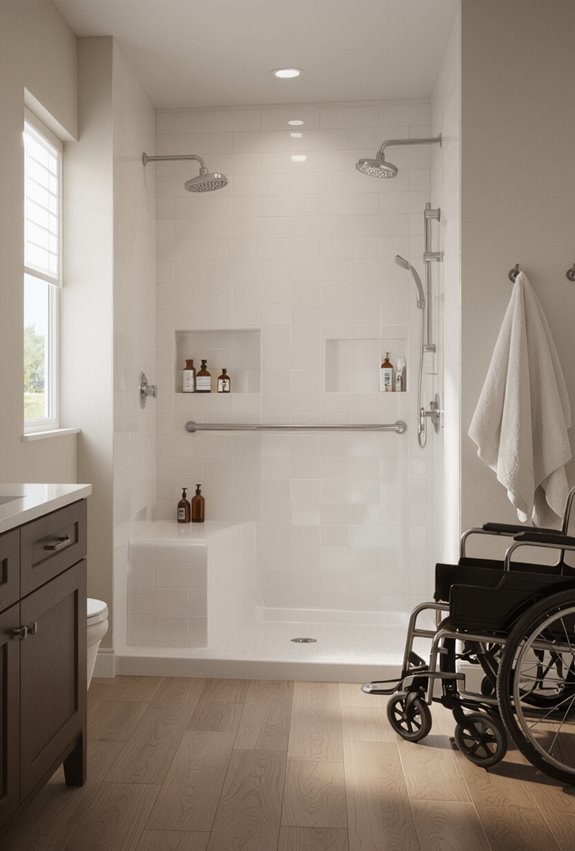
When you remove the curb and slope the floor gently toward a linear drain, a curbless bathroom gives wheelchair users smooth, barrier-free access while reducing trip hazards for everyone else.
You’ll want a seamless threshold and subtle slope to guide water to integrated drainage. Choose slip-resistant finishes, flush junctions to adjoining rooms, and durable, easy-clean materials to keep the space safe and stylish.
Comfortable-Height Toilets With Grab Bars Nearby
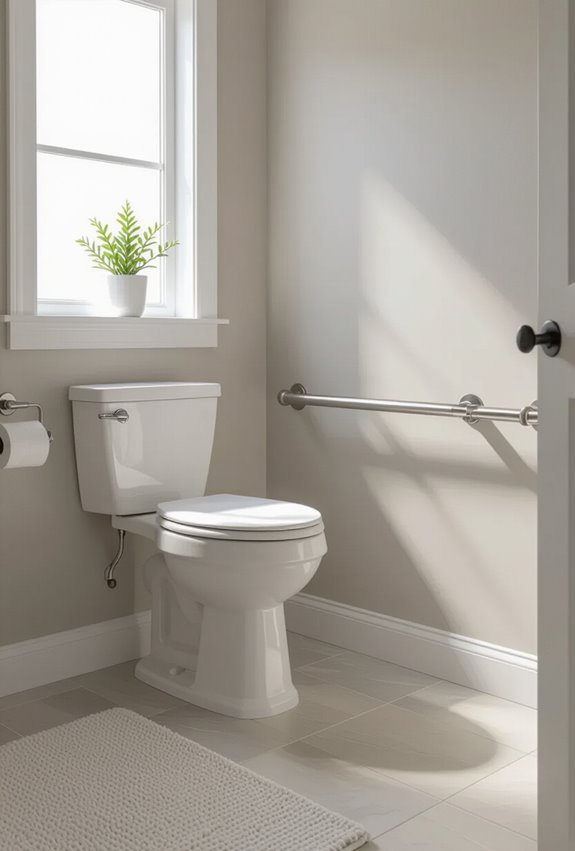
After creating a curbless route into the bathroom, make sure the fixtures inside match that same level of accessibility—starting with a comfortable-height toilet and nearby grab bars.
You’ll choose comfort height models for easier transfers, plan grab barplacement for stability, consider a toilet seatlift if needed, and add discreet odor control to keep the space pleasant and dignified for seniors using the room.
Wall-Mounted or Open-Front Sinks for Seated Use
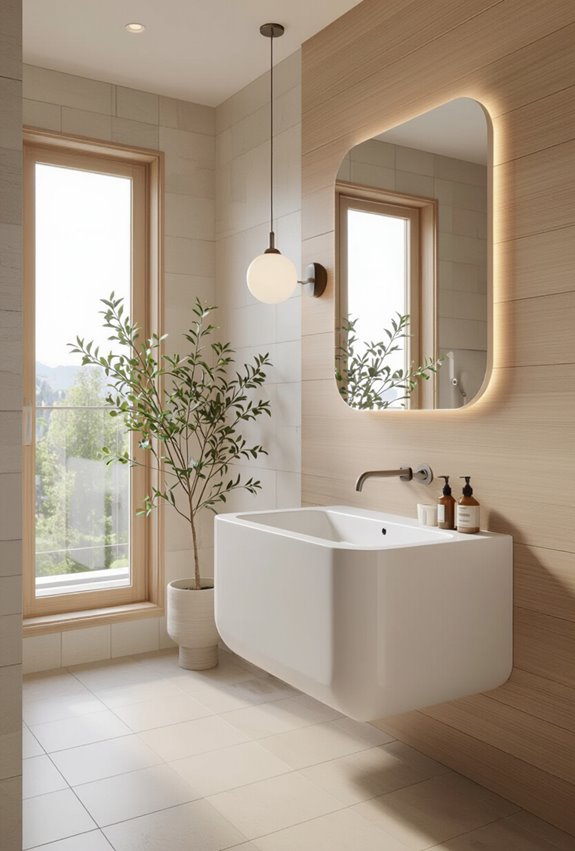
Wall-mounted sinks or open-front vanities give you knee clearance and easier access for seated use, so you can wash, shave, or brush teeth without straining. Choose seated access sinks with insulated pipes, lever faucets, and reachable storage.
Knee clearance designs pair well with adjustable mirrors and lighting. Install sturdy mounting and rounded edges for safety and comfortable daily grooming.
Lever Handles and Single-Lever Faucets for Easy Control
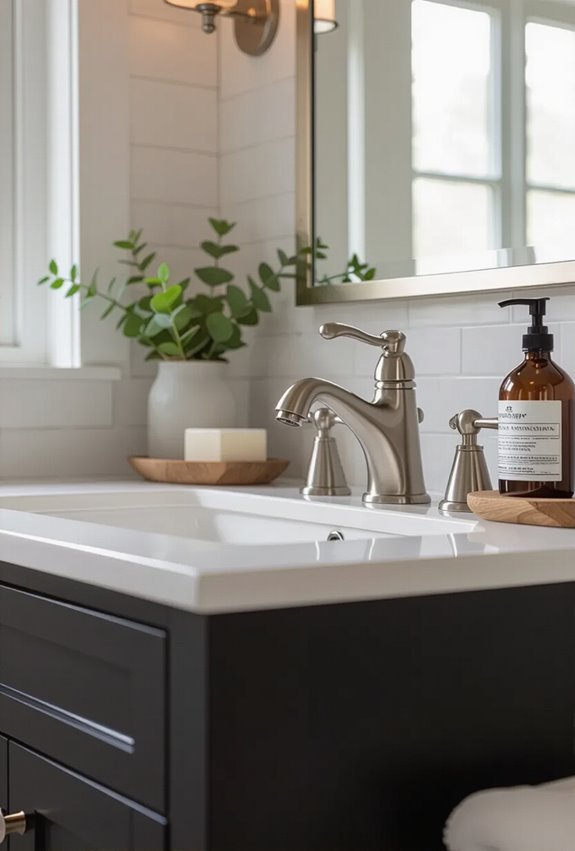
Many seniors find lever handles and single-lever faucets much easier to use than traditional knobs, since you can operate them with a closed fist, elbow, or even a forearm when your hands are occupied or weak.
For straightforward lever adoption, choose sturdy, long levers with clear temperature markers.
Prioritize Faucet ergonomics to reduce effort, improve reach, and minimize strain for daily tasks.
Fold-Down Shower Seats That Blend With Décor
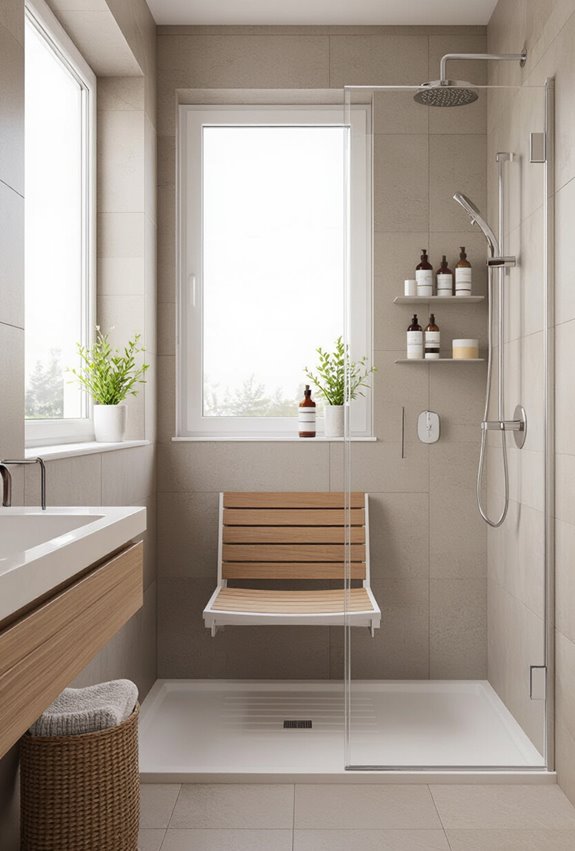
Fold down a shower seat when you need to sit, then fold it up to keep the space open—these seats give you safe rest without turning your shower into a medical room.
Choose models with hidden hinges for a sleek look and secure mounts.
Pick textured upholstery for slip resistance and easy cleaning.
Coordinate finishes and wood tones so seating complements your bathroom décor.
Vertical and Horizontal Grab Bar Placement Tips
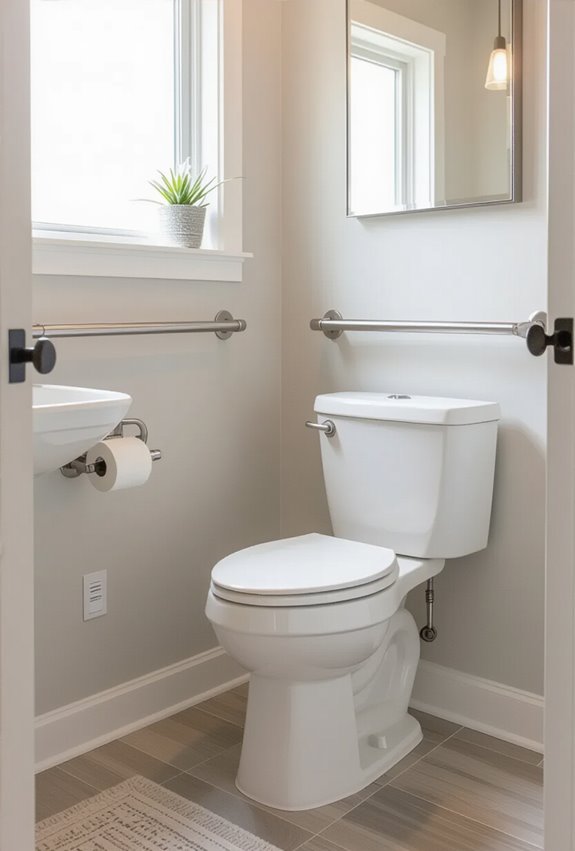
While a fold-down shower seat gives you a reliable place to rest, grab bars provide the steady support that helps you sit and stand safely.
Install horizontal bars near seating at ideal heights (33–36 inches) and vertical bars by entrances for leverage. Use sturdy mounting materials, secure into studs or with proper anchors, and test each bar’s stability before regular use.
Temperature-Limiting Anti-Scald Valves for Safety
Because water heaters and faucet settings can fluctuate, you’ll want temperature-limiting anti-scald valves installed to keep shower and sink water within a safe range.
You’ll set clear temperature thresholds to prevent sudden hot surges, ensuring consistent comfort.
These valves support scald prevention, are low-maintenance, and integrate with faucets and showers so you and caregivers can trust safer bathing without constant monitoring.
Linear Drains to Keep Floors Flat and Modern
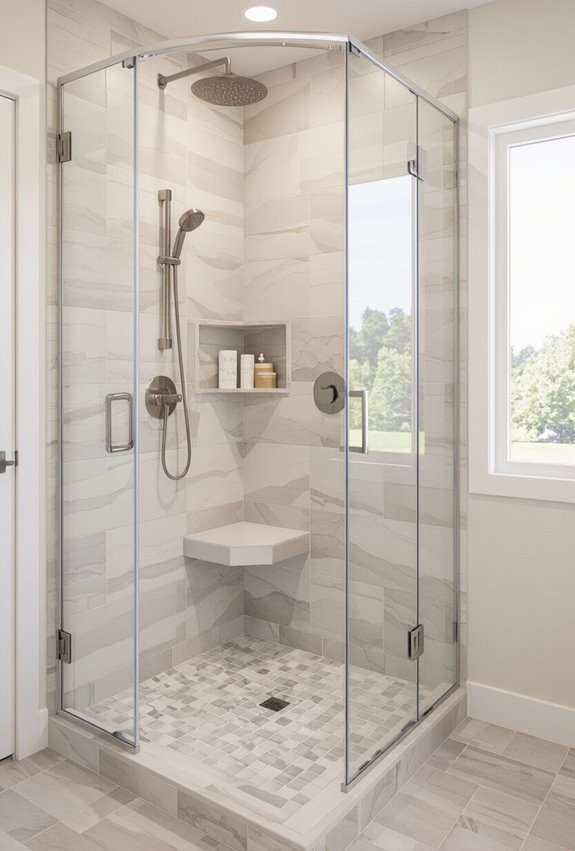
Alongside preventing scalds, you’ll want a bathroom layout that reduces tripping hazards and makes cleaning easier—linear drains help with both.
You’ll appreciate hidden channels that allow a flat, single-slope floor, minimizing thresholds and slip risks.
Their linear aesthetics suit modern bathrooms while improving water flow and maintenance.
Install them to combine safety, accessibility, and clean contemporary style without bulky drains.
Adjustable-Height Hand Showers and Slide Bars
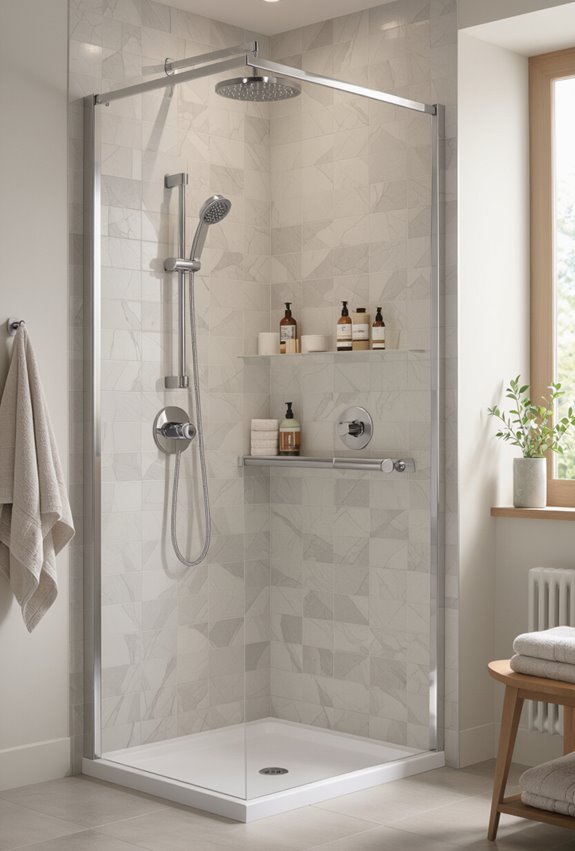
Install an adjustable-height hand shower on a slide bar to give you flexible, user-friendly control over spray position and reach. You’ll enjoy handheld versatility for seated or standing use, easier cleaning, and safer bathing.
Choose durable slide adjustment mechanisms you can operate with wet or arthritic hands, and position the bar so the shower head is reachable from transfer seats without stretching or twisting.
Strategically Placed Lighting to Reduce Glare and Shadows
Good lighting helps you see surfaces, read labels, and avoid slips when you’re stepping in or out of the shower, so it should get as much attention as your fixtures.
Place fixtures to minimize shadows, use low glare bulbs, and aim light from multiple angles.
Combine overhead, task, and accent sources for layered lighting that improves safety and comfort without creating harsh contrasts.
High-Contrast Color Choices to Aid Vision
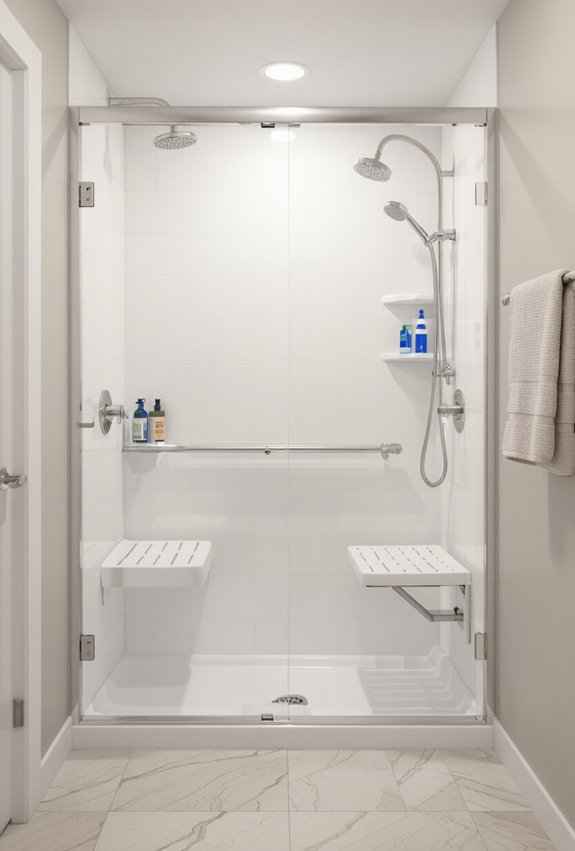
Because aging eyes lose contrast sensitivity, choosing high-contrast colors helps you quickly distinguish fixtures, edges, and controls.
Use bold paint for vanity edges, matte grab bars against lighter walls, and Accent tile trims to define shower thresholds.
Select High contrast textiles like dark towels on pale hooks and patterned bath mats to mark shifts, improving safety while keeping a stylish, coordinated look.
Heated Floors and Towel Rails for Comfort
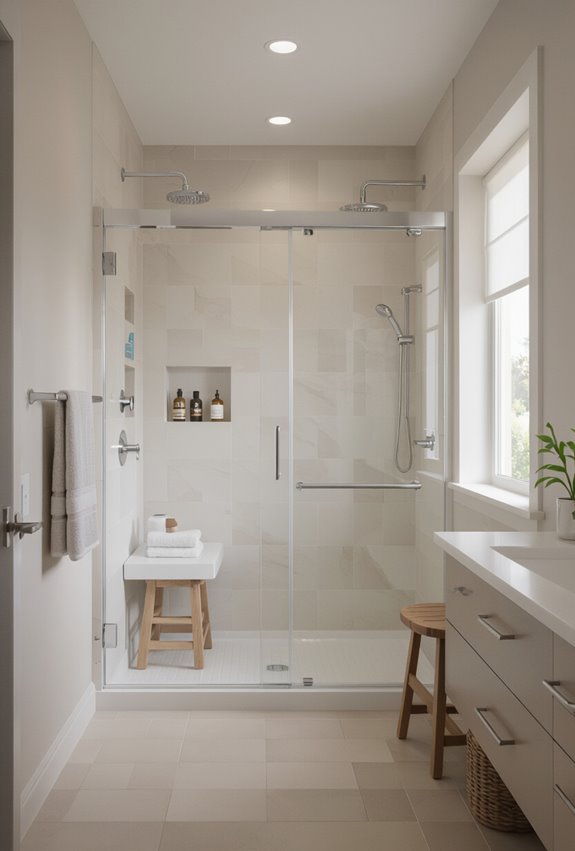
While keeping clear floor space for safe movement, you can also enhance daily comfort with heated floors and towel rails that make the bathroom more pleasant and usable for seniors.
Plan underfloor zoning to limit energy use and keep walkways warm. Position towel rails for easy reach and safe towel warmer placement near the shower or sink, avoiding obstructing mobility paths.
Storage Within Reach: Accessible Shelving Ideas
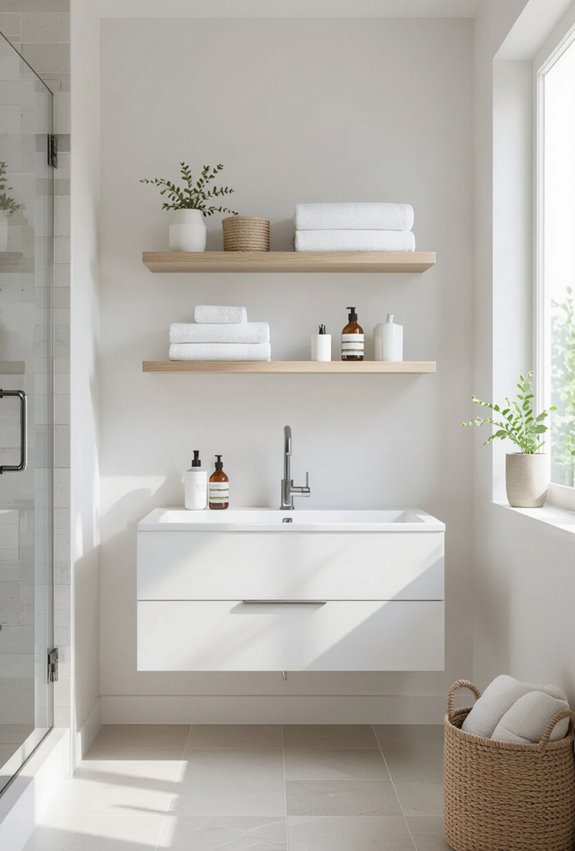
Start by planning shelving at heights seniors can actually reach without bending or stretching—typically between waist and chest level—so daily items stay accessible and independent use stays safe.
Use open shelving for visibility, pull downs for upper storage, and adjustable baskets on lower shelves.
Place frequently used toiletries and towels within easy reach, label containers, and keep clutter minimal to support safe, independent routines.
Smart Controls and Voice Assistants for Independence
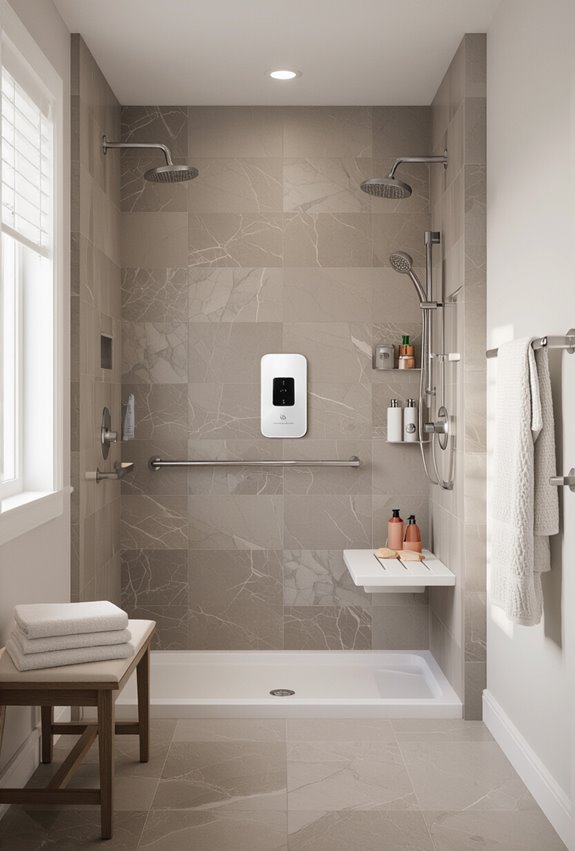
Because smart controls and voice assistants make everyday tasks simpler, you can operate lights, faucets, thermostats, and emergency features without moving from a stable position or fumbling with small switches.
Use voice activated faucets for hands-free washing and schedule lighting for safe navigation.
Integrate smart mirror assistants for reminders, visual info, and video calls so you stay independent, secure, and connected in your bathroom.
Rounded Counter Edges to Reduce Injury Risk
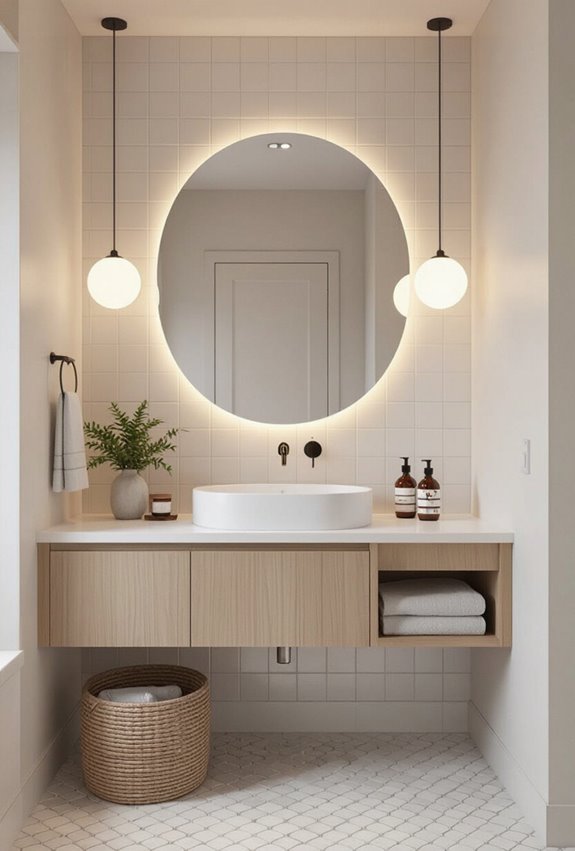
Choose rounded counter edges to lower the chance of bumps and cuts if you slip or reach across the vanity.
You’ll prefer a rounded countertop profile that’s easy on elbows and hips.
Pick soft edge materials like solid surface or wood with eased edges to absorb impact.
Install durable, water-resistant finishes and make sure edges are smoothly finished for cleaning and safety.
ADA-Compliant Mirror and Medicine Cabinet Options
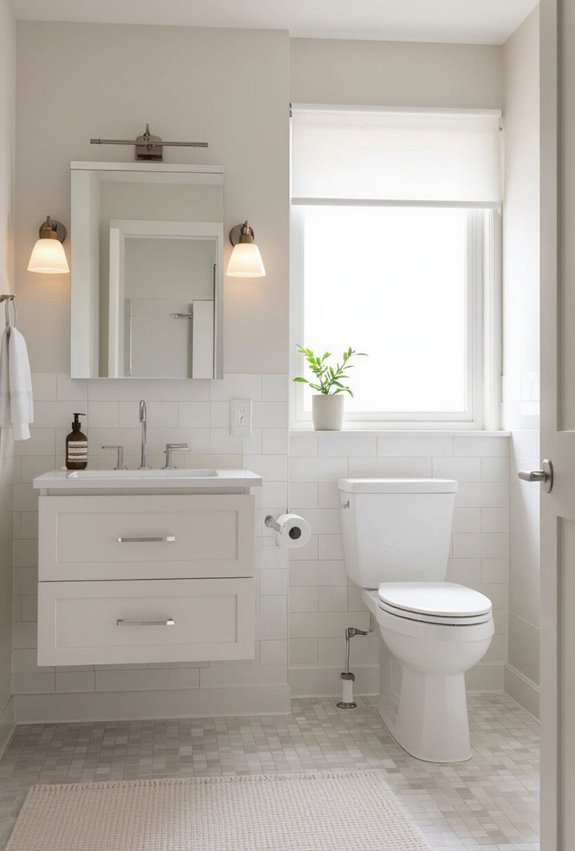
Pick mirrors and medicine cabinets that meet ADA mounting and reach-range guidelines so they’re usable whether someone’s standing or seated.
Choose tilt mirrors for adjustable viewing and low-mounted, easy-grip cabinet handles.
Recessed cabinets save clearance and keep profiles within reach.
Make certain mirrored surfaces are anti-glare and install secure, soft-close hinges for safety and convenience when accessing toiletries and medications.
Pocket Doors and Wider Swing Doors for Better Access
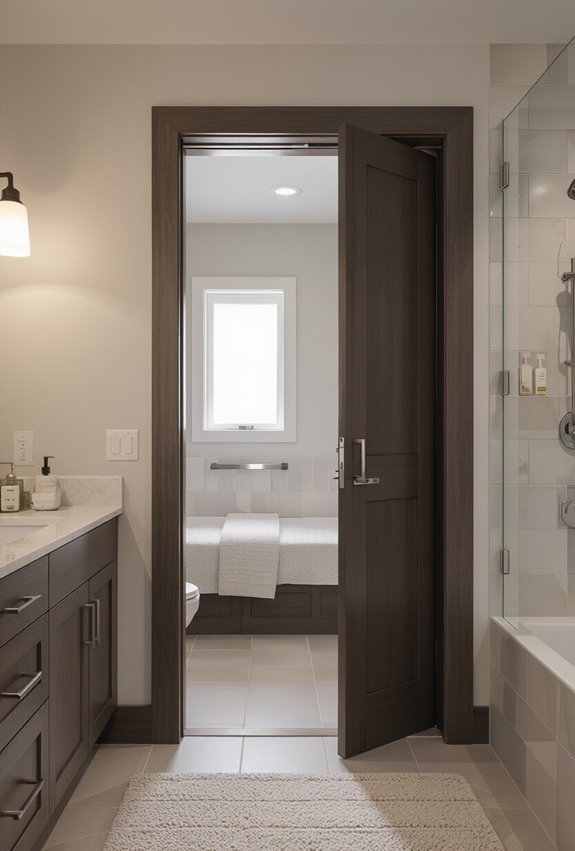
When you need easier entry and more maneuvering room, pocket doors and wider swing doors cut barriers without sacrificing style.
You’ll prefer a recessed pocket to free floor space and avoid door arcs that block mobility aids.
Wider swing doors offer simple installation and secure closure as a Bi fold alternative.
Choose lever handles and low thresholds for smooth, accessible changes.
Slip-Resistant Stylish Rugs and Mats
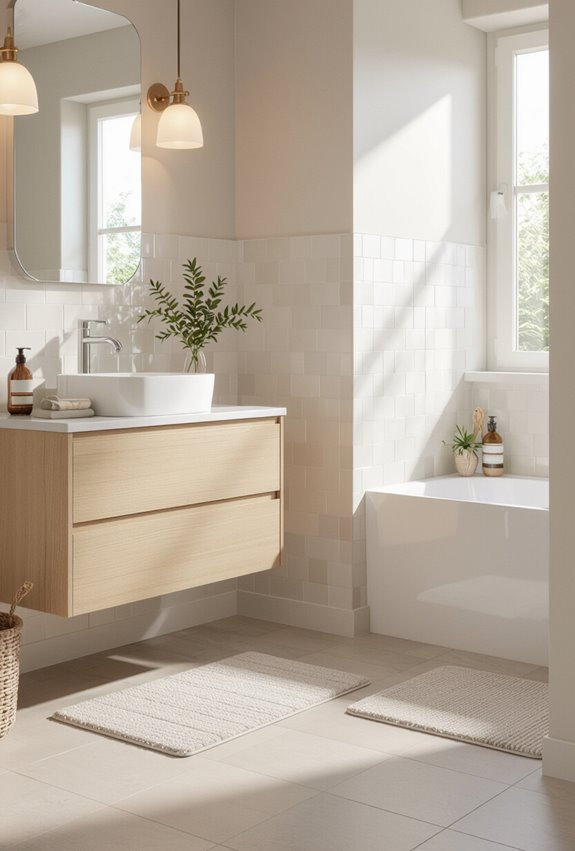
Offering both safety and style, slip-resistant rugs and mats help prevent falls while complementing your bathroom’s decor. Choose low profile mats for doorways and tubs to avoid tripping, and patterned traction mats to add visual interest and grip.
Pick quick-drying, washable materials with non-slip backing, and coordinate colors to maintain a calm, senior-friendly space that’s both safe and attractive.
Seating Solutions Outside the Shower for Dressing
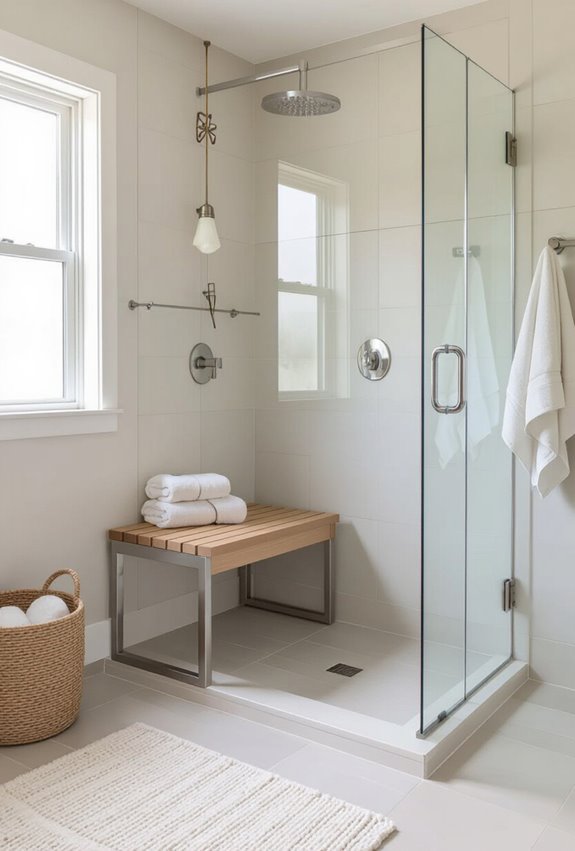
Slip-resistant mats and well-placed rugs will get someone safely out of the shower, but you’ll also want comfortable seating nearby for dressing and grooming.
Choose sturdy portable benches with backrests and non-slip feet for stability, or use low-profile styling ottomans that double as storage. Position seating within reach of towel bars and grab rails so you can sit, dry off, and dress with confidence and ease.
Durable, Easy-Clean Materials That Look Elegant
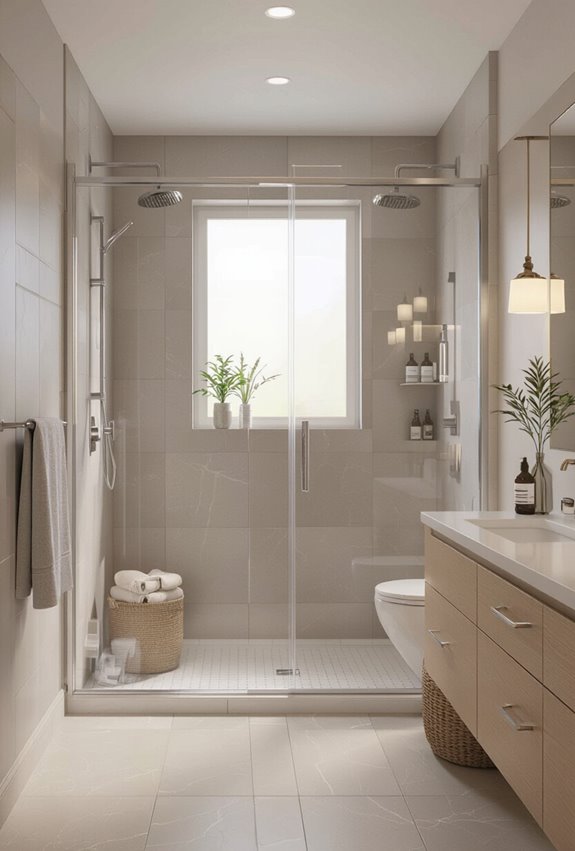
Choose materials that stand up to moisture, frequent cleaning, and daily use while still feeling tasteful and modern.
You’ll favor textured porcelains for slip-resistant floors and easy grout maintenance, and Satin quartz for countertops that resist stains and sanitize quickly.
Pick matte or low-gloss finishes to hide wear, sealed grout, and minimal seams so surfaces stay hygienic and require less effort to maintain.
Visual Cues for Step Changes and Transitions
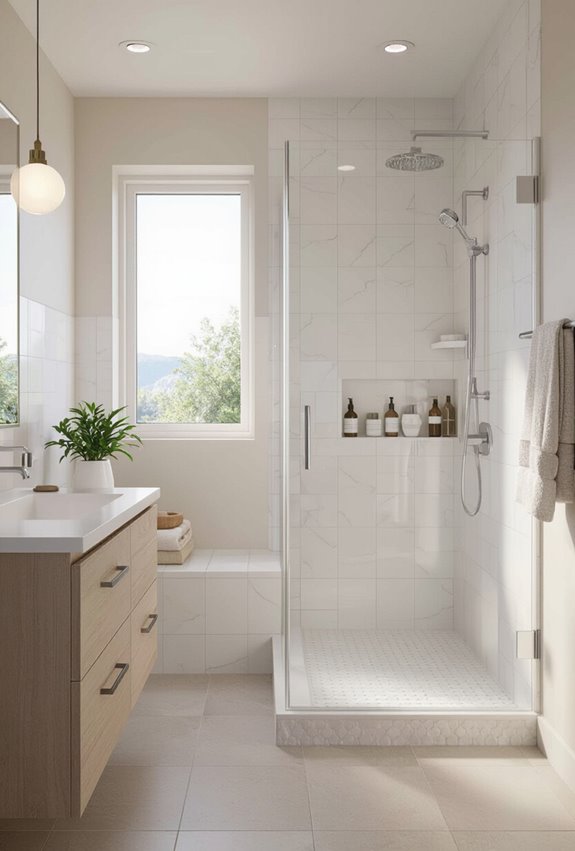
When a floor level changes or you add a small curb, make those shifts unmistakable so a senior can see and feel them before stumbling. Use high-contrast step edge markings and non-slip strips to outline risers.
Add change tactile cues—slightly raised textured strips or contrasting trim—so feet and canes detect changes. Keep colors clear and materials durable for long-term safety.
Transfer-Friendly Bathtub Trimming and Rails
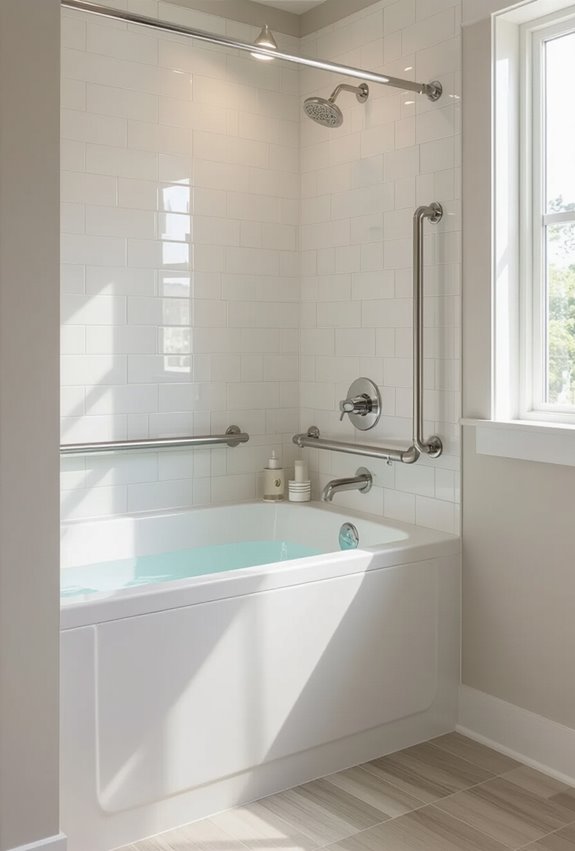
Because getting in and out of the tub is one of the riskiest moments, trim and rail choices should make transfers predictable and secure: install a low-threshold or walk-in tub, add grab rails at both knee and shoulder height, and include a sturdy transfer bench or molded seat that aligns with the bathroom doorway.
You’ll choose transfer friendly trim and prioritize rail aesthetics that blend with fixtures.
Compact Layouts for Small Accessible Bathrooms
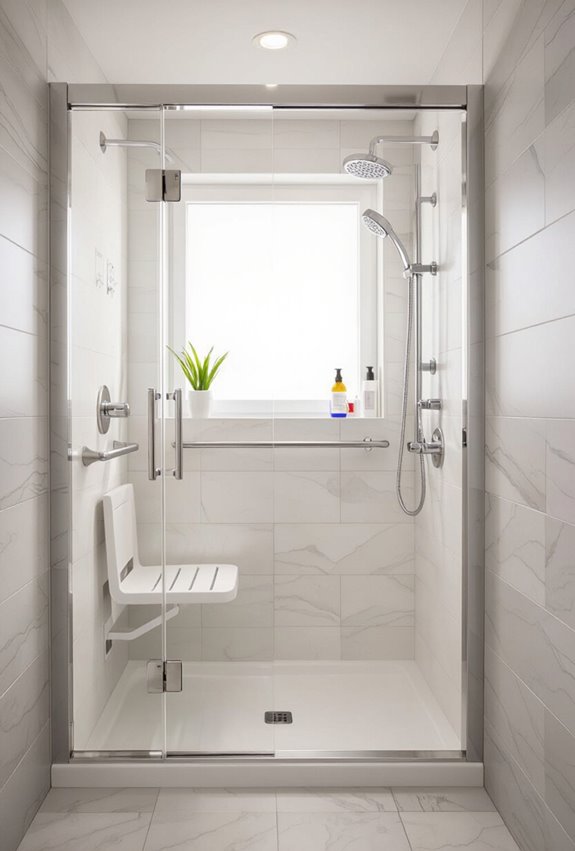
After fitting grab rails and a transfer bench, you’ll often find space is the next challenge—small bathrooms still need clear turning space and reachable fixtures.
Prioritize space saving fixtures like wall-mounted sinks and compact toilets, fold-down seats, and handheld showers.
An angled entry can improve maneuverability without widening doorways.
Plan clear floor zones and reachable storage to keep it safe and efficient.
Luxury Touches That Don’t Compromise Safety
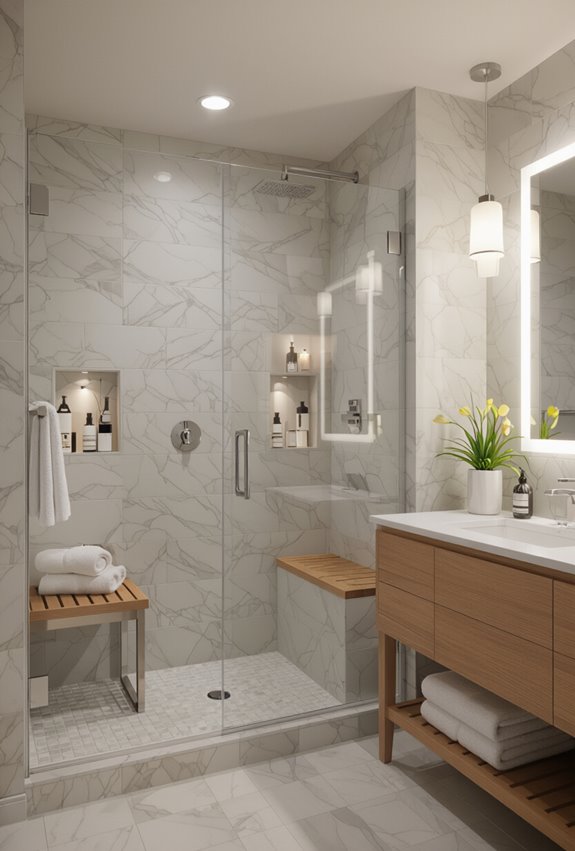
While safety stays the priority, you can still create a spa-like bathroom that feels luxurious without adding risk. Choose luxury grab bars with polished finishes and concealed mounts, pair them with designer anti slip flooring and textured tiles, and add heated towel racks, soft LED lighting, and accessible faucets.
These touches elevate style while keeping stability, comfort, and ease of use front and center.
Silhouette and Contrast for Fixture Visibility
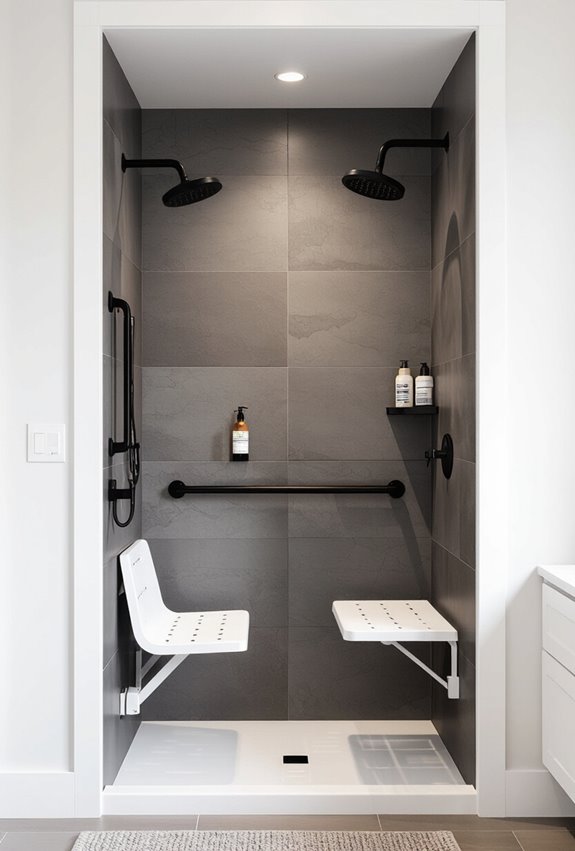
Often you’ll rely on clear silhouettes and strong contrast to help seniors quickly identify fixtures and edges, reducing hesitation and missteps. Use high contrast silhouettes for toilets, sinks, and grab bars so shapes read at a glance.
Add subtle fixture edge outlining to highlight rims and controls without glare. Choose matte finishes and consistent color cues to improve recognition and confidence.
Emergency Pull Cords and Alert Systems
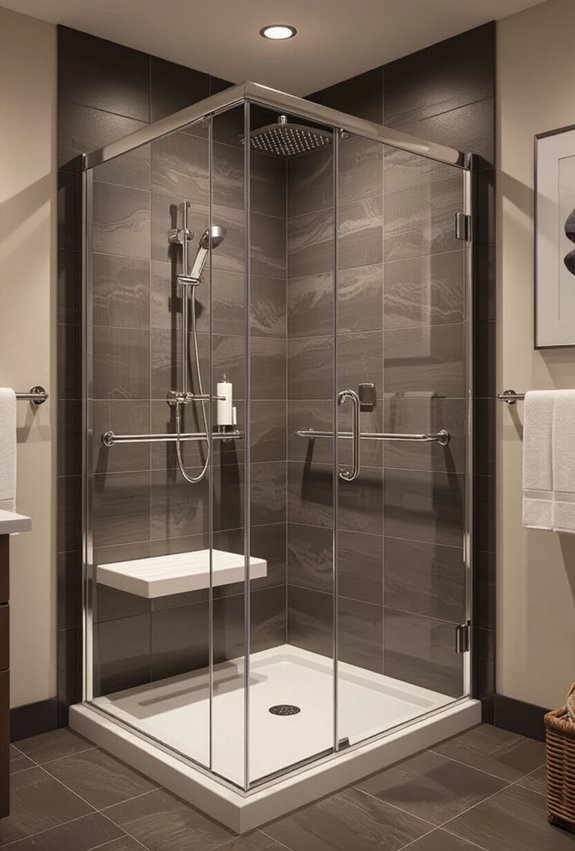
You should make emergency pull cords and alert systems obvious, reachable, and reliable so help can arrive quickly when it’s needed.
Install ceiling pullcords near toilets and showers, at floor length if possible, and test them regularly.
Combine fixed cords with wearable alerts for falls or incapacitation.
Mount visible indicator lights and guarantee alerts connect to caregivers or monitoring services for prompt response.
Color-Coded Controls for Simpler Operation
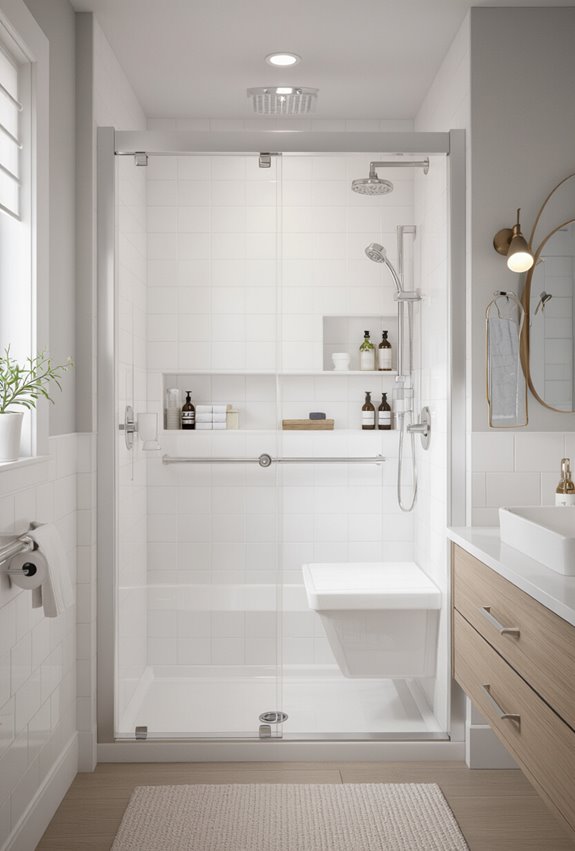
A simple color-coding system makes bathroom controls quicker and less confusing for seniors, especially those with memory or vision changes.
You can assign consistent colors for functions—red for hot, blue for cold, green for emergency—paired with high contrast labeling and tactile indicators so buttons and levers are identifiable by touch and sight.
Keep palettes simple and repeat colors across fixtures for intuitive use.
Accessible Vanity Designs With Knee Clearance
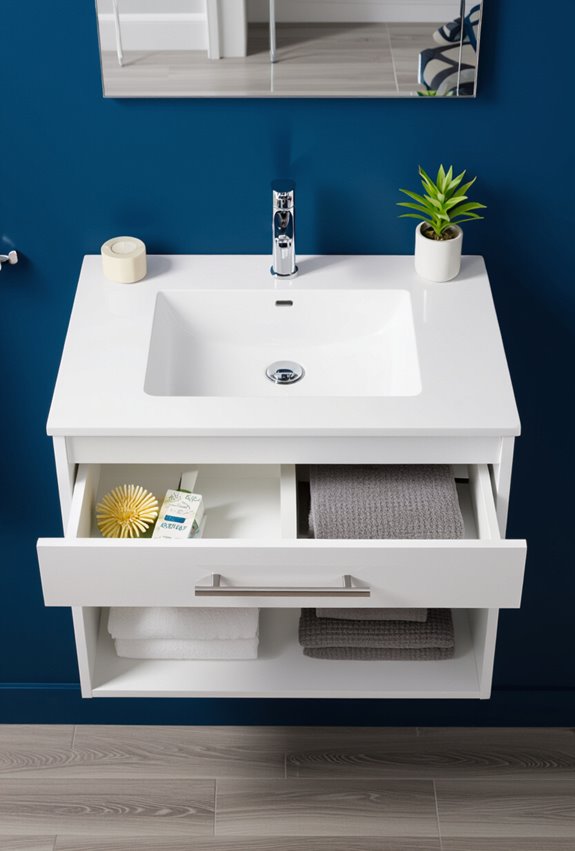
Designing an accessible vanity with proper knee clearance lets you sit comfortably at the sink for grooming, shaving, or hairstyling while keeping reach and storage within easy access.
Choose adjustable knee space so you can tailor height and depth, include under sink insulation for warmth and safety, position drawers within reach, and use anti-slip surfaces and lever handles to simplify daily routines.
Motion-Sensor Faucets and Toilets for Hygiene
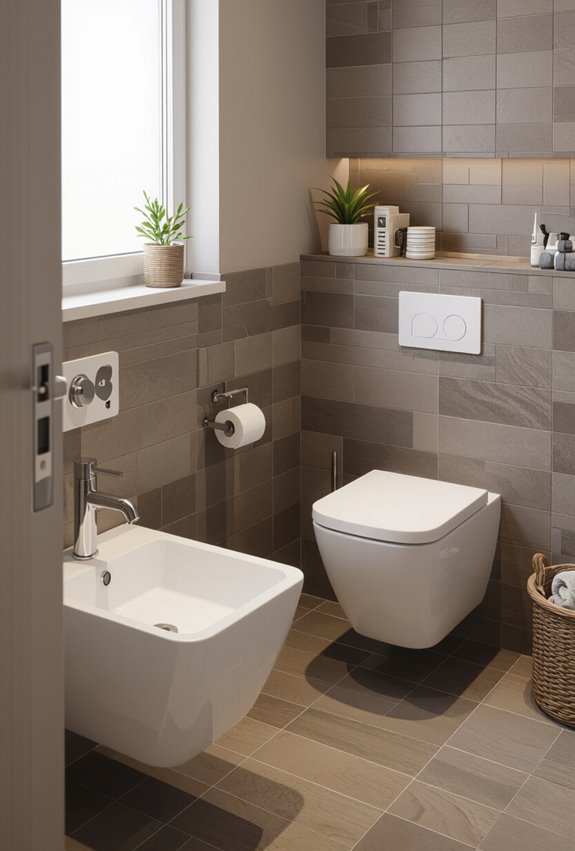
After planning a vanity that lets you sit comfortably and reach everything, consider motion-sensor faucets and toilets to reduce touchpoints and improve hygiene.
You’ll enjoy hands free hygiene for washing and flushing, lowering germ transfer and simplifying cleaning.
Choose reliable sensors, easy-access batteries or hardwired power, and models labeled for touchless maintenance so upkeep stays straightforward and hassle-free.
Cost-Effective Upgrades With Big Impact
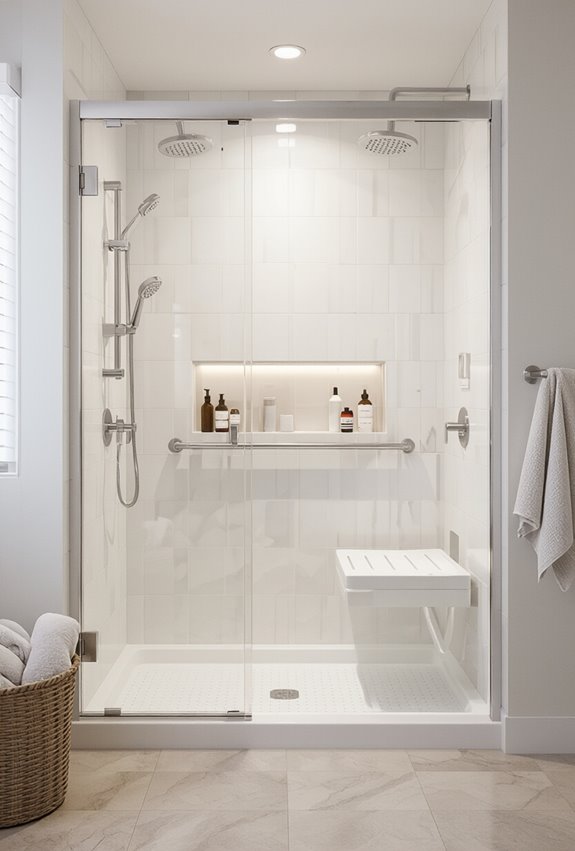
When you focus on a few targeted, low-cost changes—like installing grab bars, swapping to lever handles, or adding non-slip mats—you can dramatically boost safety and comfort without breaking the bank.
Choose budget friendly fixtures, bright lighting, and raised toilet seats to reduce strain. Install DIY grab bars where safe, replace slippery shower curtains with textured liners, and add handheld showers for easier bathing.
Aging-in-Place Retrofit Checklist for Bathrooms
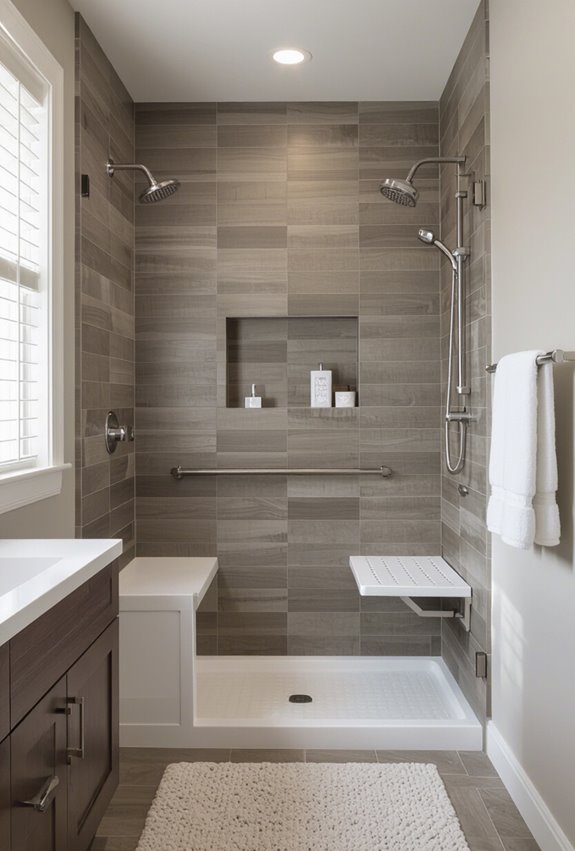
An aging-in-place retrofit checklist helps you prioritize safety, comfort, and accessibility so renovations deliver practical results without surprises.
Start with a thorough home assessment to map mobility needs, trip hazards, and fixture heights.
Include a lighting audit for glare-free, layered illumination.
Add grab bars, non-slip flooring, reachable storage, lever handles, and a curbless shower.
Schedule contractor quotes and a realistic timeline.
Maintenance Tips to Keep Accessibility Features Working
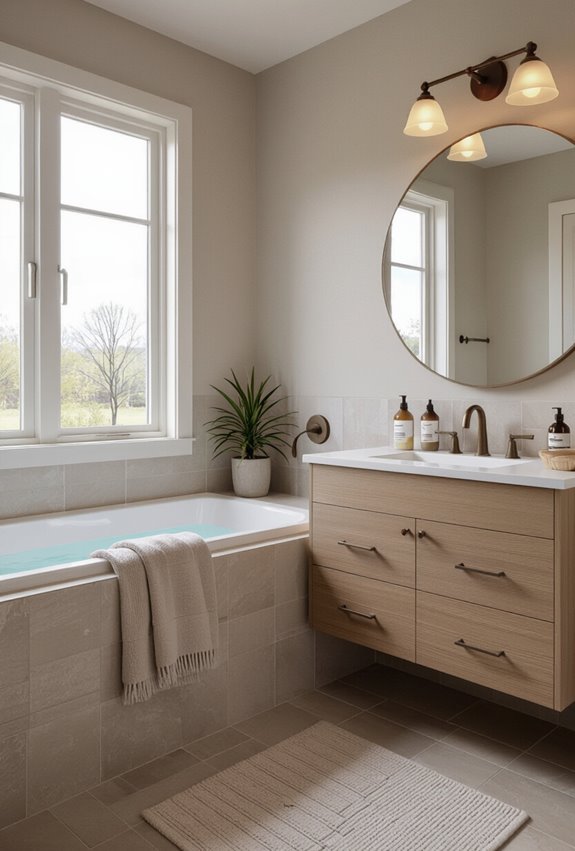
Regularly check and maintain accessibility features so they stay reliable and safe; a small monthly routine can prevent bigger repairs and hazards down the line.
You should perform routine inspections of grab bars, hinges, seals, and flooring for looseness, corrosion, or wear.
Tighten fasteners, replace worn parts promptly, and use proper lubricant application on moving components to guarantee smooth, quiet operation and longer lifespan.
Personalizing Accessibility Without Stigma
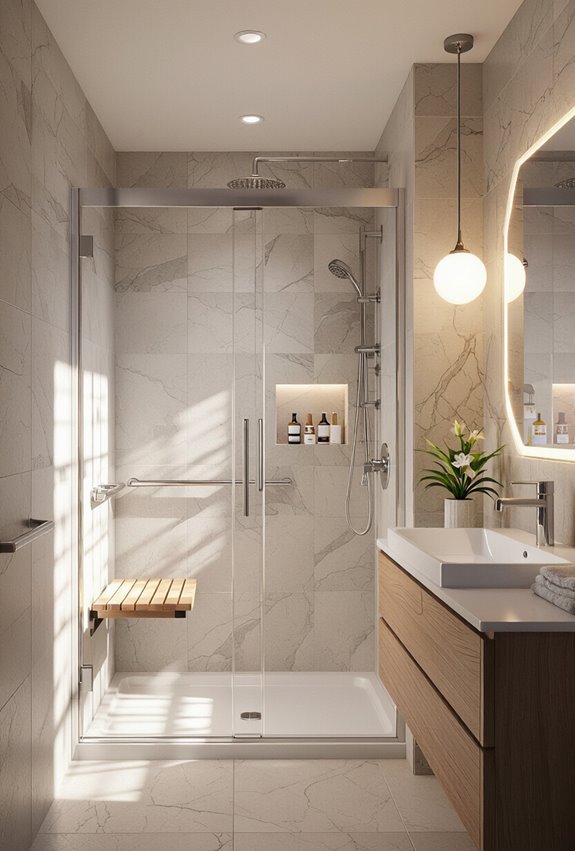
Make accessibility feel like a natural part of your bathroom by choosing fixtures and finishes that reflect your style while meeting functional needs. You can blend grab bars, seating, and lighting into a cohesive look using Personalized aesthetics—matching metals, colors, and textures.
Use Stigma free messaging in signage, product labels, and conversations so adaptations feel empowering, not medical.
Accessible Sink Designs
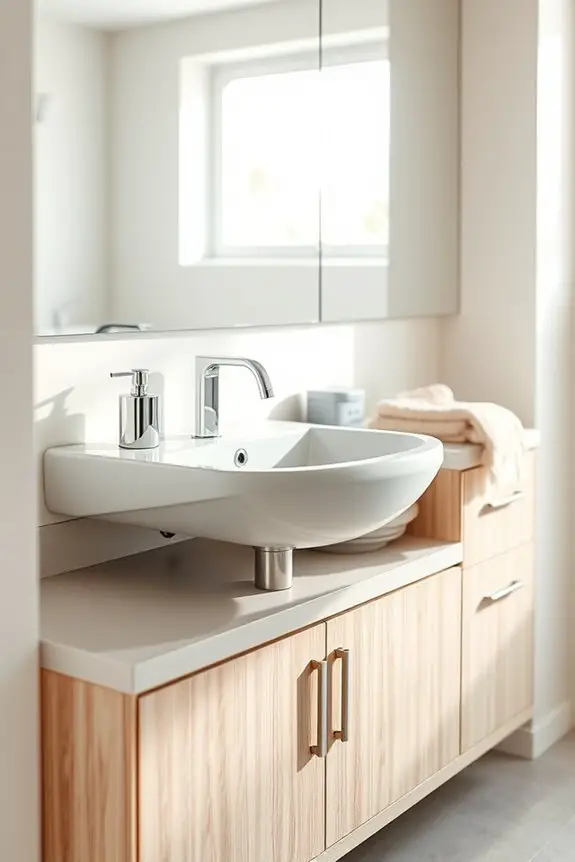
When designing an accessible bathroom, incorporating the right sink can make a significant difference in comfort and usability for seniors.
Focus on sink height; an ideal height allows for easy reach while seated or standing. You might consider wall-mounted sinks, which can be adjusted to suit individual needs.
Guarantee the basin accessibility is also a priority; deep basins can be challenging for those with limited reach. Opt for lever-style faucets that are easier to operate, and make certain there’s enough clearance underneath the sink for wheelchair users or those who need to sit.
Finally, incorporating grab bars near the sink can provide additional support, enhancing safety and independence in the bathroom.
Roll-in Shower Designs
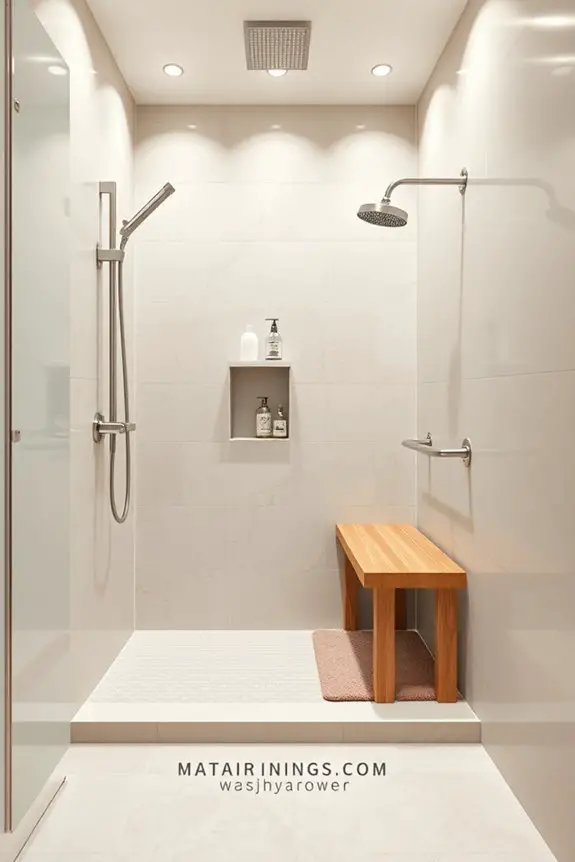
A roll-in shower can transform a bathroom into a more accessible space for seniors, promoting independence and ease of use. These barrier-free designs eliminate curbs, allowing you to effortlessly roll in without worrying about tripping or slipping.
You can customize the size and layout to fit your needs, whether you prefer a spacious design or a compact solution. Installing grab bars and non-slip flooring enhances shower accessibility, ensuring safety while bathing.
Consider adding a handheld showerhead for added convenience, making it easier to wash yourself without straining. With the right design, a roll-in shower not only meets your functional needs but also complements your bathroom’s style, creating a welcoming and functional space for daily routines.
Lever-Handled Faucets
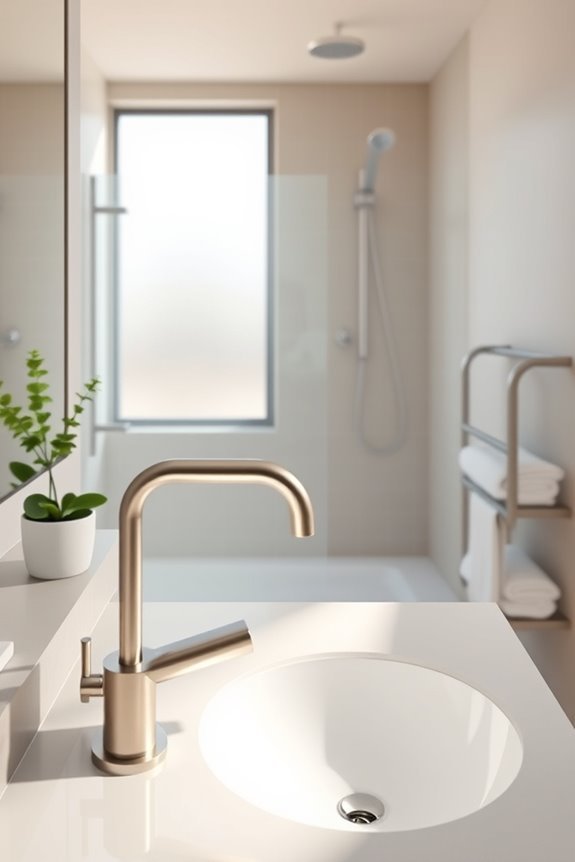
Lever-handled faucets offer a practical solution for seniors seeking ease and comfort in the bathroom.
These faucets are designed for simple operation, allowing you to turn the water on and off with just a gentle push or pull. One of the main lever handle benefits is that they require minimal grip strength, making them ideal for those with arthritis or limited mobility.
You won’t have to twist or turn knobs, which can be challenging. With faucet ease, you can quickly adjust water temperature and flow, enhancing your overall bathing experience.
Plus, lever-handled faucets come in various styles, ensuring you won’t have to sacrifice aesthetics for functionality. Investing in these faucets can greatly improve your daily routine and boost your independence.
Wall-mounted Bathroom Accessories
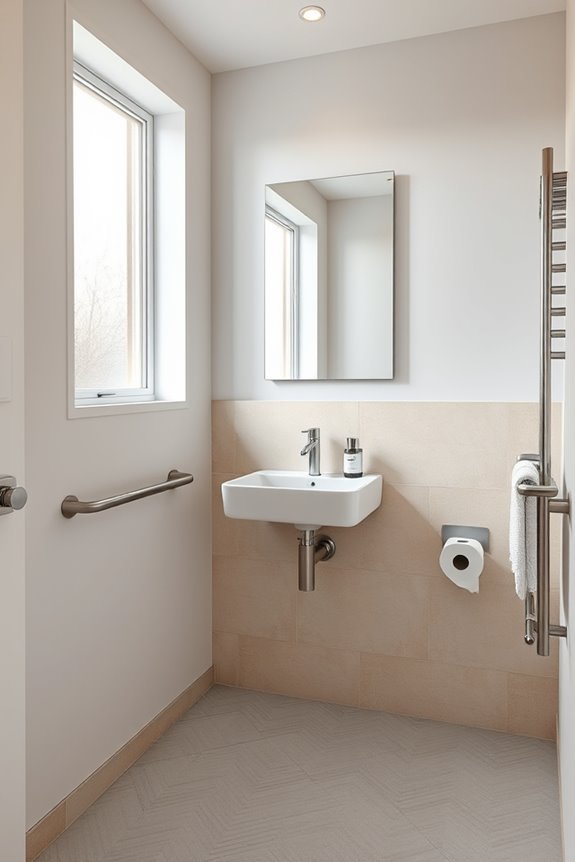
In addition to easy-to-reach storage solutions, wall-mounted bathroom accessories can greatly enhance accessibility for seniors. By installing wall-mounted shelving, you can keep essential items within arm’s reach, eliminating the need to bend down or stretch.
These shelves can be stylishly integrated into your bathroom decor, providing both function and flair.
Consider adding decorative towel racks that not only hold towels but also add a touch of elegance to your space. Position them at a comfortable height, making it easy for seniors to grab towels without straining.
With these thoughtful additions, you’ll create a bathroom that’s not just accessible but also visually appealing, ensuring comfort and style go hand in hand.
Bright Lighting Options
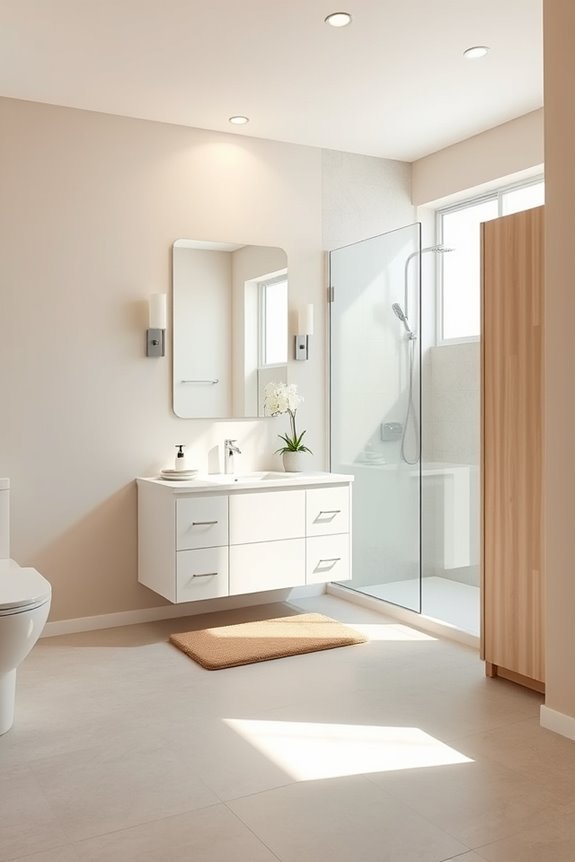
Since adequate lighting is essential for safety and comfort, incorporating bright lighting options in a senior-friendly bathroom can make a significant difference.
Start by maximizing natural light; if possible, install larger windows or skylights to let in sunlight. This not only brightens the space but also lifts spirits.
For ambient lighting, consider using LED fixtures that provide a soft yet effective glow. Wall sconces or recessed lighting can enhance visibility without harsh glare.
Make sure to place lights near mirrors and in shower areas for ideal illumination. Dimmers can also be a great addition, allowing you to adjust brightness based on the time of day or mood.
Together, these elements create a welcoming and safe environment for seniors.
Color Contrast for Visibility
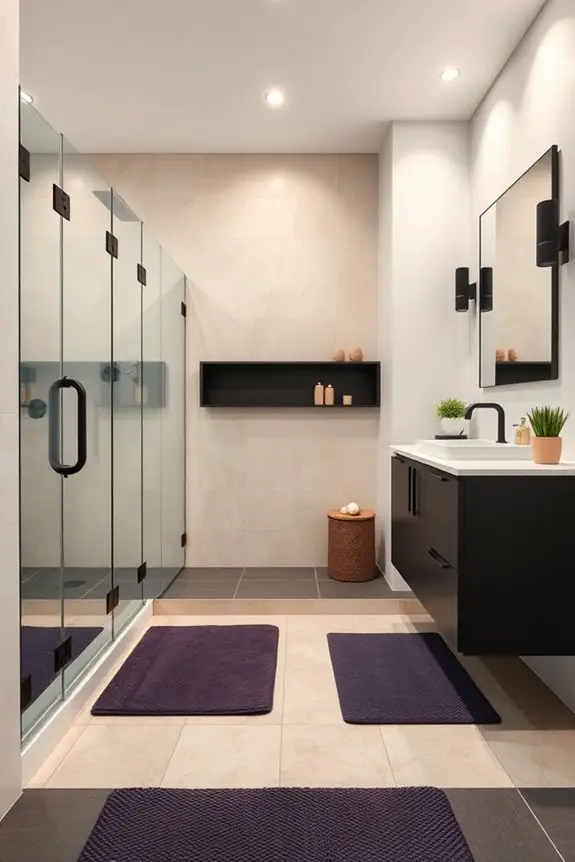
While designing a senior-friendly bathroom, incorporating color contrast can greatly enhance visibility and safety. When you choose your color palette, opt for contrasting colors between walls, floors, and fixtures.
For instance, light-colored walls paired with darker flooring can help define spaces and prevent trips. Use contrast materials like non-slip mats in vibrant colors to draw attention to areas where extra caution is needed.
Additionally, consider using bright accents on grab bars and faucets to make them easily identifiable. This approach not only improves visibility but also adds an element of style to your bathroom.
Bathing Aids and Tools
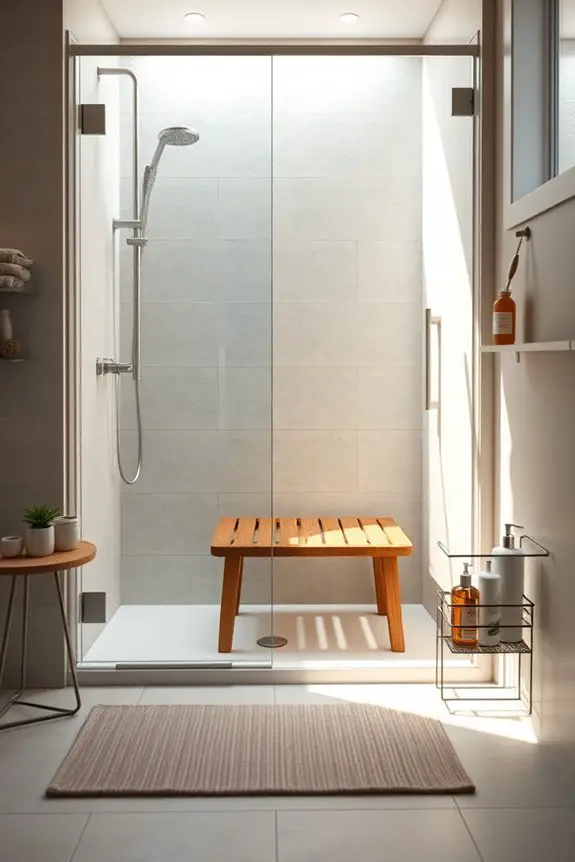
When it comes to ensuring a safe and enjoyable bathing experience for seniors, utilizing bathing aids and tools can make a significant difference.
Consider investing in non-slip mats to enhance bath safety and prevent falls. A shower chair or bench allows you to sit comfortably while bathing, making therapeutic baths more accessible.
Handheld showerheads offer flexibility, letting you control the water flow without straining. Long-handled sponges can help you reach difficult areas without overexerting yourself.
Don’t forget about grab bars, which provide extra stability when getting in and out of the tub.
Dimming Lights for Relaxation
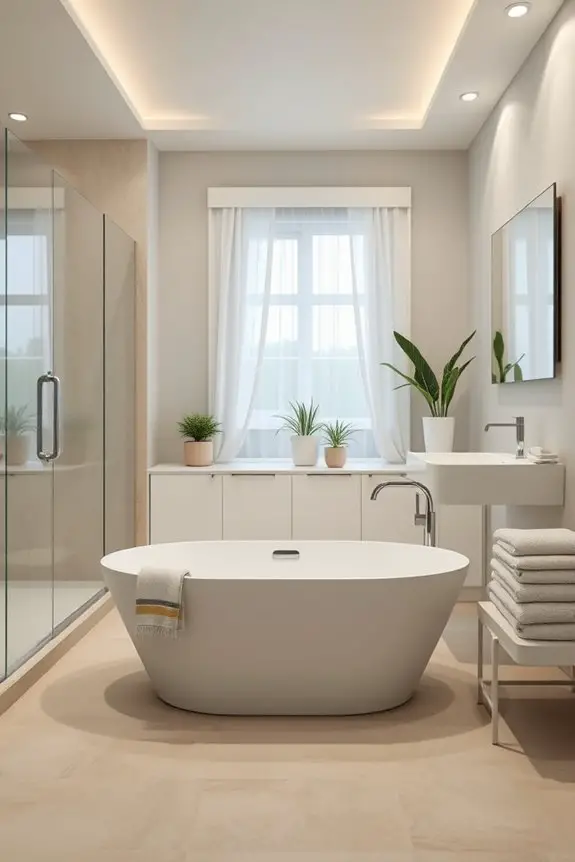
While you may not always think about lighting, dimming lights can transform a bathroom into a relaxing oasis for seniors. By incorporating dimmable fixtures, you’ll create the perfect mood lighting for unwinding after a long day.
Whether you’re soaking in a warm bath or preparing for bed, the adjustable brightness allows you to set the atmosphere just right.
Additionally, modern dimming options often come with energy efficiency in mind, helping you save on electricity bills while enjoying a soothing environment.
Consider installing LED lights with dimmers for both functionality and style.
With the right lighting, you’ll enhance not only comfort but also safety, making your bathroom a serene retreat tailored to your needs.
Wall-mounted Toiletries Organizer
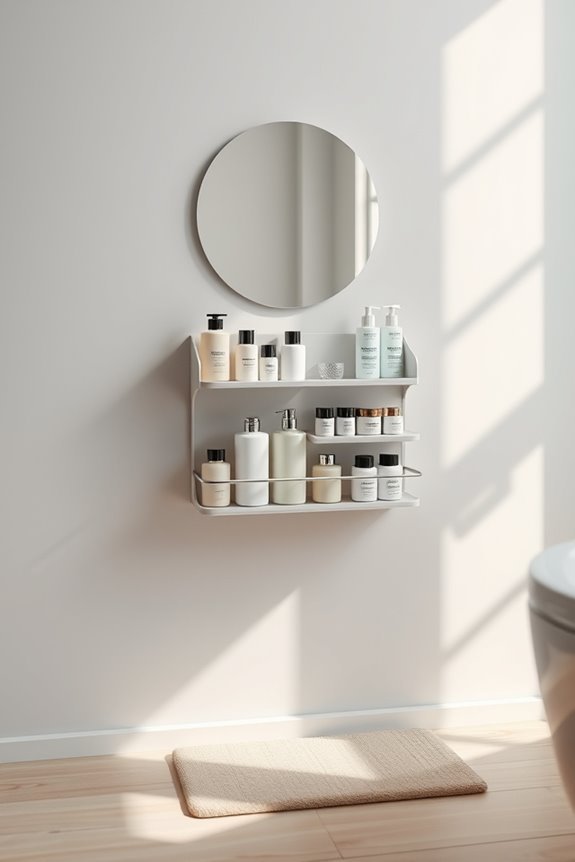
Creating a calming atmosphere isn’t just about lighting; it’s also about organization. A wall-mounted toiletries organizer is one of the best toiletries organization solutions for your bathroom.
By utilizing vertical space, you can keep essentials like shampoos, soaps, and lotions within easy reach, reducing clutter on countertops. This not only enhances bathroom space management but also makes it safer and more accessible, especially for seniors.
Choose a design that complements your style while providing practicality. Look for options with clear compartments or labels, so you can quickly find what you need.
With a well-organized space, you’ll create a serene environment that promotes relaxation and ease of use, making your bathroom a more inviting retreat.
Warm Color Palettes
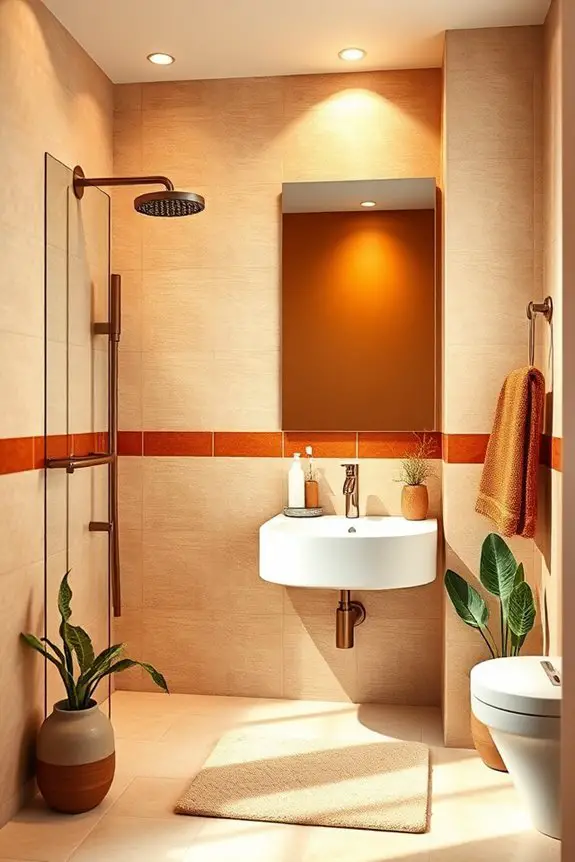
When designing a bathroom for seniors, warm color palettes can greatly enhance the space’s comfort and accessibility. By choosing warm color schemes like soft yellows, gentle oranges, and muted reds, you create an inviting atmosphere that radiates positivity.
These calming hues help reduce anxiety and promote relaxation, which is especially important in a space used for self-care. Consider painting the walls in a warm beige or installing tiles with a warm undertone to set a soothing tone.
Accentuate with accessories in complementary colors to tie everything together. Overall, a thoughtfully chosen warm color palette can make the bathroom feel more welcoming and enhance safety while maintaining a stylish appeal for seniors.
Voice-activated Technology
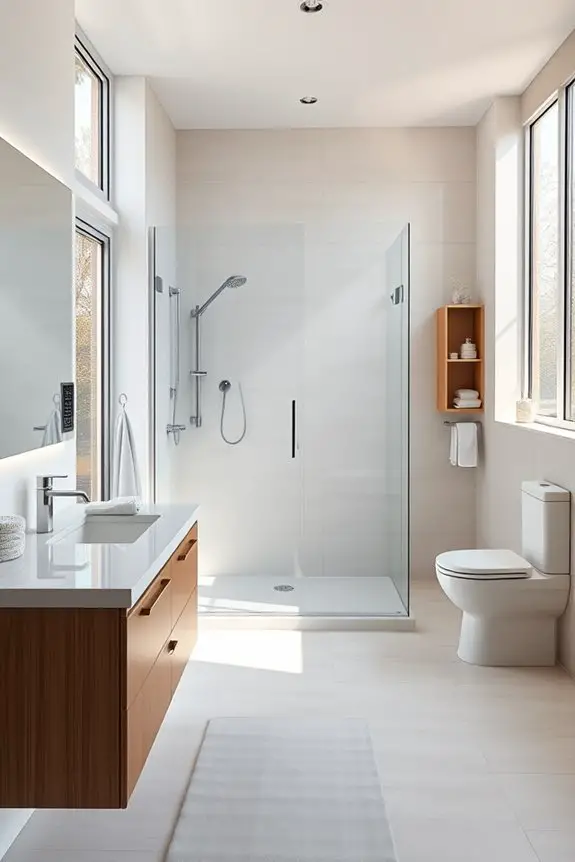
With safety features like grab bars and slip-resistant surfaces in place, incorporating voice-activated technology can further enhance the accessibility of your bathroom.
Smart assistants, like Amazon Alexa or Google Assistant, allow you to control various features using simple voice commands. You can easily adjust lighting, play music, or even set reminders for medication—all without needing to reach for switches or buttons.
Imagine asking your smart assistant to turn on the shower or adjust the water temperature just by speaking. This technology not only promotes independence but also adds a layer of convenience and comfort.
Smart Home Features
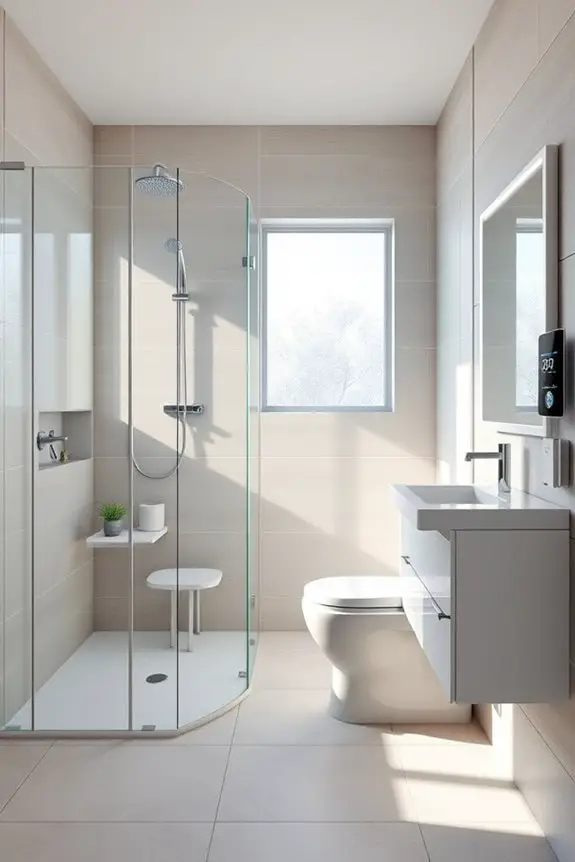
Incorporating smart home features into bathroom design can greatly enhance safety and convenience for seniors. With smart home integration, you can control various devices effortlessly, making daily routines easier.
Imagine adjusting lighting, temperature, or even music simply by using voice control. This hands-free technology allows you to maintain independence while reducing the risk of accidents.
Smart faucets and toilets can be programmed to operate automatically, promoting hygiene without requiring much effort. Additionally, smart sensors can alert you to potential hazards, like water leaks or excessive humidity.
With these features, you’ll feel more secure and comfortable in your space. Embracing smart home technology not only modernizes your bathroom but also greatly improves your overall quality of life.
Height-adjustable Mirrors
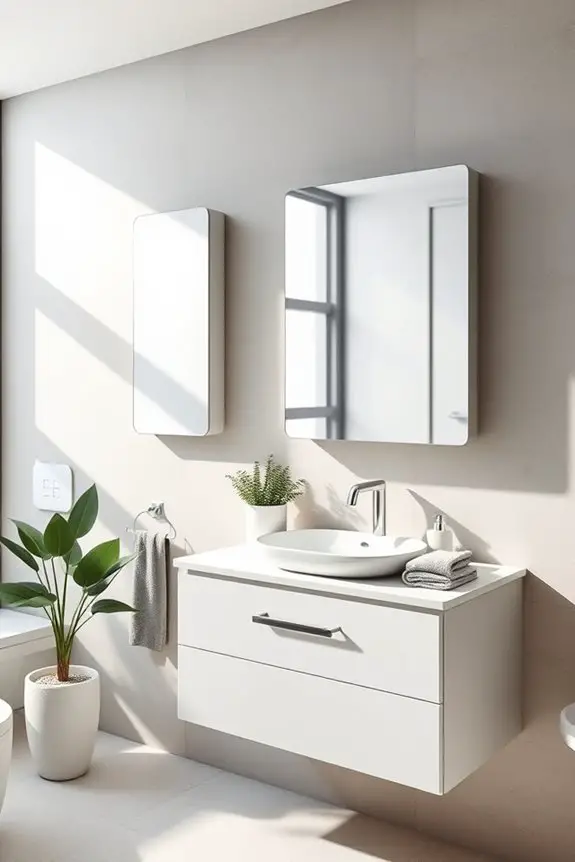
Height-adjustable mirrors are an essential addition to any bathroom designed with seniors in mind.
These mirrors offer height adjustable designs that guarantee everyone can comfortably see their reflection, regardless of mobility challenges. You can easily adjust the mirror’s height for tasks like shaving or applying makeup, enhancing independence and confidence.
When considering mirror placement, think about positioning it near sinks or vanity areas to maximize functionality. Make certain it’s installed securely and at a height that accommodates both standing and seated users.
With these mirrors, you’ll create a more accessible space that caters to the needs of seniors while maintaining a stylish aesthetic.
Investing in height-adjustable mirrors truly transforms a bathroom into a senior-friendly haven.
Practical Ventilation Solutions
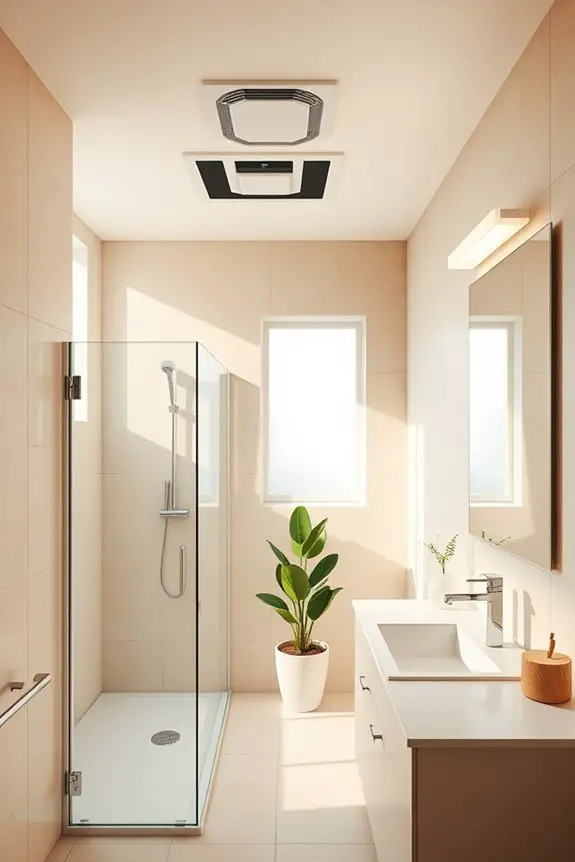
While good ventilation mightn’t be the first thing that comes to mind for bathroom design, it’s essential for creating a safe and healthy environment for seniors.
Proper ventilation helps prevent mold growth and reduces humidity levels, which can cause slips and falls. Installing ventilation fans is a practical solution to guarantee adequate airflow, especially during showers.
Choose a fan with a humidity control feature that automatically activates when moisture levels rise, keeping your bathroom dry and comfortable. Additionally, consider adding operable windows or exhaust vents to further enhance airflow.
Personal Safety Alarms
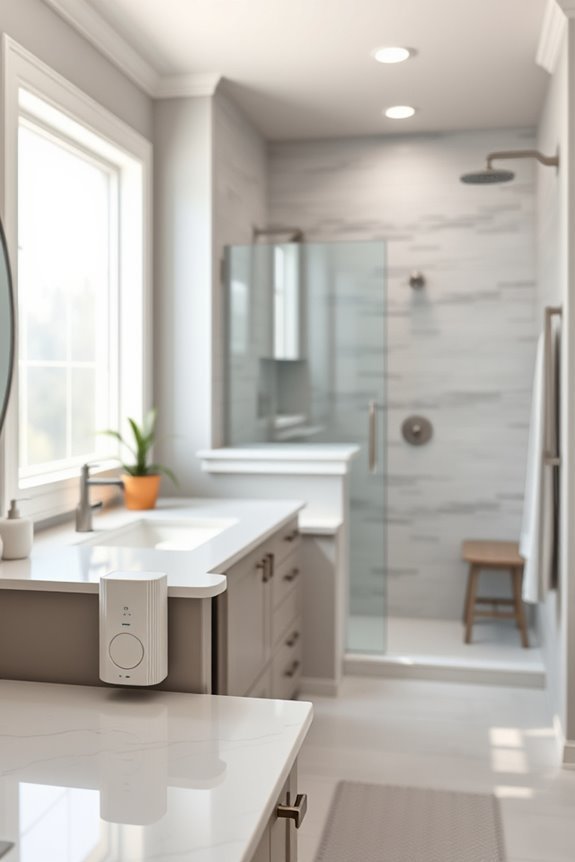
Personal safety alarms are an essential addition to any bathroom designed for seniors. These devices provide peace of mind, allowing you to call for help if you experience a fall or other emergency.
Consider investing in personal alert systems that can be worn as necklaces or bracelets, making them easy to access when needed. Many of these systems connect directly to emergency response options, ensuring help arrives quickly.
Some models even feature two-way communication, so you can speak directly to emergency personnel. When designing your bathroom, strategically place alarms within reach of the shower, toilet, and other key areas.
Conclusion
By incorporating these practical and stylish accessibility bathroom design ideas, you’re not just enhancing safety; you’re creating a sanctuary that feels like a modern spa. Imagine stepping into a space where every detail caters to your comfort, just like a luxury hotel. With thoughtful touches like grab bars and non-slip flooring, you’re paving the way for independence and peace of mind. So, embrace these changes and transform your bathroom into a haven for both style and accessibility!


