40 Elementary School Interior Design Ideas for Inspiring Learning Spaces
Elementary school interior design can truly transform learning spaces into inspiring environments. Think about flexible classroom layouts that foster collaboration and creativity. Incorporate colorful learning zones to boost engagement and mood. Consider nature-inspired designs for a calming effect and hands-on learning stations for interactive experiences. Don’t forget clear pathways to allow movement and adaptive learning environments that cater to all students. Explore more innovative ideas that could enhance your space and spark curiosity!
Mobile Storage for Quick Reconfiguration
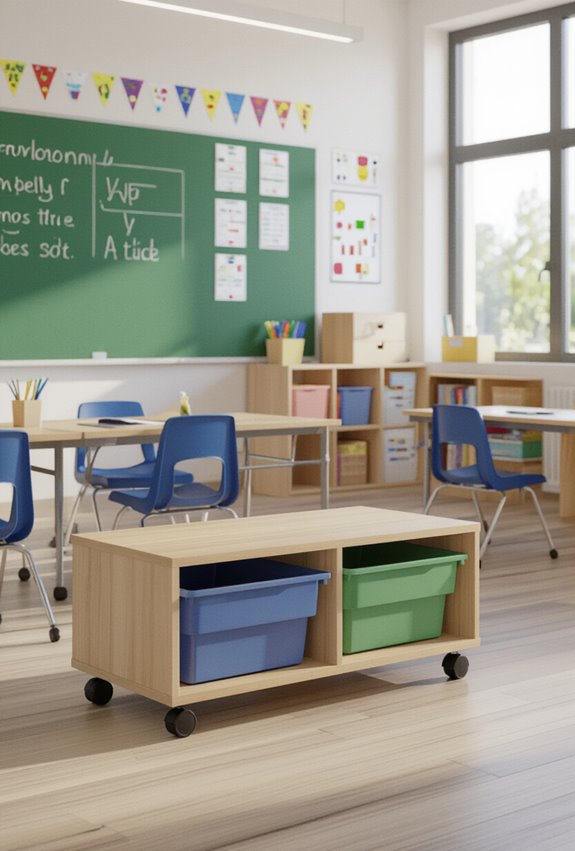
Often you’ll find that better storage is the quickest way to change how a classroom functions: mobile cabinets, carts, and shelving on casters let you reconfigure learning zones in minutes, move materials to where students need them, and tuck supplies away for a clean, focused environment.
You’ll use portable cubbies and rolling carts to store supplies, rotate centers, and create flexible workspaces that adapt instantly.
Natural Light Strategies for Brighter Rooms
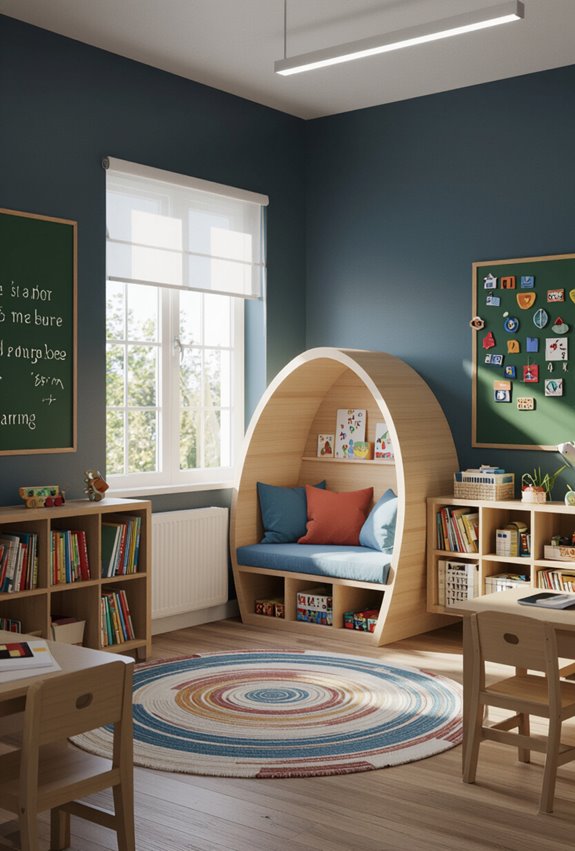
Good daylight design will make lessons feel livelier and reduce reliance on artificial lighting after you arrange interactive boards and seating.
Position windows to maximize southern exposure, add adjustable blinds, and use skylight diffusers to spread light evenly.
Install daylight sensors to dim overhead fixtures automatically, prevent glare on screens, and create comfortable, energy-efficient classrooms that support focus and circulation.
Flexible Rug Zones for Group Time
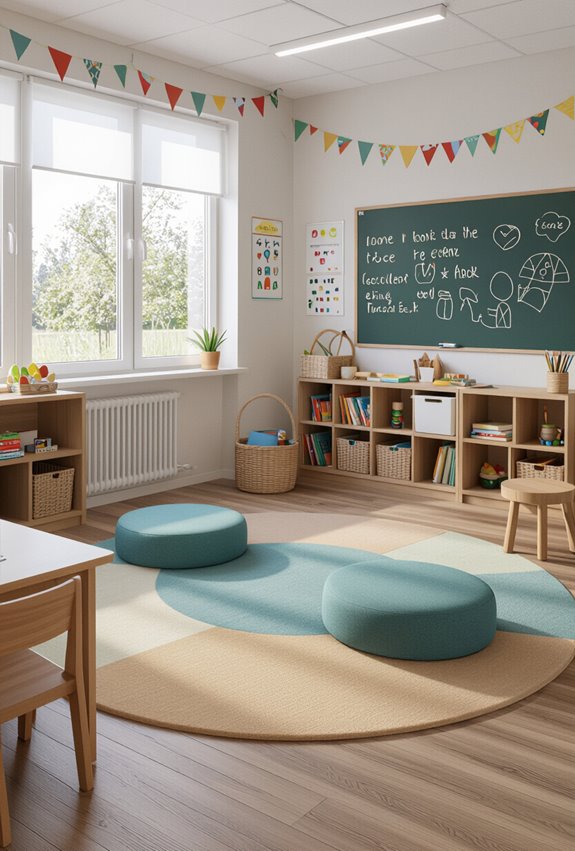
Frequent shifts in activities make flexible rug zones essential for group time; design them so you can reconfigure seating, define clear activity areas, and support both whole-class meetings and small-group work.
Use circle mats to mark spots, stackable cushions for quick rearrangement, and low shelves nearby for materials.
Integrate portable projectors on carts for sharing visuals, keeping wiring tidy and sightlines clear.
Technology Integration Without Clutter
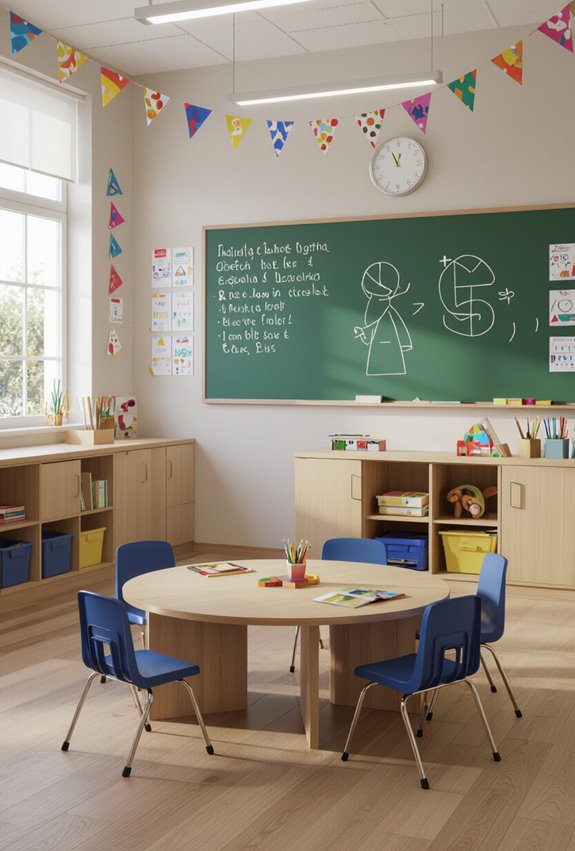
When you bring devices into an elementary classroom, keep them accessible but out of the way so tech enhances learning without turning the room into a tangle of cords and screens.
Use wall mounts, mobile carts, and recessed outlets to limit visual clutter. Favor wireless charging pads in common workstations and plan hidden cabling routes so students focus on projects, not peripherals.
Writable Surfaces on Walls and Tables
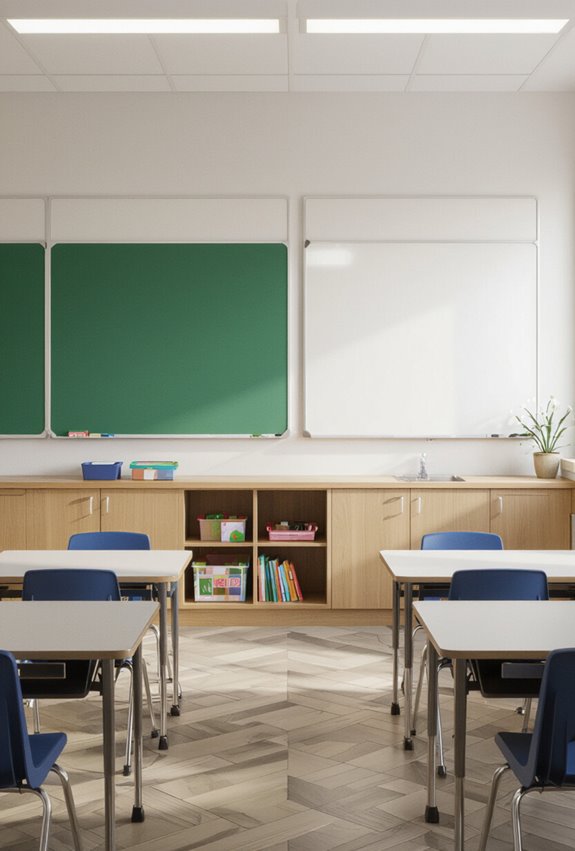
Many classrooms benefit from adding writable surfaces on walls and tables so students can brainstorm, solve problems, and show thinking without waiting for paper.
You can apply dry erase paint to sections of walls or desks for quick notes and sketches, and install magnetic wallpaper for hands-on displays and movable labels.
These surfaces encourage collaboration, let you assess understanding instantly, and stay easy to maintain.
Teacher Station Layouts That Supervise Better
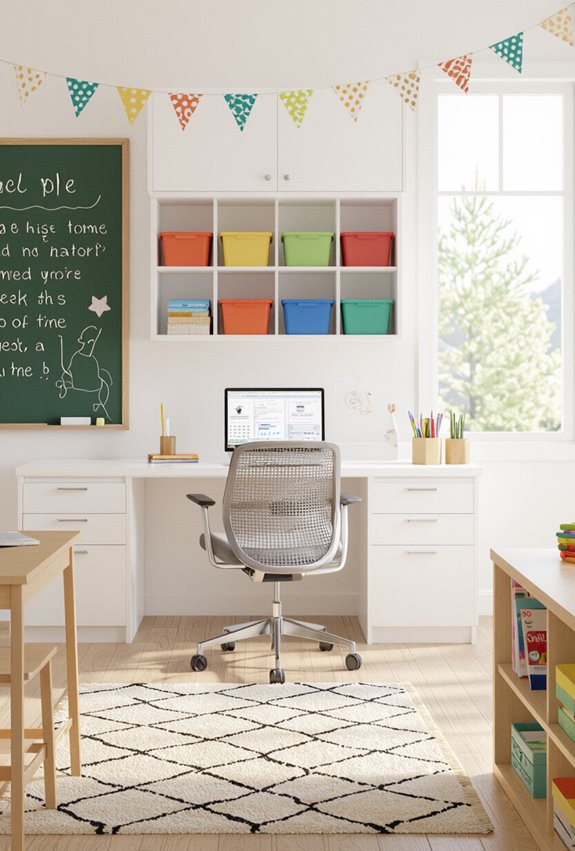
When you position your teacher station strategically—near high-traffic shifts and with sightlines to all learning zones—you’ll reduce disruptions and step in before small issues escalate.
Place stations to monitor behavior zones, using dual facing desks or mobile carts so you can pivot between group work and independent corners.
Keep storage compact, tech accessible, and pathways clear to maintain calm, quick supervision.
Biophilic Elements to Improve Wellbeing
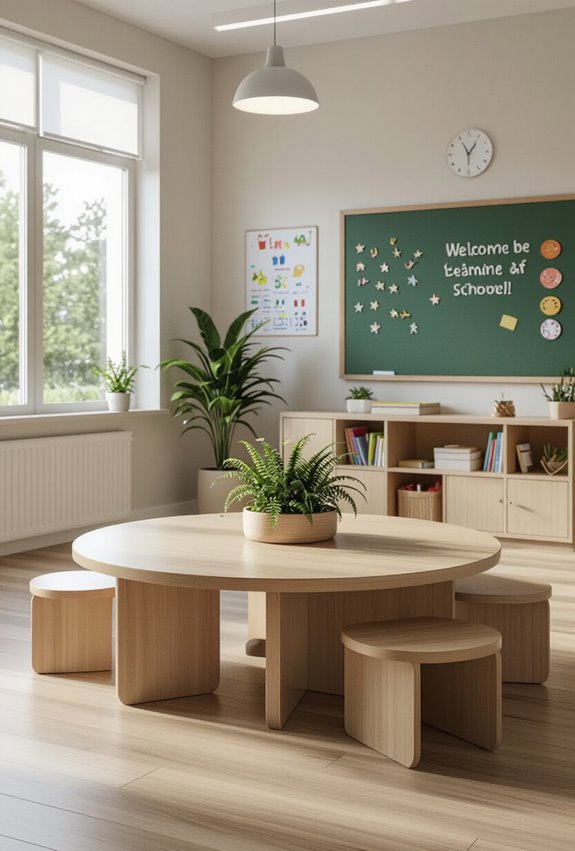
Bringing nature indoors helps students stay calmer, focus better, and recover from stress faster. You can add living walls, potted plants, natural light, and tactile wood finishes to boost mood and air quality.
Incorporate subtle nature sounds during shifts and create quiet green corners for regrouping. These biophilic touches support wellbeing, attention, and a restorative, grounded classroom atmosphere.
Durable Finishes for Heavy Use
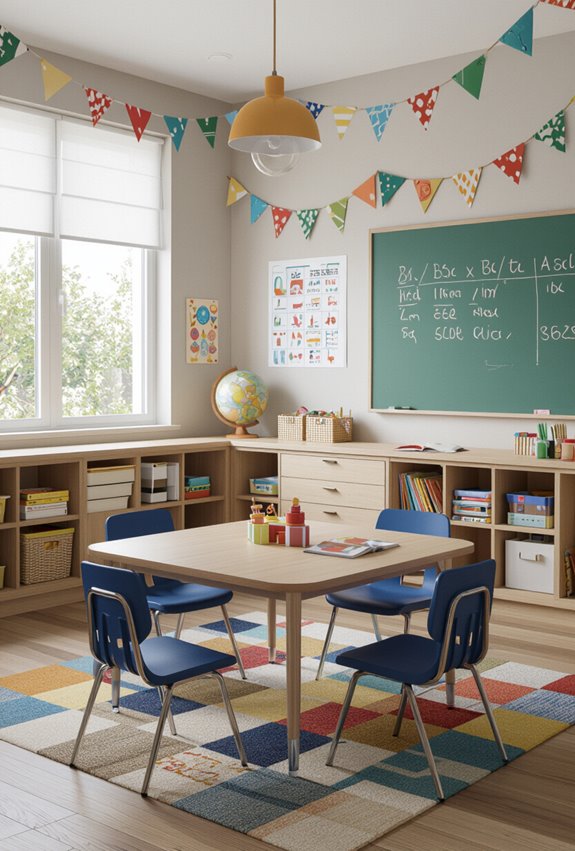
Choose finishes that stand up to constant use without looking institutional: durable materials like high-pressure laminate, commercial-grade vinyl composition tile (VCT) or luxury vinyl plank (LVP), impact-resistant paint, and sealed concrete handle scuffs, spills, and heavy foot traffic with minimal maintenance.
You’ll specify high traffic laminates and anti graffiti coatings for writable or display surfaces, pick low-maintenance sealants, and simplify cleaning protocols to extend lifespan.
Outdoor Classroom Design Ideas
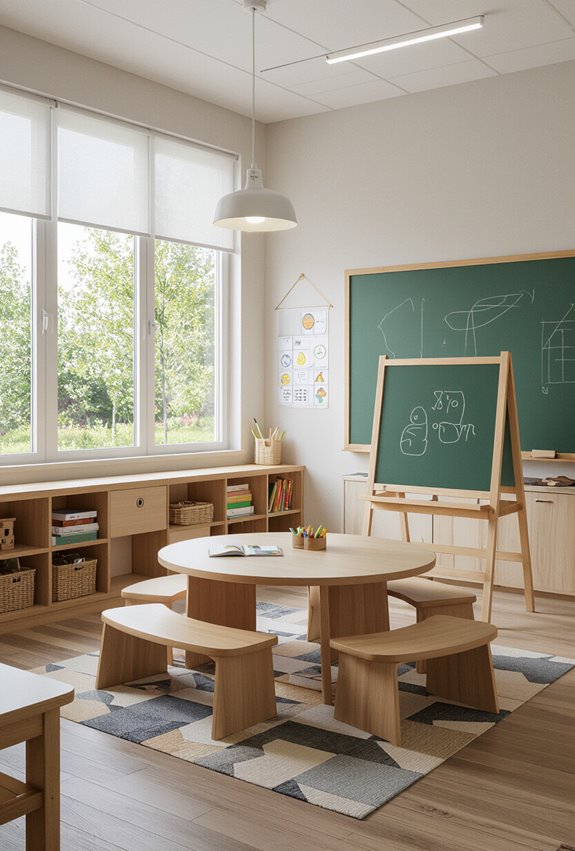
Bringing lessons outdoors lets you turn a patch of playground or garden into a flexible learning space that supports hands-on science, art, and reading.
You can create a nature amphitheater with tiered logs or stone seating for performances and group discussions. Add weatherproof seating, shade, storage for materials, and durable surfaces so you can teach year-round while keeping students comfortable and engaged.
Safety-First Choices for Materials and Edges
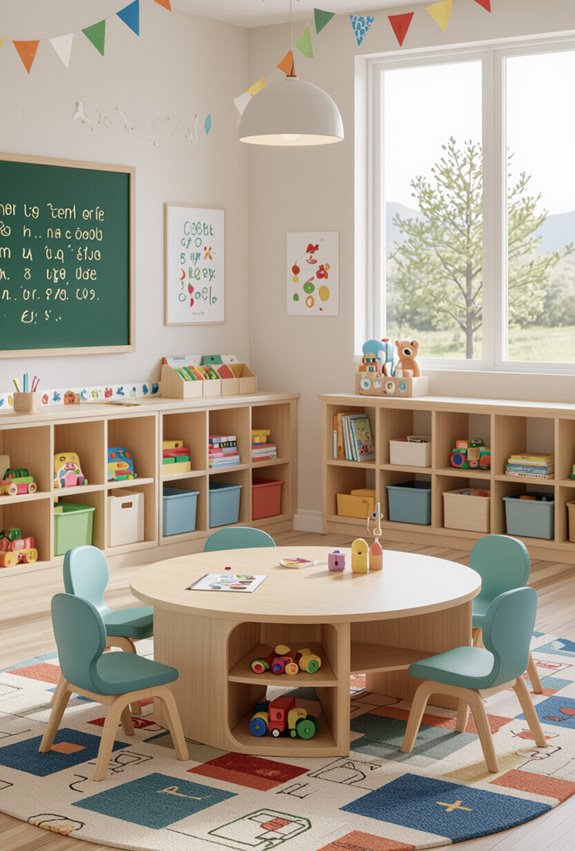
Because kids move fast and accidents happen, choose materials and edges that prioritize safety without sacrificing style.
You’ll pick furniture with rounded edges, impact-resistant surfaces, and slip-resistant flooring.
Use non toxic finishes and durable fabrics that resist stains and wear.
Anchor tall pieces, conceal cords, and keep clear sightlines so supervision’s easier and classrooms stay attractive, functional, and safer for everyone.
Modular Shelving for Evolving Needs
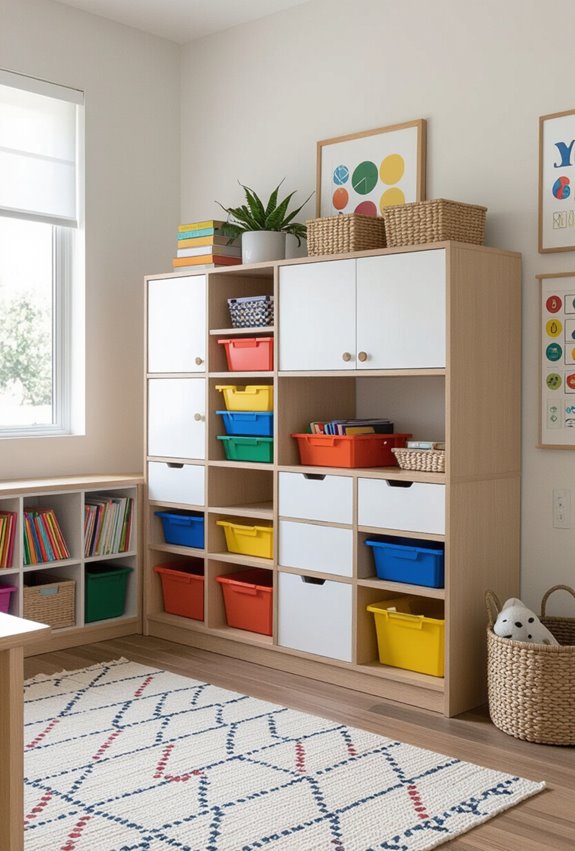
Several flexible shelving units let you reconfigure storage as needs change, keeping classrooms organized and adaptable.
You’ll choose modular towers with adjustable bins for supplies and lesson materials, and integrate hidden cubbies for personal items or sensitive resources.
Mount wheels or secure anchors so you can move or lock units safely.
This approach supports varied lessons, quick shifts, and tidy, student-friendly spaces.
Student-Created Display Galleries
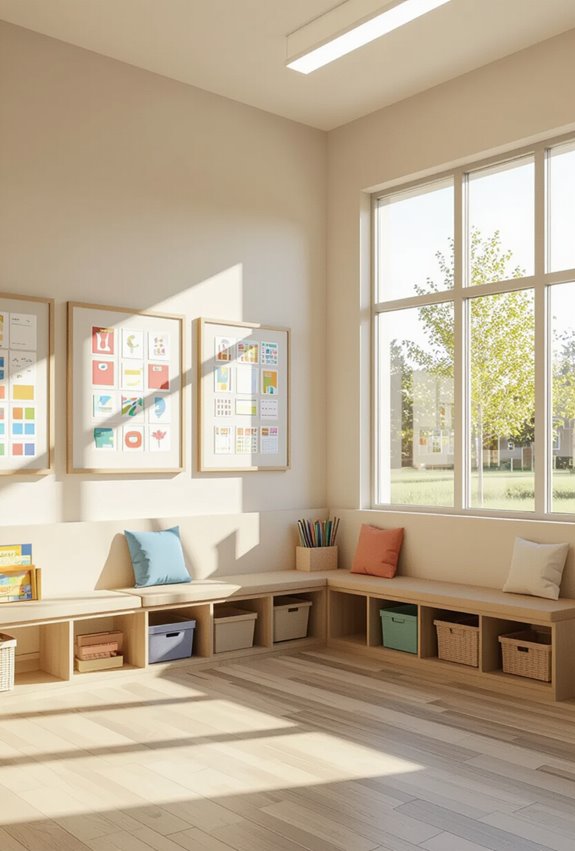
Student-created display galleries turn classroom walls into dynamic showcases that celebrate student work and boost ownership; you’ll arrange interchangeable panels, clip systems, or rail-mounted frames so pieces can be swapped quickly for new projects.
Invite students to design a rotating student exhibit, label work with reflections, and practice peer curation during display selection. Maintain clear guidelines, lighting, and accessible heights to keep galleries fresh and inclusive.
Sustainable Materials and Eco-Friendly Choices
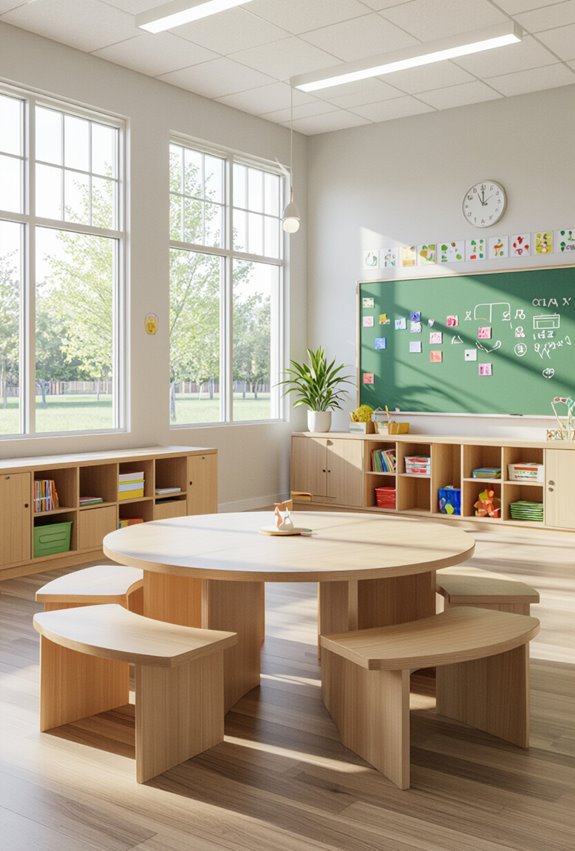
Choosing sustainable materials for your classroom cuts waste and creates a healthier learning environment for kids.
You can use reclaimed timber for shelving and tables, and choose low-VOC paints and finishes.
Recycled textiles work well for cushions, curtains, and soft storage.
Those choices lower environmental impact, teach responsibility, and create durable, safe spaces that support hands-on learning and comfort.
Interactive Whiteboard Areas
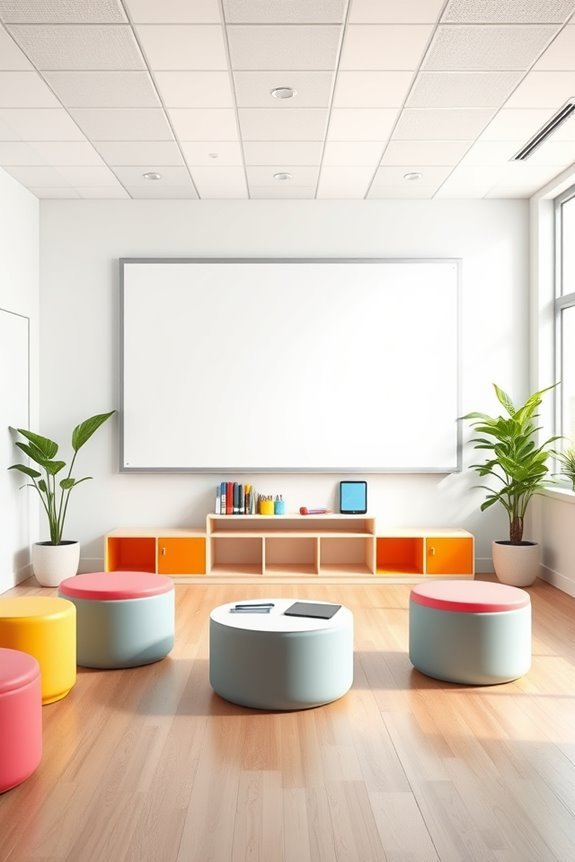
While you might think of traditional teaching methods, interactive whiteboard areas can revolutionize the classroom experience. By incorporating smartboard integration, you can create an engaging environment where students participate actively in their learning.
These areas allow for interactive lessons that cater to various learning styles, making education more dynamic and fun. You can encourage collaboration by having students work together on projects displayed on the whiteboard, fostering teamwork and critical thinking.
Additionally, using multimedia resources enhances comprehension and retention. With easy access to educational apps and online resources, you can keep lessons fresh and exciting.
Transform your classroom with dedicated interactive whiteboard areas, and watch your students thrive in an inspiring learning space.
Digital Learning Integration
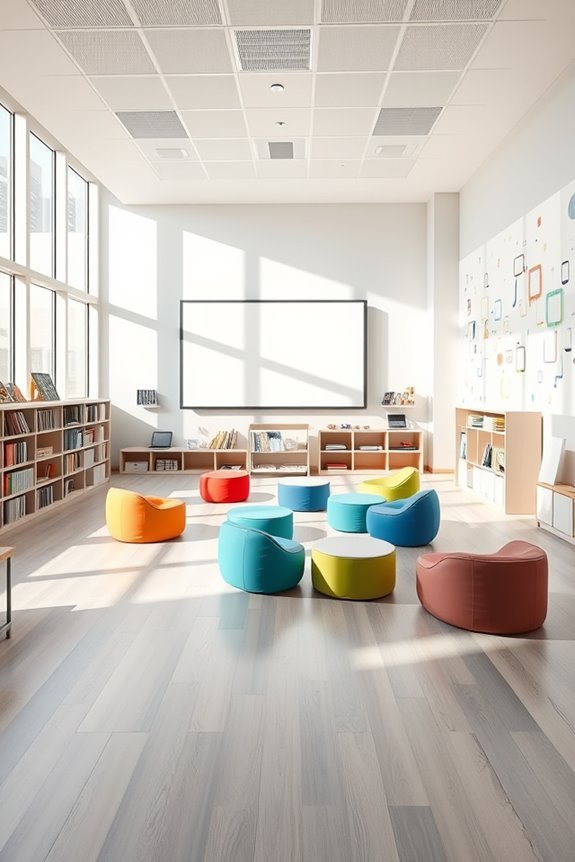
Art and craft stations can serve as a springboard for integrating digital learning tools into your classroom. By incorporating digital tools, you can enhance creativity and engagement.
Utilize online resources to access a wealth of information and interactive platforms that foster virtual collaboration among students. Encourage multimedia presentations to allow learners to express their ideas in innovative ways.
Implement e-learning strategies to personalize instruction, while digital assessments help track progress effectively. You can also introduce coding activities to spark interest in technology.
Gamified learning transforms lessons into enthralling experiences, making education fun. Finally, consider hosting technology workshops to empower students with essential skills, ensuring they’re well-prepared for the future.
Embracing these elements will create an inspiring learning environment.
Smart Storage Solutions
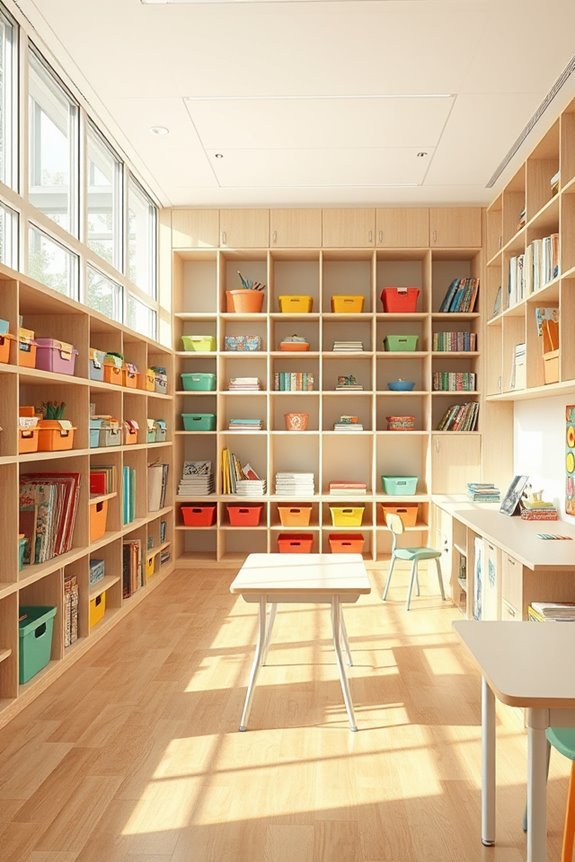
While organizing a classroom, smart storage solutions can make a significant difference in maintaining a clutter-free environment.
Start with storage bins and stackable bins for easy access to supplies. Incorporate vertical shelving and wall-mounted racks to maximize wall space, while under desk drawers can hide away less frequently used items.
Modular units offer flexibility, and color-coded storage helps students identify their materials quickly. Use multi-use containers and collapsible crates for versatility, and rolling carts can serve as mobile storage options.
Implement a pegboard organization system for crafty tools, and guarantee everything’s labeled with a reliable label system.
Finally, consider closet systems and cubby spaces to provide dedicated storage areas, keeping your classroom organized and inspiring for learning.
Cozy Nooks for Quiet Time
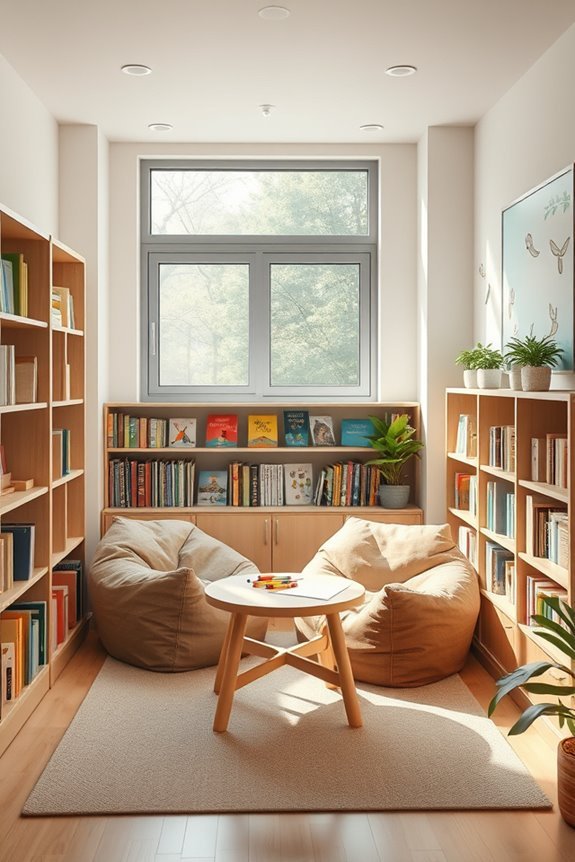
While technology plays a significant role in modern classrooms, it’s equally important to provide spaces where students can unwind and recharge. Cozy nooks can transform your classroom into a haven for quiet time, encouraging relaxation and reflection.
Consider creating reading retreats filled with comfortable seating, soft lighting, and a variety of books that spark imagination. These spaces invite students to immerse themselves in stories, fostering a love for reading.
Additionally, mindfulness spaces can help students practice being present, equipped with calming decorations and tools for breathing exercises.
Interactive Learning Stations
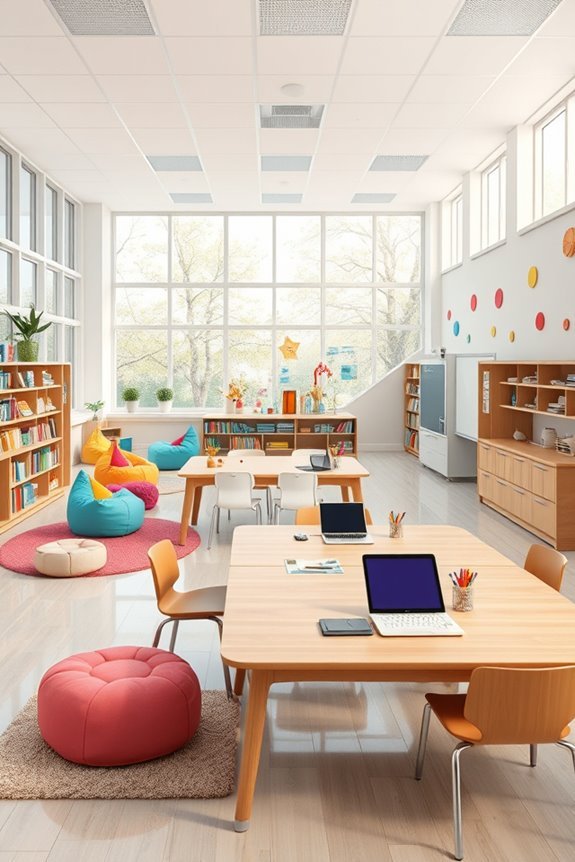
While fostering engagement and collaboration among students, interactive learning stations can revolutionize the classroom experience.
By incorporating interactive tech, you can create sensory exploration zones, allowing kids to immerse themselves in hands-on activities that spark curiosity.
Set up problem-solving stations where students tackle challenges through project-based learning, encouraging critical thinking.
Role-playing areas can inspire creative expression, letting kids embody different characters and scenarios.
Promote student-led initiatives by incorporating peer teaching, where they share knowledge with each other.
Incorporate game-based learning to make lessons enjoyable and memorable.
Outdoor Learning Gardens

Building on the idea of bringing nature into the classroom, outdoor learning gardens provide an excellent opportunity for hands-on education.
With thoughtful garden design, you can create vibrant spaces that encourage student involvement and foster environmental awareness. By selecting diverse plants, you can highlight sustainable practices and showcase seasonal changes.
Incorporating educational signage helps students learn about local wildlife habitats and the importance of biodiversity. These gardens offer sensory experiences through various textures, colors, and smells, making learning dynamic and engaging.
Plus, they provide a perfect backdrop for outdoor activities, allowing students to connect with nature while exploring their curriculum. Embrace the potential of outdoor learning gardens to inspire curiosity and creativity in your students!
Personalization Opportunities
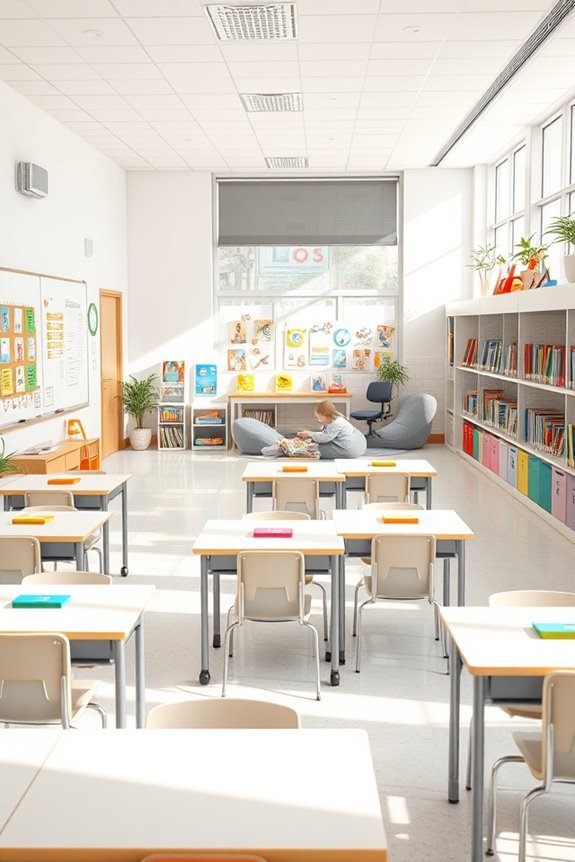
Personalization opportunities in the classroom can transform a standard learning environment into a vibrant space that reflects students’ unique identities and preferences. By incorporating student interests into personalized decor, you foster engagement and ownership.
Create individual workspaces that allow for self-directed projects and cater to various learning preferences. Use choice boards to enable learners to select topics that resonate with them, while flexible displays can showcase personal artifacts and project portfolios.
Incorporate identity and cultural representation through thematic units, giving students a voice in their learning. Establish self-assessment areas and interest zones to encourage creative expression and self-reflection.
Health and Wellness Areas
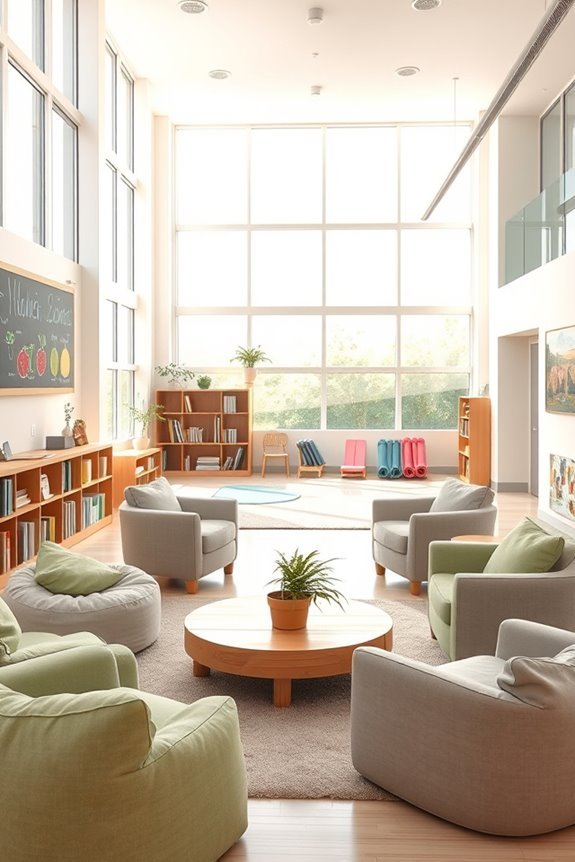
Incorporating health and wellness areas in your classroom can considerably enhance students’ overall well-being and engagement.
Designate spaces for mindfulness practices, where students can take a moment to breathe or meditate. Create relaxation zones with comfortable seating, perfect for stress relief after intense lessons.
Encourage active movement through exercise breaks, allowing kids to stretch or participate in fun physical activities. Consider hosting wellness workshops that teach healthy snacks and nutrition.
Sensory gardens can also stimulate the senses and promote calmness. These wellness initiatives foster a positive environment, helping students thrive both academically and emotionally.
Flexible Lighting Solutions

After fostering collaboration in project spaces, the next step is to enhance the learning environment with flexible lighting solutions.
Start by incorporating ambient light that creates a warm atmosphere, while task lighting focuses on specific areas where students need it most. Use adjustable fixtures to tailor the illumination to various activities, adjusting color temperature to suit different learning moods.
Consider energy-efficient options that not only save on costs but also promote sustainability. Natural daylight should be maximized, complemented by layered illumination that combines focused lighting for tasks and softer ambient light for relaxation.
Smart controls and dimmable solutions allow you to modify the brightness, ensuring an adaptable environment that supports diverse learning styles and enhances overall engagement.
Classroom Libraries

How can a well-designed classroom library transform a student’s learning experience? By creating a cozy and inviting space, you encourage students to explore books and ignite their passion for reading.
Implement effective book selection strategies to guarantee a diverse range of genres and topics that cater to various interests and reading levels. This variety allows every child to find something that captivates them.
Incorporate reading engagement techniques, like book talks or themed displays, to spark curiosity and discussions among students. Additionally, comfortable seating and inviting decor can make the library a go-to spot for quiet reflection or group activities.
Ultimately, a thoughtfully curated library fosters a love for learning and supports literacy development in your classroom.
Clear Pathways for Movement
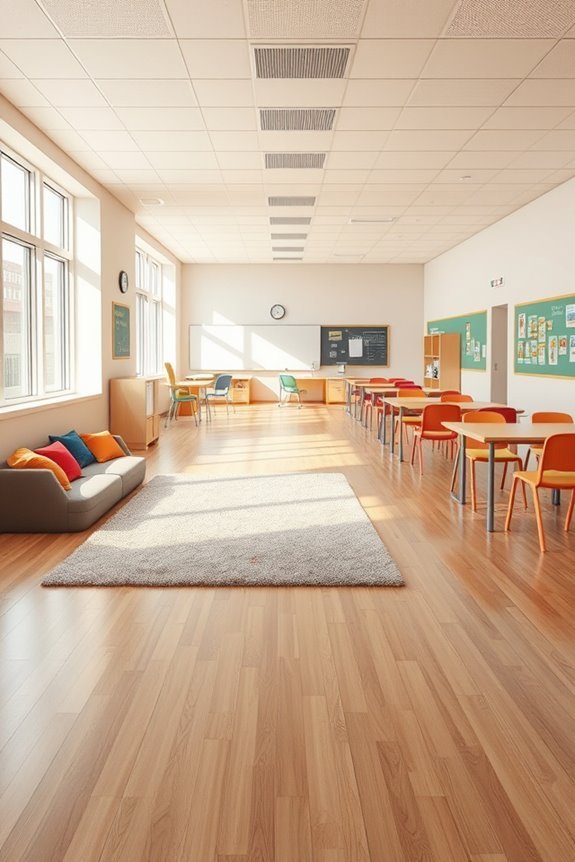
After setting up hands-on learning stations, it’s important to guarantee students can move freely between them. Clear pathways for movement enhance the overall learning experience, allowing kids to engage fully with each activity.
You’ll want to focus on spatial organization, ensuring that the layout of furniture and materials promotes an easy flow. Avoid clutter by keeping pathways wide and unobstructed; this not only prevents accidents but also encourages collaboration.
Consider using rugs or tape to outline specific areas, guiding students intuitively. Incorporating flexible furniture can further support movement flow, as it can be rearranged based on the day’s activities.
Adaptive Learning Environments
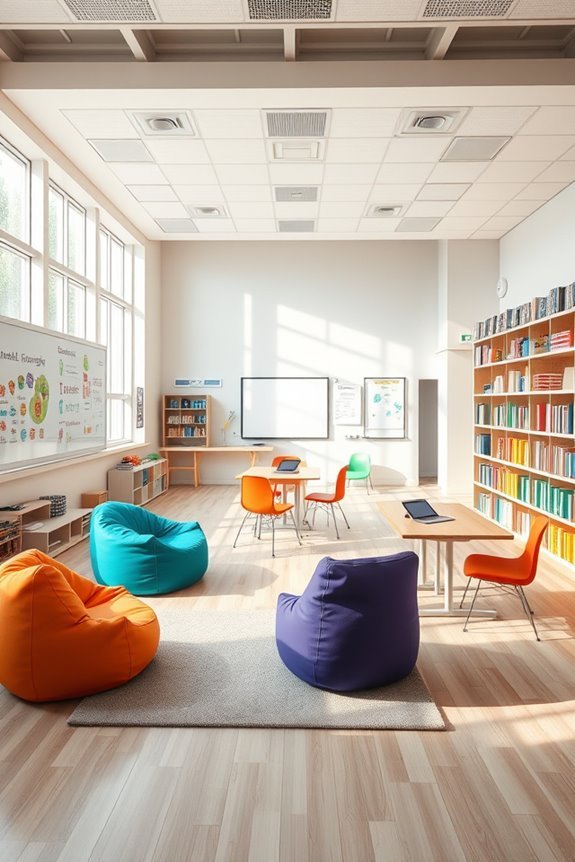
While fostering an engaging learning environment is essential, adaptive learning spaces take this a step further by accommodating diverse learning styles and needs.
By incorporating inclusive design, you create areas that support personalized learning for every student. Adaptive furniture allows for flexibility, enabling quick adjustments to suit various activities and interactions.
Integrating technology accessibility guarantees all students can engage with learning materials effectively. Sensory integration zones can provide emotional support, helping students manage stress and focus better.
Additionally, employing flexible assessment methods and individualized instruction allows you to cater to different learning preferences, enhancing student engagement.
Ultimately, these adaptive environments promote a dynamic and supportive atmosphere where every child can thrive.
Conclusion
Incorporating these 40 elementary school interior design ideas can transform learning spaces into vibrant, engaging environments. Did you know that students in well-designed classrooms can achieve up to 16% higher test scores? By embracing flexible layouts, colorful zones, and nature-inspired designs, you’re not just decorating a room; you’re fostering creativity and enhancing educational outcomes. So, take the plunge and create inspiring spaces that support diverse learning styles and encourage students to thrive!