The Ultimate Guide to Home Interior Design
You’ll transform your home into a functional, stylish, and sustainable space that fits how you live. Start by defining your personal style and a simple palette, then plan layouts that keep circulation clear and zones purposeful. Pick durable flooring and layered lighting for comfort and safety. Prioritize eco-friendly materials, smart storage, and a realistic budget with a contingency. Use pros for complex jobs and seasonal tweaks to stay fresh — keep going to uncover practical tips and examples.
Defining Your Personal Style
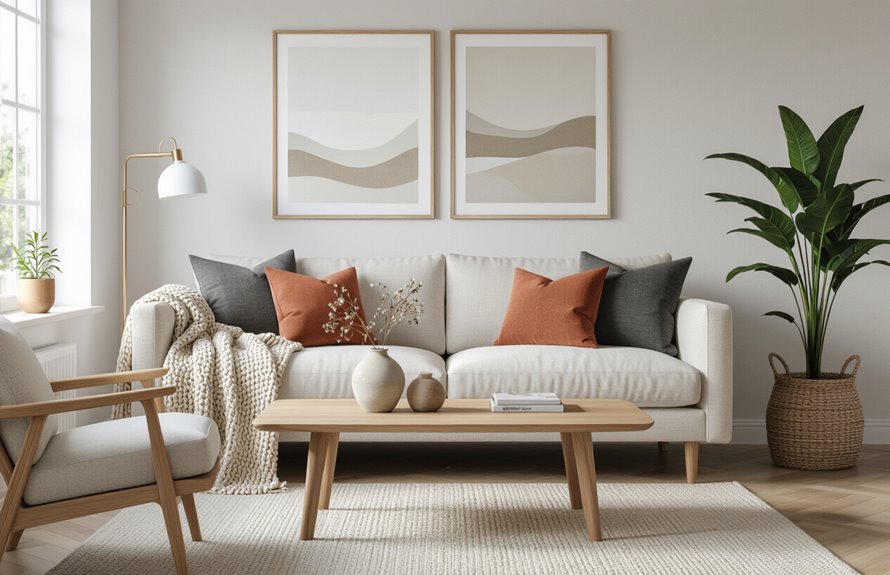
Style is the way your home speaks for you — it should feel natural, not forced.
You’ll start by gathering personal inspiration: photos, fabrics, colors that make you pause. Don’t copy a trend wholecloth; pick elements that resonate and mix them deliberately.
Track your style evolution by noting what you keep returning to and what feels off. Create a simple palette and signature pieces that anchor each room, then layer textures and art to personalize the space.
You’ll test choices in small doses, adjust as needed, and let the result reflect who you’re rather than who you think you should be.
Planning Layouts for Flow and Function
When you plan a layout, think about how people will move through and use each room so circulation, sightlines, and function work together; place key furniture to define zones, keep primary paths clear, and balance focal points so spaces feel intentional and easy to live in.
Use flow optimization to guide decisions: map arrival points, seating clusters, and work areas. Apply functional zoning to group related activities and avoid overlap.
Prioritize clear paths, appropriate scale, and flexible pieces that adapt. Consider lighting and storage integrated with zones to support daily routines.
- define activity clusters
- keep main routes unobstructed
- choose adaptable furniture
- align storage with use
Choosing a Cohesive Color Palette
Curious how to make every room feel intentionally connected? You’ll use color psychology to shape mood setting, choosing neutral tones as anchors and introducing accent colors for energy.
Aim for color harmony by pairing complementary colors or exploring monochromatic schemes for subtle unity. Try seasonal palettes to refresh without overhauling furnishings.
Use color blocking for defined zones—bold contrasts can highlight architectural features, while restrained shifts keep flow. Test swatches at different times of day and live with them on a small wall.
Trust your instincts, but balance daring choices with cohesion so the whole home reads as one thoughtfully curated space.
Selecting Flooring That Fits Your Lifestyle
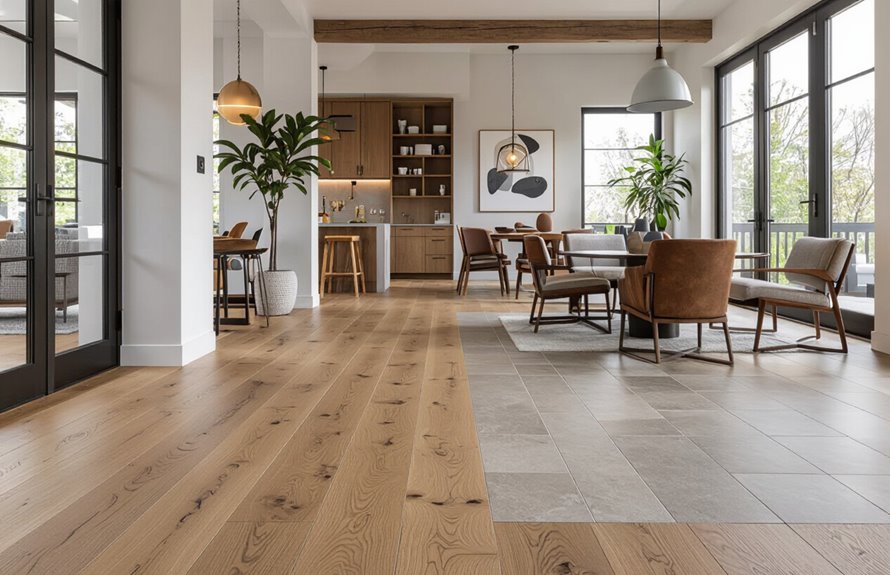
Color choices set the mood, but your flooring anchors how a home feels and functions every day. You’ll weigh hardwood vs. laminate for appearance and budget flooring for cost, consider carpet types for underfoot comfort, and explore tile options for wet zones.
Think eco friendly flooring, soundproof flooring for noise control, and pet friendly options that resist wear. Prioritize slip resistant surfaces in entries and bathrooms and factor flooring maintenance into choices.
Use practical questions: how much traffic, moisture, pets, and noise? Choose what fits lifestyle, aesthetics, and upkeep expectations.
- Traffic and durability
- Moisture resistance
- Comfort and acoustics
- Maintenance needs
Lighting Strategies for Every Room
You’ll want a layered lighting approach that mixes ambient, task, and accent lights to make each room work for its purpose.
Pick fixtures that suit the room — pendants for kitchens, sconces for hallways, and bright task lights for workspaces.
Use smart and dimmable controls so you can tailor brightness and mood with ease.
Layered Lighting Approach
Good layered lighting mixes ambient, task, and accent sources so each room works for daily life and special moments; you’ll use overhead fixtures for overall illumination, targeted lights where you perform tasks, and smaller accents to shape mood and highlight features.
Use layering techniques to combine ambient lighting, task lighting, and accent lighting while considering fixture placement and light temperature. Prioritize energy efficiency and dimming options to adapt scenes. Choose lighting fixtures that balance function and style.
Think about mood setting—warm tones for relaxation, cooler for focus—and place controls conveniently to make adjustments effortless.
- Balance zones by purpose
- Optimize fixture placement
- Match light temperature
- Use dimming options
Room-Specific Fixture Choices
When planning lighting for each room, think about how you use the space and pick fixtures that match those activities: bright, even ambient lighting and focused task lights for kitchens and home offices; layered, dimmable sources for living rooms and bedrooms to support relaxation and entertaining; moisture-rated, glare-controlled fixtures for bathrooms; and low, adjustable accent lights for hallways and staircases to boost safety and highlight architecture. You’ll choose fixture styles that suit function and décor, favoring eco friendly options where possible. Match color temperature, direct light where needed, and use accents to create depth.
| Room | Primary Fixture | Accent |
|---|---|---|
| Kitchen | Pendant | Under-cabinet |
| Bath | Vanity | Recessed |
| Living | Chandelier | Floor lamp |
| Hall | Wall sconce | Step light |
| Office | Track | Task lamp |
Smart and Dimmable Controls
Smart and dimmable controls give you precise, energy-saving command over every room’s mood and function, letting you set bright task light for cooking or soft, warm glow for winding down.
You’ll use smart home technology and lighting automation to tailor scenes, link sensors, and schedule changes that match routines. Dimming extends bulb life and saves power, while presets simplify adjustments between work, relaxation, and entertaining.
Install compatible switches, bulbs, or hubs so everything talks together. Think about placement, response time, and integration with voice assistants to keep control intuitive and reliable.
- Scene presets for each activity
- Motion-triggered dimming
- Voice and app control
- Energy-monitoring schedules
Furniture Selection and Placement Tips
Although furniture sets the tone for a room, you’ll get the best results by balancing scale, function, and flow; choose pieces proportional to the space, prioritize items you’ll use daily, and arrange them to support natural movement and conversation.
When selecting furniture styles, pick a cohesive primary style and add one complementary accent to keep rooms intentional. Measure first, then sketch layout options to test arrangement strategies that emphasize focal points and clear pathways.
Opt for multifunctional pieces in small areas, anchor seating with rugs and lighting, and leave enough space to circulate—so your rooms feel both attractive and livable.
Mixing Textures and Patterns Effectively
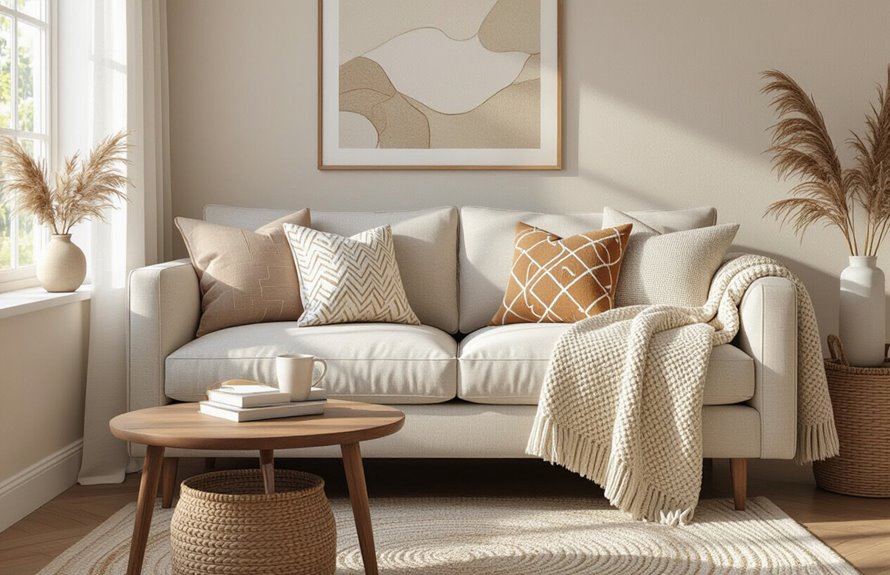
Texture and pattern give a room personality and depth, so mix them with purpose: pair a dominant texture (like a plush velvet sofa) with secondary textures (linen pillows, a woven rug) and add one patterned element to tie colors together.
You’ll focus on texture combinations and pattern balance to avoid visual chaos. Start small, repeat a motif, and keep scale varied. Trust contrast: smooth vs. nubby, matte vs. sheen.
Choose a color anchor and limit patterns to two scales. Let one texture dominate while others support, creating cohesion without monotony.
- Repeat a color or material
- Vary scale and density
- Limit pattern types
- Prioritize tactile contrast
Window Treatments That Enhance Design
When you choose window treatments, think of them as the room’s frame: they control light, add softness, and reinforce your style.
You’ll pick drapery styles and curtain materials to suit mood—linen for airy, velvet for drama. Combine blinds options with window shades for privacy and view control, and add valance designs for polish.
Use light filtering fabrics where you want glow, and energy efficient treatments to cut bills. Layering techniques—sheers beneath heavier panels—give depth.
Consider custom solutions for awkward windows and sprinkle vintage accents for character. Choose pieces that balance function and style.
Creating Focal Points and Accent Walls
Window treatments can set the stage, but a well-placed focal point or accent wall gives the room a clear visual anchor.
You’ll choose focal point techniques that draw the eye—art, lighting, or furniture grouping—and select accent wall materials that suit texture and mood.
Balance scale and color so the feature complements, not overpowers, the space.
Use contrast, repetition, and lighting to reinforce impact.
Consider function: a media wall needs different treatment than a reading nook.
Keep adjacent walls neutral and let the focal area breathe.
- contrast and texture
- lighting emphasis
- curated artwork
- functional design elements
Small Space Design Solutions
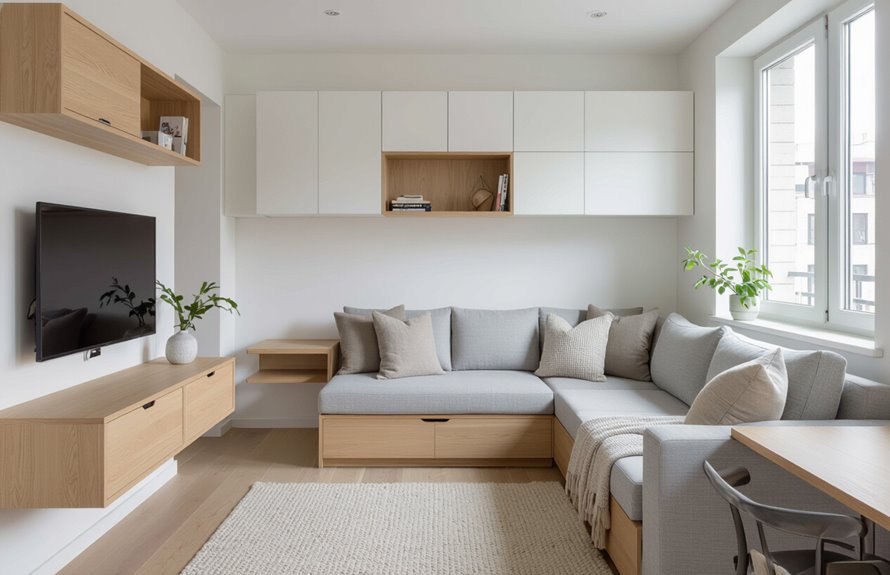
Because small rooms demand intention, you’ll prioritize multifunctional pieces, clever storage, and streamlined layouts that make every square foot work harder.
Choose multi functional furniture like sleeper sofas, nesting tables, and ottomans with hidden compartments to reduce clutter and boost utility.
Lean into vertical storage with tall shelving, wall-mounted cabinets, and hooks to free floor space.
Keep color palettes light and consistent, use mirrors to amplify light, and pick scaled-down rugs and lighting to match proportions.
Create clear pathways by placing furniture against walls and using pieces that serve double duty, ensuring a breathable, efficient small-space plan.
Open-Plan Living: Zoning and Harmony
In open-plan living you’ll define functional zones by purpose—like cooking, dining, and lounging—so each area works independently and together.
Use furniture, rugs, and lighting to mark boundaries without blocking sightlines, keeping scale consistent so nothing overwhelms.
Pay attention to flow so movement between zones feels natural and balanced.
Define Functional Zones
When you open up a space, you’ll want to define clear functional zones so each area feels purposeful without breaking the visual flow; use furniture placement, rugs, lighting, and subtle changes in materials to signal where one activity ends and another begins.
You’ll plan for functional space utilization by arranging zone specific furniture to support tasks — a sofa to anchor lounging, a console for entry, a table for dining, and a desk for work.
Consider sightlines, circulation paths, and storage so zones feel distinct yet cohesive. Use consistent palette and layered lighting to unify areas.
- Anchor with rugs
- Orient seating
- Layer lighting
- Add storage
Balance Scale and Flow
Although open-plan living invites flexibility, you’ll need to balance scale and flow so each zone feels right-sized and easy to move through.
You’ll create visual balance by aligning furniture and rugs to promote spatial harmony and clear circulation. Mind design proportions—choose pieces that respect scale relationships to avoid crowding or emptiness.
Use symmetrical layouts where calm is needed and a dynamic arrangement to energize social areas. Control visual weight with color, texture, and lighting so focal points don’t compete.
Circulate pathways naturally to preserve aesthetic flow, letting each zone function distinctly while remaining cohesive overall.
Storage Ideas That Don’t Sacrifice Style
If you want clever storage that actually looks good, focus on pieces that double as decor—think sculptural shelves, woven baskets, and upholstered ottomans with hidden compartments.
Use stylish shelving and open shelving to display curated items while hiding clutter in decorative boxes and stylish bins. Embrace multi functional furniture and modular furniture for flexibility; consider vintage finds for character.
Optimize closet organization, under bed storage, and wall mounted storage to free floor space. Blend minimalist design with decorative baskets and DIY storage solutions.
Plan furniture placement to maintain flow and let storage feel intentional, not an afterthought.
- Combine hidden storage with display
- Mix decorative baskets and boxes
- Choose modular, multi functional furniture
- Use wall mounted and under bed options
Designing Comfortable and Functional Kitchens
You’ll want a layout that supports an efficient workflow so moving between prep, cook, and clean-up feels natural.
Choose durable, easy-to-clean materials that stand up to daily use without constant upkeep.
Combine cabinets, pull-outs, and smart organizers to keep everything accessible and clutter-free.
Layout and Workflow
While planning your kitchen, focus on a layout that supports how you actually cook and move—group work zones for prep, cooking, cleaning, and storage so everything you need is within a natural reach triangle or workflow path.
You’ll improve layout optimization and workflow efficiency by placing frequently used items and appliances where you’ll reach them most. Keep clear circulation, avoid cross-traffic, and allow landing space beside appliances.
Think about sightlines and lighting for safety and speed. Use islands or carts to extend prep zones when needed, and prioritize storage that matches task frequency.
- Zone items by task
- Guarantee clear paths
- Provide landing surfaces
- Plan task lighting
Durable, Easy Materials
Durability matters in a kitchen because the right materials cut maintenance time and stand up to daily wear; choose surfaces that resist scratches, stains, heat, and moisture so you spend less time fixing and more time cooking.
You’ll pick easy to clean surfaces and low maintenance finishes for counters and backsplashes, plus resilient flooring that handles spills and traffic.
Opt for durable fabrics and versatile upholstery in seating, favoring stain resistant options and pet proof solutions.
Consider weather resistant materials for outdoor-adjacent zones, sustainable choices for longevity, and kid friendly designs that balance safety with style.
Smart Storage Solutions
When you plan smart storage, the kitchen becomes both calmer and more efficient, with everything from utensils to pots finding a logical home that’s easy to reach.
You’ll use creative cabinetry and modular shelving to zone tasks, add vertical storage for pans and spices, and choose multi functional furniture that doubles as prep surface and storage.
Decorative baskets tame open shelves, while hidden compartments keep small gadgets out of sight.
Think space saving solutions like pull-out racks and labeled bins — even borrow under bed storage ideas for seldom-used bulk items.
Practical layout beats clutter every time.
- Modular shelving for zones
- Vertical storage for spices
- Hidden compartments for gadgets
- Decorative baskets for style
Bathroom Design Essentials and Upgrades
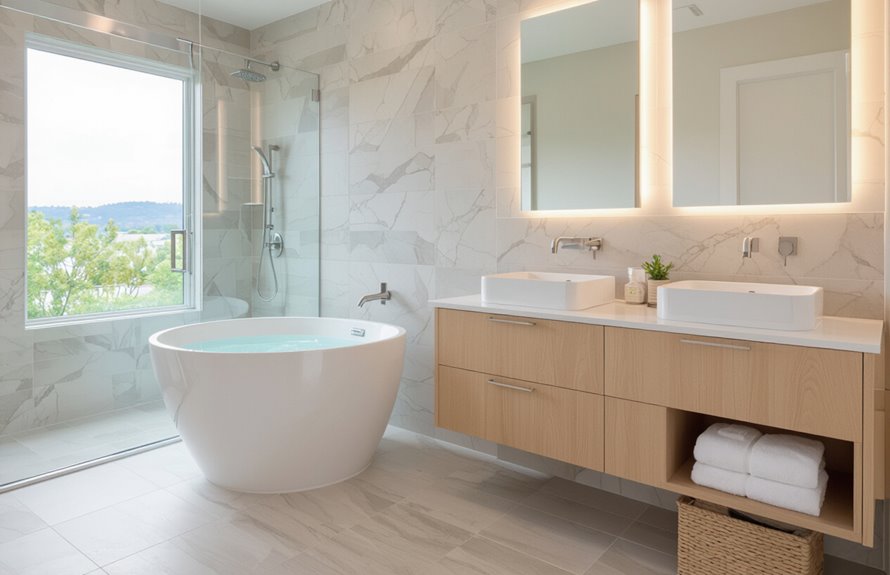
Because your bathroom blends daily function with personal style, good design focuses on layout, lighting, and material choices that make the space feel efficient and inviting.
Start by zoning: separate wet and dry areas and place fixtures for smooth traffic flow. Prioritize durable finishes like porcelain tile and moisture-resistant paint.
Optimize bathroom storage with recessed niches, floating vanities, and over-toilet cabinets to reduce clutter. Consider shower upgrades—frameless glass, thermostatic valves, and handheld heads—for comfort and resale value.
Add layered lighting: task at the mirror, ambient ceiling light, and low-level night lighting. Keep hardware consistent for a cohesive look.
Bedroom Design for Restful Sleep
After you’ve sorted wet and dry zones in the bathroom, carry that same focus on function and comfort into the bedroom so it actually supports better sleep.
You’ll design a sleeping environment that prioritizes mattress selection and personal bedding, plus calming decor and sensory elements that soothe.
Use soundproofing techniques and create tech free zones to cut noise and blue light. Add aromatherapy benefits like lavender for relaxation.
Keep layout simple, storage hidden, lighting dimmable, and textiles breathable. Small changes yield big results when you commit to routines and an uncluttered, intentional space for rest.
- Mattress selection matters
- Tech free zones enforced
- Calming decor choices
- Soundproofing techniques used
Incorporating Art and Decorative Objects
Although your bedroom’s function is to foster rest, adding thoughtfully chosen art and objects can deepen that calm without disrupting sleep. You’ll focus on art selection that reflects soft colors, soothing themes, and personal meaning rather than busy patterns.
Limit pieces to avoid clutter; one statement above the bed and a smaller bedside object create balance. Consider scale, sightlines, and tactile contrast to add warmth.
For decorative placement, keep surfaces clear around sleep zones and group objects in odd numbers for visual interest. Rotate pieces seasonally to refresh the room while preserving its tranquil purpose.
Sustainable and Eco-Friendly Design Choices
When you choose sustainable materials and energy-smart fixtures, your home looks good and reduces its environmental footprint.
You’ll prefer eco friendly materials and low VOC paints, select water saving fixtures, and boost energy efficiency with efficient lighting and appliances.
Embrace biophilic design and recycled furnishings to connect with nature and cut waste.
Seek green certifications and practice local sourcing to support ethical supply chains.
Mix upcycled decor with durable pieces, and follow sustainable practices for maintenance and disposal.
- Choose certified materials
- Prioritize energy-efficient systems
- Use recycled or upcycled furnishings
- Source locally when possible
Budgeting and Prioritizing Design Projects
Start by setting a realistic budget so you know what’s possible without overspending.
Focus on high-use rooms first—like the kitchen and master bath—where updates add the most daily value.
Allocate funds by impact and urgency so each dollar improves function or comfort.
Set a Realistic Budget
Set a realistic budget before you pick paint colors or furniture so your design stays achievable and stress-free; know how much you can spend overall, what you’ll allocate to essentials (structural fixes, flooring, windows), and what’s left for style items and splurges.
Decide your total, add a 10–20% contingency, and use simple budgeting techniques to track estimates versus actuals. Focus on decisions that prevent costly rework.
Use cost saving tips like timing purchases during sales and choosing durable materials that save long-term. Balance wants and needs, and update figures as quotes arrive.
- Set totals and contingencies
- Track estimates vs actuals
- Buy durable where it counts
- Time purchases for deals
Prioritize Rooms Strategically
After you’ve firmed up your budget and contingency, prioritize rooms so your money does the most work: focus first on spaces you use daily or that add the greatest value—kitchen, primary bath, and main living area—then move to secondary bedrooms and guest spaces as funds allow.
Decide room priorities by listing needs, wants, and resale impact. Use a strategic focus: allocate higher-percentage funds to high-use areas, set modest budgets for secondary spaces, and plan phased updates.
Choose durable finishes where traffic’s high, save decorative flair for later, and track expenses so each step stays aligned with your overall plan.
Hiring Professionals: What to Expect
When you hire a designer or contractor, expect an initial consultation that clarifies your goals, budget, and timeline so everyone’s on the same page. They’ll ask detailed questions, take measurements or photos, and explain their process, fees, and decision points up front.
You’ll review interior designer qualifications, discuss project timeline expectations, and agree on design contract essentials that protect both sides. Use clear communication strategies and budget management tips to avoid surprises.
Foster client designer collaboration during design style exploration and keep feedback processes regular and specific so adjustments are quick and aligned.
- Define scope clearly
- Schedule checkpoints
- Confirm payment terms
- Document changes
Seasonal Refreshes and Long-Term Maintenance
Once your project wraps and routines are in place, plan simple seasonal refreshes and a long-term maintenance strategy to protect your investment and keep rooms feeling current.
Rotate textiles, swap pillows, and add seasonal decor to shift mood without major expense.
Create a calendar: quarterly inspections for HVAC, roof, plumbing, and annual deep-cleaning and paint touch-ups.
Keep a binder or digital file with warranties, contractor contacts, and dates for repairs.
Follow basic maintenance tips: change filters, test smoke detectors, clean gutters, and address stains promptly.
Regular small actions prevent costly repairs and keep your home looking intentional year-round.
Conclusion
You’ve got everything you need to turn your space into a true reflection of you. Trust your instincts as you define style, plan layouts, pick colors and flooring, layer lighting, and prioritize sustainability without breaking the bank. Hire pros when tasks overwhelm you, refresh seasonally, and maintain what you love. With thoughtful choices, your home will feel endlessly welcoming — like it could hug you forever — and keep getting better with time.