How to Make Your Home More Energy Efficient
Start by evaluating your energy use—check bills, track appliance runtimes, and get an audit or DIY check. Seal leaks at windows, doors, and ducts, then add attic and rim‑joist insulation. Swap to LED lighting, ENERGY STAR appliances, and a smart thermostat. Maintain your HVAC, replace filters, and optimize laundry and cooking habits. Consider solar or rebates to cut costs upfront. Keep going and you’ll find practical steps and financing options to save more.
Assessing Your Home’s Energy Use
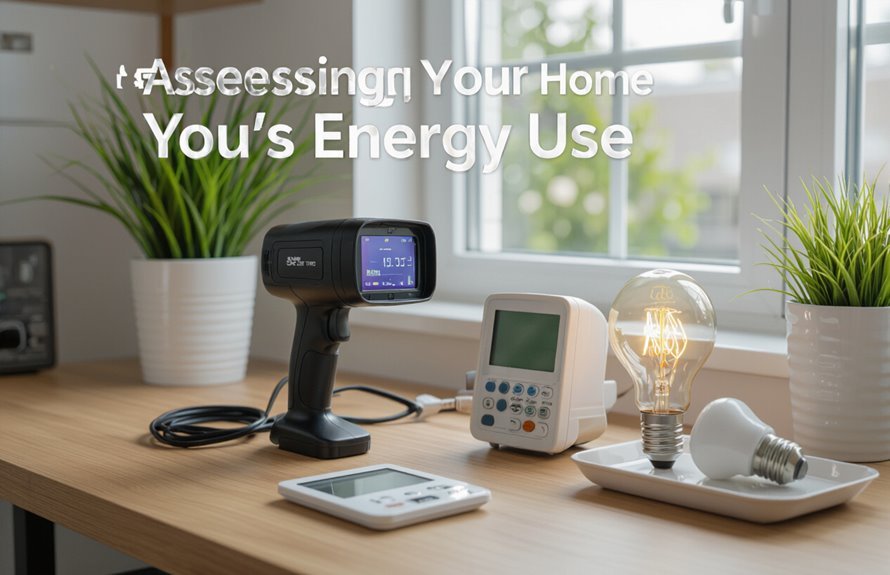
Where should you start when you want to cut energy use and bills? You begin by evaluating your home’s energy use: review past utility bills, note consumption patterns, and identify unusual spikes.
Schedule a professional energy audit or use DIY tools to check insulation, heating, cooling, and appliance efficiency. Track appliance runtimes and thermostat settings to see where waste occurs.
Prioritize fixes that offer biggest savings per dollar and consider simple behavioral changes first. Document baseline usage so you can measure improvements after upgrades.
That focused evaluation guides effective decisions and helps you target investments for real, measurable reductions.
Sealing Air Leaks and Drafts
Start by checking common leak spots like windows, doors, attic hatches, and where plumbing or wiring enters your home.
Use weatherstripping and caulking to close gaps that let conditioned air escape.
Don’t forget to seal around ductwork and vents to keep your HVAC running efficiently.
Find Common Leak Spots
Because cold air sneaks in through tiny gaps and warm air escapes the same way, finding and sealing common leak spots is one of the quickest ways to cut energy waste and lower your bills.
Start at drafty windows and exterior doors—feel for drafts with your hand or a lit candle. Check attic insulation edges, where the roof meets walls, and around recessed lighting for gaps.
Inspect plumbing and electrical penetrations, fireplace dampers, and dryer vents. Use smoke or a thermal camera to pinpoint leaks.
Make a list prioritized by heat loss so you tackle the biggest offenders first.
Weatherstripping and Caulking
When you seal gaps with weatherstripping and caulk, you’ll stop most drafts at their source and make your home noticeably more comfortable and efficient.
You can tackle doors, windows, and small cracks using proper weatherstripping materials and basic caulking techniques. Focus on prep, fit, and durable products.
- Inspect frames and thresholds for gaps
- Choose foam, V-strip, or adhesive weatherstripping
- Clean surfaces before caulking
- Use silicone or latex caulk for longevity
- Test for remaining leaks with a candle or smoke stick
Do the work yourself or hire a pro for tricky spots; results are immediate.
Seal Around Ductwork
1 simple fix that delivers big savings is sealing the gaps around your ductwork—those leaks send heated or cooled air into unconditioned spaces instead of rooms you use.
You can inspect accessible ducts in basements, attics, and crawlspaces, feel for drafts, and mark joints and seams. Use mastic or UL-rated foil tape rather than cloth tape, and wrap connections with insulation after sealing.
For complex systems, hire a pro for pressure testing and to apply advanced duct sealing techniques like aerosol-based sealants.
Proper sealing reduces drafts, balances airflow, and provides meaningful energy loss prevention that lowers bills and improves comfort.
Upgrading Insulation
Upgrading your insulation is one of the most cost-effective ways to cut energy bills and make your home more comfortable year-round.
You’ll evaluate attic, wall and crawlspace needs, compare insulation materials, and pick smart insulation techniques to reduce heat flow.
Focus on air sealing before adding batts or spray foam, and measure R-values for your climate.
Consider professional installation for hard-to-reach areas.
- Check attic insulation depth and R-value
- Seal gaps around penetrations first
- Choose between fiberglass, cellulose, or spray foam
- Insulate rim joists and ducts in unconditioned spaces
- Verify proper ventilation after upgrades
Choosing Energy-Efficient Windows and Doors
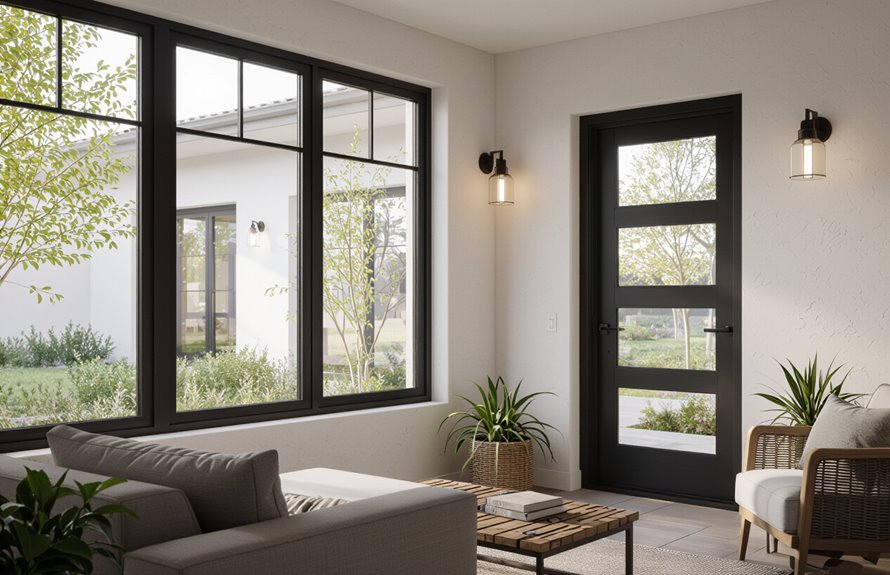
When picking windows and doors, you’ll want to compare frame materials like wood, vinyl, and fiberglass for durability and thermal performance.
Look for multi-pane glazing with low-emissivity coatings to cut heat transfer and solar gain.
Make sure units are properly sealed and installed so you actually get the rated efficiency.
Window Frame Materials
Picking the right window frame material can cut heat loss, lower your energy bills, and reduce maintenance headaches.
You’ll pick based on climate, budget, and style. Consider frame insulation and long-term performance when comparing options.
- vinyl frames: low-cost, low-maintenance, decent insulation.
- wood frames: classic look, good natural insulation, needs upkeep.
- fiberglass frames: stable, strong, excellent thermal performance.
- aluminum frames: slim profile, durable, require thermal breaks to improve insulation.
- composite materials: blend benefits—strength, low maintenance, and improved frame insulation.
Choose what balances efficiency, durability, and the aesthetic you want.
Glazing and Coatings
Frame material sets the stage, but glazing and coatings determine how much heat and light actually pass through your windows and doors.
You’ll choose single, double, or triple glazing based on climate and budget; more panes boost thermal performance and cut heat transfer.
Look for low-emissivity glass and selective energy saving coatings that reflect infrared while admitting visible light.
Spacer type and gas fills also matter for insulating value.
Compare U-factor and solar heat gain coefficients to match orientation and seasonal needs.
Pick certified products with clear performance ratings so you’ll get measurable comfort and lower energy bills.
Proper Sealing and Installation
Because even the best windows and doors can lose their value through gaps and poor fit, proper sealing and installation are essential to real energy savings.
You should prioritize precise air sealing and follow proven installation techniques to prevent drafts, moisture, and heat loss. Hire a certified installer or learn methods for tight fits, flashing, and insulation around frames.
Check warranties and local codes, and test for leaks after work’s done.
- Inspect existing frames and sills
- Choose compatible sealants and weatherstripping
- Follow flashing and shimming best practices
- Perform blower door or smoke tests
- Maintain seals seasonally
Optimizing Heating System Efficiency
When you tune your heating system for efficiency, you’ll cut energy bills and keep rooms more comfortable without extra effort.
Check furnace maintenance regularly: replace filters, clear vents, and schedule annual inspections so combustion and airflow stay efficient.
Balance radiators and bleed trapped air to spread heat evenly.
Upgrade thermostats to programmable or smart models and set setbacks for night and absences.
If you have a boiler, monitor boiler efficiency and consider catalytic or condensing upgrades when replacing units.
Seal ductwork, insulate pipes, and make certain controls respond accurately.
Small, consistent steps deliver noticeable savings and comfort.
Improving Cooling and Air Conditioning Efficiency
Just as tuning your heating system trims costs and boosts comfort in winter, keeping your cooling system in top shape does the same for hot months.
You can lower energy use and extend equipment life by following simple cooling techniques and regular air conditioning maintenance.
Try these practical steps:
- Clean or replace filters monthly during heavy use.
- Keep outdoor units clear of debris and shade them if possible.
- Seal gaps around windows, doors, and ducts.
- Use ceiling fans to raise thermostat setpoint without losing comfort.
- Schedule professional inspections and refrigerant checks annually.
These actions cut bills and improve home comfort reliably.
Installing a Programmable or Smart Thermostat
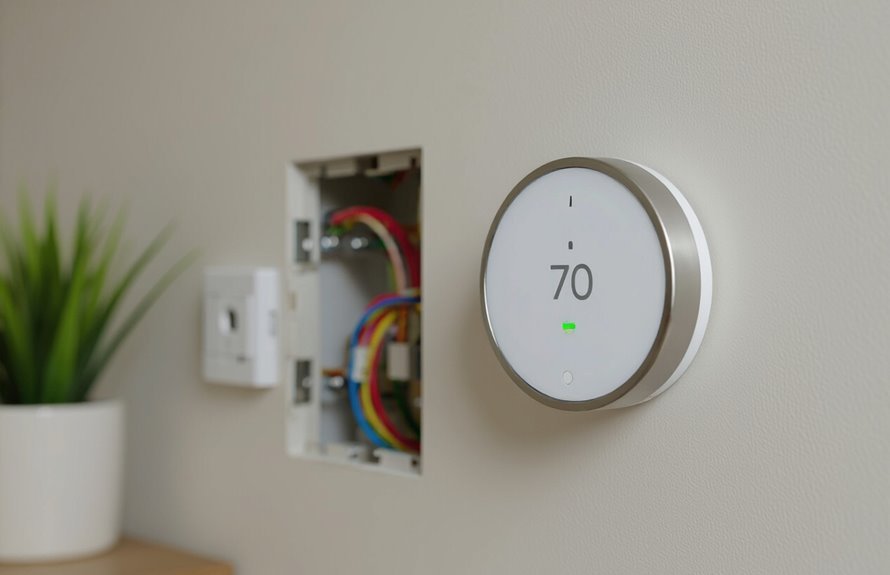
Choose a thermostat that fits your system and comfort needs—basic programmable units can cut waste, while smart models add learning and remote control.
Set schedules that lower heating and cooling when you’re away or asleep to lock in savings without sacrificing comfort.
Use smart features like geofencing, energy reports, and HVAC diagnostics to fine-tune performance and spot problems early.
Choosing the Right Thermostat
Wondering whether a programmable or smart thermostat is right for you? You’ll weigh thermostat types, features, and thermostat placement to get comfort and savings without fuss.
Consider ease of use, compatibility with your HVAC, connectivity, and sensors. Pick one that fits your routine.
- Do you want remote control and app alerts?
- Is your HVAC system compatible or needs an adapter?
- Will sensors or multi-zone control matter?
- Can you mount it where it reads true temperature?
- Is installation DIY-friendly or needs a pro?
Choose simply: match features to needs, prioritize proper placement, and avoid overpaying.
Programming for Savings
If you want to cut heating and cooling costs without fuss, programming your new thermostat is one of the quickest wins you can make. You set schedules to match your life, lower use when away, and link to home automation for broader energy management. Pair with smart appliances and programmable lighting to reduce waste. Use consumption tracking and results from energy audits to refine settings. Check utility incentives for installation help. Treat this as an efficiency upgrades step: simple schedules, vacation modes, and monitored savings keep comfort high while lowering bills.
| Time | Action |
|---|---|
| Morning | Wake schedule |
| Day | Eco mode |
| Evening | Comfort |
| Night | Setback |
Smart Thermostat Features
When you install a programmable or smart thermostat, you get more than simple temperature control — you gain features that cut energy use and make comfort automatic.
You’ll set smart scheduling to match your routine, so heating and cooling run only when needed. Many models learn preferences and adjust gradually, reducing waste.
Look for remote control via app, geofencing, and reminders for filter changes. Use energy reports to track savings and tweak settings.
Installation’s usually straightforward, but professional setup helps if ductwork or zoning’s complex. A smart thermostat pays back through lower bills and easier comfort.
- Smart scheduling adapts to you
- Remote app control
- Geofencing saves when you’re away
- Filter and maintenance reminders
- Energy reports clarify your savings
Upgrading to Energy-Efficient Lighting
Swap out old bulbs and fixtures to cut energy use and lower your electric bills—upgrading to energy-efficient lighting is one of the fastest, cheapest ways to make your home greener.
Start by replacing incandescent and halogen bulbs with LEDs to enjoy LED bulb benefits: longer lifespan, lower heat output, and instant brightness. Use dimmable LEDs and smart controls to match light levels to tasks and reduce waste.
Choose fixtures with good lumen output and appropriate color temperature. Track lighting cost savings by comparing bills before and after upgrades.
Proper disposal and recycling of old bulbs keeps the upgrade eco-friendly.
Choosing Energy-Efficient Appliances
When it’s time to replace appliances, look for the ENERGY STAR label to save energy and cut costs.
Choose models sized for your household so you’re not wasting power on oversized units.
A right-sized, certified appliance makes a big difference in your home’s efficiency.
Look for ENERGY STAR
1 simple way to cut your utility bills is to choose appliances with the ENERGY STAR label, since they meet strict efficiency standards set by the EPA and save energy without sacrificing performance.
Look for energy star certification when shopping so you know the model outperforms minimum efficiency. Energy star appliances cost less to run, often qualify for rebates, and reduce household emissions.
Consider these practical tips:
- Check the ENERGY STAR label and specs.
- Compare annual energy use on product sheets.
- Ask about available rebates or tax credits.
- Prioritize long-term savings over sticker price.
- Read user reviews for real-world efficiency.
Size for Household Needs
Choosing the right size appliance matters because an oversized or undersized unit wastes energy and money; pick models that match your household’s usage patterns so they run efficiently without overworking.
You should measure household space and estimate typical loads—how many people live there, cooking habits, laundry frequency—to determine capacity.
Look for energy efficient sizes in product specs and compare real-world energy use, not just volume. A properly sized fridge, washer, or HVAC cycles less, uses less power, and lasts longer.
If your needs change, consider flexible options like adjustable-capacity models rather than automatically buying the biggest unit available.
Reducing Water Heating Energy Use
Anyone can cut a big chunk off their energy bill by tackling water heating, since it’s typically the second-largest home energy use after heating and cooling.
You can reduce waste and save without major disruption.
- Lower your water heater temperature to 120°F to save energy.
- Insulate the first few feet of hot and cold pipes.
- Fix leaks and use low-flow showerheads and faucets.
- Consider tankless water heaters for on-demand hot water and efficiency.
- Use a timer on electric heaters to avoid heating unused water.
Small changes add up, so pick a couple and start saving today.
Using Renewable Energy Sources at Home
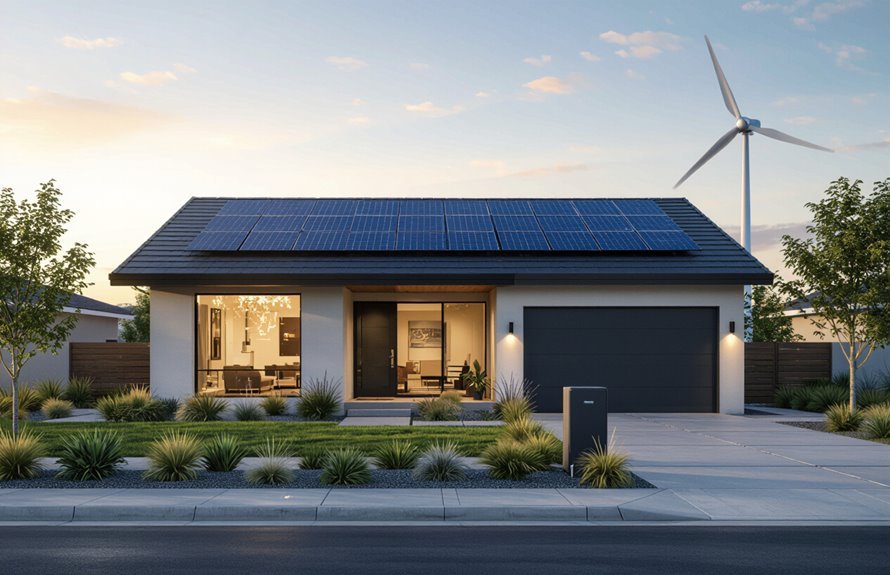
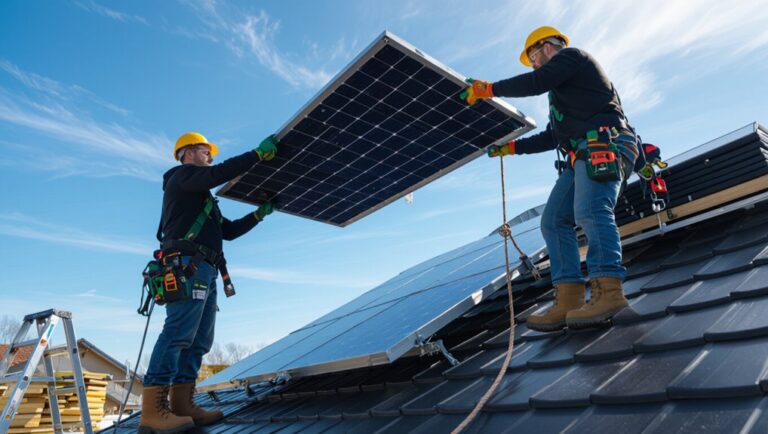
You can cut utility bills and lower your carbon footprint by adding renewable systems like rooftop solar panels, small wind turbines where zoning allows, or a dedicated solar water heater.
Evaluate your roof orientation, local wind patterns, and available incentives to pick the best option.
We’ll go over installation basics, costs, and expected savings so you can choose what’s practical for your home.
Solar Panel Installation
Installing solar panels can cut your electricity bills and shrink your home’s carbon footprint while increasing energy independence.
You’ll assess roof orientation, shading, and local incentives. Evaluate solar panel benefits and compare quotes; check warranties and equipment efficiency.
Consider solar panel financing options to fit your budget, from loans to leases and PACE programs. After permitting and installation, monitor production to maximize savings.
- Choose reputable installers with references
- Prioritize system size for your consumption
- Factor maintenance and inverter lifespan
- Use net metering where available
- Combine with efficiency upgrades for best return
Home Wind Turbines
While solar panels suit many rooftops, small wind turbines can be a smart alternative if your property gets steady, strong winds; they convert kinetic energy into electricity that can offset grid use or charge batteries.
You should assess local wind speeds, zoning rules, and setbacks before buying. Look for quality residential wind turbines sized to your consumption and site.
Consider blended systems—wind turbine benefits include complementary generation during cloudy, windy periods. Factor maintenance, noise, and wildlife impact into decisions.
If your site qualifies, turbines can lower bills and increase resilience, especially when paired with battery storage and smart controls.
Solar Water Heating
If your home gets good sun exposure, solar water heating can cut energy use and hot-water bills by using rooftop collectors to heat a fluid that transfers warmth to your storage tank.
You’ll choose systems based on climate, preferred solar panel types, and budget. Consider pros and cons, maintenance, and installation costs before committing. Benefits are reliable and simple.
- Lower monthly energy bills
- Reduced carbon footprint
- Backup heating options
- Tax credits or rebates
- Lifespan and warranty checks
You can pair this with existing systems, and contractors can size a system to match your hot-water demand.
Implementing Smart Power Strips and Reducing Standby Power
Because many devices draw power even when they’re “off,” cutting standby—or vampire—power is one of the easiest ways you can lower your energy use and bills.
Use smart power strips to shut off peripherals when the main device powers down, and plug clusters like TV setups, chargers, and printers into them.
You can set timers or sensor-triggered outlets to stop phantom loads overnight or when rooms are empty.
Track the most wasteful gadgets with a plug-in meter, then prioritize changes for biggest energy savings.
Small habits—unplugging seldom-used chargers, enabling power-management settings—add up fast.
Improving Ventilation and Indoor Air Quality Efficiently
Good ventilation keeps your home healthy and can cut energy costs when you balance fresh air with smart controls.
You’ll improve indoor air quality by combining natural ventilation with efficient ventilation systems and energy recovery ventilators.
Keep HVAC maintenance regular and swap air filters to reduce strain. Use air purifiers where needed and manage humidity control to prevent mold.
Add indoor plants for low-cost benefits.
- Open windows strategically for cross-breezes
- Service HVAC and replace air filters promptly
- Install energy recovery ventilators for balanced air
- Use portable air purifiers in problem rooms
- Monitor and adjust humidity levels routinely
Managing Energy Use With Home Automation
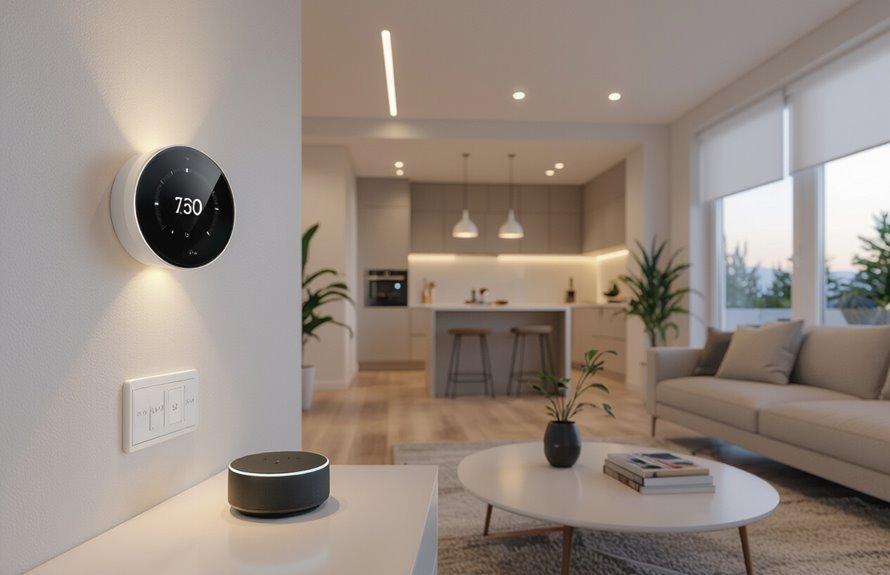
When you connect smart thermostats, lighting, and appliances to a home automation system, you’ll cut wasted energy by scheduling, zoning, and using real-time data to run devices only when needed.
You can monitor usage with energy management systems that show patterns and suggest reductions. Set schedules, create occupancy-based scenes, and use geofencing so heating, cooling, and lights follow your routine.
Integrate smart home devices for alerts on excess consumption and auto-shutoff of idle equipment. Start small—smart plugs, a thermostat—and expand.
Regularly review reports, tweak settings, and combine automation with efficient habits to lower bills and waste.
Energy-Efficient Landscaping and Shade Solutions
If you plan your yard with energy in mind, shade, plant placement, and hardscape choices can cut cooling and heating needs considerably.
Use native plants for low maintenance and water savings. Consider green roofs for insulation and reduce heat islands.
Arrange tree placement to shade sun-exposed walls; add windbreak installations to block cold winds.
Combine hardscaping options and xeriscaping techniques to minimize irrigation while creating usable outdoor living space.
Seasonal planting maximizes shade in summer and sun in winter. Simple water features cool nearby air. Practical shade structures extend comfort and lower HVAC strain.
- Plant native plants strategically
- Install shade structures
- Add green roofs
- Use xeriscaping techniques
- Plan seasonal planting
Sealing and Insulating Ductwork
Because leaky ducts can waste a surprising share of your heating and cooling, sealing and insulating them pays off quickly in comfort and lower energy bills.
Inspect accessible ducts for gaps, loose joints, and crushed sections. Use duct sealing techniques like mastic sealant or UL-rated foil tape rather than cloth-backed tape.
After sealing, apply appropriate insulation materials—foil-faced fiberglass or foam board wrapped securely—to reduce thermal loss in unconditioned spaces. Seal seams at registers and where ducts penetrate attics or crawlspaces.
Test system performance and consider professional duct leakage testing if you suspect major losses or complex duct runs.
Efficient Laundry Practices
Leaky ducts cost energy in large systems, and you can see similar savings by tightening up how you handle laundry at home.
You’ll save water and power with small habit changes. Focus on laundry scheduling to run full loads during off-peak hours and skip unnecessary cycles. Make smart detergent selection choices—use high-efficiency formulas sparingly and avoid extra pre-washes.
- Wash full loads whenever possible
- Choose cold-water cycles for most clothes
- Use high-efficiency detergent correctly
- Air-dry when fabric allows
- Clean lint traps and dryer vents regularly
These steps cut utility bills and extend appliance life.
Tips for Efficient Cooking and Kitchen Use
When you plan meals and use the right cookware, you’ll cut energy use in the kitchen without sacrificing results.
Choose energy efficient cookware like heavy-bottomed pots and lids to trap heat and cook faster.
Batch-cook and freeze portions, and use meal prep strategies that minimize oven and stove cycles.
Match pan size to burner, cover foods while simmering, and use residual heat by turning elements off early.
Use pressure cookers and microwaves for suitable dishes to save time and energy.
Keep fridge and freezer organized so you avoid long door-openings.
Small habits add up to meaningful savings.
Monitoring and Tracking Home Energy Consumption
A few simple tools can make tracking your home’s energy use clear and actionable: smart meters, plug-in monitors, and utility apps show real-time consumption, historical trends, and cost estimates so you can spot waste and measure improvements.
You’ll want energy monitoring and usage tracking to prioritize changes and verify savings. Use these steps to start:
- Check your utility’s app for hourly and monthly data.
- Install plug-in monitors on major appliances.
- Use a whole-home smart meter for patterns.
- Set alerts for unusual spikes.
- Review reports monthly and adjust habits.
Tracking helps you cut waste and target upgrades.
Financing and Incentives for Energy Efficiency Upgrades
If you’re ready to upgrade for efficiency but worried about cost, there are several financing options and incentives that can make projects affordable and even cash-positive over time.
You can apply for energy efficiency grants from local, state, or federal sources to cover audits, insulation, and appliance swaps.
Low-interest loans, on-bill financing, and PACE programs let you spread payments while saving on bills.
Check utility rebate programs for instant discounts on efficient equipment and smart thermostats.
Combine incentives to reduce upfront costs, compare payback periods, and prioritize measures with the fastest returns so upgrades start saving you sooner.
Conclusion
Making your home more energy efficient saves money and makes life comfier. Start by sealing leaks and adding insulation, upgrade windows and heating systems, tweak laundry and cooking habits, and monitor usage to spot gains. A striking stat: the average household cuts energy bills by about 20% after common efficiency upgrades — that’s like getting nearly two months of free heating or cooling each year. Small steps add up fast; pick one and start today.