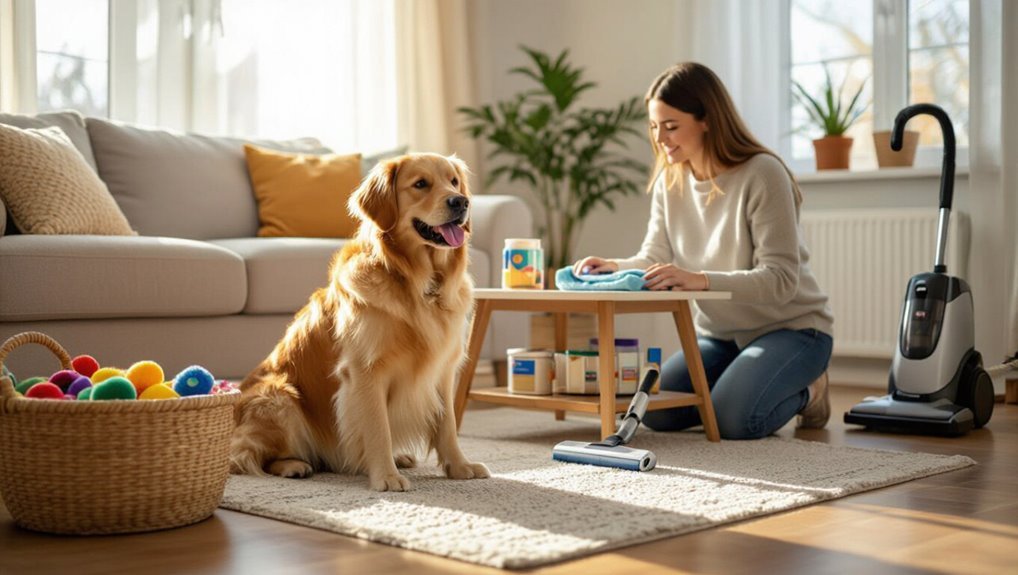
Keep pet mess under control by choosing hard, washable floors and durable, wipeable furnishings, brushing your pet daily, and setting up a paw-cleaning station at the door. Vacuum with a HEPA-equipped cleaner several times a week, wash bedding often, and use enzyme cleaners for accidents. Rotate washable covers and use air purifiers to cut odors and dander. Share chores with your household and schedule deep cleans around your pet’s routine — there’s more practical detail if you want to keep going.
Choosing Pet-Friendly Flooring and Furnishings
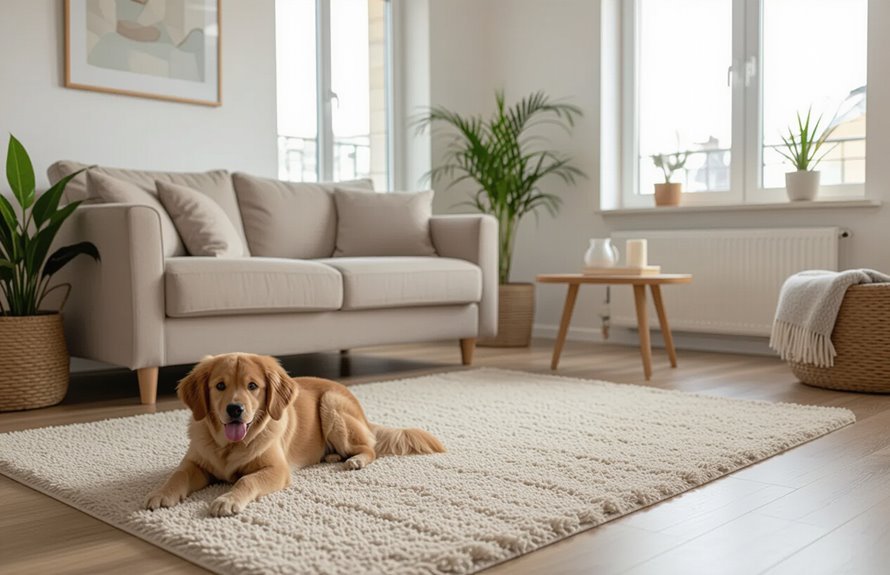
Floors and furniture set the tone for a clean, pet-friendly home, so choose materials that resist stains, scratches, and odors.
You’ll pick hard floors like sealed hardwood, bamboo, or tile for durability and easy cleanup, and opt for eco friendly materials when possible to reduce toxins.
For rugs and mats, choose low-pile, washable options and consider slip resistant surfaces to protect pets’ joints and prevent accidents.
Select upholstery with tight weaves or microfiber that repels hair and wipes clean.
Avoid delicate fabrics, excessive decorative items, and light colors that show stains; prioritize practicality and simple maintenance.
Creating a Pet Grooming Routine
Start by brushing your pet daily to cut down on loose fur and prevent mats before they end up all over your floors and furniture.
Stick to a simple bathing schedule based on your pet’s coat and activity level so you’re not over-washing or letting odor build up.
Consistent grooming sessions make cleaning easier and keep your home smelling fresher.
Daily Brushing Habits
A short daily brushing routine can cut shedding, reduce dander, and keep your home cleaner with minimal effort. You’ll spend five to ten focused minutes per pet, using proper brushing techniques and quality grooming tools. Start with gentle strokes, follow hair growth, and target common shedding zones. Keep a lint roller and a small brush nearby to catch loose fur as you go. Reward your pet so brushing becomes pleasant.
| Time | Focus |
|---|---|
| 0–2m | Calm, soothe |
| 2–7m | Brush coat |
| 7–10m | Tidy face/paws |
Scheduled Bath Times
Set a predictable bathing schedule so your pet stays clean without stress and you don’t get overwhelmed by last‑minute scrubs. You’ll enjoy bath time benefits like reduced dander, fresher scent, and less tracked dirt when you plan ahead.
Check breed needs and activity level to set scheduling frequency — puppies, active dogs, or outdoorsy cats may need more frequent washes than indoor, short‑haired pets. Mark baths on your calendar, pair them with treats or play, and keep supplies ready to streamline the process.
Consistency lowers anxiety, protects coat health, and makes cleaning your home quicker and easier.
Managing Shedding Throughout the Home
Because pet hair gets everywhere, you’ll need a simple, consistent routine to keep shedding from taking over your home. You’ll tackle fur management by brushing pets weekly, using lint rollers, and choosing washable covers.
Focus on high-traffic spots and schedule quick touch-ups.
- Vacuum floors and upholstery with pet attachments.
- Groom outdoors when possible and wipe paws after walks.
- Use microfiber cloths and rubber brushes on furniture.
These shedding solutions reduce loose hair and prevent buildup.
Rotate tools, empty vacuums often, and store grooming supplies where you’ll actually use them to keep maintenance easy and effective.
Tackling Pet Odors Effectively
To keep your home smelling fresh, focus on deep-cleaning high-traffic areas like entryways, carpets, and pet beds where odors build up.
Tackle messes quickly and neutralize odors at the source with enzyme cleaners or baking soda instead of masking them.
With regular spot treatments and scheduled deep cleans, you’ll cut down lingering smells and make maintenance easier.
Deep-Clean High-Traffic Areas
When pet traffic has worn a path through your home, deep-cleaning those spots stops odors at the source and keeps the whole space smelling fresh.
You’ll focus on fabrics, floors, and corners where oils and dander accumulate. Use spot cleaning for stains, and refine vacuuming techniques to lift embedded hair and grit before treatments.
- Strip cushions, launder covers, pre-treat stains with enzyme cleaner.
- Vacuum slowly with attachments, then steam or shampoo carpets.
- Wash baseboards, mop hard floors, and air out rugs in sunlight.
Do these regularly to prevent buildup and lingering smells.
Neutralize Odors at Source
You’ve cleaned the high-traffic areas; now tackle the smells at their source so they don’t keep coming back.
Find urine, dander, and food residues quickly—cleaning immediately stops odors from setting. Use enzyme cleaners and pet odor neutralizers on fabrics and carpets to break down smells rather than masking them.
Place odor absorbing materials like activated charcoal or baking soda in closets, litter areas, and bedding to capture lingering scents.
Wash pet bedding weekly, vacuum with a HEPA filter, and launder removable covers. Regular grooming and spot-checks prevent buildup, so odors are controlled before they spread.
Litter Box Placement and Maintenance
Although a tucked-away corner might seem ideal, litter box placement and upkeep directly affect your cat’s comfort and your home’s cleanliness. You should choose a quiet, accessible litter box location and pick litter box materials that suit your cat and clean easily.
Maintain boxes by scooping daily, replacing litter regularly, and cleaning the pan.
- Scoop daily and dispose of waste promptly to cut odors.
- Wash the box weekly with mild soap, avoid strong scents that deter cats.
- Replace litter and inspect for damage monthly; swap pans if scratched or stained.
Consistent care keeps both cat and home happier.
Training Pets to Reduce Indoor Messes
If you teach your pets a few clear rules and reward good behavior, you’ll cut down on accidents, chewing, and tracking so your home stays cleaner with less work.
Start with consistent routines: set potty times, play sessions, and designated chewing toys. Use positive reinforcement—treats, praise, or short play—for desired actions and ignore attention-seeking messes.
For persistent issues, apply gentle behavior modification: redirect, reward alternative behaviors, and shorten unsupervised freedom until reliable.
Crate train or gate off rooms to limit spread of dirt. Reinforce grooming and paw wiping after walks.
Stay patient; consistency reduces indoor mess over time.
Cleaning Up Accidents Quickly and Safely
When an accident happens, act fast to limit stains and odors: blot fresh messes with paper towels, scoop solid waste with a plastic bag or scraper, and rinse the area with cold water before treating.
Use these steps for effective accident cleanup:
- Apply a pet-safe enzymatic cleaner, following label directions to neutralize odor and bacteria.
- Blot from the outside in, avoid rubbing, and repeat until dampness subsides.
- Air-dry or use a fan; check later for lingering smells and retreat if needed.
Choose safe products labeled non-toxic for pets, test discreetly on fabrics, and store cleaners out of reach.
Stain-Resistant Fabrics and Covers
Choose performance fabrics like microfiber or Crypton so spills bead up and wipe away instead of soaking in.
Pick furniture with removable, machine-washable covers to make regular laundering easy.
Together they cut stains and save you hours of cleanup.
Choose Performance Fabrics
Because pets are part of your daily life, picking stain-resistant performance fabrics makes maintenance far easier — they repel spills, resist odors, and stand up to rough play without looking worn.
Look for performance fabric options that list fiber content and finish, and weigh durability considerations like abrasion ratings and colorfastness. Choose tightly woven synthetics or treated natural blends for easy cleaning.
Consider texture to hide fur and simple patterns for camouflage.
- Check abrasion test scores.
- Prioritize water- and oil-repellent finishes.
- Match fabric weight to furniture use.
You’ll clean less and replace cushions less often.
Use Removable Covers
One of the smartest moves you can make is to outfit sofas, cushions, and pet beds with removable, machine-washable covers made from stain-resistant fabrics — they let you tackle spills, fur, and odors fast without scrubbing upholstery or hauling items to a cleaner. You’ll appreciate removable covers benefits: quick washes, longer-lasting upholstery, and easy odor control. Choose durable, water-resistant textiles and secure zippers. Combine with regular vacuuming and spot treatment as fabric protection methods. Quick swaps cut deep-clean frequency and protect investment.
| Material | Washability | Pet-Friendliness |
|---|---|---|
| Microfiber | Machine | High |
| Canvas | Machine | Medium |
| Crypton | Machine | High |
Regular Vacuuming and Dust Control Tips
While pets bring life to your home, their fur and dander mean you’ll need a focused vacuuming routine to keep allergens and dust under control.
You’ll cut pet hair buildup and stop dust bunnies by vacuuming high-traffic areas daily and whole rooms twice weekly. Use a vacuum with HEPA filter and brush roll for upholstery and stairs. Empty canister outside to avoid reintroducing allergens.
- Focus: entryways, pet beds, and under furniture.
- Tools: HEPA vacuum, crevice tool, rubber broom.
- Schedule: short daily touch-ups, deep weekly clean.
Bathing Pets Without Making a Bigger Mess
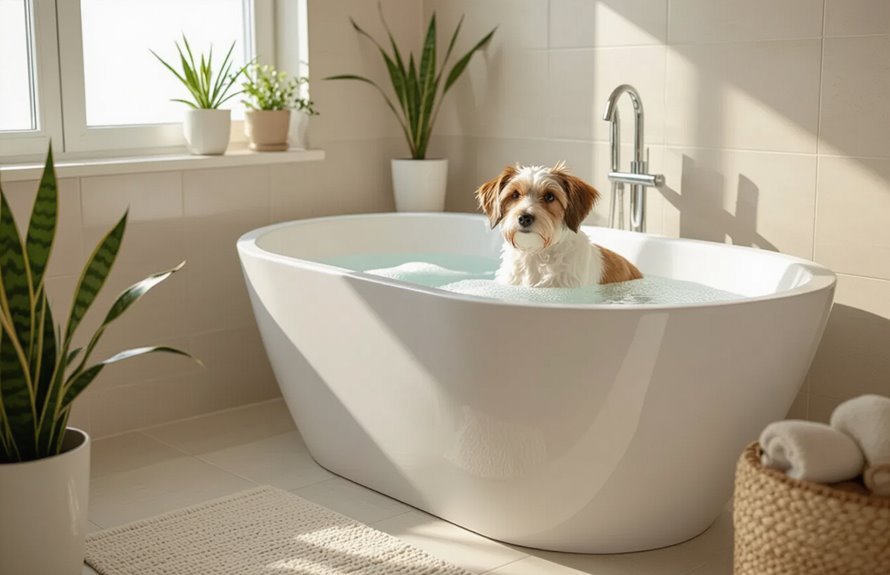
If you want bath time to be quick and tidy, set up a controlled space before you bring your pet in — lay down towels, have non-slip mats, a handheld sprayer or pitcher, and all grooming supplies within arm’s reach so you won’t chase soap and water around the house. Use pre bath preparation: trim nails, brush loose fur, and block doors. Work calmly, use treats, and rinse thoroughly to avoid odors. For post bath cleanup, wring towels outside, launder promptly, and wipe floors. Below is a quick plan:
| Task | Action |
|---|---|
| Prep | Brush, trim, gather supplies |
| Bath | Use gentle spray, slow strokes |
| Dry | Towel, air-dry, treat |
| Cleanup | Launder towels, mop floor |
Keeping Food Areas Clean and Pest-Free
After bath time, you’ll want the kitchen and feeding spots just as tidy to keep pests away and food fresh.
Wipe bowls after each meal, sweep crumbs, and keep dry pet feeding areas elevated. Seal kibble and human food in airtight containers, label dates, and rotate stock to prevent spoilage.
- Clean: sanitize bowls, mats, and surrounding floors daily.
- Store: use proper food storage for kibble and treats; avoid cardboard bags.
- Inspect: check cupboards and bins weekly for pests or moisture.
Stick to routines and you’ll limit odors, pests, and wasted food.
Protecting Furniture From Scratches and Hair
Protect your furniture by using scratch-resistant covers that take the worst of the wear and tear.
Keep your pet’s nails trimmed regularly to reduce snagging and marks.
And vacuum or lint-roll upholstery often to remove hair before it builds up.
Use Scratch-Resistant Covers
When your pets climb, scratch, or nap on the couch, scratch-resistant covers give your furniture a simple, effective barrier against claws and hair.
You’ll choose covers made from scratch resistant materials that protect durable upholstery without hiding style. Install fitted slipcovers or throws that zip or tuck for a neat fit, and pick washable fabrics for quick cleaning.
- Pick tight-weave fabrics that resist claws and trap less hair.
- Choose machine-washable or wipeable options for fast maintenance.
- Secure covers with non-slip backing or straps so they stay put during play.
These steps keep furniture cleaner and lasting longer.
Trim Nails Regularly
Covers help shield fabric, but trimming your pet’s nails cuts down on the damage they can still cause to upholstery and carpets.
You should check paws weekly, looking for sharp tips or split nails, and trim before they get too long. Learn basic nail trimming techniques so you’ll feel confident and calm; reward your pet afterward to build positive association.
Use proper nail care tools — guillotine clippers, scissor clippers, or a grinder — and keep styptic powder nearby in case of quicking.
If you’re unsure, ask a groomer or vet for a demo to avoid injury and protect furniture.
Vacuum and Lint-Roll Furniture
1 simple habit—vacuuming and lint-rolling your furniture weekly—cuts down on pet hair and reduces the chance of scratches by removing abrasive debris.
You’ll protect upholstery and keep allergens low with consistent care. Choose vacuum types with pet brushes or soft-floor settings to avoid harming fabric.
Lint rollers reach crevices and spot-clean quickly between deeper cleans. For furniture protection, use gentle strokes and test tools on hidden areas first.
- Use a pet brush attachment for sofas.
- Lint-roll seams and cushions after shedding periods.
- Schedule a monthly deep vacuum with HEPA filtration.
Storing Pet Supplies for Easy Access and Cleanliness
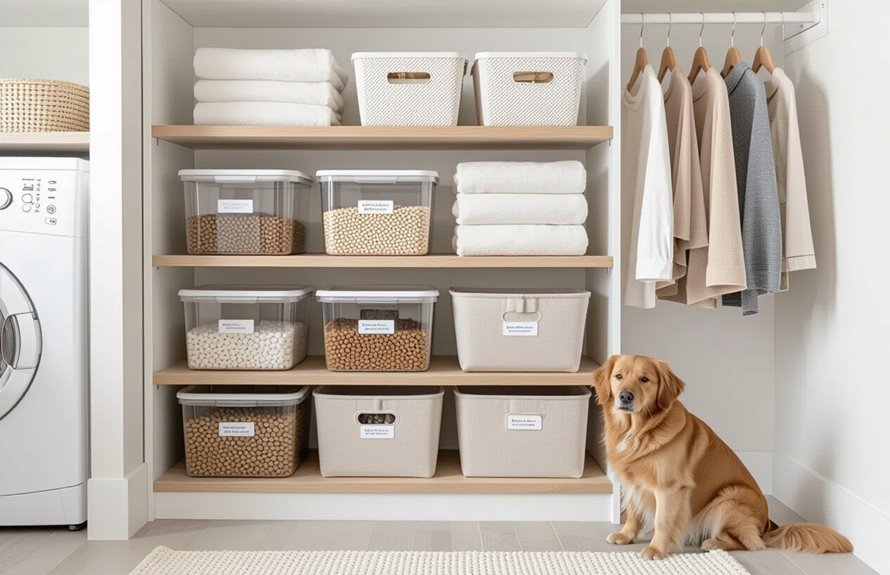
Because pet supplies can clutter high-traffic areas and attract odors, organize them so you can grab what you need fast and keep surfaces clean.
Use clear bins, labeled baskets, and wall hooks as storage solutions to separate toys, grooming tools, and feeding items. Keep leashes and collars by the door in a small caddy so you don’t track dirt through the house.
Stash food in sealed, labeled containers to prevent spills and pests. Schedule quick weekly checks to purge damaged toys and expired treats.
These organization tips save time, reduce mess, and make cleaning routines smoother and more consistent.
Air Filtration and Ventilation Solutions
Storing pet supplies neatly helps cut down on odors and shed, but you’ll also want to manage the air itself so dander, hair, and smells don’t circulate through your home.
Use targeted air purifiers in rooms pets use most, choosing HEPA filters and quiet operation. Guarantee your ventilation systems bring in fresh air without spreading allergens.
- Place an air purifier near pet resting areas.
- Check and replace HVAC filters monthly during heavy shedding.
- Run exhaust fans or open windows briefly to exchange indoor air.
These steps reduce airborne particles and keep your home fresher.
Cleaning Toys, Beds, and Bedding Properly
Toys, beds, and bedding pick up fur, dander, saliva, and odors quickly, so you should clean them on a regular schedule to keep pets healthy and your home fresh.
Wash bedding weekly in hot water and a pet-safe detergent; dry thoroughly to prevent mildew.
Machine-washable toys get the same treatment, while plush items you can’t machine-wash go in a sealed bag in the freezer for 24 hours, then surface-clean.
For hard toys sanitization, soak in a vinegar-water solution or diluted bleach per label instructions, rinse well, and air-dry.
Inspect for damage and replace items showing wear to avoid hazards.
Managing Muddy Paws and Outdoor Debris
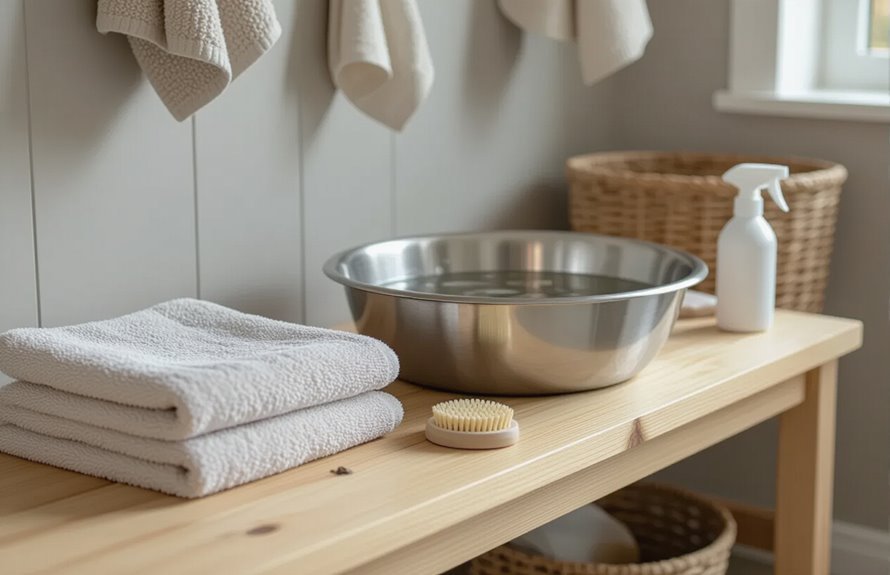
Set up a dedicated entryway cleaning station with mats, towels, and a bin for wet wipes so you can stop dirt at the door.
Create a quick paw-cleaning routine—wipe or rinse paws after walks and keep a towel or pet-safe spray nearby.
Consistency with this setup will cut down tracked-in mud and protect your floors.
Entryway Cleaning Station
If you expect muddy paws and outdoor debris, create a dedicated entryway cleaning station so dirt never makes it into the rest of your home.
Use entryway organization tips to group leashes, towels, boot brushes, and pet wipes in labeled bins.
Keep a washable mat and a shoe tray for runoff, and designate a hook or basket for pet gear storage.
Quick routine:
- Shake or brush off boots and paws outside.
- Wipe paws and gear on the mat or towel inside.
- Store wet items in breathable bins to dry.
This setup keeps mess contained and cleanup fast.
Paw-Cleaning Routine
When your pet comes in from outside, a quick, consistent paw-cleaning routine will keep mud and grit from spreading through the house; start by having everything you need at the entry — wipes, a towel, a brush, and a shallow basin — so you can act fast.
Wipe or rinse paws immediately, scrub between toes when needed, then dry thoroughly to prevent tracking and odor.
Use pet safe mats to catch drips and debris, and rotate them for washing.
Train your pet to pause at the station with treats and praise to reduce paw print tracking and simplify daily maintenance.
Safe Cleaning Products for Homes With Animals
Why choose pet-safe cleaners? You want products that protect curious noses and paws.
Choose eco friendly cleaners and non toxic sprays to reduce chemical exposure. Read labels, avoid phenols, bleach, and essential oils toxic to pets. Use fragrance-free, biodegradable formulas when possible.
- Pick enzyme-based cleaners for urine and odor — they break down stains safely.
- Select certified pet-safe all-purpose sprays for countertops and floors; spot-test first.
- Store chemicals sealed and up high; dispose of leftovers per instructions.
You’ll keep your home clean and your animals safe by prioritizing gentle, clearly labeled products.
Scheduling Deep-Clean Sessions That Work With Pets
Because deep cleans stir up dust and strong smells, plan sessions around your pet’s routine so you can keep them safe and calm.
Start by noting high-traffic days and established nap or walk times; schedule vacuuming, steam cleaning, and litter or cage refreshes when your pet can be elsewhere.
Set a realistic scheduling frequency—weekly for light maintenance, monthly for thorough tasks—and mark them on your calendar.
Create a concise cleaning checklist that lists supplies, areas, and ventilation steps so you work efficiently and avoid lingering odors.
Afterward, return your pet only when air feels clear and noise has subsided.
Involving the Whole Family in Pet Clean-Up
If you want the house to stay tidy with pets, make care and clean-up a shared responsibility so chores don’t fall on one person.
You’ll foster family teamwork by assigning clear cleaning responsibilities and rotating tasks so no one gets stuck with the same job.
Keep instructions simple, post a checklist, and reward consistency.
- Assign daily quick tasks like sweeping fur or wiping paws.
- Schedule weekly chores such as vacuuming and washing bedding.
- Rotate deeper jobs and track who did what.
You’ll cut mess, teach responsibility, and keep your home pleasantly livable with everyone pitching in.
Reducing Allergens and Maintaining Indoor Air Quality
When you live with pets, reducing allergens and keeping your indoor air clean takes a few deliberate habits: regular grooming, targeted cleaning, and improved ventilation will cut dander, hair, and odor at the source. You should groom pets weekly, vacuum with HEPA filters, wash bedding, and run an air purification unit to support allergen reduction. Open windows when possible, use exhaust fans, and limit pet access to bedrooms. Monitor humidity to deter mold. Small, consistent steps protect sensitive household members and keep rooms smelling fresh.
| Action | Benefit |
|---|---|
| Grooming | Fewer loose hairs |
| HEPA vacuum | Removes dander |
| Air purifier | Improves air purification |
| Ventilation | Lowers humidity |
Conclusion
Keeping a clean home with pets is totally doable when you plan and stay consistent. Use pet-friendly materials, stick to grooming and vacuum routines, and tackle odors and litter with smart placement and products. Schedule deep cleans around your pets’ habits, involve everyone in chores, and focus on air quality to reduce allergens. With these habits, your home will feel fresh and welcoming — like a well-tuned orchestra where every family member, human or furry, plays their part.