How to Create a Home Cleaning Routine That Works
Start by doing a quick walk-through to note high-traffic spots, tools you have, and any health needs, then set realistic goals you can stick with. Break tasks into tiny daily (15–30 minutes), weekly, and monthly lists, and assign rooms or chores to family members. Block short cleaning slots on your calendar, build small habits like one-minute nightly tidies, and track wins to adjust frequency. Follow these steps and you’ll find a routine that fits your time and energy, with practical tips ahead.
Assess Your Home and Cleaning Needs

Where do you start? You begin with a quick home assessment: walk each room, note high-traffic areas, surfaces, and problem spots.
List cleaning priorities by frequency and impact — pets, kids, kitchen, bathrooms first; guest rooms and storage later.
Measure time available daily and weekly, then match tasks to realistic slots.
Note tools and supplies you already have, plus must-haves to simplify chores.
Record any health or allergy concerns that change priorities.
This focused assessment gives you a clear map of tasks and limits, so you’ll allocate effort where it actually matters and avoid wasted time.
Set Realistic Cleaning Goals
Goals make your cleaning routine manageable and keep you from trying to do everything at once. You’ll set realistic expectations by listing what matters most—high-traffic zones, visible clutter, and safety hazards.
Break each goal into manageable tasks so you don’t face overwhelm: short, specific actions you can finish in 10–30 minutes.
- Prioritize: pick one area to improve this week.
- Break down: turn goals into quick, repeatable steps.
- Track progress: note wins and adjust goals.
Keep goals simple, measurable, and flexible so you stick with them and build momentum without burnout.
Choose a Cleaning Frequency for Each Task
Because not every task needs the same attention, assign a clear frequency to each cleaning task so you know when to do it and don’t waste time guessing.
Start by listing tasks, then decide how often each really needs doing based on use, visibility, and health concerns. Use simple categories (daily, weekly, occasional) in your head but focus on the right cleaning frequency per item.
This task prioritization helps you spend time where it matters most and prevents burnout. Reassess after a month and adjust frequencies as habits and household needs change to keep your routine efficient and realistic.
Break Tasks Into Daily, Weekly, and Monthly Lists
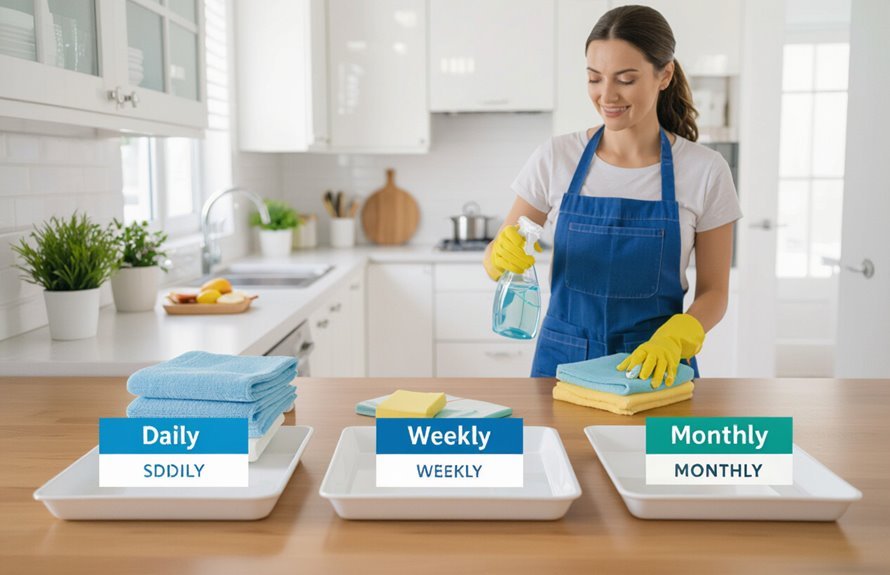
Once you’ve set frequencies, split your tasks into three clear lists — daily, weekly, and monthly — so you always know what to tackle next.
Use simple cleaning categories (kitchen, bathrooms, living areas) to group items and improve task prioritization. Keep lists visible and realistic so you stick to them.
- Daily: quick upkeep (dishes, counters, spot tidying) to prevent buildup.
- Weekly: deeper cleaning (vacuum, mop, bathroom scrub) that keeps spaces fresh.
- Monthly: low-frequency jobs (oven, vents, deep declutter) that maintain long-term order.
Review and adjust lists as needs change.
Create a Room-by-Room Cleaning Plan
When you break cleaning down by room, you turn an overwhelming list into clear, manageable steps — and you can tackle each space with the right tools and routine.
List each room, note high-traffic zones, and assign daily, weekly, and monthly tasks so cleaning schedules stay realistic. For kitchens focus on counters, sinks, and fridge; bathrooms get surfaces, grout, and mirrors; bedrooms need dusting, linens, and decluttering.
Add a brief room organization step for each: bins, labels, or shelves. Print the plan, stick it where you’ll see it, and adjust as habits and needs change.
Build a Morning Cleaning Routine
Now that you’ve mapped rooms and set task frequencies, turn that framework into a short, repeatable morning routine that keeps mess from piling up.
You’ll want morning motivation and energizing rituals to make it stick. Pick three compact actions you can do daily before leaving the house: tidy surfaces, clear dishes, and set laundry or trash notes.
Keep each step under five minutes and pair tasks with something you already do, like coffee. Track progress on a simple checklist and celebrate small wins to build habit momentum.
Consistency beats perfection; aim for manageable actions you’ll actually repeat.
- Tidy surfaces
- Clear dishes
- Set laundry/trash notes
Build an Evening Cleaning Routine
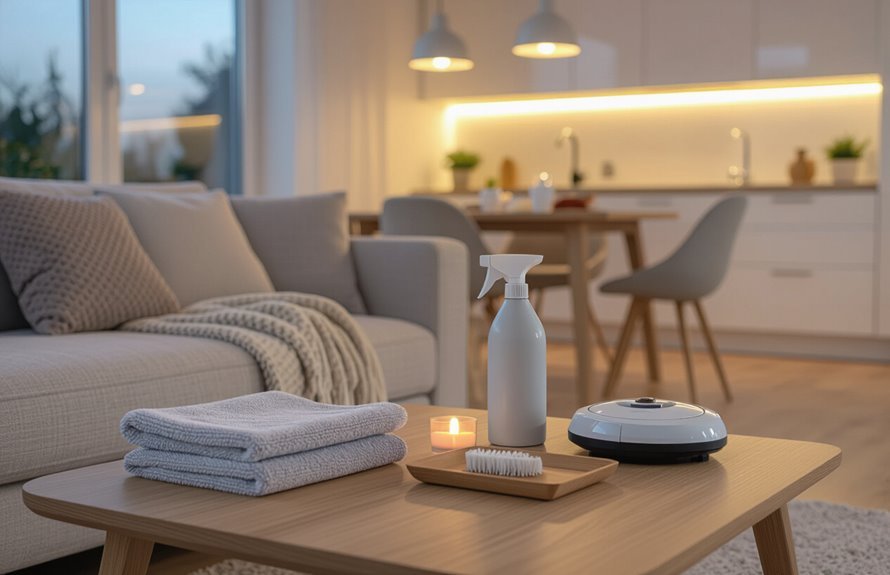
End your day with three simple, calming steps that reset your space and make mornings easier. You’ll set evening ambiance, tidy high-traffic zones, and prep breakfast spots so mornings flow. Do a quick wipe of counters, collect dishes, and stow stray items. Light a soft lamp or diffuser to cue relaxation and cleaning motivation. Use a 10-minute timer and enlist family if possible.
| Task | Time |
|---|---|
| Counters & sink | 3 min |
| Floors quick-sweep | 3 min |
| Prep coffee/breakfast | 2 min |
| Declutter surfaces | 2 min |
Schedule Deep-Cleaning Sessions
Although regular tidying keeps clutter at bay, you should schedule focused deep-cleaning sessions so dirt and buildup don’t sneak back in.
Pick a day each month for a targeted deep clean and use a deep cleaning checklist to stay efficient. Rotate larger tasks quarterly so nothing piles up. Seasonal deep cleaning tackles windows, vents, and upholstery when weather changes, making maintenance easier year-round.
- Prioritize high-traffic rooms
- Break tasks into 2–4 hour blocks
- Prep supplies and dispose of waste immediately
Stick to dates on your calendar so sessions become habit, not a last-minute scramble.
Assign Tasks to Household Members
Match tasks to each person’s strengths so chores get done well and faster.
Set clear expectations about who’s responsible, when tasks should be finished, and what “done” looks like.
Rotate duties and adjust schedules regularly so work stays fair and fits changing routines.
Match Tasks to Strengths
When you assign cleaning tasks, play to each household member’s strengths and preferences so chores get done faster and with less nagging.
You’ll boost consistency by matching cleaning strengths and task preferences to chores people actually don’t mind. Ask who likes detail work versus quick fixes, who’s time, and who prefers solo or paired tasks.
Rotate occasionally to avoid burnout, but keep core matches.
- Give detailed, methodical people bathroom and kitchen scrubbing.
- Let speedy, results-oriented members handle tidying and vacuuming.
- Assign social or cooperative chores—laundry sorting, dishes—to those who don’t mind teamwork.
Set Clear Expectations
Before you hand out chores, be explicit about what’s expected: list each task, how often it should be done, and what “done” looks like so everyone knows when to move on.
You should assign tasks by ability and availability, explain steps briefly, and set realistic outcomes so no one feels set up to fail.
Use clear communication—notes, shared apps, or a quick family huddle—to confirm understanding and deadlines.
Encourage questions and accept feedback, then record agreements.
When everyone knows who’s responsible and what success looks like, chores get done more smoothly and resentment drops.
Rotate and Adjust Schedules
To keep chores fair and prevent burnout, rotate tasks regularly and adjust schedules based on people’s changing availability and skills.
You assign roles, swap them weekly or monthly, and build cleaning flexibility so no one’s stuck with the same chore.
Communicate openly about preferences and capability; adjust when someone’s schedule shifts or a task proves harder.
Use a shared calendar or app for schedule adjustments and reminders.
Balance workload by matching tasks to skill level and time.
- Rotate tasks to spread effort.
- Reassign when availability changes.
- Use tools to track and remind.
Pick Effective Cleaning Tools and Supplies
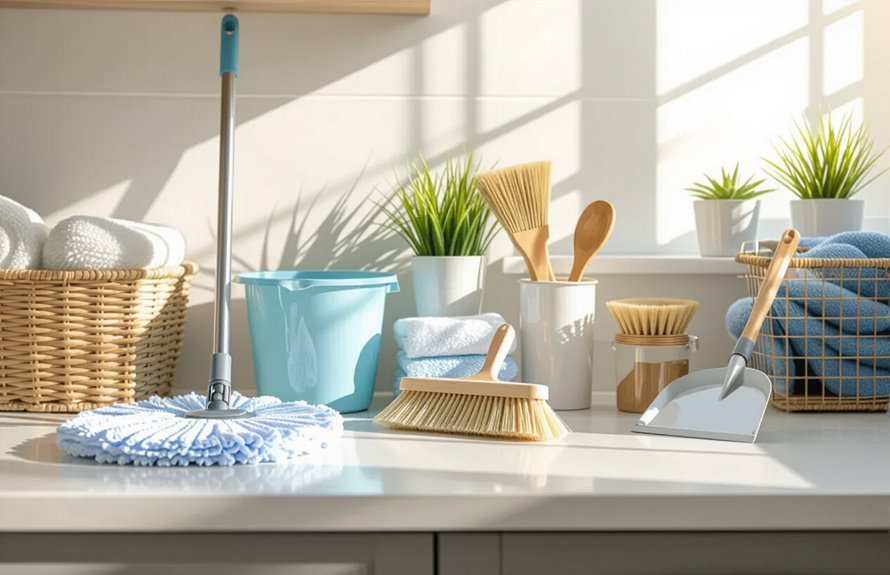
1 smart set of tools will cut your cleaning time and make tasks feel manageable.
Pick essential tools: a microfiber cloth set, a quality vacuum, mop, scrub brushes, and a sturdy bucket.
Choose eco friendly supplies — concentrated cleaners, refillable sprays, and plant-based detergents — to reduce waste and irritation.
Match tools to tasks: a long-handled duster for high spots, grout brush for tiled areas, and a squeegee for windows.
Store them accessibly so you’ll grab them without thinking.
Replace worn items on schedule and keep refill backups; reliable gear makes routines stick and chores finish faster.
Develop a Decluttering System
Start by tackling one room at a time so the job feels manageable.
Sort items into Keep, Donate, and Toss piles, and label them clearly.
Make quick decisions to keep the process moving and avoid second-guessing.
Sort by Keep, Donate, Toss
Begin by making three clear piles—Keep, Donate, Toss—and commit to quick decisions that stop clutter from creeping back in.
You’ll find a minimalist mindset helps: question usefulness, joy, and frequency. Use simple decluttering techniques—set a timer, tackle surfaces, and handle items once. Decide confidently, bag donations immediately, and schedule trash pickup so things don’t linger.
- Prioritize essentials to keep daily life smooth.
- Donate items in good condition; box and drop off within a week.
- Toss broken, expired, or hazardous items responsibly.
Repeat this short routine regularly to maintain order.
One Room at Time
After you’ve sorted items into Keep, Donate, and Toss, attack clutter one room at a time so you don’t get overwhelmed. Focus on clear goals: pick a room, set a timer, and grab essential cleaning supplies. You’ll make steady progress and keep momentum. Tackle flat surfaces, then storage, then trash. Use simple bins for sorting and label zones to improve room organization long-term. Repeat weekly for maintenance.
| Step | Action | Result |
|---|---|---|
| 1 | Sort | Clear surfaces |
| 2 | Clean | Fresh space |
| 3 | Store | Organized rooms |
Use Time-Blocking to Stay Consistent
Block off specific chunks of time on your calendar for cleaning tasks so they become nonnegotiable parts of your week.
You’ll use time management and productivity techniques to protect those slots, treat them like appointments, and avoid decision fatigue. Short, regular blocks beat infrequent marathon sessions.
Keep sessions realistic and consistent so habits form.
- Schedule 15–30 minute daily tidy-ups.
- Reserve one longer block weekly for deep tasks.
- Set a monthly block for seasonal chores.
When you respect those blocks, cleaning becomes automatic and less stressful, and you’ll maintain a cleaner home with minimal effort.
Create Checklists and Printable Schedules
When you pair your time blocks with simple checklists and printable schedules, staying on top of chores gets a lot easier — you see at a glance what needs doing and you don’t waste mental energy deciding where to start.
Create room-by-room checklist templates you can reuse weekly, plus a master weekend list for deeper tasks. Use printable planners to assign days and durations, then hang them where they’ll be seen.
Check items off as you go to track progress and tweak timing. Keep lists short, specific, and realistic so you’ll actually use them instead of letting papers pile up.
Establish Small Habits That Prevent Messes

Checklists and schedules tell you what to do; small daily habits keep messes from forming in the first place.
You’ll prevent clutter by tying tiny tasks to existing routines—habit stacking makes them effortless. Do a quick surface wipe after meals, put items back immediately, and clear one countertop before bed.
These simple actions are the backbone of mess prevention and reduce the need for deep cleans.
- Wipe surfaces after use.
- Return items to their homes instantly.
- Do a one-minute nightly tidy.
Repeat these habits until they feel automatic; consistency beats intensity.
Incorporate Laundry and Linens Into Your Routine
Set a weekly laundry schedule so you’re not scrambling with piles of clothes at the end of the week.
Sort by fabric and color, use the right detergent and temperature, and treat stains promptly to protect garments.
Rotate and wash linens on a set plan—sheets weekly, towels every few days—to keep beds and bathrooms fresh.
Weekly Laundry Schedule
Laundry is easiest to manage when you build it into a weekly rhythm that matches your household size and activities.
Decide fixed days for categories—colors, whites, delicates—and stick to them. Use baskets, labels, and a simple sorting system for effective laundry organization.
Schedule small loads more often if you have kids or workouts. Treat stains promptly and follow tags for proper fabric care to extend garment life. Quick folding and putting away prevents backlog.
- Assign days by type.
- Keep supplies visible and labeled.
- Fold or hang immediately to avoid rewash.
Linen-Care Basics
Treat your linens like everyday tools: rotate bedding, towels, and table linens on a predictable schedule so they stay fresh and last longer.
Sort by linen types and soil level, keeping delicates separate to avoid damage. Check care labels, match water temperature and detergent to fabric, and use gentle cycles for fragile items.
Spot-treat stains promptly and avoid overloading the washer to guarantee thorough cleaning. Dry according to instructions — air-dry when possible to extend life.
Schedule small, regular loads so laundry stays manageable, and store clean linens in a cool, dry place to maintain freshness and longevity.
Maintain High-Traffic Areas More Frequently
Because these spots get the most foot traffic and use, you’ll need to clean them more often than other areas to keep your home looking and smelling fresh.
Focus on high traffic zones and frequent touchpoints like entryways, kitchens, and bathrooms. Set simple routines so you won’t skip them: quick daily wipe, weekly vacuum/mop, and monthly deep clean.
Prioritize surfaces where dirt and germs spread fastest, and keep supplies handy to make upkeep easy. Track tasks on a short checklist and adjust frequency when seasons or household habits change.
- Daily wipe
- Weekly vacuum/mop
- Monthly deep clean
Troubleshoot Common Cleaning Roadblocks
Even with a steady routine for high-traffic spots, you’ll hit snags that slow you down or undo your progress. Identify what derails you: clutter hotspots, unclear tasks, or frequent cleaning distractions like notifications or kids.
Tackle clutter with quick 5-minute resets and set clear, small goals so work feels doable. Use time management techniques—block short focused sessions, set timers, and batch similar tasks—to keep momentum.
If supplies run out, keep a simple checklist to avoid interruptions. When roommates or family don’t pitch in, assign specific responsibilities.
Anticipate common hiccups and create simple habits to prevent them.
Track Progress and Adjust Your Plan
Once you start following your cleaning routine, track what actually gets done each week so you can see what’s working and what isn’t.
Keep a simple checklist or app entry to track accountability and note missed tasks. At the end of each week, evaluate effectiveness: which chores took too long, which you skipped, and what’s realistic.
Use that data to tweak timing, frequency, or delegation. Small changes prevent burnout and improve consistency. Review monthly to confirm progress and adapt as needed.
- Log weekly tasks
- Review missed items
- Adjust schedule based on results
Make Cleaning More Enjoyable and Motivating
Tracking progress helps you see where the plan fails and where it works — now make the actual work feel less like a chore.
Turn cleaning into a short ritual: queue upbeat cleaning playlists, set a timer for focused sprints, and celebrate small wins.
Post motivational quotes where you’ll see them — on the fridge or bathroom mirror — to keep energy up.
Reward yourself after tasks with a break, a treat, or something relaxing.
Invite a friend for a swap session or share progress photos to stay accountable.
When cleaning feels rewarding and social, you’ll stick with the routine.
Set Up Maintenance Routines for Appliances and Systems
Because appliances work best when you care for them regularly, set simple maintenance routines that fit your schedule and skill level. You’ll prevent breakdowns, save money, and keep chores predictable.
Create a checklist for appliance maintenance and integrate routine system checks—filters, vents, seals—into your weekly or monthly plan. Label tasks by frequency and clear steps so you won’t procrastinate. Use reminders on your phone or calendar, and keep basic tools and replacement parts handy.
Teach household members quick tasks so responsibility’s shared. Review and adjust routines seasonally to match wear patterns and changing needs.
- Weekly quick checks
- Monthly deep tasks
- Annual inspections
Conclusion
You’ve built a practical cleaning plan tailored to your home — now stick with it. Small, consistent habits beat occasional deep-cleaning marathons: research shows people who clean 15–30 minutes daily feel 20% less stressed about chores. Use daily, weekly and monthly lists, tweak as needed, and tackle roadblocks with simple fixes. Keep routines enjoyable with music or rewards, and maintain appliances so your system stays efficient and stress-free long term.