How to Choose the Right Flooring for Your Home
Pick flooring that fits how you live now and how you’ll live over the next decade: consider traffic, kids, pets, and noise. Match material to room function—hardwood for living areas, engineered wood where moisture’s a concern, luxury vinyl or tile for kitchens and baths. Weigh durability, maintenance, refinishing ability, and underfloor heating compatibility. Test samples in your light and compare warranties and cleaning needs. Keep practical resale appeal in mind, and keep going to learn specific pros and cons.
Assessing Your Lifestyle and Household Needs
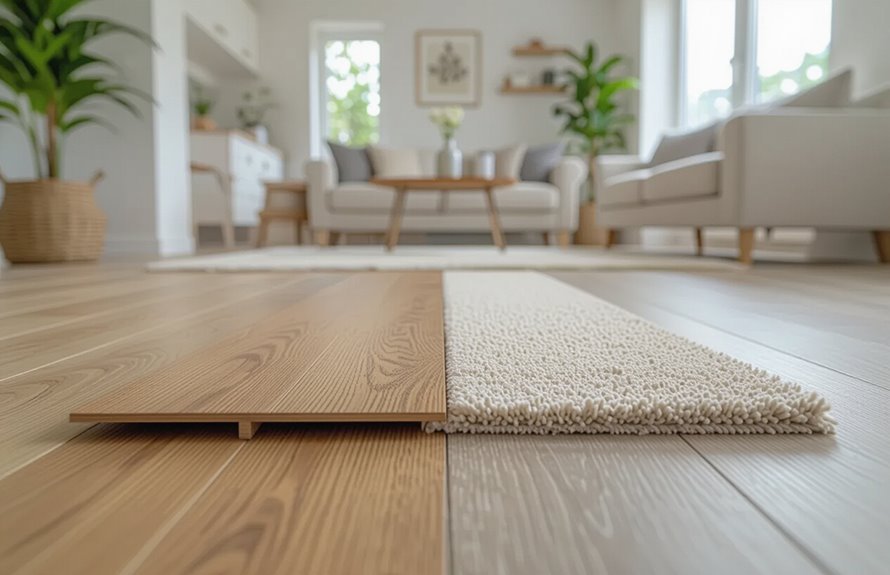
How do you use each room day to day? You should evaluate family activities and space usage to match flooring to real routines.
Consider foot traffic patterns, entertaining guests frequency, children’s needs and pet considerations when choosing durability and maintenance.
Think about lifestyle changes like remote work or growing kids, plus aging in place adaptations such as slip resistance and ease of adjustments.
Account for noise levels in busy areas and your personal preferences for warmth, texture, and upkeep.
Prioritize practical solutions that address current and foreseeable needs so the floor supports how you live rather than forcing habits to change.
Understanding Different Flooring Materials
Now that you know your household needs, you’ll compare common choices like solid hardwood and engineered wood to see which fits your budget and traffic levels.
You’ll also weigh low-maintenance, water-resistant options such as vinyl and cost-effective laminate for high-use areas.
Consider durability, appearance, and installation when you pick the best match for each room.
Hardwoods vs. Engineered
Curious which option will last and look best in your space? You’ll weigh hardwood benefits like timeless appearance, long lifespan with refinishing, and strong resale appeal.
Solid planks suit stairs and can be sanded multiple times, but they react to humidity and cost more.
Engineered pros include dimensional stability, easier installation over concrete, and often lower price with similar surface woods.
You’ll pick solid hardwood for historic homes or heavy refinishing needs; choose engineered for basements, radiant heat, or tighter budgets.
Consider traffic, moisture, and future refinish plans to decide which fits your lifestyle.
Vinyl and Laminate
Though they can look strikingly like wood or stone, vinyl and laminate are distinct synthetic options you’ll want to contemplate for budget-conscious, low-maintenance rooms.
You’ll find vinyl advantages include water resistance, soft underfoot comfort, and easy cleaning, so it’s great for kitchens, bathrooms, and busy households.
Laminate offers realistic visuals and scratch resistance at a lower cost than hardwood, but be aware of laminate drawbacks: poor moisture performance and limited refinishing options.
Choose vinyl if moisture and comfort matter, pick laminate for high-traffic dry spaces where appearance and budget drive your decision.
Comparing Durability and Longevity
Because you’ll live with your flooring every day, durability and longevity should guide your choice, not just style.
You’ll compare expected lifespan, resistance to scratches or moisture, and how warranty length matches realistic wear. Look at flooring warranties for coverage details and consider maintenance costs over years, not just upfront price.
Think about traffic patterns, pets, and room function when weighing options.
- Hardwoods: long life, can be refinished
- Engineered wood: stable, good for humidity
- Tile: highly durable, water-resistant
- Luxury vinyl: scratch and stain resistant
- Carpet: softer but shorter lifespan
Evaluating Maintenance and Cleaning Requirements
When you pick flooring, think beyond initial cost and ask how much time and effort you’ll spend keeping it clean and in good shape; maintenance needs will affect daily routines, long-term appearance, and total ownership cost.
You’ll want practical maintenance tips: sweep or vacuum high-traffic areas daily, use felt pads under furniture, and follow manufacturer schedules for refinishing or resealing.
Match cleaning products to material—pH-neutral for hardwood, gentle cleaners for laminate, and manufacturer-approved solutions for stone.
Consider stain resistance and how easily spills lift. Choose a surface whose upkeep fits your schedule and energy, so care stays manageable.
Considering Moisture and Humidity Resistance
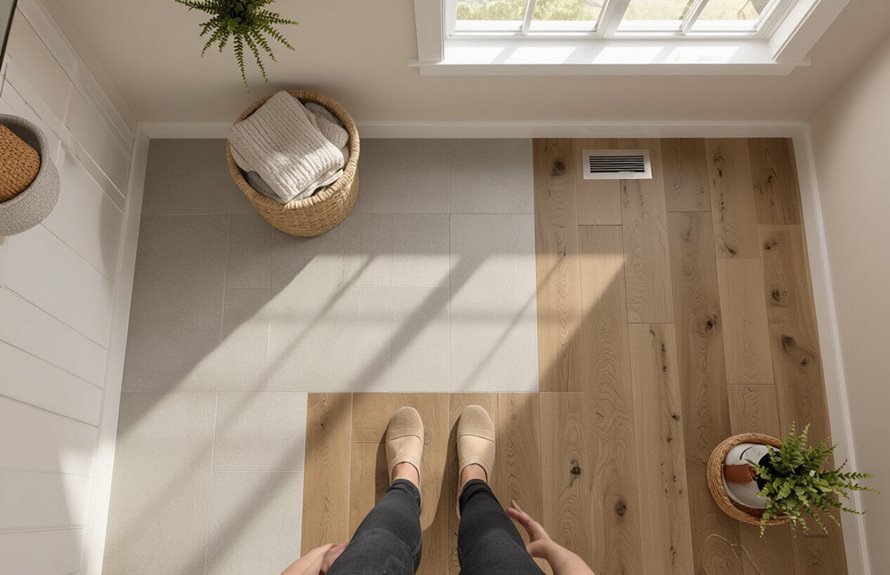
How will your floors handle damp basements, steamy bathrooms, or sudden spills? You should pick materials with high humidity tolerance and plan for moisture barriers where needed.
Consider how long exposure affects seams, finishes, and adhesives. Prioritize options that resist warping, mold, and stains, and think about installation methods that improve protection.
Check warranties and maintenance needs tied to moisture. Balance cost with long-term durability so you won’t face surprise repairs.
- Choose water-resistant or waterproof materials
- Install proper moisture barriers on concrete
- Verify humidity tolerance ratings
- Use mold-resistant underlayments
- Maintain adequate ventilation
Matching Flooring to Room Function
Moisture concerns will shape which rooms can handle certain floor types, but you’ll also want to match flooring to how each room is used.
Think about floor function: high-traffic entryways need durable, scratch-resistant materials; kitchens require surfaces that handle spills and are easy to clean; bedrooms can prioritize warmth and comfort.
Consider room activity—playrooms need impact-resistant, low-maintenance options, while home offices benefit from smooth, stable floors for chairs and equipment.
Match texture, slip resistance, and acoustics to daily use. Prioritize longevity and practicality for each room rather than chasing a single look everywhere.
Budgeting for Purchase and Installation
Set a clear budget before you start shopping so you can balance material quality, installation costs, and any unexpected expenses.
Decide what you can pay upfront and what you might finance; explore financing options from retailers or lenders.
Get multiple quotes to compare labor and materials, and ask for itemized estimates to spot hidden fees.
Prioritize high-traffic rooms if funds are limited, and plan for underlayment or repairs.
Keep a 10% contingency for surprises.
- Compare material price per square foot
- Request at least three installation bids
- Ask about warranties and what they cover
- Factor in removal and disposal
- Track receipts for budgeting
Exploring Eco-Friendly and Sustainable Options
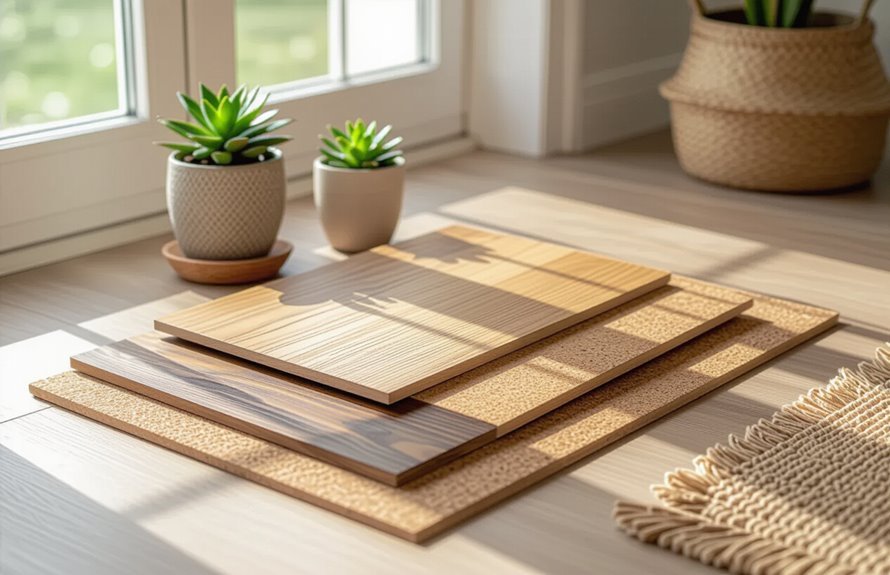
When you choose flooring with sustainability in mind, you cut environmental impact and often get healthier indoor air and longer-lasting materials; consider recycled materials and bamboo flooring for low-impact choices.
Check eco certifications and research sustainable brands to verify claims. Look for natural finishes that avoid VOCs and learn about cork benefits—durable, renewable, and comfortable.
Evaluate life cycle impacts and compare carbon footprint from production and transport. Favor products with energy efficiency in manufacture and seek biodegradable options where disposal matters.
You’ll make a smarter, greener choice by prioritizing verified sustainability over marketing buzz.
Balancing Comfort and Underfoot Warmth
You want flooring that feels good underfoot and stays warm without sacrificing durability.
Consider cushioning and surface softness—like thicker vinyl or cork—for daily comfort, and check whether your choice works with underfloor heating systems.
That way you get a cozy surface that performs with your home’s heating.
Cushioning and Surface Softness
Although hard surfaces look sleek, they’ll feel cold and unforgiving underfoot unless you add cushioning. Choosing flooring with the right softness — whether plush carpet, cushioned vinyl, or underlayment beneath hardwood or tile — makes your floors comfy and helps trap warmth so rooms feel inviting year-round.
You want soft flooring options and effective cushioning materials to match each room’s use. Consider durability, maintenance, and thickness to balance comfort with function. Test samples in your space and walk on them barefoot. Ask about warranties and hypoallergenic choices.
- Plush carpet for bedrooms
- Cushioned vinyl for kitchens
- Foam underlayment under laminate
- Cork for natural resilience
- Rubber for utility areas
Underfloor Heating Compatibility
Soft cushioning helps rooms feel warmer, but pairing your flooring with underfloor heating lets you feel that warmth directly underfoot.
You’ll want materials with good radiant heat compatibility so heat moves evenly and efficiently. Tile, stone, and engineered wood usually offer excellent underfloor heating efficiency; thick carpets or heavy padding can block heat and reduce performance.
Check manufacturer specs, especially maximum temperatures and recommended adhesives. If you’re renovating, coordinate installer plans so heating mats or pipes sit close to the surface.
That balance gives you cozy underfoot warmth without sacrificing durability or energy use.
Choosing Styles That Complement Your Interior Design
When picking flooring, consider how patterns, colors, and textures will support the room’s purpose and existing furnishings; they’ll either anchor your design or clash with it.
You want color harmony and style cohesion across spaces, so match flooring warmth and scale to furniture and architectural details. Think about contrast for focal areas, continuity for open plans, and durable finishes for high-traffic rooms. Test samples in different light before deciding.
- Coordinate wood tones with cabinetry and trim
- Use consistent flooring to unify open-plan areas
- Balance bold textures with simple furnishings
- Choose finishes that suit room activity
- Consider connector pieces between rooms
Color and Pattern Selection Tips
Think about how your flooring color and pattern will match your existing decor so it feels cohesive.
In smaller rooms you’ll want lighter, simpler patterns to keep the space feeling open, while larger rooms can handle bolder colors and textures.
Test samples in different light to make sure scale and tone work with your furniture.
Match Existing Decor
Start by evaluating the dominant colors and patterns already in the room so you can choose flooring that supports, not competes with, your existing decor.
Use color psychology to pick tones that set the mood—warm woods for cozy, cool grays for calm—and aim for design cohesion across furniture, rugs, and walls.
Test samples in different light, and think about contrast: subtle matches blend, bold contrasts add drama.
Consider pattern repetition without overcrowding. Keep finishes consistent for flow.
- Compare samples against major furniture pieces
- Test at morning and evening light
- Match undertones, not just hues
- Repeat a single pattern sparingly
- Prioritize visual balance
Scale With Room Size
Pick flooring colors and patterns that respect the room’s proportions so your space feels balanced rather than overwhelmed.
You’ll want larger planks or bolder patterns in roomy areas to maintain scale aesthetics, while small rooms benefit from narrow boards or subtle textures to elongate sightlines.
Consider directionality: running planks lengthwise can make a short room seem longer.
Keep contrast moderate with walls and furnishings to preserve cohesive room proportions.
If you’re unsure, sample several options in different lighting and stand back; real-life viewing reveals how color, pattern, and scale aesthetics interact before you commit.
Sound Insulation and Acoustics Considerations
How loud will footsteps, music, or appliances seem once you’ve installed new flooring? You’ll want materials and setup that control impact and airborne noise.
Consider underlayment choices and surface materials, and use soundproofing techniques where needed. Acoustic panels can help on walls or ceilings if echoes persist.
- Choose dense flooring (vinyl, cork, carpet) to reduce impact.
- Add resilient underlayment for impact isolation.
- Use rugs in high-traffic zones to dampen footsteps.
- Seal gaps around edges and connections to limit sound transfer.
- Combine flooring choices with room treatments for balanced acoustics.
Assessing Subfloor and Structural Requirements
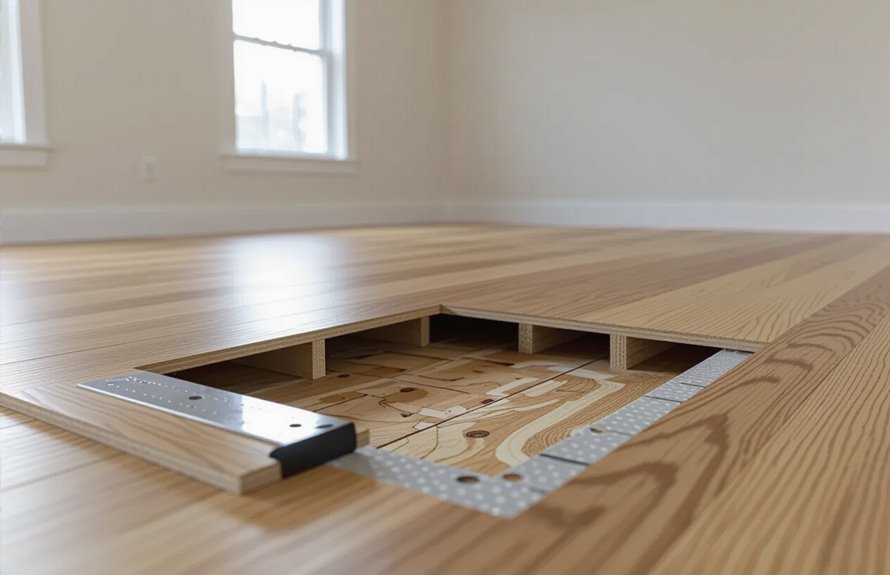
Sound control measures work best when the floor assembly is solid and properly supported, so before you pick a finish you should inspect the subfloor and structural framing for level, flatness, moisture, and load capacity.
You’ll use basic subfloor inspection techniques: visual checks for rot, tapping to detect voids, a straightedge for flatness, and a moisture meter near seams.
For structural integrity assessment, look for sagging joists, inadequate spans, or modified load paths and consult span tables.
Document issues, prioritize repairs, and plan reinforcement or leveling so your chosen flooring performs safely and lasts.
Installation Methods: DIY vs. Professional
Want to tackle installation yourself or hire a pro? You’ll weigh DIY challenges against Professional expertise.
Consider Cost considerations, Time investment, Skill level, and Tool requirements before deciding. Match your abilities to Project scope and remember Warranty implications may differ between DIY and pro installs.
- Assess your Skill level honestly and list Tool requirements.
- Estimate Time investment including prep and cleanup.
- Compare Cost considerations: rental vs. labor.
- Gauge DIY challenges for layout, cuts, and subfloor fixes.
- Value Professional expertise for complex Project scope and guaranteed finishes.
Warranty and Manufacturer Guarantees
Because warranties vary widely, you should read the fine print before you buy so you know what’s covered, for how long, and what voids the guarantee.
Check warranty types—limited, prorated, lifetime—and understand exclusions like moisture, improper installation, or misuse.
Verify manufacturer reputation by reading reviews, industry certifications, and claim-response history.
Ask how repairs, replacements, and labor are handled, and whether transfers are allowed if you sell your home.
Keep purchase records and registration receipts to support claims.
A clear, reputable guarantee protects your investment and helps you choose flooring that lasts without surprise costs.
Pet-Friendly Flooring Solutions
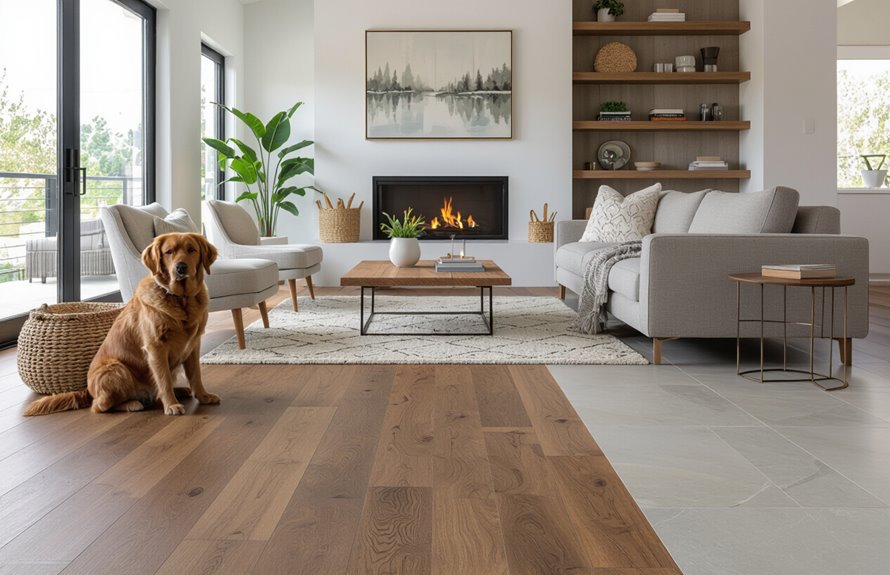
When you’ve got pets, flooring needs to stand up to claws, accidents, and extra traffic without hiding under maintenance, so choose materials that are durable, water-resistant, and easy to clean.
You want pet proof materials that offer scratch resistance, quick cleanup, and traction to prevent slips. Consider textured surfaces and sealed seams to block odors and moisture. Match finish to your pet’s activity level and your cleaning routine.
- Luxury vinyl plank: waterproof, forgiving
- Porcelain tile: highly durable, easy wash
- Engineered hardwood: better scratch resistance than solid
- Bamboo: tough, sustainable option
- Sealed concrete: stain- and water-resistant
Allergy-Friendly and Hypoallergenic Choices
For allergy-friendly flooring, choose hard, nonporous surfaces that won’t trap dust and allergens.
Pick low-VOC finishes to keep indoor air healthier, especially if anyone in your home has sensitivities.
Look for easy-to-clean textures so you can remove pollen, pet dander, and other irritants with minimal effort.
Hard, Nonporous Surfaces
Many homeowners prefer hard, nonporous flooring because it’s easy to keep clean and doesn’t trap common allergens like dust, pollen, or pet dander.
You’ll find ceramic tiles and porcelain surfaces resist moisture and staining, so you can mop or vacuum frequently and reduce airborne irritants.
These floors work well in kitchens, bathrooms, and entryways where allergens gather.
Choose grout and sealants carefully to avoid trapping particles.
Maintain smooth finishes and promptly clean spills to prevent mold growth.
- Low-maintenance cleaning routines
- Durable against wear and scratches
- Hypoallergenic for sensitive occupants
- Compatible with radiant heat
- Wide style options
Low-VOC Finishes
Because off-gassing from paints, sealants, and adhesives can worsen indoor air quality, choosing low‑VOC finishes helps you keep allergen triggers and irritants to a minimum. You’ll notice fresher air, fewer headaches, and a calmer home when you select products with certified low voc benefits. Look for water‑based sealants, natural oil finishes, and adhesives labeled low‑VOC options to reduce odors and sensitivities. Prioritize certifications like GreenGuard or Ecologo. Enjoy the peace of mind that comes from safer materials and cleaner breathing spaces.
| Feel | Look | Relief |
|---|---|---|
| Calm | Warm | Breathing easier |
| Safe | Natural | Less irritation |
Easy-to-Clean Textures
Texture matters when you’re managing allergies: smooth, tightly woven, or nonporous surfaces trap less dust and shed allergens more readily than plush or highly textured floors.
You want easy care options that reduce cleaning time and allergen buildup. Consider texture variations that balance grip and wipeability; low-profile weaves and sealed surfaces work best.
Choose materials that resist moisture and don’t harbor dust mites. Regular vacuuming with a HEPA filter and damp mopping will keep counts down. Match finish and grout choices to minimize crevices where particles collect.
- Vinyl plank (sealed, nonporous)
- Porcelain tile (smooth grout)
- Hardwood (finished, low-sheen)
- Low-pile wool blend
- Cork (sealed surface)
Resale Value and Market Appeal
When you’re choosing flooring, think about how it will affect your home’s resale value and market appeal; buyers often notice flooring first and judge a property’s upkeep by it.
You should track resale trends in your area and align choices with local market preferences — durable hardwood or neutral luxury vinyl often appeals widely.
Consider long-term maintenance, repair costs, and timeless styles that won’t date quickly. Avoid overly personalized colors or rare materials that narrow your buyer pool.
Testing Samples and Mockups at Home
Bring samples home and look at them in natural light throughout the day so you can see how color and texture change.
Lay full-size mockups or several planks in the actual room to judge scale and how seams will read against your furniture and baseboards.
That hands-on test will help you avoid surprises once the floor’s installed.
Test in Natural Light
How will that sample actually look in your room’s daylight? You’ll want to see the natural light impact on flooring appearance throughout the day.
Place samples near windows, observe morning, noon, and evening light, and note color shifts, sheen, and texture visibility. Don’t rely on photos; your eyes and the room’s light are decisive.
- Check samples at different times
- Move samples across sun and shade
- View from standing and seated angles
- Watch for glare and color fading
- Compare samples against wall and furniture tones
This method reveals true color, depth, and mood before you commit.
Try Full-Size Mockups
After checking samples in natural light, you’ll want to see a full-size mockup to confirm how the flooring reads across a real area.
Lay out full size samples in the rooms where they’ll be installed, spanning traffic paths and corners. Walk over them at different times to notice sheen, wear patterns, and color shifts.
Mockup advantages include revealing installation challenges, changeover issues, and how trim and furnishings interact with the floor.
You’ll catch surprises before committing, and you can tweak choices—grain direction, plank layout, or finish—based on actual sightlines. This reduces risk and boosts confidence in your final decision.
Seasonal and Climate-Based Flooring Decisions
Because your region’s temperature swings and humidity levels affect durability and comfort, choose flooring that suits both seasonal changes and daily life.
You’ll weigh climate considerations and seasonal trends when picking materials: prioritize humidity-resistant options in wet areas, choose stable woods for cold, and pick insulating carpets for chilly seasons.
Consider maintenance needs as seasons shift, and plan for expansion gaps where temperatures fluctuate.
- Use engineered hardwood in variable climates
- Choose vinyl or tile for humid rooms
- Pick low-pile carpet for insulation
- Allow expansion space for solid wood
- Seal and maintain finishes seasonally
Conclusion
You’ve weighed needs, materials and seasons, and now your home’s next chapter waits at your feet. Trust what feels right underfoot — the durable friend for busy mornings, the warm embrace on quiet evenings, the moisture‑tough companion for splashy days. Let practical sense guide choices, but listen to the room’s heart: the floor that sings with your life will anchor memories, brighten resale, and turn daily steps into a journey you’ll love.