How to Choose Energy-Efficient Appliances for Your Home
When choosing energy-efficient appliances, check trusted labels like ENERGY STAR for kWh/year and star scores, match capacity to your household, and prefer features such as inverter compressors, load sensing, or heat-pump tech. Compare lifecycle costs — purchase price plus expected energy and maintenance — and calculate payback using local electricity rates and rebates. Prioritize repairable, well‑warranted models and proper installation for peak performance, and keep going to uncover sizing tips, incentives, and operation strategies.
Understanding Energy Efficiency Ratings and Labels
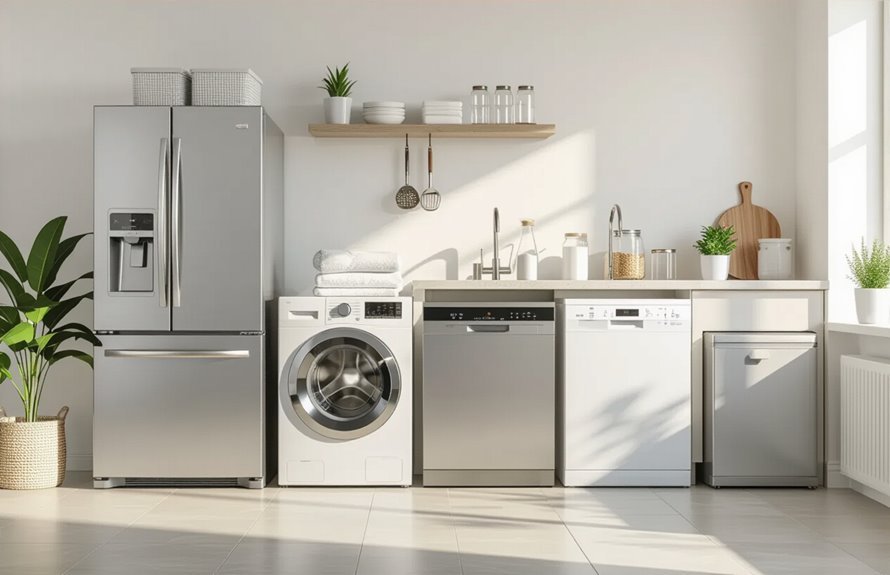
How do you know which appliance will save you the most energy and money? You read energy ratings and efficiency labels carefully.
Start by checking the label’s scale, estimated annual energy use, and cost figures so you can compare models quickly. Look for clear metrics like kWh per year or a star score, and note the test conditions so comparisons are fair.
Don’t assume bigger size means higher consumption efficiency; match capacity to your needs. Consider lifecycle cost, not just purchase price, and prioritize appliances with transparent ratings and labels that let you predict real-world savings reliably.
Comparing ENERGY STAR and Other Certification Programs
Curious which certification actually means lower energy bills? You’ll find ENERGY STAR benefits include stricter efficiency thresholds, independent testing, and clear labeling that helps you spot top-performing models.
When doing certification comparisons, check regional programs too—some cover local climate or grid factors that affect real-world savings.
Look for program transparency: test methods, update frequency, and rebate alignment. Don’t assume all labels are equal; some focus on emissions or materials rather than operational efficiency.
Use certifications as a shortcut, not the sole decision factor, and pair them with product specs and reputable reviews to choose wisely.
Calculating Long-Term Operating Costs vs. Purchase Price
When you’re weighing an appliance, compare its higher upfront cost to the expected energy and maintenance savings over time.
Calculate annual energy use from the appliance’s wattage or ENERGY STAR label, multiply by your local electricity rate, and include estimated maintenance.
Then estimate the payback period by dividing the price premium by the annual savings to see how long it takes to break even.
Upfront Cost vs. Savings
Deciding between a cheaper appliance and a more efficient—but pricier—model means comparing purchase price to the energy you’ll actually pay for over its life; you’ll want to estimate annual operating costs, factor in expected lifespan and maintenance, and then calculate the break-even point where higher upfront spending pays off.
| Item | Consideration |
|---|---|
| Purchase price | Initial outlay and rebates |
| Annual cost | Energy and routine maintenance |
| Lifespan | Years of reliable use |
| Break-even | When savings offset extra cost |
| Risk | Repair likelihood, residual value |
You’ll weigh upfront investment against long term benefits to pick the best financial and practical option for your home.
Energy Usage Calculations
Although the sticker price matters, you should calculate expected annual energy costs so you can compare models on total lifetime expense rather than just upfront outlay.
Start by checking rated power and estimated annual kWh, then multiply by your local rate to get yearly operating cost. Adjust that with realistic usage patterns—hours per day, seasonal changes, and standby time—to refine results.
Combine those figures into an energy consumption analysis for each model, and factor in maintenance differences that affect long-term efficiency. This lets you prioritize appliances that lower lifetime expenses, not just purchase price, when making choices.
Payback Period Estimation
How long will the energy savings cover the higher upfront cost of a more efficient appliance? You’ll run a payback analysis: subtract the efficient model’s higher purchase price from the baseline model, then divide by annual energy savings (kWh saved × local rate).
Include maintenance and rebates for accuracy. Compare the payback period to the appliance’s expected life to judge value.
Think of it as investment returns — shorter payback means quicker recovery and greater net savings over time. If payback seems long, factor in non-monetary benefits like comfort or noise reduction before deciding.
Assessing Appliance Size and Capacity for Your Household Needs
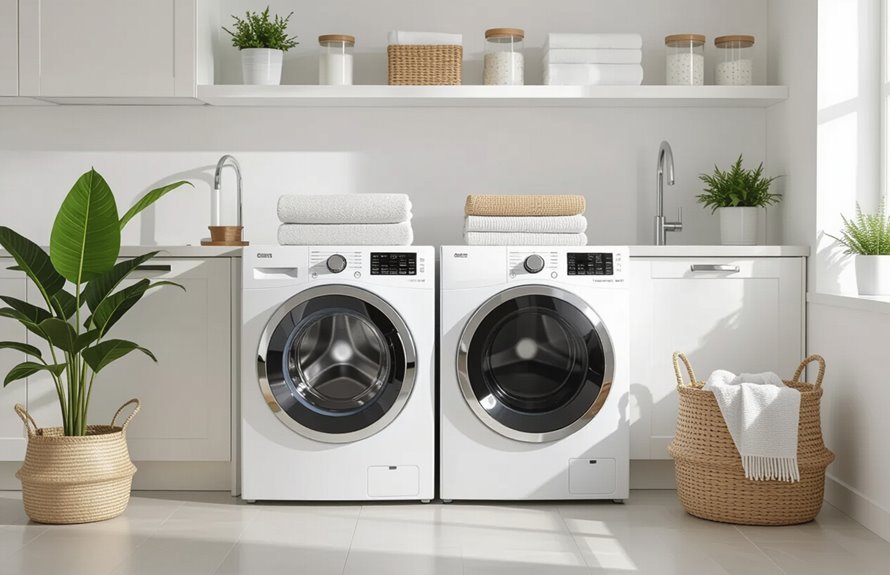
Wondering what size appliance best fits your household? You should match appliance dimensions to household requirements: measure installation space, allow clearance, and note door swings.
Consider capacity versus typical use — smaller loads waste energy if you run inefficiently, while oversized units cycle less efficiently. For laundry, match drum size to load frequency; for ovens, balance family meal size with empty-cavity waste.
Think long-term: future household changes, storage needs, and multiuse scenarios. Check manufacturer capacity ratings and real-world performance reviews.
Choosing the right size prevents wasted energy and guarantees appliances operate near their ideal efficiency.
Evaluating Refrigerator Efficiency Features and Technologies
Curious which refrigerator features actually cut energy use? You’ll want to compare models with efficient refrigerator cooling technologies like inverter compressors and multi-evaporator systems; they run steadier and use less power.
Look for energy efficient insulation—thicker, vacuum panels or high-R-value foams reduce compressor runtime.
Adjustable thermostat controls and smart defrost lower wasted cycles, while proper door seals prevent leaks.
Choose right-sized capacity for your habits to avoid overworking the unit.
Check ENERGY STAR ratings and real-world energy use on labels.
Together, these features help you pick a fridge that keeps food fresh with minimal electricity.
Choosing a High-Efficiency Washing Machine
Because laundry is one of the biggest energy and water users in most homes, choosing a high-efficiency washing machine can cut bills and shrink your environmental footprint without sacrificing cleaning power. You’ll look for energy efficient features like load-sensing, cold-water cycles, and high spin speeds. Compare washing machine brands for reliability, warranty, and local service. Check capacity vs. typical loads and ENERGY STAR ratings. Consider front-loaders for water savings but weigh maintenance needs. Use the table to compare quick specs:
| Feature | Benefit | Note |
|---|---|---|
| Load-sensing | Saves water | Automatic |
| High spin | Shorter dry time | Cuts energy |
| ENERGY STAR | Verified efficiency | Look for label |
| Capacity | Matches loads | Avoid oversizing |
Selecting an Efficient Dryer and Moisture-Sensing Options
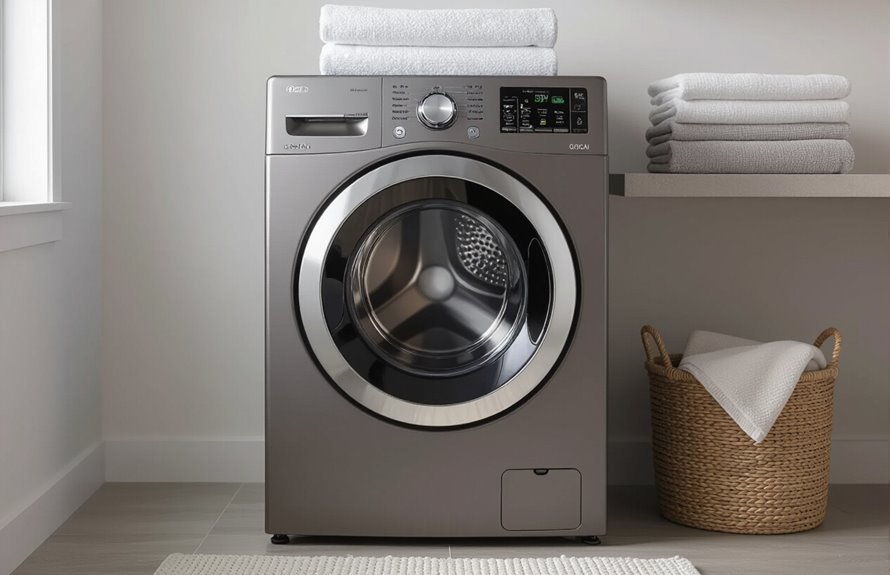
When you pick a dryer, prioritize models with moisture-sensing controls and high-efficiency features to cut run time and energy use without over-drying clothes.
Look for ENERGY STAR-rated heat pump or condenser dryers if available; they lower energy use versus conventional vented models.
Use moisture sensors to stop cycles precisely when clothes reach the target dryness, improving drying efficiency and extending fabric life.
Choose sensor modes for mixed loads, and avoid timed cycles except for special needs.
Check drum capacity and airflow design—larger drums and good ventilation reduce heat loss.
Regular lint-filter and vent maintenance keeps sensors accurate and efficiency high.
Picking Energy-Saving Dishwashers and Settings
When you’re choosing a dishwasher, look for models with dedicated energy-saving cycles that use lower temperatures and less water.
You can cut energy use further by filling the machine efficiently—arrange plates and pots to avoid blocking spray arms and run full loads instead of partial ones.
Also consider air-dry or eco-dry settings to save heat energy.
Energy-Saving Cycles
Curious which dishwasher cycles actually save energy?
You’ll benefit from energy saving innovations like sensor washes and low-heat drying — they cut water and electricity by tailoring run time and temperature.
Look for cycle optimization features that select shorter, cooler cycles for light loads.
- Sensor wash: detects soil, reduces time and heat.
- Eco or energy-saver: uses lower temp and extended soak to clean efficiently.
- Quick wash: best for lightly soiled items, uses less energy per use.
You should choose cycles matching soil level and avoid default heavy settings to maximize savings.
Efficient Loading Strategies
You’ve picked the right cycle—now load your dishwasher so it actually saves energy. Place similar items together, avoid blocking spray arms, and don’t pre-rinse. Use load optimization: fill racks fully but not overcrowded. Adjust the surfacing for tall items and use the eco setting when capacity’s right. Good appliance organization shortens runs and cuts water heating.
| Area | Tip |
|---|---|
| Top rack | Cups, small bowls angled |
| Bottom rack | Plates, pots facing center |
| Cutlery | Mixed, handles down |
| Large items | At sides, not blocking |
Run full loads and skip heat-dry to maximize savings.
Selecting Efficient Heating, Ventilation, and Air Conditioning Units
Choosing the right HVAC system can cut your energy bills and improve indoor comfort, so focus on size, efficiency ratings, and features that match your home’s needs.
You should compare SEER and AFUE numbers, consider heat pump options for mild climates, and size units to avoid short cycling.
Prioritize models with variable-speed compressors, smart thermostats, and high-efficiency filters.
Plan regular HVAC maintenance to keep efficiency and extend lifespan. Look for ENERGY STAR and local rebates to offset costs.
- Match capacity to home load
- Choose high-efficiency features
- Schedule routine professional maintenance
Choosing Energy-Efficient Water Heaters and Alternatives
If you want lower bills and reliable hot water, pick a water-heating solution that matches your household’s usage patterns and climate. You’ll weigh tankless options for on-demand heat, heat pump water heaters for efficiency in moderate climates, and solar heaters where sunlight’s abundant. Consider installation cost, recovery rate, and maintenance. Choose capacity to avoid shortfalls and insulate tanks and pipes. Here’s a quick comparison:
| Type | Best for | Note |
|---|---|---|
| Tankless | Small families | Lower standby loss |
| Heat pump | Moderate climates | High efficiency |
| Solar heaters | Sunny areas | Needs backup |
Make choices based on usage and budget.
Identifying Efficient Cooktops, Ovens, and Ranges
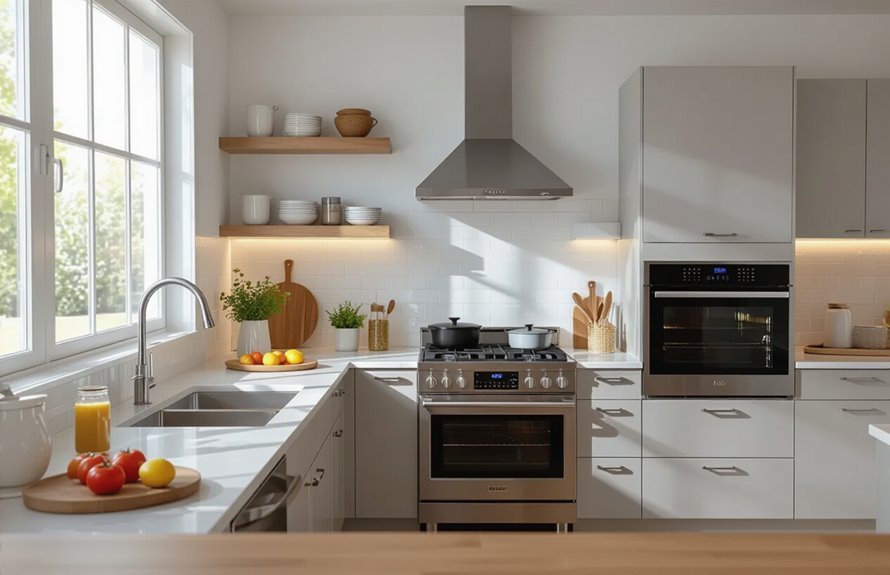
When you compare cooktops, note that induction is typically more energy-efficient than gas because it heats cookware directly and wastes less heat.
For ovens, look for features like convection cooking, good insulation, and precise temperature controls to cut cooking time and energy use.
We’ll cover how those options affect performance and operating costs so you can choose what’s best for your kitchen.
Induction vs. Gas Efficiency
Although both gas and induction have fans, you’ll save more energy and heat your kitchen less with induction cooktops because they transfer heat directly to the pan instead of warming the air.
You’ll notice induction efficiency in faster boiling, precise control, and less standby loss.
Gas efficiency matters if you prefer flame control, but much energy escapes around the pan.
Choose induction to cut wasted heat and cooking time; choose efficient gas models only if you need specific cooking characteristics and guarantee good ventilation.
- Faster heat-up
- Less wasted energy
- Better temperature control
Oven Energy-Saving Features
Moving from cooktop choice to ovens, you’ll find that several design features cut energy use and keep kitchens cooler.
Choose ovens with thick oven insulation to retain heat longer, so you bake at lower temperatures and finish dishes using residual warmth.
Look for convection technology—fans circulate heat for even cooking, reducing time and energy.
Dual- or tri-ring burners on ranges let you match flame size to cookware.
Self-cleaning cycles that lock and concentrate heat can be more efficient than manual methods.
Also pick models with accurate thermostats and quick-preheat settings to avoid wasted energy.
Understanding Smart Appliances and Energy Management Integration
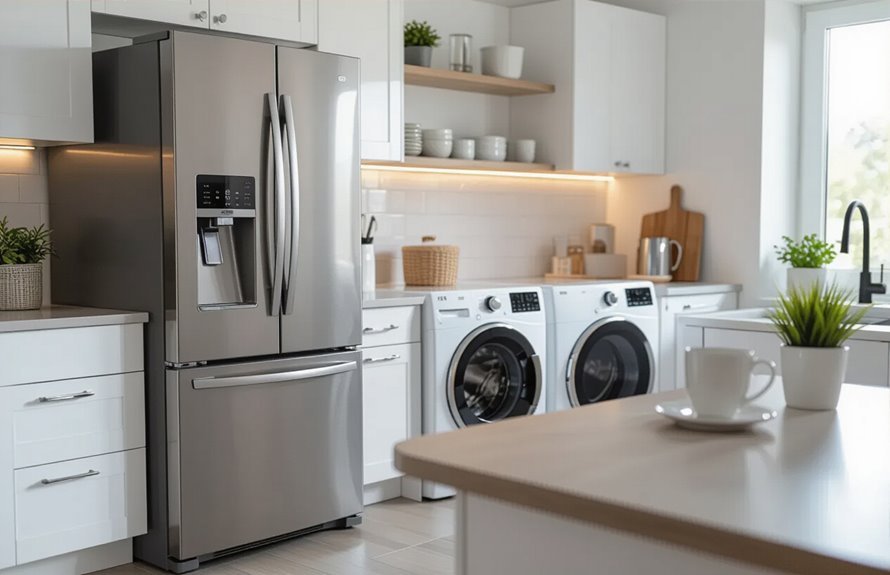
If you want appliances that save energy and simplify control, smart models connect to your home network and share data with energy management systems so you can monitor usage, set schedules, and optimize performance.
You’ll get real-time energy monitoring and benefit from smart home integration that ties appliances to thermostats, lights, and your utility’s demand-response programs.
Choose devices with open standards and strong privacy controls so they work with multiple platforms.
Look for clear dashboards and automated routines that reduce waste without constant attention.
Start with one or two key appliances and expand as you see savings.
- Compare compatibility
- Check dashboards
- Verify privacy
Considering Standby Power and Phantom Load Reduction
When appliances stay plugged in, they can draw power even when you’re not using them, a phenomenon called standby or phantom load that quietly adds to your energy bills.
You can cut standby power by choosing models with true off switches or low standby ratings, checking labels, and preferring ENERGY STAR certified devices.
Use smart power strips or unplug chargers and entertainment gear when idle to eliminate phantom load.
For complex setups, measure draw with a plug-in meter to target biggest offenders.
Small changes add up, lowering consumption and bills without sacrificing convenience.
Prioritizing Durable Designs and Repairability for Longevity
Choose appliances that’re built to last so you won’t be replacing them every few years.
Look for models with easily accessible components and clear repair guides so you can fix problems instead of tossing the unit.
Prioritizing durability and repairability saves money, reduces waste, and keeps energy performance consistent over time.
Built to Last
Because a longer-lasting appliance cuts waste and saves you money, prioritize durable construction and repairability when shopping.
You’ll want a clear durability assessment and look for longevity features like reinforced frames, quality motors, and corrosion-resistant finishes. Choose brands with good warranties and readily available parts so replacements aren’t needed prematurely.
- Inspect build materials and user reviews for real-world lifespan.
- Favor modular designs and documented service manuals.
- Check warranty terms, spare-part availability, and brand reliability.
Being deliberate up front means fewer replacements, lower lifetime energy use, and better value for your household.
Easy to Repair
Long-lasting construction matters, but you’ll get the biggest lifetime savings if an appliance’s parts are easy to access and replace.
You should favor models with modular components, clear service manuals, and widely available spare parts so local technicians can fix them affordably.
Check warranty terms and manufacturer repair options before buying, and prioritize brands known for long-term support.
Learn basic maintenance tips like cleaning filters, tightening connections, and scheduling periodic checks to prevent minor issues from becoming major failures.
When you choose repairability over disposability, you extend appliance life, reduce waste, and save energy and money over time.
Calculating Payback Periods and Return on Investment
Payback period and return on investment (ROI) tell you how quickly an energy-efficient appliance pays for itself and how profitable that purchase is over time.
Use payback analysis and investment evaluation to compare models. Calculate annual energy savings, subtract extra purchase cost, then divide added cost by yearly savings to get years to payback.
For ROI, divide net savings over expected life by initial extra cost.
- Estimate annual energy savings and operating costs.
- Compute payback period (extra cost ÷ annual savings).
- Calculate ROI (total net savings ÷ extra cost) for the appliance lifespan.
Incentives, Rebates, and Tax Credits for Energy-Efficient Purchases
When you’ve calculated payback and ROI, factor in incentives, rebates, and tax credits since they can considerably shorten your effective payback period and boost returns. Check government programs and utility energy rebates for purchase discounts, explore federal and state tax savings, and compare loan options that bundle financial incentives. Keep documentation and eligibility rules handy, and stack offers when allowed. Below is a quick comparison:
| Source | Typical benefit | How to access |
|---|---|---|
| Federal tax | Tax savings | IRS forms/apply |
| Utility rebate | Purchase discounts | Utility portal |
| State program | Financial incentives | State energy office |
| Lender | Loan options | Banks/credit unions |
Sizing and Installing Appliances for Optimal Performance
You’ll get the most savings and comfort when you choose an appliance with the right capacity for your household rather than one that’s too big or small.
Make sure vents, clearances, and placement support airflow and safety so the unit runs efficiently.
Also verify electrical and gas service, circuit sizing, and hookups meet the manufacturer’s requirements before installation.
Correct Appliance Capacity
Although bigger units can seem like a safe choice, choosing the right appliance capacity prevents wasted energy and poor performance. You should match appliance sizing to your household requirements so units run efficiently and last longer.
Consider usage patterns, space constraints, and budget when selecting capacity.
- Calculate daily and weekly use to pick a capacity that meets demand without oversizing.
- Compare energy ratings for models in the appropriate size to avoid higher operating costs.
- Consult manufacturer load charts or a technician to confirm the right capacity for your lifestyle and avoid unnecessary energy waste.
Proper Venting and Placement
How should you position and vent appliances to maximize efficiency and safety?
Place appliances where airflow is unobstructed and near existing ventilation systems to reduce duct length and energy loss. Keep clearances per manufacturer guidance so units draw and expel air properly; cramped spaces make compressors and burners work harder.
Position laundry and range vents to exit outdoors, avoiding recirculation in living areas. Consider elevation and room layout—cold basements or hot attics can affect performance—while ensuring easy access for maintenance.
Thoughtful appliance placement and correct venting lower energy use, extend lifespan, and reduce moisture or combustion-related risks in your home.
Electrical and Gas Requirements
1 key step in sizing and installing appliances is matching their electrical and gas demands to your home’s capacity and safety standards.
You should check nameplate specs, circuit amperage, breaker size, and fuel line sizing before purchase. Hire a licensed electrician or gas fitter when in doubt to meet code and avoid hazards.
Verify ventilation and clearance for gas appliances and guarantee dedicated circuits for high-draw electric units. Keep documentation and permits for resale value and inspections.
Follow manufacturer installation instructions to maintain efficiency and warranties; correct electrical requirements and gas requirements prevent performance issues and safety risks.
- Verify nameplate specs and breakers
- Use licensed pros for hookups
- Keep permits and manuals
Evaluating Noise Levels and Comfort Trade-Offs With Efficiency
Wondering how quiet your new appliance will be once you prioritize energy efficiency? You’ll weigh noise reduction against performance: some efficient compressors or fans run steadily at lower RPMs, cutting hum but occasionally producing higher-pitch tones.
Test models in-store or check decibel ratings and user reviews to judge real-world sound. Consider placement, insulation, and vibration pads to improve comfort balance without sacrificing savings.
For HVAC and refrigerators, variable-speed motors often offer the best compromise. Prioritize features that match your tolerance for sound and desired comfort, and remember quieter models can sometimes cost more upfront yet save energy long-term.
Lifecycle Environmental Impact and Recycling Considerations
When you pick an energy-efficient appliance, consider its full lifecycle—from raw-material extraction and manufacturing to use, repairability, and end-of-life recycling—because long-term environmental impact depends on more than just operating watts.
You should check lifecycle analysis data, material toxicity, and expected lifespan. Look for modular designs that let you repair or upgrade components.
Verify manufacturer take-back programs and local recycling options to avoid landfill and recover valuable metals. Choose models with clear parts availability and documented disassembly.
Balance energy savings with embodied carbon to make choices that reduce total environmental harm.
- Compare lifecycle analysis summaries
- Prioritize repairable designs
- Confirm recycling options
Creating a Home Appliance Upgrade Plan and Timeline
As you plan upgrades, start by mapping your current appliances, their ages, energy use, and repair history so you can prioritize replacements that cut operating emissions and cost.
Next, list appliances by urgency: failed items, those near end of appliance lifespan, and high-energy devices.
Set a realistic timeline, spacing purchases to manage cash flow and avoid disposal bottlenecks.
Create an upgrade budgeting spreadsheet with estimated purchase, installation, and recycling costs plus expected energy savings.
Seek rebates and off-peak sales to stretch funds.
Review the plan annually, adjusting priorities as prices, needs, or technology change.
Conclusion
You’ve learned to read labels, weigh long-term costs, and match capacity to your life — now act. Choose ENERGY STAR where it saves power, pick the right size so nothing’s wasted, and favor quiet, efficient models that blend into daily routines. Recycle old units, plan upgrades room by room, and track savings over time. Start small, think long-term, and turn smart purchases into steady comfort, lower bills, and a greener home.