40 Container Vegetable Garden Ideas for Creative Urban Growing
If you’re looking to maximize your urban gardening potential, consider options like vertical garden towers, hanging herb gardens, and window box planters. Recycled pallet planters and stackable pots are great for limited spaces, while mobile garden carts make it easy to relocate your plants. Glass jar terrariums add a touch of charm, and hydroponic container systems streamline the growing process. Discover these creative ideas and more as you transform your small space into a vibrant garden oasis.
DIY Wooden Crate Planters
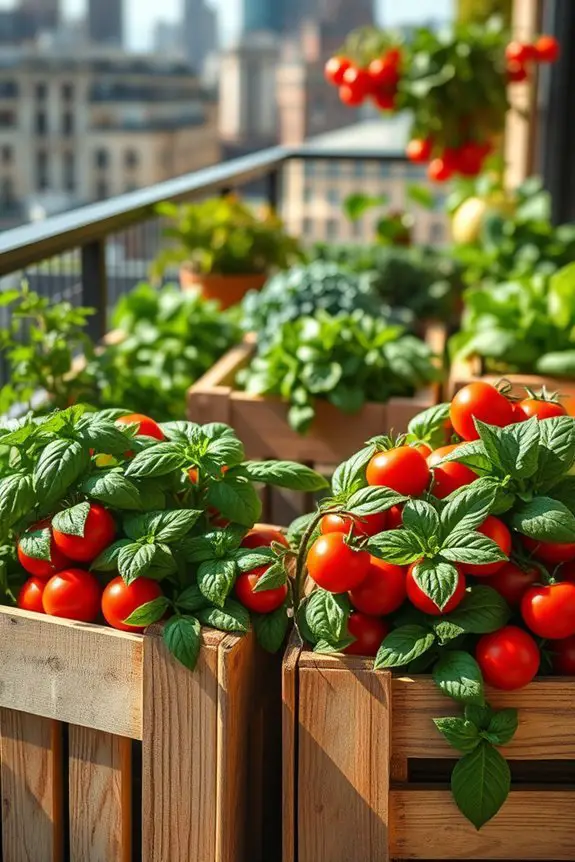
If you’re looking for a rustic and charming option for your container garden, DIY wooden crate planters can be a fantastic choice. You can easily find various wooden crate types at thrift stores or online marketplaces.
With a little creativity, you can customize your planters to fit your style. Stain or paint them to match your decor, or even add stencils or designs for a personal touch.
Make certain your crates have proper drainage by drilling holes in the bottom. Fill them with quality potting soil, and you’re ready to plant your favorite vegetables or herbs.
DIY wooden crate planters not only enhance your garden but also provide a unique way to express your gardening personality.
Concrete Block Garden
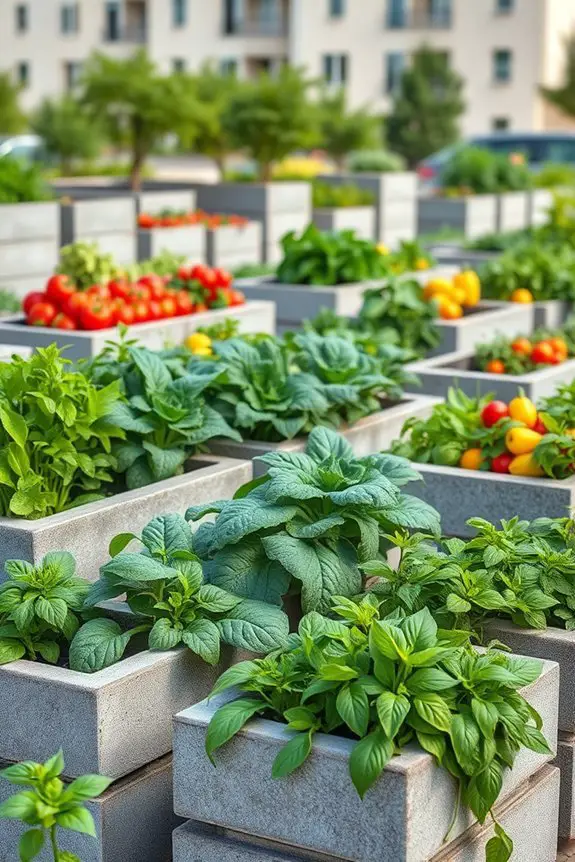
Ladder planters make great use of vertical space, but if you’re looking for a sturdy and versatile option, a concrete block garden could be your perfect solution.
With a unique concrete block design, you can create a durable structure that withstands the elements while providing ample room for planting. The open cavities in the blocks can hold soil for herbs, flowers, or vegetables, making it easy to customize your garden layout.
One of the significant concrete block benefits is its ability to retain moisture, which helps reduce the need for frequent watering.
Plus, you can easily stack and arrange the blocks to fit your available space, allowing you to grow your urban garden creatively and efficiently.
Window Box Tomato System
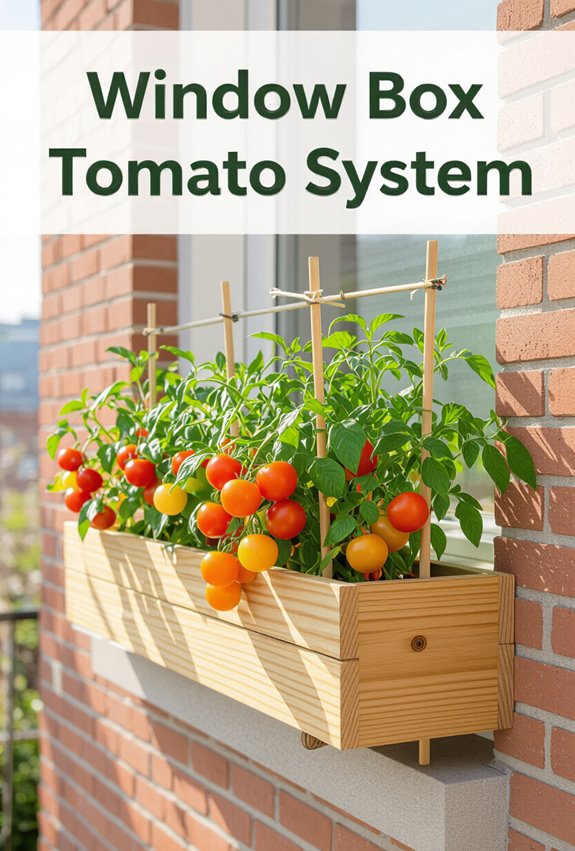
Because window boxes sit right outside your kitchen, they make an ideal spot for growing compact tomato varieties that give you fresh fruit with minimal space and fuss.
Choose a sturdy window box design with good drainage, rich potting mix, and a dwarf determinate plant.
You’ll water consistently, feed lightly, prune suckers sparingly, and monitor for pests—simple tomato care for urban kitchens.
Tiered Strawberry Barrel
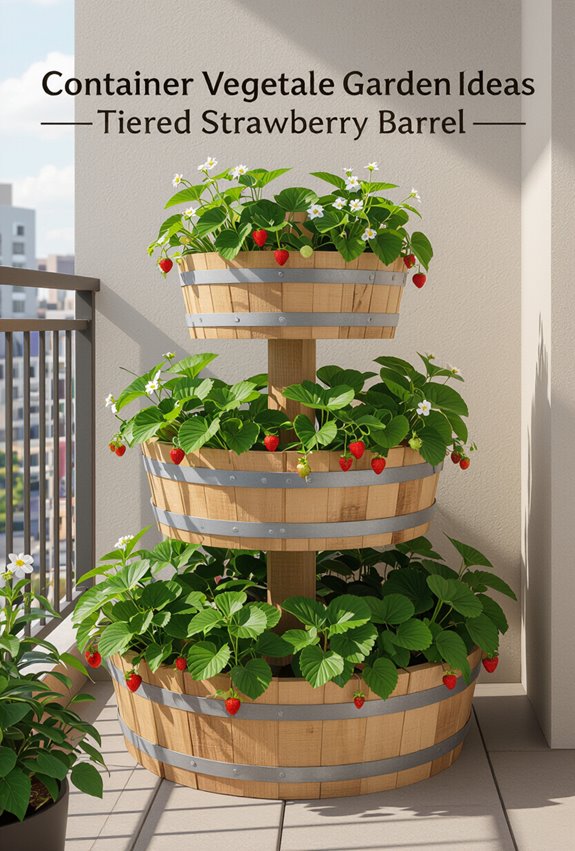
Think vertical: a tiered strawberry barrel stacks planting pockets so you get lots of berries from a small footprint.
You’ll choose strawberry varieties for flavor, season and runner habits, mixing everbearing and June-bearing types. Position the barrel in sun, water consistently, and inspect roots.
Regular barrel maintenance—refresh soil, prune dead leaves, and check drainage—keeps productivity high and plants healthy.
Self-Watering Bucket Planters
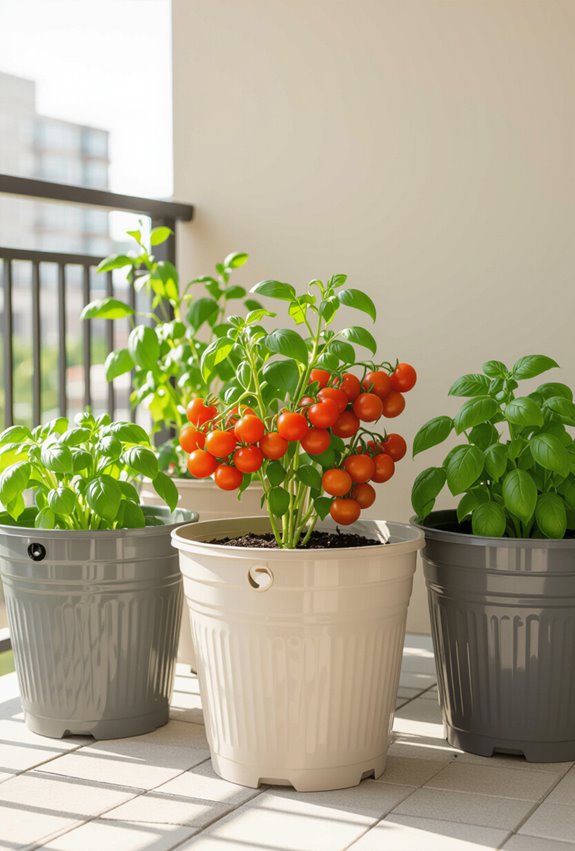
When you want low-maintenance containers that deliver consistent moisture, self-watering bucket planters are a smart choice—these DIY systems store water in a reservoir below the soil and wick it up to roots as needed.
You’ll appreciate self watering benefits like longer watering intervals and healthier roots.
Guarantee proper container drainage and a breathable soil mix, and check reservoirs to avoid overfilling or algae buildup.
Upcycled Shoe Organizer for Salad Greens
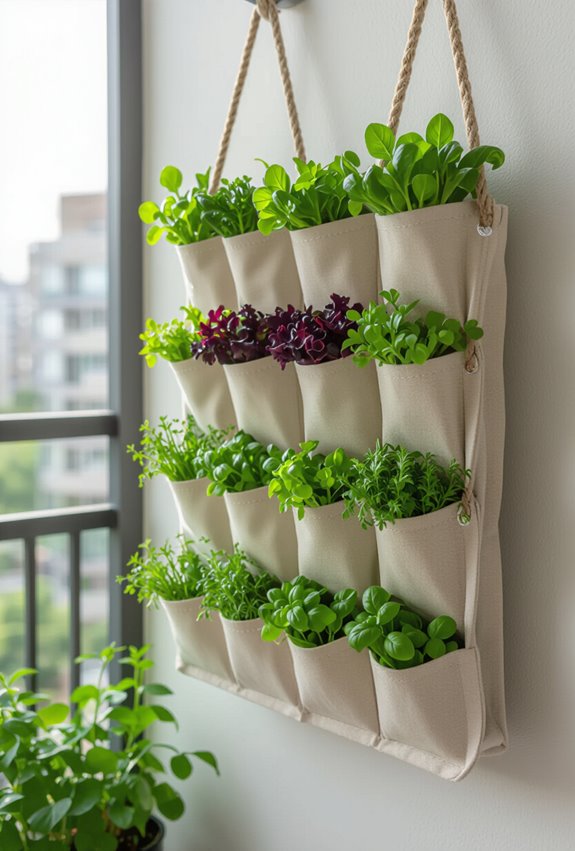
A hanging shoe organizer makes an excellent, space-saving salad green planter you can hang on a fence, railing, or sunny wall; simply line each pocket with drainage-friendly soil and plant compact lettuces, arugula, and baby spinach for easy harvests.
You’ll enjoy shoe organizer benefits like vertical spacing and easy access, and creative reuse turns discarded organizers into productive, tidy micro-gardens you can water and harvest quickly.
Rain Gutter Cucumber Troughs
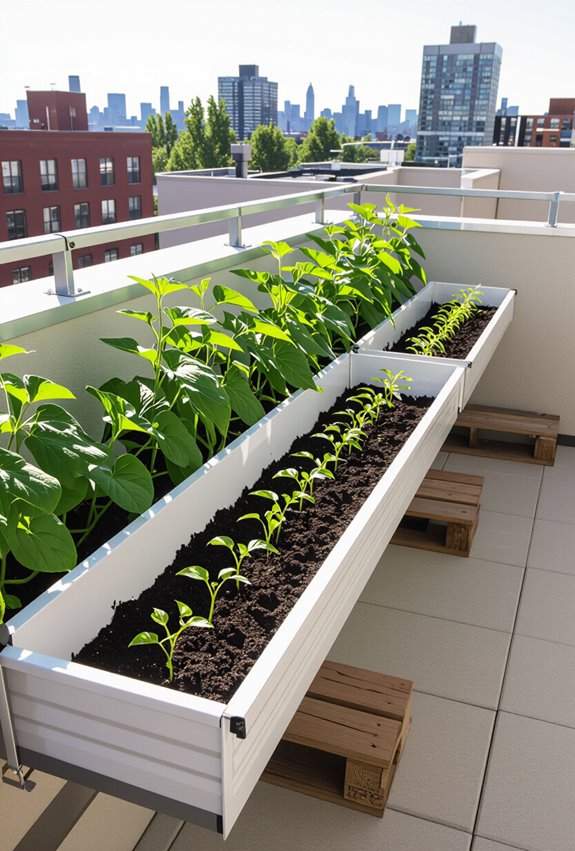
If you’re short on space but want to grow cucumbers, rain gutters make narrow, affordable troughs that let vines climb vertically and roots spread along a shallow bed.
You’ll mount gutters on brackets, add drainage holes and lightweight potting mix, and train vines onto a simple trellis.
Try compact cucumber varieties for gutter gardening to maximize yield in tight urban spots.
Trellised Tomato Cages in Containers
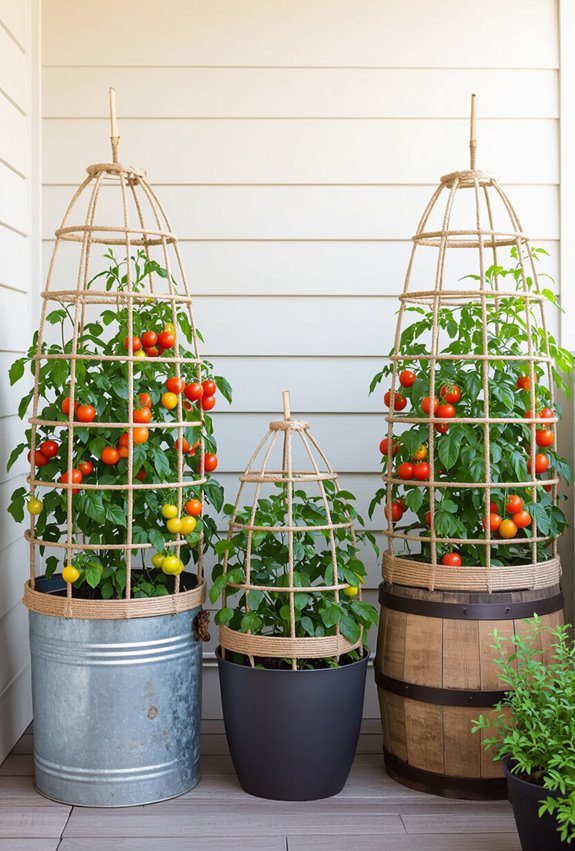
Although tomatoes love sun and space, you can get big harvests from containers by using sturdy trellised cages that keep plants upright, improve air flow, and make harvesting easier.
Choose a trellis design that fits pot size, anchoring cage legs deep for container stability.
Train vines with soft ties, prune suckers, and rotate stems to balance weight and maximize fruiting in your urban space.
Meso-Scale Raised Containers for Root Vegetables
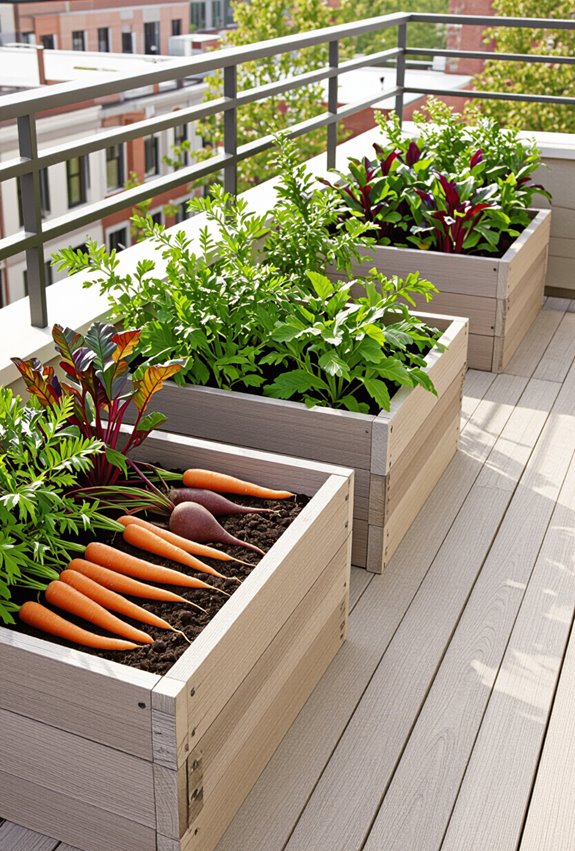
When you need deeper, more controlled soil for carrots, beets, and parsnips, meso-scale raised containers—about 18–24 inches deep and sized to hold multiple rows—give roots room to develop without taking over your patio.
Choose root vegetable varieties suited to container depth considerations, use loose, well-draining mix, space rows tightly, and rotate crops yearly to maintain fertility and prevent pests.
Reclaimed Crate Root Vegetable Beds
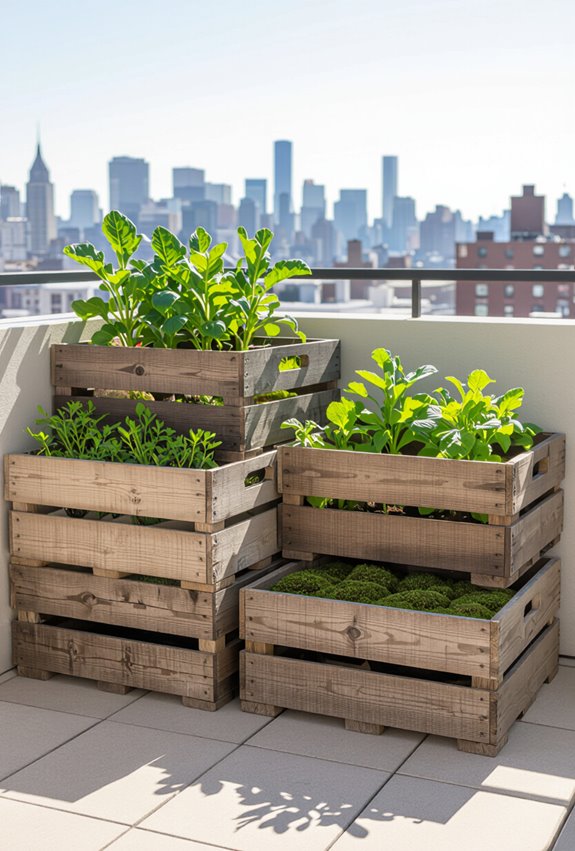
Reclaimed crate root vegetable beds give you a low-cost, rustic option for growing carrots, beets, radishes, and other roots in tight or raised spaces.
Use reclaimed materials and DIY planters with good container soil and drainage solutions.
Follow urban gardening tips: choose root vegetable varieties, plan seasonal planting, and apply creative designs that boost garden aesthetics while supporting sustainable gardening.
Stackable Modular Planter System
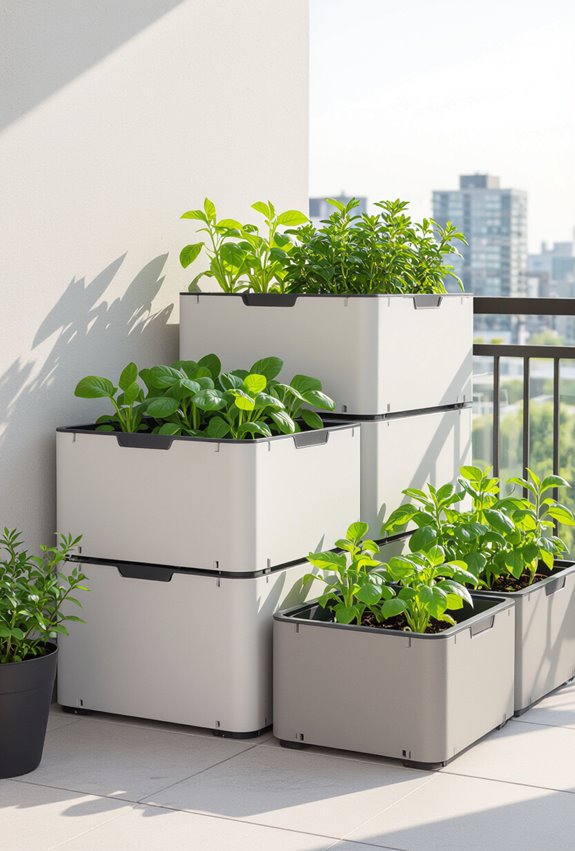
If you liked the rustic charm of crate beds but need more flexibility and vertical space, a stackable modular planter system gives you compact, scalable planting options for patios, balconies, or small yards.
You can mix stackable planters to customize height, rotate crops easily, and maximize sun exposure. Modular gardening saves floor area, simplifies watering, and makes harvests accessible without bending or heavy lifting.
Hanging Shoe Planter for Microgreens
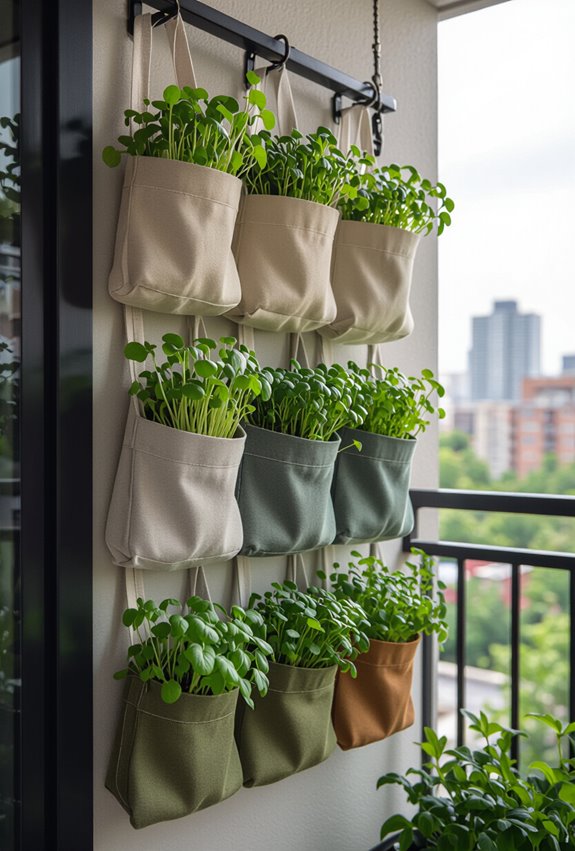
Try hanging a shoe planter to turn unused wall or balcony space into a vertical microgreen farm that’s lightweight, affordable, and easy to maintain.
You’ll enjoy shoe planter benefits like space-saving and drainage control. Fill pockets with seed mix, water gently, rotate for light, and monitor humidity.
With simple microgreens care routines, you’ll harvest fast, fresh greens even in tiny urban spots.
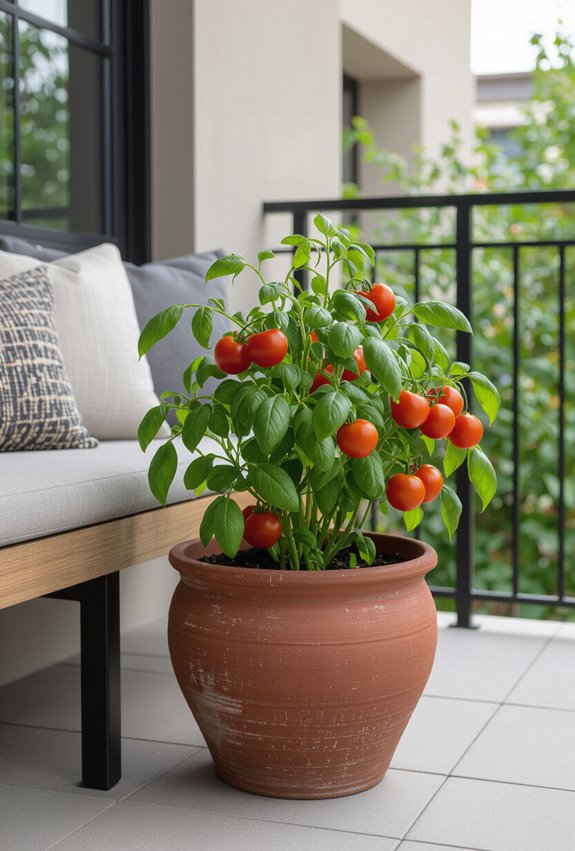
Large Clay Pot Pepper Station
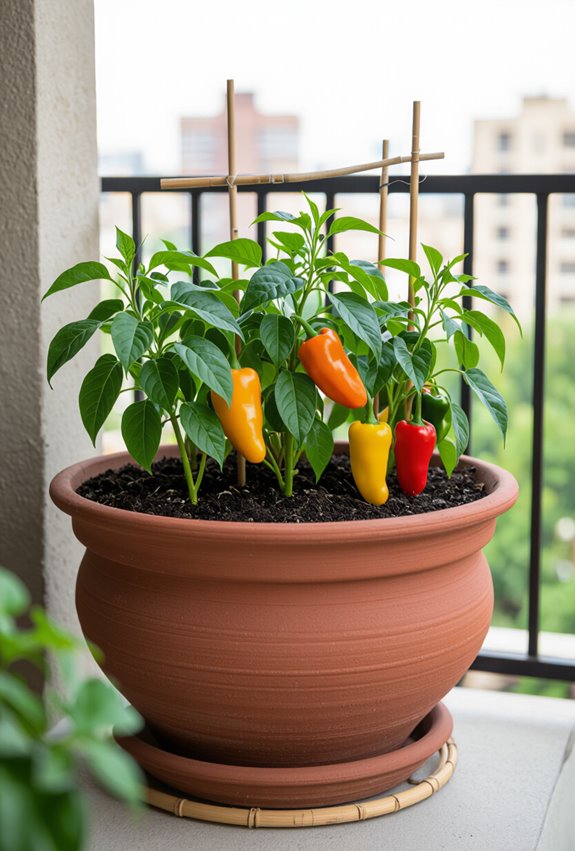
Think of a Large Clay Pot Pepper Station as a focused, productive spot where you can grow multiple pepper varieties in a single container.
Choose compact plants, space them for airflow, and use rich potting mix.
Guarantee excellent pot drainage with ample holes and a gravel layer.
Water consistently, feed lightly, and rotate the pot for even sun exposure to maximize yield.
Window Sill Microgreen Trays
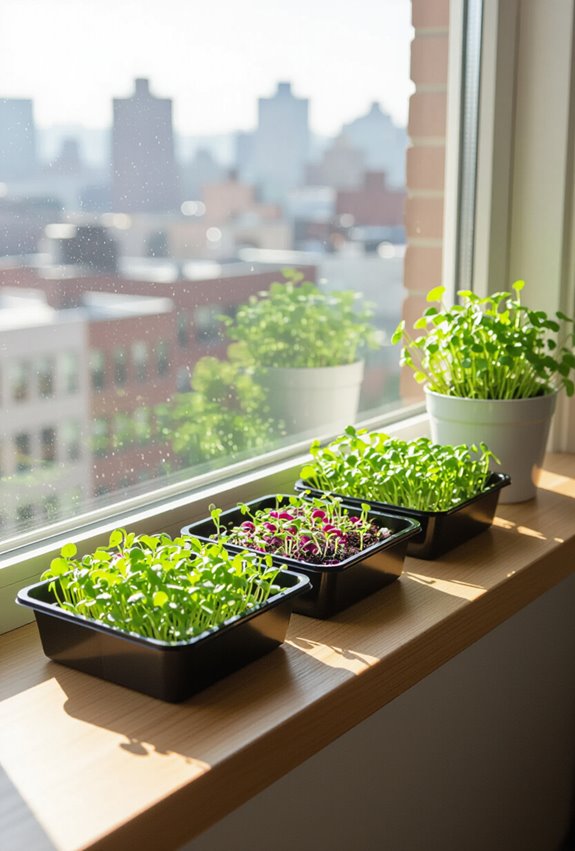
Sunlit trays on your window sill let you grow nutrient-dense microgreens year-round in just a few square inches of space.
You’ll pick compact microgreen varieties like radish, broccoli, and basil, sowing shallow trays, misting daily, and harvesting in 7–14 days.
Enjoy intense flavor and clear nutrient benefits in salads, sandwiches, and smoothies without bulky equipment or outdoor space.
Elevated Planter Boxes for Accessibility
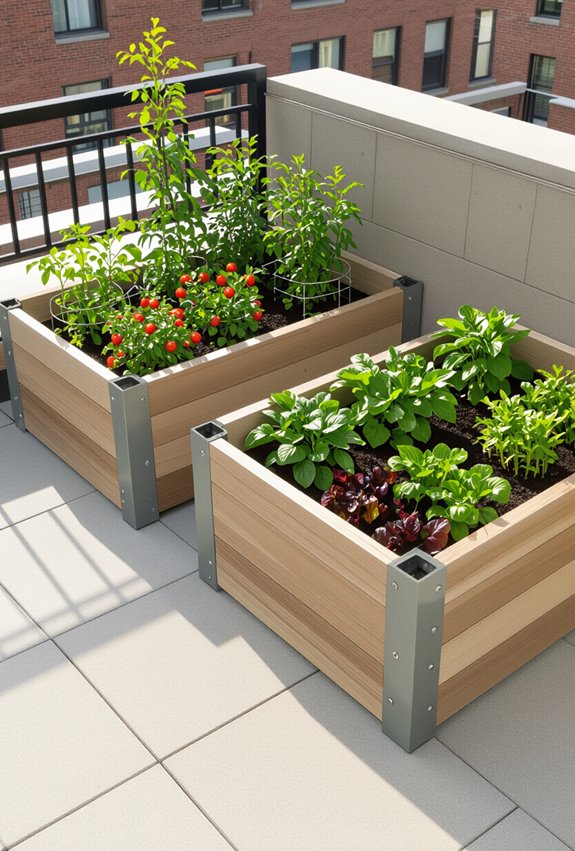
Microgreens on a windowsill are great for tight spaces, but raised planter boxes bring the garden to a comfortable height so you can work without bending or kneeling.
You’ll love accessible gardening with ergonomic design: choose raised planters with adjustable planter height, mobility features and sturdy edges.
These space saving solutions enhance container gardening, boost vegetable accessibility and deliver lasting gardening comfort and urban accessibility.
Herb Spiral in a Barrel Half
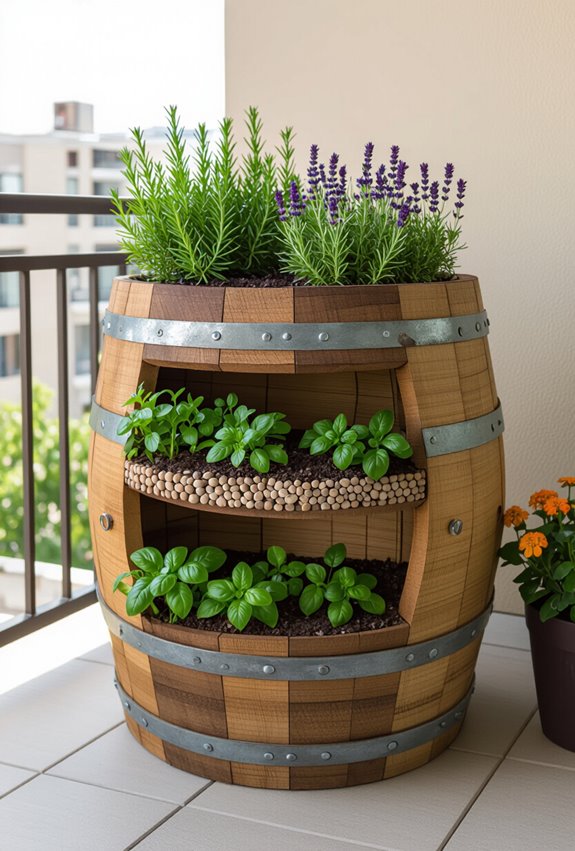
When you cut a half-barrel lengthwise and build a coiled, layered bed inside, you get a compact herb spiral that maximizes growing area and creates varied microclimates for different herbs.
You’ll appreciate herb spiral benefits: efficient drainage, sun exposure gradients, and easy access.
Use simple barrel half construction, fill with mixed soil, and plant basils, thyme, rosemary, and parsley in tiers.
Tomato-and-Basil Companion Planter
Moving from a handy salad table, a tomato-and-basil companion planter gives you a compact way to grow two staples that really boost each other: the basil repels pests and can improve tomato flavor, while the tomato offers shade and structure.
Choose tomato varieties and note basil benefits; match container sizes, soil requirements, watering techniques and sunlight needs, practice pest management, and follow harvesting tips to enjoy diverse flavor profiles.
Vertical Mesh Pocket Garden for Greens
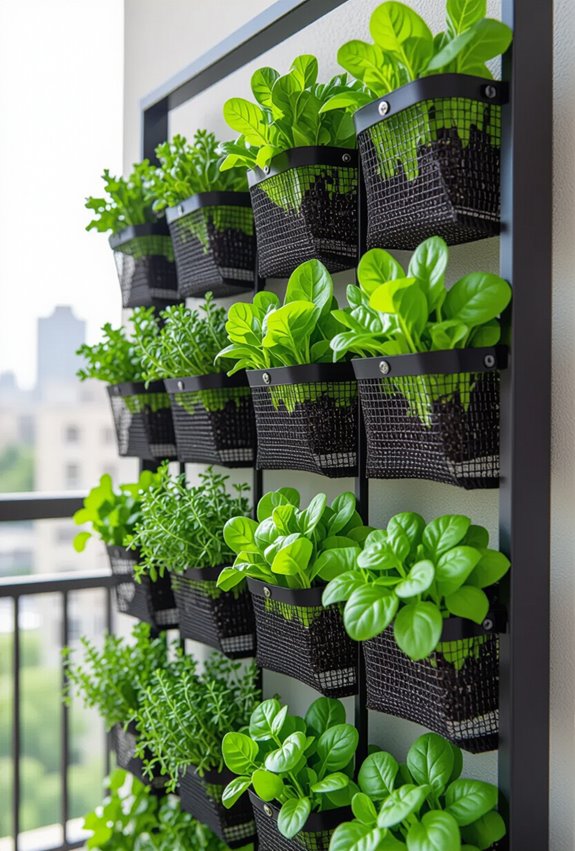
Because vertical mesh pocket gardens make the most of limited space, you can grow a surprising variety of leafy greens on a balcony, fence, or small patio.
Choose breathable fabric pockets, optimize soil mix, and stagger plant placement for airflow.
Learn mesh pocket benefits and simple vertical gardening techniques: regular watering, nutrient-rich feed, and occasional pruning keep lettuces, spinach, and herbs productive without bulky containers.
Recycled Tin Can Vegetable Patch
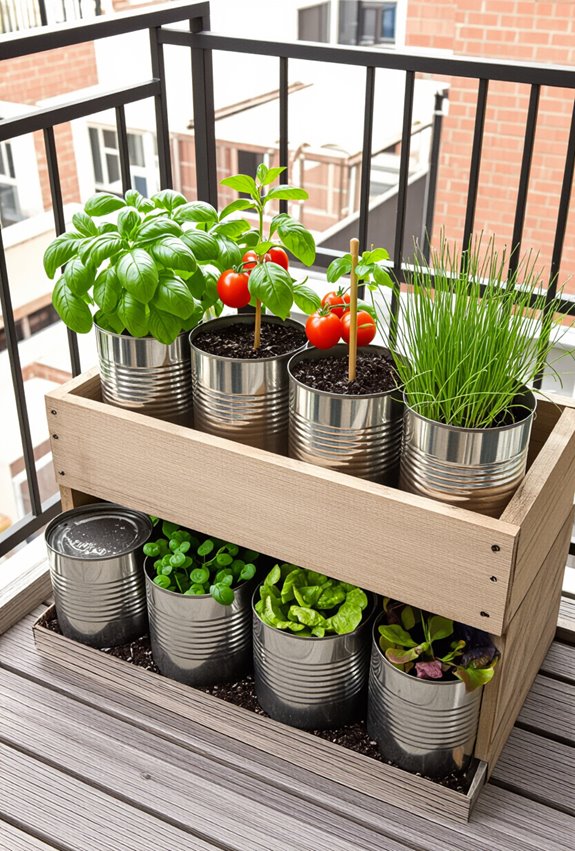
You can carry the same space-saving spirit of a mesh pocket garden into a charming recycled tin can patch that’s perfect for balconies, windowsills, or a sunny ledge.
Clean cans, label plants, and follow tin can preparation: smooth edges, paint for protection, and add potting mix.
Guarantee tin can drainage by drilling holes and using gravel layer; water sparingly and position for sun.
Balcony Rail Planter With Built-In Trellis
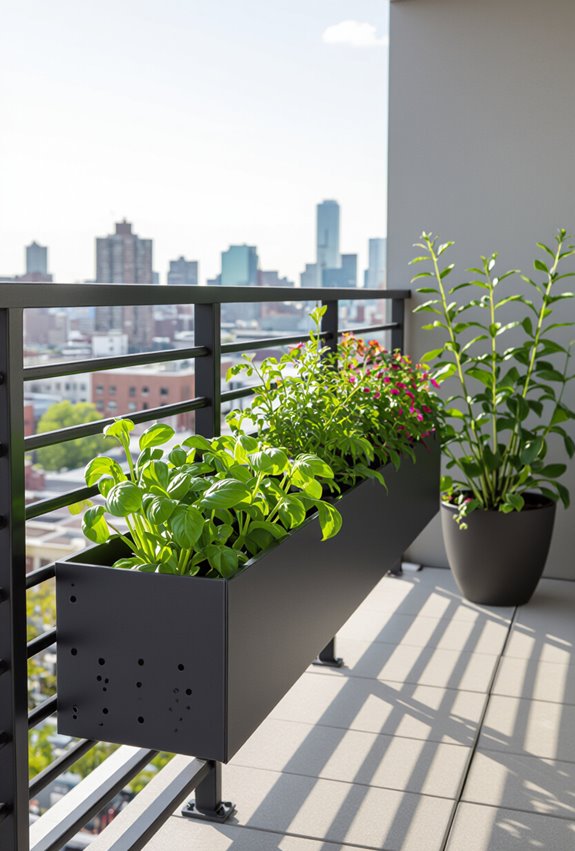
When space is tight but you still want vertical interest, a balcony rail planter with a built-in trellis turns rail space into a productive, eye-catching garden that supports climbers like peas, beans, and indeterminate tomatoes.
You’ll choose a sturdy trellis design that clips to rails, pick compact soil mixes, and arrange plants to enhance balcony aesthetics while keeping watering and access simple for efficient, safe urban growing.
Pallet Herb Wall With Drip Irrigation
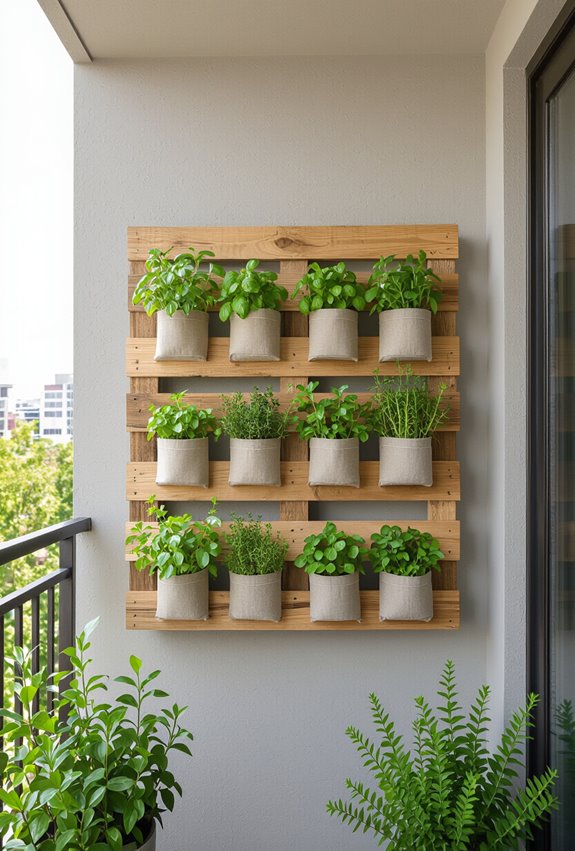
If you’re short on ground space but want a fragrant, productive herb garden, a pallet herb wall with drip irrigation turns an old pallet into a vertical planting system that saves water and hands-on time.
You’ll mount the pallet, line pockets with landscape fabric, add potting mix, plant compact herbs, and run a simple drip irrigation line on a timer so watering stays regular without daily effort.
Cinder Block Edible Wall Garden
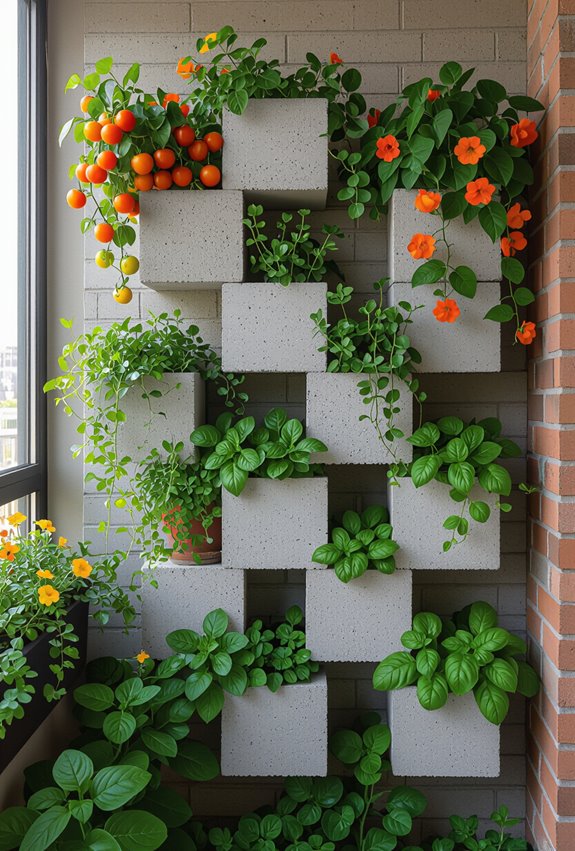
Though it looks industrial, a cinder block edible wall garden gives you instant pockets for herbs, salad greens, and strawberries while doubling as a sturdy, low-maintenance structure.
You’ll stack blocks, add lightweight soil, and position plants to maximize sun. Water at the base, mulch pockets to retain moisture, and rotate crops seasonally.
It’s affordable, modular, and perfect for compact urban yards.
Smart Planter With Moisture Sensors
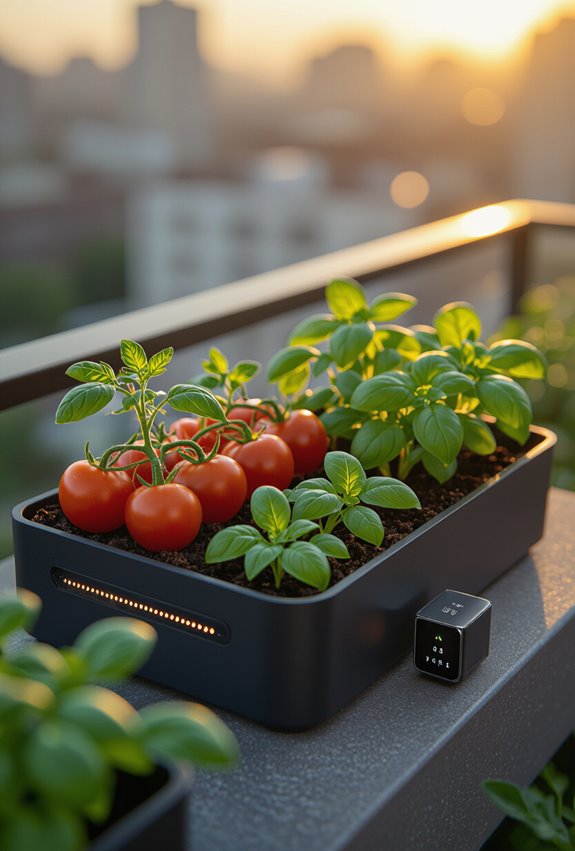
After building a cinder block edible wall, you might want tech that takes the guesswork out of watering—smart planters with moisture sensors do just that.
You’ll get real-time moisture monitoring, alerts, and automated smart irrigation that conserve water and protect roots. They’re easy to install in containers, help prevent overwatering or drought stress, and free you to focus on planting and harvesting.
Segmented Planter for Succession Planting

Wondering how to keep fresh salads coming all season without reworking your entire bed? Use a segmented planter so you can swap crops by section, stagger sowing, and harvest continuously.
Build with sustainable materials like reclaimed wood or recycled plastic. Position sections for microclimate management—shade, sun, wind breaks—so each crop gets ideal conditions.
It’s efficient, tidy, and perfect for small spaces.
Water Garden for Aquaponic Greens
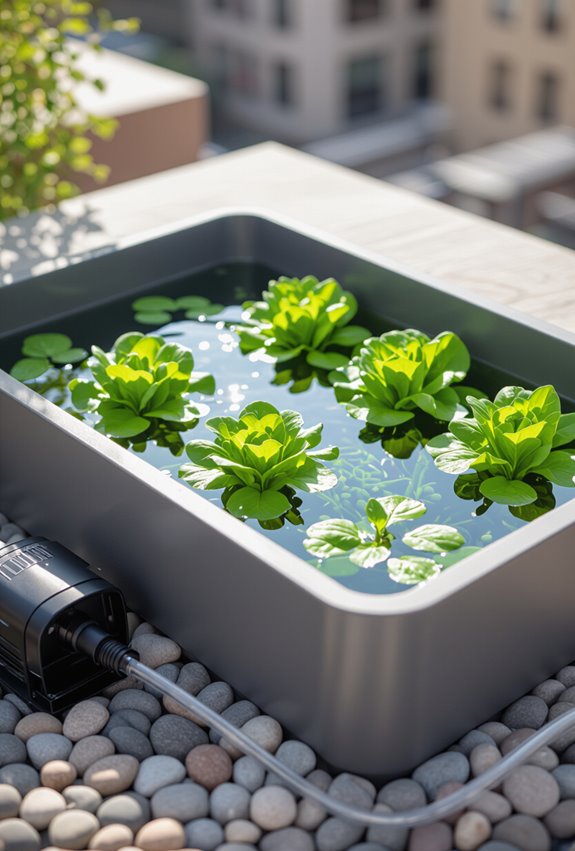
If you want continuous, nutrient-rich greens with minimal fertilizer, try a water garden for aquaponic growing where fish and plants recycle nutrients in a closed loop.
You’ll set up a tank, grow beds, and a pump, monitor water quality management, and harvest fast, enjoying aquaponic system benefits: efficient space use, reduced waste, and steady organic greens with lower inputs and satisfying hands-on care.
Grow Bag Row System for Beans and Peas
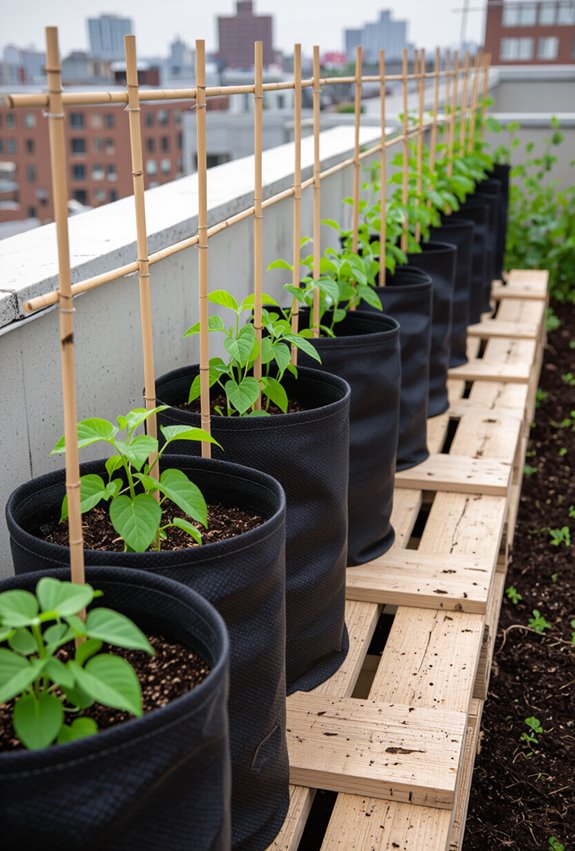
Several rows of grow bags let you maximize narrow spaces and keep beans and peas productive without permanent beds.
You’ll arrange drip lines, plant different bean varieties for succession, and space peas for tidy pea support like trellises or netting.
Rotate bags seasonally, monitor moisture, and feed lightly.
This modular system keeps harvests steady and fits balconies or alleys.
Compost-Integrated Planter for Nutrient Boost
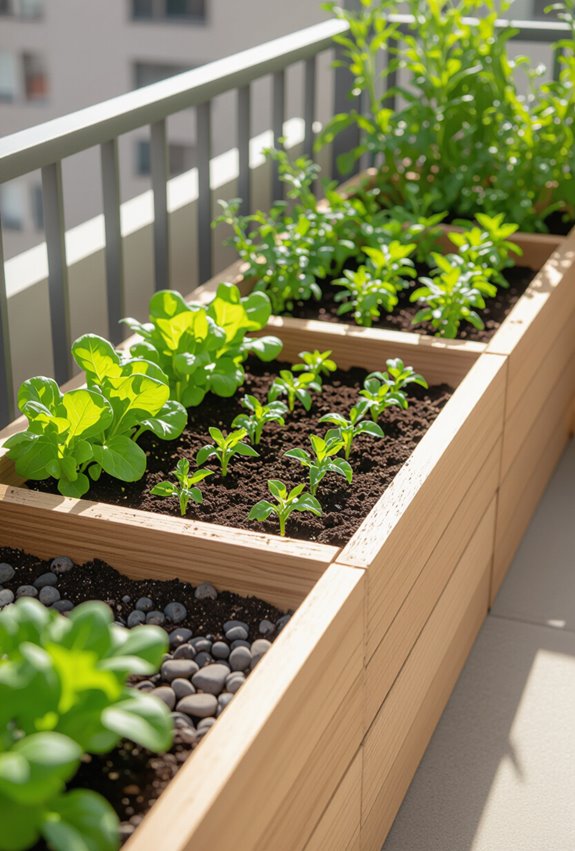
When you tuck finished compost into a planter’s base and side pockets, your container garden gets a steady, slow-release nutrient boost that cuts down on frequent feeding.
You’ll layer compost to improve structure, moisture retention and compost benefits while encouraging nutrient cycling.
Check pockets each season, refresh with fresh compost, and avoid compacting roots so vegetables access steady fertility without synthetic fertilizers.
Decorative Ceramic Pot Mixed Vegetable Display

A compost-rich base will feed plants, but you can also make a strong visual statement by arranging a mix of vegetables in a decorative ceramic pot.
You’ll choose ceramic color combinations that complement foliage and fruit, then plan vegetable pot arrangements for height, texture, and harvest sequence.
Place taller plants central or rear, trailing herbs at edges, and rotate containers for sun and airflow.
Conclusion
In a bustling urban landscape, your container garden can be a refreshing change. With these 40 creative ideas, you can transform even the tiniest of spaces into a thriving green oasis. Each planter can be a canvas for your creativity, allowing you to cultivate not just vegetables, but also a sense of accomplishment and joy. So, roll up your sleeves, dig in, and watch your urban garden flourish like a phoenix rising from the concrete!