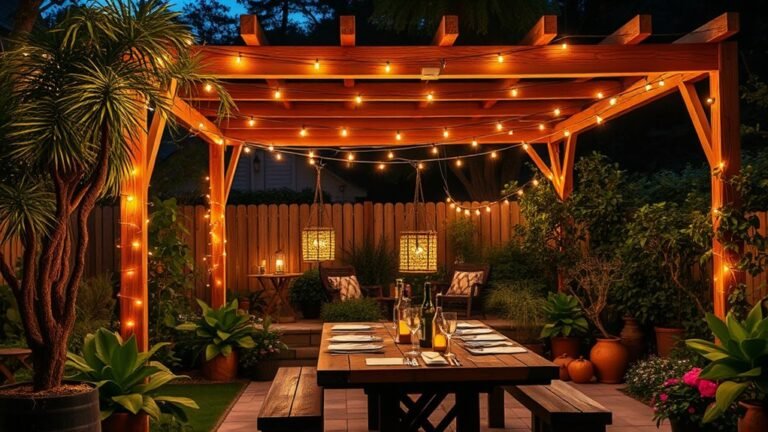
40 Clever Backyard Raised Garden Ideas to Maximize Your Growing Space
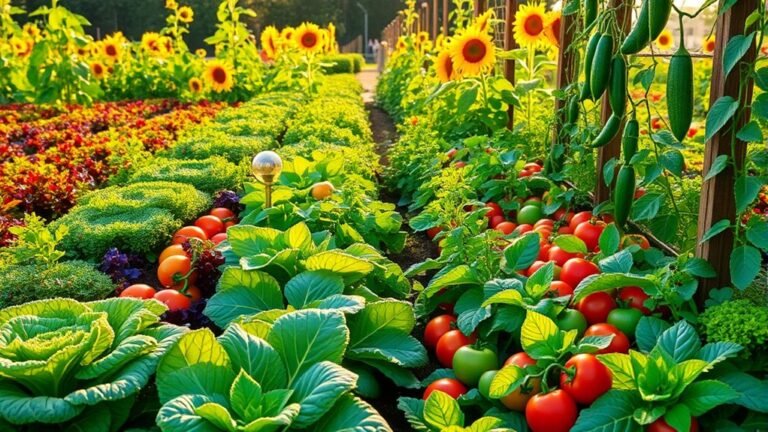
To maximize your backyard’s growing space, consider vertical garden planters for a stunning plant display. Corner raised beds efficiently use overlooked spots, and tiered garden boxes enhance accessibility. Pallet gardens and repurposed wine crates add charm while staying functional. Portable garden carts give you mobility for seasonal changes, and rustic log planters can create a natural aesthetic. If you explore further, you’ll find even more innovative ideas for your gardening endeavors!
Build a Classic Wooden Raised Bed
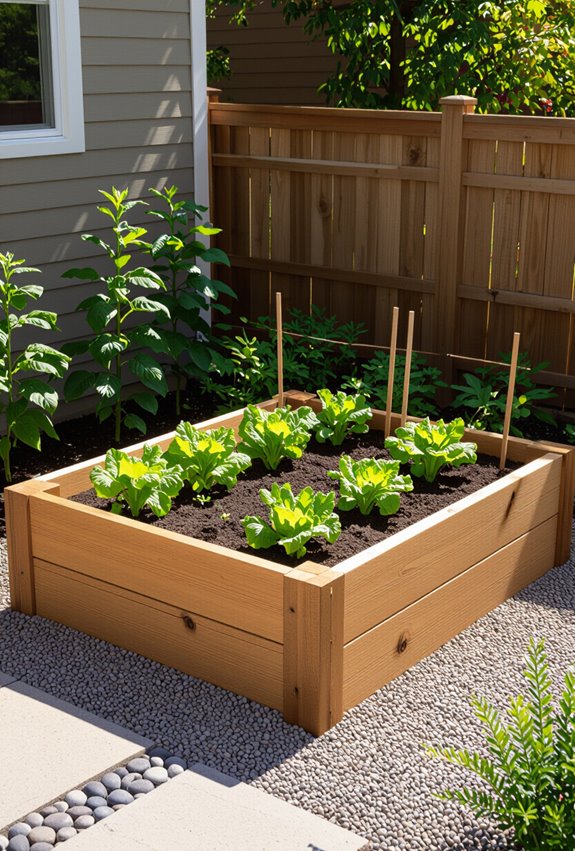
Start by choosing rot-resistant lumber like cedar or redwood so your raised bed lasts longer without chemicals.
You’ll plan wood selection around durability and budget, cut boards to match practical bed dimensions—typically 4 feet wide for reach and 6–12 inches deep for vegetables, deeper for roots.
Assemble with galvanized screws, level the site, and add quality soil for productive, low-maintenance growing.
Create a Tiered Stacked Planter System
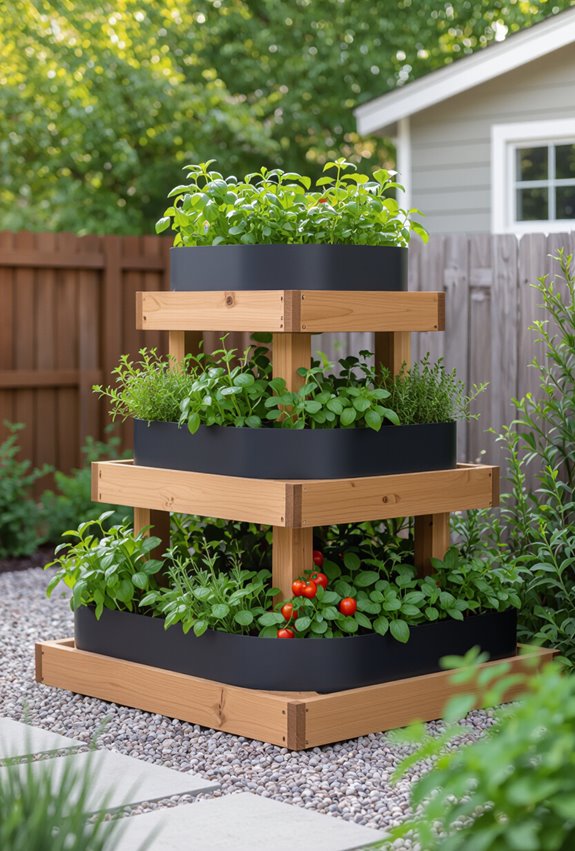
If you want to maximize planting space in a small yard, a tiered stacked planter system lets you grow more in less footprint by arranging containers or boxes in stepped layers.
You’ll use a stacked design to mix shallow herbs above deeper vegetable beds, simplify watering with drip lines, and embrace vertical gardening for sun exposure.
It’s compact, accessible, and customizable to your needs.
Use Cedar Pallet Raised Beds

Moving from stacked planters to cedar pallet raised beds lets you keep that compact, layered approach while adding durability and a rustic look.
You’ll repurpose pallets, line them, and use cedar for longevity; cedar durability resists rot and pests.
Pallet aesthetics give charm while maximizing planting space. Position beds for sunlight, fill with quality soil, and plant intensively for high yields.
Construct a Zigzag Corner Garden Bed
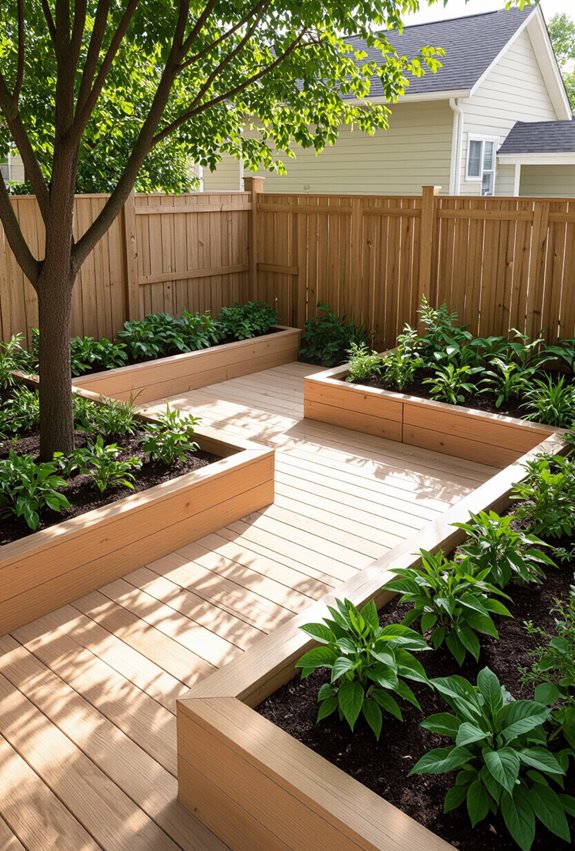
Because corners often go unused, a zigzag corner garden bed turns that awkward space into a productive, decorative feature you’ll actually enjoy tending.
You’ll build short angled sections, creating pockets for mixed plantings and improved edge access. The zigzag design maximizes planting area while emphasizing corner placement.
Use sturdy materials, level each segment, and plant alternating heights for visual interest and easy maintenance.
Make a Circular Raised Herb Spiral
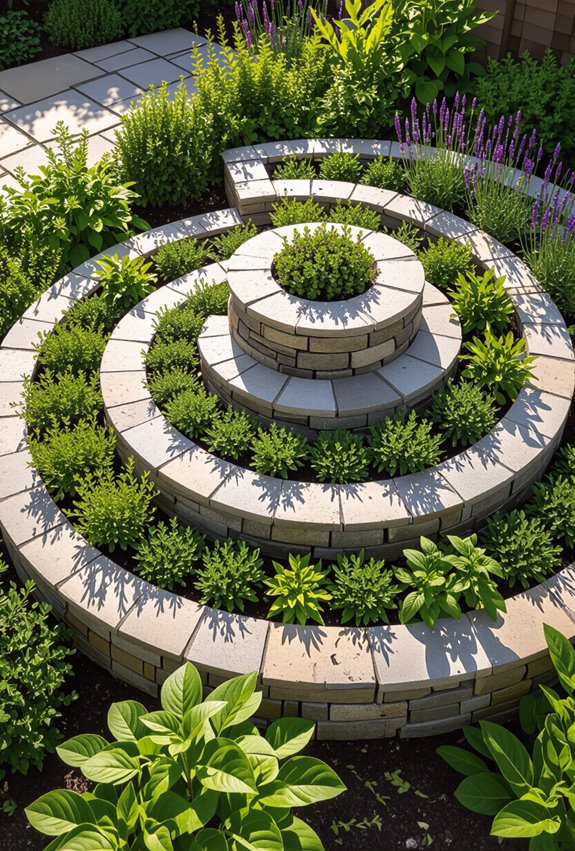
If you want a space-saving, visually striking herb garden, build a circular raised herb spiral that layers microclimates for different plants as it ascends.
You’ll arrange drought-tolerant herbs at the sunny top and moisture-loving ones near the base, maximizing exposure and drainage.
This compact vertical gardening design saves space, boosts yields, and creates easy access for harvesting and maintenance.
Convert Old Shipping Pallets Into Raised Planters
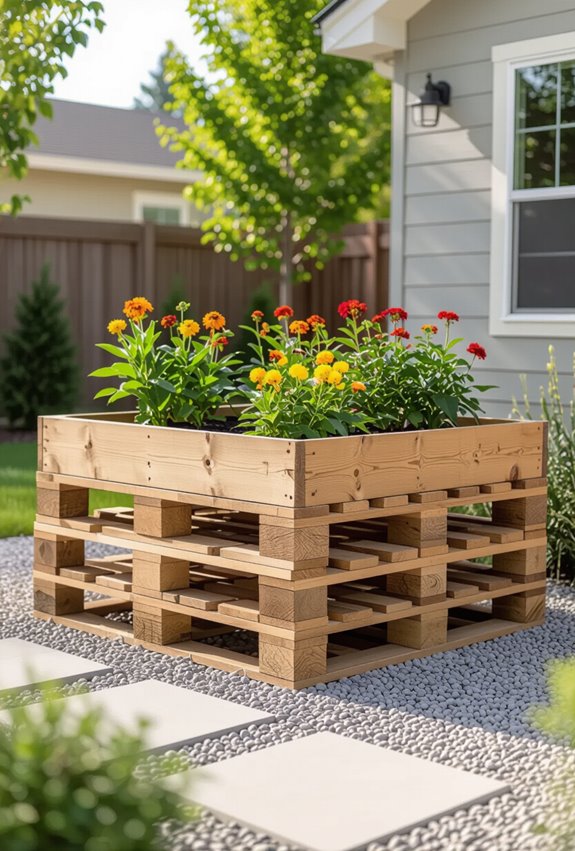
Though they were built for hauling, old shipping pallets make sturdy, affordable raised planters you can repurpose for herbs, flowers, or veggies.
You can saw, repaint, and add liners to create vertical tiers or modular boxes. Embrace pallet planter benefits: low cost, quick assembly, and recyclability.
Try creative pallet designs like staggered pockets or stacked crates to fit patios, fences, and tight garden corners.
Use Reclaimed Brick or Stone Walls
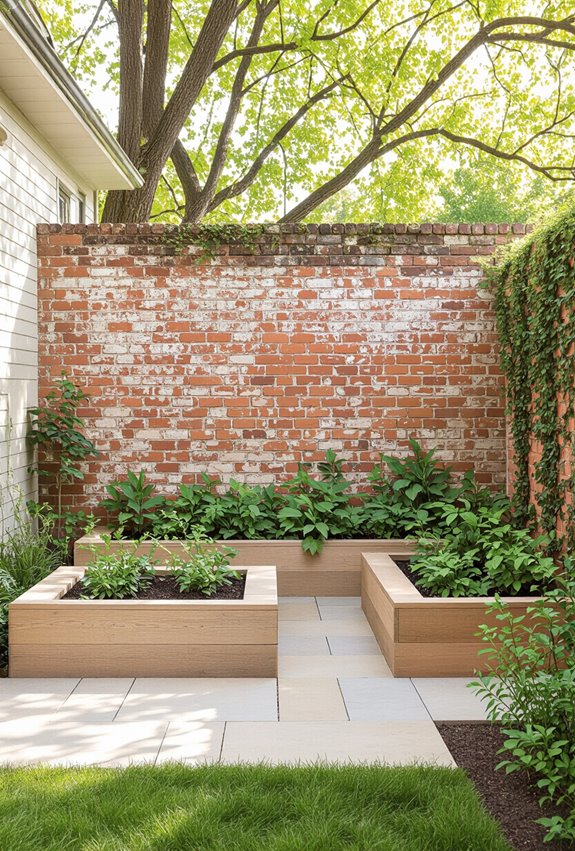
Weathered brick and stone give your raised beds instant character and lasting structure, and using reclaimed materials keeps costs and waste down.
You can stack bricks or dry-fit stones to form sturdy walls, add soil and drainage, and tuck herbs along edges.
This approach boosts garden aesthetics, blends with existing landscape, and creates durable beds you’ll enjoy with minimal expense and environmental impact.
Install Mobile Raised Planters on Casters
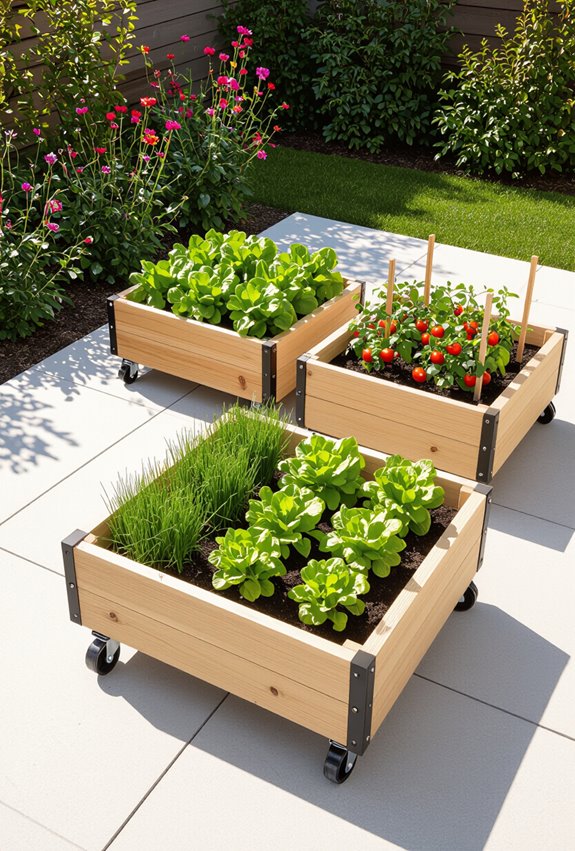
When mobility matters, mount your raised planter on heavy-duty casters so you can rearrange plants for sun, shade, or shelter from storms without lifting a thing.
You’ll enjoy mobile planter benefits like easier positioning, seasonal rotation, and simplified maintenance.
Choose lockable, weatherproof casters matched to load, and plan drainage and weight distribution carefully to maximize planter mobility advantages while protecting roots and structures.
Create a Vertical Wall of Raised Boxes
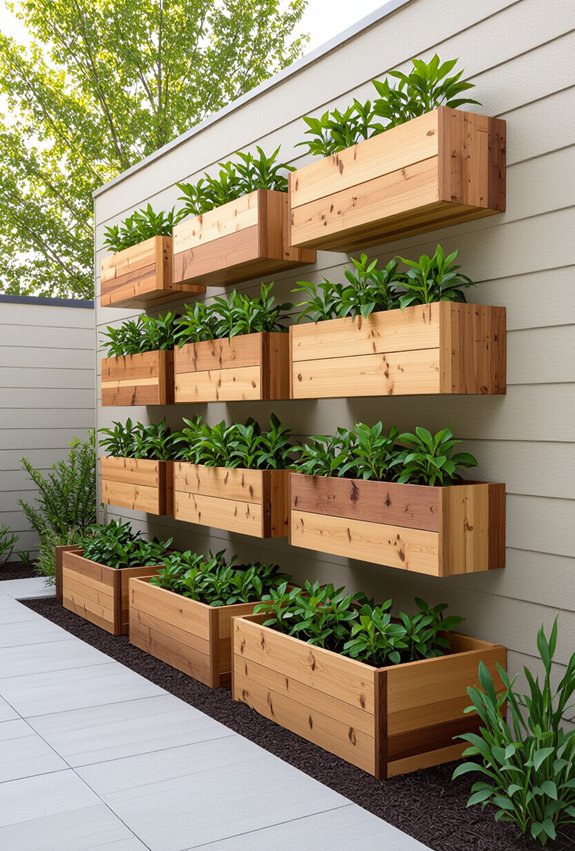
Think of a vertical wall of raised boxes as a space-saving, eye-catching way to grow more in less ground—stack or stagger shallow, framed beds to turn a blank fence or wall into a productive living tapestry.
You’ll use vertical gardening techniques to maximize sun and airflow, choose durable wall planter materials, secure strong mounts, and plan irrigation so herbs, lettuces, and trailing vines thrive without crowding.
Use Concrete Block Raised Beds With Planter Hollows
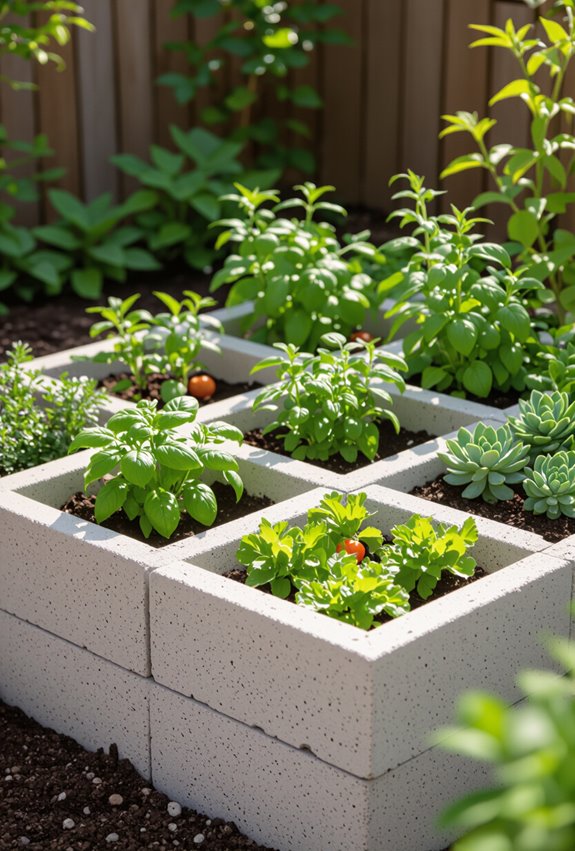
Moving from vertical wall planters to something more grounded, concrete block raised beds offer a durable, affordable way to build tiered planting areas with built-in hollows you can use as mini planters.
You can stack blocks for height, stagger them for access, and fill each planter hollow with herbs or succulents.
The concrete block design is low-maintenance and highlights planter hollow benefits for micro-gardens.
Construct a Cold-Frame Raised Bed
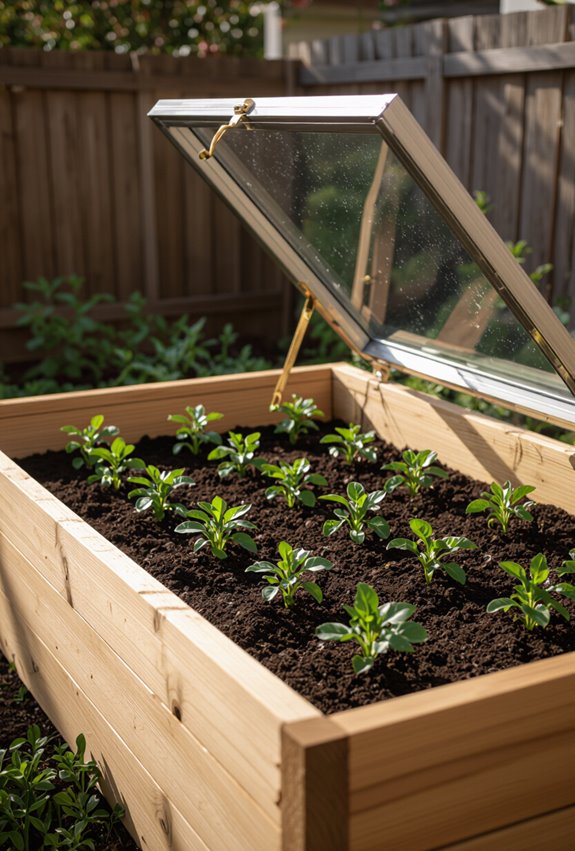
If you want to extend your growing season and protect tender seedlings, build a cold-frame raised bed that combines the insulation and tilt of a cold frame with the depth and soil control of a raised bed.
You’ll get cold frame benefits: warmer soil, frost protection, and earlier starts. Set it facing south, use clear glazing, and monitor ventilation for successful winter gardening and year-round seedlings.
Install a Raised Pond-Edge Garden
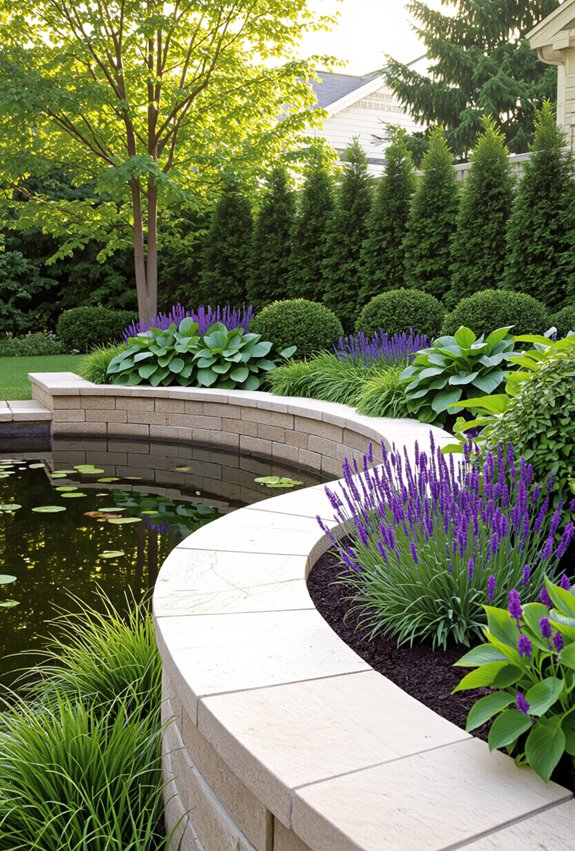
Create a raised pond-edge garden to bring water-loving plants within easy reach while keeping soil and roots above fluctuating water levels.
You’ll line a sturdy bed against the pond, add free-draining mix, and plant marginal aquatic plants and moisture-loving perennials.
This setup simplifies pond maintenance, limits algae runoff, and creates accessible planting zones so you can tend, divide, and enjoy waterside greenery without stepping into mud.
Use Reclaimed Windows for Cloche-Topped Beds
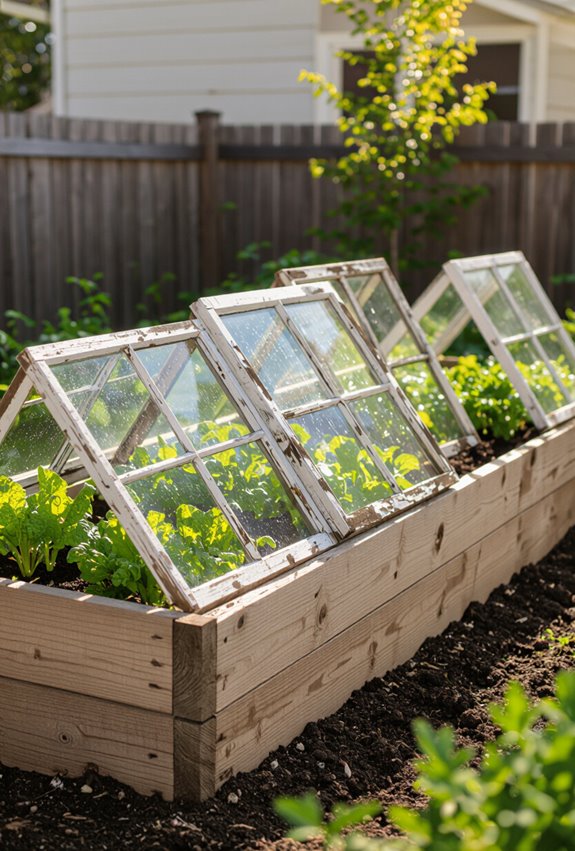
If you want season‑extending protection without buying specialty cloches, repurpose reclaimed windows as removable toppers for raised beds—glass panes trap heat and shield young plants while still letting in light.
You’ll get cheap window gardening solutions that show clear cloche benefits: easy venting, portability, and vintage charm.
Secure hinges or blocks so panes lift for watering and airflow without risking damage.
Build Raised Beds With Integrated Seating
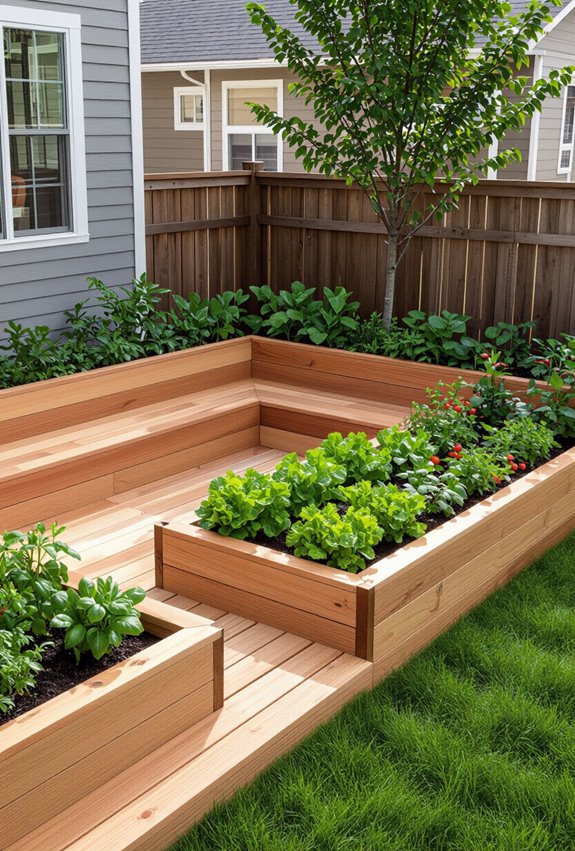
Window-topped cloches work great for protecting seedlings, but you can also make your raised beds double as comfortable spots to sit and enjoy the garden.
Design benches along edges for integrated seating that saves space and invites relaxation. Choose timber or stone to match raised bed aesthetics, add storage under seats, and position beds to catch sun while keeping paths clear for easy access.
Create a Companion-Planting Chessboard Bed Layout
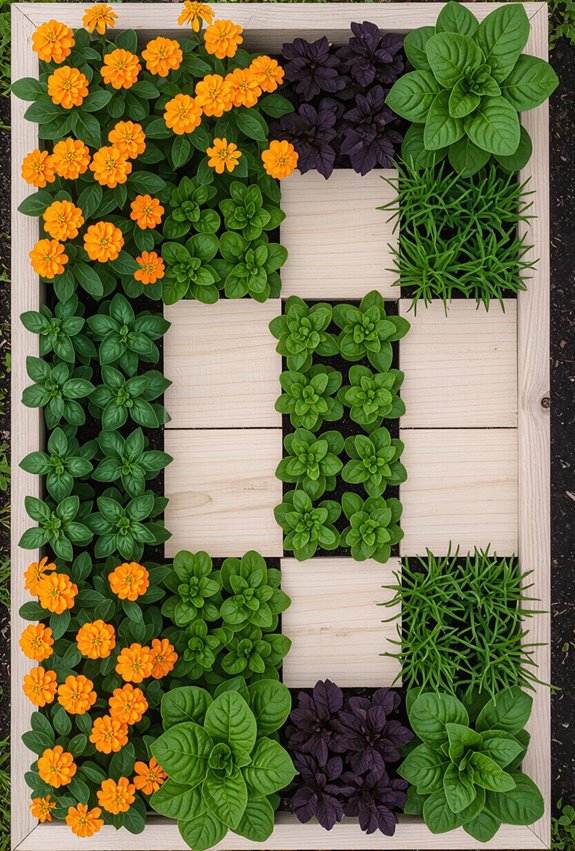
When you lay out a companion-planting chessboard bed, alternate squares of complementary species—like basil beside tomatoes or marigolds next to beans—to maximize pest control, pollination, and nutrient sharing in a compact space.
You’ll map a garden chessboard on your raised bed, rotate crops yearly, pair deep and shallow roots, and add flowering edges to attract beneficial insects, improving yield and resilience.
Use Timber Frame Raised Beds With Trellis Ends
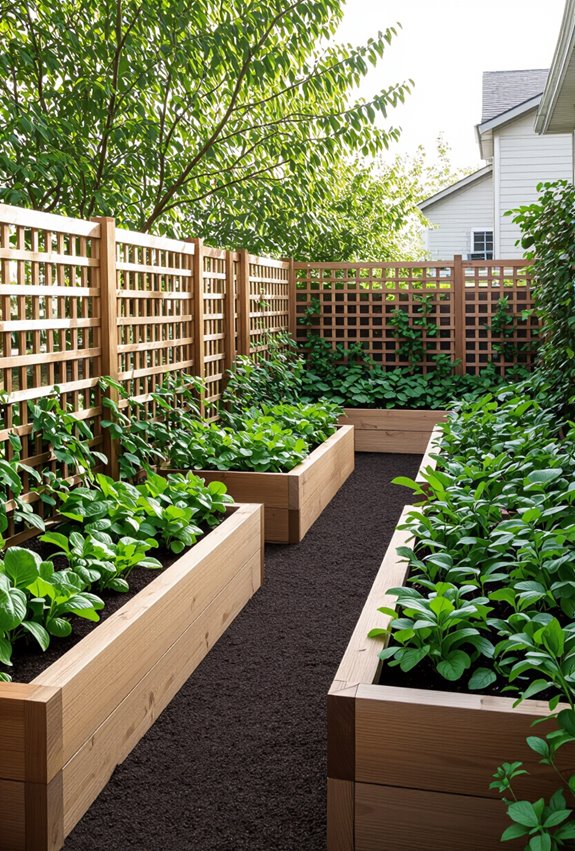
A timber-frame raised bed with trellis ends gives you sturdy, long-lasting planting space and built-in vertical support for vining crops like peas, beans, and cucumbers.
You’ll enjoy timber advantages such as durability and natural aesthetics while saving ground space.
Choose trellis designs—arched, A-frame, or lattice—that suit plant habits, ease harvesting, and simplify maintenance, staking, and seasonal removal.
Construct Insulated Raised Beds for Early Starts
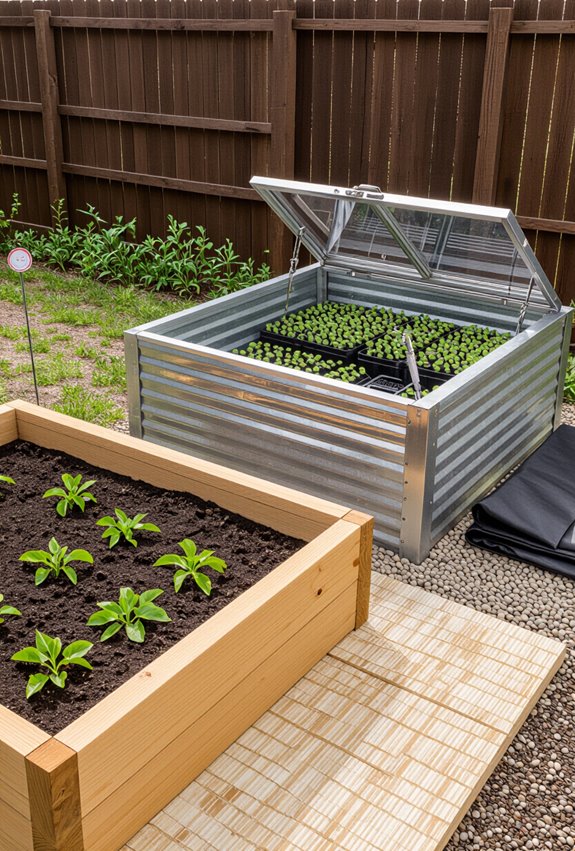
If you want to start seedlings weeks earlier and extend your growing season, build insulated raised beds that trap warmth and protect roots from frost.
Line sides with insulated materials like rigid foam or straw bales, add dark mulch and cloches, and position beds for maximum sun.
You’ll speed germination, reduce transplant shock, and enjoy reliable early gardening results without complicated heaters.
Make a Children’s Raised Sensory Garden
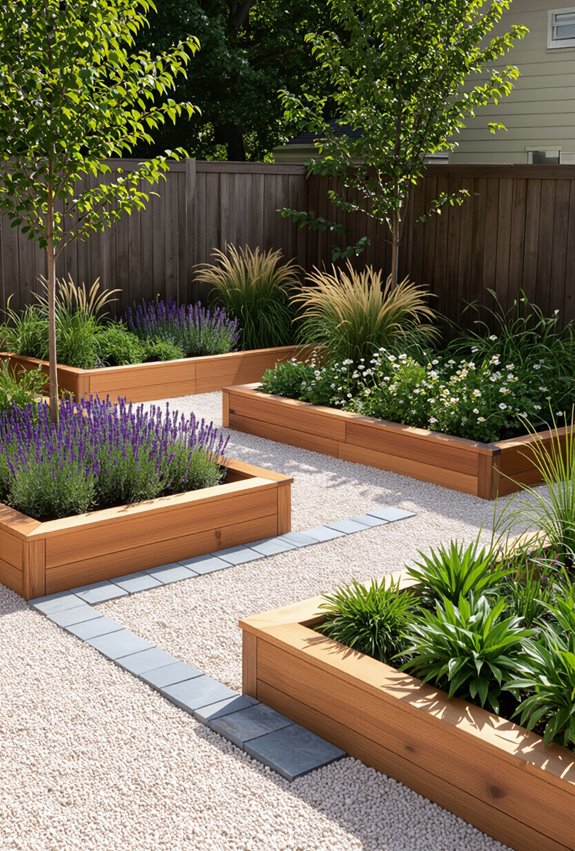
Because kids learn best by touching and exploring, design their raised sensory garden with varied textures, scents, colors, and heights so every visit becomes an adventure.
Add kid friendly plants like lamb’s ear, mint, and sunflowers. Include tactile paths, water features, wind chimes, and labeled sensory activities stations.
Keep edges safe, tools small, and maintenance simple so children stay engaged and curious.
Create a Pollinator-Attracting Raised Flower Bed
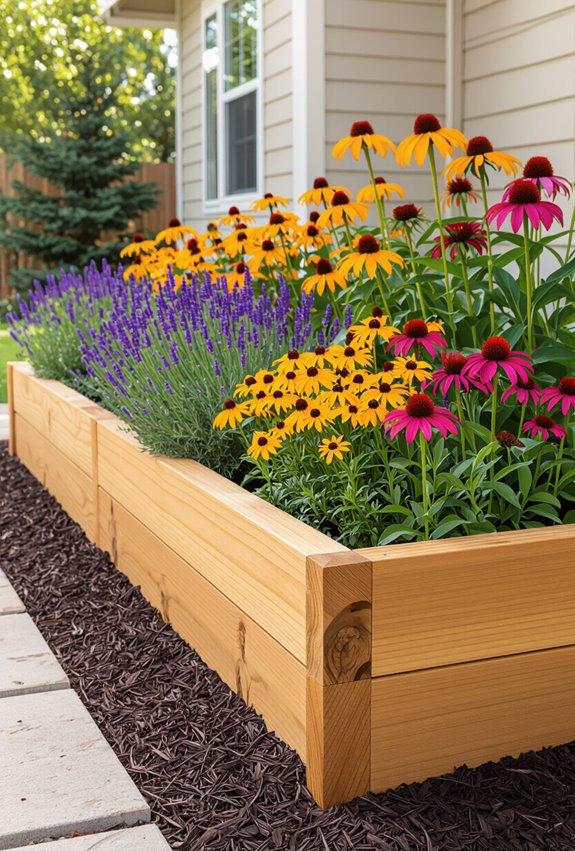
When you plant a raised flower bed with pollinators in mind, you’ll draw bees, butterflies, and hummingbirds while boosting your garden’s health and productivity.
Choose diverse pollinator plants with staggered bloom times, group colors and heights, and add a shallow water source.
Use compact flower bed design to maximize space and accessibility, and avoid pesticides so visiting pollinators thrive.
Build a Sloped Rock-Faced Raised Bed
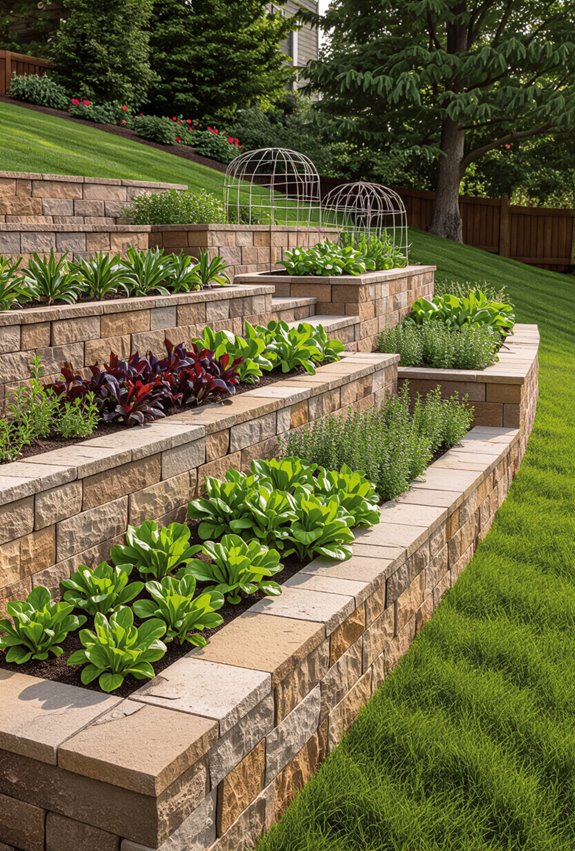
If you liked the rugged look of metal troughs, a sloped rock-faced raised bed will bring the same bold, natural statement to a larger planting area.
You’ll stack stone with proper rock retention techniques, backfill with coarse material, and grade the bed for sloped drainage solutions.
Plant drought-tolerant perennials and herbs on terraces, and mulch to reduce erosion and retain moisture.
Install Raised Beds Along a Fence for Privacy Planting
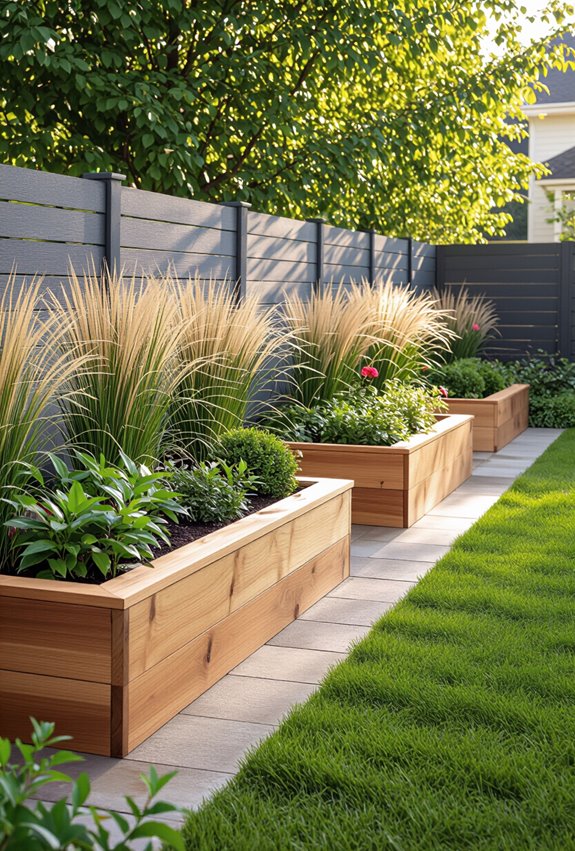
Because a fence already defines your yard’s edge, installing raised beds along it lets you create an instant privacy screen while maximizing planting space; set the beds close to the fence, choose tall or vining plants, and stagger heights for depth and airflow.
You’ll plant privacy plants like bamboo, clematis, or hops, combining flowering and evergreen choices for effective garden screening and year-round interest.
Use Stackable Modular Raised Planter Kits
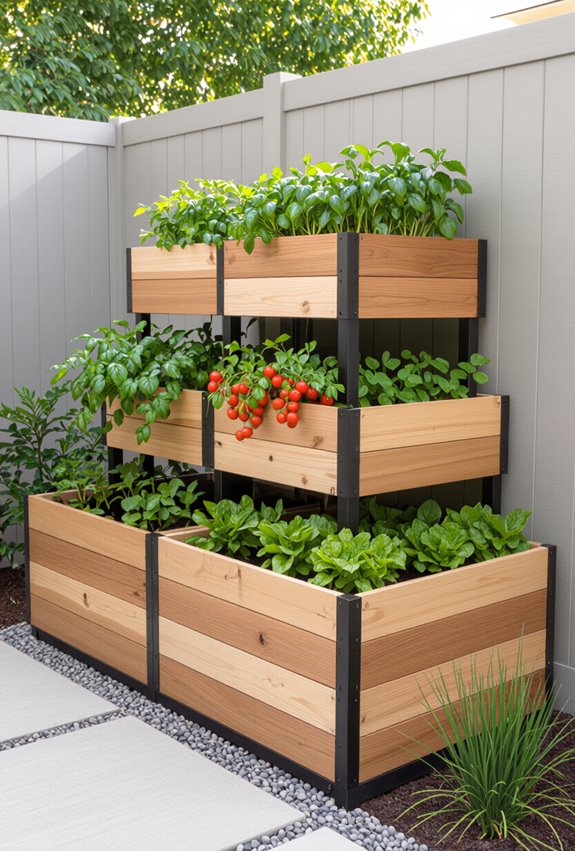
When space or soil quality limits your options, stackable modular raised planter kits let you build custom beds quickly and without heavy construction.
You can mix and match levels to suit root depth, rearrange modules as needs change, and enjoy stackable benefits like better drainage and pest control.
These modular designs save time, fit tight spots, and make expanding your garden simple and tidy.
Convert an Old Bathtub Into a Raised Bed
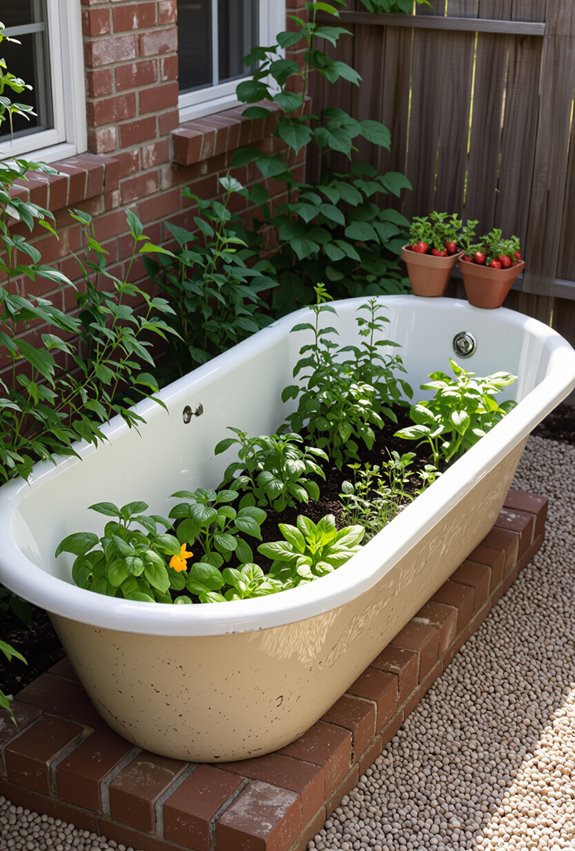
Stackable planters are great for tight spots, but you can also repurpose something unexpected: an old bathtub makes a roomy, durable raised bed with minimal work.
You’ll drill drainage holes, add landscape fabric and gravel, then fill with quality soil.
Bathtub gardening gives deep root space for vegetables and herbs, and repurposed planters reduce waste while creating a charming focal point.
Build a Raised Rock Garden for Succulents
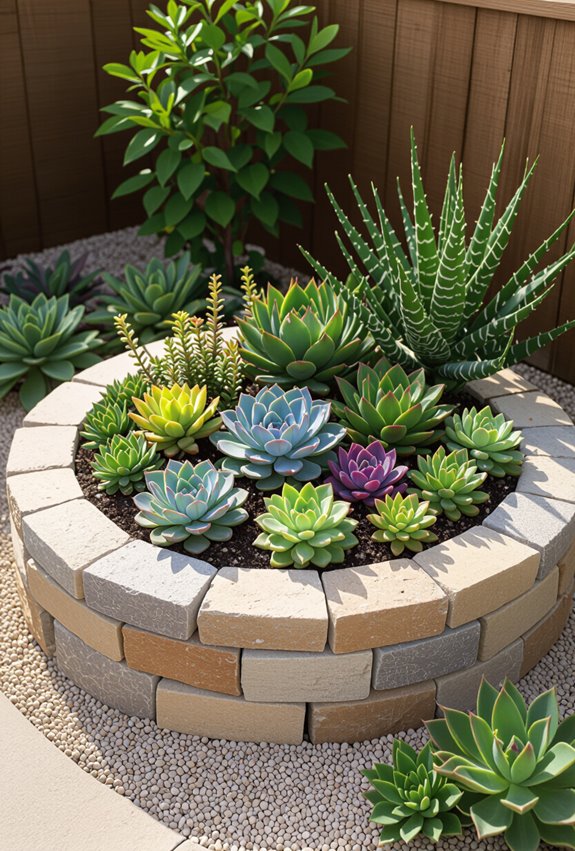
A raised rock garden gives succulents excellent drainage and a sculptural look while keeping maintenance low.
You’ll layer gravel, cactus mix, and rocks, then select succulent varieties that suit sun exposure and compact roots.
Arrange rocks to create microclimates, plant grouped by water needs, and mulch with coarse grit.
This setup boosts drainage, reduces watering, and highlights architectural plants.
Create a Raised Shade Garden Under Trees
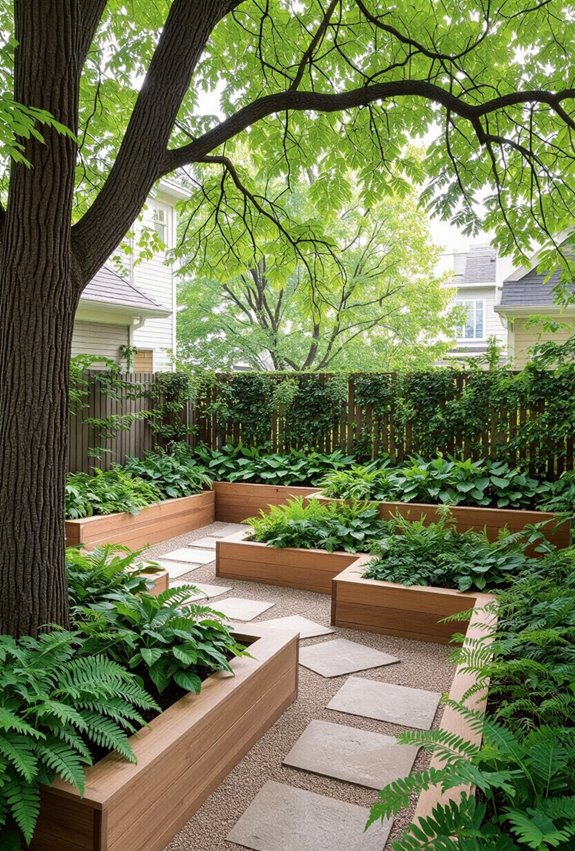
If you loved the low-maintenance sculptural look of a raised rock bed, you can apply the same raised framework to create a cool, shady oasis beneath trees.
Use shallow, wide beds, add leaf-rich topsoil and mulch, and choose shade loving plants that tolerate root competition.
Respect tree root considerations: avoid deep digging, use raised soil to protect roots, and water sparingly to prevent stress.
Use Straw Bale Raised Gardening Technique
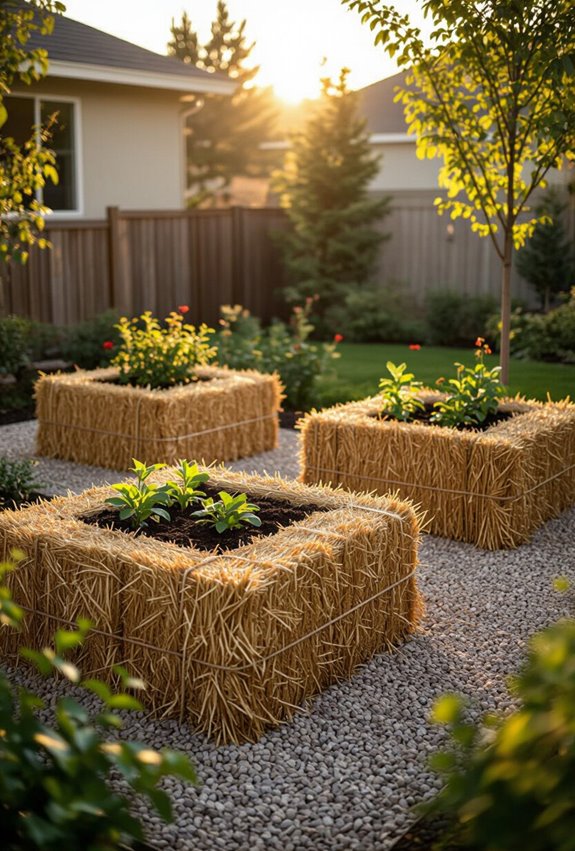
When you want a quick, portable raised bed that’s ready to plant in weeks, straw bales offer a simple, space-saving solution you can set up almost anywhere.
You’ll appreciate straw bale benefits like minimal prep, good drainage, and warmth for seedlings.
Be aware of straw bale disadvantages: short lifespan, nutrient needs, and possible seeds or chemicals—plan rotations and supplement fertilizer accordingly.
Install a Raised Bed With Integrated Composting
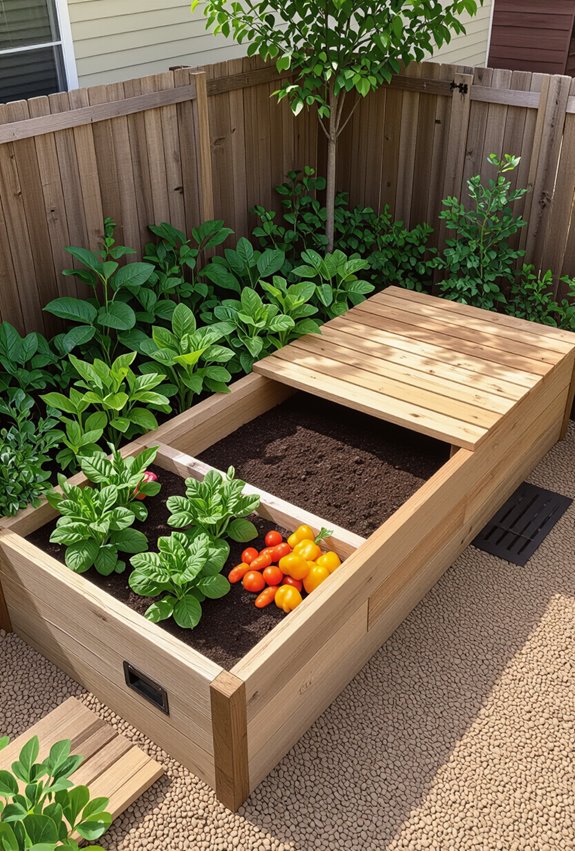
Because you’ll want rich, accessible soil and less hauling of amendments, install a raised bed with integrated composting to feed plants right where they grow.
You’ll save time and enjoy composting benefits as kitchen scraps and yard waste break down within the bed. That continuous soil enrichment boosts fertility, moisture retention, and root health, letting you harvest more without constant external inputs.
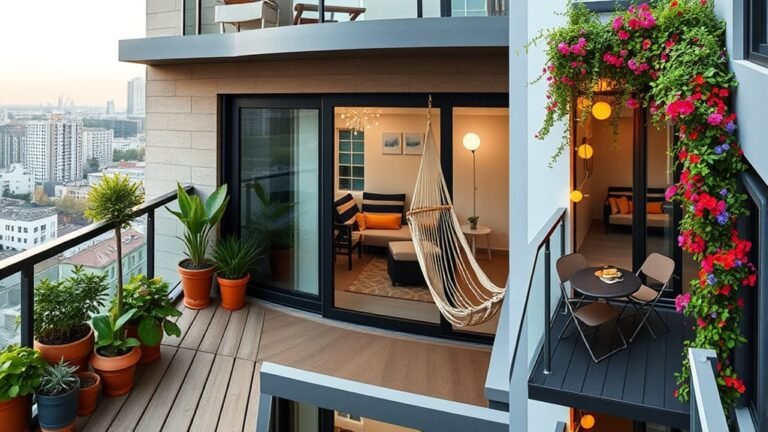
Make a Balcony-Style Raised Bed for Small Yards
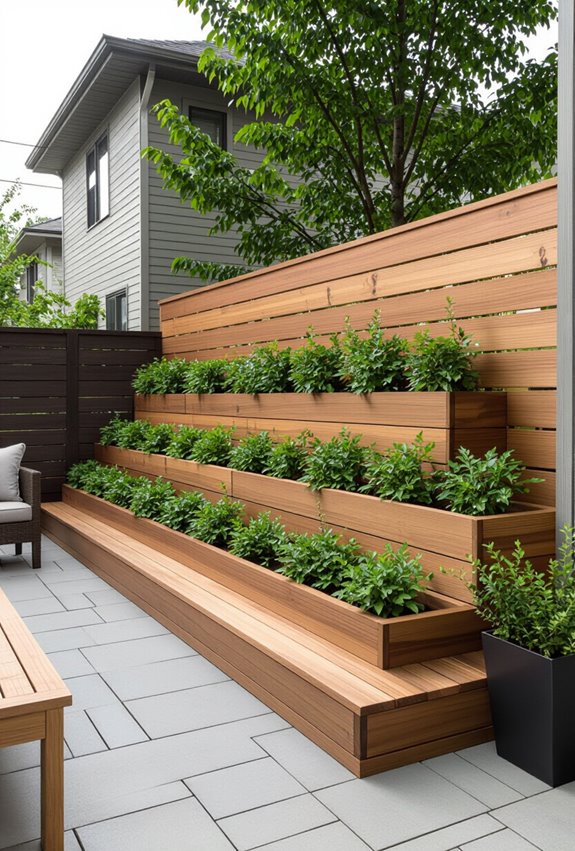
A balcony-style raised bed lets you grow a surprising amount of food and flowers in tight yards by elevating soil, improving drainage, and making maintenance easier.
You can mount narrow timber boxes against railings or walls, use tiered planters, and choose compact varieties.
In a balcony garden for a small space, prioritize vertical supports, drip irrigation, and lightweight soil mixes for easier handling.
Construct Raised Beds With Built-In Cold Frames
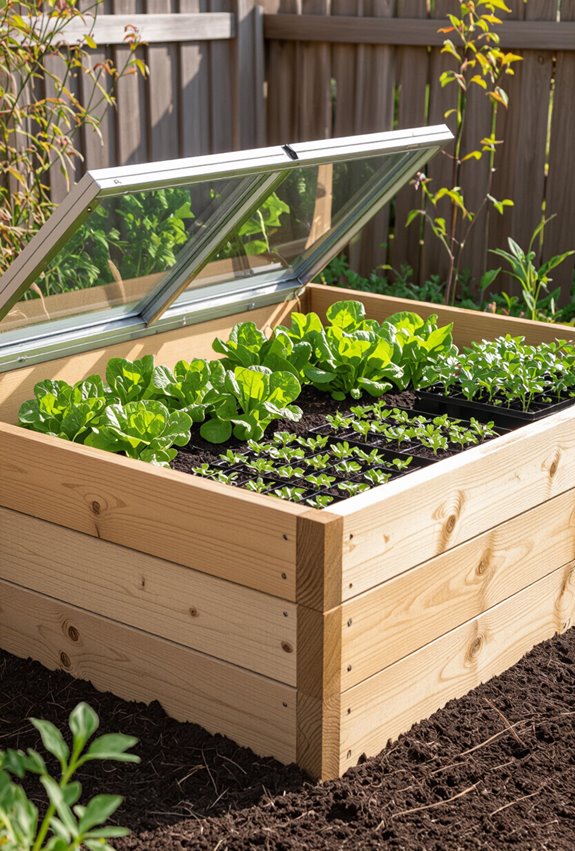
If your small-yard balcony beds give you a taste for season-extension, build raised beds with built-in cold frames to stretch your growing season and protect tender plants.
Choose durable cold frame materials like polycarbonate or tempered glass and rot-resistant wood.
You’ll control microclimate easily: hinged lids, vents, and insulation provide precise temperature regulation, making planting earlier and harvesting later simple and reliable.
Use Recycled Tires as Layered Raised Planters
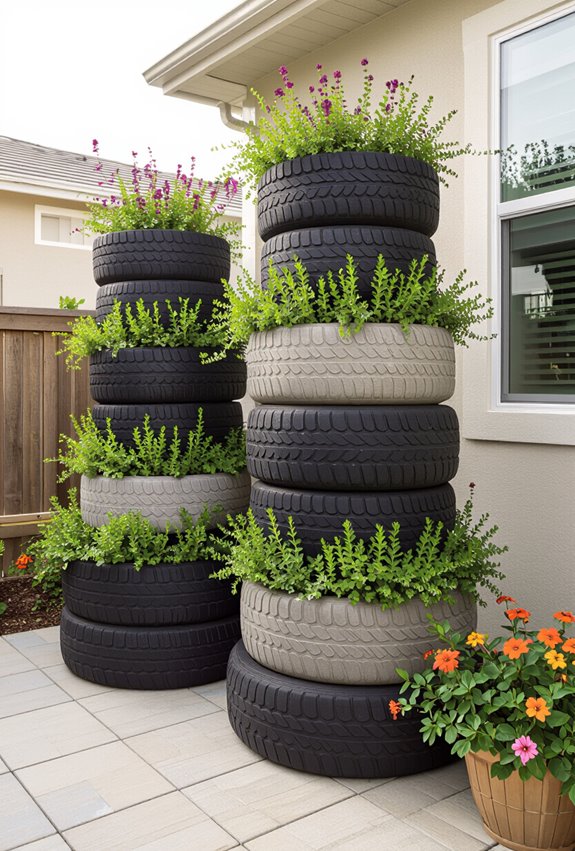
Old tires make surprisingly sturdy, affordable layered planters you can stack and plant in right away.
You’ll drill drainage holes, paint or line them, then fill with soil to grow herbs, lettuces, or flowers.
Highlight tire planter benefits like affordability, portability, and space-saving verticality.
This eco friendly gardening option repurposes waste while giving you flexible, compact growing zones.
Build a Multi-Level Patio Raised Kitchen Garden
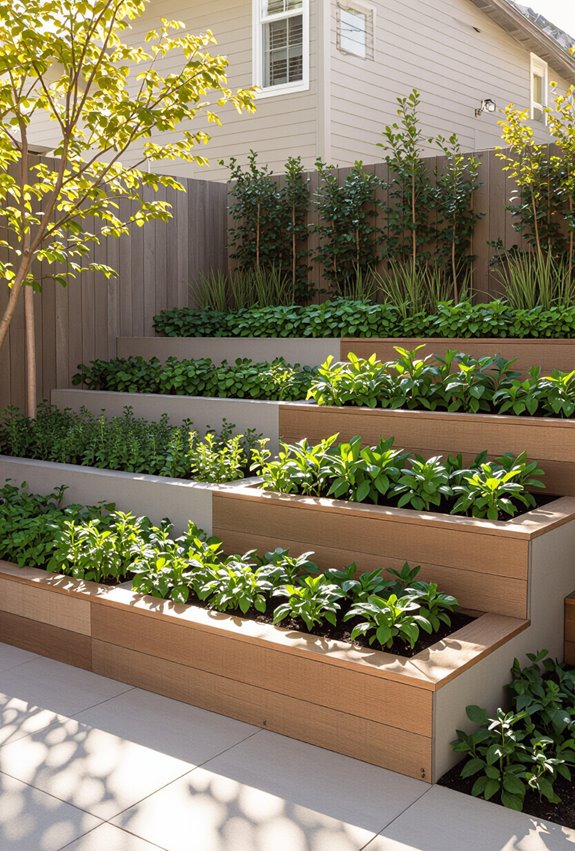
Three tiered beds make it easy to fit a full kitchen garden on a small patio, letting you grow herbs, salad greens, and compact veggies within arm’s reach.
Use a multi level design with staggered heights for sun exposure and ergonomic planting.
Keep paths clear, add wheels or hinged tops for maintenance, and place frequently used herbs closest to enhance kitchen accessibility and harvest speed.
Create Raised Aquaponic Planter Beds
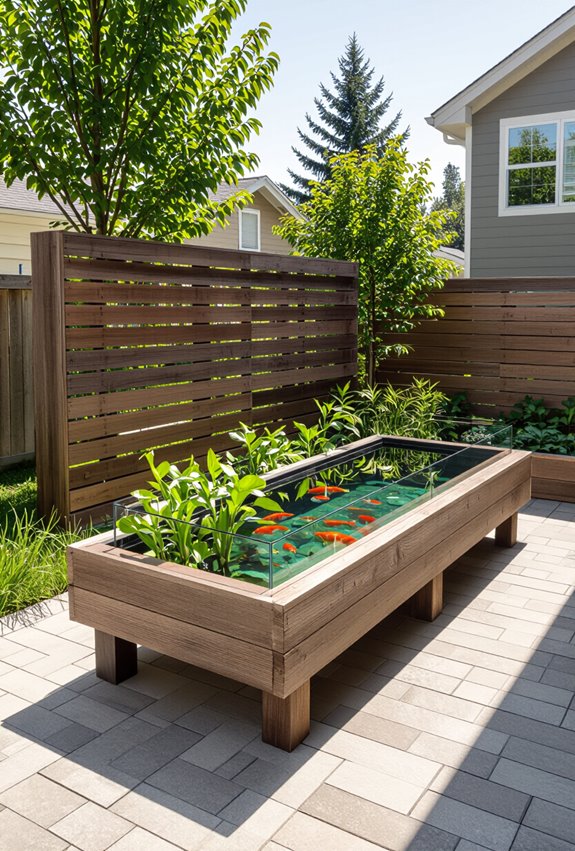
When you combine raised beds with a simple aquaponics loop, you’ll get a space-saving, low-maintenance planter that feeds both plants and fish while recycling water and nutrients; it’s perfect for patios or small yards.
You’ll set up fish tank integration beneath or beside the bed, route water through grow media, and monitor nutrient cycling.
Plant herbs and greens for steady harvests.
Install Raised Beds With Solar-Powered Watering Systems
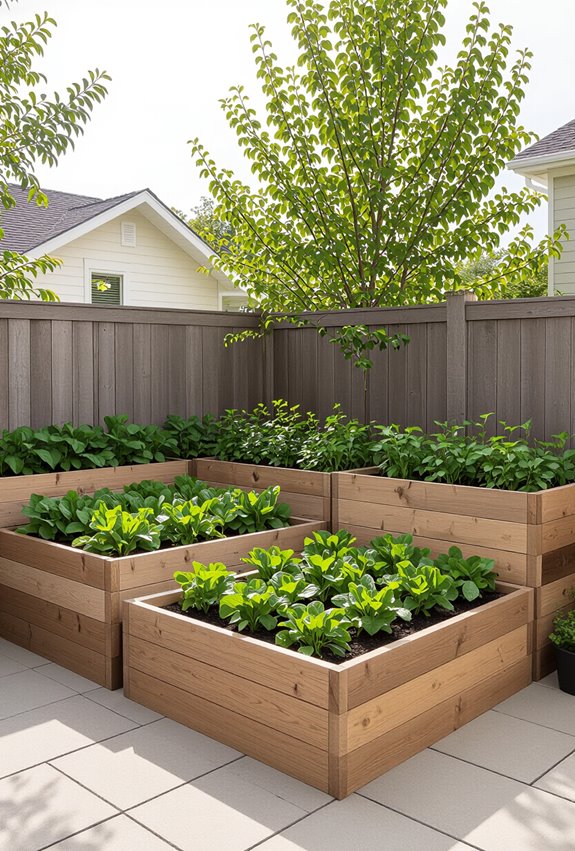
If you want hands-off irrigation that conserves water and saves time, install solar-powered drip or micro-sprinkler systems on your raised beds; they run pumps and timers from a rooftop or panel-mounted array, so you won’t need wired electricity.
You’ll boost solar panel efficiency by matching panel size to pump draw, choose smart automated watering solutions, and set schedules to prevent overwatering and reduce maintenance.
Cinder Block Gardens
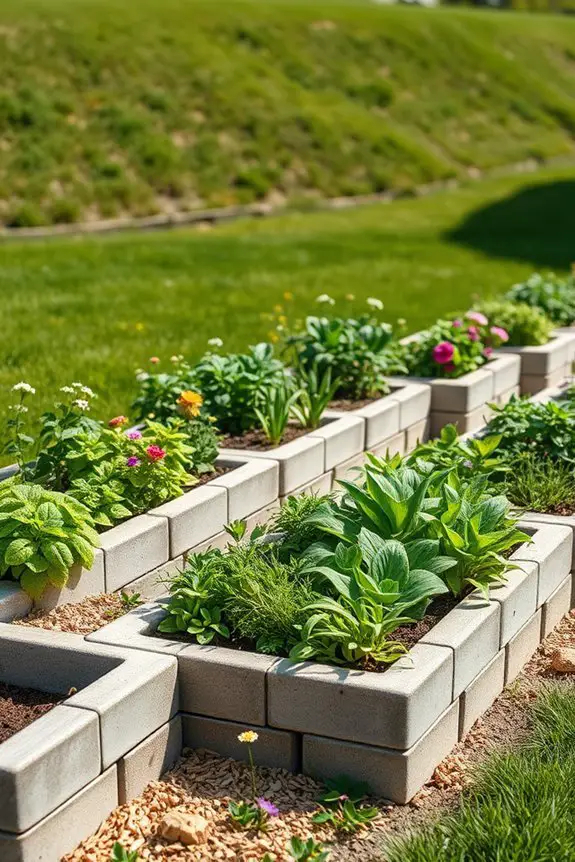
Cinder block gardens offer a practical and stylish alternative to traditional planters. You can express your cinder block creativity by stacking blocks to form unique raised beds that suit your space.
These durable blocks not only provide excellent drainage but also allow for easy customization. Whether you live in a small yard or an urban setting, cinder block gardens maximize your growing space. You can fill the holes with soil to create additional planting areas for herbs or flowers, enhancing your urban gardening experience.
Plus, the gray color of the blocks can complement any backyard aesthetic. With a little imagination, you can transform cinder blocks into eye-catching garden features that are both functional and visually appealing.
Garden Archways With Planters
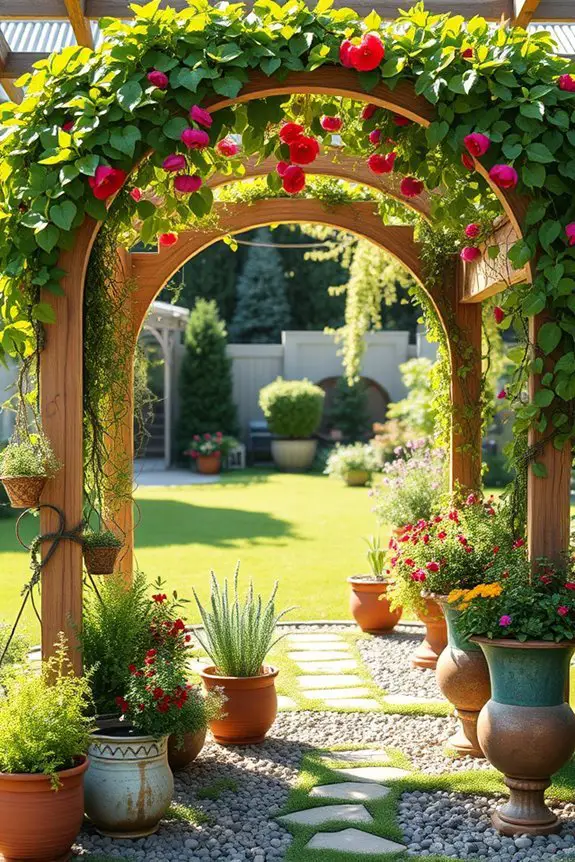
While garden archways can serve as stunning focal points in your outdoor space, incorporating planters into their design elevates their beauty and functionality.
You can choose from various garden arch designs, whether it’s a rustic wooden structure or a sleek metal frame. By adding planters directly to the archway, you create a seamless integration that draws the eye upward and maximizes vertical space.
Consider cascading flowers or climbing vines for a lush effect. This planter integration not only enhances the arch but also provides additional growing opportunities, making the most of your garden area.
Plus, it adds a charming touch that invites guests into your garden paradise. Don’t shy away from experimenting with different plants to find your perfect combination!
Edible Flower Gardens
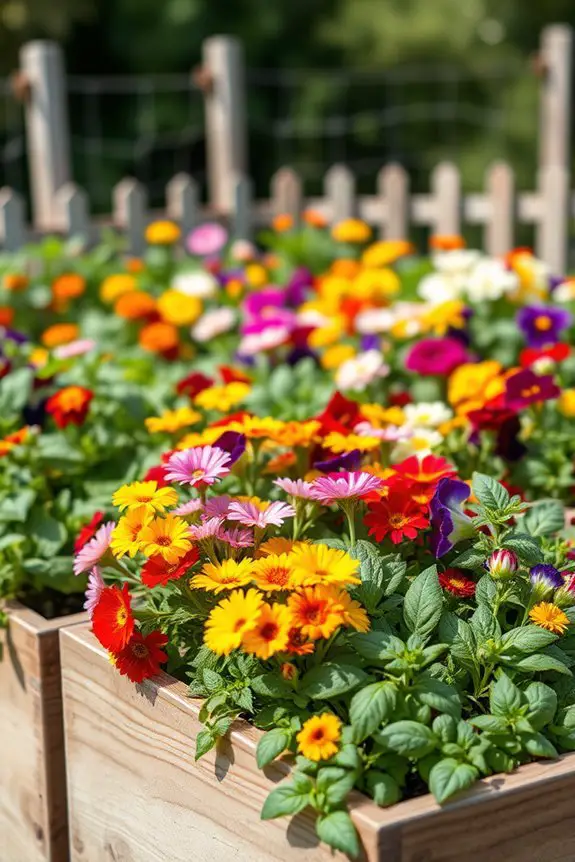
If you want to add both beauty and flavor to your garden, consider planting an edible flower garden. Edible flowers like nasturtiums, pansies, and calendulas not only enhance your meals but also attract beneficial pollinators.
The edible flower benefits include adding visual appeal and unique flavors to salads, desserts, and drinks. To get started, follow some simple flower gardening tips: choose a sunny spot, prepare your soil with organic compost, and space your plants properly for airflow.
Remember to harvest regularly to encourage new blooms. Incorporating edible flowers into your garden won’t only delight your taste buds but also create a stunning landscape that you can enjoy all season long. Embrace this delightful gardening trend!
Conclusion
In your backyard, these clever raised garden ideas are like seeds waiting to bloom, transforming your space into a lush oasis. By embracing vertical planters, tiered boxes, and even rustic logs, you can maximize every inch of your garden. You’ll cultivate not just plants, but also joy and creativity. So grab your tools, dig in, and watch your garden flourish like a vibrant tapestry, woven with color and life, right outside your door.