How to Build a Sustainable Outdoor Living Space
Start by evaluating your site: note sun, wind, drainage, soil and microclimates so you place plants and seating wisely. Set clear sustainability goals and a budget, then pick native, drought‑tolerant plants grouped by water need. Use permeable paving, rain barrels, swales and smart irrigation to cut runoff and water use. Add recycled or FSC materials, wildlife‑friendly plantings, and solar or efficient lighting. Keep maintenance low with mulch and organic care — explore practical steps next.
Assessing Your Site and Climate for Sustainable Design

Before you plan materials or pick plants, take a clear inventory of your site and local climate so your design works with, not against, natural conditions.
You’ll conduct a site analysis: note sun paths, wind patterns, drainage, existing vegetation, soil type, and microclimates. Record shade hours and frost dates to match plant choices and placement.
Use climate considerations to minimize irrigation and heating needs—orient seating and structures for passive cooling or warmth, capture rainwater, and protect from prevailing winds.
That upfront assessment helps you choose durable materials, reduce maintenance, and create a resilient, low-impact outdoor living space.
Setting Eco-Friendly Goals and Budget Priorities
Now that you’ve mapped sun, wind, soil, and water on your site, set clear eco-friendly goals and budget priorities to guide every choice you make.
Define sustainability aims — water savings, low-carbon materials, wildlife habitat — then rank them by impact and cost.
Allocate funds for durable eco friendly materials where longevity reduces replacement expense, and seek budget friendly solutions for low-risk items like furniture or lighting.
Plan phased upgrades so high-impact measures come first. Track costs and expected savings, and leave a contingency.
With priorities set, you’ll make consistent, measurable decisions that balance environmental benefit and fiscal reality.
Choosing Native and Drought-Tolerant Plant Species
Choose low-water native species that thrive in your region to cut irrigation needs and support local ecosystems.
Match plants to your soil type and microclimates—sun, shade, drainage—so they establish faster and need less care.
Include nectar- and pollen-rich varieties to invite pollinators and boost biodiversity.
Low-Water Native Choices
Many homeowners find that planting native and drought-tolerant species cuts water use dramatically while creating a resilient, low-maintenance landscape you’ll enjoy year after year.
Pick locally adapted perennials, grasses, and shrubs that show native plant benefits: reduced irrigation, fewer chemicals, and habitat for pollinators.
Group species by water need, mulch to retain moisture, and choose drought tolerant landscaping that establishes quickly.
Use seasonal interest—flowers, seedheads, foliage—to keep the yard attractive without extra water.
Start with small beds, observe performance, then expand.
You’ll save time, protect local ecology, and still have a beautiful outdoor living space.
Soil and Microclimate
Shifting from plant selection to the ground they’ll grow in will help you get the most from native, drought-tolerant species. Test soil to learn texture, pH, and organic matter; improving soil health with compost boosts water retention and nutrient cycling without overwatering.
Match species to existing conditions—sun, shade, slope—and use mulches to moderate temperature swings. Consider microclimate effects like reflected heat from patios or cold pockets near structures when siting plants.
Group species with similar moisture needs to reduce waste. Minimal amendments preserve native adaptability; plant with respect for site realities to guarantee resilience and lower maintenance.
Planting for Pollinators
When you plant to support pollinators, favor native, drought-tolerant species that match your soil and microclimate so they’re resilient without extra water or fuss.
Choose a diversity of bloom times and shapes so butterflies, bees, and hummingbirds always find nectar and pollen.
Cluster pollinator plants in sunny spots, avoid pesticides, and provide shallow water.
Add nesting habitat: leave patches of bare ground, twig bundles, and install bee hotels for solitary bees.
Use mulch sparingly to expose ground-nesters.
Monitor and adjust: replace failing species with other natives suited to your site, conserving water while boosting biodiversity.
Designing for Water Efficiency and Rainwater Capture
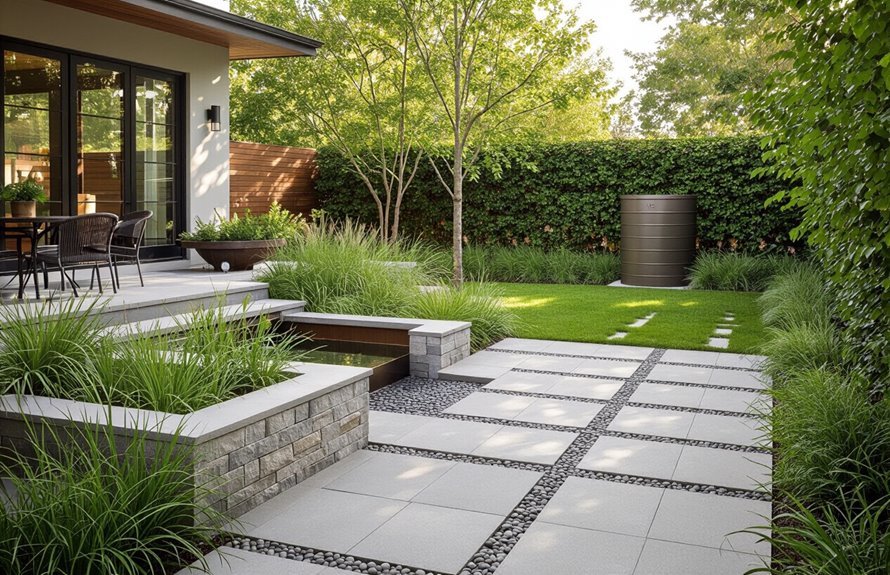
Because water shapes both your landscape and your utility bills, designing for efficiency and rainwater capture should be central to any sustainable outdoor space.
You’ll plan irrigation zones by plant needs, install smart controllers, and choose drought-tolerant natives to cut demand.
Integrate rain garden design near downspouts to slow runoff, filter pollutants, and recharge soil.
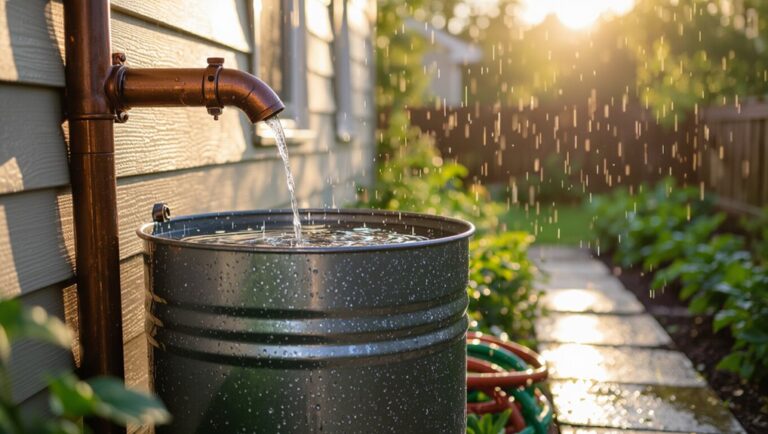
Add cisterns or barrels to harvest roofwater for irrigation, sizing storage to seasonal rainfall and garden demand.
Consider greywater reuse from laundry or showers where local codes allow, directing treated flows to mulch basins or subsurface trenches for safe reuse and reduced potable water use.
Incorporating Permeable Surfaces and Reduced Hardscape
If you want a landscape that manages stormwater, reduces heat, and invites more greenery, prioritize permeable surfaces and cut back on impermeable hardscape.
Choose permeable paving for driveways, paths, and patios so water soaks into gravel, sand, or engineered voids instead of running off. Break up large slabs with planting strips and mulch beds to cool surfaces and support biodiversity.
Use grade, swales, and rain gardens to direct flow into planted areas, creating sustainable drainage without pipes. Reduce total paved area and favor mixed-texture groundcover to lower heat island effect and improve site hydrology.
Selecting Sustainable Materials for Decks and Patios
Permeable paving sets the tone, but the materials you pick for decks and patios will determine how green and long-lasting your outdoor living spaces are.
Choose durable, low-maintenance options that cut waste and chemical use. Consider reclaimed or FSC-certified woods, recycled composite boards, and natural stone sourced locally.
For patios, prioritize eco friendly patio materials like permeable pavers, stabilized gravel, and responsibly quarried flagstone. Match materials to use and climate to reduce replacements.
- Reclaimed or FSC-certified wood
- Recycled composite sustainable decking options
- Local natural stone
- Permeable pavers and stabilized gravel
Building Long-Lasting, Low-Impact Outdoor Furniture
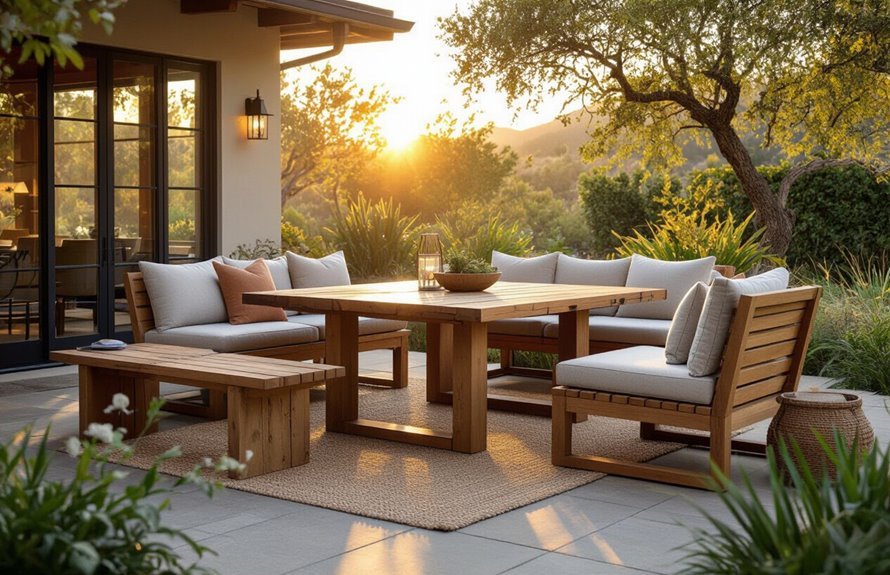
When you build outdoor furniture with durable, low-impact materials and simple joinery, you’ll cut maintenance and replacement cycles while keeping chemical use and waste down.
Choose rot-resistant woods like cedar or reclaimed hardwoods, or composite boards made from recycled materials. Use stainless or galvanized fasteners and avoid toxic finishes; opt for oil or water-based sealers.
Design pieces to be modular and multi functional designs—benches that become tables, stackable chairs, storage benches—to extend usefulness.
Plan for repairability: standard hardware, replaceable slats, and accessible joints. Small thoughtful choices now save resources, time, and landfill space later.
Integrating Solar Lighting and Renewable Power Options
You can brighten walkways and patios with solar pathway lighting that charges by day and turns on automatically at dusk.
For larger needs, consider off-grid power systems—like solar panels with battery storage—to run pumps, lighting, and small appliances without tapping the grid.
Combine both approaches to keep your outdoor space functional and low-impact.
Solar Pathway Lighting
Although solar pathway lighting needs a little planning, it gives you an easy, low‑maintenance way to light walkways and patios without adding to your electricity bill.
You can boost energy efficiency with quality fixtures and thoughtful placement. Consider solar panel integration for fixtures that recharge faster or connect to a shared panel for cloudy seasons.
Choose warm LEDs, durable materials, and adjustable stakes to match your landscape. Maintain panels and clear shading for best performance.
Think about what you need for safety, ambiance, and longevity.
- Placement
- Brightness
- Durability
- Maintenance
Off-Grid Power Systems
If you want reliable lighting and appliance power without tying into the grid, an off‑grid system combining solar panels, batteries, and efficient loads gives you independence and resilience.
You’ll size solar battery storage to match daily use and autonomy needs, choosing deep‑cycle batteries and a quality charge controller.
Add an inverter sized for peak loads and prioritize LED lighting and efficient appliances to reduce capacity needs.
For sites with steady wind, consider wind turbine integration to diversify generation and shorten battery drawdowns.
Monitor system performance, secure permits, and plan maintenance so your outdoor space stays powered and low‑impact.
Creating Wildlife-Friendly Habitats and Pollinator Gardens
Bring native plants and water features into your yard to invite birds, bees, butterflies and other beneficial wildlife while cutting maintenance and chemical use.
You’ll create native habitats that support local species, connect wildlife corridors, and boost pollinator resources. Plan layered planting, leave brush piles, and add shallow water for drinking. Aim for biodiversity gardens that bloom across seasons so food and shelter are always available.
- Choose local perennials and shrubs for continuous nectar.
- Provide nesting sites: bee hotels, bird boxes, brush.
- Avoid pesticides; use organic pest controls.
- Group plants by moisture and sun needs.
Designing Outdoor Cooking Areas With Eco-Conscious Appliances
When you plan an outdoor kitchen, choose eco-conscious appliances that cut energy use and pollution without sacrificing performance.
Pick efficient outdoor appliances like induction burners, high-efficiency grills, and tankless water heaters to lower fuel needs.
Use eco friendly materials for counters and cabinetry—reclaimed wood, recycled composite, or sustainably sourced stone—to reduce embodied carbon.
Design for ventilation, shaded work zones, and smart controllers to optimize energy and limit emissions.
Incorporate LED task lighting and rain-protected outlets.
You’ll save resources, spend less on utility bills, and enjoy a durable, low-impact cooking space that fits sustainable living goals.
Implementing Composting and Organic Waste Management
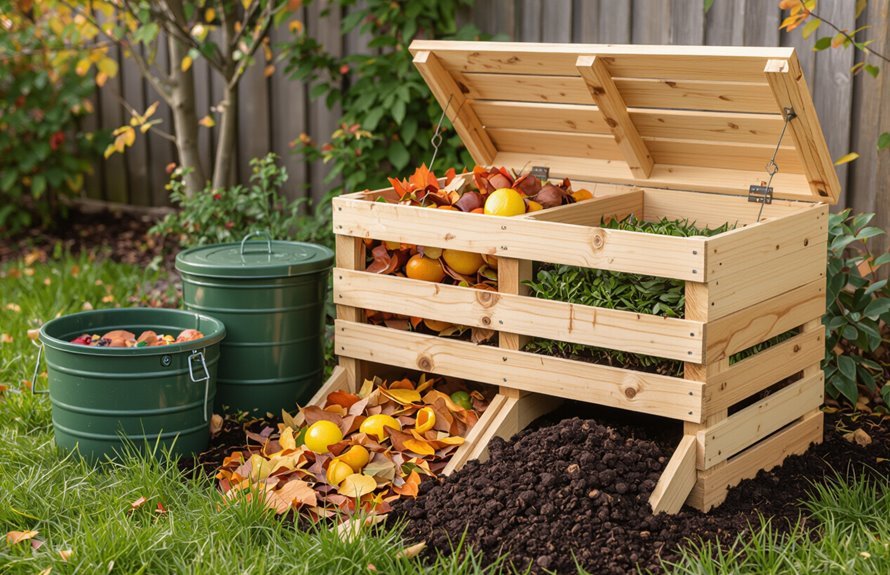
To keep your outdoor space truly sustainable, start by choosing the right composter for your needs—tumbler, bin, or worm bin—and place it where it’s convenient yet unobtrusive.
You’ll want a simple system for kitchen scraps (no meats or oils) so they break down quickly and don’t attract pests.
For yard waste, shred and layer leaves and prunings or set up a separate pile so you can turn it into rich mulch and compost for beds and containers.
Choosing the Right Composter
If you’re serious about reducing waste and enriching your soil, choosing the right composter makes a big difference; consider size, materials you’ll compost, maintenance time, and how much space you have.
You’ll weigh composter types and the compost benefits for your garden. Match capacity to household output, pick durable materials that resist pests, and choose a design you’ll actually maintain.
Location affects odor and access. Start simple if you’re new, upgrade later for faster results, and guarantee good airflow and moisture control.
- Tumblers: fast, low-lift maintenance
- Bins: affordable, simple
- Worm bins: great for small spaces
- Hot systems: rapid decomposition
Composting Kitchen Scraps
Now that you’ve picked a composter that fits your space and habits, start bringing kitchen scraps into the system so they actually become garden gold.
Collect fruit and vegetable peels, coffee grounds, eggshells, and tea bags in a countertop pail. Chop larger bits to speed breakdown and layer with dry browns like shredded paper to balance moisture and odor.
Turn the pile weekly, monitor temperature, and keep it damp like a wrung-out sponge. Avoid meat, dairy, and oils to prevent pests.
With simple kitchen composting you’ll reduce waste, enrich soil, and enjoy clear compost benefits for thriving plants.
Managing Yard Waste
When you tackle yard waste thoughtfully, you cut landfill trips and create valuable compost and mulch for your outdoor space.
You’ll sort leaves, grass clippings, and prunings, then apply composting techniques suited to your scale — tumblers, bins, or windrows.
Yard waste recycling keeps nutrients local and reduces waste hauling.
Turn materials regularly, balance greens and browns, and monitor moisture to speed breakdown.
Use finished compost for beds and shredded branches as mulch or path cover.
Start small, then expand.
Your choices lower waste and nourish soil, making your outdoor living space healthier and more sustainable.
- Choose a composting method
- Balance greens/browns
- Maintain moisture and aeration
- Repurpose finished compost
Planning for Shade, Wind Protection, and Microclimates
Because sun, wind, and local temperature patterns shape how comfortable your outdoor space feels, plan for shade, wind protection, and microclimates together rather than separately.
You’ll map sun paths and prevailing winds, then create outdoor zoning that places seating, dining, and play areas where comfort is naturally higher.
Use shade structures—pergolas, retractable awnings, and trees—to reduce heat, and add wind barriers like hedges, screens, or berms to block gusts without trapping heat.
Combine planting and hardscape to craft microclimate management: orient surfaces, choose materials with appropriate thermal properties, and allow airflow for cooling and shelter.
Using Greywater Systems and Efficient Irrigation Strategies
If you want to cut water use and lower utility bills, integrating greywater systems and efficient irrigation gives your outdoor space big payoffs; they let you reuse lightly used household water and deliver moisture precisely where plants need it.
You’ll reduce potable water demand with greywater recycling and smart irrigation techniques, protect soil health, and keep plants thriving.
- Install a simple diversion from laundry or shower lines to mulch basins.
- Use drip lines and soaker hoses to target roots.
- Add timers and moisture sensors to avoid overwatering.
- Choose drought-tolerant plants to match recycled water quality.
Installing Green Roofs, Living Walls, and Vertical Gardens
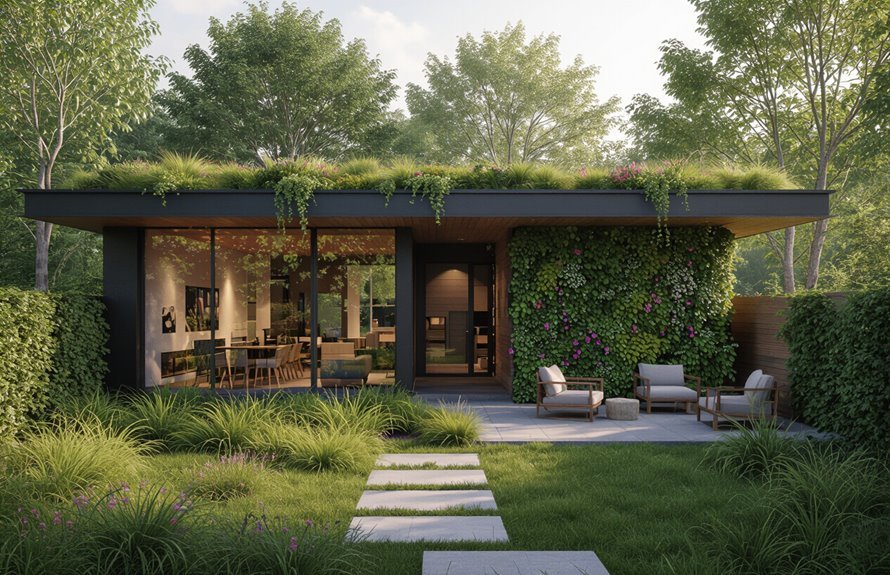
You can boost insulation, reduce stormwater runoff, and extend roof life by installing a green roof that fits your structure and climate.
Choose a living wall system—modular panels, felt pockets, or hydroponic rigs—based on maintenance needs and water access.
Pick vertical garden plants that tolerate your light conditions and root space, like sedums and native perennials for low care or herbs and salad greens for frequent harvesting.
Green Roof Benefits
While green roofs, living walls, and vertical gardens may sound decorative, they deliver real environmental and practical benefits—cooling buildings, managing stormwater, improving air quality, and creating habitat—while also boosting property value and occupant well-being.
You’ll pick from various green roof types (extensive, intensive) to match load capacity, budget, and desired use. Proper green roof maintenance keeps systems healthy and effective, from irrigation checks to seasonal pruning.
Benefits you’ll notice include:
- Lower energy bills and reduced urban heat island effects.
- Slowed runoff and improved stormwater retention.
- Enhanced biodiversity and pollinator habitat.
- Noise reduction and improved occupant comfort.
Living Wall Systems
Living wall systems bring plants vertical, turning blank exterior or interior surfaces into vibrant, space-saving ecosystems that improve air quality, insulate buildings, and attract pollinators.
You can install modular panels, pocket systems, or trellises to suit scale and maintenance needs. Prioritize lightweight substrate, efficient irrigation, and durable backing to prevent moisture damage.
Use proper drainage and routine pruning to sustain plant health and system longevity.
Besides aesthetics, living wall benefits include reduced energy use and urban heat mitigation.
Learn vertical gardening techniques for planting patterns, irrigation scheduling, and structural anchoring so your wall thrives with minimal waste.
Vertical Garden Plants
Having covered how living wall systems transform surfaces and conserve resources, let’s look at choosing plants for vertical gardens, green roofs, and wall installations.
You’ll select species that suit light, weight, and maintenance limits to maximize vertical garden benefits and complement vertical garden designs. Consider native sedums for green roofs, cascading herbs for balconies, shade-tolerant ferns for north walls, and pollinator-friendly flowers for mixed panels.
Rotate seasonal accents and plan irrigation zoning. Maintain access for pruning and replace failures promptly.
With thoughtful plant choice and layout, you’ll get resilient, attractive vertical systems that save water, boost biodiversity, and soften hardscapes.
Choosing Low-VOC Finishes, Sealants, and Treatments
Because the finishes, sealants, and treatments you choose affect both your outdoor environment and your health, pick low-VOC options whenever possible to cut harmful emissions without sacrificing durability.
Choose eco friendly paints and non toxic sealants for decks, siding, and furniture to reduce off-gassing. Use natural wood treatments like oils and waxes derived from renewable resources to protect timber without chemicals.
Select sustainable outdoor fabrics and furniture finishes rated for low emissions. Prefer biodegradable finishes where exposure to soil or water is likely.
Read labels, verify third-party certifications, and buy from suppliers committed to transparency so your space stays healthy and long-lasting.
Incorporating Smart Controls and Energy-Efficient Systems
You can cut energy use and boost comfort by adding smart lighting and efficient climate controls to your outdoor space.
Program lights and sensors to run only when needed, and choose LED fixtures with tunable color and motion activation.
Pair thermostatic or zoned heating and smart fans with weather-aware controls to keep temperatures comfortable without wasting power.
Smart Lighting Strategies
Want to make your outdoor space both welcoming and energy-smart? Use smart bulb options and layered ambient lighting to set mood, save energy, and boost safety. You’ll control brightness, color, and schedules from your phone or hub, linking sensors and timers to cut waste.
- Choose LED smart bulb options for low wattage and long life.
- Use ambient lighting—path, deck, and accent—to create zones.
- Integrate motion sensors to light only when needed.
- Program scenes and schedules to match seasons and activities.
These steps keep your outdoor lighting efficient, flexible, and easy to manage.
Efficient Climate Controls
Good lighting sets the mood and conserves energy, and the same smart thinking can help you keep outdoor temperatures comfortable without wasting power.
You’ll combine passive cooling—shade, orientation, and ventilation—with thermal mass like stone or water to moderate swings.
Add energy-efficient fans, infrared heaters, or heat-pump units sized for the space, and control them with smart thermostats and occupancy sensors so systems run only when needed.
Solar power and battery storage can offset operating costs.
Program scenes with your home hub or phone app to balance comfort and efficiency, and monitor usage to refine settings over time.
Pathways, Edging, and Drainage Solutions for Sustainability
When planning pathways, edging, and drainage for a sustainable outdoor space, think long-term: choose permeable materials that direct water where plants need it, edge beds to prevent soil loss, and size drains to handle peak flows so you avoid erosion and costly fixes.
- Use sustainable materials like recycled pavers or gravel for eco friendly pathways to reduce runoff and embodied energy.
- Install flexible edging (steel or recycled plastic) to keep soil and mulch contained without hard barriers.
- Create swales or dry creek beds to slow and infiltrate stormwater close to source.
- Add grit trenches and catch basins sized for local rainfall intensity.
Maintenance Plans That Minimize Chemical Use and Water Waste
Because regular care shapes long-term performance, create a maintenance plan that prioritizes cultural controls, efficient irrigation, and spot treatments so you cut chemical use and water waste.
Inspect plants weekly for pests and disease, remove affected foliage, and encourage beneficial insects to support chemical free gardening.
Mulch to retain moisture, suppress weeds, and moderate soil temperature.
Schedule irrigation for early morning, use drip lines or smart controllers, and group plants by water needs to apply water efficient practices.
Use hand-pulling, targeted organic sprays, and soil health amendments to prevent problems before they need broad chemical or excessive water fixes.
Community-Oriented Features and Resource Sharing
How can your outdoor space become a neighborhood asset as well as a private retreat?
Invite neighbors into community gardens and urban farming plots, host neighborhood workshops and local events, and set up resource libraries with shared tools for repairs and planting.
Encourage collaborative landscaping, skill sharing, and food swaps to strengthen ties.
Consider communal firepits for evenings and skill exchanges that teach sustainable practices.
- Organize community gardens and urban farming shifts.
- Build a resource library with shared tools.
- Schedule neighborhood workshops and local events.
- Promote food swaps, collaborative landscaping, and skill sharing.
Measuring Performance and Adapting for Long-Term Resilience
Shared projects like community gardens and tool libraries are living experiments, so you’ll want ways to measure what’s working and adapt as conditions change.
Set clear performance metrics — yield per square foot, water use, tool turnover, participation rates — and track them regularly. Use simple logs, sensors, or monthly check-ins to gather data.
Review results with stakeholders, identify trends, and prioritize low-cost fixes first. Implement adaptive strategies like shifting plant varieties, altering irrigation schedules, or revising membership rules.
Document changes and outcomes so you learn over time. That feedback loop keeps the space resilient, efficient, and aligned with community needs.
Conclusion
You can create an outdoor space that looks great, saves money, and protects local ecosystems—starting with smart site assessment and durable, low-water choices. Aim for native plants, permeable surfaces, and rain capture to cut runoff and irrigation. Interesting stat: yards converted to sustainable landscaping can reduce outdoor water use by up to 50%. With modest planning, shared tools, and low-chemical maintenance, your yard will stay resilient, affordable, and community-minded for years.