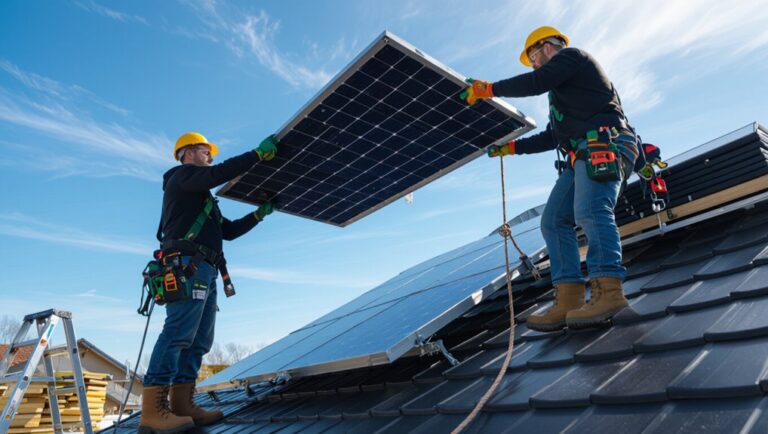
The Benefits of Rainwater Harvesting for Homeowners
You can cut your water bills, boost home resilience, and ease pressure on local supplies by capturing roof runoff for irrigation, laundry, and toilet flushing. Gutters, screens, filters, and tanks keep water usable for nonpotable uses, while first‑flush diverters and routine maintenance prevent problems. Systems range from simple barrels to larger tanks with pumps, and incentives may offset costs. Start small to see savings and learn how scaling up and combining with greywater adds greater benefits.
Understanding How Rainwater Harvesting Works
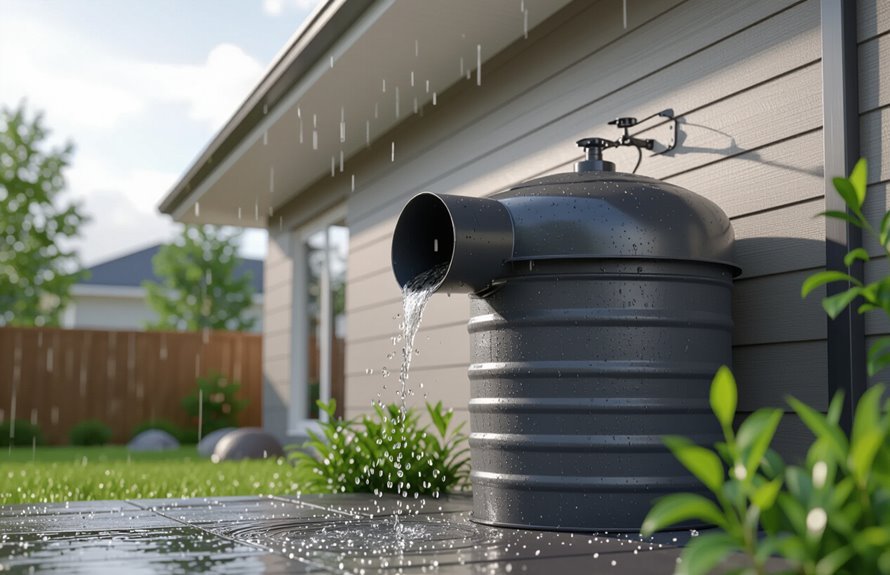
Because rain falls on your roof and flows downhill, harvesting it’s basically a matter of catching, filtering, and storing water for later use.
You position gutters and downspouts to direct runoff into tanks, then choose rainwater collection techniques like first-flush diverters and mesh screens to keep debris out.
You’ll add filters and sediment traps so water’s suitable for irrigation, laundry, or nonpotable uses; benefits of filtration include reduced clogging, improved water quality, and longer equipment life.
You monitor storage levels, secure overflow paths, and maintain components seasonally so your system stays safe and efficient.
Reducing Household Water Bills
Harvesting rainwater can cut your municipal water bill by diverting a portion of outdoor and some indoor water needs to a free, onsite source.
You’ll see cost savings quickly when you use collected water for lawns, gardens, car washing, and toilet flushing, reducing metered consumption.
Track usage to estimate payback and include system expenses in financial planning so you know when savings offset installation and maintenance.
Simple systems lower bills immediately; larger setups give greater long-term relief.
Monitor seasonal patterns, maintain filters, and adjust irrigation to maximize savings without compromising household needs.
Increasing Water Independence and Resilience
By collecting and using rainwater, you cut back on municipal supply and lessen strain on public systems.
It also gives you a reliable backup during droughts so you’re less vulnerable to restrictions.
That self-reliance can keep your utility bills lower and more predictable over time.
Reduce Municipal Water Use
When you collect rainwater at home, you cut how much you pull from the municipal supply, easing demand on local systems and lowering your water bills. You’ll see rainwater benefits immediately for irrigation, car washing, and nonpotable uses, and you’ll adopt sustainable practices that reduce community stress. That lowers infrastructure wear and delay for utilities, helping rates stay stable. You also gain independence when systems are strained. Use the table below to compare common uses and municipal load reduction.
| Use | Municipal Demand Reduced |
|---|---|
| Garden irrigation | High |
| Laundry (graywater) | Medium |
| Car washing | Medium |
| Landscaping | High |
| Toilet flushing | High |
Backup During Droughts
If droughts cut municipal supply, having a rainwater system keeps your household running for essential needs like irrigation, toilet flushing, and basic cleaning.
You’ll store captured rain to increase drought resilience, giving you a local supply when mains pressure drops or rationing starts. Properly sized tanks and simple filtration let you access emergency water quickly for hygiene, pets, and garden recovery.
You can prioritize uses, stretch potable reserves, and maintain comfort without relying solely on deliveries. Regular maintenance and testing guarantee safety, so your system truly functions as a dependable backup during droughts and short-term outages.
Lower Utility Bills
As you capture and use rainwater for chores that usually tap the municipal supply, you’ll see your water bills drop and your dependence on utilities shrink.
You’ll reduce meter readings by using collected rain for irrigation, car washing, and toilet flushing, creating measurable cost savings over time.
Systems with gravity feed or efficient pumps cut electricity use, improving energy efficiency while lowering operating costs.
Fewer municipal withdrawals also shield you from rate hikes and reduce strain during peak demand.
With modest maintenance and smart system sizing, you’ll gain long-term financial resilience and greater control over household water expenses.
Conserving Municipal Water Supplies
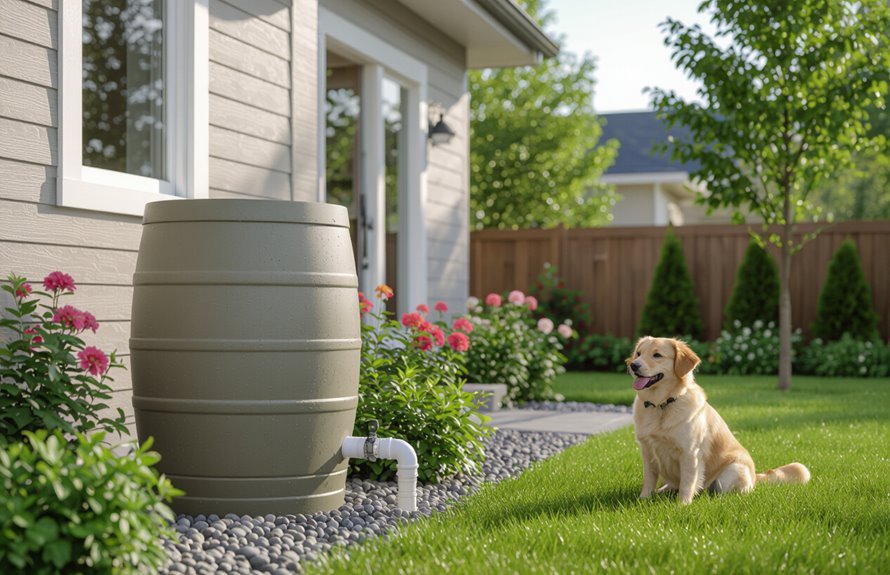
Because municipal systems are stretched thin during dry months and growth, harvesting rain lets you cut your demand on treated water, easing pressure on reservoirs and treatment plants.
You’ll practice water conservation by using captured rain for irrigation, washing, and nonpotable chores, reducing withdrawals from municipal supplies. That lowers energy and chemical use tied to treatment, supports municipal sustainability goals, and helps utilities manage peak demand without costly expansions.
When neighbors adopt similar systems, your collective reduced draw helps maintain reservoir levels and system reliability.
Installing a simple cistern and fixtures makes your contribution practical, measurable, and cost-effective.
Lowering Stormwater Runoff and Erosion
By capturing rain on your property, you’ll reduce the volume of stormwater that rushes into streets and drains.
Slowing that flow with tanks, barrels, or infiltration beds also cuts peak runoff rates.
That lower, gentler movement helps prevent soil erosion around your yard and nearby waterways.
Reduce Runoff Volume
When you capture rainwater on your property, less stormwater rushes across lawns and pavement, so you’re directly cutting runoff volume and the erosion it causes.
You collect roof and surface water in barrels or cisterns, reducing peak flows into gutters and drains. That helps stormwater management by lowering burden on public systems and minimizing sediment and pollutant transport.
With simple measures—gutters, storage, and overflow routing—you gain effective runoff control and protect slopes, planting beds, and curbs from scour.
You also reduce flood risk for neighbors and cut municipal treatment costs, making your yard greener and more resilient.
Slow Water Flow
Slowing water flow complements reduced runoff volume by giving rain more time to soak into soil instead of racing across your property.
You can direct captured rain to swales, permeable paving, or rain gardens that encourage slow absorption and reduce peak flows. These features increase water retention in root zones, supporting plants and recharging groundwater rather than dumping water downstream.
When you design systems to slow movement, you lower stress on storm drains and reduce localized flooding risk.
Maintain channels and mulch to keep flow rates low and consistent so your landscape captures more rain and performs reliably during storms.
Prevent Soil Erosion
Although rain can give your garden life, uncontrolled flows strip topsoil and wash away mulch, nutrients, and seeds. You can reduce stormwater runoff by capturing rain at the source with barrels, cisterns, and rain gardens that slow release.
Those practices support soil stability by keeping moisture on-site and feeding plant roots rather than sending water downhill. Established vegetation, mulch, and contouring combined with harvested water provide practical erosion control.
You’ll protect slopes, prevent gullies, and preserve planting beds while reducing sediment in drains. Implementing these measures lowers maintenance needs and helps your landscape withstand heavy storms.
Improving Garden and Landscape Health
Healthy soil and thriving plants are much easier to maintain when you use rainwater, because it’s naturally soft and free of the salts and chemicals found in municipal supplies.
You’ll notice improved soil moisture, so roots access water evenly and plants stress less during dry spells. Using harvested rain supports garden biodiversity by encouraging pollinators, native plants, and beneficial microbes that struggle with treated water.
You can target runoff to flowerbeds, trees, or vegetable patches, reducing supplemental watering and keeping nutrients balanced. With simple watering schedules and rain-fed irrigation, your landscape stays healthier, more resilient, and visually vibrant.
Supporting Sustainable Home Practices
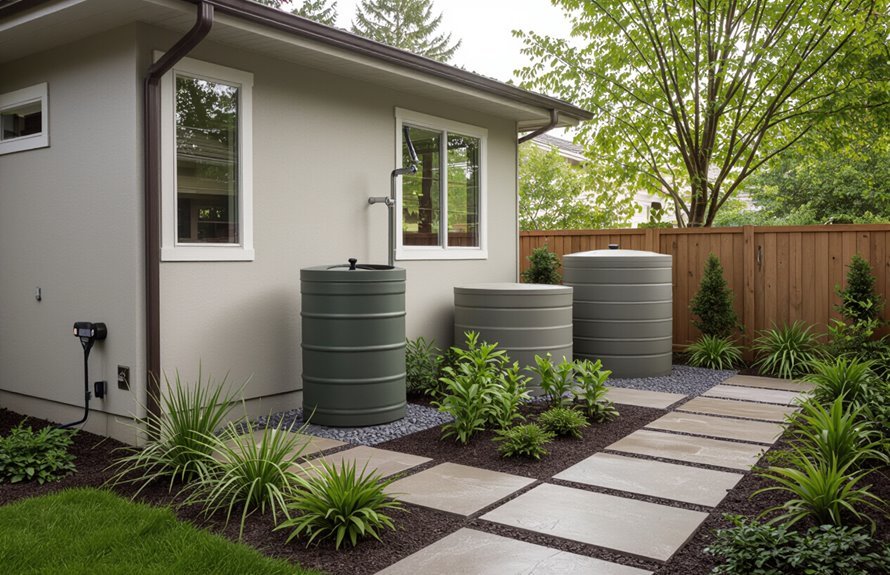
When you collect rainwater, you cut your household’s demand on treated supplies and lower both water bills and environmental impact.
You’ll foster sustainable landscaping by using captured water for native plants and reducing runoff. These eco friendly practices help conserve municipal resources, support local wildlife, and cut energy tied to water treatment.
You’re also building resilience against drought and showing neighbors practical stewardship. Small systems scale: a barrel or cistern makes a difference.
Feel pride in everyday conservation and pass that ethic on.
- Relief knowing you’re saving resources
- Joy watching wildlife return
- Calm during dry spells
- Pride in hands-on stewardship
Enhancing Property Value With Eco-Friendly Features
Because buyers are increasingly prioritizing sustainability, adding rainwater harvesting can make your home more marketable and may boost resale value. You’ll attract eco conscious buyers by combining practical savings with visible eco friendly upgrades that enhance property aesthetics. A neat tank, landscaped overflow, and informational plaque show care and intention. Highlight reduced irrigation costs and lower utility bills in listings. Use certifications or local incentives as selling points. Below is a quick comparison to show buyer appeal:
| Feature | Buyer Impact | Visual Effect |
|---|---|---|
| Rain tank | Cost savings | Clean focal point |
| Drip system | Low maintenance | Discreet lines |
| Rain garden | Ecological value | Lush border |
| Certification | Credibility | Badge on listing |
Reducing Demand During Droughts
If droughts tighten local water supplies, you can ease strain by using harvested rain for nonpotable needs like irrigation, toilet flushing, and laundry.
That shift boosts your drought preparedness and supports water conservation while keeping gardens alive and bills lower. You’ll feel relieved knowing you’re less dependent on rationed mains.
Rainwater systems give immediate, practical options during restrictions and help your household stay resilient without drastic lifestyle changes.
- Relief watching green shrubs survive dry months
- Pride in protecting community supplies
- Calm knowing toilets and taps still work
- Confidence in your household’s self-reliance
Saving Energy Through Reduced Water Treatment Needs
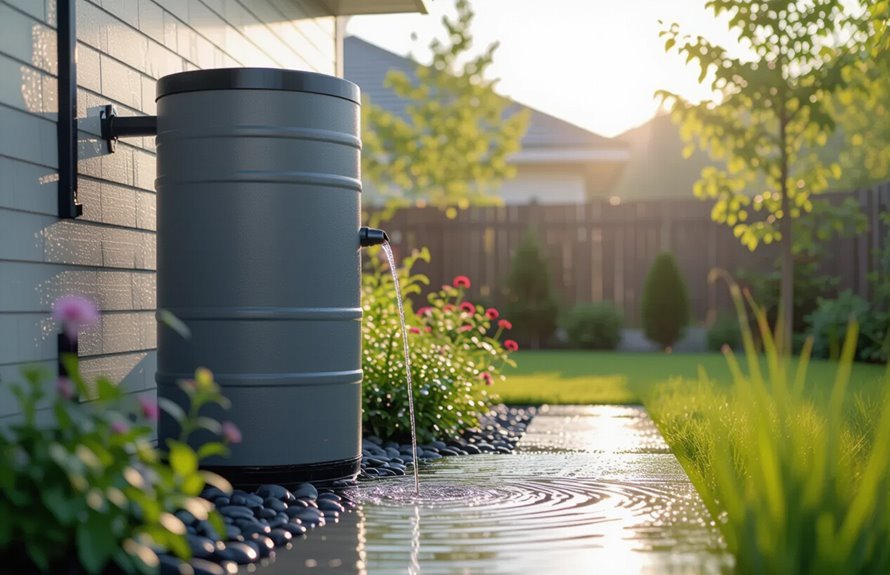
By collecting rainwater for outdoor use and nonpotable tasks, you cut down on the volume the utility has to pump, which saves energy across the system.
That reduced flow also lessens the load on treatment plants, so less electricity and chemicals are needed to make water potable.
And by using harvested rain for washing or irrigation, you’ll lower your hot-water use at home and trim household energy bills.
Less Municipal Pumping
When you collect rainwater at home, your demand on the municipal supply drops and the city can cut back on how much it pumps and treats.
You help reduce strain on aging pumps and lower peak demand, which saves fuel and grid stress. This also creates opportunities for community engagement and educational workshops so neighbors learn low-cost systems and shared benefits.
You’ll see fewer service interruptions and slower infrastructure wear when many households participate. Imagine quieter pump stations and cleaner local streams as less treated discharge is needed.
- Pride in conserving resources
- Hope for lower bills
- Trust in local resilience
- Motivation to teach others
Lower Treatment Energy
Because harvesting rain reduces the volume of water entering treatment plants, you cut the energy needed for filtration, disinfection, and pumping through the treatment process.
By using captured rain for irrigation, toilet flushing, and outdoor chores, you lower demand on centralized systems, improving energy efficiency across the water cycle.
That reduced load translates to fewer greenhouse gas emissions and tangible environmental benefits in your community.
You also ease peak treatment requirements, which can delay costly upgrades and spread operating energy more evenly.
Installing a simple storage-and-distribution setup makes your household part of a smarter, leaner water network.
Reduced Hot-Water Demand
Lowering the volume of water sent to treatment plants also cuts the energy used to heat household hot water.
By using harvested rainwater for laundry, irrigation, and toilet flushing, you lower demand on treated supplies and see real energy savings.
You’ll reduce utility bills, shrink your home’s carbon footprint, and reinforce sustainable practices that matter.
Practical systems are simple to maintain, and the payoff grows over time.
- Feel proud lowering bills and emissions.
- Enjoy the comfort of efficient, eco-friendly living.
- Relax knowing you’re conserving municipal resources.
- Celebrate small daily actions that add up.
Simple Rainwater Collection Systems for Beginners
If you’re new to rainwater harvesting, start with a basic system you can install and maintain yourself: a roof catchment, a downspout diverter, and a food-grade storage barrel.
You’ll find simple systems work well for garden watering and car washing. Position the barrel on a stable platform, add a screened inlet to keep debris out, and fit a spigot near the bottom for easy access.
Use beginner tips: slope gutters toward the diverter, sanitize barrels before use, and include an overflow outlet.
Check fittings after storms and winterize if needed. These steps keep your setup safe and functional.
Designing an Efficient Rainwater Storage System
A well-designed storage system maximizes the water you capture while minimizing space, cost, and maintenance.
You’ll pick rain barrel types that fit your yard and budget, place them for gravity-fed flow, and calculate storage capacity based on roof area and rainfall.
Use modular tanks to expand later, elevate barrels for pressure, and include accessible outlets for hoses.
Keep connections secure and protect tanks from sunlight to reduce algae.
- Imagine reliable water for your garden during drought.
- Feel proud saving on bills.
- Enjoy independence from interruptions.
- Trust a system built to last.
Filtration and Treatment Options for Safe Use
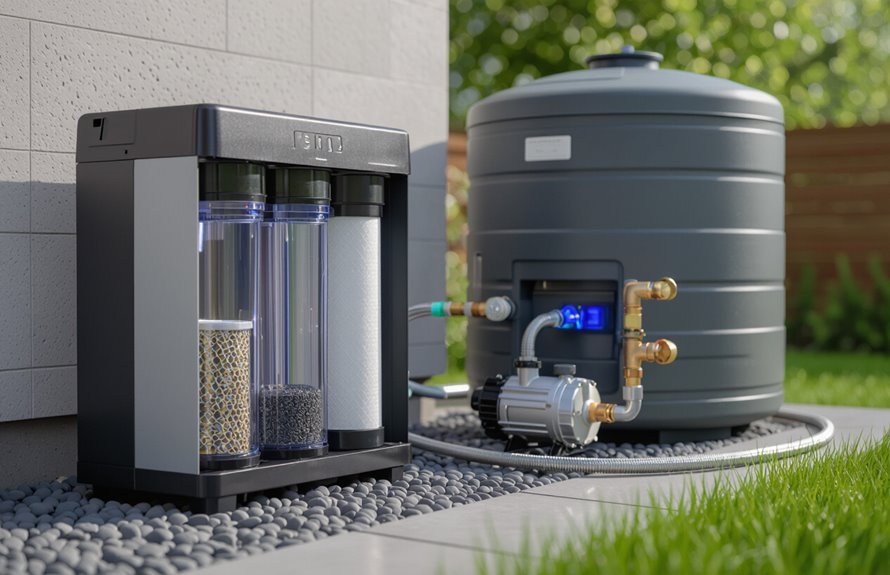
Now that you’ve set up a storage system that captures and holds water efficiently, you’ll want to make certain what’s in those tanks is safe for its planned uses.
You’ll choose filtration methods based on end use: coarse screens and sediment filters for irrigation, activated carbon for taste and odor, and fine membrane filters for potable needs.
Pair filters with treatment technologies like UV disinfection, chlorination, or ozonation to remove microbes.
Maintain and test systems regularly, replace cartridges per manufacturer guidance, and flush first-flush diverters.
Proper selection and upkeep guarantee water quality matches landscape, laundry, or household supply requirements.
Legal and Regulatory Considerations for Homeowners
Before you install a system, check local laws and ordinances so you know what’s allowed where you live.
You’ll likely need permits or approvals for tank size, placement, or plumbing changes.
Also confirm any water quality regulations that affect how you can use harvested rainwater.
Local Laws and Ordinances
Because local rules vary widely, you should check municipal and state regulations before installing a rainwater-harvesting system to avoid fines or required modifications.
You’ll want to know rainwater regulations, setbacks, allowed uses, and harvesting compliance standards. Local ordinances can affect tank size, overflow routing, and public health safeguards.
Don’t assume it’s the same as neighboring towns; contact your zoning office or health department first. If rules seem confusing, get a brief legal or installer consultation so you can act confidently and avoid costly changes later.
- Relief when you learn it’s allowed
- Frustration at unexpected limits
- Pride in following rules
- Peace knowing you’re compliant
Permitting and Approvals
If you’re planning to install a rainwater-harvesting system, you’ll likely need permits and approvals to keep the project legal and safe.
You should check local building codes, zoning rules, and utility requirements before buying equipment. Contact your municipal permitting office to learn permit types, submission documents, fees, and the approval timeline for inspections or variances.
Provide site plans, tank specifications, and plumbing details to speed review. Hire a licensed contractor or consultant if regulations are complex.
Keep records of approvals and inspections to avoid fines and to guarantee future resale compliance. Follow conditions specified in issued permits.
Water Quality Regulations
When you collect and use rainwater, local and state water quality rules determine how you must treat, store, and distribute it to protect public health and comply with the law.
You’ll need to meet specific quality standards, follow guidelines for filtration and disinfection, and keep records proving water safety.
Inspect storage tanks, use approved materials, and avoid cross-connections with potable supply. Noncompliance can bring fines or forced system shutdowns, so plan accordingly and consult regulators before installing systems.
- You’ll feel safer knowing systems meet standards.
- You’ll avoid costly penalties.
- You’ll protect your family’s health.
- You’ll gain community trust.
Cost Estimates and Return on Investment
Although upfront costs vary widely by system size and complexity, you can expect most residential rainwater-harvesting setups to land in predictable price ranges once you break down the components. You’ll weigh purchase and installation against projected cost savings from lower bills and reduced municipal demand. Do a simple investment analysis: calculate payback by dividing net system cost by annual water-value savings. Consider incentives and increased property value. Below is a quick cost guide:
| Component | Typical Range |
|---|---|
| Basic system | $800–$2,500 |
| Mid-range | $2,500–$7,000 |
| High-capacity | $7,000–$20,000 |
Maintenance Tips for Long-Term Performance
To keep your system working well, you should schedule regular tank cleanings to remove sediment and prevent odors.
Check and clean filters and screens often so leaves and debris don’t clog the flow.
Also perform seasonal inspections to catch wear, leaks, or freezing risks before they become costly.
Regular Tank Cleaning
Keep your tank clean to protect water quality and extend system life. You should set a tank maintenance cleaning schedule and stick to it, checking for sediment, algae, and odors.
Empty and rinse tanks annually or sooner if you notice changes. Wear protective gear, remove sludge, and disinfect surfaces with appropriate solutions. Document each service so you track patterns and avoid surprises.
Regular cleaning prevents contamination and costly repairs, and it keeps your harvested water safe for garden use or emergency storage.
- Relief knowing water is safe
- Pride in a well-kept system
- Confidence against unexpected failures
- Calm from proactive care
Filter and Screen Checks
Because filters and screens are your first line of defense, check them regularly to keep debris, leaves, and insects from entering your tank and clogging pipes.
Inspect strainers and mesh after storms, clear trapped material, and flush housings to maintain flow.
For filter maintenance, follow manufacturer intervals, replace cartridges when flow drops or damage appears, and keep spare parts on hand.
Examine seals and frames for corrosion or warping so you can schedule timely screen replacement if holes or persistent clogging occur.
Document checks and actions so you spot patterns and extend system life with minimal downtime.
Seasonal System Inspections
Although your routine checks handle day-to-day issues, seasonal inspections catch problems that develop slowly over months. You should schedule a full system review at least once each change of season to protect performance and avoid costly repairs.
You’ll inspect tanks, gutters, pumps, and filters, note wear, and document findings for seasonal maintenance records. Address small leaks, sediment buildup, and electrical concerns before they worsen. Plan system upgrades when recurring issues appear.
Regular inspections preserve water quality, extend component life, and keep savings steady.
- Relief knowing your system won’t fail
- Pride in conserving water reliably
- Confidence avoiding emergency repairs
- Satisfaction from wise stewardship
Integrating Rainwater Into Irrigation and Appliances
When you tap rainwater for irrigation and appliances, you’ll cut municipal water use and lower your utility bills while keeping plants healthier with softer, chemical-free water.
You can apply targeted irrigation techniques—drip lines, soaker hoses, and timed zones—to maximize efficiency and reduce runoff.
Check appliance compatibility before connecting washers or toilets; some need filtration or pressure adjustments.
Size your water storage to match demand and rainfall patterns, and include first-flush diverters and screens.
Regular system maintenance—inspect pumps, filters, and seals, and clean tanks seasonally—to prevent contamination, extend equipment life, and guarantee reliable supply for landscape and home uses.
Combining Rainwater Harvesting With Greywater Systems
If you want a resilient, water-efficient home, combining rainwater harvesting with a greywater system lets you stretch every drop for irrigation, toilet flushing, and other nonpotable uses.
You’ll design system integration that routes roof runoff and lightly used household wastewater into separate storage and treatment, maximizing water reuse while keeping health risks low.
Proper filters, simple pumps, and clear labeling make maintenance straightforward, and phased installation fits your budget.
You’ll conserve potable water, lower bills, and build drought resilience.
- Relief as your garden thrives
- Pride in reduced bills
- Confidence in emergency supply
- Calm knowing you’re conserving
Common Mistakes and How to Avoid Them
Because small oversights can undercut an otherwise well-designed system, you’ll want to watch for a few predictable mistakes—undersized storage, poor filtration, cross-connections with potable plumbing, and skipping routine maintenance.
You should dispel common misconceptions like thinking any roof runoff is instantly potable; treat water before household use.
Avoid improper installations by hiring qualified contractors and following local codes. Size tanks to seasonal rainfall and your demand, install first-flush diverters and screens, and label pipes to prevent cross-connections.
Set a maintenance schedule for gutters, filters, and pumps. With careful planning and routine care, you’ll keep the system efficient and safe.
Incentives, Rebates, and Grants for Rainwater Projects
Although rainwater systems may seem costly up front, you can often recoup much of the expense through incentives, rebates, and grants offered by utilities, local governments, and conservation groups.
You should search for government incentives, tax rebates, and grant programs that support water conservation; these provide financial assistance and sustainable funding to reduce upfront costs and improve project financing.
Apply early, document system specs, and highlight environmental benefits to strengthen applications. Local utilities and nonprofits often list opportunities.
Look for combined funding to cover installation and maintenance so your system pays back faster and benefits your community.
- Relief that eases the burden
- Hope for affordable sustainability
- Pride in community impact
- Confidence in long-term savings
Conclusion
By capturing rain, you turn a free, falling gift into household resilience and savings — like filling a lifeboat before a storm. You’ll cut bills, ease demand on the city supply, and protect your yard from erosion while enjoying more control over your water. Start small, avoid common pitfalls, and explore rebates or combining systems for greater benefit. A modest investment now can keep your home steadier, greener, and more self-reliant.