
40 Commercial & Office Architecture Ideas to Modernize Your Space
To modernize your commercial and office space, consider open floor plans that encourage collaboration and include biophilic design for a healthier environment. Flexible office furniture lets you adapt to various work styles while transparent meeting rooms foster transparency. Don’t forget tech-enabled reception areas and colorful wayfinding systems that improve navigation. Incorporating outdoor collaboration zones can boost creativity too. There’s so much more to explore that can transform your workspace into a vibrant hub.
Biophilic Office Design
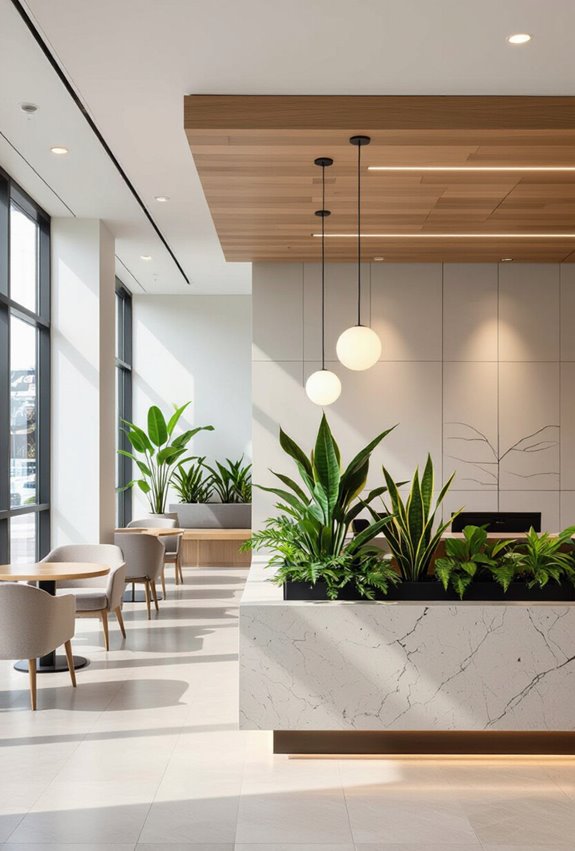
Because people work better where they’re connected to nature, biophilic office design brings daylight, greenery, and natural materials into the workplace to boost wellbeing and productivity.
You’ll use nature integration, indoor greenery, natural light, organic materials and biophilic elements like living walls and views to outdoor spaces.
This nature inspired design delivers measurable health benefits and supports psychological well being for staff.
Flexible Open-Plan Workspaces
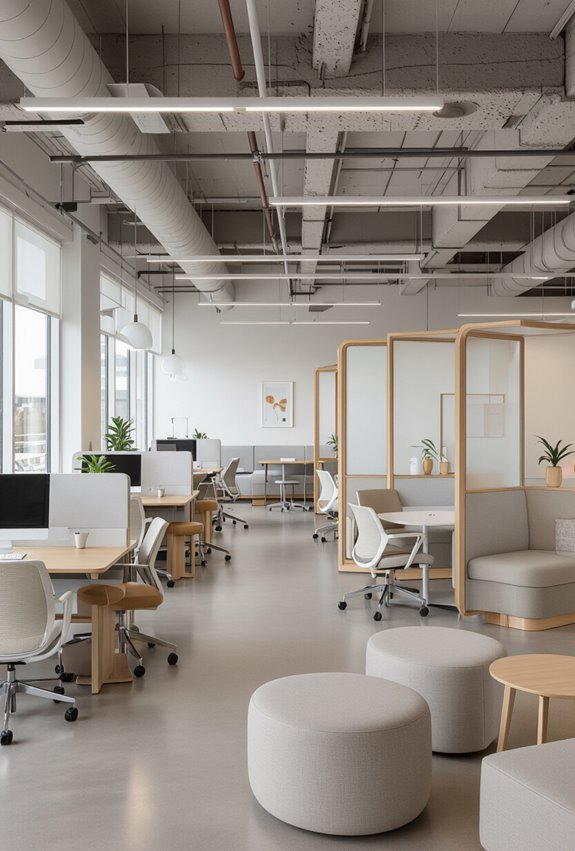
Although open-plan layouts prioritize collaboration and adaptability, you’ll design them to balance teamwork with focused work by zoning spaces, varying furniture, and integrating quiet rooms and phone booths.
You’ll create collaborative zones and creative environments with dynamic layouts, technology integration, wellness amenities, adaptability features, and inclusive spaces.
Use employee feedback to refine community engagement and productivity enhancements without sacrificing concentration.
Rooftop Gardens and Green Roofs
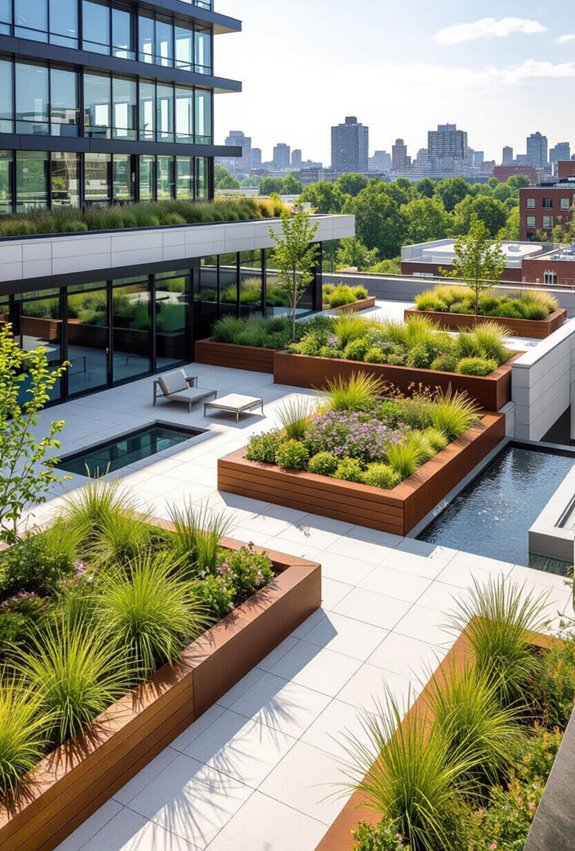
Extending zoning strategies upward, rooftop gardens and green roofs give you usable outdoor space while improving building performance and occupant well-being.
You’ll use sustainable landscaping and rainwater harvesting as part of green infrastructure to boost climate resilience.
Edible gardens and habitat creation support urban biodiversity and community engagement, delivering wellness benefits and aesthetic appeal that enhance tenant satisfaction and reduce stormwater runoff.
Passive Solar Office Design
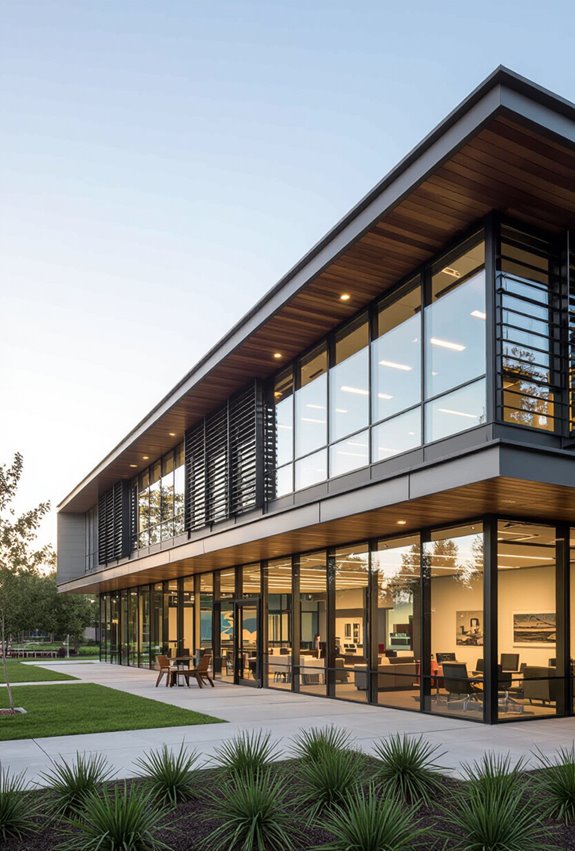
When you orient and shape an office to capture winter sun and block summer heat, passive solar design cuts energy use while boosting occupant comfort and daylighting.
You’ll place glazing, overhangs, and shading to optimize solar energy efficiency, and integrate thermal mass utilization—concrete floors or masonry walls—to store heat.
You’ll balance ventilation, insulation, and window performance for year-round comfort and lower operating costs.
Wellness-Focused Work Environments
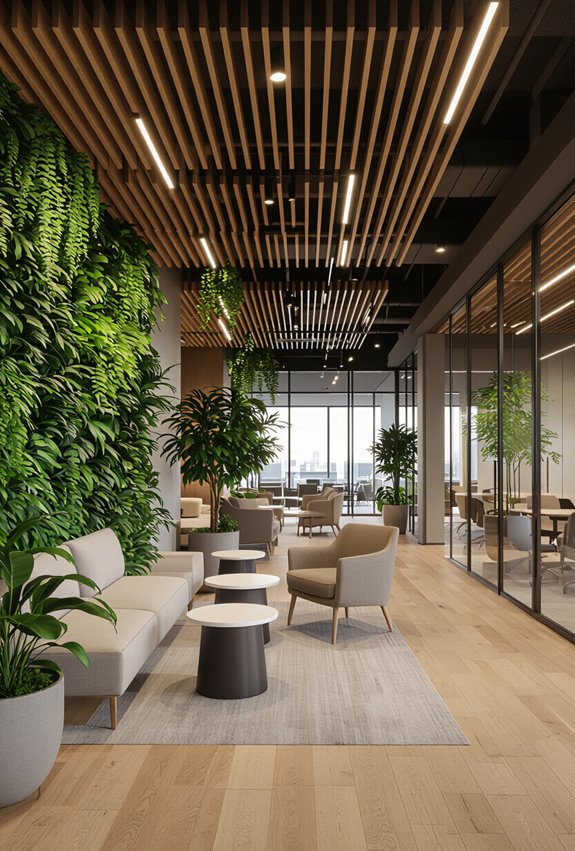
Modular fit-outs make it easy to reshape space, but you also want environments that support people’s health and productivity.
You’ll create mindfulness spaces and meditation areas alongside collaborative zones, blending nature integration with indoor gardens.
Prioritize ergonomic furniture and wellness amenities for a productivity focus.
Design with health centric design principles to boost employee wellbeing, circulation, daylight, and stress reduction.
Co-working Hub Concepts
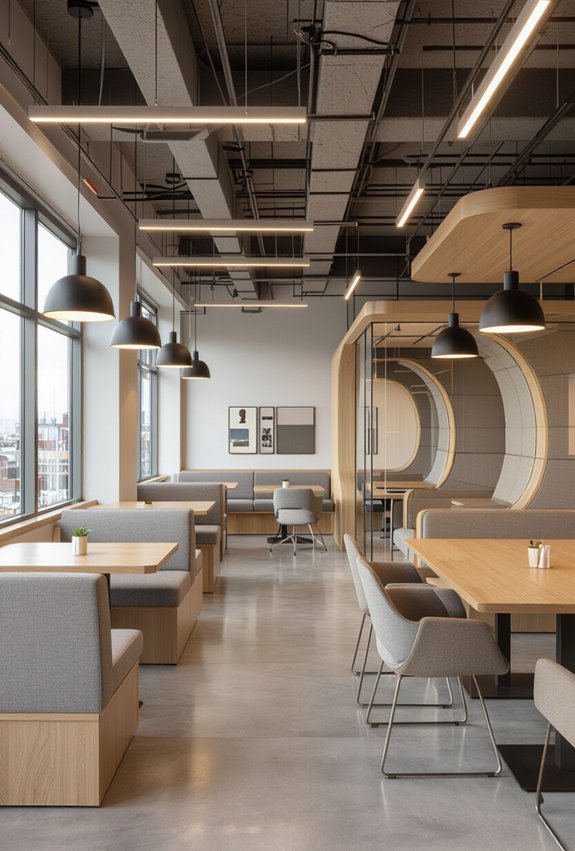
While acoustic pods give teams pockets of quiet, co-working hubs bring people together for collaboration, creativity, and flexible use of space.
You’ll design for community engagement and creative collaboration, balance technology integration without overreach, include wellness amenities, promote cultural diversity, and apply branding strategies.
Prioritize sustainability initiatives, design flexibility, networking opportunities, and an intuitive user experience to make the hub welcoming and productive.
Smart Building Integration
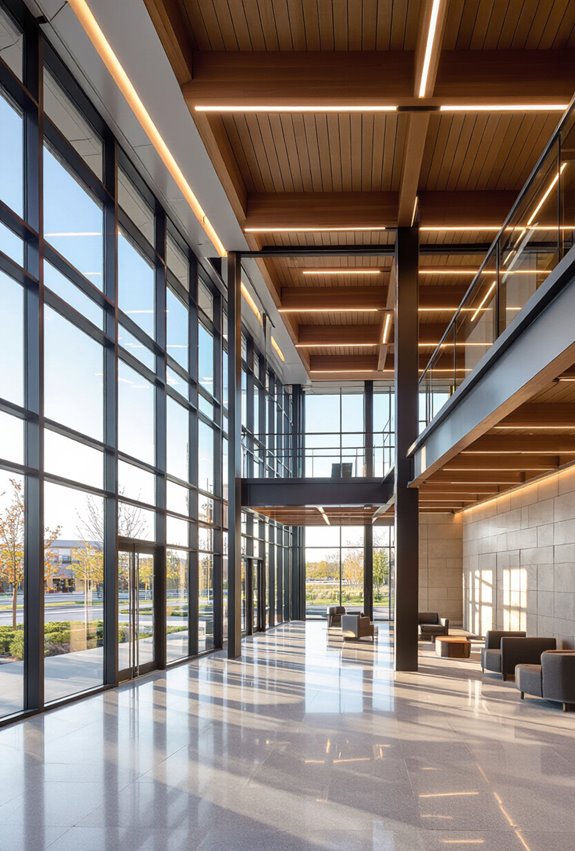
Because smart systems learn occupant patterns and automate environmental controls, you’ll get spaces that feel responsive rather than intrusive.
You’ll use smart technology and building automation to improve user experience, enable energy management, and feed data analytics.
IoT integration and network connectivity support remote monitoring, adaptive systems, and sustainability metrics, letting you optimize comfort, reduce waste, and make informed design decisions.
Timber-Frame and Mass Timber Structures
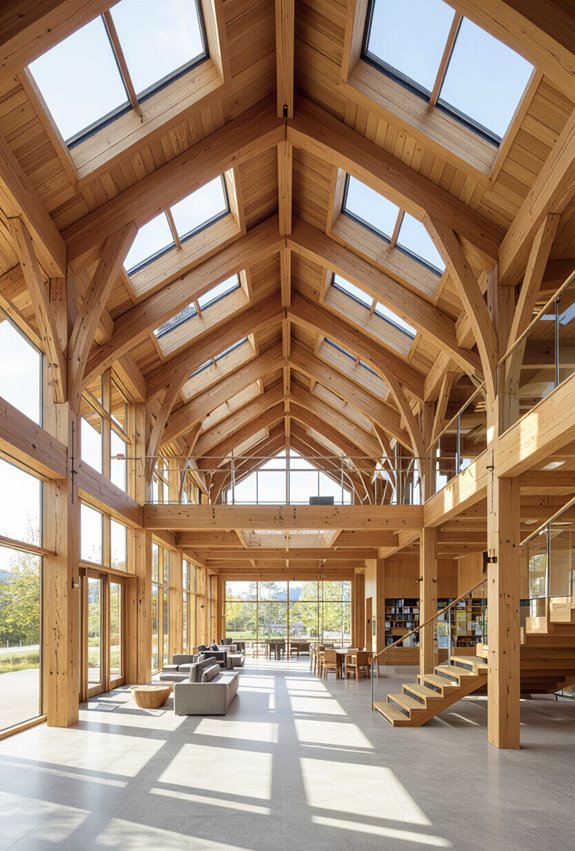
Though rooted in centuries-old craft, timber-frame and mass timber systems are driving a modern rethink of commercial and office architecture, offering strength, speed, and a warm aesthetic that you can leverage for sustainability and occupant wellbeing.
You’ll balance timber sustainability, material sourcing, prefabrication techniques, structural efficiency, seismic resilience, fire safety, acoustic performance, thermal insulation, energy performance, life cycle analysis, cost effectiveness, durability assessment, design flexibility, craftsmanship quality, biophilic integration, community engagement, and code compliance.
Daylight Optimization Strategies
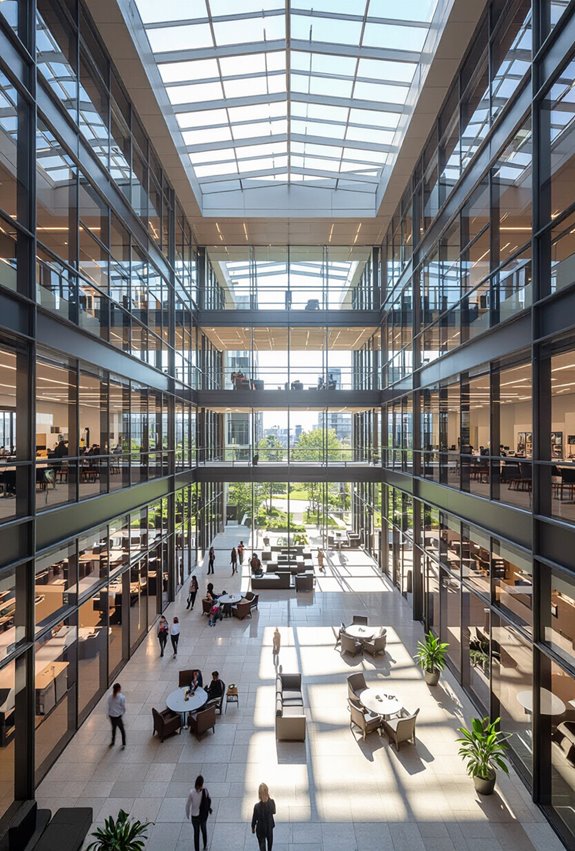
Moving from timber’s tactile warmth to how spaces are lit, daylight optimization shapes comfort, productivity, and energy use in commercial and office buildings.
You’ll use daylight harvesting controls, glazing strategies, and light shelf placements to balance glare and uniformity.
Orient windows, size apertures, and specify sensors so natural light reduces electric loads while maintaining visual comfort and adaptable work environments.
Courtyard-Centric Office Layouts
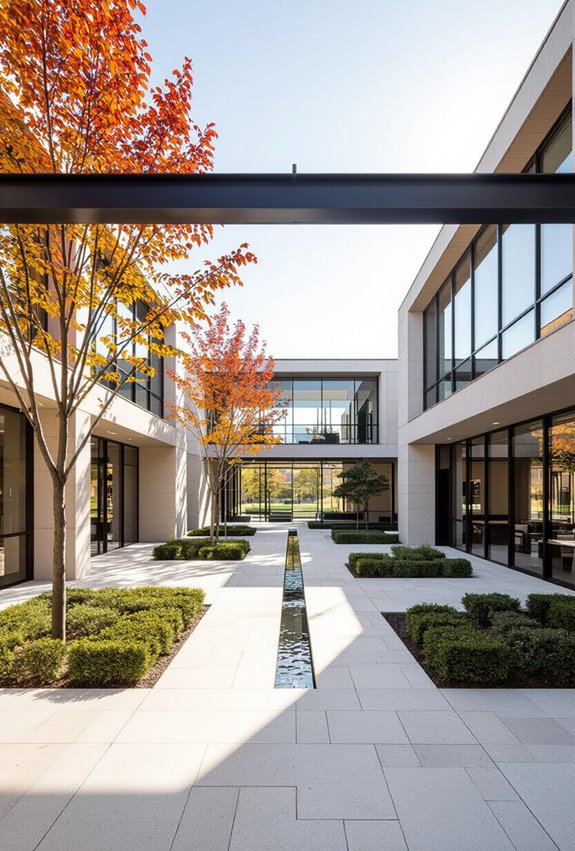
If you anchor an office plan around a central courtyard, you’ll open up daylight, natural ventilation, and social sightlines that boost wellbeing and collaboration.
You’ll design outdoor meeting spaces and collaborative gardens with seasonal adaptability, cultural integration, and community engagement.
Include sustainable drainage, wildlife friendly designs, immersive landscapes, and art installations so the courtyard feels functional, ecological, and inspiring for daily work.
Vertical Circulation as Social Space
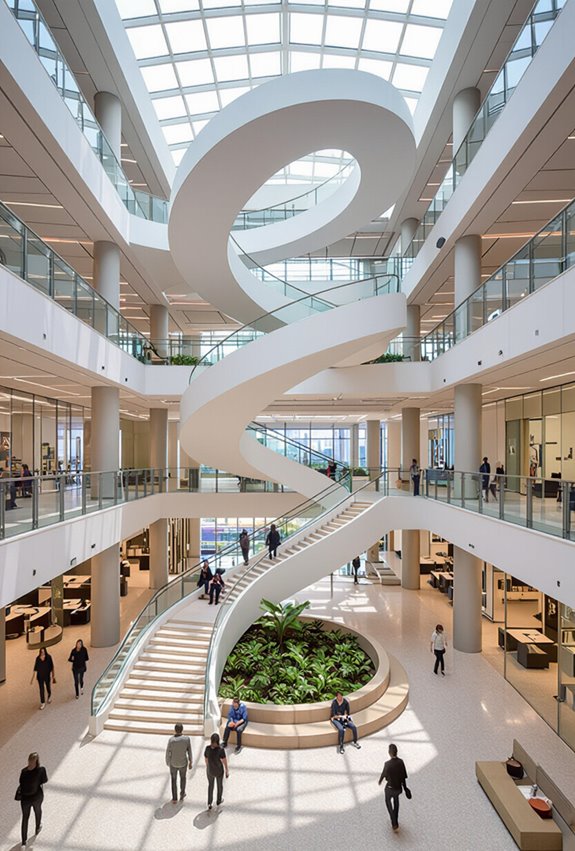
When you treat stairs, ramps, and atrium walkways as purposeful social rooms instead of mere connectors, they become everyday places for chance encounters, informal meetings, and visible wayfinding.
You’ll design communal staircases, shared corridors and multi level atriums with seating clusters, vertical gardens, art installations and social lounges.
Interactive elevators, networking zones and adaptable event spaces encourage collaboration and unplanned exchange throughout the building.
Outdoor Work Terraces
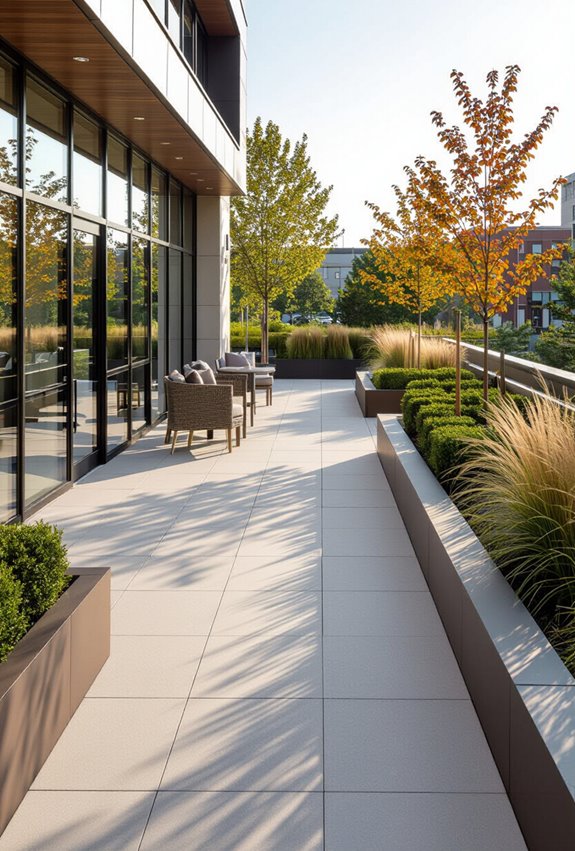
Because fresh air and daylight boost focus and well‑being, outdoor work terraces turn rooftops and setback patios into productive extensions of the office.
You’ll outfit spaces with outdoor furniture, flexible seating and shade structures, shape seasonal landscaping and privacy screens, and stitch connection pathways between collaboration zones and performance areas.
Include aesthetic lighting and visible sustainability features so terraces feel usable day and night.
Sustainable Material Palette
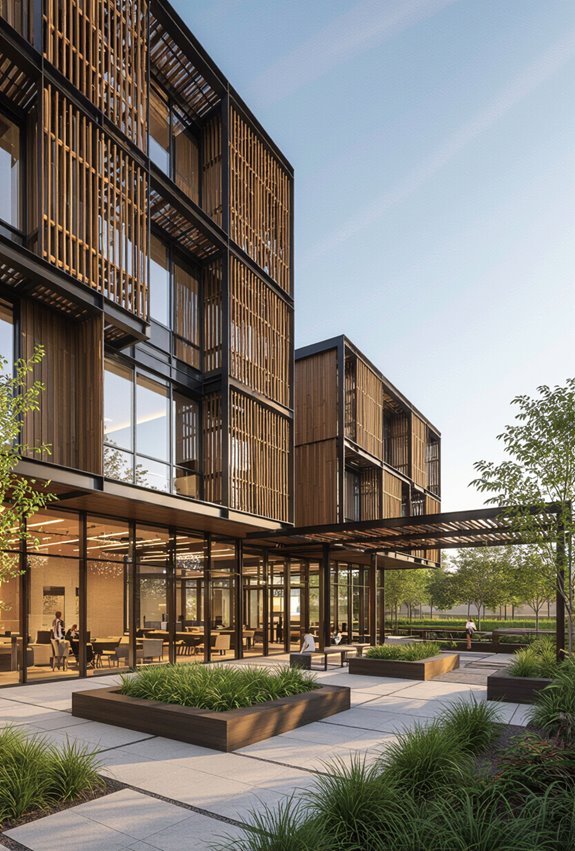
Although you’ll balance performance and aesthetics, prioritize materials that lower embodied carbon and stand up to heavy use.
Choose recycled materials and local sourcing, specify eco friendly finishes and low VOC products, and incorporate upcycled furnishings and sustainable textiles.
Use biodegradable elements, energy efficient insulation, water saving fixtures, and durable natural stone to create resilient, healthy, cost-effective commercial and office spaces.
Prefabricated Office Modules
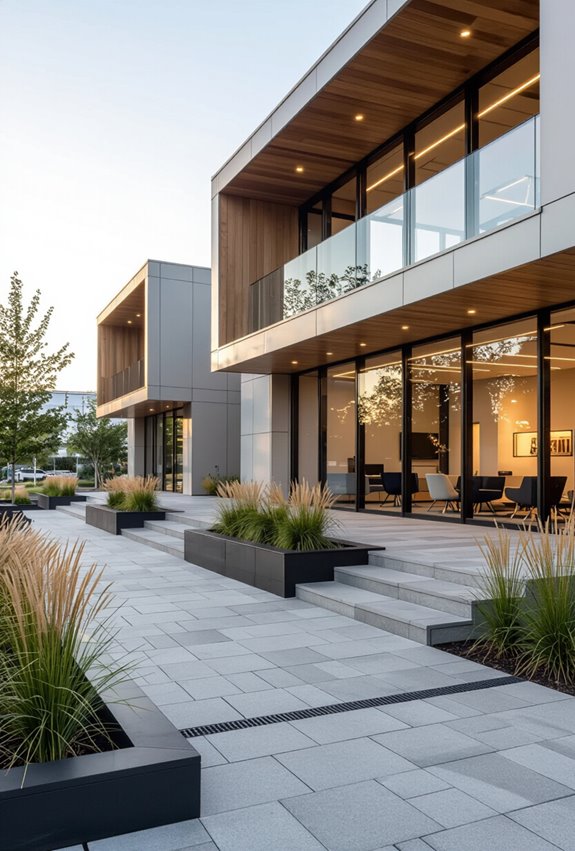
Having chosen low‑embodied‑carbon materials and durable finishes, you can accelerate build schedules and cut waste by specifying prefabricated office modules.
You’ll streamline installation, improve quality control, and reduce site disruption. Embrace modular workspace efficiency to reconfigure layouts quickly, and choose scalable office solutions that grow with staffing.
This approach saves time, lowers costs, and supports predictable, repeatable construction outcomes.
Inclusive Universal Design Principles
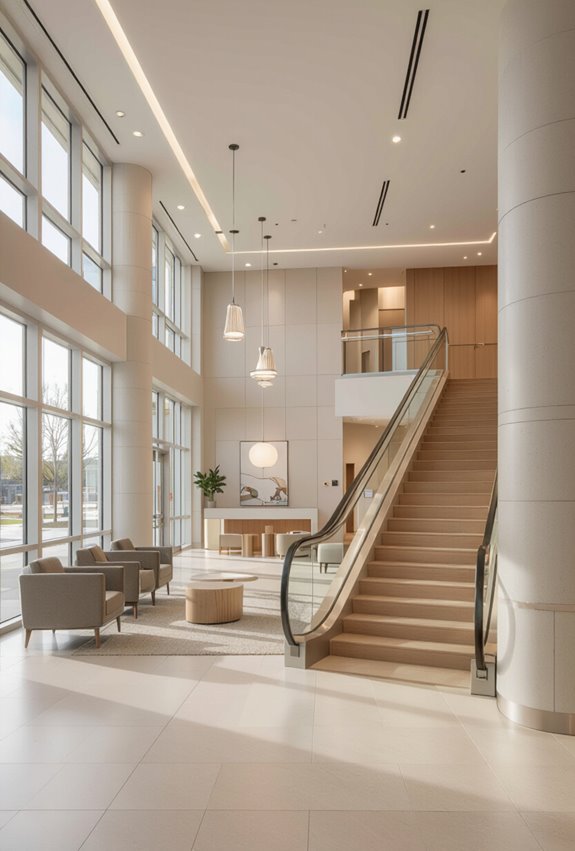
Accessibility is good design: it makes spaces usable, comfortable, and efficient for everyone, not just a few.
You prioritize accessibility features and inclusive signage, design sensory spaces and multi sensory experiences, and guarantee universal navigation.
Column-Free Flexible Spans
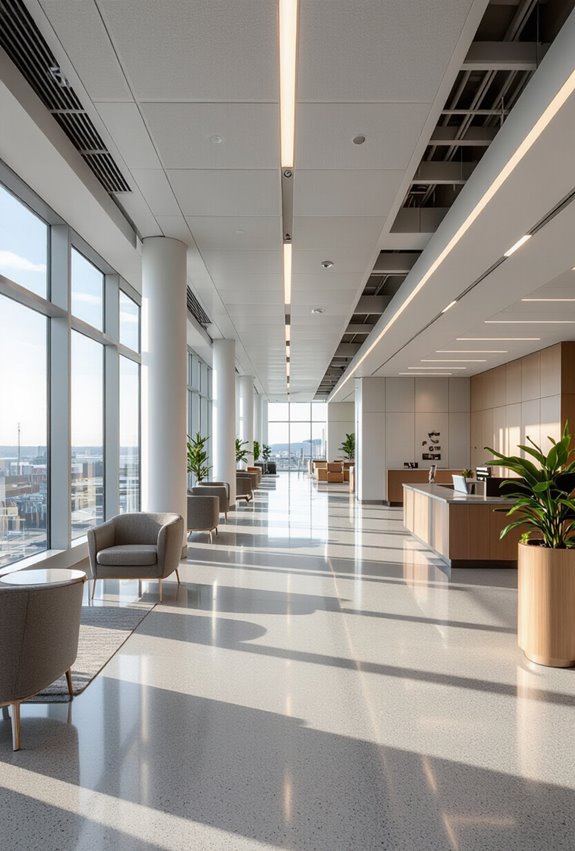
When you need adaptable office layouts that support changing teams and tech, column-free flexible spans give you wide, uninterrupted floor plates that maximize usable space and sightlines.
You’ll appreciate open structures and adaptable frameworks that create expansive interiors and spacious environments.
These innovative spans enable versatile designs and creative configurations, delivering functional aesthetics and real design freedom for efficient, flexible workplace planning.
Interactive Facade Systems
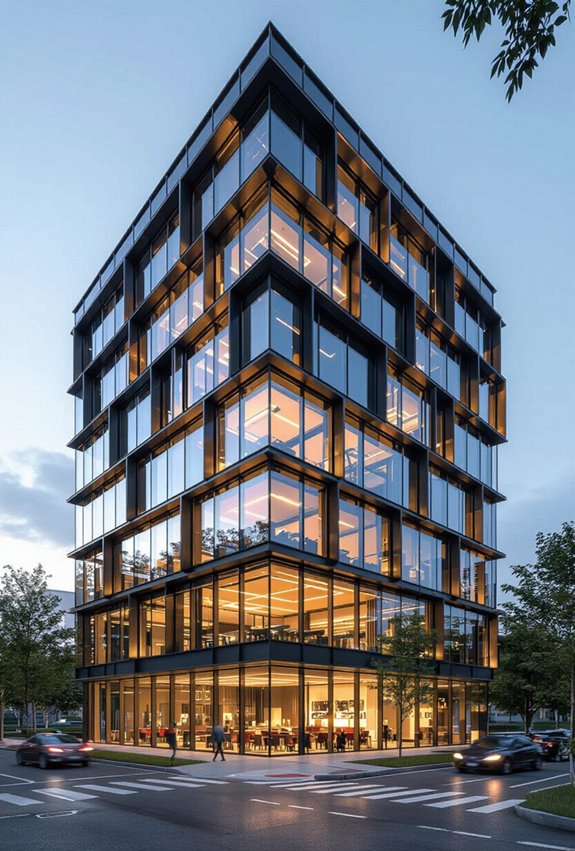
If you want a building that responds to its environment and users, interactive facade systems give you dynamic control over light, ventilation, privacy, and energy use.
You’ll use interactive technology and digital integration to enable light modulation, climate adaptability, and environmental responsiveness.
Dynamic materials enhance facade aesthetics, promote urban interaction, and boost user engagement while delivering a refined sensory experience that’s efficient and adaptable.
Lobby as Brand Experience
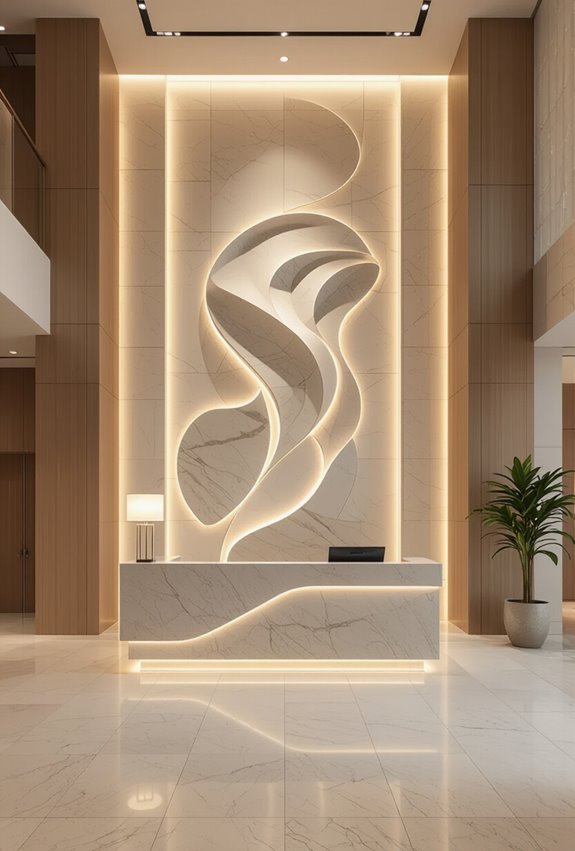
Entry spaces set the tone: your lobby should act as a living brand statement that greets visitors, communicates values, and guides behavior.
You’ll use lobby design and experiential branding to craft spatial identity with aesthetic appeal and a welcoming atmosphere.
Prioritize brand storytelling, visitor engagement, and subtle interactive elements so guests immediately sense purpose, authenticity, and clear wayfinding.
Flexible Partitioning With Moveable Walls
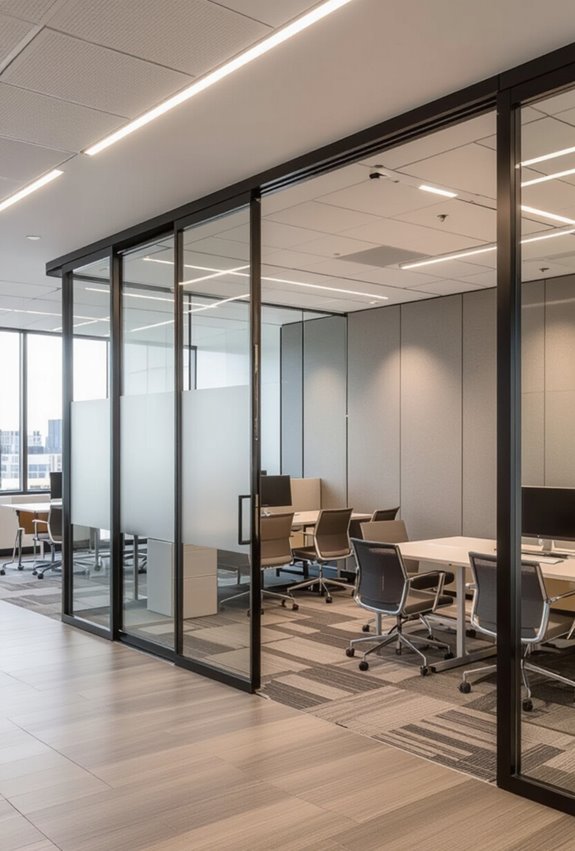
Nearby transit and shifting commuter patterns change how people use commercial interiors, so you’ll want spaces that adapt as quickly as they arrive.
You’ll deploy movable partitions and modular design to enable space reconfiguration and dynamic layouts.
Prioritize sound insulation and privacy solutions for focused areas, while design flexibility and aesthetic integration support user adaptability and maintain an efficient workflow across changing occupancy.
Integrated Art and Wayfinding
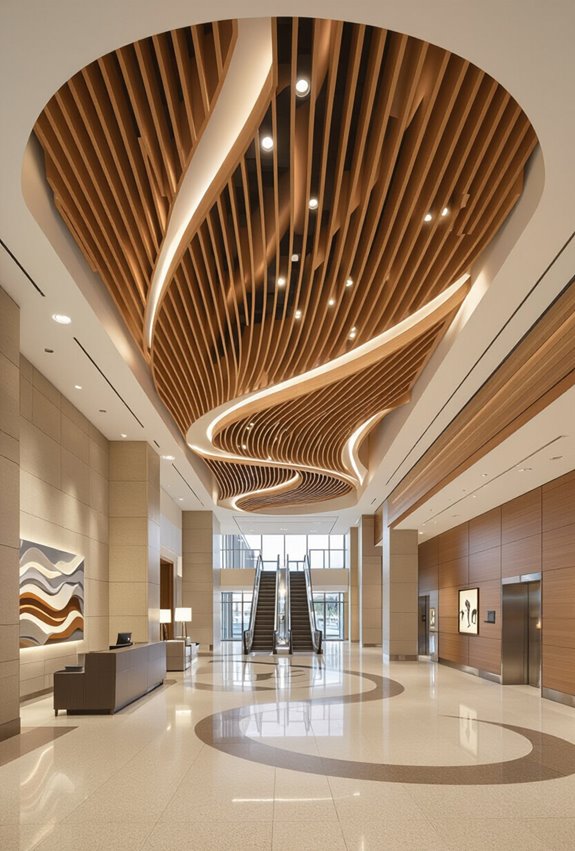
Art and wayfinding should work together so people move intuitively while experiencing your brand and culture; use murals, sculptural landmarks, and integrated signage to create visual cues that guide circulation without overwhelming the architecture.
You’ll deploy artistic wayfinding and culturally inspired signage, combine interactive installations, digital art integration, and community storytelling to craft immersive environments, playful navigation, and cohesive visual branding strategies.
Micro-Retail Within Office Complexes
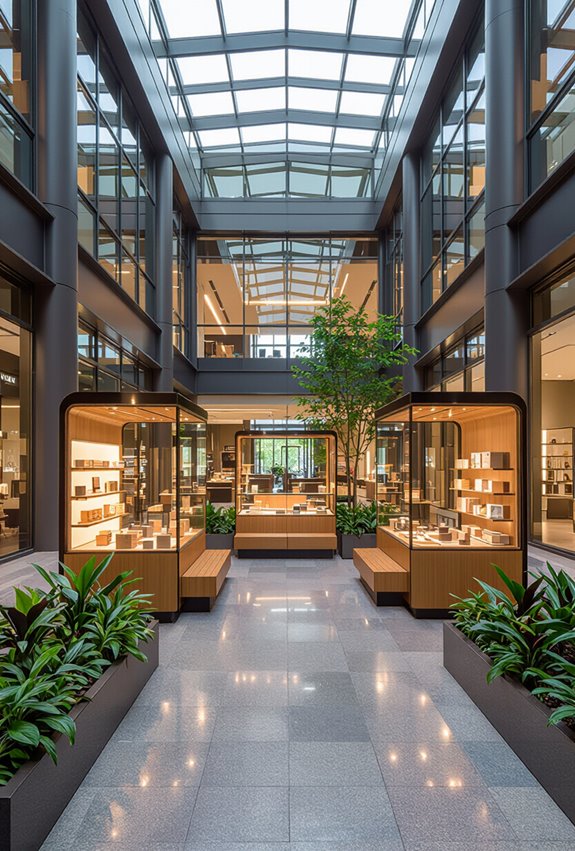
Integrating micro-retail into office complexes gives you convenient amenities that boost day-to-day productivity and foster a stronger sense of place.
You can host pop up retail and brand activation with flexible leasing, creating immersive experiences and experiential shopping that complement office amenities.
On site services promote tenant collaboration and community engagement, turning urban retail pockets into purposeful, connected destinations within your workplace.
Employee Amenity Floors
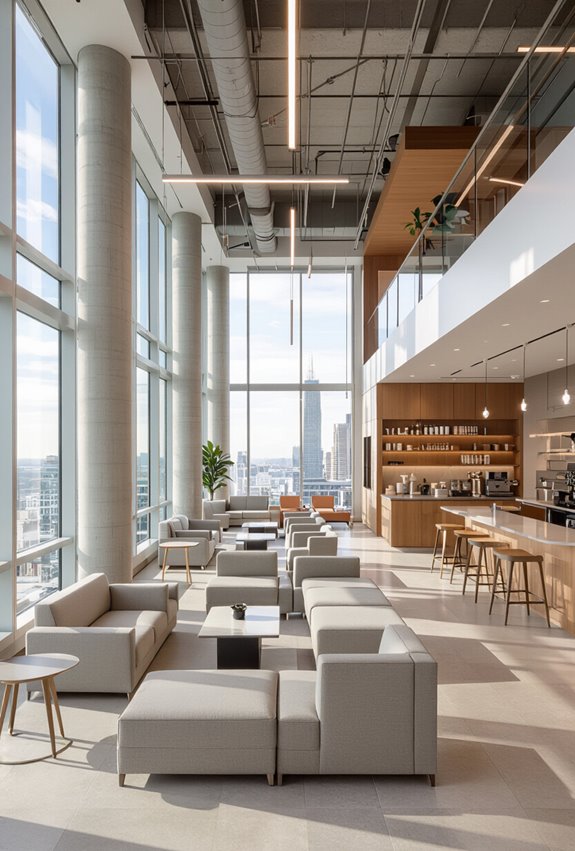
Amenity floors give your team space to recharge, collaborate, and stay healthy without leaving the building.
You’ll design employee wellness hubs with fitness amenities, relaxation zones, and recreational facilities that support health initiatives.
Create creative spaces and collaboration areas that act as productivity boosters and foster social interaction.
Prioritize community engagement through flexible layouts, programming, and accessible resources that keep people energized and connected.
Resilient Flood-Adapted Offices
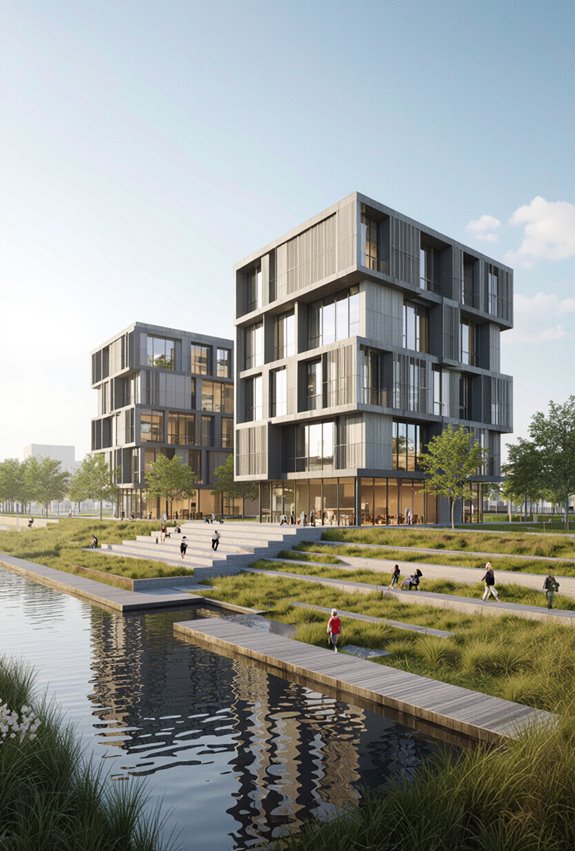
While amenity floors keep employees healthy and connected, you also need offices that withstand rising water and keep people working safely.
Design elevated service cores, waterproof lower levels, and quick-drain circulation paths. Use flood resilience strategies—sacrificial ground floors, raised utilities, resilient materials—and adaptive landscaping techniques like bioswales and permeable paving to divert water and protect access, minimizing downtime and repair costs.
Energy-Efficient HVAC Strategies
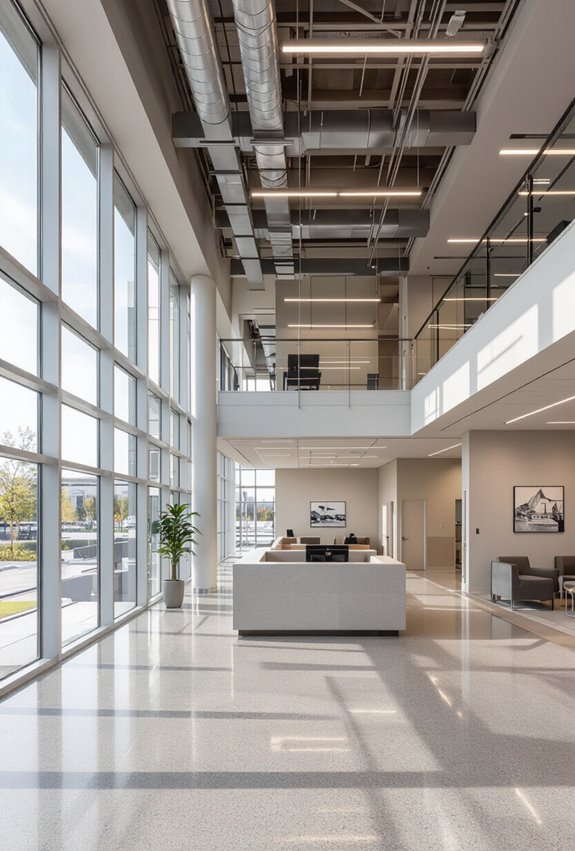
When you prioritize energy-efficient HVAC strategies, you cut operating costs, improve occupant comfort, and reduce your building’s carbon footprint.
You’ll integrate high-efficiency chillers, variable-speed drives, smart controls, geothermal systems for stable baseload heating and cooling, and energy recovery ventilators to reclaim exhaust heat.
You’ll zone spaces, monitor performance, and schedule setbacks so systems run only when and where they’re needed.
Smart Lighting and Circadian Support
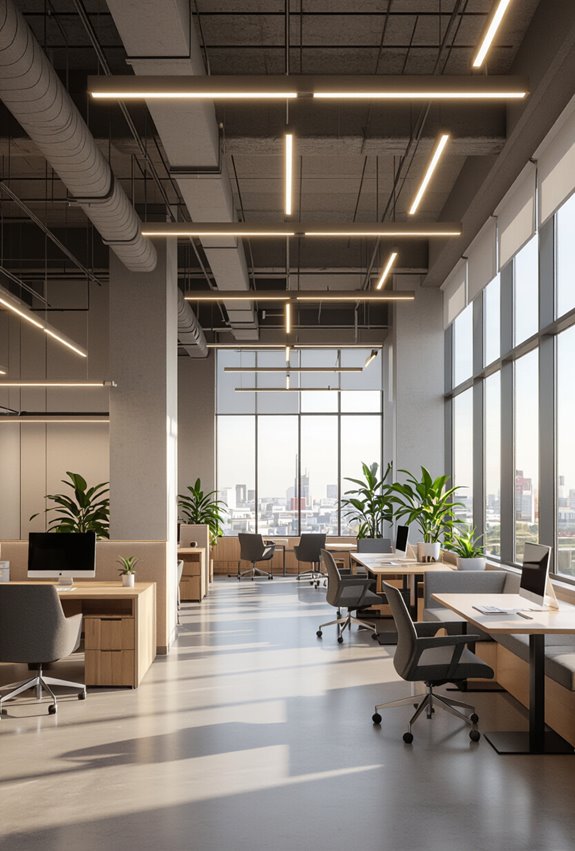
If you want occupants to feel alert, focused, and healthy throughout the day and night, integrate smart lighting that mimics natural circadian rhythms and adapts to activities and schedules.
You’ll use dynamic lighting solutions and circadian rhythm optimization with energy efficient lighting, automated light control and daylight harvesting techniques.
Prioritize health focused lighting, mood enhancing illumination, ambient light adjustments, responsive indoor environments, and user centered lighting design.
Security-Conscious Open Spaces
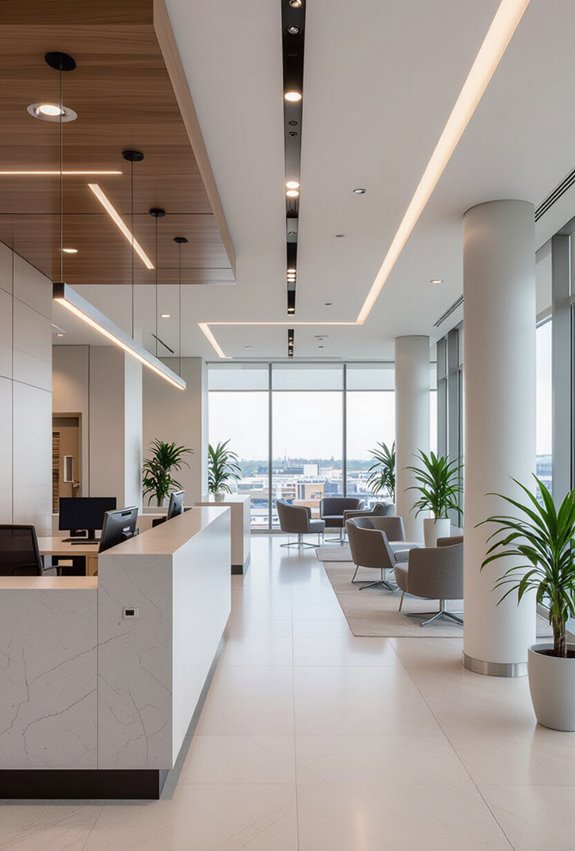
Smart lighting that supports circadian health also gives you tools to strengthen safety in open-plan offices: sensors, controlled access points, and integrated cameras can work with illumination schemes to guide movement and improve visibility without feeling intrusive.
You’ll pair security technology with open space design, balancing surveillance integration, access control, emergency planning, user privacy, community engagement, outdoor security, space management, risk assessment, accessibility measures, aesthetic security, incident response, safety regulations.
Data-Driven Space Utilization Design
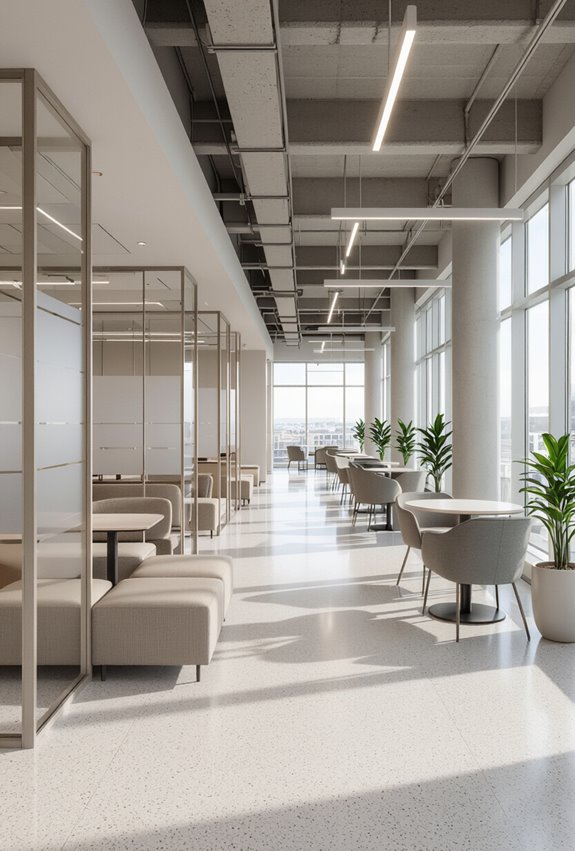
Data-driven space utilization design lets you shape offices around real behavior instead of assumptions: by collecting anonymized occupancy, movement, and environmental data, you can pinpoint underused zones, optimize desk-to-meeting ratios, and schedule cleaning and maintenance when areas are empty.
You’ll use occupancy sensors, spatial analytics and data analytics to drive space optimization, improve layout efficiency, track user behavior, gather design feedback, and monitor performance metrics.
Placemaking and Public Realm Integration
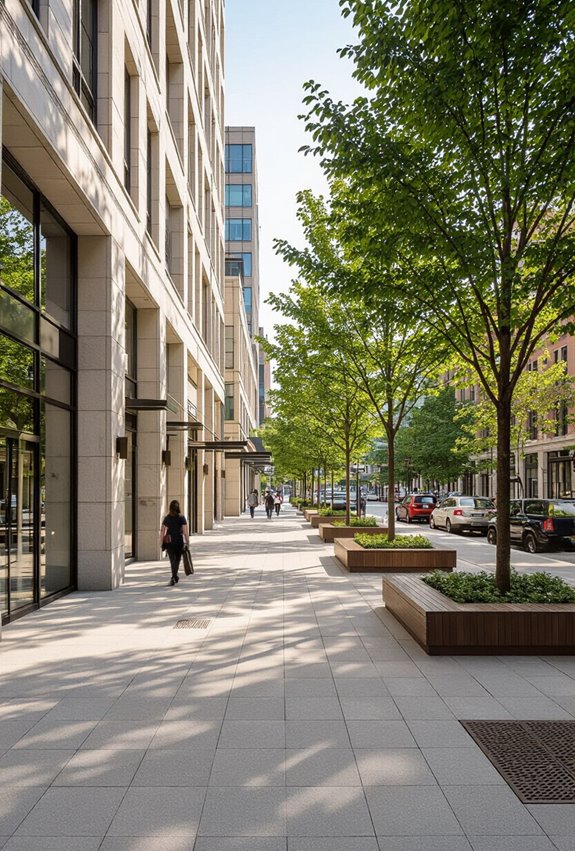
When you design commercial buildings with the public sphere in mind, you turn isolated structures into vibrant community anchors that invite people in and keep them there; thoughtful placemaking ties entrances, ground-floor uses, and outdoor spaces to pedestrian routes, transit stops, and neighboring businesses so the whole block feels connected and safe.
You foster community engagement, urban connectivity, pedestrian pathways, public art, social interaction, green infrastructure, inclusive spaces, cultural programming, active transportation, and strong place identity.
Color Psychology in Design

Color plays an essential role in shaping the atmosphere of your office environment. Understanding color symbolism can enhance your brand identity and create a positive emotional impact on employees and clients alike.
By carefully selecting color combinations, you can influence mood enhancement and boost productivity. For instance, blue fosters calmness, while yellow sparks creativity. Staying updated with color trends can also reflect your company’s values and cultural significance.
Additionally, the psychological effects of color can alter spatial perception, making spaces feel larger or cozier. Implementing a visual hierarchy through color can guide attention and improve focus.
Ultimately, the right palette won’t only energize your space but also align with your brand’s mission and vision.
Ergonomic Workstations

While a well-designed office inspires creativity, ergonomic workstations are essential for maintaining employee health and productivity. By incorporating adjustable desks, you give your team the flexibility to switch between sitting and standing, reducing the risk of fatigue and discomfort. These desks can easily adapt to individual preferences, promoting better posture and overall well-being.
Pairing adjustable desks with ergonomic seating further enhances the workspace. Look for chairs that offer lumbar support and adjustable features to guarantee everyone finds their perfect fit. This combination not only boosts comfort but also encourages movement throughout the day.
Digital Collaboration Tools

To enhance teamwork and streamline communication, digital collaboration tools have become indispensable in modern office environments.
These tools allow you to connect with your team seamlessly, whether you’re in the office or working remotely. With features like virtual brainstorming sessions, you can generate ideas collectively, ensuring everyone’s voice is heard.
Digital whiteboards facilitate dynamic discussions, making it easy to visualize concepts and share insights in real time. You’ll find that integrating these tools not only boosts productivity but also fosters a culture of collaboration.
By embracing technology, you can create an engaging workspace that encourages creativity and innovation, ultimately leading to better project outcomes.
Consider implementing these digital collaboration tools to transform how your team interacts and works together.
Wellness Rooms

Incorporating wellness rooms into commercial and office spaces not only enhances employee well-being but also boosts productivity and morale. These dedicated areas encourage mindfulness practices and relaxation techniques, providing a refuge for stress reduction.
You can design restorative environments that inspire creative expression and foster social connection among colleagues. Consider adding elements of nature immersion, such as plants and natural light, to promote a calming atmosphere.
Wellness design principles can guide you in creating spaces that prioritize mental health, allowing employees to recharge and refocus. By integrating these wellness rooms, you’ll cultivate a culture that values holistic well-being, ultimately leading to a more engaged and motivated workforce.
Prioritizing employee wellness is an investment in your organization’s success.
Smart Glass Technology

As you explore innovative solutions for your office environment, smart glass technology stands out as a game-changer. This cutting-edge material automatically adjusts its tint based on sunlight, offering incredible smart glass benefits. By reducing glare and controlling natural light, it creates a more comfortable workspace for you and your employees.
Moreover, smart glass enhances energy efficiency by minimizing the need for artificial lighting and reducing heating and cooling demands. You’ll notice lower energy bills and a smaller carbon footprint, making your office not just modern, but also environmentally friendly.
Incorporating smart glass into your design can elevate aesthetics while promoting sustainability, ultimately transforming your workspace into a sleek, efficient, and inviting environment.
Tech-Enabled Reception Areas

Tech-enabled reception areas are transforming the way businesses welcome guests and enhance their operations. By integrating smart reception interfaces, you can create a seamless experience for visitors.
Imagine guests checking in through a digital kiosk that streamlines the process and reduces wait times. This not only elevates their first impression but also allows your staff to focus on more meaningful interactions.
With digital visitor management systems, you can efficiently track who’s in your building, ensuring security and compliance. These systems can also send notifications to employees when their guests arrive, enhancing communication.
Conclusion
Just like a garden thrives when nurtured with sunlight and care, your office can bloom into a vibrant space that inspires creativity and collaboration. By embracing these modern architectural ideas, you’re not just building walls; you’re cultivating an environment where innovation flourishes. Each design choice is a seed planted for growth, inviting a dynamic atmosphere that reflects your vision. So, let your office transform into a flourishing landscape, where every corner encourages connection and productivity.


